Google Maps adds ability to see speed limits and speed traps in 40+ countries

Google Maps is gaining some features previously exclusive to Google’s navigation app, Waze. The company confirmed it’s rolling out the ability for Google Maps users to see speed limits, speed cameras, and mobile speed cameras in over 40 countries worldwide — an expansion of its earlier launch of these features, which were previously limited to select markets.

The change was noted earlier by ZDNet and, of course, Reddit.

Google confirmed with TechCrunch the full list of supported countries, which now includes:

Australia, Brazil, U.S., Canada, U.K., India, Mexico, Russia, Japan, Andorra, Bosnia and Herzegovina, Bulgaria, Croatia, Czechia, Estonia, Finland, Greece, Hungary, Iceland, Israel, Italy, Jordan, Kuwait, Latvia, Lithuania, Malta, Morocco, Namibia, Netherlands, Norway, Oman, Poland, Portugal, Qatar, Romania, Saudi Arabia, Serbia, Slovakia, South Africa, Spain, Sweden, Tunisia, and Zimbabwe.

Google had not been quick to integrate Waze’s best features into its own Google Maps app, following its 2013 acquisition of the popular navigation app. Instead, it seems to prefer using Google Maps as a broader platform for helping people find places including — most importantly — nearby businesses and Google advertisers.

Above: Image credit – Android Police

But last year, some people began to spot incident reports as well as crash and speed trap reports appearing in Google Maps. Those features were not broadly rolled out to all users at that time, however.

Now, that’s starting to change.

Google began to roll out the ability for users in more countries to see speed limits and speed cameras around two weeks ago, we understand. The rollout is taking place on both Android and iOS. But Android users will additionally be able to report mobile speed cameras and stationary cameras, while both iOS and Android users will be able to see those updates during their drive.

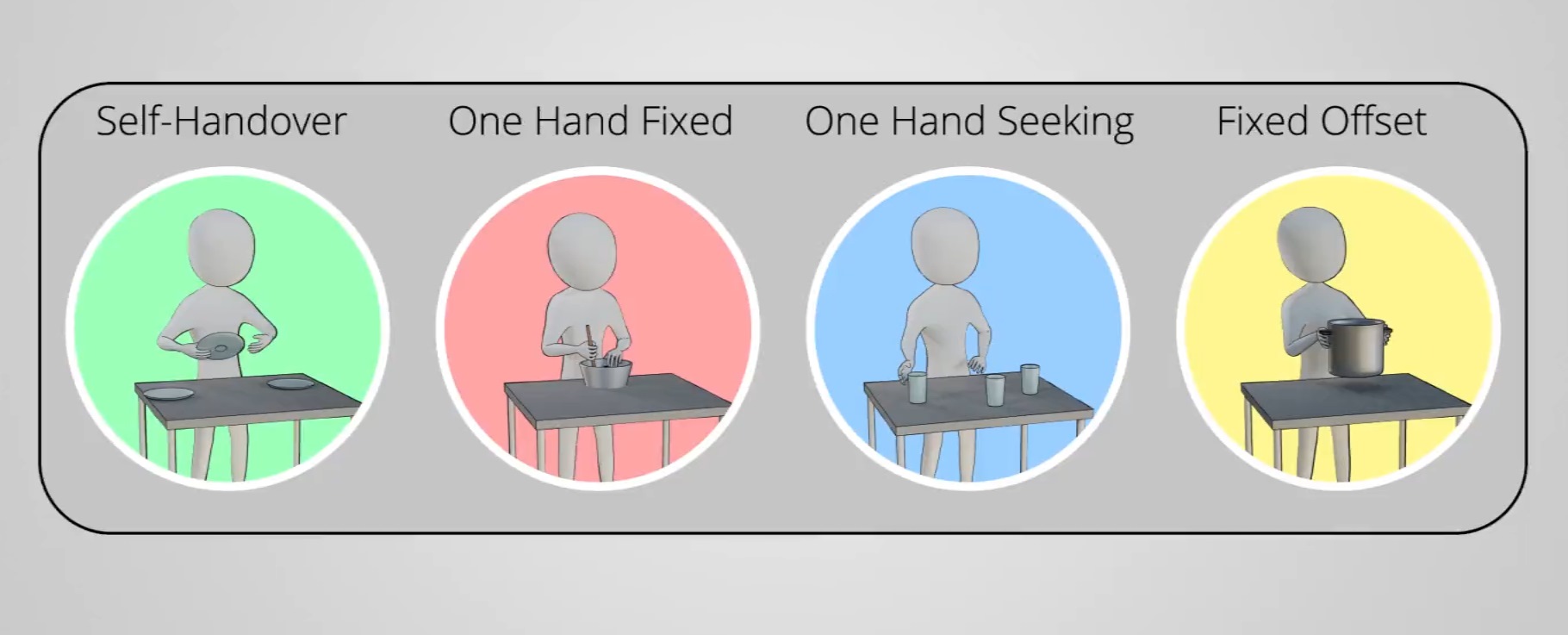
The speed limit appears in the bottom corner of the app, while speed traps show up as icons on the roads themselves.

The features will likely appeal to users who want similar functionality as to what’s available today in Waze, but don’t either care for the Waze user interface (which can be overwhelming if you’re not used to it), or the way Waze chooses its routes.

There has been some confusion over where and when these alerts would be available, as Google failed to officially announce the features’ expansion. Adding to the confusion, was the fact that people were seeing the changes appear at different stages of the rollout in different countries around the world.

Despite the usefulness of speed-related alerts, Waze remains the more useful navigation platform due to its ability to crowdsource reports of all kinds — including police ahead, crashes, cars pulled over on the side of the road, gas prices, road closures, obstacles in your path like debris, red light cameras, and more.


This robot learns its two-handed moves from human dexterity

If robots are really to help us out around the house or care for our injured and elderly, they’re going to want two hands… at least. But using two hands is harder than we make it look — so this robotic control system learns from humans before attempting to do the same.

The idea behind the research, from the University of Wisconsin-Madison, isn’t to build a two-handed robot from scratch, but simply to create a system that understands and executes the same type of manipulations that we humans do without thinking about them.

For instance, when you need to open a jar, you grip it with one hand and move it into position, then tighten that grip as the other hand takes hold of the lid and twists or pops it off. There’s so much going on in this elementary two-handed action that it would be hopeless to ask a robot to do it autonomously right now. But that robot could still have a general idea of why this type of manipulation is done on this occasion, and do what it can to pursue it.

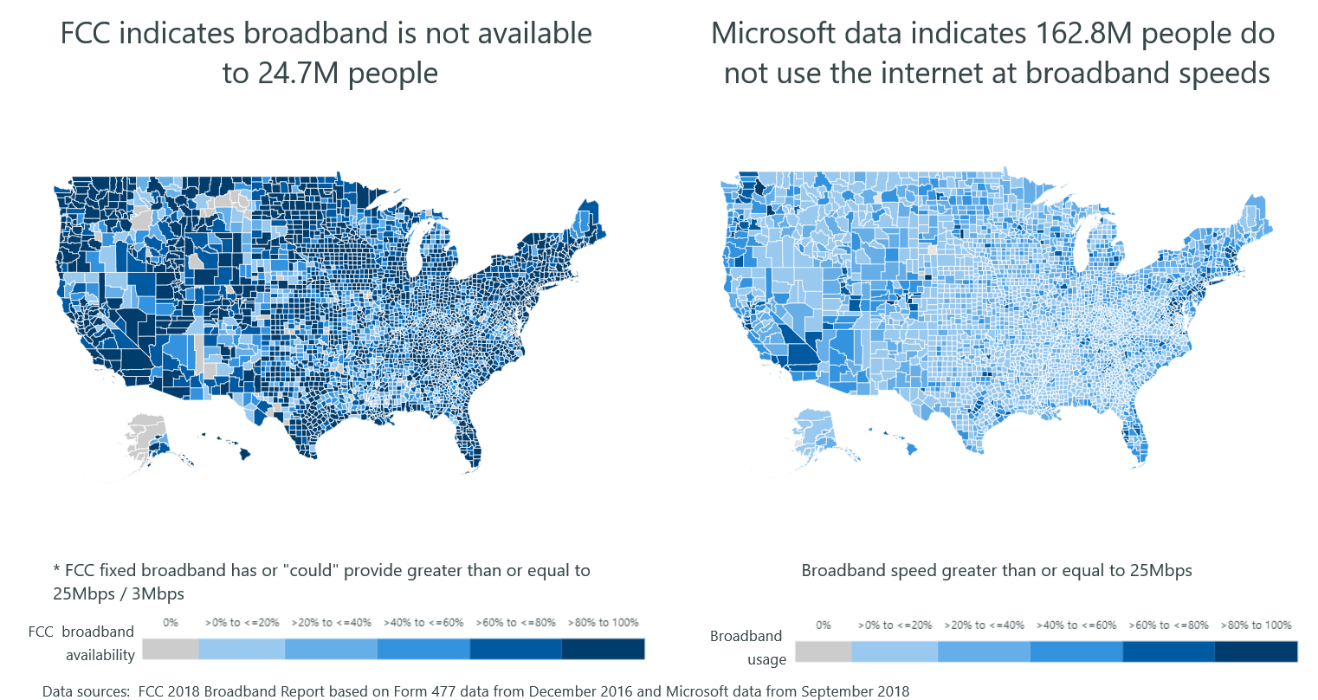
The researchers first had humans wearing a motion capture equipment perform a variety of simulated everyday tasks, like stacking cups, opening containers and pouring out the contents, and picking up items with other things balanced on top. All this data — where the hands go, how they interact, and so on — was chewed up and ruminated on by a machine learning system, which found that people tended to do one of four things with their hands:

  • Self-handover: This is where you pick up an object and put it in the other hand so it’s easier to put it where it’s going, or to free up the first hand to do something else.
  • One hand fixed: An object is held steady by one hand providing a strong, rigid grip, while the other performs an operation on it like removing a lid or stirring the contents.
  • Fixed offset: Both hands work together to pick something up and rotate or move it.
  • One hand seeking: Not actually a two-handed action, but the principle of deliberately keeping one hand out of action while the other finds the object required or performs its own task.

The robot put this knowledge to work not in doing the actions itself — again, these are extremely complex motions that current AIs are incapable of executing — but in its interpretations of movements made by a human controller.

You would think that when a person is remotely controlling a robot, it would just mirror the person’s movements exactly. And in the tests, the robot does so to provide a baseline of how without knowledge about these “bimanual actions,” many of them are simply impossible.

Think of the jar-opening example. We know that when we’re opening the jar, we have to hold one side steady with a stronger grip and may even have to push back with the jar hand against the movement of the opening hand. If you tried to do this remotely with robotic arms, that information is not present any more, and the one hand will likely knock the jar out of the grip of the other, or fail to grip it properly because the other isn’t helping out.

The system created by the researchers recognizes when one of the four actions above is happening, and takes measures to make sure that they’re a success. That means, for instance, being aware of the pressures exerted on each arm by the other when they pick up a bucket together. Or providing extra rigidity to the arm holding an object while the other interacts with the lid. Even when only one hand is being used (“seeking”), the system knows that it can deprioritize the movements of the unused hand and dedicate more resources (be it body movements or computational power) to the working hand.

In videos of demonstrations, it seems clear that this knowledge greatly improves the success rate of the attempts by remote operators to perform a set of tasks meant to simulate preparing a breakfast: cracking (fake) eggs, stirring and shifting things, picking up a tray with glasses on it and keeping it level.

Of course this is all still being done by a human, more or less — but the human’s actions are being augmented and re-interpreted into something more than simple mechanical reproduction.

Doing these tasks autonomously is a long ways off, but research like this forms the foundation for that work. Before a robot can attempt to move like a human, it has to understand not just how humans move, but why they do certain things in certain circumstances, and furthermore what important processes may be hidden from obvious observation — things like planning the hand’s route, choosing a grip location, and so on.

The Madison team was led by Daniel Rakita; their paper describing the system is published in the journal Science Robotics.

CrowdStrike sets terms for $378M Nasdaq IPO

CrowdStrike, in preparation for its Nasdaq initial public offering, has inked plans to sell 18 million shares at between $19 and $23 apiece. At a midpoint price, CrowdStrike will raise $378 million at a valuation north of $4 billion.

The company, which develops cloud-native endpoint protection software to prevent cyber breaches, has raised $480 million in venture capital funding to date from Warburg Pincus, which owns a 30.2% pre-IPO stake, Accel (20.2%) and CapitalG (11.1%), according to its IPO prospectus. The business was valued at $3.3 billion with a $200 million January 2018 Series E funding.

Sunnyvale, Calif.-based CrowdStrike outlined its IPO plans two weeks ago. The company plans to trade under the ticker symbol “CRWD.”

The cybersecurity unicorn follows several other highly valued venture-backed startups to the public markets, including Uber, Lyft, Pinterest, PagerDuty and Zoom. CrowdStrike’s offering will represent only the second cybersecurity IPO in 2019, however. It follows Israel’s Tufin Software Technologies, which went public earlier this year. Last year, for its part, saw the IPOs of Zscaler, Carbon Black and Tenable.

Founded in 2011 by former McAfee executives George Kurtz and Dmitri Alperovitch, CrowdStrike is up against steep competition in the cyber protection space. It’s battling the likes of McAfee, Cylance, Palo Alto Networks, Symantec, Carbon Black and more.

The business’ revenues, fortunately, are growing at an impressive rate, increasing from $53 million in 2017 and $119 million in 2018 to $250 million in the year ending January 31, 2019. In the quarter ending April 30, 2019, its revenues shot up from $47.3 million in 2018 Q1 to between $93.6 million to $95.7 million.

CrowdStrike is also backed by IVP, March Capital Partners, General Atlantic and others.

Online lender SoFi has quietly raised $500 million in funding, led by Qatar

Usually when it comes to big sums of funding, companies like to boast about them. Online lending startup Social Finance, better known as SoFi, took another tack this morning, quietly announcing in a press release that it has closed half a billion dollars in a single funding round led by Qatar Investment Authority, a Doha, Qatar-based private equity and sovereign wealth fund.

Even in a world now awash with rounds in the multiple hundreds of dollars, the financing is notable. First, it’s the third giant round in recent years for the nearly eight-year-old, San Francisco-based company. Its biggest round to date came in September 2015, when SoftBank led a $1 billion round in the company. SoftBank’s then COO, Nikesh Arora, abruptly left the Japanese conglomerate the following year, but SoftBank CFO Alok Sama maintains a board seat.

In February 2017, SoFi raised $500 million more in funding led by the private equity firm Silver Lake, but there would come another twist five months later, when SoFi’s founder and its CEO at the time, Mike Cagney, was forced to resign following a sexual harassment lawsuit. (Cagney has since raised a bundle for a new lending company called Figure. )

Indeed, the new, Qatar-led round is the first big vote of confidence for SoFi’s newest CEO, Anthony Noto, joined the company in January of last year after spending three-and-half-years at Twitter, first as its CFO and later as its COO — roles he took on after spending several years with Goldman Sachs as a managing director before that.

Still, the round — which pushes SoFi’s total funding to $2.4 billion altogether — appears to be a flat one.  According to SoFi’s release about the round, its pre-money valuation is $4.3 billion, the same valuation it was assigned at the time of that Silver Lake led round two years ago.

Seemingly, that owes to competitor pressure in the space, including a flood of non-bank lending companies that includes Lending Club and Prosper for consumer loans, OnDeck for small-and mid-size business loans. StreetShares for veteran-owned businesses, and CommonBond and SoFi for student loans.

That’s saying nothing of newer online lenders like Affirm, the Silicon Valley startup that’s led by serial entrepreneur Max Levchin and aggressively chasing millennial shoppers who need loans (or can be easily persuaded to take one).

Little wonder that SoFi, which also markets its services largely to younger customers, has been rolling out new products, including two no-fee exchange-traded funds that it introduced last month.

The move gives SoFi’s a way to access that $3.9 trillion U.S. ETF market, but rollout also reminded many that when dealing with non-traditional institutions busy growing their businesses, there are often unexpected kinks.

In SoFi’s case, customers of weren’t told beforehand was that SoFi intended to liquidate their existing ETF investments and funnel the proceeds into its own new funds, as reported by the WSJ. Indeed, one customer with whom the outlet spoke said that the tax bill he will owe because of the move will outweigh 35 years of fee savings.

Above: SoFi CEO Anthony Noto.

Allbirds, Everlane investor Maveron turned away more than $70M for its latest fund

Maveron, a venture capital fund co-founded by Starbucks mastermind Howard Schultz, has closed on another $180 million to invest in early-stage consumer startups.

The capital represents the firm’s seventh fundraise and largest to date. To keep the fund from reaching mammoth proportions, the firm’s general partners said they turned away more than $70 million amid high demand for the effort.

“It takes discipline to do something different from the rest of the herd, but we know that we’re not in the business of AUM, we’re in the business of generating cash-on-cash returns,” they wrote. “We know in this market it is hard to adhere to the idea that size is the enemy of performance but we believe in that truth here.”

In a phenomenon dubbed “The SoftBank Effect,” early- and late-stage venture firms have upped the ante when it comes to the size of their funds. Andreessen Horowitz, for example, recently brought in a fresh $2.75 billion to invest in startups, its largest pool to date.

Maveron was launched in 1998 by Schultz and Dan Levitan, a former managing director of investment firm Wertheim Schroder & Co. Schultz, currently considering a presidential run, is no longer actively involved in the firm. Maveron is known for recent bets in startups such as Allbirds, Everlane, General Assembly, Modern Fertility and Eargo.

Fund VII will be led by a team of six, including Levitan, Jason Stoffer, Anarghya Vardhana, David Wu, Cat Lee and Natalie Dillon. Split equally by gender, Maveron says its diversity gives them an edge.

“We’re able to see things others can’t because of our balanced team,” they said. “Last year, 70% of the founders we backed were women and all of those founders were also CEO or co-CEO. Beyond gender diversity, we also have someone on the investment team in every decade of their lives from their 20s to their 60s. That perspective marries the experience and scars of living through multiple market cycles with youthful optimism and connectivity to today’s tastemakers and trends.”

Maveron invests exclusively in consumer startups, with an eye for founders who are “unapologetically non-normal,” who value relationships over transactions, profit and purpose, and who “win the right way.”

FCC’s broadband deployment report called ‘fundamentally at odds with reality’

The FCC has officially issued this year’s Broadband Deployment Report, summarizing the extent to which the agency and industry have closed the digital divide in this country. But not everyone agrees with it: “The rosy picture the report paints about the status of broadband deployment is fundamentally at odds with reality,” said Geoffrey Starks in a lengthy dissenting statement.

The yearly report, mandated by Congress, documents things like new broadband customers in rural areas, broadband expanding to new regions, and all that sort of thing. The one issued today proclaims cheerfully:

[The FCC] has made closing the digital divide between Americans with, and without, access to modern broadband networks its top priority. As a result of those efforts, the digital divide has narrowed substantially, and more Americans than ever before have access to high-speed broadband.

We find, for a second consecutive year, that advanced telecommunications capability is being deployed on a reasonable and timely basis.

Naturally the FCC wants to highlight the progress made rather than linger on failures, but this year the latter are highly germane, as Starks points out, largely because one error in particular threw off the results by millions.

The statistics in the report are based on forms filled out by broadband providers, which seem to go unchecked even in the case of massive outliers. Barrier Free broadband reported having gone from zero subscribers in March of 2017 to,  seven months later, serving the entirety of New York state’s 62 million residents with state of the art gigabit fiber connections. There are so many things wrong with this filing that the freshest intern at the Commission should have flagged it as suspect.

Instead, the data was accepted as gospel, and only a full year later did reporters at Free Press notice the discrepancy and call it to the FCC’s attention.

That this error, so enormous in scope, so obvious, and so consequential (it skewed the national numbers by large amounts), was not detected, and once detected was only cursorily addressed, leaves Starks flabbergasted:

The fact that a 2019 Broadband Deployment Report with an error of over 62 million connections was circulated to the full Commission raises serious questions. Was the Chairman’s office aware of the errors when it circulated the draft report? If not, why didn’t an “outlier” detection function raise alarms with regard to Barrier Free? Also, once the report was corrected, the fact that such a large number of connections came out of the report’s underlying data without changing the report’s conclusion, and without resulting in a substantial charge to the report, calls into question the extent to which the report and its conclusions depend on and flow from data.

In other words, if the numbers can change that much and the conclusions stay the same, what exactly are the conclusions based on?

Starks is the latest Commissioner to be appointed and one of the two Democrats there, the other being Jessica Rosenworcel (the Commission maintains a 3:2 party balance in favor of the current administration). Both have been outspoken in their criticism of the way the Broadband Deployment Report is researched and issued.

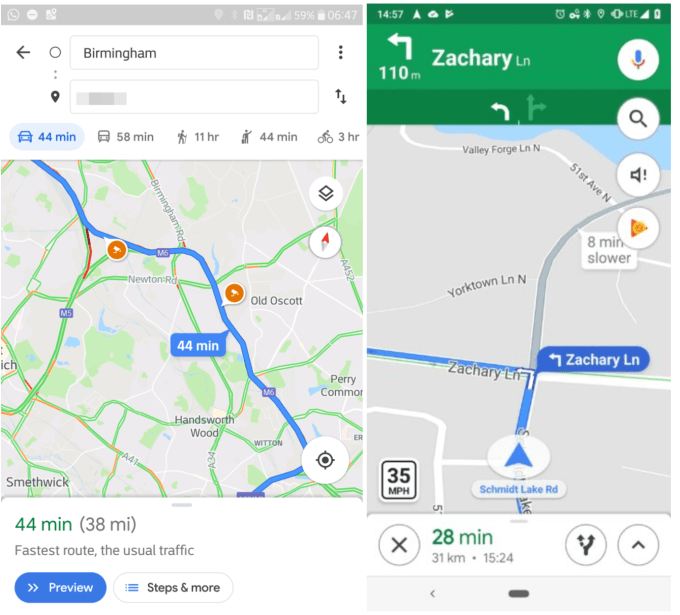
It’s the same data used to create the FCC’s broadband map, which ostensibly shows what carriers and speeds are available in your area. But the issues with this are many and various.
The data is only broken down by census tract, a unit that varies a great deal in size — some are tiny, some enormous. Yet if one company provides service to one person in that tract, it is considered “served” with that broadband capability throughout. The resulting map is so full of inaccuracies as to be useless, many argue — including Microsoft, which recently said it had observed “significant discrepancies across nearly all counties in all 50 states.”

The good news is that the FCC is aware of this and currently working on ways to improve data gathering. In future years better rules or more location-specific reporting could make the maps and deployment report considerably better. But at present, Starks concludes, “I don’t believe that we know what the state of broadband deployment is in the U.S. with sufficient accuracy.”

Commissioner Rosenworcel was similarly unsparing in her dissent.

“This report deserves a failing grade,” she wrote. “Putting aside the embarrassing fumble of the FCC blindly accepting incorrect data for the original version of this report, there are serious problems with its basic methodology. Time and again this agency has acknowledged the grave limitations of the data we collect to assess broadband deployment.”

The data also do not address problems that are unlikely to be addressed in forms filled out by the industry, such as redlining, shady business practices, and high prices for the broadband that is available.

“We will never manage problems we do not measure,” she continued. “Our ability to address the challenge of uneven internet access across the country is only made more challenging by our inability to be frank about the state of deployment today. Moreover, we need to be thoughtful about how impediments to adoption, like affordability, are an important part of the digital equity equation and our national broadband challenge.”

The Republican Commissioners, Brendan Carr and Michael O’Rielly, supported the report and did not mention the systematic data sourcing problems or indeed the enormous error that caused the draft of this report to be totally off base. O’Rielly did have an objection, however. He is “dismayed by the report’s reliance on purported ‘insufficient evidence’ as a basis for maintaining—for yet another year in a row—an outdated siloed approach to evaluating fixed and mobile broadband, rather than examining both markets as one.”

This has been suggested before and is a dangerously bad idea.

It should be said that the report isn’t one big single error. There’s more to it than just repackaging the aspirational numbers of the telecoms industry — though that’s a big part. It still holds interesting data that can be used in apples-to-apples comparisons to previous years. But more than ever it sounds like that data and any conclusions made from it — or for that matter rules or legislation — should be taken with a grain of salt.

The Crunchbase Unicorn Leaderboard is back, now with a record herd of 452 unicorns

We are very pleased to announce that the new and improved Crunchbase Unicorn Leaderboard re-launched today after nearly a year’s absence from TechCrunch.

Venture investors did a lot of handwringing in the past year over rising valuations, but that did not slow the unicorn juggernaut, as 2018 outstripped all previous years in terms of the number of unicorns created and venture dollars invested. Indeed, 151 new unicorns joined the list in 2018 (compared to 96 in 2017), and investors poured more than $135 billion into those companies, a 52% increase year over year and the biggest sum invested in unicorns in any one year since unicorns became a thing.

Back in 2013, Cowboy Ventures’ Aileen Lee coined the term “unicorn” in a piece on TechCrunch with her report stating “39 companies belong to what we call the ‘Unicorn Club’ with four unicorns born per year in the past decade, … with Facebook being the breakout ‘super-unicorn’ (worth >$100 billion).” A lot has changed in six years.

From 19 new unicorns in 2013, roughly two each month, we now see a new unicorn coming into being every two working days. In 2019 so far, 42 new unicorns have joined the unicorn leaderboard, and by next week that number will have jumped again.

The Unicorn Leaderboard now lists 452 companies, which have collectively raised $345 billion and represent a cumulative valuation of $1.6 trillion. Go back to February 2018 and there were just 279 companies, with $206 billion raised and valued at $1 trillion. In just 15 months 170+ companies reached unicorn status, raised $140 billion more and added $600 billion in company valuations.

View by investor, sector and country

On the new leaderboard, it’s possible to filter by investor, lead investor, market sector and country. The unicorn leaders are the U.S. with 196 companies, China with 165, India with 19 and the U.K. with 12.

Leading investors

Three well-known venture firms, Sequoia Capital, Accel and Andreessen Horowitz, have invested in the most unicorn rounds. The investors that actually led the most rounds are corporate investor Tencent Holdings, venture firm Sequoia Capital and private equity firm Tiger Global Management. The rise of Tencent Holdings and Tiger Global Management reflect the prominence of China-based unicorns, as well as the increase in investment from corporate and alternative investors.

Emerging unicorns

The leaderboard also hosts a list of companies that have disclosed valuations between $500 million and > $1 billion and may well reach unicorn status with their next capital raise, unless, of course, they exit before then.

Unicorn exits

The majority of these 452 companies are in the U.S. or China, and most will plan to exit (go public or get acquired) within the next five to eight years.

2018 was also the best year ever for unicorn exits, as 39 unicorns went public while 14 were acquired. This year so far, six U.S.-based unicorns have gone public, namely, Uber, Lyft, Pinterest, Zoom, PagerDuty and Beyond Meat, representing $131.5 billion in public valuations, with Uber at  $82.5 billion and Lyft at $24 billion. The first Africa-based unicorn to go public is Jumia Group, an e-commerce company that operates in 14 African countries. Four China-based unicorn companies went public so far this year: Maoyan, an online movie ticketing service; mobile stock investing service Tiger Brokers; Lakala, a fintech platform; and, most recently, Luckin Coffee, a retail coffee brand. Hong Kong-based Futu Holdings, an online stock platform, also went public this year.

More than a one-third of all unicorn exits took place in 2018. The exited unicorns section of the Crunchbase Leaderboard lists 144 companies; roughly two-thirds of these companies (98) went public and the balance (46) were acquired.

Is 2018 the peak?

2018 might well be the peak, but 2019 is still strong, with 42 new unicorns announced this year so far, and $33.6 billion invested in this cohort of private companies. With the record of 452 unicorns, $345 billion currently invested, $1.6 trillion in captured value and an average age of 8.2 years since being founded, 2019 will be the year we watch the IPO market closely.

Credit: Steven Rossi who manages the board, Santosh Ankola on the TechCrunch product team and Human Made Design for their work on recreating the board.

Daily Crunch: Uber will deactivate low-rated riders

The Daily Crunch is TechCrunch’s roundup of our biggest and most important stories. If you’d like to get this delivered to your inbox every day at around 9am Pacific, you can subscribe here.

1. Uber will start deactivating riders with low ratings

Uber drivers have been able to rate their passengers before this, but those passengers were never really at risk of deactivation — until now. In a blog post, Uber’s Kate Parker said that while only “a small number of riders” should be affected, “it’s the right thing to do.”

The company isn’t announcing a specific rating cutoff. Instead, it says it will deactivate users who fall significantly below a city’s average, after “several notifications and opportunities to improve his or her rating.”

2. Huawei files motion to challenge sweeping US ban, calling it ‘not normal’

The Chinese hardware giant has filed a motion for summary judgement that questions the constitutionality of the section of the National Defense Authorization Act that the Trump administration used to halt imports.

3. Flipboard hacks prompt password resets for millions of users

Hackers stole usernames, email addresses, passwords and account tokens for third-party services. According to Flipboard, “not all” users’ account data were involved in the breaches, but the company declined to say how many users were affected.

4. Amazon just launched a $90, 5.5-inch Echo Show

The Echo Show 5 (that’s “five” for inches) doesn’t replace any existing Amazon smart screen, even though the price point will no doubt make many think twice about the $130 Spot.

5. Talkspace picks up $50 million Series D

Talkspace launched back in 2012 with a mission to make therapy accessible to as many people as possible. The platform allows users to pay a subscription fee for unlimited messaging with one of the company’s 5,000 healthcare professionals.

6. NYC subway riders will be able to swipe in with Apple Pay starting Friday

Apple Pay is hitting select subway stations this Friday, May 31. New Yorkers will then be able to swipe their iPhones or Apple Watches to catch a ride.

7. Q&A with J Crowley, Head of Product at Airbnb Lux, on what makes a great PM

Crowley has run product at three big-name companies: Foursquare/Swarm, Blue Apron and now Airbnb. (Extra Crunch membership required.)

Salesforce’s first blockchain plunge will involve development tools

Last year, Salesforce chairman Marc Benioff mentioned, perhaps for the first time, his interest in the the blockchain. It was not known at the time he was seriously interested, or if Salesforce would indeed offer a way to use the blockchain on the Salesforce platform. Today, a little over a year later, the company announced its first blockchain product, and it’s one aimed squarely at developers.

Salesforce’s MO with new tech is always to start slowly and branch out after it gets a feel for customer requirements. Today’s announcement follows a similar path. The company is releasing a low code blockchain development tool on the Lightning platform. It’s important to note that this is only available to select design partners, and won’t become generally available until sometime next year.

About the time Benioff was making his first public statements about blockchain, the company began looking at how it could incorporate blockchain into Salesforce and use it to take advantage of gaps in the CRM platform, or if it even made sense to. As Adam Kaplan, SVP of emerging technology at Salesforce put it, “Was this technology just looking for a problem to solve or could it really drive big business impact?”

After talking to 100 customers over the last year, Salesforce realized there was something there and felt like they could help companies, especially those working work partners outside the organization. The blockchain could provide a way for these companies to collaborate in a trusted environment.

Kaplan said many of the customers he spoke to had begun experimenting with the idea of working in trusted environments with immutable records and other distributed ledger concepts, but most were stuck in Proof of Concept stages and were looking for a way to streamline the application development process.

Bret Taylor, who is president and chief product officer at Salesforce, says the company has been focusing on how the decentralized nature of the blockchain can really open up new business models that might not have been possible on the Salesforce platform in the past.

“We love the idea of extending the CRM with this capability because it really does enable multiple parties to work together in a trusted way and create business models around ecosystems, rather just direct customer relationships,” Taylor explained.

Taylor says the company went for developers as initial entree into blockchain to help customers get going with it in a fairly quick way by abstracting away a lot of the complexity associated with developing blockchain applications.

The new product will consist of three components: Blockchain Builder to help developers build blockchain applications; Blockchain Connect to integrate blockchain actions directly with applications on the Salesforce platform and Blockchain Engage to invite parties to the blockchain application, regardless of whether they are part of the Salesforce ecosystem or not.

“We think that having the Salesforce gravity being around the customer and customer experience, and making blockchain really accessible to a broad range of developers will help enable a lot of our customers to start experimenting with these new business models and new approaches to build ecosystem around their products and experiences,” Taylor said.

Delane Parnell’s plan to conquer amateur esports

Most of the buzz about esports focuses on high-profile professional teams and audiences watching live streams of those professionals.

What gets ignored is the entire base of amateurs wanting to compete in esports below the professional tier. This is like talking about the NBA and the value of its sponsorships and broadcast rights as if that is the entirety of the basketball market in the US.

Los Angeles-based PlayVS (pronounced “play versus”) wants to become the dominant platform for amateur esports, starting at the high school level. The company raised $46 million last year—its first year operating—with the vision that owning the infrastructure for competitions and expanding it to encompass other social elements of gaming can make it the largest gaming company in the world.

I recently sat down with Founder & CEO Delane Parnell to talk about his company’s formation and growth strategy. Below is the transcript of our conversation (edited for length and clarity):

Founding PlayVS

Eric P: You have a fascinating background as a serial entrepreneur while you were a teenager.

Delane P.: I grew up on the west side of Detroit and started working at the cell phone store of a family friend when I was 13. When I turned 16 or so, I joined two guys in opening our own Metro PCS franchise. And then two additional franchises. And I was on the founding team of a car rental company called Executive Rental Car.

Eric P: And this segued into tech startups after meeting Jon Triest from Ludlow Ventures?

Delane P: He got me a ticket to the Launch conference in SF, and that experience inspired me to start a Fireside Chat series in Detroit that brought in people like Brian Wong from Kiip and Alexis Ohanian from Reddit to speak. Starting at 21, I worked at a venture capital firm called IncWell based in Birmingham, Michigan then joined a startup called Rocket Fiber.

We were focused on internet infrastructure – this is 2015-ish – and I was appointed to lead our strategy in esports. So I met with many of the publishers, ancillary startups, tournament organizers, and OG players and team owners. Through the process, I became passionate about esports and ended up leaving Rocket Fiber to start a Call of Duty team that I quickly sold to TSM.

Eric P: What then drove you to found PlayVS? Did it seem like an obvious opportunity or did it take you a while to figure it out?

Delane P.: What esports means is playing video games competitively bound to governance and a competitive ruleset. As a player, what that experience means is you play on a team, in a position, with a coach, in a season that culminates in some sort of championship.