Is your autonomous vehicle Sally the sports car or blood-thirsty Christine?

When automobiles first started to appear alongside horse-drawn buggies, horses were the initial victims of the technology. They would not be struck by the slow-moving vehicles so much as be frightened into runaways. Sometimes the horses themselves suffered injury; other times it was property damage and pedestrian injury as the terrified steeds trampled everything in their paths.

As cars got faster and more numerous, pedestrians began to fall direct victim to moving vehicles, and it wasn’t long before rules of the road, and product and tort liability laws, imposed order to avoid carnage. Still, even today we have an ever-growing number of distracted and inept drivers turning our crowded highways into a dystopic version of real-life Frogger.  

Enter the autonomous vehicle. All the benefits of driving, without having to drive! Proponents of driverless cars believe that autonomous technology will make cars safer and lead to a 90% reduction in accident frequency by 2050, as more than 90% of car crashes are caused by driver error.

There is certainly no shortage of news stories about injuries and fatalities resulting from drunk or distracted driving, and other accidents caused by drivers’ behavior. Text your friends or binge watch Black Mirror; with an autonomous vehicle, it’s OK. Or is it? All goes well until your AV decides that the pedestrian in front of you isn’t really there, or mistakes the debris trailing a garbage truck for lane guidance, and steers you into a concrete barrier. 

Some companies are closer than others to completely driverless vehicles, but the edge case driving situations are still a challenge, as we sadly found not long ago when an AV hit a pedestrian walking her bicycle across a dark highway in Arizona. Although there was a driver present who could have taken the controls, she didn’t. One can hardly blame her inattention, for the whole point of autonomous driving technology is to allow for, if not encourage, drivers to disengage from the task.

The “autonomous vehicle paradox” of inducing drivers to disconnect because they are not needed most of the time is confounding. At least in the interim, until autonomous systems can reliably achieve better than a 98% safety rate (roughly the rate of human drivers), autonomous systems will need to be supplemented by a human driver for emergencies and other unexpected situations.

What happens and who is at fault when an accident occurs during or even after this transition period? Before the advent of autonomous vehicle technology, car accidents would typically invoke one of two legal theories:  driver negligence and manufacturers’ products liability. The legal theory of negligence seeks to hold people accountable for their actions and leads to financial compensation from drivers, or more commonly their insurance companies, for the drivers’ conduct behind the wheel. Products liability legal theories, on the other hand, are directed at companies that make and sell the injury-causing products, such as defective air bags, ignition switches, tires, or the cars themselves. Applying current legal theories to autonomous vehicle accident situations presents many challenges.   

Suppose artificial intelligence (AI), or whatever makes a car autonomous, fails to detect or correct for a slippery curve. Perhaps a coolant leak from some car ahead covers the road with antifreeze, which can seen by the human behind the wheel, yet is all but invisible to the AI system. If the AV has manual override controls and an accident occurs, is the driver at fault for not taking the controls to avoid the crash? Is the car manufacturer at fault for not sensing the road condition or correcting for it? If both, how should fault be apportioned? 

If a conventional vehicle was involved, the case against the driver may depend on proof that their behavior fell below an applicable standard of care. Not having one’s hands on the steering wheel would most likely be considered negligent behavior with such a car, and likely, so would being distracted by texting on a smartphone. But the self-driving feature of an autonomous vehicle by its very nature encourages driver inattention and lack of engagement with the controls. So would we be willing to find the driver at fault in the above instance for not taking over?

Car manufacturers have expressed different views on liability.

As to the manufacturer of a conventional vehicle, liability might depend on whether a system or part was defective. A conventional vehicle in good condition, with no suspension, brake or steering defects, would likely allow the manufacturer to escape the brunt of liability in the above scenario. The manufacturer of an autonomous vehicle with human override controls, however, might try to shift at least some portion of fault to the driver, but would or should society allow that? The driver might argue he or she reasonably relied upon the AV, but should the manufacturer instead be held responsible where the hazard was visible and driver intervention could have avoided the accident?

The outcome might differ if the vehicle was completely autonomous and no human possibly could have intervened, but that vehicle may be years away.

When such an AV comes to market, would, or should it be considered “defective” if it fails to detect or correct for the unexpectedly slippery surface? And if so, would it be considered defective merely because the failures occurred, or would proof also require some showing of errors in the AI software? Given that AI algorithms can evolve on their own and be dependent on millions of miles or hours of training data, how would one prove a “defect” in the software? Would it be fair to hold the programmer or software supplier accountable if the algorithm at the time of the accident differed substantially from the original, and the changes were effected by the AI algorithm having “taught” itself?

Another issue is the “hive mind.” One way AI could learn is by processing the collective experiences of other connected AVs, a process at one time used by Tesla. But if a significant proportion of other AVs upload erroneous data that is acted upon, what then?

In light of these issues, and as technology moves toward complete control of the vehicle with increasingly less human intervention, we may see the law evolve to place more emphasis on products liability theories and perhaps strict liability rather than negligence. It is not far-fetched that the price tag of an AV of the future not only include the R&D and component costs, but an “insurance” component to cover the costs of accidents. Such an evolution would be consistent with the decreasing role of the human driver, though it is somewhat inconsistent with a car manufacturer’s ability to exert full control over an AI system’s learning process, not to mention the driving environment.

In the present interim period when at least some human intervention is required, car manufacturers have expressed different views on liability. Some, like Volvo, have publicly stated that they will accept full responsibility whenever one of their vehicles is involved in an accident while in autonomous mode. But others, like Tesla, are attempting to shift liability to drivers when accidents happen by requiring some modicum of driver engagement, even in autonomous mode.

For example, to activate the capability to pass other cars in autonomous mode, drivers of Teslas once had to trigger the turn signal (Tesla recently announced a new version that would dispense with this requirement). Having drivers perform this seemingly insignificant but deliberate action could help auto manufacturers shift legal liability to the driver. Performing that simple action not only tells the car to pass, but suggests the driver has made a decision that the maneuver is safe and therefore is willing to, or should, accept responsibility for the consequences if it is not.  

What about the ethics of the AI programming or training?

The underlying technology itself presents further complications to ascertain who is at fault. As alluded to above, one aspect of AI, better characterized as “machine learning,” is that its behavior is more or less a “black box” developed from millions of a variety of inputs and cannot be well-understood as might a strictly math-based algorithm.

Put another way, we might be incapable of knowing exactly how the machine decided to act as it did. In such an instance, if the AI box was negligently trained, or “trained” on a simulator rather than based on real-world driving, could the author of the simulator instead be held accountable for the box’s failure to handle the edge case scenario that resulted in the accident? 

What about the ethics of the AI programming or training? A recent study found that current AI systems are perhaps 20% less likely to identify pedestrians if they are people of color. Was that due to the AI training on an insufficiently diverse subject base, or is there some other explanation? A recent survey conducted by MIT concluded that people ascribe a hierarchy to whose lives might be spared in edge cases where a crash is unavoidable and the question is not whether, but which, lives will perish. According to survey participants, human lives should be spared over those of animals; the lives of many should be spared over those of a few; and the young should be spared at the expense of the aged.

Interestingly, people also thought there should be a preference for someone pushing a stroller and observing traffic laws, the bottom line being that if an AV is programmed according to such ethics, your odds of being hit by an AV might increase significantly if you are a lone person jay-walking across a busy highway. In the moral hierarchy of the study, being a cat, dog or criminal is at the lowest level of protection, though one must wonder how a vehicle will be able to distinguish a human criminal from a non-criminal — real-time connection to prison records? And what happens if, say, animal activist hackers alter the programming to prefer saving animals over people?

If the MIT survey is to be believed, such a hierarchy and variability exist today, only tucked away in the subconsciousness of human drivers rather than in machines. Think about that the next time you cross the street.

Google rolls out dining and translation filters to Lens

Google Lens users on iOS and ARCore-compatible Android phones are getting some added utility when it comes to ordering at restaurants or translating foreign languages on-the-go.

The functionality was announced earlier this month at Google I/O.

With the new “dining” features, users can point their phone at the menu and the Lens app will highlight the most popular dishes on the menu or surface food information and photos from the restaurant’s Google Maps profile. The company also detailed that you would be able to snap a picture of the bill and split the check directly inside the app.

On the foreign language translation front, the Google Translate app has long enabled language translation of signs that matches the style and typeface of what’s being parsed, but now a more lightweight version of this functionality is cooked directly into Lens.

Google has generally liked to take their sweet time when it comes to rolling out any I/O announcements related to Lens, so the promptness of this launch just a few weeks after the conference is probably the biggest surprise.

Looking Beyond Meat, the future of food investment looks pretty cheesy

As Beyond Meat continues its reign as one of the kings of this year’s IPO mountain and Impossible Foods serves up impossibly good numbers for Burger King, venture capitalists seem ready to feast on new food deals.

And judging by market size and the returns that some companies have already realized by targeting the dairy aisle, the next big wave in food tech might just come with a whiff of Camembert. Meat alternatives and cultured meat may be grabbing headlines, but a wave of early-stage companies are looking at the dairy business for the next big thing.

There’s nothing cheesy about the size of the check that Danone wrote for WhiteWave Foods. That over $10 billion payout for WhiteWave’s dairy alternatives was one of the single biggest acquisitions in the new food space. And consumers spent a whopping $61.9 billion on cheese in 2018 — a number that’s expected to reach $99.4 billion by 2024, according to data just published by the research group, iMarc.

But before determining which venture capitalists are going to be moving the cheese (or cutting it), it’s worth examining what’s driving the latest food tech craze right now.

VC interest remains huge in foodtech as major IPOs outperform

Investors have long been eyeing a slice of the food business for the simple reason that it, along with healthcare, is one of the largest industries in the world. U.S. consumers, businesses and government services will shovel $1.62 trillion down the giant gaping maw of food and beverage businesses — spending more in a year on food and drink than they will on either healthcare or personal insurance, according to data from the Bureau of Labor Statistics (as CNBC noted).

Aptiv’s Karl Iagnemma at TC Sessions: Mobility July 10 in San Jose

Before automakers and giant tech companies kicked off their own autonomous vehicle pilots, a startup called nuTonomy launched a self-driving taxi service in Singapore for the public, not just its test engineers.

The AV industry took notice; and by October 2017 it was snapped up for $450 million by Aptiv, U.S. auto supplier and self-driving software company formerly known as Delphi.

We’re excited to announce that Karl Iagnemma, co-founder of nuTonomy and now president of Aptiv Autonomous Mobility will participate in TechCrunch’s inaugural TC Sessions: Mobility, a one-day event on July 10, 2019 in San Jose, Calif. centered around the future of mobility and transportation.

Iagnemma, who earned his MS and PhD degrees from MIT, co-founded nuTonomy in 2013. The former director of the Robotic Mobility Group at MIT, has filed for, or been issued, 50 patents and published more than 150 technical publications and edited volumes that include books on the DARPA Grand Challenge and Urban Challenge autonomous vehicle competitions.

After Aptiv acquired nuTonomy, Iagnemma became president of Aptiv Autonomous Mobility, which is building advanced safety and automated driving systems. Aptiv recently announced that it’s opening an autonomous mobility center in Shanghai — the fifth market where the company has set up R&D, testing or operational facilities — to focus on the development and eventual deployment of its technology on public roads.

Aptiv has autonomous driving operations in Boston, Las Vegas, Pittsburgh and Singapore.

In short, Iagnemma is an authority on robotics and autonomous vehicles. Iagnemma will join a panel discussion focused on the real-life operations of autonomous vehicles — the where and how it works and what challenges could derail AVs.

If you haven’t noticed, TC Sessions: Mobility has a jam-packed agenda. Some of the biggest names and most exciting startups in the transportation industry are participating; and we have more to announce in the weeks ahead. With early-bird ticket sales ending soon, you’ll want to be sure to grab your tickets after checking out this agenda.

You can expect to hear from and partake in discussions about the future of transportation, the promise and problems of autonomous vehicles, the potential for bikes and scooters, investing in early-stage startups and more.

We’ll be joined by some of the most esteemed and prescient people in the space, including Dmitri Dolgov at WaymoArgo AI Chief Safety Officer Summer Craze Fowler, Nuro co-founder Dave FergusonKarl Iagnemma of Aptiv, Voyage CEO Oliver Cameron and Seleta Reynolds of the Los Angeles Department of Transportation. UberElevate, Populus AI, May Mobility, Ford, Fuell, Scoot, Lyft and Jump will also be there.

Early-bird tickets are now on sale — save $100 on tickets before prices go up.

Students, you can grab your tickets for just $45.

Bidding for this like-new Enigma Machine starts at $200,000

If you’re feeling flush this week, then perhaps instead of buying a second Bugatti you might consider picking up this lightly used Enigma Machine. These devices, the scourge of the Allies in World War II, are rarely for sale to begin with — and one in such good shape that was actually used in the war is practically unheard of.

The Enigma saga is a fascinating one, though far too long to repeat here — let it suffice to say that these machines created a code that was as close to unbreakable, allowing the Nazis to communicate securely and reliably even with the Allies listening in. But a team of mathematicians and other experts at Bletchley Park in Britain, the most famous of them Alan Turing, managed to crack the Enigma’s code, helping turn the tide of the war. (If you’re interested, a good biography of Turing will of course tell you more, and Simon Singh’s The Code Book tells the story well as part of the history of cryptography.)

The risk of exposure should a machine be captured by the Allies meant that German troops were instructed to destroy their Enigma rather than let it be taken. And at the end of the war, Winston Churchill ordered that any surviving Enigmas be destroyed, but many escaped into the hands of private collectors like the person who got this one. It is thought that only a few hundred remain extant, though as with other such infamous artifacts a precise estimate is impossible.

This machine, however, passed through the fires of WWII and survived not only intact but with its original rotors — the interchangeable parts which would spin in a special fashion to irreversibly scramble text — and only one of its interior light bulbs out. The battery’s shot, but that’s to be expected after so long a duration in storage. If you’re waiting on an Enigma in better condition, expect to be waiting a long time.

Naturally this would be of inestimable value to a deep-pocketed collector of such things (let us hope in good taste) or a museum of war or cryptography. The secrets of the Enigma are long since revealed (even replicated in a pocket watch), but the original machines are marvels of ingenuity that may still yield discoveries and provoke wonder.

Bidding for this Enigma starts at $200,000 on Thursday at Nate D Sanders Auctions. That’s some ten times what another machine went for ten years ago, so you can see they’re not getting any less expensive (this one is in better condition, admittedly) — and it seems likely it will fetch far more than the minimum.

Indie travel app Lambus makes group trip planning easier

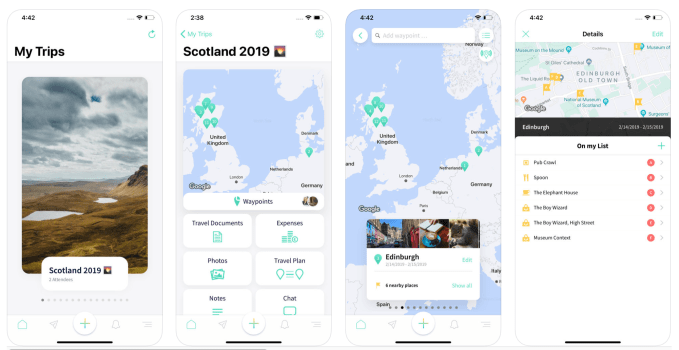
There are plenty of travel apps for researching flights and hotels or generally organizing your trips, but indie German developer Hans Knöchel struggled to find one that could gather all his travel-related information in one place, in addition to allowing a group of friends to collaborate on the trip-planning process. So he built one for himself: Lambus, an app that lets you organize your travel documents, manage expenses, plus collaborate and chat with fellow co-travelers about the trip being planned.

Previously a senior software engineer at Appcelerator in San Jose, Knöchel came up with the idea for Lambus after being on the road a lot himself, and finding existing travel apps lacking.

“When traveling, you either use a manual folder with dozens of pages for all your information — or countless apps to display travel expenses, booking confirmations, and waypoint planning. Alternatives like Google Trips, Sygic and Roadtrippers were always limited to one person and never offered all the features I needed during the trip,” he explains. “This gave me the idea for Lambus: A collaborative platform on which travel groups — in real-time — can display all the properties of the trip in an easy-to-use platform: Waypoints, travel expenses, booking documents, notes, photos and chat,” he says.

The resulting app he refers to as a “Swiss Army Knife” for travel planning.

Like TripIt and others, travel documents can be shared with Lambus by forwarding emails to a unique personal email address. The imported documents — like plane tickets or Airbnb stays will then be made available to all group attendees automatically. This is handy for group trips where often multiple people take turns making the various reservations, but don’t have any easy way to share the information with others beyond forwarding emails or writing down information in a shared online document.

Documents can also be uploaded through an “Import PDF” feature, as an alternative to email sharing. And photos can be added by snapping a picture or importing from the phone’s Camera Roll, as well.

The photo feature is handy for saving those miscellaneous pieces of travel information — like how to access an Airbnb upon arrival, travel directions posted on an event or venue’s website, a helpful online review you saved, and more. It’s also a fast way to import any other information, without having to rely on email or uploads.

In the expenses section, you can keep track of either private or group expenses by entering the amount and what it was for, and, optionally, if it’s been paid.

While largely aimed at group travel because of the collaboration and built-in chat features, the app can be used for solo trips, too.


In testing the app, we found there were a few kinks that still needed to be corrected.

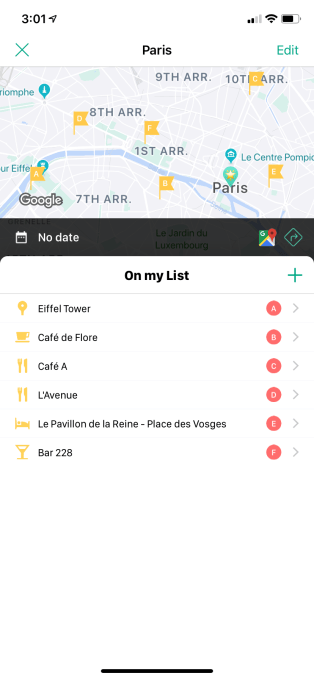
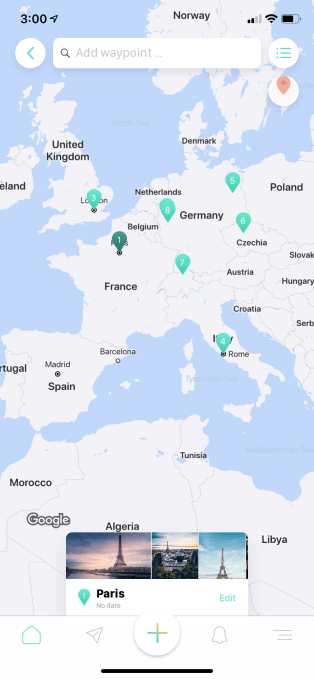
The calendar, for example, didn’t include the days of the week, only the dates — which was unusual. The app also had trouble finding some points of interest — like a convention center, for example, when it was entered directly in the search box. (It came up when we searched for a “nearby place” to an existing waypoint, oddly.) This appears to be a bug.

Some parts of the German app hadn’t been localized to English, either. For instance, when viewing the detail page for a waypoint, the “On My List” section read: “Noch keine Orte in der Nähe geplant.” (Meaning: “No places planned nearby.”) 

More importantly, Lambus didn’t turn imported documents into an easy-to-read itinerary, as TripIt does. The travel plan, instead, included a list of waypoints but not the dates and times, with all the details like flight numbers or hotel reservation numbers. That’s perhaps a deal-breaker in terms of dumping all other travel apps in favor Lambus alone.

Despite its quirks, the concept here is solid and the app is nicely designed with a bright and clean look-and-feel. The app is only a couple of months old, so given a little more time, attention, and a few more releases, it has the potential to become a seriously useful travel tool for group trip planning.

The name, “Lambus,” is an odd choice, we have to also note.

Knöechel says he was searching for a word that was easy to pronounce in many different languages, and settled on this — a domain name he already owned.

While Knöechel is the sole founder, Lambus is a team of seven including mainly university friends, he says. The startup is seed-funded by the Ministry of Economics in Germany (~120k€), and eventually has plans to generate affiliate revenue by offering hotel, flight, Airbnb and activity bookings in-app.

Lambus is live on iOS and Google Play.

Upsie nabs $5M to build a direct-to-consumer warranty service

Warranties for purchased products is a $40 billion annual market. But in in their current form, they are considered by some to be one of the bigger scams in the world of retail because they cost so much and often return too little.

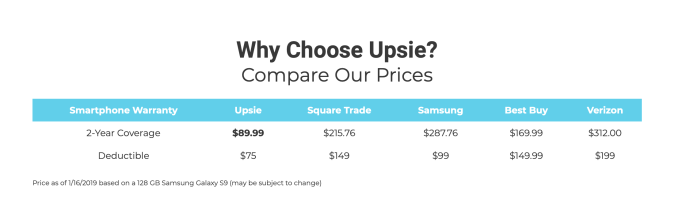
Now there is an alternative emerging. A startup out of Minneapolis, Minnesota, called Upsie has decided to wage war on the old warranty, with more reasonable pricing (typically 70 percent lower than what the retailer offers) and a much more modern approach to selling and managing the warranty.

Its bet is that lower prices, and more flexible options for ordering, tracking and claiming against warranties, will drive more users to its service and take some business away from the retailers that largely dominate the market today. Today it’s announcing that it has raised $5 million led by True Ventures to build out that busines in the US. Techstars Ventures, Matchstick Ventures, Syndicate Fund, M25, and angel investor Marc Belton also participated.

If you’ve ever purchased an expensive consumer electronics product, you’ll know the problem that Upsie is tackling: warranties can cost a lot, and in many cases you’re not sure what you might even be getting out of it. And if you do find yourself in the unfortunate predicament of needing to claim, you may find the process a little less than efficient but hopefully not as bad as this:

“If you buy a product worth $900 dollars, a warranty might cost an extra $130, but that warranty might cost only $10 from the insurance company,” said Clarence Bethea, the CEO and founder of Upsie.

When an expensive purchase like a consumer electronics product breaks down, the buyer needs to pay out big money for repairs or replacements, and that worry drives many of those customers to pay a big sum for the guarantee that someone else will cover those liabilities.
The operative words in that last paragraph are “big sum”: a warranty can represent peace of mind, and sometimes actually help in those cases where something relatively new does break down, but one of the big issues is the mark-up that providers put on a service that preys on the fear of needing it — in some cases a warranty can cost as much as 900 percent more than the policy would cost if it were purchased directly from an insurance provider.

Bethea used to be a consultant to big box retailers and in the work he did, he realised quickly that the retailers were taking advantage of consumers when they were selling warranties on top of products. “Consumers don’t know what the warranties actually cost,” he said. “That’s what pushed me into this.”

Upsie gives consumers the option to purchase warranties up to 60 days after the sale (or 45 for smartphones). The product itself needs a minimum 90-day warranty from the manufacturers themselves, and the Upsie warranty does not kick in until 30 days after its purchased — the idea being that it picks up right after the manufacturer warranty ends.

The warranties can be purchased online or through an app and they apply currently to around 15 different categories and hundreds of electric goods covering areas like computers, wearables, phones, TVs, small and large appliances and outdoor tools. The Upsie app in itself is like your warranty file in your filing cabinet, except much simpler and lighter and less cluttered: it stores receipts, lets you scan sku’s to register the goods and more to make it easier. Then after a user purchases the warranty, it can be managed and claims can be filed by way of Upsie’s app.

The basic idea behind Upsie is reminiscent of the direct-to-consumer brands that have grown in popularity over the last several years.

Just as these have leveraged the web, mobile apps and more recently social media to build direct relationships with consumers, Upsie is also bypassing retailers and hoping that consumers will consider their cheaper alternatives, which in actuality have been negotiated with the same warranty service providers that the retailers use. It currently works with Centricity, and the plan is to expand it to a wider range over time.

Other companies have built businesses in the area of providing warranty services outside of what retailers offer, such as SquareTrade, which was acquired by AllState, and Asurion. Puneet Agarwal, a partner at True Ventures, believes that it stands out.

“Upsie is the only consumer facing brand in the space whereas everyone else is more of a back end provider,” he said. “Their subscriber growth and engagement are tremendous and the end consumer identifies with them. Because of their direct consumer focus, they also offer a level of pricing, convenience, and customer service the industry has not seen.” He added that the “big ambition” is “to make the idea of ‘upsie-ing’ a product as part of the the everyday lexicon of the consumer.”

Bethea said that one of the big early challenges was convincing insurance companies that D2C was a viable idea — which dissipated as insurance companies, like all brands and B2B2C businesses, began to consider the plethora of ways that people are buying goods today, which increasingly extend well outside the realm of just retailers.

The other challenge that is still one that Upsie will continue to work to surmount as it continues growing is convincing consumers to change their behavior. “Initially it was about convincing the industry that this is a market,” he said. “Today it’s awareness and giving consumers another option. ‘I didn’t know I could leave the register and purchase a plan afterwards’ is what we want people to be thinking.”

So far, the results have been pretty positive. Since exiting beta in 2016, Bethea said that the company has grown 300 percent each year. Services are live only in the US, and while it works towards expanding to international markets, it will also be adding auto warranties to its plans next.

Living outside of Silicon Valley as I do, companies that are outliers from the normal pattern that often list the same litany of credentials (including but not limited to grads from Stanford or MIT, possible stint at YC, office in San Francisco, past history at other tech companies), but are still thriving, do tend to catch my eye. Upsie, with its roots in the Midwest and an African American founder (also not very common at the typical SV startup), and tackling something that is fundamentally broken but not flashy, ticks some of those boxes.

Turns out that True sees and wants to seek out more of this, too.

“Great companies are being built everywhere,” said Agarwal. “More and more of the companies we invest in are outside of the Valley or are building teams outside of the Valley and we encourage it. It can be a tremendous competitive advantage both from a talent and cost perspective. We have had great success investing in places like Michigan, Montana, Oregon, Wisconsin, Washington, even recently in Africa, and now in Minnesota with Upsie. I still do see a lot of bias from investors not wanting to invest outside of the Valley. There is no question they will miss out not because of high prices in the Valley but because of the opportunity.”

Mobility startups: apply for a free Startup Alley spot as a TC Top Pick

We’re hunting for bold, boundary-breaking founders of early-stage mobility startups to apply to our TC Top Picks program at Disrupt San Francisco 2019. “Bold and boundary-breaking” pretty much describes the current tech revolution taking place in mobility and transportation — one that Henry Ford and the Wright brothers could never have imagined.

Top Pick designees receive a VIP Disrupt experience. It starts with a free Startup Alley Exhibition package which, among other things, includes a full day exhibiting in Startup Alley. Top Picks attract a lot of media and investor interest, and they also receive invitations to special events at Disrupt SF — like the investor reception.

One special perk lasts long after the show ends. Each Top Pick will be interviewed by one of our TechCrunch editors live on the Showcase Stage, and we promote that interview across all our social media platforms.

Here’s what one co-founder had to say about his TC Top Pick experience.

Israeli-based CAARESYS earned a TC Top Pick designation in the mobility category at Disrupt SF 2018. The startup’s vehicle monitoring system uses low-emission radio frequency radar and contactless biometrics to track the body location and physical state — respiration rate, heart rate and heart-rate variability — of each passenger in the car.

According to Konstantin Berezin, the company’s COO and co-founder, the connections they made as a TC Top Pick at Disrupt SF resulted in projects with three OEM and Tier 1 companies. The company is currently in the integration phase with auto manufacturers to get the systems into cars by 2021.

“We also followed up with a potential customer we met at Disrupt and, as a result of that meeting, we signed a memorandum of understanding to partner on a mutual project,” said Berezin. “I can’t disclose the name just yet, but we’re very excited. Being a TC Top Pick really put us on the map.”

Berezin also enjoyed the Showcase stage interview, which has become a very useful marketing tool for his company.

“The interview was terrific, and TechCrunch did a very professional job shooting and editing the video,” said Berezin. “Sending our video to current and potential customers gives us prestige and a certain cool factor. We love it!”

Our TC Top Picks program won’t cost you a thing to apply or to participate. The application is dead simple. Being selected is not. TechCrunch editors vet the applications and choose up to five outstanding early-stage startups for each of these categories: AI/Machine Learning, Biotech/Healthtech, Blockchain, Fintech, Mobility, Privacy/Security, Retail/eCommerce, Robotics/IoT/Hardware, SaaS and Social Impact & Education.

Only bold, boundary-breaking mobility startups need apply to our TC Top Picks program at Disrupt San Francisco 2019 on October 2-4. Come and show the world your plan to create the future.

While you’re applying to be a TC Top Pick, why not apply to compete in Startup Battlefield, too? Our epic startup pitch competition carries a $100,000 equity-free cash prize.

Is your company interested in sponsoring or exhibiting at Disrupt SF 2019? Contact our sponsorship sales team by filling out this form.

The all-electric Honda e is bringing its side view mirrors inside

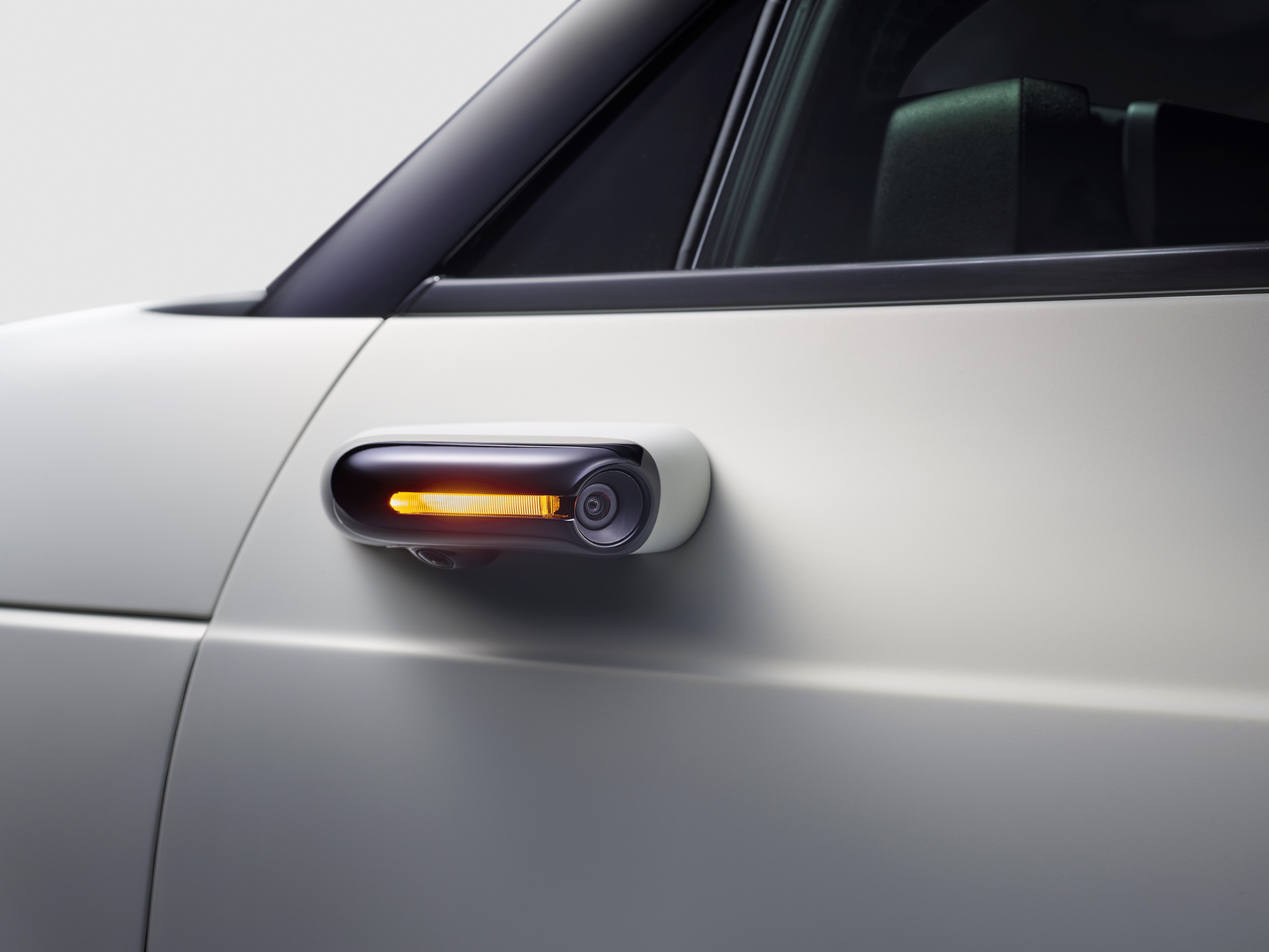
Honda e, the compact electric vehicle that’s coming to market in spring 2020, is bringing its side view mirrors inside. The company confirmed Tuesday that its side camera mirror system, which was on the prototype version, will be a standard feature when the car enters production. 

The side camera mirror system includes two six-inch screens, situated on the left and right sides of the dashboard, provides live images of traffic. Honda argues that the tech reduces aerodynamic drag by 90 percent compared to conventional door mirrors for an overall 3.8 percent improvement for the entire vehicle. This, in turn, can help with the battery’s efficiency and range.

The mirrors also improve visibility, Honda says, adding that the camera unit housings are shaped to prevent water drops on the lens. The lens has a water-repellent coating to prevent residual water build up.

You can check out how it works in the video below.

The driver can choose two views, normal and wide, via the vehicle settings. The two views extends the field of vision and helps reduce blind spots by about 10 percent in normal and about 50 percent when using the wide option, Honda claims.

If the driver, puts the vehicle in reverse, guidelines appear on the side view screens. As lighting conditions change, the brightness levels on the interior displays adjust.

Honda also has confirmed that the pop out door handles will be in the production version.

Honda e Prototype

The automaker has big plans for the Urban EV, officially named the Honda e, and more broadly electric vehicles. The Honda e is expected to have a battery range of more than 124 miles and come equipped with a “fast charge” capability that will provide a 80 percent change in 30 minutes.

Way back in 2017, Honda Motor Co. president and CEO Takahiro Hachigo emphasized that the Urban EV wasn’t some “vision of the distant future.”

Honda plans to bring electrification, which can mean hybrid, plug-in or all-electric, to every new car model launched in Europe. The automaker is aiming for two-thirds of European sales to feature electrified technology by 2025.

The production version of the Honda e will be unveiled later this year.  Customers can make a reservation for priority ordering online in the UK, Germany, France and Norway or register their interest in other European markets on the Honda national websites.

The Looking Glass Pro might be the weirdest all-in-one PC ever

All-in-one PCs have adopted some pretty odd designs over the years, but I’ve never seen one quite like this.

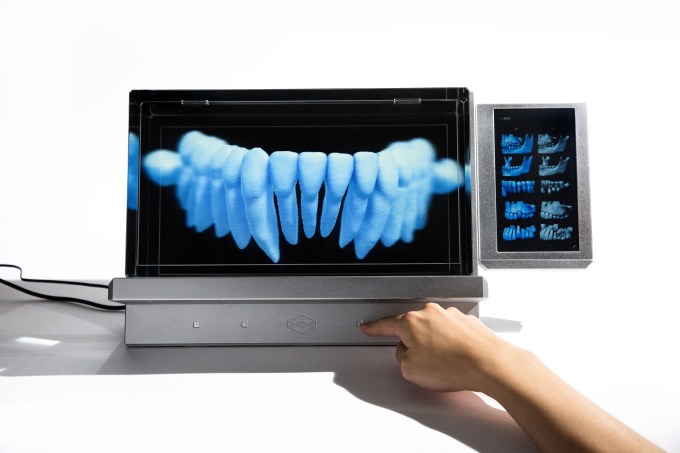
The Looking Glass Pro is an all-in-one gaming PC that’s focused on one thing, visualizing 3D content on its bizarre lenticular display that makes you feel like you’re staring into a glass box filled with pixels. The embedded 4K display renders dozens of potential views and pipes them out as lower-res slices through some bizarre lens wizardry so that users can see the onscreen content in volumetric 60fps 3D without needing glasses.

You can get a better sense of how exactly this looks from a video that the company tweeted out.

https://platform.twitter.com/widgets.js

This isn’t the first product from Brooklyn-based Looking Glass Factory, but it is a culmination of all their weirder efforts to date.

Last year, the company raised nearly $850k in a crowdfunding campaign for its Looking Glass display, focusing the market for the display technology on creators looking to visualize 3D graphics and objects without having to toss on a VR headset. The company has disclosed nearly $14 million in funding.

With the new hardware, the startup is aiming to court some enterprise customers to shove one of these front-and-center on their conference table displays, hoping that the new design can streamline the process of showcasing 3D content. Looking Glass Factory is courting everyone who has ever brought a VR headset to showcase 3D content. The startup argues that their solution showcases glorious 3D but doesn’t require a headset and can showcase multiple views to multiple people at once.


Copyright 2006 Phoebe Cheong, all rights reserved

The hardware is focused on ensuring that you can cue up content and live-render it as users manipulate the content or change views with the onboard touch controls. The Looking Glass Pro integrates an Intel NUC 8 VR mini PC running Windows as well as a 7″ secondary touch panel screen that flips out from the side to make navigating the PC a bit easier, though that process still seems to be a tad janky at the moment.

The whole premise for this thing is weird and cool but also super expensive. The original 15.6″ Looking Glass display was $3,000, this thing is $6,000. The workstation is available for pre-order now and ships in July.