India’s FreshToHome raises $11 million to expand its fish, meat, and vegetable e-commerce platform

Shan Kadavil, who spent early days of his career managing tech support firm Support and then heading India operations of gaming firm Zynga, says he had a calling of sorts when his son was born. Kadavil realized that much of the meat that sells in India is not exactly healthy. The perishables are loaded with chemicals to superficially extend their life by six months, if not more. He wanted to do something better.

Fast forward four years, Kadavil said today that FreshToHome, his new e-commerce startup that delivers “100 percent” pure and fresh fish, chicken, and other kinds of meat, has raised $11 million in Series A funding. The startup has raised $13 million to date.

The round was led by CE Ventures, with participation from Das Capital, Kortschak Investments, TTCER Partners, Al-Nasser Holdings, M&S Partners and other Asia and Valley based Investors. Some of the backers of FreshToHome include Rajan Anandan, the former head of Google Southeast Asia, David Krane, CEO of GV, and Mark Pincus, chairman of Zynga.

FreshToHome has already courted 400,000 customers across four cities — Bengaluru, NCR (Delhi, Gurgaon, Noida, Faridabad, Ghaziabad & Greater Noida), Chennai and Kerala (Kochi, Trivandrum, Calicut & Trichur) — in India. On the backend, the startup does business with 4,500 fishermen across 125 coasts.

In an interview with TechCrunch, Kadavil said the startup is trying to “Uber-ize farmers and fishmen in India. We are giving them an app — around which we have a US patent — for commodity exchange. What farmers and fishermen do is they bid with us (as mandated by local laws) electronically using the app.” By dealing directly with the source, the startup is eliminating as many as half a dozen middlemen to cut costs.

The startup has built its own supply chain network. “We have got a 1,000 people, 100 trucks, and 40 collection points.” Kadavil claimed that FreshToHome has already become the largest e-commerce platform for meat with $1.73 million in GMV sales each month.

If this all sounds well strategized, it is because of the people who are running the show. Kadavil founded the FreshToHome with Matthew Joseph, a veteran in the industry who has dealt with fish export for more than 30 years. Joseph started India’s first e-commerce venture in fish and meat called SeaToHome in 2012.

FreshToHome has also emerged as a micro-VC to farmers where it is doing corporate farming. In such model, FreshToHome guides farmers to use the latest technologies to produce certain kind of fish. As of today, the startup is seeing 60,000 kg (132,227 pound) of production each month.

FreshToHome will use the fresh capital to expand its supply chain network, connect with as many as 5,500 new farmers, and start delivering vegetables. It already delivers vegetables in Bengaluru. Kadavil said the startup will also expand to two more cities — Mumbai and Pune.

FreshToHome will compete with a handful of startups, including Licious, which has raised more than $35 million to date, ZappFresh, and BigBasket, which just earlier this month raised $150 million. The cold-chain market of India is estimated to grow to $37 billion in next five years.

In a prepared statement, Tushar Singhvi, Director of CE Ventures said, “The Meat and Seafood segment in India is pegged to be a 50 billion dollar market, but we have to keep in mind that it’s a highly fragmented industry. FreshToHome.com is not only trying to streamline the industry, they’re also using technology to revolutionize the way the industry functions by disintermediating the supply chain, eliminating the middleman and working directly with the fishermen and farmers in a market place model, to make fresh and chemical free food accessible to the masses at large.”
Qualcomm and Lenovo reveal the first Snapdragon-powered 5G PC

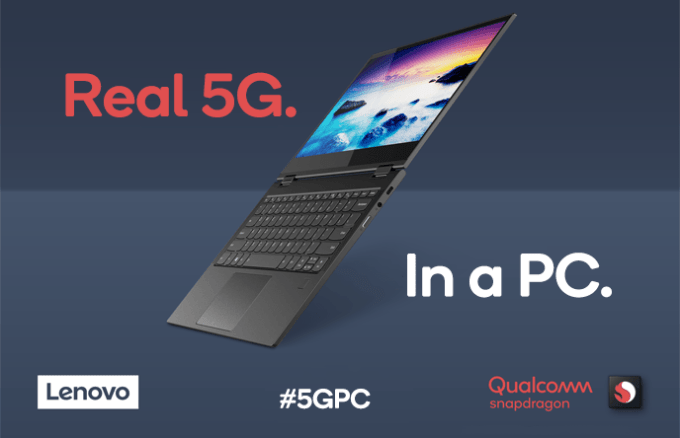
Qualcomm announced during its Computex press conference today that it will launch the first Snapdragon-powered 5G PC with Lenovo. The two companies describe the PC, called Project Limitless, as “the world’s first 7nm platform purpose-built for PCs that offers 5G connectivity.”

Qualcomm and Lenovo unveil the first Snapdragon-powered 5G PC at Computex in Taipei

Qualcomm and Lenovo unveil the first Snapdragon-powered 5G PC at Computex in Taipei

The laptop runs on Qualcomm’s Snapdragon 8cx Compute Platform, which is designed to support both 5G and 4G connections, combines the Qualcomm Adreno 680 GPU with the Qualcomm Kryo 495 CPU and has a battery that Qualcomm claims can last for several days per charge. The platform uses the Snapdragon X55 5G modem, which has download speeds of up to 2.5 Gbps.

Project Limitless’ release date and pricing haven’t been revealed yet.

Final week to sign up and save €200 on Disrupt Berlin passes

Planning to join us and more than 1,200 other startuppers at Disrupt Berlin 2019 on 11-12 December? That’s great news, but this is even better; you can save €200 off the super-early-bird ticket price if you sign up for our mailing list.

Here’s the catch: You must sign up before registration officially opens, and that happens in just one week. Once you join, we’ll email you a discount code to use when it’s time to purchase your passes. That means you can get an Innovator pass to Disrupt Berlin for as low as €245 + VAT. Or if you are a founder, you can get one as low as €145 + VAT.

You’ll enjoy everything a Disrupt experience offers even more with €200 still resting comfortably in your wallet. That includes two full days of programming across all the Disrupt stages — speakers, panelists, demos, workshops and Q&A Sessions.

We’re building this year’s lineup of leading founders, technologists, investors and tech icons, and we’ll announce who’s coming in the weeks running up to Disrupt. Another good reason to join our mailing list — you’ll be among the first to know all the cool stuff!

If you’re keen on networking, then CrunchMatch, our free business match-matching platform, will make connecting with the right people so much easier. No more needle in a haystack, CrunchMatch lets you choose who you want to meet based on your specific criteria, goals and interests.

Don’t miss Startup Alley, our exhibition floor and an all-around oasis of opportunity. Hundreds of creative early-stage startups demo their products, platforms and services, and it’s the place to make connections that could change the course of your business. Startup Alley is also home to our TC Top Picks — a group of innovative startups chosen by TechCrunch editors.

And no one ever wants to miss the Startup Battlefield. Our epic pitch-off features exceptional startups vying for $50,000 cash, the Disrupt cup and a boatload of life-altering media and investor exposure. The Battlefield has launched more than 850 companies — including Vurb, Dropbox, Mint and Yammer to name just a few. Those alumni companies have collectively raised more than $8 billion in funding and produced 109 exits. Who will join them?

Want to participate in the Startup Battlefield and the TC Top Picks program? Applications will be open later on this summer, but you can get a head start by starting your application at apply.techcrunch.com.

Registration to Disrupt Berlin 2019 opens in one week, and once that happens, the €200-off deal disappears. Don’t wait — sign up for our mailing list and save.

Is your company interested in sponsoring or exhibiting at Disrupt Berlin 2019? Contact our sponsorship sales team by filling out this form.

TikTok parent Bytedance is reportedly working on its own smartphone

It’s been a busy couple of months for Bytedance, one of the world’s most valuable startups and the operator of globally popular video app TikTok. The Beijing-based company has continued to grow its list of apps to include the likes of work collaboration tool Lark, an instant messenger called Feiliao as well as a music streaming app, and now it appears to be taking a bold step into the hardware realm.

Bytedance is planning to develop its own smartphone, the Financial Times reported (paywalled) citing two sources. A spokesperson from Bytedance declined to comment on the matter, but the rumor is hardly a surprise as smartphone pre-installs have long been a popular way for Chinese internet companies to ramp up user sizes.

There’s also urgency from Bytedance to carve out more user acquisition channels. After a few years of frantic growth, Bytedance failed to hit its revenue target for the first time last year amid slowing ad spending in China, according to a report by Bloomberg.

Some of Bytedance’s predecessors include selfie app maker Meitu, which builds smartphones pre-loaded with its suite of photo editors and recently sold this segment to Xiaomi as the latter tries to capture more female users and newcomers, including Snow-owned camera app B612 and Bytedance’s Faceu, close on Meitu’s heels.

Others have taken a less asset-heavy approach in the early days of the Chinese internet. Baidu, Alibaba and Tencent — known collectively as the BAT for their supremacy in China’s tech world — all worked on their own custom Android ROMs, which come with extra features compared to a stock ROM pre-installed by a phone manufacturer.

Alibaba’s ambition also manifested in a $590 million investment in Meizu in 2016 that saw the eommerce giant take up the challenge to develop a tailored operating system for the handset maker. More recently in March, WeChat owner Tencent teamed up with gaming smartphone maker Razor on a number of initiatives that cover hardware.

There were early clues to Bytedance’s smartphone endeavor. The company confirmed in January that it has acquired certain patents and some employees from phone maker Smartisan, although it said at the time the deal was done to “explore the education business.” That was a curious statement as Smartisan’s business has little to do with education. At the very least, the tie-up confers hardware development capability on the mobile internet upstart.

Indeed, a source told the Financial Times that Bytedance founder Zhang Yiming “has long dreamt of a phone with Bytedance apps pre-installed.” Nonetheless, this is tipped to be an uphill battle, at least in China where smartphone sales are cooling and competition intensifies between entrenched players like Huawei, Vivo, Oppo, Xiaomi and Apple.

Bytedance has built a leg up away from home, thanks to its empire of mobile apps. The company is one of the few — and many would argue the first — Chinese internet startups that manage to gain a meaningful foothold globally. TikTok has consistently topped the worldwide app ranking in the last handful of months, though it’s also encountered a few stumbling blocks in some of its larger markets.

In the United States, the Federal Trade Commission imposed a fined on TikTok for violating children’s privacy protection law. The government of India, which has driven much of TikTok’s recent growth, also took issue with the app to temporarily ban it on account of illegal content.

While the US market may be difficult to penetrate given Washington’s concerns around the security threat that Chinese companies may present, India is now crowded with Chinese brands. A research done by Counterpoint found that in the first quarter, Chinese manufacturers led by Xiaomi controlled a whopping 66 percent of India’s smartphone market. That means Bytedance, alongside its potential ally Smartisan, is not only up against local rivals in India but also the familiar faces from its home market.

Nvidia announces its Studio line of laptops to compete against the MacBook Pro

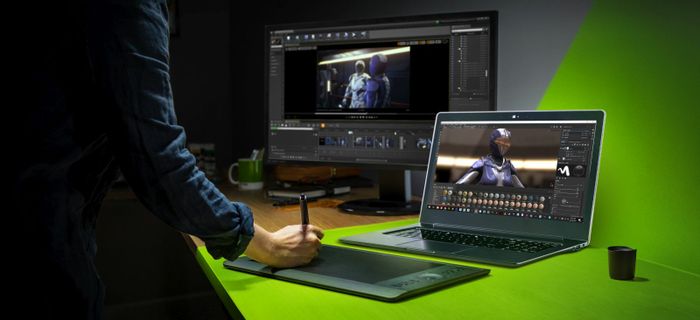
During its press conference in Taipei a day before Computex starts, Nvidia announced a new line of laptops that will run its RTX graphics processing units, as well as a new software platform called Studio, with SDKs and drivers to make graphics rendering and other tasks faster. The units are targeted to creative professionals, like video editors, photographers and graphic designers, and meant to compete with the 15-inch MacBook Pro.

One of Nvidia's new Studio laptops, meant to compete against the MacBook Pro

One of Nvidia’s new Studio laptops, meant to compete against the MacBook Pro

The series will include seventeen laptops made by Nvidia’s manufacturing partners (including Acer, ASUS, Dell, Gigabyte, HP, MSI and Razer). The laptops will begin retailing in June, with prices starting at $1,599.

The 17 laptops will be equipped with Quadro RTX 5000, 4000 or 3000 GPUs or GeForce RTX 2080, 2070 and 2060 GPUs. Nvidia claims they can perform up to seven times faster than the MacBook Pro. Studio laptops with Quadro RTX 5000 GPUs will have 16GB of graphics memory, and some of the devices will also have 4K displays and Nvidia’s Max-Q tech for building thin and lightweight laptops.

The Nvidia Studio suite includes the CUDA-X AI platform for automating tasks like color matching videos or tagging photos.

Fiat Chrysler proposes 50-50 merger with Renault

Fiat Chrysler Automobiles has proposed merging its business with Renault that, if accepted, would create the third largest global automaker with 8.7 million in annual vehicle sales.

FCA delivered Monday a non-binding letter to Renault’s board that proposes combining the business as a 50-50 merger. FCA’s proposal illustrates the growing desire among automakers to consolidate, or form partnerships, in an environment of increasing regulatory pressure, declining sales and rising costs associated with next-generation technologies such as autonomous vehicle technology.

Under the proposal, the combined businesses would be split equally between FCA and Renault shareholders. The board would be a combined entity of 11 members, FCA said. The majority would be independent. FCa and Renault would get equal represent with four members each as well as one nominee from Nissan. The parent company would be listed on the Borsa Italiana in Milan, Euronext in Paris and the New York Stock Exchange.

French automaker Renault has an alliance with Nissan Motor. The two companies, whose relationship has become stressed in the fallout over the arrest of former Renault-Nissan Alliance CEO Carlos Ghosn and subsequent power struggle, share vehicle parts and collaborate on technology. Renault owns 43.4 percent of Nissan. Nissan owns 15 percent of Renault.

Fiat Chrysler is best known in U.S. for the company behind the Jeep and Ram trucks. But its business is far larger. Fiat, which has a market value of $20 billion, is also one of Italy’s oldest companies and owns brands like Alfa Romeo, Fiat, Lancia, and Maserati.

Fiat acquired a stake in Chrysler in 2009. The FCA people know today — which employs nearly 200,000 people — was created when the companies merged in 2014.

The proposed merger would result in cost savings. However, FCA insists it would not come from plant closures. No factories would close as a result of the merger, FCA said in its proposal. In a release describing the proposal FCA states:

The benefits of the proposed transaction are not predicated on plant closures, but would be achieved through more capital efficient investment in common global vehicle platforms, architectures, powertrains and technologies.

The combined companies would realize more than 5 billion euros in estimated annual run rate savings by collaborating on products and in certain regions, particularly when it comes to the development and commercialize of new technologies. FCA noted that these areas included connectivity, electrification and autonomous driving.

FCA argued that is has a history of “successfully combining OEMs with disparate cultures to create strong leadership teams and organizations dedicated to a single purpose.”

Those cost savings will be crucial for both companies if there’s a downturn in sales — a reality that other automakers like GM and Ford are already preparing for. It would also allow the companies to pursue technologies such as advanced driver assistance systems and autonomous vehicles.

FCA, which operates 46 research and development centers, has invested in advanced driver assistance systems like its highway assist feature offered in its Maserati brand. It has also relied on partnerships such as the one with self-driving vehicle company Waymo .

Last year, the company announced an expanded partnership with Waymo that will add up to 62,000 more Chrysler  Pacifica minivans to Waymo’s self-driving car fleet. The two companies are also working on ways to license Waymo’s self-driving car technology in order to deploy the tech in cars for consumers.

AMD unveils the 12-core Ryzen 9 3900X, at half the price of Intel’s competing Core i9 9920X chipset

AMD CEO Lisa Su gave the Computex keynote in Taipei today, the first time the company has been invited to do so (the event officially starts tomorrow). During the presentation, AMD unveiled news about its chips and graphics processors that will increase pressure on competitors Intel and Nvidia, both in terms of pricing and performance.

Chips

All new third-generation Ryzen CPUs, the first with 7-nanometer desktop chips, will go on sale on July 7. The showstopper of Su’s keynote was the announcement of AMD’s 12-core, 24-thread Ryzen 9 3900x chip, the flagship of its third-generation Ryzen family. It will retail starting at $499, half the price of Intel’s competing Core i9 9920X chipset, which is priced at $1,189 and up.

The 3900x has 4.6 Ghz boost speed and 70 MB of total cache and uses 105 watts of thermal design power (versus the i9 9920x’s 165 watts), making it more efficient. AMD says that in a Blender demo against Intel i9-9920x, the 3900x finished about 18 percent more quickly.

https://platform.twitter.com/widgets.js

Starting prices for other chips in the family are $199 for the 6-core, 12-thread 3600; $329 for the 8-core, 16-thread Ryzen 3700x (with 4.4 Ghz boost, 36 MB of total cache and a 65 watt TDP); and $399 for the 8-core, 16-thread Ryzen 3800X (4.5 Ghz, 32MB cache, 105w).

GPUs

AMD also revealed that its first Navi graphics processor units will be the Radeon RX 5000 series. Pricing is being closely watched because it may pressure Nvidia to bring down prices on competing products. AMD announced that the GPUs will be available in July, but more details, including pricing, performance and new features, won’t be announced until E3 next month in Los Angeles.

https://platform.twitter.com/widgets.js

Data processors

AMD announced that its EPYC Rome data center processors, first demoed at CES in January, will launch next quarter, one quarter earlier than previously anticipated, to compete with Intel’s Cascade Lake. AMD says that during a benchmark test, EPYC Rome performed twice as fast as Cascade Lake.

https://platform.twitter.com/widgets.js

Arm announces its new premium CPU and GPU designs

Arm, the company that designs the basic chip architecture for most of the world’s smartphones, today announced the launch of its next suite of designs for premium phones. It’ll be a while before you’ll see the first phones that use chips based on this design, but typically we see the first actual chips before the end of the year. With this launch, the company is announcing the Cortex-A77 CPU, the Mali-G77 GPU and a more energy efficient and powerful machine learning processor.

Given recent trends, it’s no surprise that the new Cortex-A77 doesn’t only focus on overall performance improvements, though the company’s promise of 20% IPC performance improvement over the last generation is nothing to sneer at. Thanks to a combination of hardware and software optimizations, the Cortex-A77 now promises significantly better machine learning performance, too.

Why focus on that when the company also offers a machine learning processor? Arm argues that most smartphones today don’t use a dedicated neural processor. Indeed, the company argues that 85 percent of smartphones today run machine learning workloads with only a CPU or a CPU+GPU combo. And even when an accelerator is available, the CPU has to hand that over to the accelerator, no matter whether that’s a GPU or a dedicated machine learning chip.

Like with every new generation of Arm CPUs, the Cortex A77 also promises to be more power efficient and offer better raw processing performance. Indeed, Arm says that it has been able to improve performance by 4x since 2013.

Another area Arm is betting on is mobile gaming — and by extension, mobile VR and AR experiences. The new Mail-G77 GPU architecture is the first one based on the company’s Valhall GPU design and promises a 1.4x performance improvement over the G76. It’s also 30 percent more energy efficient and — and I’m guessing you can spot a theme here — 60% faster at running machine learning inference and neural net workloads.

For the machine learning processor, Arm notes that it already offers Project Trillium, its heterogeneous machine learning compute platform that runs in combination with the company’s CPUs. Since announcing Trillium last year, the company has managed to bring up energy efficiency by 2x and scaled performance up to 8 cores and 32 TOP/s.

“Every new smartphone experience begins with more hardware performance and features to enable developers to unleash further software innovation,” the company notes in today’s announcement. “For developers, the CPU is more critical than ever as it not only handles general-compute tasks as well as much of the device’s ML compute which must scale beyond today’s limits. The same holds true for more immersive untethered AR/VR applications, and HD gaming on the go.”

How games conquered the movies

We used to think that as video games matured, as a medium, they would become more like Hollywood, becoming more focused on character development, plot reversals, and tight, suspense-driven narratives, rather than action set pieces alternating with cinematic cut scenes. Hoo boy, were we wrong. Instead the exact inverse has happened. Action movies have become more like video games. And you know what, this is no bad thing.

I thought of this while watching John Wick 3 last night. (Which I loved, as I did 1 and 2.) It’s not just that its ballet of bullets — especially the one with the dogs — are so like video games, in both structure and form, that they seem to have been practically been torn from a controller; you can practically see health bars and Stun markets hovering over the heads of the characters.

It’s also that the series’s primary costars, after Keanu — with apologies to Halle Berry and Ian McShane — is not any other individual character, but the world of John Wick, the Continental, and the High Table. Worldbuilding has long been a first-class citizen in video and tabletop role-playing games; now it has graduated to movies as well.

Speaking of role-playing games, ensemble-cast movies are more and more like them as well. Consider the Fast and Furious movies, or Game of Thrones. Each has a core group who are clearly the “player characters,” as well as disposable villains and extras who are “NPCs.” Each starts with the characters at a relatively low level of skill/power, and over the course of the series grow to worldshaking might.

In The Fast & The Furious Vin Diesel’s character is a really good driver and mechanic; by the time we get to The Fate of The Furious he’s a superspy capable of singlehandedly opposing entire intelligence agencies. In Game of Thrones we watch Arya become a high-level assassin before our eyes, and Jon Snow happens to become one of the deadliest swordsmen in all of Westeros, casually dispatching dozens of enemies, often several simultaneously, while rarely even breaking a sweat, because — well, there’s no real reason for it, other than that’s what happens to player characters, isn’t it? They level up and become the best.

That didn’t use to be the case. Jason Bourne and James Bond were superspies, but they didn’t really get better over the course of their series, or become so ridiculously puissant that they can casually take out a dozen heavily armed/armored expert fighters in thirty seconds, singlehandedly, as Shaw does in the trailer of the new Fast & Furious movie. Most of Jason Bourne’s action sequences are escapes; most of John Wick’s are hunts. And of course “one hunting a horde” has been the basic mode of first-person shooters since long before Doom.

Does the introduction of these new tropes / styles / narrative conceits make things worse? Well — not necessarily. The Bourne series is a lot grittier, in terms of emotional resonance and suspense, than the John Wick series, but the latter is far more stylish, semiotically rich, and immersive. I love them both about equally. It would be a shame if the only kind of action movie we ever saw from here on in was the stylized un/hyperreality of John Wick — but similarly it would be a shame if Hollywood had never made those movies on the grounds they were too brutally unrealistic.

Ultimately, video games have expanded Hollywood’s possibility space, and to my mind that’s always a good thing. Is it a universal rule that when technology introduces a new medium of storytelling, old media soon adopts the new medium’s styles and tropes? Did plays become more like novels after Don Quixote? Did radio become more like television after TV was introduced? And if/when we figure out the most compelling structure(s) for AR/VR storytelling, will video games become more like that? It seems fairly inevitable to me that the answer is yes.

National security journalism just became a national security threat

Six years ago, British intelligence officers walked into the offices of The Guardian newspaper in London and demanded its staff destroy computers they believed stored highly classified documents leaked by NSA whistleblower Edward Snowden.

In the basement of the newspaper’s officers, editors used angle-grinders and drills to destroy the computers in an effort to render its data unusable after “weeks of tense negotiations” between the newspaper and the British government, itself under pressure from U.S. authorities — a close intelligence sharing partner — to return the leaked top secret documents. Despite the fact that there were several copies of the NSA documents — including in the U.S — the newspaper faced a threat of punitive legal action or prosecution if they declined.

“The only way of protecting the Guardian’s team was for the paper to destroy its own computers,” said Luke Harding, a Guardian journalist.

In the years of citing this case in why press freedoms are so important, the Americans always respond: “Wait, that happened?”

That would never happen in the U.S. It’s not uncommon for national security reporters to obtain classified information or rely on government employees providing secret information, particularly to uncover abuses of power or the law. As the only named profession in the U.S. constitution, the U.S. press is a shining example of holding the powers to account no matter what.

But the most recent charges laid against Julian Assange has put those press freedoms under threat.

Julian Assange, widely regarded as a liar, a proponent of misinformation, and loathed by many for generally being a shitbag, has been defended by some of his biggest critics since the latest round of charges were announced against him.

Assange last week became the first person to be charged under the Espionage Act, an act of law that predates the Great Depression by an entire decade, and used to prosecute foreign spies and government whistleblowers, for publishing classified information.

“This is exactly what national security reporters and their news publications often ask government officials or contractors to do,” said Jack Goldsmith, a professor at Harvard Law School and former government lawyer, in a post on Lawfare.

In fact, that’s exactly what I’ve done. In 2017, following the fifth security lapse at NSA in as many years, I obtained and published classified documents relating to the government’s Ragtime program and the Red Disk intelligence sharing platform. While it’s not unheard of for reporters to face government investigations for doing their jobs, not a single journalist has been charged for obtaining or publishing classified information in the past hundred years since the Espionage Act became law.

It’s no surprise that the indictment has rattled news organizations and reporters, which too have published classified information like off-grid torture sites and global government surveillance provided by anonymous sources and whistleblowers, for fear they may also suffer a similar prosecution.

Washington Post editor Marty Baron said in a statement: “Dating as far back as the Pentagon Papers case and beyond, journalists have been receiving and reporting on information that the government deemed classified. Wrongdoing and abuse of power were exposed. With the new indictment of Julian Assange, the government is advancing a legal argument that places such important work in jeopardy and undermines the very purpose of the First Amendment.”

Assange, through WikiLeaks, published numerous troves of highly classified diplomatic cables and military videos showing the killing of civilians including a Reuters camera crew, provided by former Army intelligence analyst Chelsea Manning, who was herself charged under the act and imprisoned before her sentence was later commuted. The government’s latest indictment accused Assange of publishing “unredacted names of human sources,” which “risked serious harm to United States national security.”

Some of Assange’s most vocal critics have said the U.S. is prosecuting Assange for “the last good thing he did”. Since his publications, Assange has sullied his own name and reputation, not least by working with Russia to undermine Hillary Clinton’s presidential campaign by releasing embarrassing stolen emails.

The Justice Department said Assange is “no journalist.” But the First Amendment, which protects freedom of speech and press freedoms, doesn’t distinguish between whether someone’s a journalist or not.

“The First Amendment gives journalists no special rights,” says national security lawyer Elizabeth Goitein. in a Washington Post op-ed. “In prohibiting abridgments of ‘the freedom of speech, or of the press,’ it gives equal protection to those who speak, those who write, those who report, and those who publish.”

In other words, it doesn’t matter whether Assange is a journalist or not.

Under U.S. law, with which he’s charged, all — regardless of whether a person is a reporter or not — are protected by the same freedoms. With a successful prosecution of Assange, there’s nothing stopping the government from laying charges against any other American — journalist or otherwise — for receiving and publishing classified information.

“This is not about Julian Assange,” said Sen. Ron Wyden, a prominent lawmaker and member of the Senate Intelligence Committee. “This is about the use of the Espionage Act to charge a recipient and publisher of classified information.”

“Assange’s case could set a dangerous precedent with regard to the kinds of activities that the First Amendment does not protect — a precedent that could chill even the most careful, skilled professional journalists from pursuing stories involving national security secrets,” said Steve Vladeck, a professor at the University of Texas School of Law, in an op-ed.

The Washington Post reported Friday that the Obama administration considered bringing charges against Assange years ago but was concerned that the charges would prosecute conduct “too similar” to that of reporters at established news organizations.

But now that the Trump administration has brought charges against Assange, journalists once branded by the president the “enemy of the people” could soon be treated as enemies of the state.