SpaceX reveals more Starlink info after launch of first 60 satellites

Last night’s successful Starlink launch was a big one for SpaceX — its heaviest payload ever, weighed down by 60 communications satellites that will eventually be part of a single constellation providing internet to the globe. That’s the plan, anyway — and the company pulled the curtain back a bit more after launch, revealing a few more details about the birds it just put in the air.

SpaceX and CEO Elon Musk have been extremely tight-lipped about the Starlink satellites, only dropping a few hints here and there before the launch. We know, for instance, that each satellite weighs about 500 pounds, and are a flat-panel design that maximized the amount that can fit in each payload. The launch media kit also described a “Startracker” navigation system that would allow the satellites to locate themselves and orbital debris with precision.

At the fresh new Starlink website, however, a few new details have appeared, alongside some images that provide the clearest look yet (renders, not photographs, but still) of the satellites that will soon number thousands in our skies.

In the CG representation of how the satellites will work, you get a general sense of it:

Thousands of satellites will move along their orbits simultaneously, each beaming internet to and from the surface in a given area. It’s still not clear exactly how big an area each satellite will cover, or how much redundancy will be required. But the image gives you the general idea.

The signal comes from and goes to a set of four “phased array” radio antennas. This compact, flat type of antenna can transmit in multiple directions and frequencies without moving like you see big radar dishes do. There are costs as well, but it’s a no-brainer for satellites that need to be small and only need to transmit in one general direction — down.
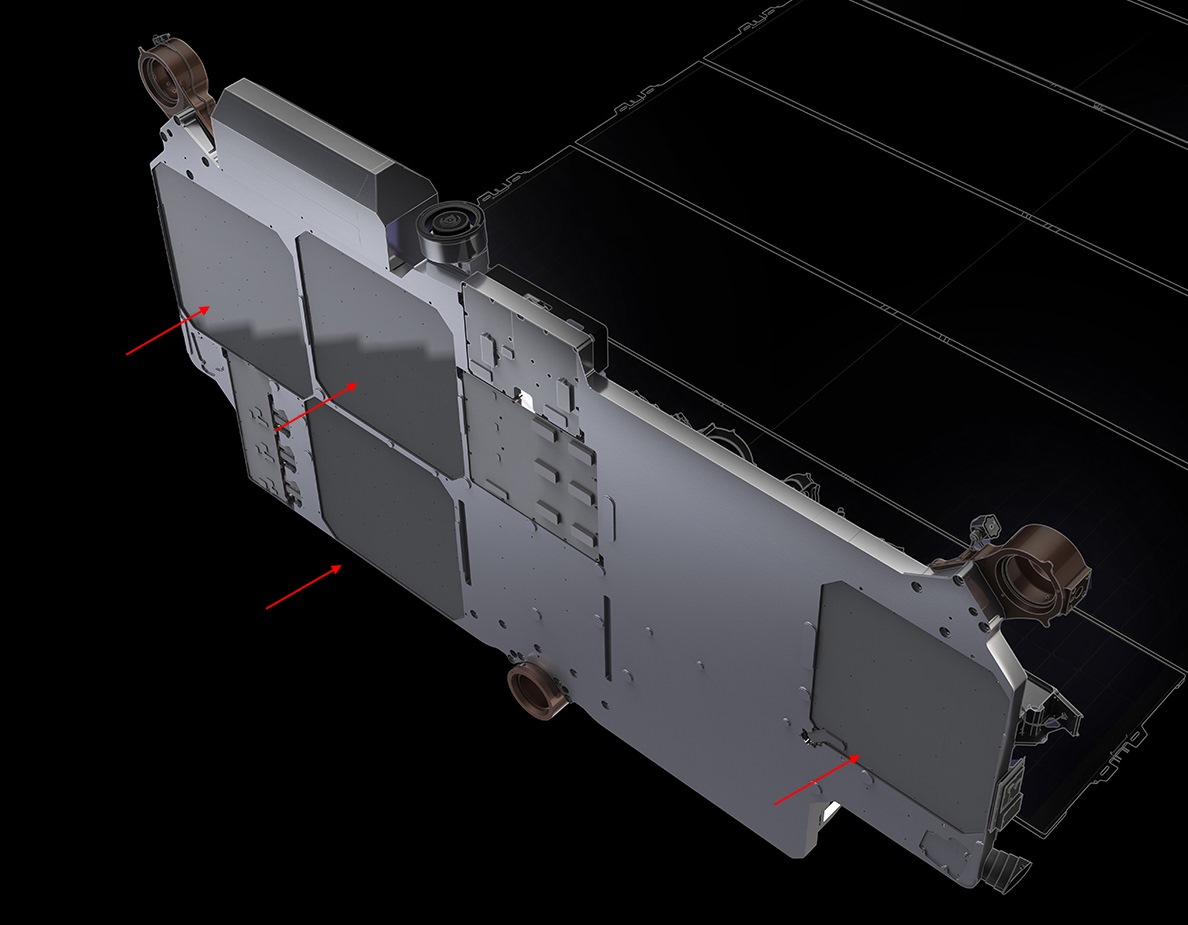
There’s only a single solar array, which unfolds upwards like a map (and looks pretty much like you’d expect — hence no image here). The merits of having only one are mainly related to simplicity and cost — having two gives you more power and redundancy if one fails. But if you’re going to make a few thousand of these things and replace them every couple years, it probably doesn’t matter too much. Solar arrays are reliable standard parts now.

The krypton-powered ion thruster sounds like science fiction, but ion thrusters have actually been around for decades. They use a charge difference to shoot ions — charged molecules — out in a specific direction, imparting force in the opposite direction. Kind of like a tiny electric pea shooter that, in microgravity, pushes the person back with the momentum of the pea.
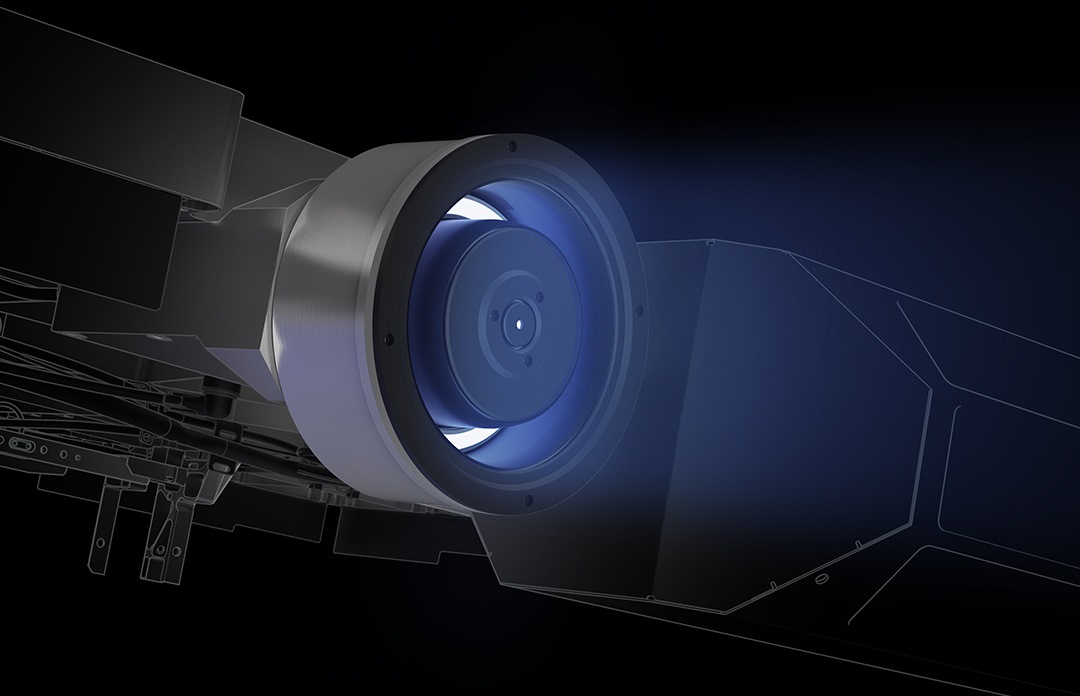
To do this it needs propellant — usually xenon, which has several (rather difficult to explain) properties that make it useful for these purposes. Krypton is the next Noble gas up the list in the table, and is similar in some ways but easier to get. Again, if you’re deploying thousands of ion engines — so far only a handful have actually flown — you want to minimize costs and exotic materials.
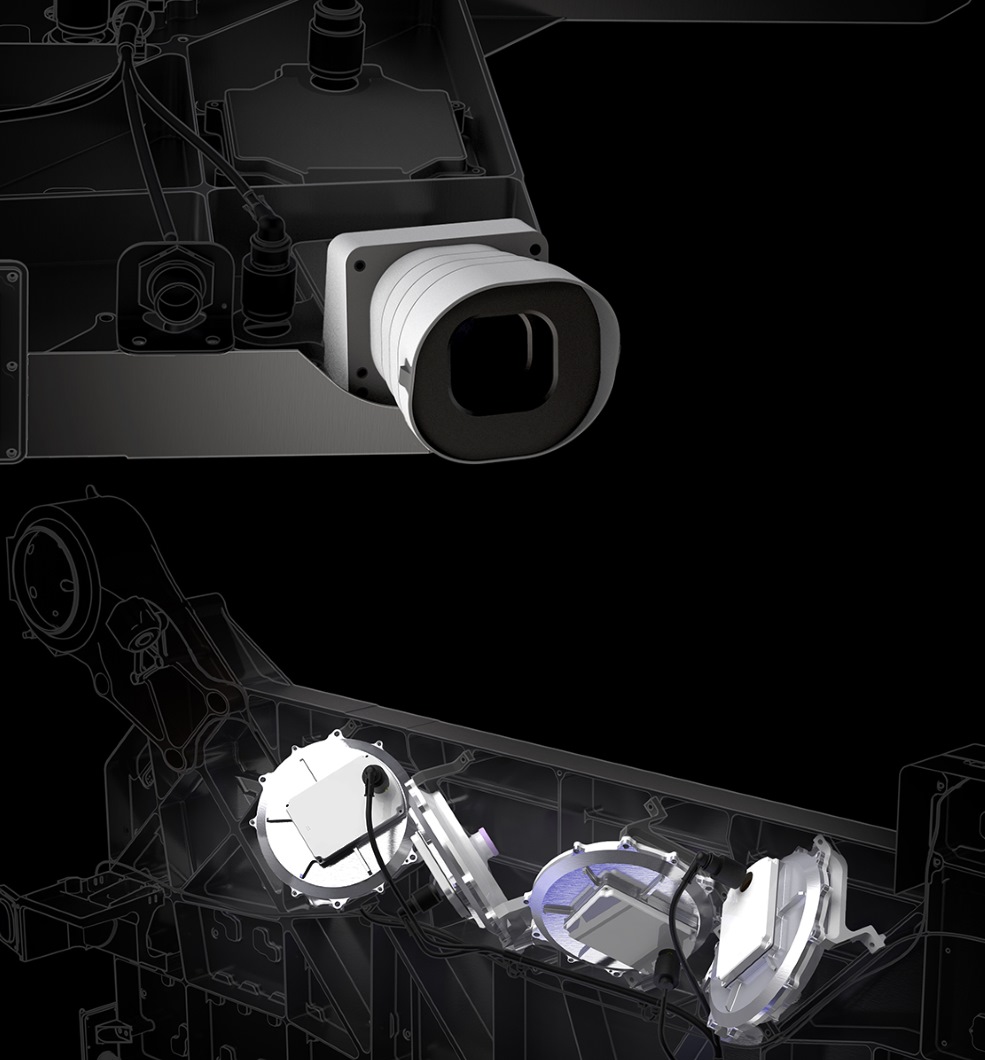
Lastly there is the Star Tracker and collision avoidance system. This isn’t very well explained by SpaceX, so we can only surmise based on what we see. The star tracker tells each satellite its attitude, or orientation in space — presumably by looking at the stars and comparing that with known variables like time of day on Earth and so on. This ties in with collision avoidance, which uses the government’s database of known space debris and can adjust course to avoid it.

How? The image on the Starlink site shows four discs at perpendicular orientations. This suggests they’re reaction wheels, which store kinetic energy and can be spun up or slowed down to impart that force on the craft, turning it as desired. Very clever little devices actually and quite common in satellites. These would control the attitude and the thruster would give a little impulse, and the debris is avoided. The satellite can return to normal orbit shortly thereafter.

We still don’t know a lot about the Starlink system. For instance, what do its ground stations look like? Unlike Ubiquitilink, you can’t receive a Starlink signal directly on your phone. So you’ll need a receiver, which Musk has said in the past is about the size of a pizza box. But small, large, or extra large? Where can it be mounted, and how much does it cost?

The questions of interconnection are also a mystery. Say a Starlink user wants to visit a website hosted in Croatia. Does the signal go up to Starlink, between satellites, and down to the nearest base station? Does it go down at a big interconnect point on the backbone serving that region? Does it go up and then come down 20 few miles from your house at the place where fiber connects to the local backbone? It may not matter much to ordinary users, but for big services — think Netflix — it could be very important.

And lastly, how much does it cost? SpaceX wants to make this competitive with terrestrial broadband, which is a little hard to believe considering the growth of fiber, but also not that hard to believe because of telecoms dragging their heels getting to rural areas still using DSL. Out there, Starlink might be a godsend, while in big cities it might be superfluous.

Chances are won’t know for a long time. The 60 satellites up there right now are only the very first wave, and don’t comprise anything more than a test bed for future services. Starlink will have to prove these things work as planned, and then send up several hundred more before it can offer even the most rudimentary service. Of course, that is the plan, and might even be accomplished by the end of the year. In the meantime I’ve asked SpaceX for more details and will update this post if I hear back.

CFIUS Cometh: What this Obscure Agency Does and Why It Matters to Your Fund or Startup

On January 12, 2016, Grindr announced it had sold a 60% controlling stake in the company to Beijing Kunlun Tech, a Chinese gaming firm, valuing the company at $155 million. Champagne bottles were surely popped at the small-ish firm.

Though not at a unicorn-level valuation, the 9-figure exit was still respectable and signaled a bright future for the gay hookup app. Indeed, two years later, Kunlun bought the rest of the firm at more than double the valuation and was planning a public offering for Grindr.

On March 27, 2019, it all fell apart. Kunlun was putting Grindr up for sale instead.

What went wrong? It wasn’t that Grindr’s business ground to a halt. By all accounts, its business seems to actually be growing. The problem was that Kunlun owning Grindr was viewed as a threat to national security. Consequently, CFIUS, or the Committee for Foreign Investment in the United States, stepped in to block the transaction.

So what changed? CFIUS was expanded by FIRRMA, or the Foreign Risk Review Modernization Act, in late 2018, which gave it massive new power and scale. Unlike before, FIRRMA gave CFIUS a technology focus. So now CFIUS isn’t just an American problem—it’s an American tech problem. And in the coming years, it will transform venture capital, Chinese involvement in US tech, and maybe even startups as we know it.

Here’s a closer look at how it all fits together.

What is CFIUS?

Image via Getty Images / Busà Photography

CFIUS is the most important agency you’ve never heard of, and until recently it wasn’t even more than a committee. In essence, CFIUS has the ability to stop foreign entities, called “covered entities,” from acquiring companies when it could adversely affect national security—a “covered transaction.”

Once a filing is made, CFIUS investigates the transaction and both parties, which can take over a month in its first pass. From there, the company and CFIUS enter a negotiation to see if they can resolve any issues.

Daily Crunch: Assange faces Espionage Act charges

The Daily Crunch is TechCrunch’s roundup of our biggest and most important stories. If you’d like to get this delivered to your inbox every day at around 9am Pacific, you can subscribe here.

1. WikiLeaks’ Assange charged under the Espionage Act in a ‘major test case’ for press freedom

Julian Assange, founder of whistleblowing site WikiLeaks, is facing more than a dozen additional charges from U.S. federal prosecutors.

According to the newly unsealed indictment, Assange faces 17 new charges — including publishing classified information — under the Espionage Act, a law typically reserved for spies working against the U.S. or whistleblowers and leakers who worked for the U.S. intelligence community.

2. Lime’s founding CEO steps down as his co-founder takes control

Lime announced co-founder and chief executive officer Toby Sun will transition out of the C-suite to focus on company culture and R&D. Brad Bao, a Lime co-founder and longtime Tencent executive, will assume CEO responsibilities.

3. The US Senate is coming after ‘loot boxes’

A new Senate bill asserts that “pay-to-win” transactions that give users a nominal advantage for a fee, or loot boxes, which allow users to essentially play a slot machine for rare and important items, are bad for minors and need to be banned.

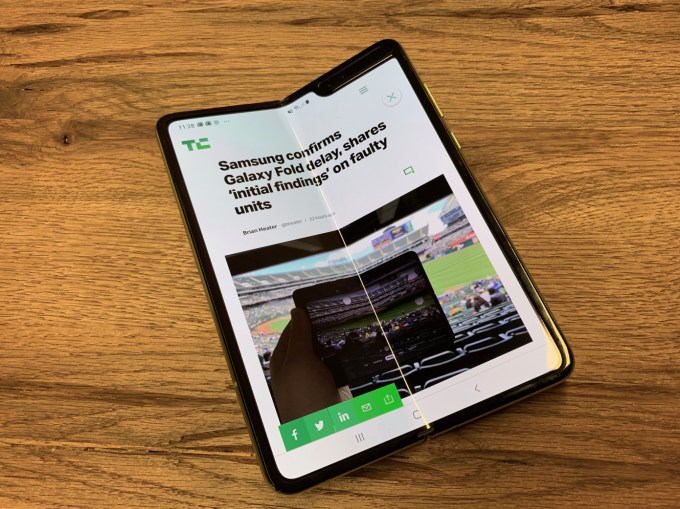
4. Best Buy cancels Samsung Galaxy Fold pre-orders

A note from Best Buy cites “a plethora of unforeseen hiccups,” and adds, “Because we put our customers first and want to ensure they are taken care of in the best possible manner, Best Buy has decided to cancel all current pre-orders for the Samsung Galaxy Fold.”

5. Automattic acquires subscription payment company Prospress

Among other things, Prospress has developed WooCommerce Subscriptions, a recurring payment solution specifically designed for WooCommerce.

6. Instagram’s vertical IGTV surrenders to landscape status quo

Following lackluster buy-in from creators loathe to shoot in a proprietary format that’s tough to reuse, IGTV is retreating from its vertical-only policy.

7. Shopify quietly acquired Handshake, an e-commerce platform for B2B wholesale purchasing

Handshake is a New York startup that offers a commerce platform for businesses that sell wholesale goods.

Apply to TechCrunch’s premier startup competition, Startup Battlefield

Imagine what $100,000 cash could do for your startup dreams. If you’re an early-stage startup founder determined to take your business to the top, it’s time to stop dreaming and get down to the serious task of competing in Startup Battlefield, our premier pitch-off that takes place at Disrupt San Francisco 2019 on October 2-4.

Step one is ridiculously quick and easy. Simply fill out this application form. Applying to and participating in Startup Battlefield is 100% free, so you have absolutely nothing to lose. Let’s get ‘er done!

Our Battlefield-tested TechCrunch editors have a knack for spotting greatness, and they’ll pour over every application to select 15-30 startups to compete. Each team receives extensive coaching — again from experienced TechCrunch editors and again, at no cost.

You’ll be ready to take your shot in the form of a six-minute pitch to a panel of expert VCs and tech leaders. Then they’ll pepper you with questions. If you make it into the second and final round, you’ll face a different set of judges, deliver your pitch again and endure another probing Q&A. From that final group, one exceptional startup will win $100,000 in equity-free cash and hoist the Disrupt cup. And it could be you.

The action is fast and furious, and it all takes place on the Disrupt Main Stage in front of a live audience of thousands, including tech movers and shakers, investors and more than 400 media outlets. Plus, we live-stream the entire competition on TechCrunch.com, YouTube, Facebook and Twitter. And it’s available later on-demand.

You don’t even have to win the $100,000 to reap incredible benefits. In addition to exhibiting in Startup Alley all three days of the show, Battlefield participants get media and investor attention, invitations to VIP events, free passes to future TechCrunch events and complimentary subscriptions to Extra Crunch.

Plus, you’ll become part of the legendary Startup Battlefield alumni community. That group, which numbers more than 850 strong, has collectively raised more than $8.9 billion in funding and produced more than 110 exits. You might recognize some of the companies, like Mint, Dropbox, Yammer, TripIt, Getaround and Cloudflare to name just a few.

Startup Battlefield takes place at Disrupt SF 2019 on October 2-4. Are you ready to fight to make your dream a reality? Apply to compete in Startup Battlefield today.

Great news, startup founders. There’s more than one way to showcase your early-stage startup at Disrupt SF 2019. We’re looking for outstanding startups to apply for our TC Top Picks program. If we select your company, you’ll receive a free Startup Alley Exhibitor Package, VIP treatment and plenty of media and investor exposure.

Interested in sponsoring or exhibiting at Disrupt SF 2019? Contact our sponsorship sales team by filling out this form.

Amazon finally supports Traditional Chinese books on Kindle

A long-awaited service for readers in Taiwan, Hong Kong, Macau and some other overseas Chinese communities have finally come true: Amazon has just started offering Traditional Chinese books for its Kindle E-reader.

The release filled an obvious gap for Kindle, which debuted back in 2007 and has been growing the number of languages it supports over the years. 2012 marked a major step in its Asia expansion as it began providing E-books in Simplified Chinese — the type of characters used in mainland China — under its China-specific site. That was a prelude to Kindle’s entry into China the next year. We will see if the same pattern of regional push will repeat for Taiwan and Hong Kong, where Kindle isn’t officially distributed at the moment.

Previously, people who read Traditional characters had to find roundabout ways to access the language on Kindle, such as buying Simplified content and converting it into Traditional using customized fonts that became available since Amazon’s 5.9.6 firmware update. Of course, that’s a time-consuming solution riddled with all sorts of calibration issues in spacing and font size.

The Traditional Chinese store kicked off with a list of over 20,000 books that people can read on their Kindle apps and Kindle devices. For some comparison, Kindle carried some 60,000 Simplified titles a year after introducing the language.

Users can now find Traditional Chinese books on a dedicated portal hosted on all existing Amazon.com websites, the company says. The early selection spans popular authors like Hugo Award-winning Liu Cixin and Chinese classics like Dream of the Red Chamber, in addition to translated bestsellers including George R.R. Martin’s A Song of Ice and Fire Series.

The regional launch is also targeted at authors, who can now self-publish their Traditional Chinese books through Kindle Direct Publishing and distribute the works to the language communities around the world.

“Bringing Traditional Chinese language books to Kindle is a step forward on our journey to provide more choice and selection to readers around the world,” said David Naggar, vice president of Kindle Books in a statement. But the store is not as finished as its Simplified counterpart yet, missing editor’s choice, book sales, pre-sales, book rankings and other potentially popular features.

Sonic the Hedgehog movie is getting delayed to redesign the title character

To say that reaction to the first Sonic the Hedgehog trailer was mixed would be overly diplomatic. But at least fans were able to look beyond the thin premise and bizarre Jim Carrey turn for long enough to focus on what was really important: the weird ass Sonic design.

The latest in an increasingly frequent number of wins for internet commenters, director Jeff Fowler balked earlier this month, telling Twitter, “you aren’t happy with the design & you want changes. It’s going to happen.” Looks like Fowler and Paramount are going ahead with the changes, but it’s going to take the speedy blue fur ball a few months longer to get here than initially expected.

https://platform.twitter.com/widgets.js

Once again, Fowler announced the big news on Twitter, writing, “Taking a little more time to make Sonic just right.” That tweet was accompanied by a new Valentine’s release date for the film, a three month delay of the original timeframe. Given that it’s already taken the beloved video game hero nearly 30 years to get to the big screen, what’s another couple of months, really?

Hopefully it will be enough time to hop cleanly over the uncanny valley.

Luckin leaves bitter aftertaste, now trading below IPO price

In the first few days following Luckin Coffee’s initial public offering, the stock chart for LK looked like a roller coaster. Now it’s looking more like a freefall.

The Chinese Coffee chain successfully completed its highly anticipated offering roughly a week ago, raising over $550 million after pricing at $17 per share, the high end of its $15-$17 per share range.

Luckin was met with a warm reception from the markets, with the stock skyrocketing roughly 20% to a greater than $5 billion market cap in its first day of trading. However, concerns over the company’s lofty valuation, major cash burn and uncertain path to profitability have caused the stock to nosedive since.

Luckin has around 25% since closing its debut trading day at $20.38 per share, and 40% from its intraday peak of $25.96. As of Friday’s open, Luckin stock sat at $15.44, now well below its IPO price.

Leading into the IPO, Luckin had already been the topic of much debate. Luckin had filed for its public offering just a year and a half after its founding. And prior to its filing, Luckin had raised over $500 million in venture capital through four fundraising rounds that all occurred just within roughly one year’s time, per Pitchbook and Crunchbase data.

As Luckin’s valuation continued to level up, many questioned the sustainability of its business model and heavily discounted pricing strategy, with Luckin’s limited operating history already pointing to substantial losses and heavy cash outflows.

The concerns have followed Luckin into the public markets and it’s unclear whether the stock’s early struggles are just growing pains or a broader indication that public investors have limits to the levels of nascency and unprofitability they are willing to accept and bet capital on.

As one of the few publicly-traded early-stage growth companies, and likely the only one in the “coffee” vertical, Luckin lacks similar companies for investors to compare the stock to and also seems to lack a natural investor base – with the story a bit too foreign for typical tech sector investors and a bit too hectic for your typical food and beverage investor.

What is clear is that much is still misunderstood regarding the company’s unique history, its growth strategy, local market dynamics or otherwise. We’ll continue to keep an eye on Luckin stock to see whether the picture gets a bit brighter once investors get more comfortable with the story and as management proves its ability to execute.

For now, check out articles on Extra Crunch written by TechCrunch’s Danny Crichton and Rita Liao for deep dive primers into Luckin and all its moving parts.

Why Luckin’s ultimate target may not be Starbucks

Starbucks plans to double its store count in China to 5,000 in 2021 and Luckin, a one-year-old coffee startup, is matching up by aiming to reach 4,500 by the end of this year. Luckin’s upsized $651 million flotation has brought American investors’ attention to this potential Starbucks rival in China, where the Seattle giant controlled over half of the coffee market as late as 2017. But as soon as you make your first purchase with Luckin, you realize its ultimate goal may not be to topple Starbucks.

To get your caffeine intake from Luckin, the ordering process happens entirely on its app. First, you will decide how you want to fetch the drink: have it delivered within 30 minutes, pick it up at a nearby Luckin kiosk, or sit back and sip at one of its full-on cafes, or what it calls ‘relax stores.’

Say you’re tied up at the desk, you can input your location to check if you’re within Luckin’s delivery radius. Luckin has essentially built a vast coffee delivery network through its partnership with one of China’s biggest courier services SF Express, which dispatch staff to ferry the drinks on scoot fleets.luckin You then place the order, choosing from a range of drinks and customizing it — hot or cold, the amount of sugar and portions of creamer, the type of syrup flavor and the likes. When you get to the end, Luckin will ask you to pay via its app. If you’re a first-time user, you get a ‘first order free’ voucher, a common strategy for many Chinese consumer-facing apps to lure new users.

MacBook Pro teardown reveals subtle changes to keyboard mechanism

The shift to a new butterfly keyboard mechanism is Apple’s least popular design decision in recent memory. After a flood of negative feedback over stuck and malfunctioning keys, the company, has continued to upgrade the technology with subtle fixes.

Just two days ago Apple issued yet another update — one it believes will address many of the system’s on-going woes. Today iFixit broke open the new model, identifying some of the changes underneath. The tweaks appear to be small, and the iFixit folks are still on the fence about precisely what’s new here, but things do appear to line up with what we were told by the company.

Here’s Matthew,

The MacBook Pro keyboard mechanism has had a materials change in the mechanism. Apple says that this new keyboard mechanism composition will substantially reduce the double-type/no-type issue.

There have been some material changes to various elements, including the membrane the company added last year to both cut down on keyboard volume and (hopefully) help keep debris from lodging themselves beneath the keys. The material has shifted from an opaque (likely) silicone to clear (probably) nylon.

The dome, which provides the bounce back while typing appears to have been updated, as well in order to help protect it from the wear and tear that might have been contributing to failure.

“There are myriad possible reasons for this switch to crack or wear out,” iFixit writes, “manufacturing defects, plain old fatigue, prolonged heat, moisture, outgassing from other components, and corrosion are all common culprits.”

As with past updates, Apple’s choosing to remain silent over what precisely has changed. This time out, however, the company’s including the new models under the umbrella of its Keyboard Service Program, just in case.

Best Buy cancels Samsung Galaxy Fold preorders

Samsung is taking its time bringing the Galaxy Fold back to market. And frankly, that’s probably for the best. The Note debacle from a few years back was an important lesson about what happens when you rush a product back to market. That one resulted in a second recall — PR nightmae upon PR nightmare.

With a release date still very much in limbo, Best Buy has sent notes to those who pre-ordered the Fold. Spotted by The Verge, the letter has since been posted to Best Buy’s support forum. It cites “a plethora of unforeseen hiccups,” (fair enought) adding, “Because we put our customers first and want to ensure they are taken care of in the best possible manner, Best Buy has decided to cancel all current pre-orders for the Samsung Galaxy Fold.

The letter goes on to assure customers that the big box retailer is “working closely with Samsung” to help deliver the product to customers. At the moment, however, their guess on the timeframe is as good as ours.

Recent reports have suggested that an announcement was imminent, with the company having solved design flaws that had reviewers peeling off screens and getting debris jammed in the holes of the folding mechanism. More recent reports gave the product a June 13 release date, but that too appears to have been scrubbed for the time being.