How to avoid An IPO

Hello and welcome back to Equity, TechCrunch’s venture capital-focused podcast, where we unpack the numbers behind the headlines.

We’re back to our old, weekly cadence. Which is all well and good but after a run of doubling up episodes to keep up with the news cycle, showing up just every seven days nearly feels like vacation. But hey, we’re here for you (you follow us both on Twitter, right?).

There was a lot to go over, so please enjoy the following:

An IPO update: First up we checked in on our favorite children, the recently public. Uber and Lyft are still down. Fastly is still far up while Luckin Coffee is losing air like a pinched balloon. Also, Slack has a new ticker symbol, and we have thoughts about it.

Changes at YC: In case you hadn’t heard, YC has a brand new president by the name of Geoff Ralston. Sam Altman, opting to focus exclusively on OpenAI, is no more.

DoorDash’s capital hunger: We had to record a day early this week, putting us precisely one day ahead of the DoorDash round. Turns out it was a $600 million round at a $12.7 billion valuation. Listen on for our take on the round, the company and its space.

Sun Basket raises: Yet another food delivery — well, meal kit delivery — business raised this week, too. Sun Basket, which sends healthy meal-kits to its customers, closed in on $30 million in Series E funding.

TransferWise’s not-an-IPO: What do you call a company more than doubling its valuation through a huge, sanctioned secondary transaction? Weird flex, but ok. Anyway. TransferWise is now worth $3.5 billion, up from its now-passé Series E valuation of $1.58 billion. If you want to dodge an IPO this is one pretty good way.

Finally, TransferWise actually makes money. Quelle surprise, literally.

Equity drops every Friday at 6:00 am PT, so subscribe to us on Apple PodcastsOvercast, Pocket Casts, Downcast and all the casts.

Roland’s tiny R-06 recorder is better than your phone’s recorder app

In an era when the smartphone can do everything, why do you need a standalone audio recorder? Roland, makers of music gear, might have an answer.

Their R-07 voice recorder is about as big as original iPod and is designed for music recording, practice, and playback. It features two microphones on top as well as an auxiliary microphone in. It also includes a headphone jack and supports Bluetooth.

As a recorder the R-07 is a single-touch marvel. You record by turning it on and pressing the center button. It records to MicroSD card and can create up to 96 kHz 24-bit WAVs and 320 kbps MP3s. It runs on USB power or two AA batteries.

A Scene mode makes the R-07 a bit more interesting. It has built-in limiters and low cut, essentially features that will make voices crisper. Further, you can set it to “Music Long” to record longer performances while using less drive space.

Rehearsal mode lets you hear live audio through audio playback, a great feature for budding musicians.

Finally you can control up to four devices at once via Bluetooth, allowing you to mic various members of a band, for example.

The R-07 costs an acceptable $199 and is shipping now. While it doesn’t beat a massive recorder with dual mics and XLR inputs like the Zoom H6 in terms of versatility, in terms of portability and sound quality – not to mention music-friendly features, the R-07 is a great alternative to the Voice Memos app on your phone.
In an era when the smartphone can do everything, why do you need a standalone audio recorder? Roland, makers of music gear, might have an answer.

Their R-07 voice recorder is about as big as original iPod and is designed for music recording, practice, and playback. It features two microphones on top as well as an auxiliary microphone in. It also includes a headphone jack and supports Bluetooth.

As a recorder the R-07 is a single-touch marvel. You record by turning it on and pressing the center button. It records to MicroSD card and can create up to 96 kHz 24-bit WAVs and 320 kbps MP3s. It runs on USB power or two AA batteries.

A Scene mode makes the R-07 a bit more interesting. It has built-in limiters and low cut, essentially features that will make voices crisper. Further, you can set it to “Music Long” to record longer performances while using less drive space.

Rehearsal mode lets you hear live audio through audio playback, a great feature for budding musicians.

Finally you can control up to four devices at once via Bluetooth, allowing you to mic various members of a band, for example.

The R-07 costs an acceptable $199 and is shipping now. While it doesn’t beat a massive recorder with dual mics and XLR inputs like the Zoom H6 in terms of versatility, in terms of portability and sound quality – not to mention music-friendly features, the R-07 is a great alternative to the Voice Memos app on your phone.

Uber launches a Jump e-bike pilot in London, one year on from winning taxi license appeal

After admitting it had to modify some of its Jump electric bikes to fix braking issues — the same problem that had halted Lyft’s e-bike business — Uber is getting back on its bike, so to speak. Almost one year after nearly getting driven off London’s streets completely by losing its taxi operating license, Uber today announced the launch of Jump e-bikes in London. The service is kicking off with a pilot of 350 bikes in the borough of Islington, with plans to expand to more areas of the city in the coming months.

If you are in the catchment, Jump Bikes will now appear as an option in your Uber app alongside UberPool, UberX and public transportation data — which was added three weeks ago.

Pricing for the dockless Jump bikes is modelled on how Jump works in the US: it costs £1 to unlock a bike, and then £0.12 per minute to ride it, with your first five minutes free. The electric pedal-assist responds to pedal pressure, and can give a boost to help you ride up to 15 miles per hour. If you park a bike outside of the allowed range (currently, Islington), you get warning on the app. And if you leave the bike parked there, you get a £25 fine.

“There is now one more transport alternative for the 3.5 million people who use the Uber app in the capital,” said Jamie Heywood, Uber’s GM for Northern and Eastern Europe. “Over time, it’s our goal to help people replace their car with their phone by offering a range of mobility options – whether cars, bikes or public transport, all in the Uber app.”

Ride-sharing companies like Uber and Lyft, built on hailing cars through apps, have been gradually incorporating other forms of transportation on to their platforms to diversify what they offer to consumers, and to provide a more open and accessible face to local regulators.

In urban areas, sometimes taking cars is excessive or impractical because of the distances covered, or the traffic situation, or because the passenger wants to do something more active than sit in the back of a Prius. (It’s not the only one: as we reported a couple of weeks ago, Uber’s soon-to-be-Middle Eastern business Careem, which it’s buying for $3.1 billion, has also been working on buying a bike startup.)

That has led to adding in other “vehicles” like bikes and scooters, as well as public transportation for those who want to walk a little as well. The bigger idea is that even in cases where the operator — Uber, in this case — is not getting a cut on the ride (as in the case of public transportation), or actually making very little on the ride while also taking on more overhead (as it does with owning bike fleets where average rides are likely to be under $10), it’s helping create a habit. It wants to be the app a consumer turns to for any transportation-related need.

But it’s not just about consumer choice. It was almost a year ago that Uber won a hotly-contested appeal in the London courts to get an extension of its vehicle-operating license in London (which had been snapped away from it by angry regulators) while it worked on fixing some of the issues that it had with its service: adding more environment-friendly, and car traffic congestion-reducing, options like e-bikes is also part of that effort.

Still, micro-mobility — the term for two-wheeled vehicles and the short rides and small fees that are typically collected around them — has had something of a bumpy road in London and other markets.

We still do not have any on-demand scooter services (electric or otherwise) running widely in London. Part of the reason is that the UK’s Department of Transportation and Transport for London (the city’s local authority) — have not yet determined whether and how to change electric scooters’ classification for open-road use.

Currently, electric scooters are classified as light electric vehicles and are illegal on both roads and sidewalks, so can only be used on private property, making any wide commercial rollouts impossible. To date, the only electric scooter businesses that we have seen launched in the UK have been pilots in closed campuses, like the Bird scooter service in the Olympic Village started last year.

There are a number of electric scooter services already available in other markets in Europe — Paris, where you might find kids giving each other lifts and couples romantically co-riding on single vehicles, is apparently one of the largest e-scooter markets in the world now — but these are facing other problems, such as malfunctioning vehicles, and vast, clutter-ific oversupply. That’s not stopping money from pouring into the startups, though!

Bikes have also had issues: a number of the companies that confidently launched services a year ago have either collapsed or significantly curtailed operations. Some are recapitalising and trying once more on a different footing. Mobike, which is currently raising money to complete a spinoff from its Chinese parent, also wants to add alternative forms of transport, which could include e-bikes and scooters, to its fleet.

Electric bikes — despite some notable hiccups in the US, such as Lyft’s service halt, executive changes and layoffs — are a story that has yet to be fully played out.

If you were to walk through many parts of the city today, you’d likely see multiple Lime e-bikes alongside the plethora of other shared bikes that can be picked up and used on-demand.

The city is sprawling enough that walking might take a bit too long, and congested enough that any motorised car or bus also doesn’t inspire, with a good enough amount of inclines that regular bikes face a barrier from some: the perfect environment for e-bikes, some might say.

That’s given Uber a big fillip to move ahead with the Jump launch here now.

“We’re excited to bring JUMP bikes to Islington, our first launch in London. With our electric bikes, we hope to encourage more people to try an environmentally friendly way to get across the city,” said Christian Freese, General Manager of JUMP, EMEA, in a statement.

“Our JUMP bikes have been designed with safety in mind, with a sturdy frame and a bright red colour that makes them visible to other road users. The app explains features of the bike before your first trip so you can ride confidently. We encourage everyone to think about wearing a helmet, follow all traffic laws and break early and gradually.”

Unlike its original forays into car-sharing, Uber’s move with bikes has been made with playing-nice in mind.

“We’re working hard to make Islington an attractive and easier place to walk and cycle. We’re pleased to welcome JUMP to Islington – bike sharing offers a simple way for many residents, workers and visitors to get around quickly, cheaply and conveniently,” said Claudia Webbe, a councillor in the borough of Islington who is also executive member for Environment and Place. “Shared electric bikes are accessible to many people of different ages and fitness levels, and can help encourage even more people to switch to cycling, which is healthier and more environmentally friendly.”

Crypto exchange Binance prepares to add margin trading ‘soon’

Binance, the world’s most prominent crypto exchange, says it is close to adding a much-anticipated margin trading feature to its service following weeks of speculation.

The company tweeted confirmation of the upcoming feature in a screenshot which subtly teases the imminent arrival of margin trading options. Binance CEO Changpeng Zhao (pictured above) first revealed that the feature was headed to Binance during a live stream following a hack earlier this month that saw Binance lose around $40 million in Bitcoin.

TechCrunch understands that margin trading has been beta tested among selected users. A Binance representative declined to comment on the specifics, but did confirm that margin trading will be available on Binance.com “soon.”


Margin trading, which lets traders use their balance as collateral to super-size their buying power, is seen by many as an important growth vector for crypto trading. Binance is often the world’s largest exchange based on daily trading volumes — though it is currently ranked second, according to Coinmarketcap data — but it has avoided margin trading to date. Instead, exchanges like BitMex, Huobi Pro, Poloniex, Kraken and Coinbase’s GDAX have run with the ball and offered the functionality. Coinbase has also considered adding it for regular, retail customers.

The new feature is part of a number of expansions from Binance as it aims to broaden its reach. The company has added support for purchasing crypto using fiat currency in three countries — Jersey (for the UK), Uganda and most recently Singapore — while it also released an early version of its ‘decentralized’ exchange (DEX) to offer further trading options.

Despite that hack, which saw Binance pause withdrawals and deposits for a week, the crypto market remains bullish on the company. Binance’s BNB token passed a $30 valuation this week for the first in its history. Its worth is up 8 percent over the last 24 hours — that’s better than Bitcoin (5 percent), Ethereum (6 percent) and XRP (4 percent), which are crypto’s three largest tokens based on ‘coin market cap.’

There’s been excitement around Bitcoin’s rally in recent weeks, which saw its price briefly pass $8,000 a coin this month, but BNB has been the pick of crypto’s top tokens in 2019. Its value has increased more than five-fold since January 1, when it was worth $6. Today, it trades at $33, as of the time of writing.

Binance’s BNB token has been a standout performer for crypto investors in 2019 [Chart via Coinmarketcap.com]

Nigeria’s Gokada raises $5.3M round for its motorcycle ride-hail biz

In many large cities across Africa, motorcycle taxies are as common as yellow-cabs in New York.

That includes Lagos, Nigeria, where ride-hail startup Gokada has raised a $5.3 million Series A round to grow its two-wheel transit business.

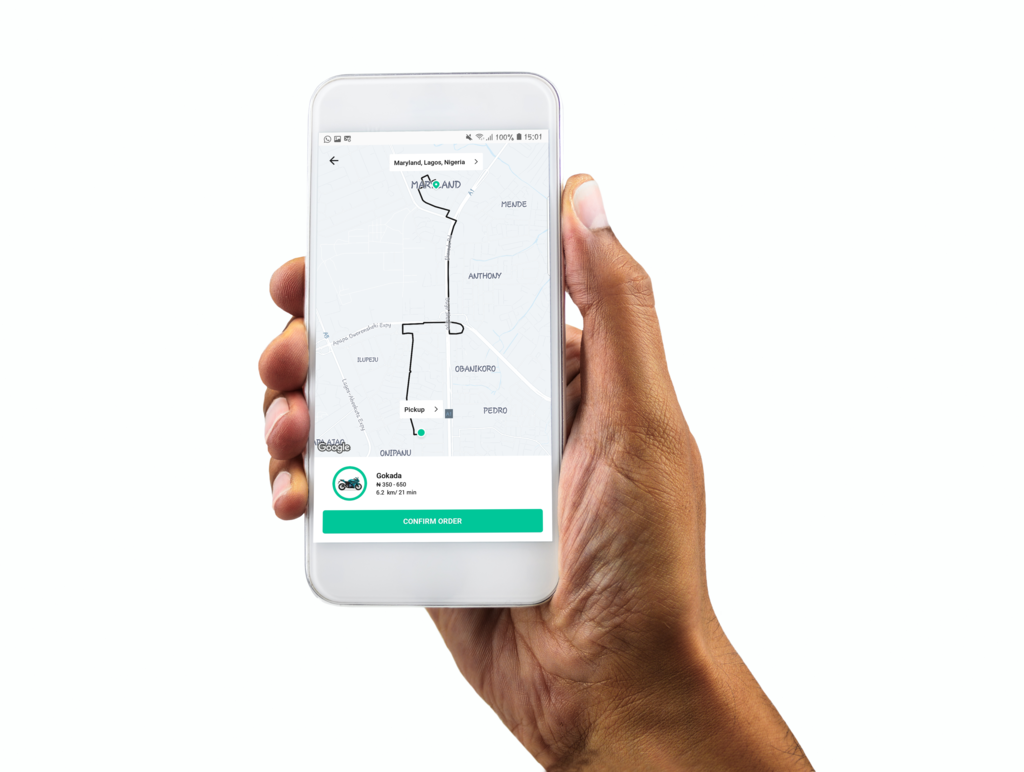
Gokada has trained and on-boarded over 1000 motorcycles and their pilots on its app that connects commuters to moto-taxis and the company’s signature green, DOT approved helmets.

The startup has completed nearly 1 million rides since it was co-founded in 2018 by Fahim Saleh—a Bangladeshi entrepreneur who previously founded and exited Pathao, a motorcycle, bicycle, and car transportation company.

For Gokada’s Series A, Rise Capital led the investment joined by Adventure Capital, IC Global Partners, and Illinois based First MidWest Group. Coinciding with the round, Nigerian investor and Jobberman founder Ayodeji Adewunmi will join Gokada as co-CEO.

Gokada will use the financing to increase its fleet and ride volume, while developing a network to offer goods and services to its drivers. “We’re going to start a Gokada club in each of the cities with a restaurant where drivers can relax, and we’ll experiment with a Gokada Shop, where drivers can get things they need on a regular basis, such as plantains, yams, and rice,” Saleh told TechCrunch.

The startup differs from other ride-hail ventures in that it doesn’t split fare revenue with drivers. Gokada charges drivers a flat-fee of 3000 Nigerian Naira a day (around $8) to work on their platform. The company is looking to generate a larger share of its revenue from building a commercial network around its rider community.

“We don’t do anything with the fares. We want to create an Amazon prime type membership…and ecosystem around the driver where we’re going to provide them more and more services, such as motorcycle insurance, maintenance, personal life-insurance, micro-finance loans,” Saleh said.

“We’re trying to provide a network of great services for our drivers that makes them stick with us, and not necessarily see a reason to switch to other platforms,” said Saleh.
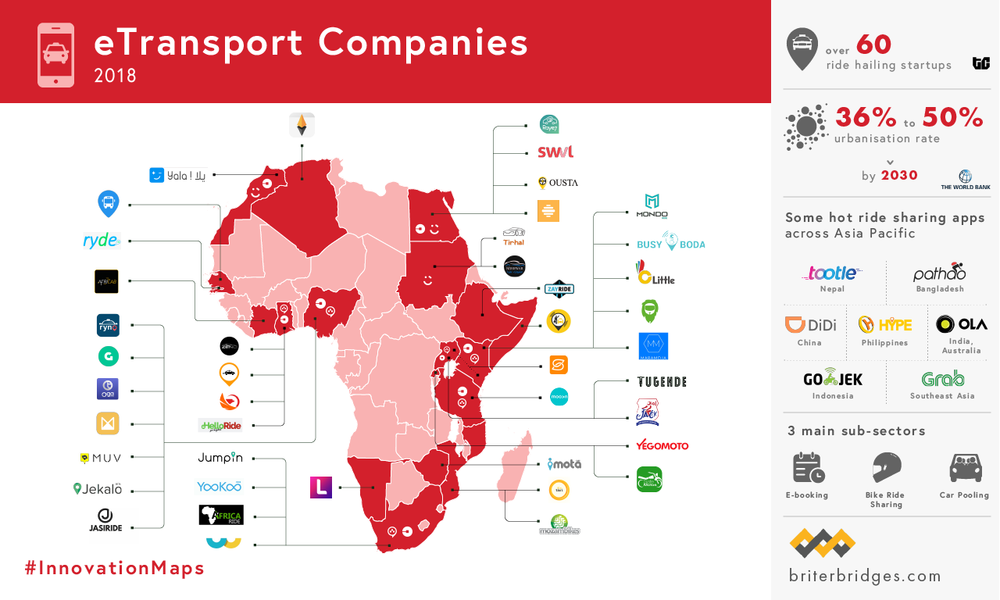
Competition among those platforms is heating up, as global players enter Africa’s motorcycle taxi market and local startups raise VC and expand to new countries.

Uber began offering a two-wheel transit option in East Africa in 2018, around the same time Bolt (previously Taxify) started motorcycle taxi service in Kenya.

Rwanda has motorbike taxi startups SafeMotos and Yegomoto. Uganda based motorcycle ride-hail company Safeboda expanded into Kenya in 2018 and this month raised a Series B round of an undisclosed amount co-led by the venture arms of Germany’s Allianz and Indonesia’s GoJek.

Safeboda will use the round to further expand in East Africa and Nigeria in the near future, the startup’s CEO Maxime Diedonne confirmed to TechCrunch.

In Nigeria, Gokada faces a competitor in local startup MAX.ng, which offers mobile based passenger and logistics delivery services.

Overall, Africa’s motorcycle taxi market is becoming a significant sub-sector in the continent’s e-transport startup landscape. Two-wheel transit startups are vying to digitize a share of Africa’s boda boda and okada markets (the name for motorcycle taxis in East and West Africa)—representing a collective revenue pool of $4 billion and expected to double to $9 billion by 2021, according to a TechSci study.

“There is a formalization of an informal sector play here…to make it safer and higher quality,” Gokada investor Nazar Yasin of Rise Capital told TechCrunch.

The appeal to passengers is the lower cost of motorbike transit compared to buses or cabs ($1.85 is Gokada’s average fare) and the ability of two-wheelers to cut through the heavy congestion in cities such as Lagos and Nairobi.

A notable facet of motorcycle ride-hail companies in Africa is better organizing a space with a reputation for being somewhat chaotic and downright dangerous (see Nigeria’s past bans on the sector entirely due to safety).

For Gokada that includes training courses and certification of riders, the ability to track trips and safety stats from the app, and quality control for motorcycles—something that’s been lacking in East and West Africa’s non-digital moto-taxi space.

The company’s rider program offers a way for drivers to buy, own, and maintain their motorcycles as they earn. Gokada has entered into partnership with Indian motorcycle maker TVS Motors to create a custom version of the company’s TVS Apache motorcycles for Gokada drivers.

Gokada is also experimenting with adding sensors to its fleet to better track safety standards. “We’re looking at seat sensors and another GPS sensor to track things like ‘did this driver add more than one passenger on the bike’ and all that data will feed back into our servers,” Saleh said.

The company won’t enter any new countries in Africa in the near future. “We plan to expand all over Nigeria. We think its a large enough market for now,” said Gokada CEO Fahim Saleh. Nigeria is Africa’s most populous nation (190 million) and largest economy.


Online bank Simple makes things harder by removing bill pay

With a growing number of challenger banks taking on the U.S. market, one of the original startup banks, Simple — now owned by BBVA — has taken the unusual step of removing a core banking feature: bill pay. The company claimed the feature was under-utilized and usage was trending downwards, which is why it decided to sunset the option to pay bills through its app. That decision, not surprisingly, has angered a number of customers who are taking to social media and online forums like Reddit threatening to switch banks as a result.

It’s likely true that fewer people today use bill pay than in the past.

The feature is something of a holdover from an earlier era before electronic payment options and auto pay became as ubiquitous as they are now. And many customers may still have bill pay set up even though another electronic option has since become available. Or they may not want to take the time to reconfigure things, when what they have works.

But despite bill pay’s waning usage, it’s odd to shut down such a commonplace banking feature. It’s rare to find a bank that doesn’t offer bill pay services, in fact, outside of a handful of smaller up-and-comers that aren’t full-service banks.

Even new most of the newer U.S. fintech players like Chime, Qapital, SoFi Money, Varo, Aspiration, and others offer bill pay services where they mail a check for you. And it’s common among more traditional online banks like Ally, as well.

Removing bill pay also greatly impacts those who pay their rent by way of a mailed check, as many landlords are not set up for electronic payments. This is a recurring complaint among the customers who are lambasting Simple for its decision.

Instead, these customers will now have to purchase Simple’s newly available paper checks (sold in packs of 25 for $5 — oh, what a timely launch!).

They’ll then need to buy stamps, address envelopes, fill out checks and actually mail them.

Postal mail, of course, is not a preferred by today’s younger generation — many of whom never had to write letters, having grown up in the internet age. Millennials have even complained that the very act of having to mail things gives them anxiety, due to all the steps involved and their overall unfamiliarity with the process.

https://platform.twitter.com/widgets.js

Considering that banks like Simple are targeting the millennial customer, forcing them back to checks they have to mail themselves is not the smartest move — at least from a public relations perspective.

On top of all this, Simple’s announcement about the discontinuation of bill pay was not well-communicated. As it touted the arrival of paper checks, an email footer also quietly noted that bill bay would also shut down after July 9, 2019. Customers dinged Simple for its lack of transparency.

https://platform.twitter.com/widgets.js

The company claimed it was sending emails about bill pay to customers — but many didn’t receive any message before learning of the change on Twitter. And they were angry.

Since the decision was announced, Simple has been dutifully responding to customers’ complaints on Twitter, sometimes with smiley emojis and cheerful customer service-ese, like: “We hear ya. Mailing payments for bills can be nerve wracking.” 

The company even wished one customer well on their journey to find another bank.

https://platform.twitter.com/widgets.js

https://platform.twitter.com/widgets.js

In addition to declining usage, the company said its newer Expenses feature was not working well with Bill Pay, which was another factor in its decision.

https://platform.twitter.com/widgets.js

Predictably, the volume of customer complaints has led to the creation of a Change.org petition.

Things are now going so badly that Simple just sent customers another email in response to all the backlash. In it, the company acknowledges how unhappy customers are about its decision and its handling of the news.

“To be completely transparent, a really small percentage of our customers use Bill Pay,” the email reads. “With this service’s usage declining, we made the decision to sunset it. This allows us to use those resources to build new features that benefit a broader number of customers. We know that some of you aren’t happy about this decision or how we broke the news, and for that, we’re sorry.”

The decision, however, still stands.

Simple was one of the original innovators in online banking. But after its acquisition, the pace of innovation has slowed down and customer growth has stagnated. Over the years, the company has been maligned for not allowing non-U.S. citizens to sign up and for shutting down customers’ accounts without with little notice, due to transition issues.

Now it’s angering customers again just as a number of new, millennial-focused online banks are hitting the market — and as challenger banks from Europe, like N26 and Revolut are preparing to make the jump to the U.S. That may not be the best time to send a core group of users in search of alternatives.

The full email sent to customers is below:

You probably heard this already but if you haven’t: Simple’s “Pay a bill” and “Mail a check” features (also known as “Bill Pay”) are going away on or after July 9. If you have a payment scheduled on or after that date, it will not be paid or sent.

To be completely transparent, a really small percentage of our customers use Bill Pay. With this service’s usage declining, we made the decision to sunset it. This allows us to use those resources to build new features that benefit a broader number of customers.

We know that some of you aren’t happy about this decision or how we broke the news, and for that, we’re sorry.

We’ll continue to be in touch over the coming weeks. In the meantime, if you have any questions, we’re reachable via a support message or at (888) 248-0632.

Thanks,

— The Team at Simple

Simple has been offered the opportunity to comment.


The U.S. Senate is coming after ‘loot boxes’

Gamers feel passionately about loot boxes, turns out some elected officials do too.

A new Senate bill was formally introduced today with bipartisan support and it could categorically shift how today’s top platforms and distribution platforms monetize the titles they sell. The bill’s introduction was first reported by The Verge.

The bill asserts that “pay-to-win” transactions that give users a nominal advantage for a fee or loot boxes which allow users to essentially play a slot machine for gaining rare or important items, are bad for minors and need to be banned. If the bill passes, offending studios could be fined.

It’s hard to reiterate what a major impact this legislation could have, the games industry has reorganized itself around micro-transactions in the past decade. Much of the growth of the industry’s greatest success stories has been tied to the idea that free-to-download games can quickly nurture massive growth with network effects and then gradually monetize those users via small payments for items that can give them a unique look or edge.

This obviously wouldn’t fully sink in-game transactions by any means, but loot boxes have been one of the most lucrative models and by placing a ceiling on acceptable behavior for these transactions, game companies might have to find new ways to monetize their content.

The death of loot boxes probably isn’t going to be mourned by many outside of game publishers’ accounting departments. There was something kind of fun about them for adults that knew exactly what they were doing, but it was still mostly in an infuriating way.

Missouri Republican Senator Josh Hawley, who introduced the bill, told Kotaku earlier this week that loot boxes were “basically adding casinos to children’s games,” which generally feels like a fair assertion.

As with almost all major pieces of legislation that aim to address new trends in technology, there’s potential that broadness in language can leave room for this to be very damaging to the industry, but the broadness here seems to be that this minor-oriented provision is going to end up being universal. Gizmodo notes some more issues with the grayness surrounding what exactly is “pay-to-win.”

What is a “minor-oriented” game? Is that simply any game with an ESRB rating below “M for Mature”? Nope, the bill outlines that game publishers need to focus on titles if they have “constructive knowledge that any users are under 18.” So, that’s just about every single game.

This was addressed, sort of, in a FAQs list released by Hawley’s camp:

While it is true that a large proportion of game players are adults, even games with predominantly adult player bases – including games marketed primarily to adults – tend to have enormous appeal to children. The onus should be on developers to deter child consumption of products that foster gambling and similarly compulsive purchasing behavior, just as is true in other industries that restrict access to certain kinds of products and forms of entertainment to adult consumers.

The legislation has some important problems its aiming to put in check, and clearly the gaming industry hasn’t been as active as it should in ensuring minors aren’t being taken advantage of in the midst of a micro-transaction land grab, so I’m not going to cry over them, but there’s a lot at play here so hopefully nothing rushes through without proper considerations.

You can read the full text of the legislation here.

Lime’s founding CEO steps down as his co-founder takes control

In an all-hands meeting this afternoon, the scooter and bike-sharing phenom Lime announced co-founder and chief executive officer Toby Sun would transition out of the C-suite to focus on company culture and R&D. Brad Bao, a Lime co-founder and long-time Tencent executive, will assume chief responsibilities, Lime confirmed to TechCrunch.

“Lime has experienced unprecedented growth in the global marketplace under the joint leadership of our co-founders Brad Bao and Toby Sun,” the company said in a statement provided to TechCrunch. “Fortunately, Lime’s structure allows for our executive leadership to be multipurpose and we are making a few changes to our team today to seize the opportunity ahead of us.”

Sun and Bao launched Lime together in late 2016. The San Mateo-based company had near-immediate success, attracting hundreds of millions in venture capital funding and reaching a valuation of more than $1 billion in only a year and a half’s time. Today, the company is valued at $2.4 billion and is expected to hit the fundraising circuit soon.

In addition to today’s CEO shake-up, Lime’s chief operating officer and former GV partner Joe Kraus has been promoted to the role of president. Kraus joined Lime-full time late last year after more than a decade at the venture arm of Alphabet.

Bao, given his Tencent tenure, seems like a natural choice to lead Lime into a more mature phase of business. Sun, a former investment director at Fosun Kinzon, has less operational experience than his counterpart, most recently as the vice president of its gaming decision.

News of Sun’s demotion comes hot off the heels of a fresh new marketing campaign in which the Lime co-founders describe the scooter-sharing startup’s origin story and grand ambitions. The company, backed by Bain Capital Ventures, Andreessen Horowitz, Fidelity Ventures, GV, IVP, and a slew of other top-notch investors, is active in more than 100 cities in the U.S. and 27 cities internationally. As of June, riders had taken more than 50 million trips on one of Lime’s vehicles.

Canopy’s upscale co-working business adds a new location in SF on the heels of strategic funding

Canopy, an upscale, profitable developer of co-working spaces, has expanded its footprint in San Francisco to a third location on the heels of a strategic financing round.

Co-founded by the product designer Yves Behar; the second generation design-build developer Amir Mortazavi; and serial entrepreneur and medical office space developer Steve Mohebi, Canopy bills itself as a better-designed WeWork for high-powered adults (or aspiring high-powered adults).

Canopy co-founders Amir Mortazavi, Yves Behar and Steve Mohebi

The company opened its latest office space in the financial district of San Francisco and has plans to double its . Jackson Square location with a new penthouse space.

Investors in the round were culled from Canopy members and a few institutional investment funds including: Structure Capital, Montage Ventures, Graph Ventures and individuals like Erik  Blachford, the former chief executive of Expedia, Mark PIncus, the former chief executive of Zynga, and Spencer Raskoff the co-founder of Zillow.

Canopy’s latest office will be at 353 Kearny Street and Pine. The ground floor will house a retail store in partnership with Monocle Magazine ad contain 32 offices suitable for everyone from one person shops to larger teams of ten.

Like all of its offices, Canopy’s new building will be kitted out with Herman Miller sit-to-stand desks and Sayl chairs, and sound masking for privacy.

“Designing our spaces along with my friend and co-founder, Yves Behar, to serve the unmet demands of the premium segment has been a true labor of passion,” said co-founder and CEO, Amir Mortazavi, in a statement. “We build everything around our members’ needs — a generosity of space, abundant natural light, easy flow between private and shared spaces — to ensure the overall Canopy experience is at once inspiring and calm.”

The company boasts 300 members already and its founders say the business is already profitable. Canopy’s workspaces are not for everyone. Prices start at $100 per month to take advantage of the company’s addresses for people who want a virtual office. For folks who want ten days worth of access to the co-working space’s common areas and an actual seat at a table, the price tag is $365 per month ($275 gets you 60 days of access out of a year).

Meanwhile, anyone who wants to be able to sit at an actual desk and work at a Canopy space better be willing to shell out $925 per month. That’s… not cheap.

You can do it, robot! Watch the beefy, 4-legged HyQReal pull a plane

It’s not really clear just yet exactly what all these powerful, agile quadrupedal robots people are working on are going to do, exactly, but even so it never gets old watching them do their thing. The latest is an Italian model called HyQReal, which demonstrates its aspiration to winning strongman competitions, among other things, by pulling an airplane behind it.

The video is the debut for HyQReal, which is the successor to HyQ, a much smaller model created years ago by the Italian Institute of Technology, and its close relations. Clearly the market, such as it is, has advanced since then, and discerning customers now want the robot equivalent of a corn-fed linebacker.

That’s certainly how HyQReal seems to be positioned; in its video, the camera lingers lovingly on its bulky titanium haunches and thick camera cage. Its low slung body recalls a bulldog rather than a cheetah or sprightly prey animal. You may think twice before kicking this one.

The robot was presented today at the International Conference on Robotics and Automation, where in a workshop (documented by IEEE Spectrum) the team described HyQReal’s many bulkinesses.

It’s about four feet long and three high, weighs 130 kilograms (around 287 pounds), of which the battery comprises 15 — enough for about two hours of duty. It’s resistant to dust and water exposure and should be able to get itself up should it fall or tip over. The robot was created in collaboration with Moog, which created special high-powered hydraulics for the purpose.

It sounds good on paper, and the robot clearly has the torque needed to pull a small passenger airplane, as you can see in the video. But that’s not really what robots like this are for — they need to generate versatility and robustness under a variety of circumstances, and the smarts to navigate a human-centric world and provide useful services.

Right now HyQReal is basically still a test bed — it needs to have all kinds of work done to make sure it will stand up under conditions that robots like Spot Mini have already aced. And engineering things like arm or cargo attachments is far from trivial. All the same it’s exciting to see competition in a space that, just a few years back, seemed totally new (and creepy).