Google Assistant gets NYC subway arrival times ahead of MTA Google Pay support

Next week, New York City’s Metro Transit Authority will be adding contactless payment support for Google Pay. In the meantime, Google’s getting ready by bringing a key new commuting feature to Android.

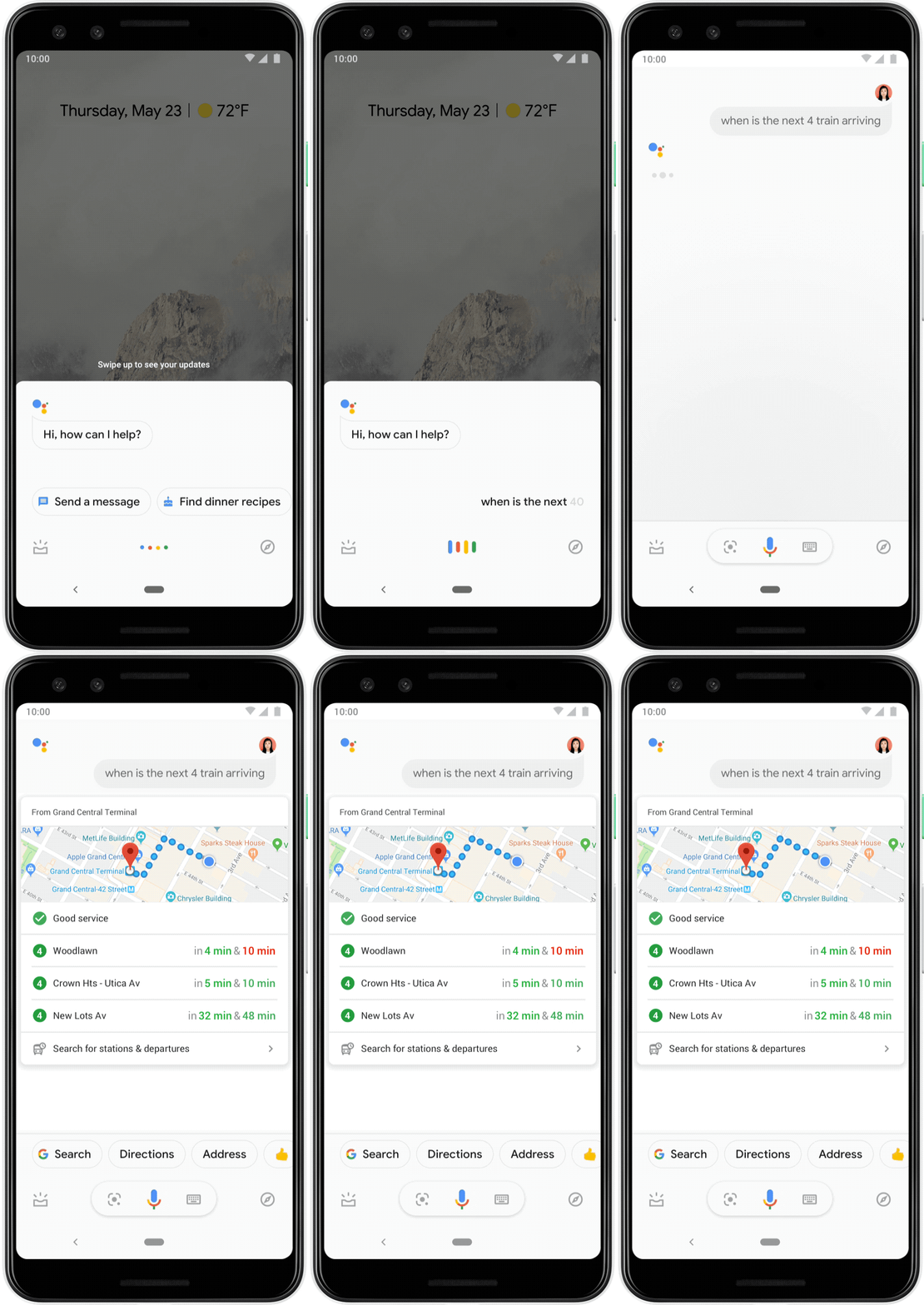
Starting today, NYC straphangers can use Google Assistant to find out the ETA of the next train. Saying, “Hey Google, when is the next 4 train arriving?” or “Hey Google, when is the next train?” Will pop up its estimated arrival in each direction, along with walking directions to the closet station. Something I could have used this morning, after narrowly missing the R train.

If you’re located in the New York City area, odds are you’ve already seen the contactless payments pop up in a handful of locations along the 4,5,6 line. Next week, those commuting between Grand Central in Manhattan and Atlantic Avenue-Barclays Center in Brooklyn will be able to swipe their phone as part of a public pilot.

For now, at least, it seems the future is limited to single ride payment (versus daily/weekly/monthly cards), as the MTA works on hammering out the finer details. Stations that accept Google Pay will be added to Maps in coming weeks. Android users will also be able to add in a credit or debit card via the app. That feature is also arriving for riders in Melbourne and London.

Sarah Connor returns in the teaser trailer for ‘Terminator: Dark Fate’

Oh boy, there’s another Terminator movie on its way.

I haven’t watched any of the franchise’s big-screen installments since “Terminator 2” — not “Rise of the Machines,” “Salvation” or the hilariously-named “Genisys.” But I remember the hype cycle around the latter films, with the excitement that maybe this time we’d see a return to the spirit and quality of the first two movies, followed by the inevitable disappointment when it didn’t happen.

To be honest, this teaser trailer for “Dark Fate” doesn’t do much to differentiate itself from the other sequels — there’s an evil Terminator (Gabriel Luna) hunting down a human woman (Natalie Reyes), protected in turn by a good Terminator (Mackenzie Davis).

However, it highlights two key elements that may give fans hope. First off, the big entrance is reserved not for Arnold Schwarzenegger (who’s barely in the trailer at all), but instead for Linda Hamilton, who’s returning as Sarah Connor for the first time since “Terminator 2.”

And behind the scenes, franchise creator James Cameron is taking an active role once again — he was presumably too busy with a million “Avatar” sequels to direct, but he’s on-board as a producer and story writer (Josh Friedman, who created the excellent “Sarah Connor Chronicles” TV show, also gets a story credit). And alongside the trailer, Paramount has released a promotional video with Cameron touting this as the true successor to “The Terminator” and “Terminator 2.”

“Terminator: Dark Fate” was directed by Tim Miller (who previously directed “Deadpool”) and is scheduled for release on November 1, 2019.

Tencent’s latest education push is a nod to new collaborative structure

When Tencent announced it had formed a new education brand this week, the internet giant wasn’t just flexing the muscles to conquer China’s booming online education sector. The new initiative is also an early result of Tencent’s long plan to foster more internal collaboration at a time when its core businesses, the lucrative video gaming segment and the billion-user WeChat, are under attack.

Called ‘Tencent Education’, the new brand consists of 20 products across all six of the firm’s business groups, announced executive senior vice president Dowson Tong at the company’s annual ecosystem summit on Wednesday. According to Tong, Tencent has over the years served some 15,000 schools and 70,000 educational institutes, giving it a reach of over 300 million users in the sector.

What this means is when it comes to making education products, there will be more teamwork among Tencent divisions, from the one overseeing WeChat to the entertainment-focused unit operating some of the world’s most played games. The catalog of services ranges from face recognition technology to monitor students during class time (I know, it makes me cringe), to personal development classes for adults.

This level of cross-department cooperation had been rare at Tencent until recently. For years, the Shenzhen-based company fostered a competitive culture it compares to horse races. On the one hand, internal rivalry spawns innovation. The success of WeChat has demonstrated Tencent’s willingness to let a new product eat into its legacy social network QQ. The strategy doesn’t always work, though. To contain TikTok’s rise, Tencent has churned out a dozen short video apps, but none has reached their rival’s supremacy.

Competition, on the other hand, produces internal silos and hurts collaboration. This is a critique that has often come at Tencent, although Tong refuted the notion in a recent interview with local news outlet Yicai, saying that Tencent actually had a history of keeping a data system for internal collaboration.

Meanwhile, its rival Alibaba has gotten more credit for structuring business units under one cooperative umbrella. When founder Jack Ma set up an “underlying unified data, safety, risk management and technology foundation” almost seven years ago, his goal was to tear down “internal corporate walls.” The integration was targeted at customers as well. For instance, Ma envisioned a future where a merchant on Alibaba’s consumer-facing marketplace Taobao would directly source from 1688.com, its business-to-business ecommerce arm.

Tencent is undergoing a similar transformation. In October, the company announced a sweeping reorganization that saw it knit together a few disparate business lines primed for synergies. Take the Platform and Content Group. The newly minted group consolidated all non-WeChat social and content services — spanning QQ, an app store, a web browser, two news apps, an esports platform and several video services — under one single division.

Historically, Tencent has derived a bulk of its income from video games and a handful of popular social media apps. But the cards are increasingly stacked against these ventures as China exerts more control over the gaming sector and Bytedance seizes more online attention, so part of the October reorg was aimed at fending off imminent competition from new rivals by better utilizing internal resources, as it’s the case with PCG.

The other part of the agenda is set for what’s further down the road. Tong told Yicai that the time is ripe for ‘the industrial internet,’ a buzzword in China that refers to the upgrade of traditional industries with technology. Tencent wants to be a leading force in the revolution, and the plan is to open up its technology to other enterprises, as Tencent has done through the education initiative.

“In the age of the industrial internet, I think the ultimate job is to be open… so we are opening a lot of the technologies we’ve accumulated in the past and integrating them for the use of other companies,” said Tong.

Indiegogo hires Reddit’s Andy Yang as new CEO

Indiegogo has a new chief. Andy Yang will take over for outgoing CEO David Mandelbrot who is stepping down. According to sources close to the company, several other Indiegogo employees are also leaving. Indiegogo has yet to confirm this claim or state the number or reason for their departure.

Mandelbrot announced the move on LinkedIn, citing “personal reasons” as the reason he’s leaving. He was at Indiegogo for six years starting as SVP of Operations in August of 2013.

Andy Yang comes to Indiegogo from Reddit where he was most recently leading its product team. He was previously the CEO of 500px.

Yang comes to Indiegogo at a critical time for the company. Consumers are increasingly becoming jaded by crowdfunding projects that leave backers without their promised product. Under Mandelbrot’s leadership, he helped Indiegogo net several key partners including General Electric and Lego. The company also enlisted the help of several manufacturing and marketing professionals to help backers make projects into products.

TechCrunch requested an interview with Yang, but has yet to be granted that request.

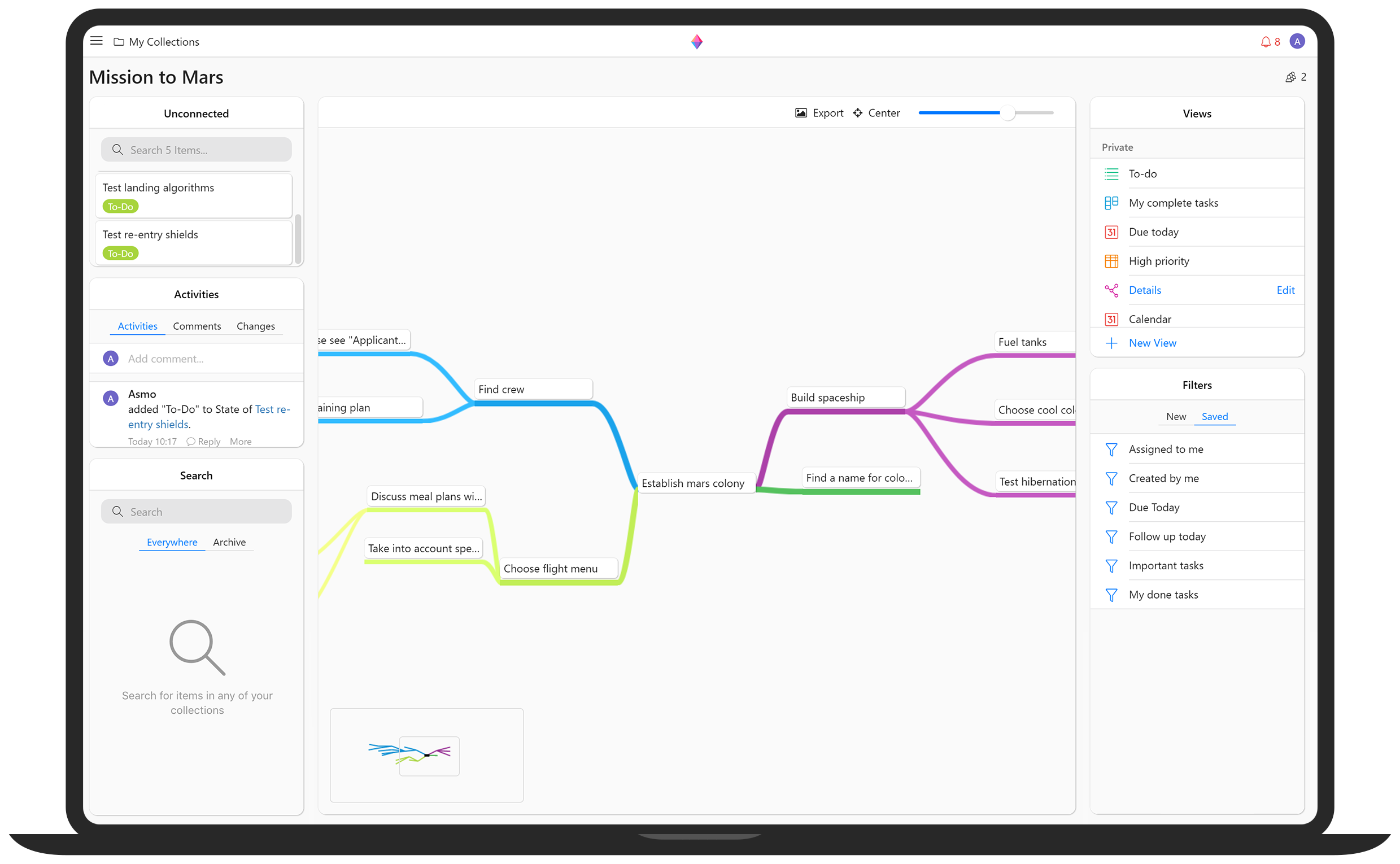
Zenkit redesigns its project management app, adds public API and more

There’s no darth of Trello-style project management services, but while the core of Zenkit is exactly that, it’s also far more flexible than most and offers plenty of ways to adjust the service to your style of work (and beyond Kanban). Today, the company is launching version 3.0 of its service and with that, it’s not just putting a fresh coat of paint on the service but also launching a number of new features for end users and developers.

With this new version, Zenkit moved to a unified user interface across mobile and desktop. The company is also placing a bet of progressive web apps. Indeed, As Zenkit CEO and co-founder Martin Welker told me, the company has now ceased developing native apps entirely.

“Existing frameworks such as Ionic are all component based, which means they couldn’t accommodate the deep complexity we envisaged,” he said. “It became clear to us that we would need to write our own framework that accommodated the entire app, not just it’s components, in order to realize our vision. The implementation of the Zenkit framework not only aligned our design across all platforms, but it also had a radical impact on how our team develop.”

With this new version, Zenkit is also introducing new features like published collections, for example. You can think of those as publish boards (or mindmaps, calendars etc.) that you can share with people outside of your organization or embed on any website. Welker expects that users will use this to share project roadmaps or changelogs for their apps, for example, while freelancers and consultants may use it to share their project progress with clients. He also expects that event managers will use it to post public schedules for their conferences, for example.

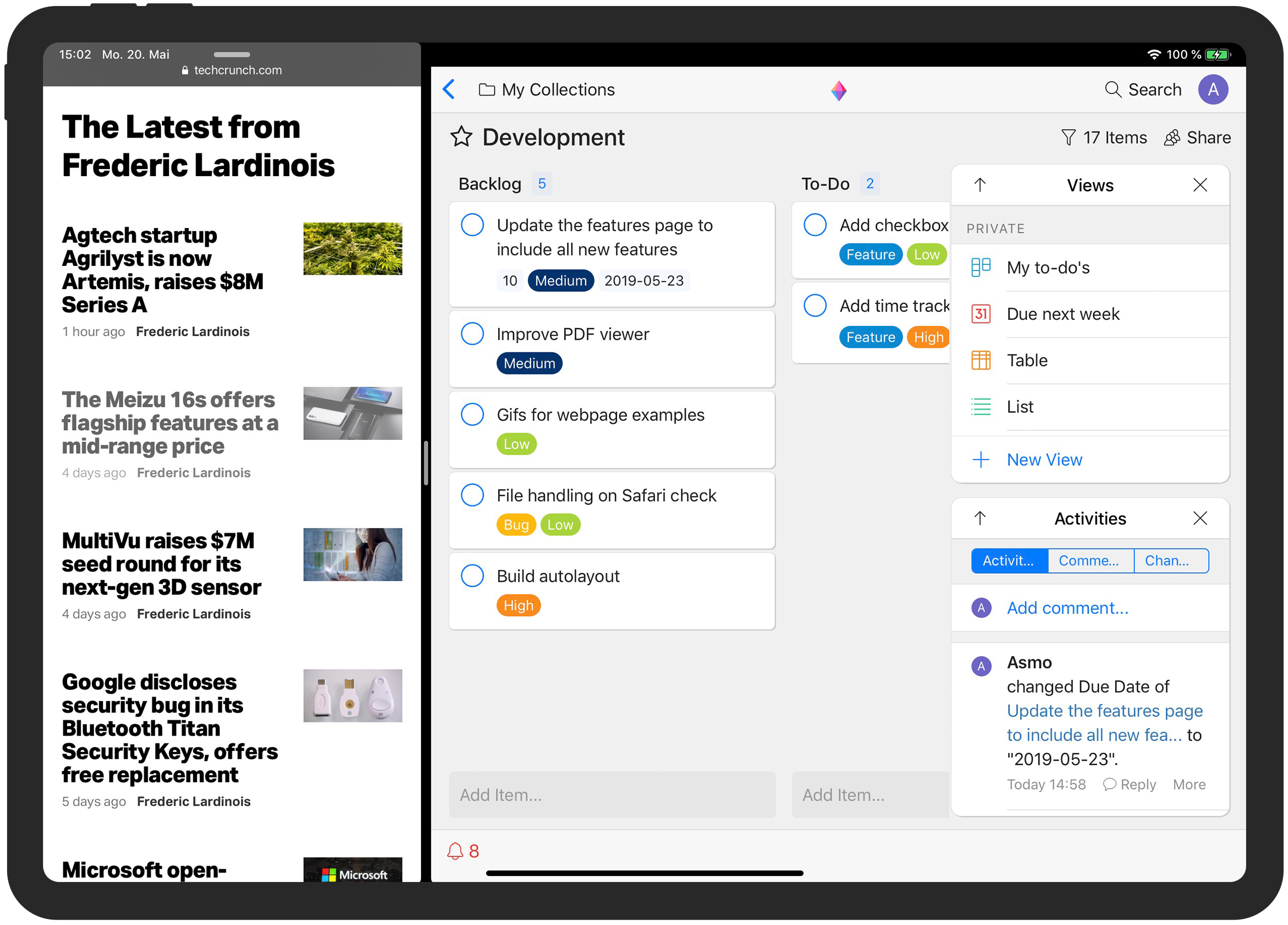
Another feature this move also enables is split-screen support on iPad.

“Our redesign was triggered by the need to improve the Zenkit mobile experience, especially on tablets,” Zenkit CEO Martin Welker said. “We know that tablets and phones are used differently, for different purposes, so the progressive web apps update makes Zenkit feel like it was designed as a native app for each device, while letting us immediately push updates and fixes from one central code source.”

Zenkit also adders Microsoft Teams support and the ability to log in with a Microsoft account, as well as iCalendar subscriptions.

There’s also now a public API, which is actually more interesting than it sounds. Since there is a generic database at the core of the service, developers will essentially be able to use Zenkit as a database backend for their own apps, too. It’ll be interesting to see how developers will use this service.

Hunters.ai raises $4.5M for its autonomous threat hunting solution

Hunters.ai, a Tel Aviv-based startup that built an AI-based threat hunting solution, today announced that it has raised a $5.4 million seed funding round led by YL Ventures and Blumberg Capital.

Threat hunting has traditionally been a rather manual practice, where analysts try to actively identify potential threats to their systems. This has always been a very data-driven activity, though, so it’s no surprise that a number of startups are now looking to automate the process. Not all attacks are as easy to spot as an attacker who is trying to brute force a password, for example. Sometimes, a sophisticated attacker may have the credentials to get into a network, for example. It’s then up to the hunter and hunting tools to recognize that there is unusual activity, because, in the end, these attackers always leave a few breadcrumbs in their wake.

The Hunters team tells me that it did a lot of market validation before deciding on its focus. “The main gap we saw is the level of talent, experience and understanding of the attack side inside of organizations,” Hunters CEO Uri May told me. “This led us to develop what we call the autonomous threat hunting machine, which is taking our understanding of what threat hunting is and to take that to a lot of customers around the world in a scalable way.”

Similar solutions often rely on agents, scanners and other techniques that collect the data, but Hunters gathers its information by integrating with existing systems. The system then continuously analyzes this data and looks for abnormalities.

As May and Hunters CTO Tomoer Kazaz stressed when I talked to them, the team wanted to provide users with more than just alerts, though. “We don’t call it alerts because it’s a full attack story because it’s more of a correlation of multiple alerts into an actionable attack story,” Kazaz said. “We always provide customers with some actionable action items.”

Over time, the company plans to integrate this dashboard with other security orchestration products.

“IT security teams must become faster and better at detecting and stopping attacks, and threat hunting is the obvious strategy of choice. But hiring the highly specialized and in-demand skills and knowledge needed is simply not possible,” said Ofer Schreiber, a partner at YL Ventures . “This leaves an attack detection gap and the cost of failure is a board-level concern. Deploying Hunters is like putting an army of highly skilled threat hunters to work to magnify your team’s power and close that gap.”

As is so often the case with Israeli security startups, May and Kazaz started their careers in the Israeli Defense Forces. The team also has Blumberg Captial’s Ehud Schneerson on its board. Schneerson is the former commander of Unit 8200, the Israeli equivalent of the NSA, an organization that has probably spawned more security startups in recent years than any university.

Hunters is now available to a limited set of customers, with general availability planned for late 2019.


A cryptocurrency stealing app found on Google Play was downloaded over a thousand times

Researchers have found two apps masquerading as cryptocurrency apps on Android’s app store, Google Play, which they say were designed to trick users into turning over their passwords.

Their aim was to steal cryptocurrency, the researchers said.

Security firm ESET said one of the two fake Android apps impersonated Trezor, a hardware cryptocurrency wallet. The good news is that app couldn’t be used to steal cryptocurrency stored by Trezor. But the researchers found the app was connected to a second Android app which could have been used to scam funds out of unsuspecting victims.

Lukas Stefanko, a security researcher at ESET — who has a long history of finding dodgy Android apps — said the fake Trezor app “appeared trustworthy at first glance” but was using a fake developer name to impersonate the company.

The fake app was designed to trick users into turning over a victim’s login credentials. Uploaded to Google Play on May 1, the app quickly ranked as the second-most popular search result when searching for “Trezor” behind the legitimate app, said Stefanko. Users on Reddit also found the fake app and reported it as recently as two weeks ago.

According to Stefanko, the server where user credentials were sent was linked to a website linked to another fake wallet, purportedly to store cryptocurrency, and also listed on Google Play since February 25.

“The app claims it lets its users create wallets for various cryptocurrencies,” said Stefanko. “However, its actual purpose is to trick users into transferring cryptocurrency into the attackers’ wallets – a classic case of what we’ve named wallet address scams in our previous research into cryptocurrency-targeting malware.”

Both apps were collectively downloaded more than a thousand times. After ESET contacted Google, the apps were pulled offline the next day.

Read more:

Fika Ventures raises $76M to fund the growing LA tech ecosystem

The Los Angeles ecosystem is $76 million stronger today as Fika Ventures, a seed-stage venture capital firm, announces its sophomore investment fund.

Fika invests roughly half of its capital exclusively in startups headquartered in LA, with a particular fondness for B2B, enterprise and fintech companies. The firm was launched in 2017 by general partners Eva Ho and TX Zhuo, formerly of Susa Ventures and Karlin Ventures, respectively. The pair raised $41 million for the debut effort, opting to nearly double that number the second time around as a means to participate in more follow-on fundings.

News of Fika’s second effort comes as investment in LA tech continues to reach record highs. In total, more than $60 billion was invested in LA startups in 2018. So far this year, companies headquartered in the area have attracted roughly $25 billion in equity funding, according to data collected by PitchBook.

“It’s still really underserved from a capital standpoint,” Zhuo said of the LA region. “We feel over the next couple of years, we’ll start to see repeat entrepreneurs come out of these LA companies. The timing is ripe for a fund like ours to capitalize on the opportunity.”

Ho, a former general partner and co-founder of San Francisco seed fund Susa Ventures, told TechCrunch LA is benefiting from the exodus of founders and investors from Silicon Valley: “A lot of the folks from up north have moved down here for better quality of life,” she explained.

“Silicon Valley has gotten a bad rap over the last couple of years so folks move down here, engineers come down here, founders come down,” Ho added. “I’ve watched the ecosystem grow over the last two decades.”

Fika Ventures focuses on the greater B2B ecosystem but has also supported companies solving social issues within housing, education and healthcare. Ho cited an investment in WeeCare, a startup that helps people launch curriculum-based home daycares within their own homes, as an example.

Additional Fika portfolio companies include Asian food delivery business Chowbus, Elementary Robotics, a developer of robot assistants, and Chatdesk, a customer support messaging platform.

Serverless and containers: Two great technologies that work great together

Cloud native models using containerized software in a continuous delivery approach could benefit from serverless computing where the cloud vendor generates the exact amount of resources required to run a workload on the fly. While the major cloud vendors have recognized this and are already creating products to abstract away the infrastructure, it may not work for every situation in spite of the benefits.

Cloud native put simply involves using containerized applications and Kubernetes to deliver software in small packages called microservices. This enables developers to build and deliver software faster and more efficiently in a continuous delivery model. In the cloud native world, you should be able to develop code once and run it anywhere, on prem or any public cloud, or at least that is the ideal.

Serverless is actually a bit of a misnomer. There are servers underlying the model, but instead of dedicated virtual machines, the cloud vendor delivers exactly the right number of resources to run a particular workload for the right amount of time and no more.

Nothing is perfect

Such an arrangement would seem to be perfectly suited to a continuous delivery model, and while vendors have recognized the beauty of such an approach, as one engineer pointed out, there is never a free lunch in processes that are this complex, and it won’t be a perfect solution for every situation.

Arpana Sinha, director of product management at Google says the Kubernetes community has really embraced the serveless idea, but she says that it is limited in its current implementation, delivered in the form of functions with products like AWS Lambda, Google Cloud Functions and Azure Functions.

“Actually, I think the functions concept is a limited concept. It is unfortunate that that is the only thing that people associate with serverless,” she said.

She says that Google has tried to be more expansive in its definition “It’s basically a concept for developers where you are able to seamlessly go from writing code to deployment and the infrastructure takes care of all of the rest, making sure your code is deployed in the appropriate way across the appropriate, most resilient parts of the infrastructure, scaling it as your app needs additional resources, scaling it down as your traffic goes down, and charging you only for what you’re consuming,” she explained

But Matt Whittington, senior engineer on the Kubernetes Team at Atlassian says, while it sounds good in theory, in practice fully automated infrastructure could be unrealistic in some instances. “Serverless could be promising for certain workloads because it really allows developers to focus on the code, but it’s not a perfect solution. There is still some underlying tuning.”

He says you may not be able to leave it completely up to the vendor unless there is a way to specify the requirements for each container such as instructing them you need a minimum container load time, a certain container kill time or perhaps you need to deliver it a specific location. He says in reality it won’t be fully automated, at least while developers fiddle with the settings to make sure they are getting the resources they need without over-provisioning and paying for more than they need.

Vendors bringing solutions

The vendors are putting in their two cents trying to create tools that bring this ideal together. For instance, Google announced a service called Google Cloud Run at Google Cloud Next last month. It’s based on the open source Knative project, and in essence combines the goodness of serverless for developers running containers. Other similar services include AWS Fargate and Azure Container Instances, both of which are attempting to bring together these two technologies in a similar package.

In fact, Gabe Monroy, partner program manager at Microsoft, says Azure Container Instances is designed to solve this problem without being dependent on a functions-driven programming approach. “What Azure Container Instances does is it allows you to run containers directly on the Azure compute fabric, no virtual machines, hypervisor isolated, pay-per-second billing. We call it serverless containers,” he said.

While serverless and containers might seem like a good fit, as Monroy points there isn’t a one size fits all approach to cloud native technologies, whatever the approach may be. Some people will continue to use a function-driven serverless approach like AWS Lambda or Azure Functions and others will shift to containers and look for other ways to bring these technologies together. Whatever happens, as developer needs change, it is clear the open source community and vendors will respond with tools to help them. Bringing serverless and containers is together is just one example of that.

Future launches $150/mo exercise app where real coaches nag you

The only way to beat laziness is with guilt, and so that’s what Future sells. It assigns you an actual human trainer who builds personalized workout plans and message you throughout the day to make sure you’re doing them. It even gives you an Apple Watch to track your activity and ensure you’re not lying. Future actually got me to the gym where my coach kicked my ass remotely with a 30 minute lifting routine I’d never have stuck to by myself.

The catch? It’s probably the most expensive app you’ve ever seen, charging $150 per month.

Future officially launches today, touting some stunning stats from its beta tests. 95% of users stuck with it for 3 months, and 85% kept training for 6 months. Luckily it comes with a 1-month money-back guarantee that CEO Rishi Mandal says has only been redeemed once.

The remarkable retention and Future’s potential to become a gateway for your fitness and nutrition spending have roped in some big name investors. Today it’s announcing an $8.5 million Series A led by Kleiner Perkins, building on its $3 million seed. Other backers include Instagram co-founder Mike Krieger, Khosla Ventures, Founders Fund, and Caffeinated Capital. Athletes are betting on Future’s promise of democratizing the personal training they get, including Golden State Warrior Sean Livingston, and NFL stars Ndamukong Suh and Kelvin Beachum.

“Future manages to be both deeply personalized (and personable!) while being super convenient” says Krieger of one of his first investments since leaving Instagram. Future’s Mandal previously built local experience app Sosh while sitting next to Krieger at incubator Dogpatch Labs where Instagram got its start. “The always available nature of it means travel or a shifting schedule is no longer an excuse to not work out.”

How Future Works (Out)

Throughout the onboarding, Future flexes the money you spend to give what feels like a luxury app experience.

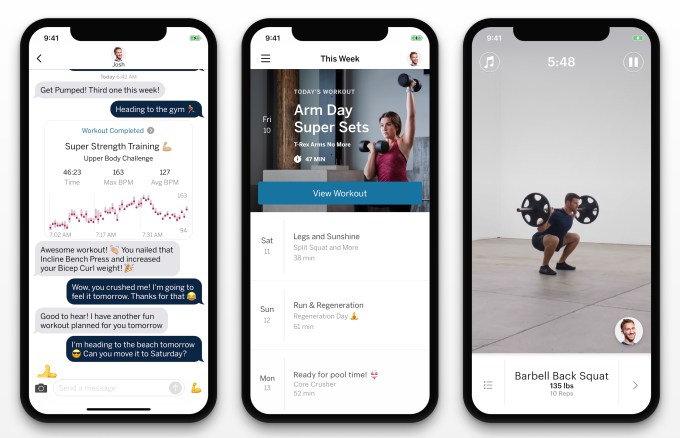
Upon signup, you’ll answer some questions about your goals like slimming down or beefing up, and pick from a few expert trainers who specialize in your needs. You’ll do a 15-minute video chat with your trainer to get friendly, describe your schedule, and hammer out details of your workout plan. After you get your welcome kit with some swag and an Apple Watch, your trainer delivers your week’s worth of personalized daily routines that come with video instructions for each exercise. The Future app provides audio cues to guide you through the workout while your trainer chimes in with personalized pointers and motivation via pre-recorded voice clips.

But what’s unique about Future is that your trainer proactively checks in with you throughout your day to make sure you’re actually getting to the gym or doing those pushups. Since you don’t switch between trainers with each workout like some apps, and since they have your activity and heart rate data from the Apple Watch, they can spot patterns of procrastination or flaking out. And you’re prompted to give feedback after each sweat session that the trainer uses to tweak your plan. That personalization and prodding go a long way to making sure Future always fits your day and actually stays part of it.

For example, I wanted to burn a few pounds without burning too much time by adding a gym day or two plus some warmup strength training before my home Peloton rides. My trainer Renee, a former University Of Wisconsin Director of Sports Performance for basketball, designed a 30-minute weight lifting circuit and some 10-minute bodyweight exercise plans for me. When I messaged her that I was doing an a more intense spin class today, she remixed my warmup exercises to avoid legs so I wouldn’t be tired during my ride. So far she’s always responded within a few minutes, and been cheerful yet forceful “I know your days are slammed, just wanted to check in and see if you were able to get to that spin class?” she messaged me at 6:30pm. That’s something even most in-person trainers don’t do.

The constant communication and sense of trust users develop with their coaches could give Future potential beyond subscription fitness. The app becomes a hub for your healthy behavior. Future already offers an in-app Shop where it recommends workout clothes, headphones, and water bottles. It’s easy to imagine it partnering with fitness equipment makers, health food lines, or other brands to score a cut of referred sales.

Still, the biggest hurdle is convincing people to pay over 10X their Netflix fee for a personal trainer they don’t see in person. Compared to the $1 apps we’re used to, Future can induce sticker shock. But compared to unused gym memberships, pricey private coaching, and potential health problems, Future could look affordable if well-to-do professionals squint right. And if it works. Humans are sluggish. Most heathy habits lapse. But Future is building the closest thing to “press button, pay money, get fitter” — which in the end looks like getting someone to enthusiastically shame us from afar.