Throw out your diary, Jour is a new app for guided journaling

Since Jour, a new app for private and portable journaling, dropped on the App Store two months ago, it’s racked up 80,000 users. No paid marketing or public announcements. Just organic interest in discovering a better way of journaling than pen to paper.

“We can reinvent and redesign what we call journaling and the journal,” Jour co-founder and chief executive officer Maxime Germain told TechCrunch. “If we do it right, it will go mainstream.”

New York-based Jour has raised a $1.8 million seed round from True Ventures’ Kevin Rose. Similar to the meditation apps that have skyrocketed in popularity recently, Jour’s audio-guided sequences are meant to facilitate the journaling process and encourage writers to mindfully reflect and record their lives. With its seed funding, Jour will expand its library of audio sessions and written questions meant to spark inspiration.

“Meditation apps have shown there are some self-care habits we can use in our life to feel better, to feel less anxious,” Germain, a French native who relocated to New York seven years ago, said. “But the journal is a way to capture moments and people’s authentic selves. It’s all the stuff you might not be sharing on social media.”

Jour, at its core, is an app battling mental illness. The business joins a number of other well-being apps and venture-backed startups targeting the mental health crisis. From brick-and-mortar therapy clinics to chat apps to emotional wellness assistants, venture capitalists are waking up to the emotional struggles rampant across the globe.

“Ten years ago when I first started using meditation apps I think there was a certain type of stigma; like you need help so you’re meditating,” True Venture’s Rose, a founder of Digg, Oak, a guided meditation app, and Zero, an app for tracking intermittent fasting, told TechCrunch. “Now, it’s just crossed over to the mainstream.”

“I’m hopeful we are finally getting to a point where we can have open conversations about mental health,” Rose added.

Jour co-founders (from left to right) Maxime Germain, Justin Bureau and Bobby Giangeruso

As Jour deals with an influx of new users, it’s keeping the entire app and all of its features free, though eventually, the team plans to add a paywall to some of the guided content. As for anyone concerned about the safety of your anxieties, hopes and dreams, Jour’s founding team, which includes Germain, Bobby Giangeruso and Justin Bureau, built the app with zero-knowledge encryption.

“I would feel very uncomfortable if the rest of the people on my team could read my most intimate thoughts,” Germain explained. “We built [Jour] with an encryption key that stays on the phone, all the data is encrypted with that key and if you lose that key we can’t recover the entries that we save on the servers. Only you have access to that key, it’s stored on the phone, it encrypts the data and even if the data is compromised we can’t get it.”

Phew. The last thing we need today is our diaries getting hacked.

Apple has a plan to make online ads more private

For years, the web has been largely free thanks to online ads. The problem is that nobody likes them. When they’re not obnoxiously taking over your entire screen or autoplaying, they’re tracking you everywhere you go online.

Ads can track where you go and which sites you visit and can be used to build up profiles on individuals — even if you never click on one. And when you do, they know what you bought and then they share that with other sites so they know you were up late buying ice cream, cat food, or something a little more private.

The obvious logic would be to use an ad-blocker. But that’s not what keeps the internet thriving and available. Apple says it’s figured out some middle ground that keeps ads alive but without their nefarious ad tracking capabilities.

The tech giant came up with Privacy Preserving Ad Click Attribution. Yes, it’s a mouthful but the tech itself shows promise.

A bit of background: Any time you buy something online, the store that placed the ad knows you bought something and so do the other sites where the ad was placed. When a person clicks on an ad, the store wants to know which site the ad was clicked on so they know where to keep advertising, known as ad attribution. Ads often use tracking images — tiny, near-invisible pixel-sized trackers embedded on websites that know when you’ve opened a webpage. These pixels carry cookies, which make it easy for ads to track users across pages and entire websites. Using these invisible trackers, websites can build up profiles on people — whether they click ads or not — from site to site, such as their interests, what they want to buy, and more.

Apple’s thinking, outlined in a blog post Wednesday, is that ads don’t need to share that you bought something from an online store with anyone else. Ads just need to know that someone — and not an identifiable person — clicked on an ad on a site and bought something on another.

By taking the identifiable person out of the equation, Apple says its new technology can help preserve user privacy without reducing the effectiveness on ad campaigns.

Apple’s new web technology, soon to be built into its Safari browser, is broken down into four parts.

Firstly, nobody should be identifiable based off their ad clicks. Ads often use long and unique tracking codes to identify a user visiting various sites and buying things. By limiting the number of campaign IDs to just a few dozen, an advertiser won’t be able to assign unique tracking codes to each ad click, making it far more difficult to track individual users across the web. Secondly, only the website where the ad was clicked will be allowed to measure ad clicks, cutting out third-parties. Thirdly, the browser should delay the sending of ad click and conversion data — such as when someone signs up for a site or buys something — at random by up to two days to further hide the user’s activity. That data is sent through a dedicated private browsing window to ensure it’s not associated with any other browsing data.

Lastly, Apple said it can do this at the browser level, limiting how much data the ad networks and merchants can see.

Instead of knowing exactly who bought what and when, the privacy ad click technology will instead report back ad click and conversion data without identifying the person.

“As more and more browsers acknowledge the problems of cross-site tracking, we should expect privacy-invasive ad click attribution to become a thing of the past,” wrote Apple engineer John Wilander in a blog post.

One of the core features of the technology is the limiting the amount of data that ads can collect.

“Today’s practice of ad click attribution has no practical limit on the bits of data, which allows for full cross-site tracking of users using cookies,” explained Wilander. “But by keeping the entropy of attribution data low enough, we believe the reporting can be done in a privacy preserving way.”

Simply put, by restricting the number of campaign and conversion IDs to just 64, advertisers are prevented from using long and unique values that can be used as a unique identifier to track a user from site to site. Apple says that restricted number will still give advertisers enough information to know how well their ads are performing. Advertisers, for example, can still see that a particular ad campaign leads to more completed purchases, based off a specific conversion ID, than other ad campaigns when they’re run on specific site in the last 48 hours.

But Apple concedes that real-time tracking of purchases may be a thing of the past if the technology becomes widely adopted. By delaying the ad click and conversion reports by up to two days, advertisers lose real-time insight into who buys what and when. Apple says there’s no way to protect a user’s privacy if attribution reports are sent as soon as someone buys something.

Apple is set to switch on the privacy feature by default in Safari later this year but knows it can’t go in alone. The company has proposed the technology as a standard to the World Wide Web Consortium in the hope other browser makers will pick up the torch and run with it.

Anyone with a short memory will know that web standards don’t always take off. The ill-fated Do Not Track web standard was meant to allow browser users to send a signal to websites and ad networks not to be tracked. The major browser makers adopted the feature, but mired in controversy, the standard never took off.

Apple thinks its proposed standard can succeed — chiefly because unlike Do Not Track the privacy ad click technology can be enforced in the browser with other privacy-minded technology. In Safari’s case, that’s intelligence tracking prevention. Other browsers, like Google Chrome and Mozilla Firefox are also doubling down on privacy features in an effort to win over the privacy crowd. Apple is also betting on users actively wanting this privacy technology, while balancing the concerns of advertisers who don’t want to be shut out through more drastic measures like users installing ad and content blockers.

The new privacy technology is in its developer-focused Safari Technology Preview 82, released last week, and will be available for web developers later this year.

Read more:

Zendesk acquires Smooch, doubles down on support via messaging apps like WhatsApp

One of the bigger developments in customer services has been the impact of social media — both as a place to vent frustration or praise (mostly frustration), and — especially over messaging apps — as a place for businesses to connect with their users.

Now, customer support specialist Zendesk has made an acquisition so that it can make a bigger move into how it works within social media platforms, and specifically messaging apps: it has acquired Smooch, a startup that describes itself as an “omnichannel messaging platform,” which companies’ customer care teams can use to interact with people over messaging platforms like WhatsApp, WeChat, Line and Messenger, as well as SMS and email.

Smooch was in fact one of the first partners for the WhatsApp Business API, alongside VoiceSageNexmoInfobip, Twilio, MessageBird and others are already advertising their services in this area.

It had also been a longtime partner of Zendesk’s, powering the company’s own WhatsApp Business integration and other features. The two already have some customers in common, including Uber. Other Smooch customers include Four Seasons, SXSW, Betterment, Clarabridge, Harry’s, LVMH, Delivery Hero and BarkBox.

Terms of the deal are not being disclosed, but Zendesk SVP <span class=”il”>Shawna Wolverton said in an interview that that the startup’s entire team of 48, led by co-founder and CEO Warren Levitan, are being offered positions with Zendesk. Smooch is based out of Montreal, Canada — so this represents an expansion for Zendesk into building an office in Canada.

Its backers included iNovia, TA Associates and Real Ventures, who collectively had backed it with less than $10 million (when you leave in inflated hills surrounding Silicon Valley, numbers magically decline). As Zendesk is publicly traded, we may get more of a picture of the price in future quarterly reports. This is the company’s fifth acquisition to date.

The deal underscores the big impact that messaging apps are making in customer service. While phone and internet are massive points of contact, messaging apps is one of the most-requested features Zendesk’s customers are asking for, “because they want to be where their customers are,” with WhatsApp — now at 1.5 billion users — currently at the top of the pile, Wolverton said. (More than half of Zendesk’s revenues are from outside the US, which speaks to why WhatsApp — which is bigger outside the US than it is in it — is a popular request.)

That’s partly a by-product of how popular messaging apps are full-stop, with more than 75 percent of all smartphone users having at least one messaging app in use on their devices.

“We live in a messaging-centric world, and customers expect the convenience and interactivity of messaging to be part of their experiences,” said Mikkel Svane, Zendesk founder, CEO and chairman, in a statement. “As long-time partners with Smooch, we know first hand how much they have advanced the conversational experience to bring together all forms of messaging and create a continuous conversation between customers and businesses.”


While the two companies were already working together, the acquisition will mean a closer integration.

That will be in multiple areas. Last year, Zendesk launched a new CRM play called Sunshine, going head to head with the likes of Salesforce in helping businesses better organise and make use of customer data. Smooch will build on that strategy to bring in data to Sunshine from messaging apps and the interactions that take place on them. Also last year, Zendesk launched an omnichannel play, a platform called The Suite, which it says “has become one of our most successful products ever,” with a 400 percent rise in its customers taking an omnichannel approach. Smooch already forms a key part of that, and it will be even more tightly so.

On the outbound side, for now, there will be two areas where Smooch will be used, Wolverton said. First will be on the basic level of giving Zendesk users the ability to see and create messaging app discussions within a dashboard where they are able to monitor and handle all customer relationship contacts: a conversation that was inititated now on, say, Twitter, can be easily moved into WhatsApp or whatever more direct channel someone wants to use.

Second, Wolverton said that customer care workers can use Smooch to send on “micro apps” to users to handle routine service enquiries, for example sending them links to make or change seat assignments on a flight.

Over time, the plan will be to bring in more automated options into the experience, which opens the door for using more AI and potentially bots down the line.

Loot, the UK digital current account for students and millennials, enters administration after a potential sale falls through

Loot, the digital current account aimed at students and millennials, has called in administrators after appearing to have run out of cash. According to sources, the U.K. fintech was unable to raise additional funding in time after a potential sale to banking giant RBS fell through.

Intriguingly, Royal Bank of Scotland Group indirectly owned a 25 percent stake in Loot via an investment by Bó, the digital-only retail bank being developed by RBS subsidiary NatWest. RBS announced that Bó had invested £2 million in Loot in January this year, following an initial investment of £3 million in July 2018.

It was also presumed by many fintech insiders that Loot had been white labelled and was powering the Bó product. Clearly that was never the case, and it now raises questions around why RBS/Natwest would invest in a competitor, only to sees its demise six months later.

Loot’s other investors included Portag3 Ventures (Power Corporation’s corporate VC arm), Austrian VC firm Speedinvest, Rocket Internet’s GFC, and a number of unnamed angel investors and smaller funds.

Founded in 2014 by now 25 year old Ollie Purdue as he was finishing up university, Loot offers a digital-only current account aimed at students and millennials, and has around 250,000 registered accounts. It comes with a Mastercard and mobile app, with a particular focus on spending insights and real-time budgeting. Like a number of competitors in the “neobank” soace, Loot doesn’t have a full banking license and instead operates under an electronic money licence through a partnership with FCA regulated Wirecard.

Meanwhile, sources tell me that Loot’s 60 or so employees were informed this lunchtime. I also understand that efforts by Loot founder Ollie Purdue and others within London’s close-nit fintech community are already underway to safe land as many of those employees as possible, and that around 30 job offers are already in motion.

Loot declined to comment. I’ve reached out to RBS and will update this post if and when I hear back.

London’s Tube network to switch on wi-fi tracking by default in July

Transport for London will roll out default wi-fi device tracking on the London Underground this summer, following a trial back in 2016.

In a press release announcing the move, TfL writes that “secure, privacy-protected data collection will begin on July 8” — while touting additional services, such as improved alerts about delays and congestion, which it frames as “customer benefits”, as expected to launch “later in the year”.

As well as offering additional alerts-based services to passengers via its own website/apps, TfL says it could incorporate crowding data into its free open-data API — to allow app developers, academics and businesses to expand the utility of the data by baking it into their own products and services.

It’s not all just added utility though; TfL says it will also use the information to enhance its in-station marketing analytics — and, it hopes, top up its revenues — by tracking footfall around ad units and billboards.

Commuters using the UK capital’s publicly funded transport network who do not want their movements being tracked will have to switch off their wi-fi, or else put their phone in airplane mode when using the network.

To deliver data of the required detail, TfL says detailed digital mapping of all London Underground stations was undertaken to identify where wi-fi routers are located so it can understand how commuters move across the network and through stations.

It says it will erect signs at stations informing passengers that using the wi-fi will result in connection data being collected “to better understand journey patterns and improve our services” — and explaining that to opt out they have to switch off their device’s wi-fi.

Attempts in recent years by smartphone OSes to use MAC address randomization to try to defeat persistent device tracking have been shown to be vulnerable to reverse engineering via flaws in wi-fi set-up protocols. So, er, switch off to be sure.

We covered TfL’s wi-fi tracking beta back in 2017, when we reported that despite claiming the harvested wi-fi data was “de-personalised”, and claiming individuals using the Tube network could not be identified, TfL nonetheless declined to release the “anonymized” data-set after a Freedom of Information request — saying there remains a risk of individuals being re-identified.

As has been shown many times before, reversing ‘anonymization’ of personal data can be frighteningly easy.

It’s not immediately clear from the press release or TfL’s website exactly how it will be encrypting the location data gathered from devices that authenticate to use the free wi-fi at the circa 260 wi-fi enabled London Underground stations.

Its explainer about the data collection does not go into any real detail about the encryption and security being used. (We’ve asked for more technical details.)

“If the device has been signed up for free Wi-Fi on the London Underground network, the device will disclose its genuine MAC address. This is known as an authenticated device,” TfL writes generally of how the tracking will work.

“We process authenticated device MAC address connections (along with the date and time the device authenticated with the Wi-Fi network and the location of each router the device connected to). This helps us to better understand how customers move through and between stations — we look at how long it took for a device to travel between stations, the routes the device took and waiting times at busy periods.”

“We do not collect any other data generated by your device. This includes web browsing data and data from website cookies,” it adds, saying also that “individual customer data will never be shared and customers will not be personally identified from the data collected by TfL”.

In a section entitled “keeping information secure” TfL further writes: “Each MAC address is automatically depersonalised (pseudonymised) and encrypted to prevent the identification of the original MAC address and associated device. The data is stored in a restricted area of a secure location and it will not be linked to any other data at a device level.  At no time does TfL store a device’s original MAC address.”

Privacy and security concerns were raised about the location tracking around the time of the 2016 trial — such as why TfL had used a monthly salt key to encrypt the data rather than daily salts, which would have decreased the risk of data being re-identifiable should it leak out.

Such concerns persist — and security experts are now calling for full technical details to be released, given TfL is going full steam ahead with a rollout.

https://platform.twitter.com/widgets.js


A report in Wired suggests TfL has switched from hashing to a system of tokenisation – “fully replacing the MAC address with an identifier that cannot be tied back to any personal information”, which TfL billed as as a “more sophisticated mechanism” than it had used before. We’ll update as and when we get more from TfL.

Another question over the deployment at the time of the trial was what legal basis it would use for pervasively collecting people’s location data — since the system requires an active opt-out by commuters a consent-based legal basis would not be appropriate.

In a section on the legal basis for processing the Wi-Fi connection data, TfL writes now that its ‘legal ground’ is two-fold:

  • Our statutory and public functions
  • to undertake activities to promote and encourage safe, integrated, efficient and economic transport facilities and services, and to deliver the Mayor’s Transport Strategy

So, presumably, you can file ‘increasing revenue around adverts in stations by being able to track nearby footfall’ under ‘helping to deliver (read: fund) the mayor’s transport strategy’.

(Or as TfL puts it: “[T]he data will also allow TfL to better understand customer flows throughout stations, highlighting the effectiveness and accountability of its advertising estate based on actual customer volumes. Being able to reliably demonstrate this should improve commercial revenue, which can then be reinvested back into the transport network.”)

On data retention it specifies that it will hold “depersonalised Wi-Fi connection data” for two years — after which it will aggregate the data and retain those non-individual insights (presumably indefinitely, or per its standard data retention policies).

“The exact parameters of the aggregation are still to be confirmed, but will result in the individual Wi-Fi connection data being removed. Instead, we will retain counts of activities grouped into specific time periods and locations,” it writes on that.

It further notes that aggregated data “developed by combining depersonalised data from many devices” may also be shared with other TfL departments and external bodies. So that processed data could certainly travel.

Of the “individual depersonalised device Wi-Fi connection data”, TfL claims it is accessible only to “a controlled group of TfL employees” — without specifying how large this group of staff is; and what sort of controls and processes will be in place to prevent the risk of A) data being hacked and/or leaking out or B) data being re-identified by a staff member.

A TfL employee with intimate knowledge of a partner’s daily travel routine might, for example, have access to enough information via the system to be able to reverse the depersonalization.

Without more technical details we just don’t know. Though TfL says it worked with the UK’s data protection watchdog in designing the data collection with privacy front of mind.

“We take the privacy of our customers very seriously. A range of policies, processes and technical measures are in place to control and safeguard access to, and use of, Wi-Fi connection data. Anyone with access to this data must complete TfL’s privacy and data protection training every year,” it also notes elsewhere.

https://platform.twitter.com/widgets.js

Despite holding individual level location data for two years, TfL is also claiming that it will not respond to requests from individuals to delete or rectify any personal location data it holds, i.e. if people seek to exercise their information rights under EU law.

“We use a one-way pseudonymisation process to depersonalise the data immediately after it is collected. This means we will not be able to single out a specific person’s device, or identify you and the data generated by your device,” it claims.

“This means that we are unable to respond to any requests to access the Wi-Fi data generated by your device, or for data to be deleted, rectified or restricted from further processing.”

Again, the distinctions it is making there are raising some eyebrows.

https://platform.twitter.com/widgets.js

What’s amply clear is that the volume of data that will be generated as a result of a full rollout of wi-fi tracking across the lion’s share of the London Underground will be staggeringly massive.

More than 509 million “depersonalised” pieces of data, were collected from 5.6 million mobile devices during the four-week 2016 trial alone — comprising some 42 million journeys. And that was a very brief trial which covered a much smaller sub-set of the network.

As big data giants go, TfL is clearly gunning to be right up there.

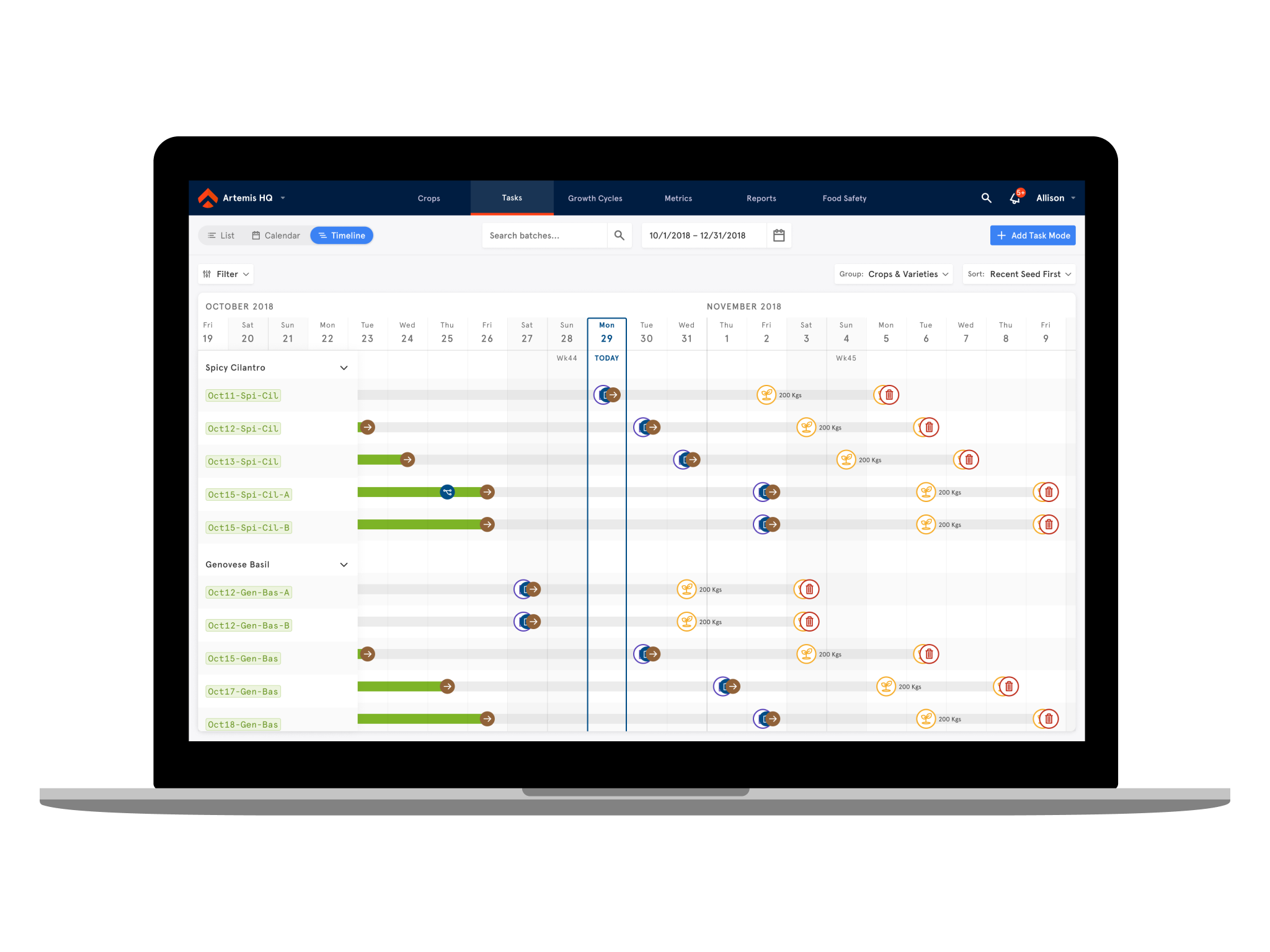
Agtech startup Agrilyst is now Artemis, raises $8M Series A

Artemis, the ag-tech startup formerly known as Agrilyst, today announced that it has raised an $8 million Series A funding round. The round was co-led by Astanor Ventures and Talis Capital, with participation from iSelect Fund and New York State’s Empire State Development Fund. With this, the company, which won our 2015 Disrupt SF Battlefield competition, has now raised a total of $11.75 million.

When Agrilyst launched, the company mostly focused on helping indoor farmers and greenhouse operators manage their operations by gathering data about their crop yields and other metrics. Over the course of the last few years, that mission has expanded quite a bit, though, and today’s Artemis sees itself as an enterprise Cultivation Management Platform (CMP) that focuses on all aspects of indoor farming, including managing workers and ensuring compliance with food safety and local cannabis regulations, for example.

The expanded platform is meant to give these businesses a single view of all of their operations and integrates with existing systems that range from climate control to ERP tools and Point of Sale systems.

Compliance is a major part of the expanded platform. “When you look at enterprise operations, that risk is compounded because it’s not just that risk across many, many sites and many acres, so in 2018, we switched to almost entirely focusing on those operations and have gained a lot of momentum in that space,” Kopf said. “And now we’re using the funding to expand from mainly focusing on managing that data to help with profitability to using that data to help you with everything from compliance down to the profitability element. We want to limit that exposure to controllable risk.”

With this new focus on compliance, the company also added Dr. Kathleen Merrigan to its board. Merrigan was the Deputy Secretary of Agriculture in the Obama administration and is the first Executive Director of the Swette Center for Sustainable Food Systems at Arizona State University . She is also a venture partner at Astanor Ventures .

“Technology innovation is rapidly transforming the agriculture sector. Artemis’ approach to using data as a catalyst for growth and risk management provides the company a significant advantage with enterprise-level horticulture operations,” said Merrigan.

Cannabis, it’s worth noting, was not something the company really focused on in its early years, but as the company’s CEO and founder Allison Kopf told me, it now accounts for about half of the company’s revenue. Only a few years ago, many investors were also uncomfortable investing in a company that was in the cannabis business, but that’s far less of an issue today.

“When we raised our seed round in 2015, we were pitching to a lot of funds and a lot of funds told us that they had LPs that can’t invest in cannabis. So if you’re pitching that you’re going to eventually be in cannabis, we’re going to have to step away from the investment, ” Kopf said. “Now, folks are saying: ‘If you’re not in cannabis, we don’t want to invest.’”

Today, Artemis’s clients are worth a collective $5 billion. The company plans to use the

Indonesia restricts WhatsApp and Instagram usage following deadly riots

Indonesia is the latest nation to hit the hammer on social media after the government restricted the use of WhatsApp and Instagram following deadly riots yesterday.

Numerous Indonesia-based users are today reporting difficulties sending multimedia messages via WhatsApp, which is one of the country’s most popular chat apps, while the hashtag #instagramdown is trending among the country’s Twitter users due to problems accessing the Facebook-owned photo app.

Wiranto, a coordinating minister for political, legal and security affairs, confirmed in a press conference that the government is limiting access to social media and “deactivating certain features” to maintain calm, according to a report from Coconuts.

Rudiantara, the communications minister of Indonesia and a critic of Facebook, explained that users “will experience lag on Whatsapp if you upload videos and photos.”

Facebook — which operates both WhatsApp and Instagram — didn’t explicitly confirm the blockages , but it did say it has been in communication with the Indonesian government.

“We are aware of the ongoing security situation in Jakarta and have been responsive to the Government of Indonesia. We are committed to maintaining all of our services for people who rely on them to communicate with their loved ones and access vital information,” a spokesperson told TechCrunch.

A number of Indonesia-based WhatsApp users confirmed to TechCrunch that they are unable to send photos, videos and voice messages through the service. Those restrictions are lifted when using Wi-Fi or mobile data services through a VPN, the people confirmed.

The restrictions come as Indonesia grapples with political tension following the release of the results of its presidential election on Tuesday. Defeated candidate Prabowo Subianto said he will challenge the result in the constitutional court.

Riots broke out in capital state Jakarta last night, killing at least six people and leaving more than 200 people injured. Following this, it is alleged that misleading information and hoaxes about the nature of riots and people who participated in them began to spread on social media services, according to local media reports.

Protesters hurl rocks during clash with police in Jakarta on May 22, 2019. – Indonesian police said on May 22 they were probing reports that at least one demonstrator was killed in clashes that broke out in the capital Jakarta overnight after a rally opposed to President Joko Widodo’s re-election. (Photo by ADEK BERRY / AFP)

For Facebook, seeing its services forcefully cut off in a region is no longer a rare incident. The company, which is grappling with the spread of false information in many markets, faced a similar restriction in Sri Lanka in April, when the service was completely banned for days amid terrorist strikes in the nation. India, which just this week concluded its general election, has expressed concerns over Facebook’s inability to contain the spread of false information on WhatsApp, which is its largest chat app with over 200 million monthly users.

Indonesia’s Rudiantara expressed a similar concern earlier this month.

“Facebook can tell you, ‘We are in compliance with the government’. I can tell you how much content we requested to be taken down and how much of it they took down. Facebook is the worst,” he told a House of Representatives Commission last week, according to the Jakarta Post.

Facebook found hosting masses of far right EU disinformation networks

A multi-month hunt for political disinformation spreading on Facebook in Europe suggests there are concerted efforts to use the platform to spread bogus far right propaganda to millions of voters ahead of a key EU vote which kicks off tomorrow.

Following the independent investigation, Facebook has taken down a total of 77 pages and 230 accounts from Germany, UK, France, Italy, Spain and Poland — which had been followed by an estimated 32 million people and generated 67 million ‘interactions’ (i.e. comments, likes, shares) in the last three months alone.

The bogus mainly far-right disinformation networks were not identified by Facebook — but had been reported to it by campaign group Avaaz — which says the fake pages had more Facebook followers and interactions than all the main EU far right and anti-EU parties combined.

“The results are overwhelming: the disinformation networks upon which Facebook acted had more interactions (13 million) in the past three months than the main party pages of the League, AfD, VOX, Brexit Party, Rassemblement National and PiS combined (9 million),” it writes in a new report.

Although interactions is the figure that best illustrates the impact and reach of these networks, comparing the number of followers of the networks taken down reveals an even clearer image. The Facebook networks takedown had almost three times (5.9 million) the number of followers as AfD, VOX, Brexit Party, Rassemblement National and PiS’s main Facebook pages combined (2 million).”

Avaaz has previously found and announced far right disinformation networks operating in Spain, Italy and Poland — and a spokesman confirmed to us it’s re-reporting some of its findings now (such as the ~30 pages and groups in Spain that had racked up 1.7M followers and 7.4M interactions, which we covered last month) to highlight an overall total for the investigation.

“Our report contains new information for France, United Kingdom and Germany,” the spokesman added.

Examples of politically charged disinformation being spread via Facebook by the bogus networks it found include a fake viral video seen by 10 million people that supposedly shows migrants in Italy destroying a police car (but was actually from a movie; which Avaaz adds that this fake had been “debunked years ago”); a story in Poland claiming that migrant taxi drivers rape European women, including a fake image; and fake news about a child cancer center being closed down by Catalan separatists in Spain.

There’s lots more country-specific detail in its full report.

In all, Avaaz reported more than 500 suspicious pages and groups to Facebook related to the three-month investigation of Facebook disinformation networks in Europe. Though Facebook only took down a subset of the far right muck-spreaders — around 15% of the suspicious pages reported to it.

“The networks were either spreading disinformation or using tactics to amplify their mainly anti-immigration, anti-EU, or racist content, in a way that appears to breach Facebook’s own policies,” Avaaz writes of what it found.

It estimates that content posted by all the suspicious pages it reported had been viewed some 533 million times over the pre-election period. Albeit, there’s no way to know whether or not everything it judged suspicious actually was.

In a statement responding to Avaaz’s findings, Facebook told us:

We thank Avaaz for sharing their research for us to investigate. As we have said, we are focused on protecting the integrity of elections across the European Union and around the world. We have removed a number of fake and duplicate accounts that were violating our authenticity policies, as well as multiple Pages for name change and other violations. We also took action against some additional Pages that repeatedly posted misinformation. We will take further action if we find additional violations.

The company did not respond to our question asking why it failed to unearth this political disinformation itself.

Ahead of the EU parliament vote, which begins tomorrow, Facebook invited a select group of journalists to tour a new Dublin-based election security ‘war room’ — where it talked about a “five pillars of countering disinformation” strategy to prevent cynical attempts to manipulate voters’ views.

But as Avaaz’s investigation shows there’s plenty of political disinformation flying by entirely unchecked.

One major ongoing issue where political disinformation and Facebook’s platform is concerned is that how the company enforces its own rules remains entirely opaque.

We don’t get to see all the detail — so can’t judge and assess all its decisions. Yet Facebook has been known to shut down swathes of accounts deemed fake ahead of elections, while apparently failing entirely to find other fakes (such as in this case).

It’s a situation that does not look compatible with the continued functioning of democracy given Facebook’s massive reach and power to influence.

Nor is the company under an obligation to report every fake account it confirms. Instead, Facebook gets to control the timing and flow of any official announcements it chooses to make about “coordinated inauthentic behaviour” — dropping these self-selected disclosures as and when it sees fit, and making them sound as routine as possible by cloaking them in its standard, dryly worded newspeak.

Back in January, Facebook COO Sheryl Sandberg admitted publicly that the company is blocking more than 1M fake accounts every day. If Facebook was reporting every fake it finds it would therefore need to do so via a real-time dashboard — not sporadic newsroom blog posts that inherently play down the scale of what is clearly embedded into its platform, and may be so massive and ongoing that it’s not really possible to know where Facebook stops and ‘Fakebook’ starts.

The suspicious behaviours that Avaaz attached to the pages and groups it found that appeared to be in breach of Facebook’s stated rules include the use of fake accounts, spamming, misleading page name changes and suspected coordinated inauthentic behavior.

When Avaaz previously reported the Spanish far right networks Facebook subsequently told us it had removed “a number” of pages violating its “authenticity policies”, including one page for name change violations but claimed “we aren’t removing accounts or Pages for coordinated inauthentic behavior”.

So again, it’s worth emphasizing that Facebook gets to define what is and isn’t acceptable on its platform — including creating terms that seek to normalize its own inherently dysfunctional ‘rules’ and their ‘enforcement’.

Such as by creating terms like “coordinated inauthentic behavior”, which sets a threshold of Facebook’s own choosing for what it will and won’t judge political disinformation. It’s inherently self-serving.

Given that Facebook only acted on a small proportion of what Avaaz found and reported overall, we might posit that the company is setting a very high bar for acting against suspicious activity. And that plenty of election fiddling is free flowing under its feeble radar. (When we previously asked Facebook whether it was disputing Avaaz’s finding of coordinated inauthentic behaviour vis-a-vis the far right disinformation networks it reported in Spain the company did not respond to the question.)

Much of the publicity around Facebook’s self-styled “election security” efforts has also focused on how it’s enforcing new disclosure rules around political ads. But again political disinformation masquerading as organic content continues being spread across its platform — where it’s being shown to be racking up millions of interactions with people’s brains and eyeballs.

Plus, as we reported yesterday, research conducted by the Oxford Internet Institute into pre-EU election content sharing on Facebook has found that sources of disinformation-spreading ‘junk news’ generate far greater engagement on its platform than professional journalism.

So while Facebook’s platform is also clearly full of real people sharing actual news and views, the fake BS which Avaaz’s findings imply is also flooding the platform, gets spread around more, on a per unit basis. And it’s democracy that suffers — because vote manipulators are able to pass off manipulative propaganda and hate speech as bona fide views as a consequence of Facebook publishing it alongside genuine views and professional journalism.

The bottom line is that even if Facebook dedicates far more resource to rooting out ‘election interference’ the wider problem is that a commercial entity which benefits from engagement on an ad-funded platform is also the referee setting the rules.

Indeed, the whole loud Facebook publicity effort around “election security” looks like a cynical attempt to distract the rest of us from how broken its rules are. Or, in other words, a platform that enables propaganda to spread is also seeking to manipulate our views.

Tencent CEO warns companies must keep innovating to survive amid US-China tensions

On Tuesday, Tencent’s usually low-profile founder and CEO Pony Ma made rare comments to weigh in on escalating tensions between the United States and China, calling domestic tech companies to build more self-reliance in a bid to stay competitive.

“China has come to the forefront of development. There is less and less room for taking the best from outside and improving on them. As the ZTE and Huawei cases have intensified recently, we are also constantly watching whether the trade war will turn into a tech war,” said Ma at an event in China’s Yunnan Province per a transcript Tencent provided to TechCrunch.

Ma’s concern is not unexpected. As recent US-China negotiations show, the Shenzhen-based telecommunication and smartphone giant has become deeply entangled in the trade spat. The Commerce Department last week restricted American companies from selling components and other technology to Huawei — which the Trump administration has labeled as posing a national security threat — though it has since scaled back the ban. That would eventually cut Huawei off from certain services from Google, chips made by Qualcomm and Intel, and its other American suppliers.

Despite China’s efforts to lead in global innovation, many of its tech startups and champions still rely heavily on imported technologies to deliver products and services. People have celebrated this level of interdependence as a result of trade, but increasingly they worry decoupling the US and China will hurt companies on both sides and lead to a bifurcation of the global tech economy.

“[China]’s digital economy will be a high-rise built on sand and hard to sustain if we don’t continue to work hard on basic research and key knowledge, not to mention the transformation from old to new forms of drivers or high-quality development,” Ma pointed out.

Jack Ma, founder of Tencent’s arch-foe Alibaba, remarked along the same line following a similar ban placed on the sale of American components to Huawei rival ZTE in April of last year.

“It is the compelling obligation for big companies to compete in core technology,” said Alibaba’s Ma at an industry event per a report from the South China Morning Post.

The latest technology ban from the US has now accelerated Huawei’s efforts to become more technologically independent. That includes designing its own chips and rolling out its own smartphone operating system, though observers and stakeholders, including Huawei’s founder Ren Zhengfei himself, have raised questions on their viability in the short run.

“We will give it a try. Making the operating system isn’t too difficult. What’s difficult is the ecosystem. How do you build an ecosystem? This is a big project, and it will take time,” said Ren during an interview with state media on Tuesday.

When it comes to Huawei’s homegrown chips, Ren said the company is “capable of making American-quality semiconductors, but that doesn’t mean it won’t buy them.” On the other side, chip experts interviewed by Reuters have called out Huawei for its claim, saying it would be difficult for the Chinese company to manufacture network gears without American suppliers.

In Ford’s future, two-legged robots and self-driving cars could team up on deliveries

Autonomous vehicles might someday be able to navigate bustling city streets to deliver groceries, pizzas, and other packages without a human behind the wheel. But that doesn’t solve what Ford Motor CTO Ken Washington describes as the last 50-foot problem.

Ford and startup Agility Robotics are partnering in a research project that will test how two-legged robots and self-driving vehicles can work together to solve that curb-to-door problem. Agility’s Digit, a two-legged robot that has a lidar where its head should be, will be used in the project. The robot, which is capable of lifting 40 pounds, can ride along in a self-driving vehicle and be deployed when needed to delivery packages.

“We’re looking at the opportunity of autonomous vehicles through the lens of the consumer and we know from some early experimentation that there are challenges with the last 50 feet,” Washington told TechCrunch in a recent interview. Finding a solution could be an important differentiator for Ford’s commercial robotaxi service, which it plans to launch in 2021.

The communication between Digit and a Ford autonomous vehicle is perhaps the most compelling piece of this research project. As the GIF below shows, the AV arrives at its destination, the hatch of the Ford Transit van opens and Digit unfolds itself, then grabs the package and walks to the door.

Ford Agility Robotics

Digit is equipped with lidar and stereo cameras, just enough sensors for basic navigation.

But there’s more to the story. The autonomous vehicle — equipped with a robust suite of sensors and computing power that allows for more complex decision making — is sharing its data with Digit long before it is deployed. When Digit “wakes up” it already knows where it is in the world. And if Digit runs into trouble, it can communicate with the idling AV for that extra perception and decision-making prowess.

This solves what Agility CEO Damion Shelton describes as a “classic robotics problem,” of helping the robot know where it is when it wakes up from its sleep state.

“If you know you’re riding around in the vehicle with a clear view of your entire surroundings, it’s a lot easier to get up and move around,” Shelton explained. “That’s really how we’re viewing the primary purpose of this beta exchange; to help the robot be aware of its surroundings, so that you don’t go through this sort of boot up process where the robot gets out of the car and is confused for the first 30 seconds it’s turned on.”

Agility’s Digit robot isn’t the only option Ford is experimenting with to solve that vehicle-to-doorstep problem, Washington said. However, Washington did note that the two-legged robots do have certain advantages, like the ability to step over cracks in the sidewalk and walk up stairs, that can be problematic for wheeled robots.


Ford and Agility’s agreement is categorized as a research project, for now. Ford has not taken an equity stake in Agility, Washington said, although he quickly added “that doesn’t mean we’re not open to it at some point.” 

For Agility, this project is a turning point — or certainly an acceleration — of its very new business. The robotics startup spun out of Oregon State University in late 2015 with an aim to commercialize research from the Dynamic Robotics Laboratory on bipedal locomotion. The company introduced its ostrich-inspired Cassie robot in 2017 as a bipedal research platform. Digit, which added an upper torso, arms, sensors, and additional computing power to the Cassie design, was introduced in February 2019.

Agility has 20 employees, about half of whom support the construction of the robots. The company has raised nearly $8.8 million in capital from a seed and Series A round. And now, with this latest partnership, Agility is prepping to raise another round to help it scale.

Agility has made two first-generation Digit robots. The company, which has offices in Albany, Oregon and Pittsburgh, plans to unveil the second-generation Digit in early summer. A third version of Digit — marking the final design of this bipedal robot — will likely come out in summer or early fall, Shelton said.

Agility will produce about six of these final versions of Digit. From here, Shelton estimated the company will have a steady state production of about two Digits a month. Ultimately, Agility is on pace to make between 50 and 100 by 2021.

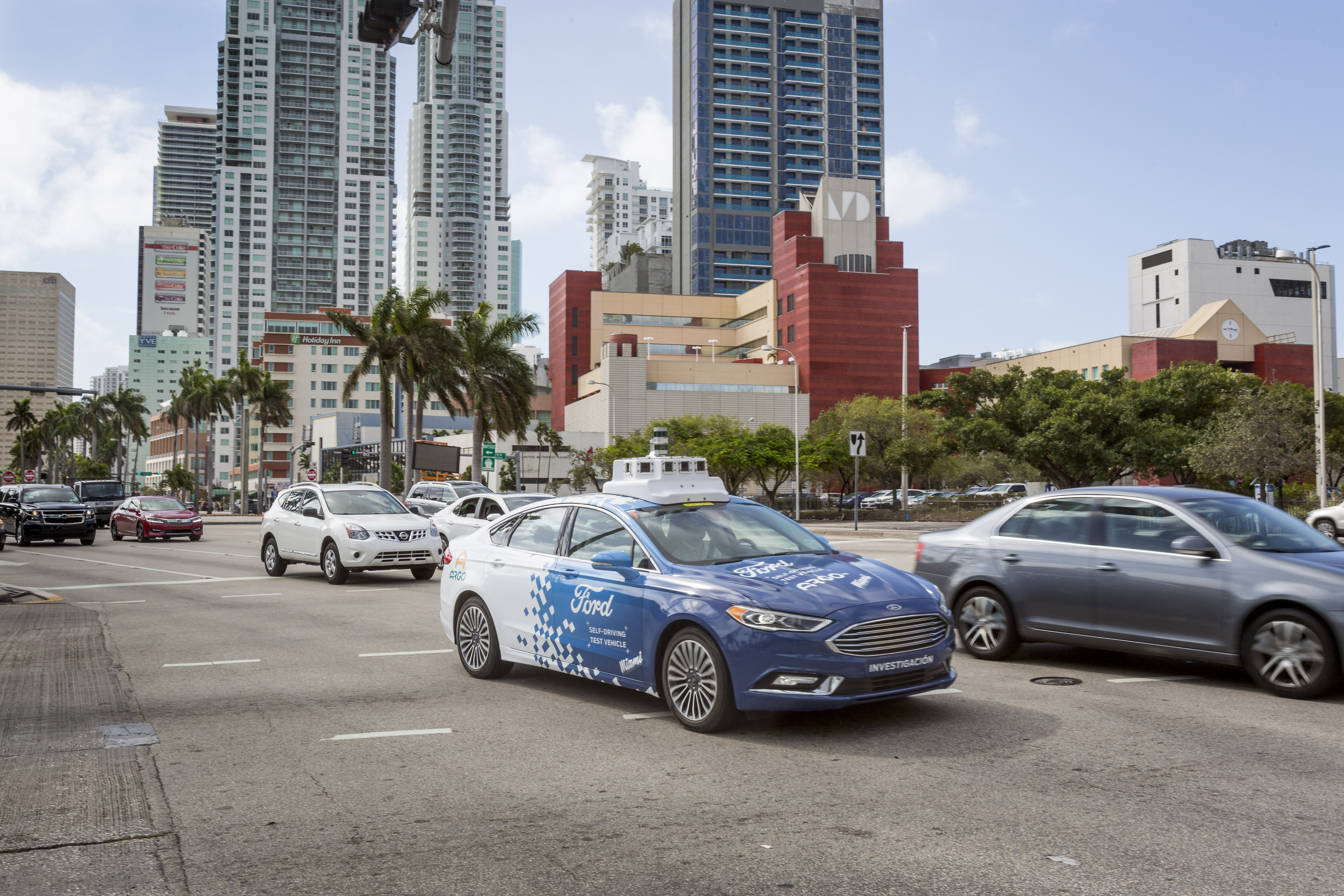
All of this research and experimentation is part of the Ford’s eventual goal to launch a commercial robotaxi service. And that last 50-feet will be one of the critical hurdles it will need overcome if it hopes to make self-driving vehicles a profitable enterprise. To prepare, the automaker is pursuing two parallels tracks — testing and honing in on how an AV business might operate, while separately developing autonomous vehicle technology through its subsidiary Argo AI .

Argo AI,  the Pittsburgh-based company into which Ford invested $1 billion in 2017, is developing the virtual driver system and high-definition maps designed for Ford’s self-driving vehicles. Meanwhile, Ford is testing its go-to-market strategy through pilot programs with local businesses as well as large corporate partners like Walmart, Domino’s and Postmates.

Ford plans to spend $4 billion through 2023 under an LLC that’s dedicated to building out an autonomous vehicles business. The $4 billion spending plan includes a $1 billion investment in startup Argo AI.

Ford is testing in Detroit, Miami, Pittsburgh and Washington D.C. and is poised to expand into Austin.