Mobile ticketing company TodayTix raises $73M in new funding

TodayTix, a mobile ticketing company that makes it easy and relatively affordable to go to Broadway shows and other live performances, is announcing a new $73 million round of funding led by private equity firm Great Hill Partners.

The company was founded in 2013, and it served initially as the mobile equivalent of New York’s TKTS booths for discounted, last-minute theater tickets. TodayTix says it’s now sold more than 4 million tickets, representing 8 percent of annual Broadway ticket sales and 4 percent for London’s West End.

Beyond that, co-founder and CEO Brian Fenty said that a little over 10 percent of the tickets sold now fall outside “theater and performing arts, narrowly defined,” covering things like comedy shows and experiential theater.

“I think to the consumer, we will be a holistic ecosystem to engage in the city’s art and experiences,” Fenty predicted. “However culture is defined … we want to be their partner in discovering those things.”

To do that, TodayTix will add more cities to its current list of 15 markets. Fenty said this expansion is driven by existing partnerships (like launching in Australia through its partnership with “Harry Potter and the Cursed Child”) and by seeing where people are already downloading the TodayTix app. His ultimate goal is to be “geographically agnostic.”

Fenty also said the company will continue investing in the TodayTix Presents program, through which the company puts on its puts on its own shows (albeit at a much smaller scale than a Broadway production).

And of course he wants to improve the app itself, introducing more personalization and curation — Fenty pointed to Netflix and Amazon as models. After all, he said TodayTix is currently offering tickets to 297 shows in New York alone, so it needs to ways to “effectively guide people through that.”

“We’re actually a media company, with our own content and perspective — not on the quality of the shows, but to have a point of view on how users should and could engage with this content,” he said.

He added that those improvements will include more basic things, like the process of purchasing a ticket: “The hardest part is to complete the purchase in 30 seconds or less, as compared to the average ticketing platform, which is somewhere between 3 and 7 minutes … How we continue to squish that conversion?”

Fenty is also hoping to work more closely with show producers, providing them with data about which shows are selling, as well as helping them use data to find the most effective ways to promote themselves.

TodayTix says it’s raised a total of $90 million since it announced its Series B back in February 2016. Fenty told me the new round includes a direct investment in the company, as well as secondary purchases of TodayTix shares from previous investors.

“TodayTix is rapidly changing the way millennials and other consumers connect with live cultural experiences,” said Great Hill Managing Partner Michael Kumin in a statement. “We look forward to working with Brian, [co-founder] Merritt [Baer] and their talented management team to expand the Company’s product and service offerings and accelerate its push into new geographies.”

Google’s new plan to push Google Pay in India: cashback incentives in Android apps

Google is gunning for India’s payment companies. The U.S. search giant entered India’s payment space in 2017, and now it is hatching an initiative that could boost usage of its Google Pay service by tying it tightly into Android apps in the country.

The company has built an in-app engagement rewards platform that promises to help developers and businesses retain users and drive engagement on their apps, two sources familiar with the matter said. It plans to formally launch the project through partners using an SDK later this year, TechCrunch understands.

Sitting at the core of this new play is Google Pay, which will be used for transactions between businesses and users, thereby expanding the reach of Google’s payment service.

Internally dubbed as Project Cruiser, the initiative has been in works since last year and it is led by Google’s Next Billion Users team, sources said. Executives from the company have reached out to several businesses in India in recent months to coax them into coming on board, they added.

The platform, if incorporated by developers into their apps, will allow app developers to incentivize users to perform certain actions in their app in a “scalable” fashion. For example, placing their first order, invite friends or adding a payment method, will all result in users earning a small sum of money. In a pitch, Google executives have described these actions as “north star” metrics — something that the company believes its current products do not currently offer.

A Google spokesperson declined to comment on the specifics of Project Cruiser, but said, “We’re always looking at ways to serve the next billion users better, but we have nothing to share at this point.”

Part of the rationale behind the project is to help businesses retain customers. A growing number of users are deleting new apps not long after installing them, the company executives said to have told prospective partners in pitches.

This cash-laden approach of using incentives to fuel engagement is a departure from how Google has typically urged developers to drive engagement on their apps: by building a high-quality experience that uses triggers like notifications in a responsible manner.

Pushing Google Pay

The company has an additional incentive at play. It has told developers that all rewards on the app will be bandied through Google Pay. That said, one source told TechCrunch that there is a plan to support other payment options from third parties at a later stage, a move that is likely to appease claims of platform abuse. The company has, interestingly, also committed to not take a cut of Google Pay revenue generated from developers through the initiative.

Google has been aggressively pushing the adoption of Google Pay in India, a market where digital payment services have grown exponentially in recent years. The app, initially launched in India as Google Tez in 2017, is the first service from Google to offer users actual money — in the form of cashback — to spur engagement. Late last year, Google ran a promotional campaign that offered Duo video chat users in India up to Rs 1,000 ($14) for inviting friends to the app.

https://platform.twitter.com/widgets.js

India has emerged as a crucial growth market for Google, which is increasingly looking at developing nations to search for new users and revenue. The U.S. firm clocked $1.4 billion in revenue in India in the fiscal year ending in March 2018, filings show, and the wider Asian region recently became its fastest-growing geography for sales.

In its quest to hold a core position in India, Google has launched a number of services to better serve the needs of users in India and other emerging markets, including data-friendly YouTube Go and Android Go apps. It also funds free Wi-Fi connectivity at 400 railway stations in India, a project that graduated to become Google Stations for several other markets.

Beyond infrastructure level plays, it has conjured up bespoke products in India. Those include tools to help small and medium businesses in India establish an online presence, as well as a neighborhood app, a literacy app and a concierge service. It also acquired popular app ‘Where Is My Train’ as part of a wider transportation data play.

“We’ve learnt that when we solve for a place like India, we solve for everyone around the world,” Sundar Pichai, CEO of Google, said at an event in New Delhi in 2017.

Google’s user-engagement initiative is potentially a tough development for independent mobile wallets such as Paytm and Mobikwik. Although there’s the potential to add their support later, Project Cruiser promises to give Google Pay a massive boost by tapping into India’s digital cashback culture.

That’s sure to make it an additional concern to those who are increasingly wary of Google’s influence in digital India. Just last month, the Competition Commission of India (CCI) opened an investigation into the alleged abuse of Android’s domination market position.

Find out how to save €200 on Disrupt Berlin 2019

Calling all startup fans across Europe and around the world. The TechCrunch crew’s planning return-trip number seven to host Disrupt Berlin 2019 on 11-12 December. The official registration doesn’t open until June, but we’ve got a little sumpin’ sumpin’ to save you serious money right now. Are you in?

Simply sign up for our mailing list before registration opens, and we’ll trim €200 off the super early-bird price of any Disrupt Berlin pass.

When you join our mailing list, we’ll send you a link for an additional €200 off when registration opens. Then sit back, relax and plan your Disrupt strategy knowing that you get to experience all the excitement and opportunity Disrupt Berlin offers — at the lowest possible price.

Disrupt Berlin’s diverse startup community includes attendees and participants from more than 50 countries, including European Union members, Israel, Turkey, Russia, Egypt, India, China and South Korea.

Join your community — tech founders, investors, developers, marketers, engineers and designers — for two full days packed with dynamic programming. Explore and network in Startup Alley. Our famed exhibit hall is home to hundreds of the most innovative early-stage startups. You never know who you might meet or the effect that a chance meeting could have on your business goals.

You’ll find the TC Top Picks in Startup Alley, too. TechCrunch editors curate and showcase a group of promising startups that reflect the best in various tech categories. They get to exhibit for free and receive a ton of media and investor attention.

Don’t miss the Startup Battlefield. This epic pitch-off competition features a cadre of phenomenal startups vying for $50,000 cash, the Disrupt cup and the kind of media and investor exposure that can literally alter a startup’s success trajectory. It’s a must-see thrill ride.

We’ll have more information in the coming weeks on how you can apply to both the Startup Battlefield and the TC Top Picks program, so keep checking back.

No Disrupt event is complete without a stellar roster of speakers, panelists, Q&A Sessions, demos and workshops. Just some of last year’s speakers included Frank Salzgeber from the European Space Agency and Lizzie Chapman from ZestMoney, an Indian fintech startup. We’re building out the programming as we speak, and we’ll keep you posted on which tech icons, famous founders and high-return investors will grace our stages.

Disrupt Berlin 2019 takes place on 11-12 December at Arena Berlin. Play it smart and save big. Join our mailing list today, and you’ll save an extra €200 off your Disrupt Berlin pass.

China’s Tesla wannabe Xpeng starts ride-hailing service

There’re a lot of synergies between electric vehicles and ride-hailing. Drivers are able to save more steering an EV compared to a gas vehicle. Environmentally conscious consumers will choose to hire an electric car. And EVs are designed with better compatibility with autonomous driving, which is expected to hit the public road in the coming decades.

Indeed, Tesla is eyeing to launch its first robotaxis in 2020 as part of a broader ride-sharing scheme. Over in China where Tesla has a few disciples, EV startup Xpeng Motors, also known as Xiaopeng, just started offering a ride-hailing app powered by its own electric fleets.

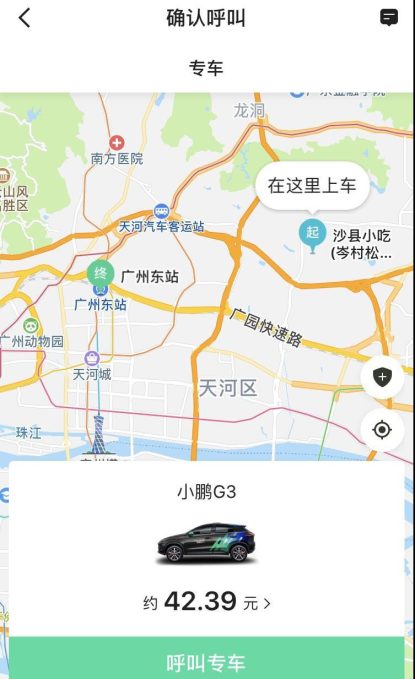
Screenshot of Xpeng’s ride-hailing app ‘Youpeng Chuxing’

The company is the latest in a clutch of carmakers flocking to introduce their own ride-hailing platforms. Didi Chuxing’s massive loss has not deterred their ambitious plans. Rather, this may be a prime time to crack a market long dominated by Didi, which is prioritizing safety over growth following two high-profile incidents and a series of new government regulations.

Xpeng’s ride-hailing app is currently only available in a limited area within Guangzhou where it’s headquartered, shows a test conducted by TechCrunch’s on Thursday.

The company’s coffer is probably large enough to fund its newly minted venture. It’s one of the most-backed EV upstarts alongside rival Nio, which raised $1 billion from a New York initial public offering last year.

Xpeng has to date banked $1.3 billion from Alibaba, IDG Capital, Foxconn, UCAR and other big-name investors, according to disclosed funding data collected by Crunchbase. Founder He Xiaopeng, a serial entrepreneur who made a fortune selling his mobile browser company UCWeb to Alibaba, told CNBC in March that Xpeng may also try an IPO down the road but wants to focus on building the business first.

When it comes to sources of inspiration for the business, Xpeng told local media that it sees Tesla as its “benchmark”. The company has never been shy about its admiration for its American peer. In an interview with Quartz in 2018, He said one of the reasons he founded Xpeng “was because Elon Musk made Tesla’s patents available. It was so exciting.”

But the affection might have gone a little far. In March, Tesla sued an ex-employee for allegedly stealing Autopilot’s proprietary technology before taking a job at Xpeng.

Xpeng started shipping to its first owners in March and was founded five years ago against the backdrop of Beijing’s aggressive electric push in the transportation sector. The sprawling city Shenzhen, just north to Hong Kong, has turned all its public buses and almost all of its taxis electric.

Alibaba invests about $635M in Red Star Macalline, one of China’s largest furniture sellers

Alibaba Group has acquired about RMB 4.36 billion ($635 million) worth of convertible bonds in Red Star Macalline, one of China’s biggest furniture retailers. If converted, this would give Alibaba about a 10 percent stake in the company. It also purchased 3.7 percent of Red Star Macalline’s publicly traded shares on the Hong Kong stock exchange, according to a disclosure.

Red Star Macalline operates about 300 shopping malls and 364 home improvement centers throughout China, leasing space to retailers in addition to selling its own inventory and services, including interior decoration consultations and construction. The company will work together with Alibaba to improve its physical stores and take advantage of the latter’s e-commerce channels.

This investment comes about six months after Red Star Macalline announced a digital marketing partnership with Alibaba rival Tencent. TechCrunch has contacted Alibaba and Tencent for more information on how Alibaba’s new stake might affect the earlier deal.

Alibaba’s Home Times, a retail chain it opened in late 2017, gives a look into what it might do with Red Star Macalline’s malls and online operations. Home Times emphasizes offline-to-online retail, enabling customers to scan products for more information and pay for them with Alipay, and has large screens that let shoppers see how items will look in their homes. Customers’ shopping behavior is then used by Tmall, Alibaba’s business-to-consumer e-commerce site, to pick products to add to stores in different locations, making inventory management more efficient.

Xnor’s AI2GO serves up custom edge AI models with a few clicks

AI would be useful for tons of everyday tasks for small businesses and other operations — if people just knew how to build and deploy their own machine learning agent. Unfortunately, few do. Edge-based AI startup Xnor.ai aims to let non-experts put state of the art AI to work as easily as they might update their website.

The company just kicked off a new platform called AI2GO that basically collects all the most common applications and hardware platforms for edge-based AI in one place and lets you download them with little or no expertise.

“Developing AI is just hard,” founder and CEO Ali Farhadi told TechCrunch. “There’s not a lot of people who can do it. And deploying to an edge device is even harder — you have to worry about power consumption, memory limits, and all that. So now you have to have both AI and systems experts.”

Good luck snagging those if you’re a small business owner who just thinks it’d be cool to know how many people are in their restaurant at any given time. Even relatively accessible, widely available frameworks like TensorFlow on which to train and deploy AI are impractical for anyone without domain expertise. AI2GO is aimed directly at these people, who are tech-savvy but can’t provide ten thousand pictures of cars or people to build a custom computer vision model for their purposes.

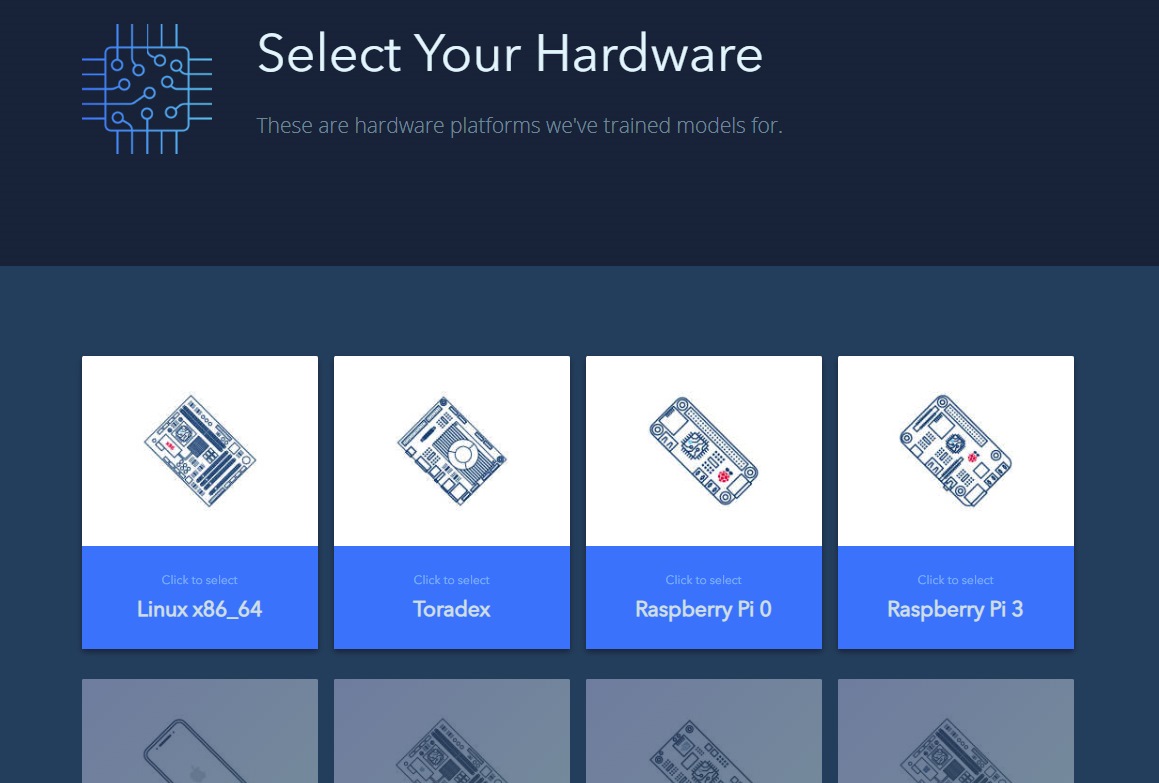
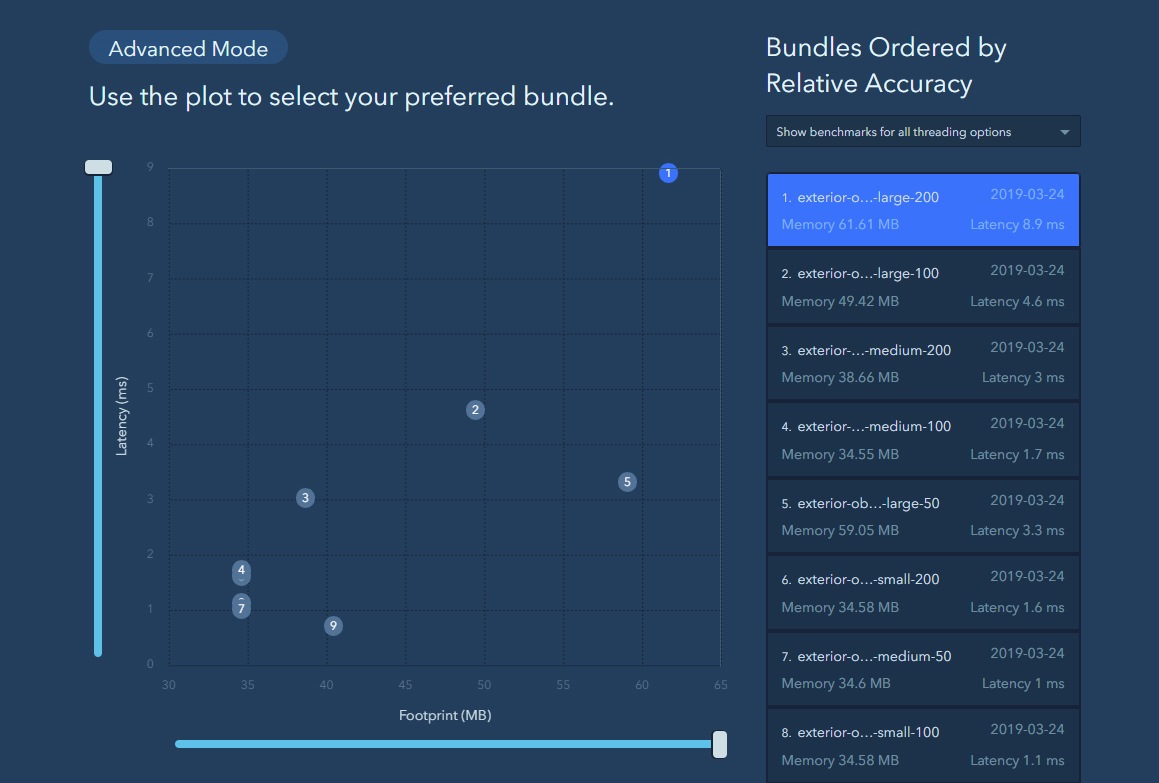
“Generic platforms let you train your own models, but in lots of businesses and applications you don’t need to — ther’s already a solution out there. Say you’re a parking lot owner, you want to monitor cars going in and out or something,” Ali proposed. “With AI2GO you just click the model, like car recognition, then select your hardware [e.g. the security camera chipset or Raspberry Pi 0]. Then you can turn some dials up and down and an Xnor bundle is created to respect your constraints.”

That bundle is a fully functioning edge-based AI system composed of the model or models you’ve selected, customized to meet power or memory restrictions. You install it according to the instructions (you’ll need some idea of how to build and deploy software here — this isn’t for babies) and in a few minutes you should have a working car-detection model running in real time on the camera you’ve already got. The process looks like this:

Farhadi compared it to something like Stripe. If you’re starting a shop online, you don’t want to build a payment processor from scratch, yet you do need something tuned to your needs. The company already creates custom high-performance edge AI models for enterprise customers, but found that small and medium-sized businesses were not only interested in a similar product, but often had similar tasks.

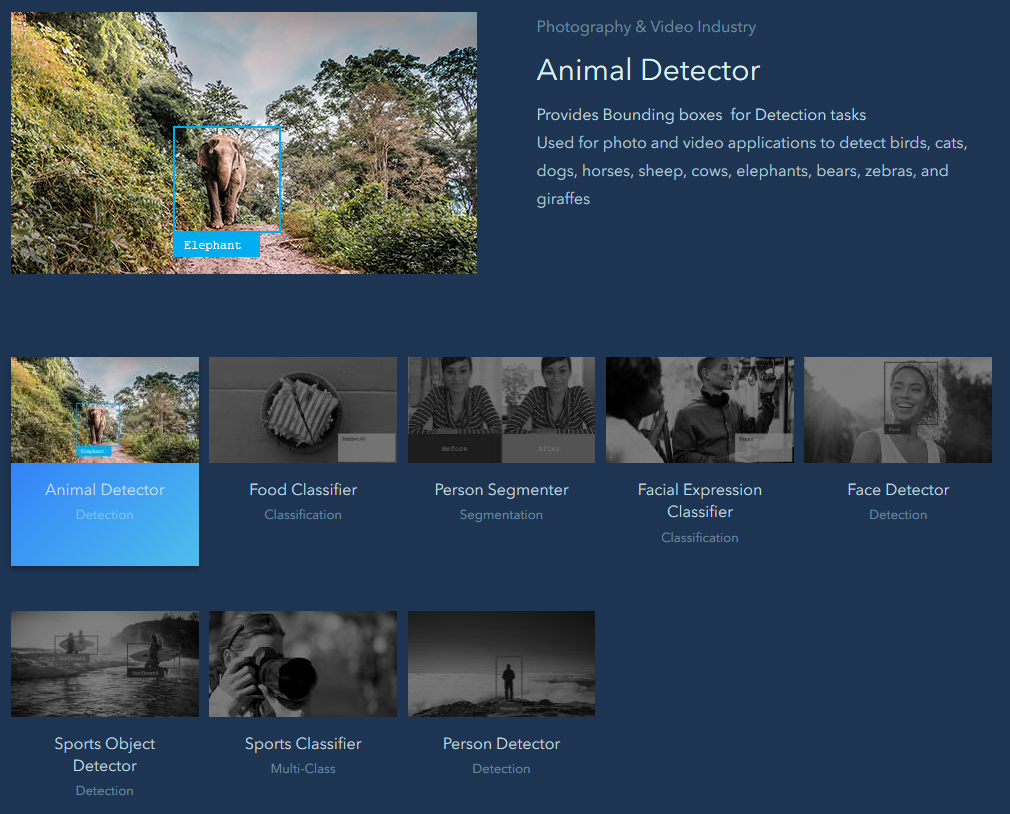
There are a bunch of pre-trained models, running the gamut from cat detectors to gesture identification. Here’s a sampling of what’s available:

  • Person detector – provides bounding boxes for any person on camera
  • Person segmenter – detects and separates a person’s body from the background
  • Facial expression classifier – get readings for anger, fear, happiness, and so on
  • Sports object detector – identify and bound things like balls, tennis rackets, skis, etc
  • Action classifier – spot common human actions like playing an instrument, pushing something, riding a bike, climbing, running
  • Kitchen object and food classifiers: label common food items (apples, condiments) and kitchen items (spoons, mugs)
  • Car cabin item detector: bound keys, people, phones, and other stuff you might find (or leave) in the car
  • Car model classifier: identify common makes and models of cars

There are lots more, and multiples of one type for different purposes; a person detector for a car’s camera will naturally be different from the one used for smart home or security purposes.

You can’t mix and match items yet — that’s likely to come in an upcoming version, alongside new hardware platforms and the ability to bring your own data.

The license model is fairly straightforward: The model you download is free if you’re just experimenting or using it for personal purposes, but once you deploy it commercially you have to apply for a license. There’s also an SDK with code samples and demos if you want to check it out without building your own.

Tech stocks slide on US decision to blacklist Huawei and 70 affiliates

The United States has been lobbying for months to prevent its western allies from using Huawei equipment in their 5G deployment, and on Wednesday, Washington made it more difficult for the Chinese telecom titan to churn out those next-gen products.

The U.S. Department of Commerce announced that it will add Huawei and its 70 affiliates to the so-called ‘Entity List,’ a move that will prevent the telecom giant from buying parts and components from U.S. companies without approval from Washington. That confirms reports of the potential ban a day before.

Despite being the largest telecom equipment maker around the world, Huawei relies heavily on its American suppliers, giving the U.S. much leeway to hobble the Chinese firm’s production.

Following the dramatic move, shares of a gauge of Huawei affiliates slumped on Wednesday. Tatfook Technology, which sells to Huawei as well as Ericsson and Bosch, dropped 2.84 percent in Shenzhen in morning trading. New Sea Union Telecom, a supplier to China’s ‘big three’ telecom network operators and Huawei, slid 4.88 percent. Another Huawei key partner Chunxing Precision Mechanical dropped as much as 5.37 percent.

Huawei did not comment directly on the Commerce Department’s blacklist when reached out by TechCrunch, but said it’s “ready and willing to engage with the U.S. government and come up with effective measures to ensure product security.”

“Restricting Huawei from doing business in the U.S. will not make the U.S. more secure or stronger; instead, this will only serve to limit the U.S. to inferior yet more expensive alternatives, leaving the U.S. lagging behind in 5G deployment, and eventually harming the interests of U.S. companies and consumers,” Huawei hit back in the statement.

This view is congruent with some of the harshest criticisms of Washington’s backlash against Huawei. Scholars and industry observers warn that Chinese tech firms have become such an integral part to the global economy that severing ties with Huawei will do ham to 5G advancement worldwide.

In addition, the Chinese company said the U.S.’s “unreasonable restrictions will infringe upon Huawei’s rights and raise other serious legal issues,” though it did not spell out what those rights and legal concerns are.

The announcement dropped on the same day U.S. President Donald Trump declared “a national emergency” over technology supply chain threats from the country’s “foreign adversaries”.

The Commerce Department said it has a reasonable basis to conclude that “Huawei is engaged in activities that are contrary to U.S. national security or foreign policy interest.”

Some of the U.S’s allies including the U.K. are still investigating Huawei’s possible security threat and deciding how close a link they should keep with Huawei, but the Shenzhen-based company has already taken a bold step to give its potential clients some assurance.

Just this Tuesday, Huawei told reporters in London that it’s “willing to sign no-spy agreements with governments, including the U.K. government,” and commit itself to making its equipment “meet the no-spy, no-backdoors standard.”

The U.S.’s tit-for-tat with Huawei also includes the push to arrest the company’s CFO Meng Wanzhou on charges that Huawei did business in Iran in breach of U.S. sanctions.

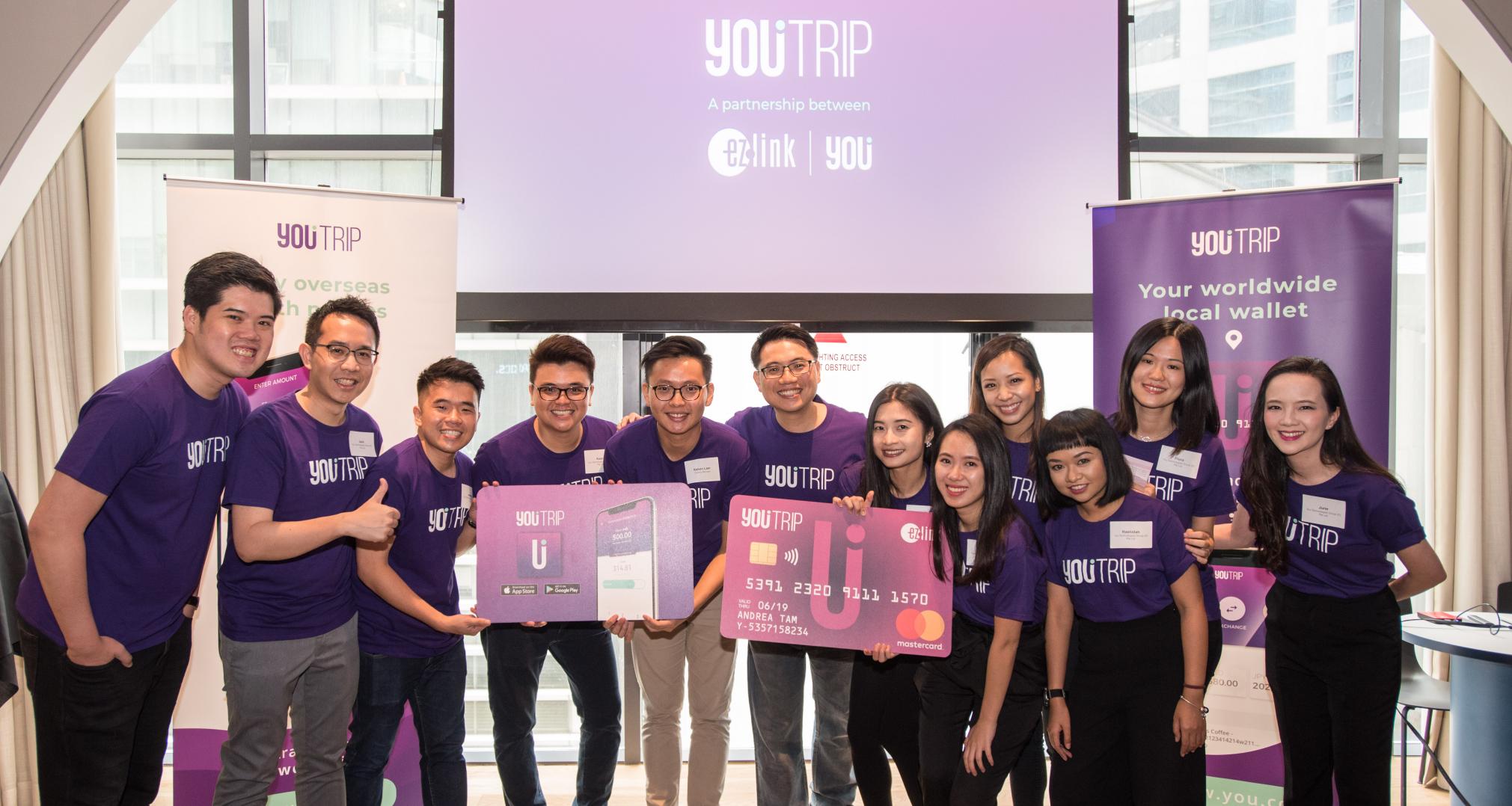
YouTrip, a challenger bank in Southeast Asia, raises $25M for expansion

Singapore-based startup YouTrip thinks consumers of Southeast Asia deserve a taste of the challenger bank revolution happening in the U.S. and Europe, and it has raised $25 million in new funding to bring its app-and-debit-card service to more parts in the region.

Challenger banks have sprung up in Europe in recent years. Unicorns Monzo, Revolut and N26 are among those that offer their customers a debit card linked to an app and various levels of banking services, including savings and overdrafts. Brex — another billion-dollar-valued startup — is bringing that approach across the pond to the U.S. market.

But what about Southeast Asia?

All the signs indicate this is a region where digital services can thrive. The number of internet users across its six main countries is larger the entire U.S. population, and online spending is tipped to triple to $240 billion by 2025. Already, the region has mega startups including Grab ($14 billion valuation), Tokopedia ($7 billion) and Go-Jek ($9.5 billion) whose investors are betting that these growth signals will translate into reality.

At the more modest end, YouTrip has pulled in this new money to take its model beyond Singapore and into larger countries in Southeast Asia.

YouTrip CEO Caecilia Chu counts Citibank, McKinsey and Chinese fintech giant Lufax among her past employers

Since its commercial launch in August 2018, YouTrip has clocked over 200,000 app downloads and completed over one million transactions for its customers, according to CEO and co-founder Caecilia Chu.

It covers 150 currencies in the app, but the card itself is limited to 10 currencies (including Singapore dollars) with plans to add local options for Southeast Asia.

Chu — who went to Havard with Grab founders Anthony Tan and Hooi Ling Tan, as well as Go-Jek CEO Nadiem Makarim — started the business with co-founder Arthur Mak in 2016 for frequent travelers who are sick of being short-changed when exchanging money for trips, or using overseas ATMs. Over the longer term, she wants to turn the product into a more modern take on banking for Southeast Asian consumers in the style of the aforementioned European flagbearers.

“The objective is to build a trustworthy financial product for the mass consumer with exchange rates that are competitive,” Chu explained in an interview with TechCrunch. “Right now, we’re incredibly focused on travelers.”

“The success [of European challenger banks] has certainly helped in this part of the world where we are the first mover,” she added.

Like Monzo and its ilk, YouTrip offers zero percent transaction fees and no cross-border fees, but there are “competitive” exchange rates and a “small” fee to cover up to SG$2,000 ($1,460) in ATM withdraws per day. (Because, in much of Southeast Asia, cash remains king.)

The plan, further down the line, is to introduce financial products in the future to draw revenue and provide access to services for users, Chu explained. That’s, again, straight out of the European playbook… but there’s nothing wrong with that.

In Singapore, the card — and app — is backed by Mastercard and it includes integration with EZ-Link, the contactless payment option that covers public transport and more in Singapore. Those are the kind of local integrations that the company is eying with its market expansions.

The YouTrip service in Singapore is integrated with Singapore’s EZ-Tap payment system

On that note, Chu, a former banker, is keeping coy on which countries the service will expand to, but she does anticipate that YouTrip will reach one or two new markets over the next six to twelve months. It already has a regional footprint, though. Its team of 70 is located across HQ in Singapore and an engineering office in Hong Kong.

“We’re certainly looking to expand regionally,” she said. “We will hire a local team for each country because the future of fintech is regional and we believe in a localized strategy.”

That’s where this new money will come into play for YouTrip. The $25 million round included Insignia Ventures Partners — the Singapore firm from Yinglan Tan, formerly with Sequoia India and Southeast Asia — with undisclosed family offices and angels providing the remainder.

That’s somewhat unconventional, but Chu said the family offices “have deep roots in Asia, are really motivated and want to invest in our kind of business.” Likely, they understand the frustration of moving money between borders, or for travel purposes, in Southeast Asia and beyond.

With Revolut continuing to stall on its planned entry to Singapore — which was first announced last November — YouTrip will want to seize the initiative on establishing challenger banking in Southeast Asia.

Lilium unveils five-seater air taxi prototype after a successful maiden flight for its latest jet

Lilium, the Munich-based startup developing an on-demand “air taxi” service, has unveiled a new five-seater prototype and is announcing to the world that a maiden flight for the new device was successfully completed earlier this month.

It’s not the first time a Lilium Jet — the company’s all-electric vertical take-off and landing (VTOL) device — has taken to the sky but it is the first time the new five seater has taken off and landed, following extensive ground testing. Lilium published a video of a two-seater version’s inaugural flight just over two year’s ago.

The new five-seater is a full-scale, full-weight prototype that is powered by 36 all-electric jet engines to allow it to take-off and land vertically, while achieving “remarkably efficient horizontal or cruise flight,” says Lilium

In a call, Lilium co-founder and CEO Daniel Wiegand described the test flight, which was a little behind schedule, as a huge step towards making urban air mobility a reality. The new jet performed in the sky as the company’s models and ground testing had predicted, providing much needed validation for the Lilium team.

The significance of getting to five seats shouldn’t be underestimated, either, as Lilium isn’t in the aircraft design and manufacturing business, but sees itself as a fully vertical mobility-as-a-service company, akin to an Uber of the skies, if you will. The technology, as groundbreaking as it needs to be, is an engineering means to an end: intercity travel that is less expensive, quicker and kinder on the environment. That’s the hugely ambitious aim, anyway.

With a top speed of 300 km/h and a range of 300km, Lilium claims its jet is capable of completing much longer journeys than the majority of its competitors. This is, in part, thanks to the fixed wing design of the aircraft. This will see it rely on the lift generated by the fixed wing to remain in the air, meaning it will require less than ten per cent of its maximum 2000 horsepower during cruise flight.

“This efficiency, which is comparable to the energy usage of an electric car over the same distance, means the aircraft would not just be capable of connecting suburbs to city centres and airports to main train stations, but would also deliver affordable high-speed connections across entire regions,” says Lilium.

For the record, the latest Lilium Jet first took to the air at 08.03 local time in Munich, Germany on 4th May 2019. The prototype aircraft was controlled remotely from the ground and Wiegand says it will now undergo a more rigorous flight test campaign to lay the foundations for certification of the aircraft against commercial aircraft safety standards. The next big milestone will be achieving transition flight where the aircraft moves from vertical takeoff to horizontal flight.

Wiegand also told me Lilium still expects to be fully-operational in various cities around the world by 2025. However, trial services will start earlier in several yet-to-be-revealed locations.

The company is backed by Tencent; LGT, the international private banking and asset management group; Atomico, Lilium’s Series A backer founded by Skype co-founder Niklas Zennström; and Obvious Ventures, the early-stage VC fund co-founded by Twitter’s Ev Williams.

7 accessibility-focused startups snag grants from Microsoft

Microsoft has selected seven lucky startups to receive grants from its AI for Accessibility program. The growing companies aim to empower people with disabilities to take part in tech and the internet economy, from improving job searches to predicting seizures.

Each of the seven companies receives professional-level Azure AI resources and support, cash to cover the cost of data collection and handling, and access to Microsoft’s experts in AI, project management, and accessibility.

Companies apply online and a team of accessibility and market experts at Microsoft evaluate them on their potential impact, data policies, feasibility, and so on. The five-year, $25 million program started in 2018, and evaluation is a rolling process with grants coming out multiple times per year. This one happens to be on Global Accessibility Awareness Day. So be aware!

Among this round’s grantees is Our Ability, a company started by John Robinson, who was born without complete limbs, and all his life has faced serious challenges getting and keeping a job. The unemployment rate for people with disabilities is twice that of people without, and some disabilities nearly preclude full-time employment altogether.

Yet there are still opportunities for such people, who are just as likely to have a head for project management or a knack for coding as anyone else — but they can be difficult to find. Robinson is working on a site that connects companies with jobs suited to disabled applicants to likely candidates.

“Our goal is to empower employers to understand and leverage the increasingly valuable employment population of people with disabilities, proven to lower job turnover rates and boost morale and productivity – because a commitment to an inclusive workplace culture begins within,” Robinson wrote in an email to TechCrunch. “Employers have previously been at a disadvantage to accelerate in this regard, because many job-seeking tools are not designed with people with disabilities in mind.”

CEO of Our Ability John Robinson sitting, smiling and in front of his laptop

John Robinson of Our Ability.

The plan that attracted Microsoft is Robinson’s idea to make a chatbot to help collect critical data from disabled applicants. And before you say “chatbot? What year is this?” remember that while chatbots may be passé for those of us able to navigate forms and websites easily, that’s not the case with people who can’t do so. A chat-based interface is simple and accessible, requiring little on the user’s end except basic text input.

Pison is another grantee whose technology would come in handy here. People with physical disabilities often can’t use a mouse or trackpad the way others do. Founder Dexter Ang saw this happen in person as his late mother’s physical abilities deteriorated under the effects of ALS.

His solution is to use a electromyography armband (you might be familiar with Myo) to detect the limited movements of someone with that type of affliction and convert those into mouse movements. The company was started a couple years ago and has been undergoing ongoing development and testing among ALS patients, who have shown that they can use the tech successfully after just a few minutes.

Voiceitt is a speech recognition engine that focuses on people with nonstandard voices. Disabilities and events like strokes can make a person’s voice difficult for friends and family to understand, let alone the comparatively picky processes of speech recognition.

Google recently took on this same problem with Project Euphonia, which along with the company’s other efforts towards accessibility was given an impressive amount of stage time at I/O last week.

Here are the remainder of the grantees (descriptions are from Microsoft):


  • University of Sydney (Australia) researchers are developing a wearable sensory warning system to help the 75 million people living with epilepsy better predict and manage seizures to live more independently.
  • Birmingham City University (United Kingdom) researchers are developing a system that enables people with limited mobility to control digital platforms using voice commands and the movement of their eyes.
  • Massachusetts Eye and Ear (Boston, MA) researchers are working on a vision assistance mobile app that offers enhanced location and navigation services for people who are blind or have low vision.
  • University of California Berkley (Berkley, CA) researchers are creating a mobile app for individuals who are blind or have low-vision to provide captions and audio descriptions of their surroundings.

The image up top, by the way, is from iTherapy’s InnerVoice, an app that provides AI-powered descriptions of images taken by kids who have trouble communicating. It’s a great example of cutting-edge tech being applied in a niche that helps a small population a lot rather than a large population a little.

Microsoft has been a good steward of accessibility for years and it seems to be leaning into that, as well it should. President Brad Smith had a lot to say about it in a blog post last year, and the commitment seems strong going into this one.