Solving tech’s stubborn diversity gaps

Twenty years after Jesse Jackson first took aim at tech employers, Silicon Valley’s enduring diversity gaps remain a painful reminder of its origins as a mostly white boy’s club.

Sadly, little has changed in the decades since the campaign first made headlines. Today, just 7.4 percent of tech industry employees are African-American, and 8 percent are Latinx. Workers at Google, Microsoft, Facebook and Twitter — according to those companies’ own reports — were just 3 percent Hispanic and 1 percent black in 2016.

In some ways, tech’s equity gaps reflect a simple supply and demand imbalance. But it is an imbalance with artificial constraints. Because while Black and Hispanic students now earn computer science degrees at twice the rate that they are hired by leading tech companies, they are all but invisible to most recruiters.  

The problem stems from the fact that tech employers tend to recruit from a tiny subset of elite U.S. colleges.  Which means they may never come into contact with, for example, the 20 percent of black computer science graduates who come from historically black colleges and universities. Thousands of talented candidates are overlooked each year because they graduate from less-selective public universities, minority-serving institutions or women’s colleges — schools that exist far outside the elite network where tech employers recruit.

As a result, the recruiting practices of Silicon Valley actually compound the structural race and economic inequities that are endemic at every step of the education-to-career ladder. The number of segregated schools in the United States has doubled over the past 20 years. Poor and minority students often lack SAT and ACT test preparation, college advising services and after-school or extracurricular options. Just 3 percent of the students at the most competitive colleges are from the lowest economic quartile. And even those who make their way through the admissions industrial complex face college-to-career barriers like unpaid internships, which are more than many less-affluent students can endure.

Failure to broaden their aperture for talent means that even the best-intentioned diversity initiatives leave companies competing for the tiny pool of engineers of color who graduate from the top programs.

Inequities have plagued the tech world since Ada Lovelace coded the first computer program in 1842.

To move the needle on diversity, employers must move beyond filtering outputs of top computer science programs and focus on changing the inputs. They must invest in building industry-aligned programs at colleges and universities that are attended by more diverse students, but may lack the know-how to build — and keep current — curricula that prepare students to thrive in an increasingly dynamic tech industry. They can partner with institutions falling into the well-worn traps of academia, teaching theory without application, or relying on dated practices that leave graduates unprepared for the labor market.

A growing number of employers have begun to take such an approach, partnering with institutions that harbor underrepresented talent to transform their computer science programs.

Facebook has partnered with institutions, including the City College of New York, to create industry-relevant courses, and committed to funding the training of 3,000 Michigan workers for jobs in digital marketing. Last year, Facebook invested $1 million in an effort to teach computer science to more women and underrepresented minorities.

In 2015, Intel announced a $300 million effort to diversify its workforce by 2020.Since then, the company has launched a $4.5 million program to help STEM students at historically black colleges stay on track. In 2017, Howard University opened a campus at Google’s headquarters, offering students a three-month program in which they can receive instruction from both Howard faculty and engineers at Google. A year later, Howard leaders said the partnership helped lead to a 40 percent increase in computer science enrollment at the university.

Inequities have plagued the tech world since Ada Lovelace coded the first computer program in 1842 — only to lose her place in the textbooks to the men who capitalized on her insights while denying her contributions. Today, fluency in high-tech skills and knowledge is no longer controlled by an elite few. Opportunity, however, can remain stubbornly fixed.

Top tech companies have already taken the first step by activating the search for underrepresented talent. The next step is to broaden their search beyond elite campuses and invest in the education of underrepresented students.

It will take wholesale collaboration between employers and colleges to provide meaningful, relevant computer science education to any student on any campus. But such partnerships hold the promise of addressing the diversity gaps that blight our industry at its roots.
Hundreds of Orpak gas station systems can be easily hacked, thanks to hardcoded passwords

Homeland Security’s cybersecurity agency says a popular gas station software contains several security vulnerabilities that require “low skill” to exploit.

The advisory, posted by the Cybersecurity and Infrastructure Security Agency (CISA), gave the Orpak SiteOmat software a rare vulnerability severity rating of 9.8 out of 10.

Orpak’s SiteOmat systems monitor the amount of fuel stored in a gas station’s tanks, as well as their temperature and pressure. The software also sets the price of the gas and processes card payments. Its user interface is password protected, preventing unauthorized access to its data or configuration.

According to the advisory, the software contained a hardcoded password set by the manufacturer, which if used would grant unfettered access to the system.

CISA didn’t publish the password.

The advisory said an attacker could gain access to the system’s configuration, including payment information, or shut down the system altogether, preventing customers from buying gas. Worse, the bugs are remotely exploitable, putting any internet-connected SiteOmat device at risk.

A cursory search of Shodan, a search engine for publicly available devices and databases, revealed more than 570 Orpak systems are connected to the internet out of more than 35,000 service stations across 60 countries.

Most of the exposed systems are located in the U.S.

The software also has several other flaws that can be remotely exploited, including code injection and buffer overflow vulnerabilities.

Ido Naor, a security researcher with Kaspersky Lab, was credited with finding the bugs — the second time in as many years. Last year, Naor and his colleague Amihai Neiderman found near-identical flaws in the SiteOmat, including another hardcoded password. The buffer overflow flaw would not only let an attacker gain access to the system but also erase its logs, wiping any evidence of their activity.

CISA said the bugs had been fixed in a new software version — v6.4.414.139 — but customers have to request the update from Orpak directly.

A spokesperson for Orpak parent company Gilbarco Veeder-Root did not immediately return a request for comment.

Facebook bans a fresh batch of mostly far-right figures

Facebook just announced its latest mini-purge of controversial accounts that violate its rules against “dangerous individuals and organizations.” In this round Facebook newly cracked down on Milo Yiannopoulos, Paul Joseph Watson, Laura Loomer, Paul Nehlen, Louis Farrakhan. The company also doubled down on its position toward Alex Jones and his conspiracy hub Infowars.

While most figures in that cluster of names are far right media figures, Farrakhan is best known for leading the Nation of Islam and has faced ongoing criticism for anti-semitism. Nehlen ran against Paul Ryan in 2018, openly espousing white supremacist views.

“We’ve always banned individuals or organizations that promote or engage in violence and hate, regardless of ideology,” a Facebook spokesperson told TechCrunch via email. “The process for evaluating potential violators is extensive and it is what led us to our decision to remove these accounts today.”

Facebook previously announced a ban for Jones in 2018 and again did a sweep for accounts linked to Jones in February. In spite of the Facebook ban, Jones was allowed to maintain his presence on Instagram due to the fact that less than 30% of his content violated the platform’s rules.

Awair raises $10M to help customers like WeWork monitor their office environments

Monitoring a space is about a lot more than security cameras, Awair is trying to help businesses and consumers more deeply understand the environments they live and work in.

Awair has raised a $10 million Series B led by The Westly Group with participation from iRobot, Altos Ventures, Emerson Electric and Nuovo Capital as well. The company has raised over $21 million to date.

The company has previously just been plugging along with air-quality monitors that looked like they belong in the MoMa. Awair’s $199 monitor senses things like particulate matter, temperature, humidity, and CO² levels. They’ve built out their product line with a couple other devices but they’re largely targeting air-conscious consumers that might have allergies of another ailments and “design moms” who are looking to get some well-designed tech into their home.

The information all plugs into an app that helps consumers understand what’s happening in their home and get tips for how they can improve air quality.

As the company looks to make venture-worthy returns, it’s been scaling beyond the consumer IoT space into the world of enterprise IoT with its Omni product that Await has been selling to large real estate firms, offices and hospitals aiming to give companies more insight into what life is like in every corner of their physical spaces.

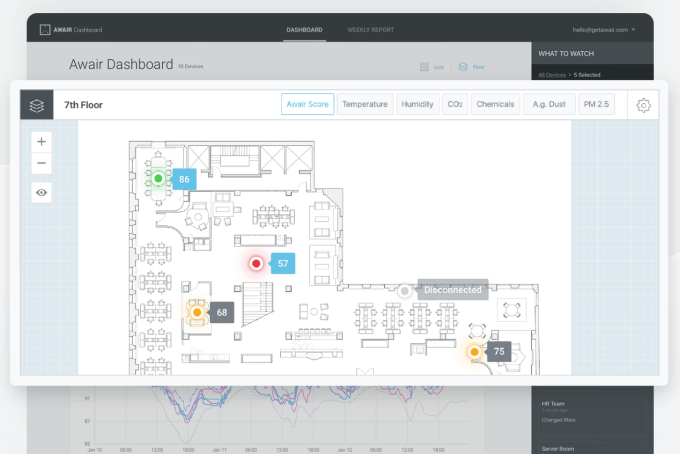
The devices measure the same things their consumer products do but also can track ambient light and noise in space, and pipe all of that data into a dashboard that can help businesses automate how they push their existing building infrastructure like their HVAC systems to respond to changes in the environment.

While Awair has been selling consumer IoT devices since 2015, its business product is about 18 months old, and a big part of this fundraise is to bring a sales staff onboard to keep the pace of enterprise expansion, which has been faster growing than the consumer business.

The company says they have more than 300 enterprise customers on the platform, including WeWork, AirBnB, Harvard, and The Crown Estate.

Takeaways from F8 and Facebook’s next phase

Extra Crunch offers members the opportunity to tune into conference calls led and moderated by the TechCrunch writers you read every day. This week, TechCrunch’s Josh Constine and Frederic Lardinois discuss major announcements that came out of Facebook’s F8 conference and dig into how Facebook is trying to redefine itself for the future.

Though touted as a developer-focused conference, Facebook spent much of F8 discussing privacy upgrades, how the company is improving its social impact, and a series of new initiatives on the consumer and enterprise side. Josh and Frederic discuss which announcements seem to make the most strategic sense, and which may create attractive (or unattractive) opportunities for new startups and investment.

“This F8 was aspirational for Facebook. Instead of being about what Facebook is, and accelerating the growth of it, this F8 was about Facebook, and what Facebook wants to be in the future.

That’s not the newsfeed, that’s not pages, that’s not profiles. That’s marketplace, that’s Watch, that’s Groups. With that change, Facebook is finally going to start to decouple itself from the products that have dragged down its brand over the last few years through a series of nonstop scandals.”

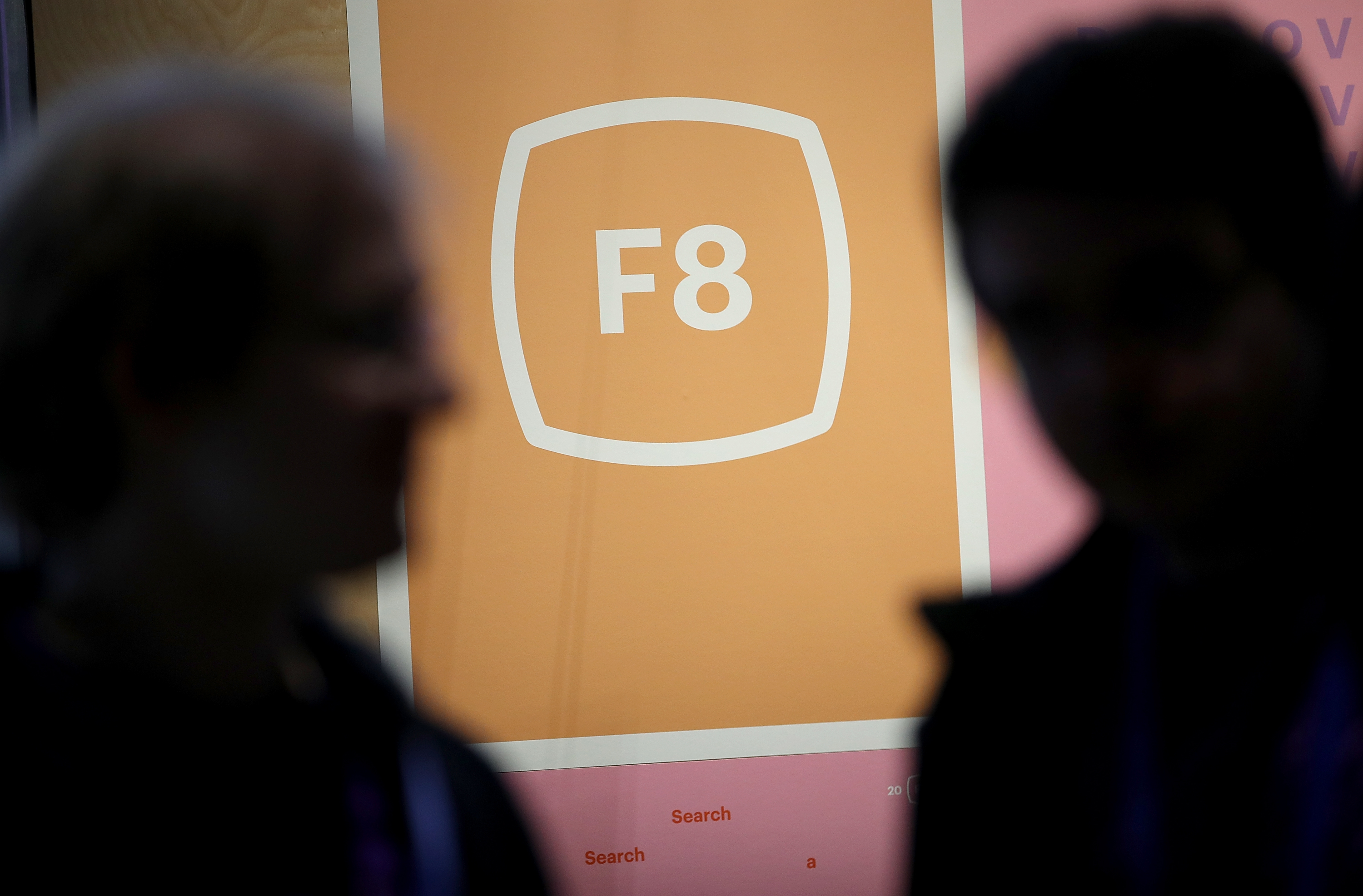
(Photo by Justin Sullivan/Getty Images)

Josh and Frederic dive deeper into Facebook’s plans around its redesign, Messenger, Dating, Marketplace, WhatsApp, VR, smart home hardware and more. The two also dig into the biggest news, or lack thereof, on the developer side, including Facebook’s Ax and BoTorch initiatives.

For access to the full transcription and the call audio, and for the opportunity to participate in future conference calls, become a member of Extra Crunch. Learn more and try it for free. 

Unshackled Ventures has $20M to invest exclusively in immigrant founders

Unshackled Ventures isn’t like other venture capital funds.

The firm invests in immigrant founders and helps them secure visas so they can ditch their corporate job and launch the startup of their dreams. Today, Unshackled is announcing its sophomore fund of $20 million, topping its debut effort by $15.5 million.

“The point is to take the burden off of founders because they are not immigration experts, they are experts at building satellites or extracting protein from plants,” Unshackled founding partner Nitin Pachisia told TechCrunch. “These are people that if you go to a workspace, you’ll see them show up on nights and weekends because they want to build something but they can’t.”

Immigrants looking to start their own businesses face a huge barrier. Take Jyoti Bansal for example. He famously waited seven years before launching AppDynamics, a business that later sold to Cisco for $3.7 billion days before its initial public offering. Why? Because as an Indian immigrant with H-1B visa status, he could work for startups but wasn’t legally allowed to start his own. It wasn’t until receiving an employment authorization document (EAD), a part of the green card process, that Bansal could finally found AppDynamics. If Bansal had the opportunity to pitch to Unshackled, which provides bespoke immigration solutions to each founder, he could have launched AppDynamics years prior.

Immigrant founders, according to a 2018 study by the National Foundation for American Policy, are responsible for 55 percent of U.S. billion-dollar companies, or “unicorns,” as they are known. Uber, SpaceX, WeWork, Palantir Technologies, Stripe, Slack, Moderna Therapeutics, Robinhood, Instacart, Houzz, Credit Karma, Tanium, Zoox and CrowdStrike all count at least one immigrant co-founder.

“The difference between success and failures is oftentimes who you know and when,” Unshackled founding partner Manan Mehta told TechCrunch. “We can bring those resources at just 1/200th the size of Andreessen Horowitz to immigrants at day zero.”

“We’re creating the best place for immigrants to start their companies,” he added. “And guess what? We’re keeping American innovation in America.”

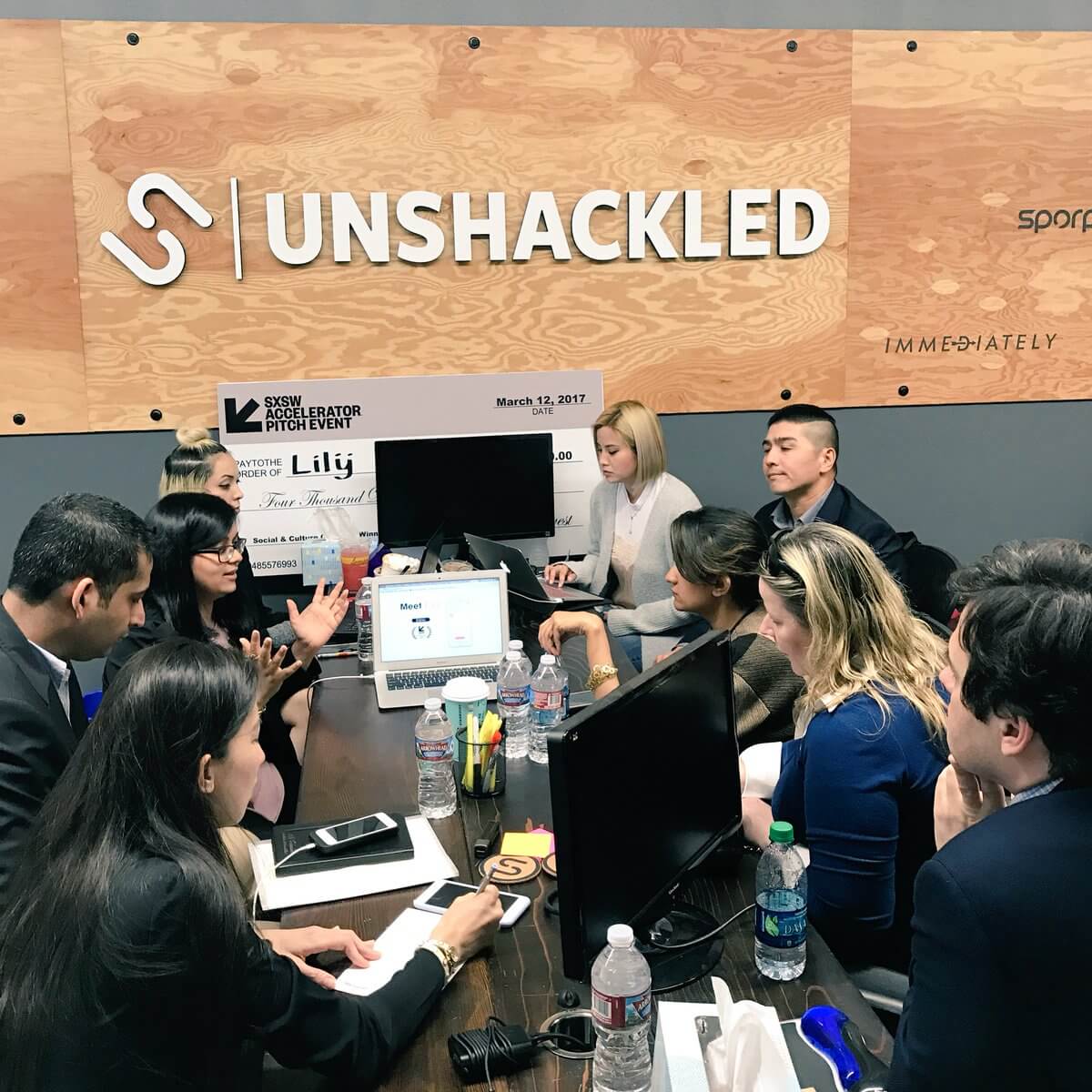
Unshackled Ventures portfolio company Lily AI.

The firm was founded by Pachisia, the son of immigrants, and Mehta, an Indian immigrant, in 2015. Since then, the duo have written pre-seed checks to 31 companies with a 100 percent success rate in procuring visas to keep talent working in the U.S. Startups in its portfolio include the very recent Y Combinator graduate Career Karma, Starsky Robotics, Plutoshift, Togg, Hype, Lily AI and more.

“I didn’t think it was possible to start a company on a visa in the U.S., let alone scale one to hit the next major milestone so quickly,” Plutoshift founder Prateek Joshi said in a statement. “That all changed when we met the Unshackled team.”

Mehta and Pachisia say its startups have gone on to raise $54 million in follow-on investments from top investors like First Round Capital, NEA and Shasta.

In addition to supporting companies based in Silicon Valley, the investors search far and wide for aspiring immigrant founders, as well as respond to every single cold email they receive. Recently, they joined the Rise of the Rest tour, a trip hosted by Steve Case and JD Vance that showcases startups in underrepresented geographies, and they make frequent visits to college campuses across the U.S.

Unshackled’s limited partners include Bloomberg Beta, Jerry Yang’s AME Cloud Ventures and Emerson Collective.

“I think the name represents the feeling that you’re a little bit shackled to a framework or a policy that doesn’t necessarily encourage entrepreneurship,” Mehta said. “When if you take a step back, immigrants are probably more entrepreneurial than native-born people.”

SpaceX confirms its Dragon crew capsule exploded in testing

For the first time after a video of an exploding Dragon capsule leaked in late April, SpaceX confirmed the spacecraft’s destruction during testing. In statements made today, SpaceX’s vice president of mission assurance Hans Koenigsmann provided a little insight on the mysterious ground test gone wrong.

As CNBC reports, Koenigsmann said during a press event that it is “too early” to determine the cause but noted that the capsule exploded as its SuperDraco thruster system was being fired up:

“At the test stand we powered up Dragon and it powered up as expected. We completed tests with the Draco thrusters – the Draco thrusters are the smaller thrusters that are also on Dragon 1, the Cargo Dragon. We fired them in two sets, each for five seconds, and that went very well. And just prior before we wanted to fire the SuperDraco there was an anomaly and the vehicle was destroyed.”

The capsule shown in a grainy video from April 21 turns out to be the same test spacecraft that visited the International Space Station in early March and returned to the Earth via a splashdown in the Atlantic six days later. Unlike the company’s cargo capsules, that capsule, known as SpaceX Demo-1, is designed to carry crew members in the future.

https://platform.twitter.com/widgets.js

Even during testing, the loss of any spacecraft — particularly one designed to carry a human crew — is a big deal. The event is likely to push SpaceX’s target launch for a crewed Dragon flight this year into 2020. NASA is currently working with the company to investigate the incident.

“I hope this is a relatively swift investigation at the end of the day,” Koenigsmann said.  “I don’t want to completely preclude the current schedule, but certainly this is not good news for the schedule.”

Beyond Meat rockets in early trading on Nasdaq, reaching a valuation of over $3 billion

Meat alternatives are getting a big public market debut with the Beyond Meat public offering, as shares of the company rocketed above their initial list price.

The company’s shares surged up 135% in their market opener, valuing the company as high as $3.52 billion. Volatility was so high on the company’s stock that the Nasdaq had to pause trading of “BYND” shares.

The company’s first trade came in at $46 at 12:18 p.m. Eastern, according to a report in MarketWatch. That’s a whopping 76% above the initial price. Gains extended throughout the morning reaching an intraday high of $63.43 (or around 154% above its initial high) and the stock is now trading at around $55 per share.

The company priced its public offering at $25 per share last night — at the upper end of an already increased share price (likely in response to shareholder demand).

In all the company raised more than $240 million at just under a $1.5 billion valuation through the sale of at least 9.6 million shares when it priced yesterday.

Beyond Meat is a pioneer of the plant-based meat movement, and the listing is a remarkable and unprecedented move for the industry,” said Bruce Friedrich, the executive director of the sustainable food industry research and watchdog group, the Good Food Institute. “While it’s the first company of its kind to go public, the move could pave a way forward for other plant-based meat makers who will be watching on.”

Investor appetite for the company comes despite its balance sheet problems. Beyond Meat reported a net loss of $29.9 million on $87.9 million in revenue for 2018.

What’s steeling investors’ stomachs for an investment in the company appears to be its gross margins, which came in at 25% for the first quarter and were at 20% for 2018 up from negative margins in the preceding year.

The company’s success could be a harbinger of things to come. There’s a crop of meat substitutes and alternative protein products on the market or coming to market — and they’ve met with enormous customer success.

Earlier this week, Burger King announced that it would begin a nationwide rollout of its Impossible Whopper, and companies like Memphis Meat, which develops lab-grown animal proteins, and Sustainable Bioproducts, another developer of protein replacements are waiting in the wings to bring their own products to market.

Beyond Meat’s public offering is the second-highest liquidity event for a company in the sustainable foods market. The largest was WhiteWave Foods acquisition for $12.5 billion by Danone in 2017 after a public listing five years earlier.

“Securing funds like this is a big deal for Beyond Meat and will allow it to ramp up its supply chain capabilities and make delicious plant-based meat accessible to all,” said Friedrich in a statement. “Investors recognize that this is not a niche but a mainstream movement and a huge business opportunity… Beyond Meat is on the frontier of food system transformation. Their success and the successes of other plant-based meat makers could help repair our food system and mitigate the many harms caused by conventional meat production.”

Target ups its ad efforts with revamped media company, Roundel

A surprise addition to this year’s NewFronts, first-time participant Target today announced its plans to rebrand its media network formerly known as “Target Media Network” to be called “Roundel.” The goal with the repositioning is to better communicate to clients that its focus goes beyond display ads on Target.com. Instead, Roundel will create campaigns and content for its clients, who include brands and agencies — including brands that aren’t sold in Target’s stores — and deliver them to either to Target’s own website or to “brand-safe” external channels like Pinterest, PopSugar, and NBC Universal.

To date, Target’s pitch has been that its data on consumers and their habits can help it to create better campaigns and content for interested brands. Target Media Network had already been working with national advertisers, including those who didn’t sell products in Target, ahead of this rebranding. But the prior name limited its potential, the retailer believed.

Roundel’s nearly 1,000 partners (previously Target Media Network clients) have included Coca-Cola, Disney, Pepsi, P&G, Mastercard, Unilever, Dyson, and others. The network, launched in 2016, has seen double-digit growth during this time.

AdWeek (paywalled) had the exclusive on Roundel’s launch. Target has now shared the details on its own website, as well.

According to AdWeek, Target wanted to announce Roundel at the NewFronts because it wasn’t only going to focus on display ads — it would also involve social, video, and linear TV.

Roundel will leverage Target’s shopper insights to create personalized ad campaigns that can run on Target.com or elsewhere across 150 brand-safe channels, like Pinterest, PopSugar, NBCU and others. These channels may also be web, mobile or social sites, Target notes.

The advertisers don’t have to currently sell products at Target to work with Roundel. Other brands — like financial services, automotive, and travel businesses — can also leverage Roundel’s offerings.

Contrary to rumors ahead of the event, however, Target doesn’t have plans to invest in original content like its rivals Walmart (Vudu) and Amazon (Prime Video).

The launch comes at a time when retailers are getting more directly involved in advertising both on their websites and through other media that goes beyond basic display ads. Amazon, for example, is now running a live-streamed QVC-like video network on Amazon.com called Amazon Live. It also has been building out a large and growing ad business that spans it properties, including Amazon.com, IMDb, and Amazon Video and is talking to clients about other ad types, including video.

In Q4 2018 its ad business topped $3 billion, but slowed in Q1 2019 to reach $2.7 billion after five quarters of 60%+ growth. It’s now the number three player behind Facebook and Google, but still very much a distant third. 

Target had kept its plans well under wraps ahead of today’s event. But it wasn’t the only retailer catering to the advertisers at this week’s Digital Content NewFronts.

Yesterday, Walmart introduced a new video ad network, the Vudu Audience Extension network, which it claims will reach half of U.S. households, as well as its plans for interactive video and “shoppable” shows, and new original content. It has also been building out its advertising business and increasing its outreach to agencies to talk about new ad formats like video.

Target didn’t follow the usual course for these sorts of presentations. Its event was hosted in a unique environment, with little seating, pop-up talks in different spots, and was bathed in red light.

https://platform.twitter.com/widgets.js

https://platform.twitter.com/widgets.js

https://platform.twitter.com/widgets.js

https://platform.twitter.com/widgets.js

May Mobility COO and Co-founder Alisyn Malek at TC Sessions: Mobility on July 10

Even as the giants of the autonomous vehicle industry were setting ambitious timelines for their robotaxi deployments, May Mobility was already hitting the streets.

The startup launched its first low-speed autonomous shuttle service in Detroit in summer 2018. By March, the Ann Arbor, Michigan-based company was operating in at least three U.S. cities. It’s a rapid acceleration for a company that was founded less than two years ago.

We’re excited to announce that May Mobility COO and co-founder Alisyn Malek will participate in TechCrunch’s inaugural TC Sessions: Mobility, a one-day event on July 10, 2019 in San Jose, Calif. centered around the future of mobility and transportation.

Malek was recognized as a top 10 female innovator to watch by Smithsonian in 2018 and named a top automotive professional under 35 to watch by LinkedIn in 2015 for her work in cutting-edge product development and corporate venture. She’s an automotive engineer

Before Malek co-founded May Mobility, she had already made a name for herself at General Motors. Malek was the former head of GM’s innovation pipeline. Prior to that role, Malek was an investment manager at GM Ventures, where she led investment in the autonomous space, including the early negotiations with Cruise Automation . GM would acquire Cruise in 2016.

During her time at GM, Malek also led a global team to develop advanced charging technology for the company’s Spark and Bolt EV products.

How does TC Sessions: Mobility stand out in a sea of automotive and mobility conferences? We invite the best and brightest founders, investors and technologists who are determined to invent a future Henry Ford might never have imagined; we highlight up and coming startups, offer demo space to showcase products and create programming aimed at delivering the most value for every ticket holder. Our events are fun too.

Early-stage startup founders, don’t miss your chance to demo your company in front of top influencers at TC Sessions: Mobility 2019. It’s a prime opportunity to showcase your tech startup in front of a very large, very targeted audience — the mobility and transportation industry’s movers and shakers. Book a demo table here.

In case you missed it, some of our recently announced speakers include Waymo CTO Dmitri Dolgov, Nuro co-founder and CEO Dave Ferguson, Scoot SVP of Product Katie DeWitt, co-founder and CEO of Voyage Oliver Cameron,  co-founder, president and CEO of Mobileye, Amnon Shashua — who also is a senior vice president at Intel. And there are more.

Early-Bird tickets are now on sale — save $100 on tickets before prices go up.

Students, you can grab your tickets for just $45.