Couchbase’s mobile database gets built-in ML and enhanced synchronization features

Couchbase, the company behind the eponymous NoSQL database, announced a major update to its mobile database today that brings some machine learning smarts, as well as improved synchronization features and enhanced stats and logging support to the software.

“We’ve led the innovation and data management at the edge since the release of our mobile database five years ago,” Couchbase’s VP of Engineering Wayne Carter told me. “And we’re excited that others are doing that now. We feel that it’s very, very important for businesses to be able to utilize these emerging technologies that do sit on the edge to drive their businesses forward, and both making their employees more effective and their customer experience better.”

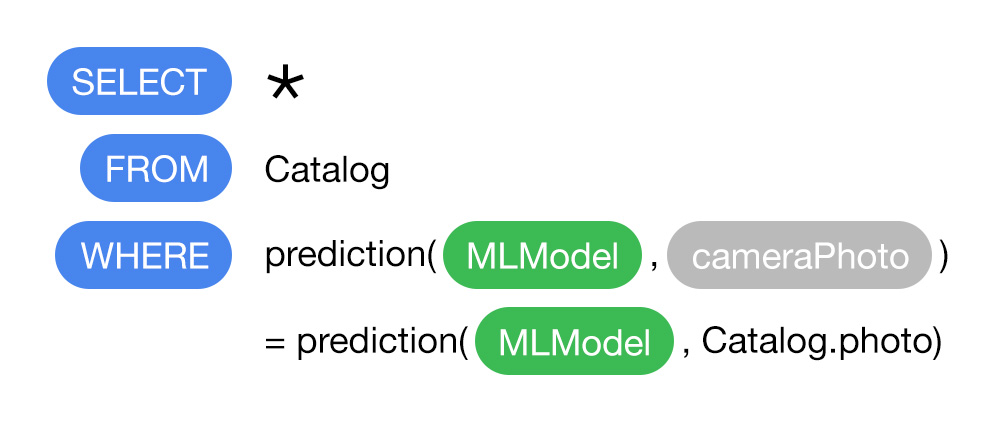
The latter part is what drove a lot of today’s updates, Carter noted. He also believes that the database is the right place to do some machine learning. So with this release, the company is adding predictive queries to its mobile database. This new API allows mobile apps to take pre-trained machine learning models and run predictive queries against the data that is stored locally. This would allow a retailer to create a tool that can use a phone’s camera to figure out what part a customer is looking for.

To support these predictive queries, Couchbase mobile is also getting support for predictive indexes. “Predictive indexes allow you to create an index on prediction, enabling correlation of real-time predictions with application data in milliseconds,” Carter said. In many ways, that’s also the unique value proposition for bringing machine learning into the database. “What you really need to do is you need to utilize the unique values of a database to be able to deliver the answer to those real-time questions within milliseconds,” explained Carter.

The other major new feature in this release is delta synchronization, which allows businesses to push far smaller updates to the databases on their employees mobile devices. That’s because they only have to receive the information that changed instead of a full updated database. Carter says this was a highly requested feature but until now, the company always had to prioritize work on other components of Couchbase.

This is an especially useful feature for the company’s retail customers, a vertical where it has been quite successful. These users need to keep their catalogs up to data and quite a few of them supply their employees with mobile devices to help shoppers. Rumor has it that Apple, too, is a Couchbase user.

The update also includes a few new features that will be more of interest to operators, including advanced stats reporting and enhanced logging support.


Daily Crunch: Facebook shows off an aspirational redesign

The Daily Crunch is TechCrunch’s roundup of our biggest and most important stories. If you’d like to get this delivered to your inbox every day at around 9am Pacific, you can subscribe here.

1. Facebook pivots to what it wishes it was

Facebook is rolling out what could be called an aspirational redesign known as FB5. Rather than polishing what Facebook was, it’s designed to spotlight what the company wants to be.

“This is the biggest change we’ve made to the Facebook app and site in five years,” said CEO Mark Zuckerberg at the company’s F8 developer conference.

2. Uber now lets you buy transit tickets in Denver

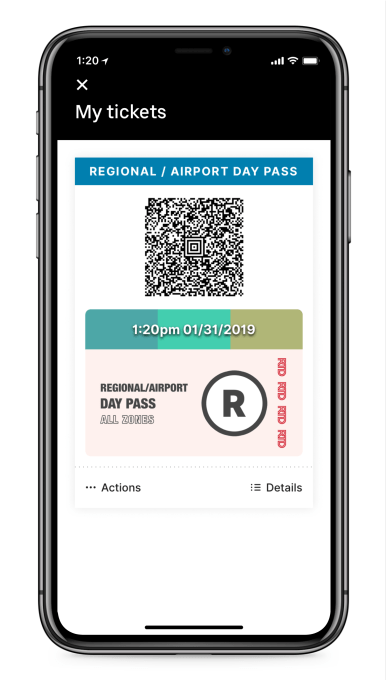
Uber, which is days away from going public, has added in-app ticketing to its transit offering in Denver. This comes a few months after Uber first launched transit integration in the city.

3. Spotify launches voice-enabled ads on mobile devices in a limited US test

The ads will encourage the listener to speak a verbal command in order to take action on the ad’s content. Initially, the audio ads will direct listeners to a branded Spotify playlist or a podcast.

4. A 30-mph e-bike to compete with cars in cities? Investors just bet $20 million on it

Bond Mobility is a three-year-old startup that says its “high-performance” dockless electric bikes will leave e-scooters in the dust.

5. Google now lets you auto-delete your app activity, location and web history

Google says you can now auto-delete your location history and web and app activity by setting a time limit for how long Google can save this data.

6. Acast launches Acast Access to make paywalled podcasts available on any player

With Acast Access, publishers should be able to create versions of their podcasts that are only available to subscribers, but are still accessible from any app.

7. Nine lessons on how Niantic reached a $4B valuation

Greg Kumparak has been taking readers on a deep dive into the Niantic story, and now he’s highlighting the key themes he found in his reporting. (Extra Crunch membership required.)

3 key secrets to building extraordinary teams

Developing new technology, identifying product/market fit, creating a go-to-market strategy… When building businesses, these are the types of challenges entrepreneurs tend to spend the majority of their time thinking about (and talking about with other entrepreneurs). And it’s easy to understand why: These are challenges that entrepreneurs can tackle largely on their own, without having to rely on anyone else.

But you can only solve a small fraction of the problems that you will face if you want to scale. You need to hire.

People – not products – are the lifeblood of hypergrowth companies. Ultimately, the conversations and relationships the people at your company have with customers, potential customers, investors, and others, will determine how successful you are in the long run.

This is a lesson that took me 20+ years and the founding of five companies to learn. Believe me, as an introvert, I’d love to just geek out on the 1% of stuff I can figure out on my own.

Instead, you need to:

  1. Hire people before skills: Scrappiness and cultural fit matter more than intelligence and experience.
  2. Hire for the right stage: you will need certain types of people at different points of your growth
  3. Get internal feedback but not consensus: hiring managers need to own the decision

This is how hypergrowth companies are born.

3 Hiring Tips for Scaling a High-Growth Startup

Last year, my most recent company, Drift, grew from 80 to 260 people and went from one office in Boston to three, with additions in San Francisco and Seattle. By the end of this year, we’ll be adding a significant number across the offices. And in the years to follow, we’ll likely open offices in EMEA and other regions around the globe.

InCountry raises $7M to help multinationals store private data in countries of origin

The last few years have seen a rapid expansion of national regulations that, in the name of data protection, govern how and where organizations like healthcare and insurance companies, financial services companies and others store residents’ personal data that is used and collected through their services.

But keeping abreast of and following those rules has proven to be a minefield for companies. Now, a startup is coming out of stealth with a new product to to help.

InCountry, which provides “data residency-as-a-service” to businesses and other organizations, is launching with $7 million in funding and its first product: Profile, which focuses on user profile and registration information in 50 countries on six continents. There will be more products launched covering payment, transaction and health data later in the year, co-founder and CEO Peter Yared said in an interview.

The funding — a seed round — is coming from Caffeinated Capital , Felicis Ventures, Ridge Ventures, Bloomberg Beta, Charles River Ventures, Global Founders Capital.

InCountry is founded and led by Yared, a repeat entrepreneur who most recently co-founded and eventually sold the “micro-app” startup Sapho, which was acquired by Citrix. Other companies he’s sold startups to include VMWare, Sun, and Oracle, and he was also once the CIO of CBS Interactive. 

Yared told me in an interview that he has actually been self-funding, running and quietly accruing customers for InCountry for two years. He decided to raise this seed round — a number of investors in this list are repeat backers of his ventures — to start revving up the engines. (One of those ‘revs’ is an interesting talent hire. Today the company is also announcing Alex Castro as chief product officer. Castro was an early employee working on Amazon Web Services and Mircosoft’s move into CRM, and also worked on autonomous at Uber.)

If you have never heard of the term “data residency-as-a-service”, that might be because it’s something that has been coined by Yared himself to describe the function of his startup.

InCountry is part tech provider, part consultancy.

On the tech side, it provides the technical aspects of providing personal data storage in a specific national border for companies that might otherwise run other aspects of their services from other locations. That includes SDKs that link to a variety of data centers and cloud service providers that allow new countries to be added in under 10 minutes; two types of encryption on the data to make sure that it remains secure; and managed services for its biggest clients. (InCountry is not disclosing any client names right now, except for video-editing company Revl.)

On the consultancy side, it has an in-house team of researchers and partnerships with law firms to continually update its policies and ensure that customers remain compliant with any changes. InCountry says that to provide further assurance to customers, it provides insurance of up to three times the value of a customer’s spend.

InCountry’s aim is twofold: first, to solve the many pain points that a company or other organization has to go through when considering how to comply with data hosting regulations; and second, to make sure that by making it easy, companies actually do what’s required of them.

As Yared describes it, the process for becoming data compliant can be painful, but his startup is applying an economy of scale, since the process is essentially one that everyone will have to follow:

“They have to figure out what the requirements are, find the facility, audit the facility, which includes making sure it’s not owned by the state, make sure the network is properly segregated, develop the right software layer to manage the data, hire program managers, network operations people and more,” he said. And for those handling this themselves, cloud service providers will typically cover a smaller footprint of regions, 17 at most for the biggest. “We take care of all that, and add on more as we need to.”

The problem is that because the process is so painful, many companies often flout the requirements, which isn’t good for its customers, nor for the companies themselves, which run the risk of getting fined.

“It’s universally acknowledged that the way data is stored and handled by most companies and handled is not meeting the average requirements of citizens rights,” Yared said. “That’s why we now have GDPR, and will see more GDPR-like regulations get rolled out.”

One thing that InCountry is not touching is data such as messages between users and other kinds of personal files — data that has been the subject of sometimes very controversial data regulations. Its limit are the pieces of personal information about users — bank details, health information, social security numbers, and so on — that are part and parcel of what we provide to companies in the course of interacting with them online.

“In early outreach, we have had people as for private data storage, but we would be ethically uncomfortable with that,” Yared said. “We want to be in the business of helping people who have regulated data, by storing that in a compliant manner that is more helpful, and more fruitful to users.”

The aim will be to add more services over time covering ever more countries, to keep in line with the growing trend among regulators to put more data residency laws in place.

“We’re witnessing more countries signing in data laws each week, and we’re only going to see those numbers increase,” said Sundeep Peechu, Managing Director at Felicis Ventures, in a statement. “We’re excited to be leading the round and reinvesting in Peter as he launches his seventh company. He recognized the problem early on and started working on a solution nearly two years ago that goes beyond regional data centers and patchwork in-house DIY solutions.”

DDoS attack disrupted US energy company operations, government confirms

A distributed denial-of-service attack launched against an energy company providing power in several western U.S. states was enough to report “interruptions of electrical system operations” to the government’s energy authority.

The “cyber event” lasted almost ten hours on March 5, according to an electric emergency and disturbance report filed with the Department of Energy by the affected company.

E&E News first reported the “cyber event” last week. It was later reported as a DDoS attack.

In an email to TechCrunch, a spokesperson for the Department of Energy confirmed the attack, which knocked the energy company’s systems offline by overloading them with traffic.

“DOE received a report about a denial-of-service condition that occurred at an electric utility on March 5, 2019 related to a known vulnerability that required a previously published software update to mitigate,” said the spokesperson. “DOE continues to work with our industry partners through the ISACs to ensure the dissemination of the appropriate mitigation information to manage their associated risks.”

The name of the energy company wasn’t named, but it provides power and energy to customers across Los Angeles in California, Salt Lake County in Utah, and Converse County in Wyoming.

“The incident did not impact generation, the reliability of the grid or cause any customer outages,” said the DOE spokesperson.

Western Electricity Coordinating Council, the regional reliability authority for the affected area, did not immediately comment.

Power networks — considered critical infrastructure by the U.S. government — have long been a target for hackers, but successful attacks are rare. Russian hackers were blamed for a power outage in Ukraine at Christmas in 2015, leaving a quarter-of-a-million residents without power for two days. Venezuela recently blamed a cyberattack for a power outage earlier this year, but the claims remain unfounded.

The Trump administration also blamed Russia for attempting to break in to U.S. power grids.

Uber now lets you buy transit tickets in Denver

Uber, which is days away from going public, has added in-app ticketing to its transit offering in Denver. This comes a few months after Uber first launched transit integration in the city.

“For the first time ever, taking an Uber trip can mean taking public transit,” Uber Head of Transit David Reich said in a statement. “We are excited to expand our collaboration with RTD and Masabi to make Denver the first city in the world where riders can purchase transit tickets and ride public transit seamlessly through the Uber app. With this step, we are moving closer to making Uber’s platform a one-stop shop for transportation access, from shared rides to buses and bikes.”

For transit, Uber is serving two sets of customers: agencies and riders. For both sets, Uber is aiming to increase efficiency, enhance the experience and increase equity and accessibility, Reich told TechCrunch earlier this year.

While Uber is only launching this in Denver today, Masabi handles ticketing for 30 transportation agencies worldwide, including Los Angeles’ Metrolink, New York’s MTA, London’s Thames Clippers and Boston’s MBTA. Uber also has relationships with a number of cities already.

“We know convenience is the number one reason people choose a transit option, and we truly believe that a multimodal public and shared private approach will be a key part of encouraging more people to take fewer private car journeys, reducing congestion for all,” Masabi CEO Brian Zanghi said in a statement. “By making public transit tickets available through Masabi’s Justride SDK in the Uber app, we are making this a reality for the first time, helping more people seamlessly and conveniently discover and access public transit services.”

CMU uses knitting machines to make soft robots that hug

Perhaps people fear robotics and automation simply because they’re not cuddly enough. It’s certainly an under explored aspect in the growing field of soft robotics. A team Carnegie Mellon is taking on the challenge by creating soft robots with knitting machines.

Cuddliness aside, the real goal here is the design robotic form factors that are lower cost, less dangerous and in some cases event wearable. The team is designing an automated process that adds tendons, which can connected to harder motors, in order to create movement. Examples include, no joke, “stuffed figures that give hugs when poked in the stomach and even a sweater with a sleeve that moves on its own.”

Down the road, the research could lead to more serious soft robotics created with commercial knitting machines designed to produce garments.

“We have so many soft objects in our lives and many of them could be made interactive with this technology,” CMU PhD student Lea Albaugh says in a release tied to the news. “A garment could be part of your personal information system. Your sweater, for example, might tap you on your shoulder to get your attention. The fabric of a chair might serve as a haptic interface. Backpacks might open themselves.”

In a sense, it’s a kind of old school take on 3D printing and other additive manufacturing. Potential materials for tendons include polyester-wrapped quilting thread, pure silk yarn and nylon monofilament. Conductive yarn, meanwhile, could give the robot a much better sense of its own movements.

What to expect from Google I/O 2019

Developer season has begun! Next week, Google will be putting on a big party at the pointy outdoor amphitheater in Mountain View. It’s shaping up to be a biggie, too, if this week’s Google earnings call was any indication. Sundar Pichai teased out a number of upcoming offerings from the company that we can expect to see on full display at the show.

From the looks of it, there’s going to be a LOT of news coming hot and heavy out of the South Bay, from new Android and Assistant features, to some rare hardware debuts. Here’s a quick rundown of what we’re expecting from the big show.

More Q

Quiche? Quindim? I had to look up the latter — it’s a “popular Brazilian baked dessert, made chiefly from sugar, egg yolks, and ground coconut” according to Wikipedia. Basically Brazilian custard.

We’re probably not getting a name either way at the event, of course. We will, however, get our best look yet and Pie’s successor. As ever, the latest version of Android will take center stage at I/O. With an expected arrival date of this summer, we’ve already seen some key pieces of Android 10 courtesy of a couple of betas.

So far, the keys are improvements to privacy/permissions and multi-tasking through Bubbles. Expect a lot more here. Rumors include pressure sensitive touch features and across the board dark mode.

Unfolding foldables

It’s admittedly been a tough couple of weeks for the ascendent form fact, thanks almost exclusively to malfunctioning Galaxy Fold units. On this week’s call, however, the company reiterated that it’s still bullish on the tech. And it kind of has to be. Google’s devoted a lot of mind share to making Android more foldable friendly, in hopes of jumpstarting a stagnant smartphone industry.

And while the Fold has been put on hiatus, we do expect a release date soon, along with Huawei’s Mate X and upcoming models from Motorola, Xiaomi, TCL and more. Expect to see the form factor positioned as the future of Android interaction.

The budget Pixel

Like other developer-focused shows, I/O isn’t really much of a consumer hardware event. That’s likely to change this year, however. In an earnings call this week, Sundar Pichai all but confirmed the long rumored arrival of the Pixel 3a. Initially floated as the Pixel Lite, the budget take on the company’s flagship is designed to curb stagnate smartphone sales by offering some flagship features at a lower price point.

Rumors so far have the product somewhere in the neighborhood of $500 and include, among other things, the return of the headphone jack — an acknowledgment that bluetooth headphones are still cost prohibitive. Equally interesting, this would make a push to roughly a six month release cycle for Pixel products, assuming the 4 arrives around an October timeframe.

Google’s made it clear that the Pixel line is about more than just showing off the latest version of Android, and a massive investment in HTC’s hardware team that includes a new Taipei campus certainly demonstrate that it’s not screwing around here.

Gaming

Stadia had its moment back at GDC back in March. The company is harnessing its live-streaming technology to finally help gamers realize the promise going hardware agnostic. Stadia was far and away the buzziest announcement out of the gaming show, but Google held back a lot of detail, only to have Apple reveal its own gaming strategy a couple of weeks later.

Pichai talked the service up during Alphabet’s earnings call, seemingly priming the pump for some stage time at I/O next week.

Smart Home

Google Hardware Event 2018

Growing its smartphone business has been a struggle, but Google’s been firing on all cylinders on the home front. Assistant is a stronger offering than Alexa, and hardware like the Home Mini and Hub have been selling briskly. We’ll undoubtedly see a lot more tricks out of Assistant this time around, including a bit focus on AI and Machine Learning smarts.

In addition to a new Pixel, we may also be getting a smart home piece of hardware from Google in the form of the Nest Hub Max. As the name implies, the device is a bigger take on the smart screen — 10 inches, according to rumors — with a focus on serving as a centralized smart home panel. The device will no doubt be primed to work well with other Google Home and Nest offerings, at a higher price point than Hub.

Etc.

Expect more on the ARCore front at the show. The oft-neglected Wear OS, which just got a nice update this week, could get some love as well. Ditto for Android Automotive. ChromeOS, will be getting some face time, as well, though I’d be surprised to see much in the way of hardware from any of the above.

Whatever comes, we’ll be on-site at Mountain View next week, bringing it to you live.

Inspection robots are climbing the walls to monitor safety conditions in hazardous locations

Down in Christchurch, New Zealand a team of roboticists at Invert Robotics has commercialized an inspection robot that uses tiny suction cups on a series of treads and a specialty chemical to create a technology that has robots literally climbing the walls.

Meanwhile, a world away in Pittsburgh, Gecko Robotics, is tackling much the same problem with a high powered magnets and an inspection robot of its own.

Both companies have recently closed on new financing, with Invert raising $8.8 million from investors including Finistere Ventures and Yamaha Motor Ventures & Laboratory Silicon Valley, and Gecko Robotics wrapping up a $9 million round which began fundraising last June, according to a filing with the Securities and Exchange Commission.

For the food-focused investment fund, Finistere Ventures, the benefit of a wall-climbing robot is apparent in looking at supply chain issues, according to co-founder and partner Arama Kukutai.

“The immediate value of Invert Robotics across the global food supply chain – from ensuring food and beverages are stored and transported in safe, pathogen-free environments, to avoiding catastrophic failures in agrichemical-industry containers and plants – is undeniably impressive,” Kukutai said in a satement. “However, we see the potential applications as almost limitless.”

Plant inspections in the food, chemicals and aviation industry are dangerous endeavors and automation can make a significant improvement in how companies address the critical function of quality assurance, according to investors and entrepreneurs.

“There has been virtually no innovation in industrial services technology for decades,” Founders Fund  partner Trae Stephens told TechCrunch in a statement. “Gecko’s robots massively reduce facility shutdown time while gathering critical performance data and preventing potentially fatal accidents. The demand for what they are building is huge.”

While Gecko uses powerful magnets to secure its robots to surfaces, Invert Robotics uses powerful suction to enable tis robots to climb the walls.

“If you think of a plunger and how a plunger adheres to a surface… it creates a perfect seal with the surface you find it very hard to lift the plunger off the surface,” said managing director, Neil Fletcher. “We’ve taken that concept and we’ve made it able to slide along the surface without losing the vacuum. It’s a fine balance between maintaining the vacuum that we’ve created and leaking enough air into the vacuum to allow the unit to slide along and we coat the suction cups with a special chemical that reduces the friction.”

Both agriculture and chemicals represent billion dollar markets for non-destructive testing, Fletcher said, and the company is already working with companies like Dow Chemical and BASF to assess their processing assets and ensure that they’re fit for use.

Yamaha has a strategic interest in developing these types of robotics systems, which prompted the investment from the firm’s skunkworks and investment shop out of Silicon Valley.

“As part of Yamaha’s long term vision supporting the development of advanced robots to improve workplace efficiency and safety, Invert Robotics’ technology and its value proposition made a positive impression on our investment committee,” added Craig Boshier, partner and general manager for Yamaha Motor Ventures in Australia and New Zealand. “Importantly, the robotic technology’s adaptability to different environments and industries is well supported by an engaged team. That combination, with proper capitalization, positions Invert Robotics for success in its global market expansion.”

Pittsburgh’s own Gecko Robotics has similar aspirations and an investor base including Mark Cuban, Founders Fund, The Westly Group, Justin Kan and Y Combinator.

Since 2012, the company has been working on its technology using ultrasound transducers and a high def camera to scan boiler walls as the company’s robot would scale them.

Given the billions of dollars in demand, and the potential life-saving applications, it’s no wonder investors are clambering to get a piece of the market.


Tinder launches ‘Festival Mode’ to connect music festival goers with profile badges

In the latest of a string of products aimed at attracting and engaging a younger demographic, dating app Tinder this morning announced the launch of a new feature called “Festival Mode,” designed to connect singles attending the same music festival. Similar to “Spring Break Mode,” announced this February, “Festival Mode” will also involve the use of badges on user profiles to indicate an upcoming destination.

These badges make it easier to spot, when swiping, those people who are planning to attend the same music festival as you.

Tinder is launching the addition in partnership with two entertainment companies, AEG Worldwide and Live Nation, and will make the feature available to those attending large festivals in the U.S., U.K., and Australia.

This includes the following events: EDC Las Vegas (May 17), Hangout Music Fest (May 17), All Points East (U.K., May 24), Governors Ball (May 31), Parklife (U.K., June 8), Bonnaroo (June 13), Firefly (June 21), British Summer Time (U.K., July 5), Lovebox (U.K., July 12), Faster Horses (July 19), Hard Summer (August 3), and EDC Orlando (November 9).

The company notes the market for music festivals is large, with over 32 million in the U.S. expected to attend at least one. These festivals also put a large number of young single together in one location, which does inspire, um, “new connections.”

Tinder has seen this in its own data first-hand. During Hangout Fest in 2018, app registrations increased by up to 30x. Meanwhile, app activity at Bonnaroo 2018 increased up to 300x, at times.

The launch of Festival Mode speaks to Tinder’s broader strategy in recent months.

Following Tinder parent Match’s full acquisition of the relationship-focused dating app Hinge, it no longer sees the need to market Tinder as an app for serious daters looking for a love match. Though that could still happen, of course, the general push for Tinder going forward is to cater to those younger users not ready to settle down, and who instead want to embrace the “single lifestyle.” 

“It’s no secret that Tinder is a must-have app for singles attending music festivals around the world. We consistently see a spike in Tinder use as tens of thousands of music fans come together, so we wanted to create a new experience that makes it easier to connect with other concert-goers before even setting foot on festival grounds,” said Jenny Campbell, CMO of Tinder, in a statement about the launch. “We’ve partnered with some of the biggest names in the entertainment and events industry to make that happen, and we couldn’t be more excited to help Tinder users find their crowd during these events for the rest of 2019.”

Festival mode launches today and will allow users to add event-specific badges to their profile approximately three weeks before each festival.

This isn’t the first feature to cater to younger users in recent months. In addition to Spring Break mode, Tinder has been further developing and expanding its Tinder U product for college students, including with the launch of new features like Rivals Week, and others.