Nearly all 2020 presidential candidates aren’t using a basic email security feature

Three years after Russian hackers targeted and breached the email accounts of Hillary Clinton’s presidential campaign, nearly all of the upcoming 2020 presidential candidates are still lagging in email security.

New data out by Agari confirms just one presidential hopeful — Democratic candidate Elizabeth Warren — uses domain-based message authentication, reporting, and conformance policy — or DMARC . This email security feature sits on top of two existing security protocols, Sender Policy Framework (SKF) and DomainKeys Identified Mail (DKIM), which cryptographically verifies a sender’s email, and can mark emails as spam or reject them altogether if an email can’t be properly validates.

Agari, which has a commercial stake in the email security space, said the remaining 11 candidates it checked — including Bernie Sanders, Joe Biden, and presidential incumbent Donald Trump — do not use DMARC on their campaign domains.

The company warned that the candidates’ risk their campaigns being impersonated in spam campaigns and phishing attacks.

“DMARC is more important than ever because if it had been implemented with the correct policy on the domain used to spearphish John Podesta, then he would have never received the targeted email attack from Russian operatives,” said Agari’s Armen Najarian.

On the bright side, the wider Fortune 500 has seen a slight rise in DMARC adoption since the start of the year. Although most of the companies use DMARC, Agari said only 16 percent of the 500 world’s richest companies reject or quarantine unvalidated email — up from two years ago when just eight percent of the Fortune 500 were using DMARC.

In recent years, the U.S. government has spearheaded an effort to get DMARC rolled out across federal domains following pressure from Congress. Sen. Ron Wyden once called the rollout of DMARC “a no-brainer that increases cybersecurity without sacrificing liberty.”

Following the deadline set by Homeland Security last October, more than 80 percent of the government was using the security feature.

Utah’s Divvy raises $200M to eliminate expense reports

In February 2016, Blake Murray wrote down an idea for a business expense and budgeting platform on the back of a napkin. Today, that’s Divvy, a tech-enabled replacement of monthly expense reports.

The company, not to be confused with Divvy Homes or Divvy Bikes, has raised an additional $200 million in venture capital funding as part of Series C financing led by NEA with participation from Pelion Venture Partners and Insight Venture Partners. Murray, Divvy’s co-founder and chief executive officer, declined to disclose Divvy’s valuation though he did confirm it’s grown 4x from the company’s $35 million Series B. According to PitchBook, the Series B financing valued Divvy at $173 million, suggesting a new valuation of nearly $700 million.

For a business headquartered in Lehi, Utah — for a Silicon Valley startup even — that’s a seriously rapid growth rate. Divvy only launched its platform, which allows customers to send and request funds, create virtual credit cards, manage team spending and more, in January 2018. Its valuation has grown 1000 percent since then across three rounds of equity funding. Murray tells TechCrunch the business hasn’t adopted a hypergrowth strategy, opting instead to spend nearly two years carefully crafting and iterating the product before its public launch.

Divvy co-founders Alex Bean (left) and Blake Murray.

“We aren’t taking the route of build fast and break fast,” Murray said. “If you want to disrupt a market you have to be very deliberate in your approach and you have to build powerful experiences that really pull the rug out from under your competition.”

Divvy’s expense tools are free. The business makes money from every transaction thanks to a fee paid by the merchant. That fee is split between Divvy, MasterCard and the issuing bank. The company’s key competitors are legacy expense system Concur and Expensify, a decade-old fellow venture-backed expense manager. Divvy, however, sets itself apart with a user-friendly mobile app and its corporate credit card, features that allow customers real-time visibility into their spending.

“It doesn’t take a genius to recognize that there’s been incredible innovation with B2B software that gives you real-time data,” Murray said. “Whether intentional or not, Divvy is creating a new category. Divvy took what looked like a bunch of disparate ideas, combined them and said holy crap that all makes a lot of sense.”

The company currently counts 200 employees and 3,000 customers on revenue growth of 30 percent quarter-over-quarter. Divvy plans to use the latest investment to bolster product and engineering teams, as well as launch a bill pay product. Next year, Divvy will expand internationally.

The round brings Divvy’s total raised to $245.5 million, not including a $250 million credit facility it secured in January. NEA managing general partner Scott Sandell is joining Divvy’s board of directors as part of the transaction.

The company has previously landed financial support from Utah’s tech unicorn CEOs Domo founder Josh James and Pluralsight co-founder Aaron Skonnard .


Uber adds real-time public transport data for London

From today, Uber has added public transport to its app in London, incorporating real-time information on the city’s Underground, Overground, train and bus network, as well as other trams, shuttle, river boat and the DLR’s driverless trains.

Last summer the ride-hailing giant was granted a provisional 15-month license to operate in the U.K. capital — after appealing against the shock 2017 decision of transport regulator, TfL, to reject its application for a licence renewal.

But instead of the standard five-year license, a judge gave Uber 15 months grace to continue working to satisfy conditions that Transport for London had said it had failed to meet when it made the decision not to grant a license renewal — deeming Uber “not fit and proper to hold a private hire operator licence”.

The TfL decision focused mainly on concerns around passenger and driver safety. But Uber was also called out for a questionable approach to regulatory oversight, with TfL saying it had failed to adequately explain local use of software designed to thwart checks by regulatory and/or law enforcement officials. (Aka its controversial Greyball program.)

The wider theme here is Uber being called to heel to work with regulators, rather than seeking to hack their rulebooks and thumb its nose at city priorities — as was the case with its earlier expansionist playbook under founder Travis Kalanick.

TfL has been working on updating its regulatory framework for ride-hailing, and actively pushing for ride-hailing firms to share data with it.

While London’s mayor, Sadiq Khan, has made tackling London’s awful air quality, a policy priority — launching an ‘ultra-low emission zone’  in central London earlier this month which levies extra charges on motorists with more polluting vehicles if they drive into the zone.

Adding public transport options in London is an easy way for a rebooted Uber — under baggage-free CEO Dara Khosrowshahi — to get with this zeitgeist and project a more collaborative, civic-minded, environmentally aware aura atop a business that nonetheless still competes with public transit by encouraging people to pay to take a car ride home, rather than hop on the bus…

https://platform.twitter.com/widgets.js

To wit: Uber’s own S-1 Form lists public transportation as a direct competitor and thus one of the risk factors affecting future growth of its business: “Our Personal Mobility offering competes with personal vehicle ownership and usage, which accounts for the majority of passenger miles in the markets that we serve, and traditional transportation services, including taxicab companies and taxi-hailing services, livery services, and public transportation, which typically provides the lowest-cost transportation option in many cities.” [emphasis ours]

So the cold-eyed capitalist view says Uber gunning to become a ‘one-stop shop’ transport app by assimilating London’s public transit, and presenting it as a comparative option alongside its own hail-able rides, offers a route for the company to capture more users and upsell those who land in its app intending to get the bus/train/metro on calling an Uber instead.

You can see this strategy at work in the design of the public transit addition — with “public transport” only appearing as an option after riders enter a destination into the app, and then with results presented in a tab that sits alongside UberX and UberPool.

This means Uber is suggestively positioning publicly funded transport alongside rides that pour money its own tax shifting coffers — thereby eroding the taxpayer value distinction between what are actually very different options by inviting its users to think of getting an Uber as ‘equivalent’ to getting the train or bus, when it’s anything but.

So even when the company claims to be ‘working with cities’, the cold hard truth is its business demands that it competes and substitutes better value transport alternatives. Expect dark patterns.

The move into public transport also shifts Uber deeper into the territory of rival urban navigator app, Citymapper, which has been dabbling in tie-ups to push shared rides via its own app for a few years — and thus seeking to more directly squeeze Uber.

Commenting on the public transport addition to the London Uber app, David Reich, head of transit at Uber said: “With 3.5 million Londoners relying on Uber, we recognise the important responsibilities that come with being a good partner to this great global city. We share many of the same goals as the cities that we serve and are committed to addressing the same challenges: reducing individual car ownership, expanding transportation access and tackling air pollution.”

Reaching for a response to the update, a TfL spokesperson told us: “Our data is open to everyone, with more than 675 mobile phone and online apps already powered by our feeds. We provide up-to-the-minute information, making it easier for millions of people each day to move around our city by helping them plan their journeys.”

For the record Uber’s business was founded in 2009, while the London Underground has been ferrying people around the capital since 1863. The first omnibus service got going in London in 1829.

Grocery startup Honestbee makes layoffs and cuts costs as it prepares to raise more money

Asia Pacific grocery delivery startup Honestbee has confirmed it is suspending business in half of the eight markets it operates in and laying off 10 percent of its 1,000 staff. The cost-cutting appears to be part of belt-tightening ahead of a planned new injection of funding, TechCrunch has come to learn.

According to a statement shared today, Honestbee is “halting our services in Hong Kong and Indonesia” while its business in Japan and the Philippines — and some partnerships in other countries — will be “temporarily suspended” while an internal review is conducted. It also operates in Singapore, Taiwan, Thailand (where it has paused its food delivery service) and Malaysia.

One of the big concerns around Honestbee’s future is its lack of financing, as TechCrunch reported last week. The company has raised around $60 million in disclosed funding from investors, which does not match its currently monthly losses of around $6.5 million. A source told TechCrunch that Honestbee is expecting to win new financing by the middle May and that will give it a further year of runway. However, it is unclear what investor is providing the money and exactly how much it might be. The source suggested it may be Formation Group, which has backed the company since its $15 million Series A round was announced in October 2015.

An Honestbee spokesperson declined to comment on the company’s funding plans.

Beyond the cash burn, we reported that the company has unpaid bills owed to a range of suppliers and partners across its eight markets. Honestbee said last week that it would layoff six percent of staff but we reported at the time that more terminations were planned — today’s statement confirms that the number is indeed higher than first disclosed.

We also wrote that four-year-old Honestbee had told staff in Singapore, its HQ, that it would not make payroll on time this month. The company said today that is not true. Sources told TechCrunch that Honestbee told staff last week that management in Singapore would not be paid on time, but an update this week communicated that the payment would not, in fact, be delayed after all.

New funding may stave off the need to sell the business, but Honestbee’s ongoing talks with suitors — which we reported have included ride-hailing firms Go-Jek and Grab — are ongoing. Possible outcomes could include the company’s selling its local operations in some markets in Southeast Asia to streamline its costs. One thing we do know from today is that it will continue with its Habitat supermarket, which combines on- and offline retail and is likely to be capital intensive.

Here is the full statement from Honestbee:

In 2015, honestbee started in Singapore with the mission of providing positive social and financial impact on the lives and businesses that we touch. Today, we are a regional business committed to making great food experiences accessible to customers across Asia.

Over the past four years, we have demonstrated commitment to our staff, partners and customers, and continue to innovate and improve our business to stay relevant in today’s rapidly-changing business environment. The launch of habitat by honestbee in Singapore last October marks the next phase in our evolution as a food company.

As part of an ongoing strategic review of our business, we are halting our services in Hong Kong and Indonesia, as well as our food vertical in Thailand. Our services in Japan and the Philippines, along with specific partnerships in others markets are also temporarily suspended as part of this review. This is necessary to help us focus and align our regional business, and more importantly, to enable us to better meet our customers’ needs. The status of honestbee’s business in the remaining markets stands unchanged.

Some roles within the organisation will no longer be available. Approximately 10% of our global headcount in the organisation are affected.

There have been media reports regarding payroll delay for our employees. We would like to stress that this is untrue. We will ensure that all employees across all markets, including Singapore, are paid in a timely manner.

In addition, we are also committed to fulfilling our financial obligations to all Bees, partners and vendors.

For context, our original report is below:


If you have a tip about this story or others, you can contact TechCrunch reporter Jon Russell in the following ways:

  • DM to @jonrussell on Twitter
  • Email jr@techcrunch.com
  • For PGP use the public key listed on MIT’s keyserver (here) or jonrussell@protonmail.com
  • Contact directly for WhatsApp or Signal number

Garmin adds menstrual cycle tracking to devices

Garmin announced today that it will be adding menstrual cycle tracking to its line of trackers and smartwatches. The new feature gives users the ability to log symptoms, track cycles and offers up additional context by way of Garmin Connect, the company’s mobile app.

The addition follows a similar feature instituted by Fitbit, roughly this time last year. It’s since become a mainstay across the company’s tracker and smartwatch offerings. In spite of still being associated with GPS, Garmin has become a major wearable player in its own right, generally rounding out the global top five, courtesy of devices focused on sports and outdoor functionality.

Garmin’s offering sounds pretty similar to Fitbit’s primarily focused on offering users a way to log this information in a centralized location along with the rest of the health data Garmin’s devices track. The contextual information, meanwhile, continues tidbits such as,

  • Once your period starts, you might find it easier to push yourself physically. In 2002, Paula Radcliffe broke the world record for the fastest marathon in Chicago while dealing with menstrual cramps.”
  • Your body naturally craves high amounts of protein at this point in your cycle. Lentils, seeds or lean meats are great options to keep you going.”
  • During the first 2 weeks of your cycle, your body is primed for maximum strength, speed and power. This is the best time to focus on more challenging strength training.”

The new feature comes as Garmin is looks to expand its wearables’ appeal by offering additional smaller sizes of its devices. The new menstrual cycle tracking feature is available to users starting this week via Garmin Connect. A number of devices will get a widget for the feature, including the Forerunner 645 Music, vívoactive 3 and Fenix 5 Plus Series. A handful of additional devices will be getting it soon.

UiPath nabs $568M at a $7B valuation to bring robotic process automation to the front office

Companies are on the hunt for ways to reduce the time and money it costs their employees to perform repetitive tasks, so today a startup that has built a business to capitalize on this is announcing a huge round of funding to double down on the opportunity.

UiPath — a robotic process automation startup originally founded in Romania that uses artificial intelligence and sophisticated scripts to build software to run these tasks — today confirmed that it has closed a Series D round of $568 million at a post-money valuation of $7 billion.

From what we understand, the startup is “close to profitability” and is going to keep growing as a private company. Then, an IPO within the next 12-24 months the “medium term” plan.

This latest round of funding is being led by Coatue, with participation from Dragoneer, Wellington, Sands Capital, and funds and accounts advised by T. Rowe Price Associates, Accel, Alphabet’s CapitalG, Sequoia, IVP and Madrona Venture Group.

CFO Marie Myers said in an interview in London that the plan will be to use this funding to expand UiPath’s focus into more front-office and customer-facing areas, such as customer support and sales.

“We want to move into automation into new levels,” she said. “We’re advancing quickly into AI and the cloud, with plans to launch a new AI product in the second half of the year that we believe will demystify it for our users.” The product, she added, will be focused around “drag and drop” architecture and will work both for attended and unattended bots — that is, those that work as assistants to humans, and those that work completely on their own. “Robotics has moved out of the back office and into the front office, and the time is right to move into intelligent automation.”

Today’s news confirms Kate’s report from last month noting that the round was in progress: in the end, the amount UiPath raised was higher than the target amount we’d heard ($400 million), with the valuation on the more “conservative” side (we’d said the valuation would be higher than $7 billion).

“Conservative” is a relative term here. The company has been on a funding tear in the last year, raising $418 million ($153 million at Series A and $265 million at Series B) in the space of 12 months, and seeing its valuation go from a modest $110 million in April 2017 to $7 billion today, just two years later.

Up to now, UiPath has focused on internal and back-office tasks in areas like accounting, human resources paperwork, and claims processing — a booming business that has seen UiPath expand its annual run rate to more than $200 million (versus $150 million six months ago) and its customer base to more than 400,000 people.

Customers today include American Fidelity, BankUnited, CWT (formerly known as Carlson Wagonlit Travel), Duracell, Google, Japan Exchange Group (JPX), LogMeIn, McDonalds, NHS Shared Business Services, Nippon Life Insurance Company, NTT Communications, Orange, Ricoh Company, Ltd., Rogers Communications, Shinsei Bank, Quest Diagnostics, Uber, the US Navy, Voya Financial, Virgin Media, and World Fuel Services.

Moving into more front-office tasks is an ambitious but not surprising leap for UiPath: looking at that customer list, it’s notable that many of these organizations have customer-facing operations, often with their own sets of repetitive processes that are ripe for improving by tapping into the many facets of AI — from computer vision to natural language processing and voice recognition, through to machine learning — alongside other technology.

It also begs the question of what UiPath might look to tackle next. Having customer-facing tools and services is one short leap from building consumer services, an area where the likes of Amazon, Google, Apple and Microsoft are all pushing hard with devices and personal assistant services. (That would indeed open up the competitive landscape quite a lot for UiPath, beyond the list of RPA companies like AutomationAnywhere, Kofax and Blue Prism who are its competitors today.)

Robotics has been given a somewhat bad rap in the world of work: critics worry that they are “taking over all the jobs“, removing humans and their own need to be industrious from the equation; and in the worst-case scenarios, the work of a robot lacks the nuance and sophsitication you get from the human touch.

UiPath and the bigger area of RPA are interesting in this regard: the aim (the stated aim, at least) isn’t to replace people, but to take tasks out of their hands to make it easier for them to focus on the non-repetitive work that “robots” — and in the case of UiPath, software scripts and robots — cannot do.

“We are at the tipping point. Business leaders everywhere are augmenting their workforces with software robots, rapidly accelerating the digital transformation of their entire business and freeing employees to spend time on more impactful work,” said Daniel Dines, UiPath co-founder and CEO, in a statement. “UiPath is leading this workforce revolution, driven by our core determination to democratize RPA and deliver on our vision of a robot helping every person.”


Nigerian startup Tizeti launches WifiCall.ng IP voice call service

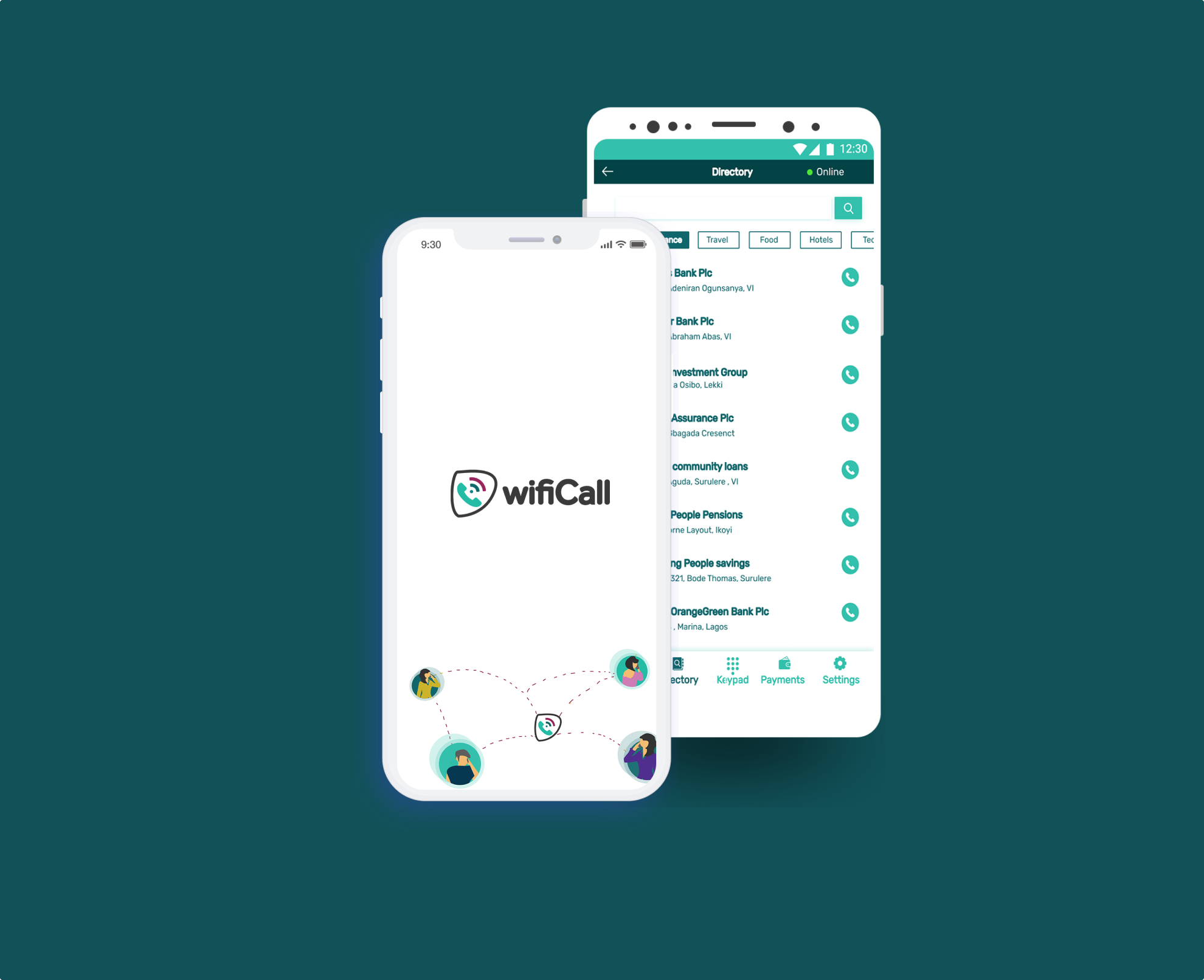
Nigeria based startup Tizeti, an internet service provider, today launched WifiCall.ng—an internet voice-calling platform for individuals and businesses.

WifiCall is a VoIP—or Voice over Internet Protocol—subscription service that allows unlimited calls to any phone number, even if that number isn’t registered on WifiCall’s network.

Tizeti will offer the product in Nigeria for now, with plans to open it up to phone numbers outside Africa’s most populous nation and largest economy in 2020.

WifiCall was influenced by popularity of WiFi enabled voice services such WhatsApp, in Africa, and the continent’s improving digital and mobile profile.

With its new VoIP product, Tizeti looks to contend with the likes of Skype, WhatsApp, and major telcos.

“On the low end we’re competing with the mobile providers. WifiCall gives you a real number and it’s cheaper. But we’re also offering enterprise options you would not get with a mobile connection or even WhatsApp,” Tizeti co-founder and CEO Kendall Ananyi told TechCrunch.
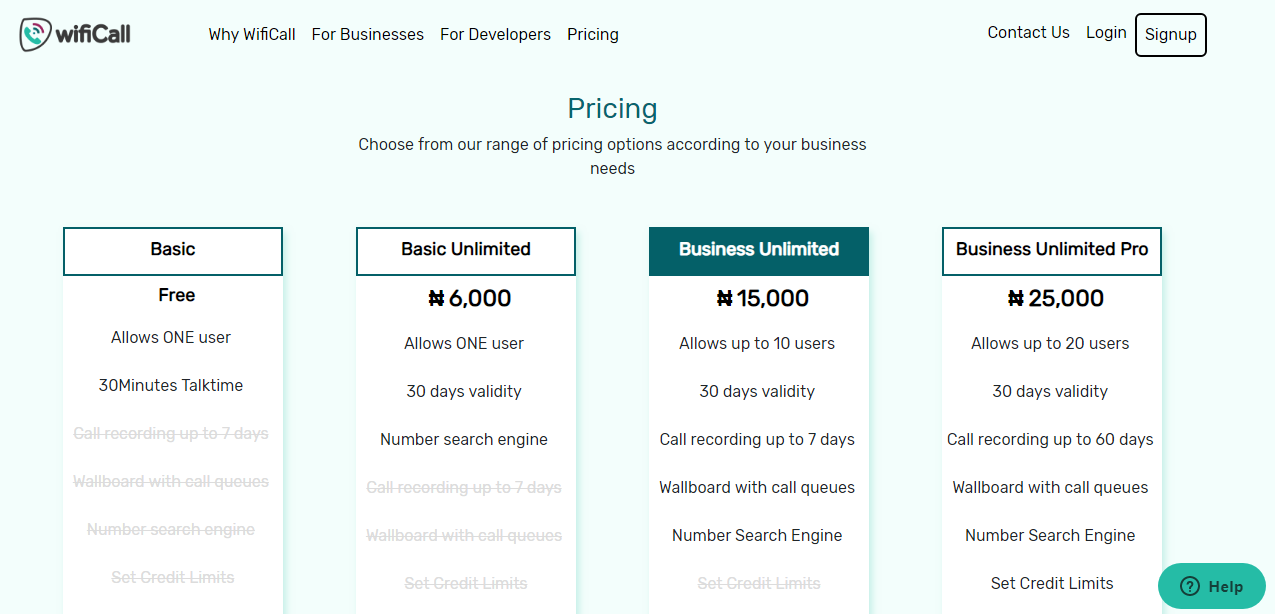
In addition to individual users, businesses and startups can use WifiCall for internal communications or open it up to developers to customize APIs for white-label, customer applications.

WifiCall is available online or for download for free under the “Basic” package. The entry level commercial “Business Unlimited Pro” package—that offers up to 10 users, call recording, and call analytics—goes for ₦15,000, or around $35 a month. 

Nigerian trucking logistic startup Kobo360 is already is a client. Ananyi sees prospective market segments for WifiCall as startups, educational institutions, hotels, gated communities, and “regular users anywhere they have tower coverage,” he said.

That last group ties into Tizeti’s core business, which is building solar powered towers that offer WiFi service packages and hotspots in and around Lagos and Ogun State, Nigeria. Since its launch from Y Combinator’s  winter 2017 batch, the company has installed over 12,000 public WiFi hotspots in Nigeria with 500,000 users. The startup packages internet services drawing on partnerships with West African broadband provider MainOne and Facebook’s Express Wi-Fi

Tizeti raised a $3 million Series A round in 2018, led by 4DX Ventures, and has $5.1 million in investment from firms including Golden Palm Investments, YC, and Social Investments.

4DX Ventures co-founder Walter Baddoo sees Tizeti’s voice calling as a strategic extension of its connectivity business (noting WifiCall can be used with any IP).

“The core of the company’s mission is to bring down the cost of connectivity on the continent by leveraging mobile internet and data networks, WifiCall is a step in that direction” Baddoo told TechCrunch. “Africa is going to leapfrog a lot of the traditional call infrastructure…and WiFi calling…is giving individuals, small-businesses, and large businesses one-stop for much cheaper data-service alongside voice.”

Though Sub-Saharan Africa still stands last in most global rankings for smartphone adoption (33 percent) and internet penetration (35 percent), the continent continues to register among the fastest growth in the world for both.

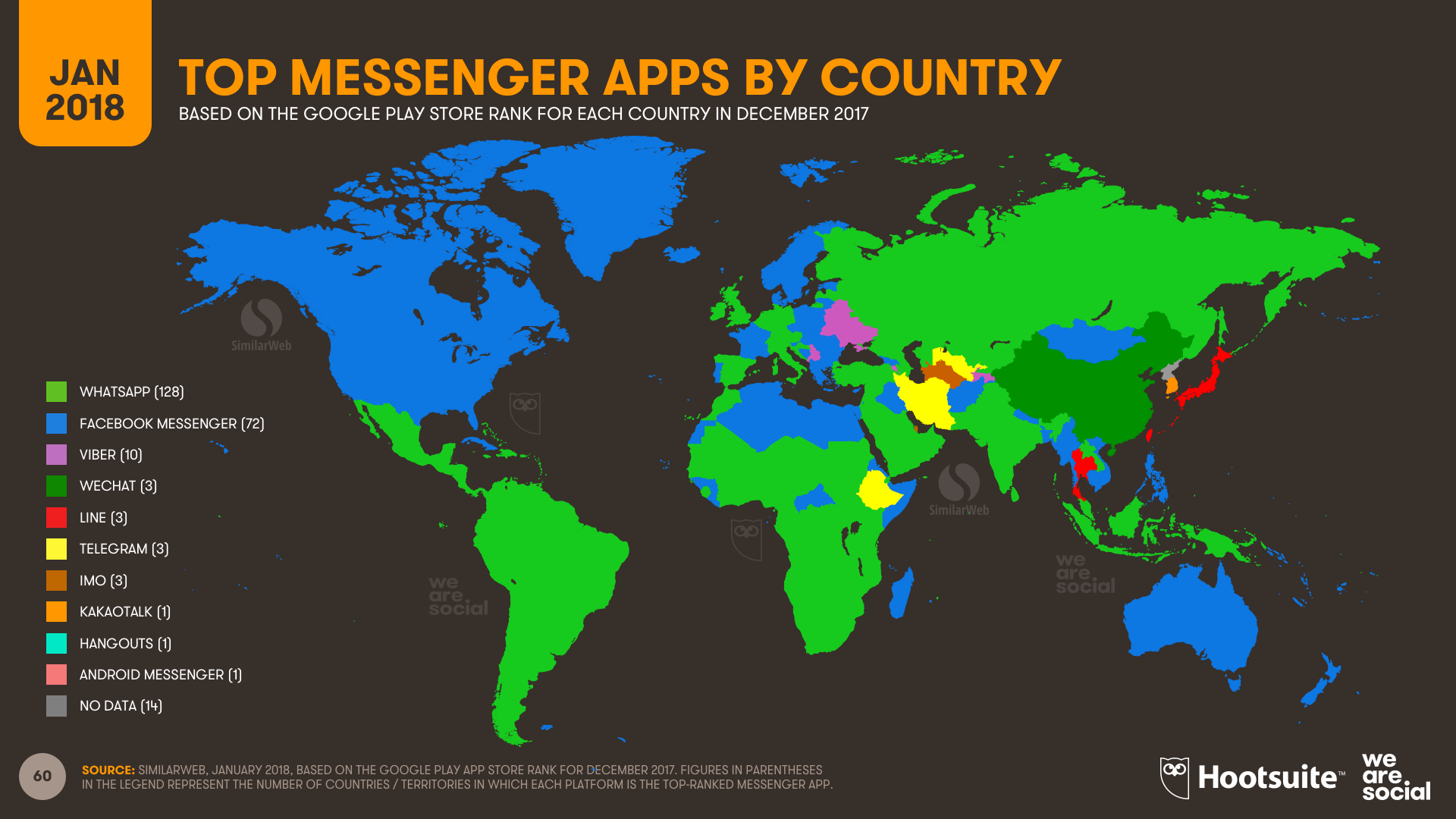
Mobile providers in Nigeria—such as MTN and Glo—are shifting customers from buying anonymous data-bundles to registered sim cards and subscription services. WiFi voice services are also commonly used across the continent for calls. Per We Are Social’s 2018 Digital Report, WhatsApp is the most downloaded messenger app across Africa.

On its internet service business, Tizeti has already expanded to Ghana with a consumer facing brand, Wifi-Africa, and looks to offer WifiCall there as soon as it gains regulatory approval—something in process, according to CEO Kendall Ananyi.

The startup is building an LTE network, to compliment its IP network, and plans to expand further into Nigeria with 5G offerings in the near future, according to Ananyi.

Tizeti also plans to open up its WifiCall product to phone numbers outside of Nigeria starting in 2020.  “The way Africa skipped landlines and went straight to mobile, this is us saying the next level for our voice communications is to move toward voice IP networks,” Ananyi said.


Vault Platform raises $4.2M to fix workplace misconduct reporting

Vault Platform, a London-based startup that has built software to “re-imagine” workplace misconduct reporting, has raised $4.2 million in seed funding. Leading the round is Kindred Capital, with participation from Angular Ventures, System.One, Jane VC, and ex-Mosaic Ventures Partner Mike Chalfen.

Founded in 2018 by Neta Meidav and Rotem Hayoun-Meidav, Vault is attempting to create a new and better way for company employees to report misconduct, such as workplace bullying or harassment, and in turn replace existing “hotline” systems, which it reckons are underused and often ineffective.

The so-called “TrustTech” offering lets employees easily record incidents in a diary-like space, with the option to only action those complaints when others also come forward. The SaaS consists of an employee app, corporate case management hub, and data and analytics. The latter claims to be able to help enterprises identify repeat problems and manage issues internally before they escalate.

“It’s undisputed that the world of work is going through a rapid change in light of the #MeToo and #TimesUp movements — we realised that one of the underlying reasons for this cultural revolution is the fact that reporting mechanisms are completely broken and what we really witness here is a deficit of trust,” Vault Platform co-founder and CEO Neta Meidav tells TechCrunch.

“Bullying and harassment are prevalent, however only 25 percent of misconduct is reported. This is a long-standing problem, but nowadays the risk lies with the enterprise not just the individual. Companies are waking up to the need of doing things differently”.

To tackle this, Meidav says Vault was created as an “employee-centric” platform that provides employees with a safe diary-like space to record incidents and save related evidence. If and when they choose to report it to their employer, they can do so by choosing “GoTogether,” a feature that allows them to file the report on the condition that they are not the only ones raising the same issues.

“GoTogether is a viable alternative to anonymous reporting, and it ensures that people are coming forward… with substantiated, evidence-based reports,” explains the Vault Platform CEO. “With the prevalent legacy hotline solution, abuse is much more of a possibility, since employees can just ‘tip’ anonymously without any accountability for what is being said”.

Meidav describe’s Vault Platform’s main competition as the “business as usual” solutions: anonymous reporting hotline operators that are traditionally the default for most employers. “They provide very little value for employees and employers beyond ticking the compliance and ethics box,” she says. “Alongside them, we compete with other startups who by large took the idea of anonymous reporting, digitised the same old methodology and turned it into an app”.

Meanwhile, Vault says it will use the funding to scale and expand its presence in North America and Europe. The company says target customers are organisations and enterprises from every sector and industry, typically with more than 1,000 employees. “Our client pipeline is varied, however, the most overwhelming interest has come so far from emerging tech companies,” adds Meidav.

India unseats China as Asia’s top fintech funding source

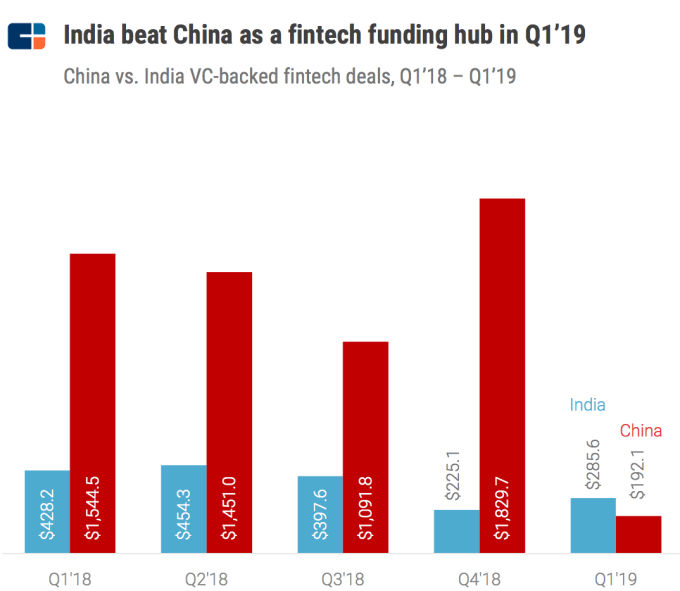
China’s massive fintech industry took a beating in recent months as the government continued to wind down online lending nationwide, rattling investor confidence.

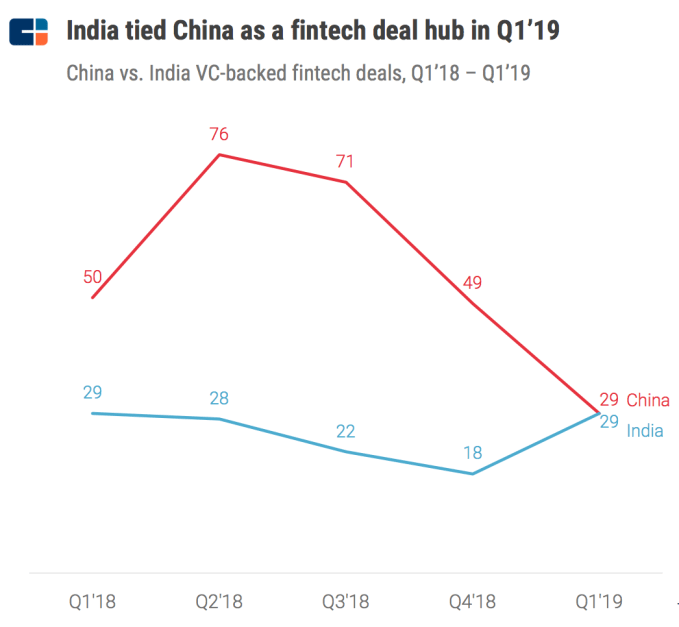
Funding for fintech startups shrank 87.6 percent year-over-year to $192.1 million during the first quarter of 2019, a new report from data provider CB Insights shows. India, which recorded $285.6 million raised for fintech startups in the period, overtook China to be Asia’s top fundraising hub for financial technology. Both countries clocked in 29 fintech deals, suggesting a cooling investor sentiment in China which saw its height of 76 deals just three quarters ago.

cb insights china q1

Chart: CB Insights

The plunge in China has followed on the heels of tightened regulation around online lending, suggests CB Insights . Over the past few years, China has rolled out a flurry of measures to rein in financial risks arising from its fledgling online lending industry. Peer-to-peer lending, which matches an individual looking for a loan with someone looking to invest, has been the top target in a wave of government crackdowns.

This kind of service offers credit to unbanked individuals who cannot otherwise get loans in a country without a mature unified credit system. But a lack of oversight led to rampant frauds across the board. Thousands of peer-to-peer lending sites shut down due to increased regulation, which is estimated to leave as few as 300 players on the market by the end of 2019, Shanghai-based research firm Yingcai forecasted.

Like China, India’s enthusiasm for finance technology is in part a result of the country’s lack of financial infrastructure. Lending startups are gathering steam as they, like their Chinese counterparts, tailor services to the country’s large unbanked and underbanked consumers and enterprises. Moves from tech leaders are also set to send ripples through the rest of the industry. Amazon finally followed its rivals Paytm, Google Pay and PhonePe to start offering peer-to-peer payments in the country. Walmart is closely watching how Flipkart, which it bought out last year, applies data to payments solution.

cb insights china q1

Chart: CB Insights

Despite the setback in online lending, a new form of consumer-facing financing vehicle — so-called mutual aid platforms that let patients crowdfund for serious diseases — is enjoying an early boom in China, CB Insights noted in its report. As with peer-to-peer lending, internet-powered mutual aid is trying to fill gaps in a traditional industry. Though most Chinese people are part of a national public insurance scheme, surgical bills can easily bring down an average family.

The top two performers in the sector are unsurprisingly from the top two opposing camps in China’s tech world. Shuidihuzhu, which translates as “water drop mutual help” in Chinese, counts Tencent as a major investor. Users contribute as little as half a cent to a pool of funds that pays out when a patient needs financial aid. The three-year-old platform, which leverages Tencent’s billion-user WeChat messenger to sign up members, claims it has attracted 78.8 million users and paid out nearly 440 million yuan $65.34 million to more than 3,100 families so far.

Shuidihuzhu’s rival, which is called Xiang Hu Bao and means “mutual protection”, is run by Alibaba’s affiliate e-wallet Alipay. Launched only last September, the service said it had acquired over 50 million users by April and had set itself up for an ambitious goal: to reach low-income groups who can’t afford the premiums and advance payments attached to traditional health insurance and to acquire 300 million users in the next two years. That means almost a third of Alipay users, most of whom live in Chia. By the end of 2018, the digital wallet had over 1 billion annual users worldwide.

Perkbox, the employee experience platform, raises £13.5M

Perkbox, the London-based startup now calling itself an “employee experience platform,” has raised a further £13.5 million in funding. The round is led by existing investor Draper Esprit, alongside a number of previous Perkbox angels. Prior to this, the company, which launched in 2015, had raised £11 million.

Targeting companies of all sizes, from SMEs to larger businesses, Perkbox’s platform lets employers give employees a number of benefits and rewards to enrich their work and personal life. The broader aim, of course, is to improve retention and staff well-being.

The offering now spans several products beyond its “perks” origins, including card-linked loyalty and medical provision. In addition, Perkbox enables companies to measure employee sentiment to help break down silos between management and teams, and to let employees give recognition to one another. This can either be peer-to-peer or top down from management.

“With this new suite of products, we transitioned from an employee ‘engagement’ platform to an employee ‘experience’ platform,” Perkobox co-founder and CEO Saurav Chopra tells me. “[All] with the aim of helping employers enrich the personal and working life of employees by catering for the full spectrum
of employee wellbeing: financial, physical and emotional”.

Headquartered in London but also with offices in Sheffield, Paris and Sydney, Perkbox says the new funding will be used to finance the company’s expansion operations in Australia and France.

longside this, it will invest in scaling the development and distribution of Perkbox’s new products: Perkbox Medical, Perkbox Insights and the platform’s card-linked PerksGo feature — all of which were launched late last year.