ManyChat raises $18M to help businesses tap into messaging

Mobile marketing company ManyChat has raised $18 million in Series A funding.

The startup, co-founded by CEO Mikael Yang, is currently focused on Facebook Messenger. It offers tools for creating a bot on Messenger while also supporting live human chatting (ManyChat says its approach is a “smart blend of automation and personal outreach”), and additional options like advertising to get more users to engage with with your messaging channels.

ManyChat is just one of several startups hoping to build a business around Facebook Messenger bots, but this sounds like a product that businesses are actually using. The company says more than 1 million accounts have been created on the platform, with customers coming from e-commerce, traditional retail, gyms, beauty salons restaurants and more.

Those customers have collectively enlisted 350 million Messenger subscribers, and there are 7 billion messages sent on the platform each month. Plus, with an average open rate of 80 percent, these messages are actually being read.

The funding was led by Bessemer Venture Capital, with participation from Flint Capital.  Bessemer’s Ethan Kurzweil is joining the board of directors, while the firm’s Alex Ferrara also becomes a board observer.

“ManyChat is at the forefront of a major shift in how businesses market to customers,” Kurzweil said in the funding announcement. “It’s not a matter of ‘if’ but ‘when’ email lists and static forms get replaced with a more personalized and conversational approach to customer engagement.”

He added that the company’s work with Messenger is “only the beginning”: “With Instagram, WhatsApp, RCS, and others on the horizon, there’s endless potential to scale.”

Cozmo maker Anki is shutting its doors

No one ever said consumer robots were easy. But Anki’s actually made a pretty strong go of it, all things considered. After wowing the world at Apple’s 2013 WWDC keynote with its Drive cars, the company went all in on robotics, first with Cozmo, then Vector.

After earlier reports of an understandably emotion Monday morning staff meeting lead by CEO Boris Sofman, the company has confirmed with TechCrunch that it will be letting go of its staff, effective later this week. Here’s the full statement,

It is with a heavy heart to announce that Anki will be letting go of our employees, effective Wednesday. We’ve shipped millions of units of product and left customers happy all over the world while building some of the most incredible technologies pointed toward a future with diverse AI and robotics driven applications. But without significant funding to support a hardware and software business and bridge to our long-term product roadmap, it is simply not feasible at this time.

Despite our past successes, we pursued every financial avenue to fund our future product development and expand on our platforms. A significant financial deal at a late stage fell through with a strategic investor and we were not able to reach an agreement. We’re doing our best to take care of every single employee and their families, and our management team continues to explore all options available.

We’ve reached out for further specifics regarding what, if any, future there is the company. Anki built several compelling products, most notably Cozmo, which turned into a big holiday hit. As of last August, the Bay Area-based startup told us that it had sold 1.5 million robots since its inception, including “hundreds of thousands” of Cozmo models.

Over the course of its life, the company raised $182 million, according to Crunchbase. It was clearly spending quite a bit as well, having hired composers and former Pixar and Dreamworks animators to more fully realize the personality of Cozmo and its more adult-focused followup, Vector.

Developing…

Getting a piece of Uber

Menlo Ventures was founded in 1976 but it took 35 years for the venture capital firm to hit the jackpot.

Since the dot-com boom, Menlo Ventures has teetered between good and great. A prolific Silicon Valley investor, it’s never quite reached the heights of Accel or Andreessen Horowitz (a16z), or established the level of name recognition as Benchmark or Sequoia, firms that struck gold with bets on Facebook, Instagram and Snap.

But where others missed the boat entirely on one of the most valuable tech startups of all time, Menlo Ventures gnawed its way into an early deal at the last possible moment.

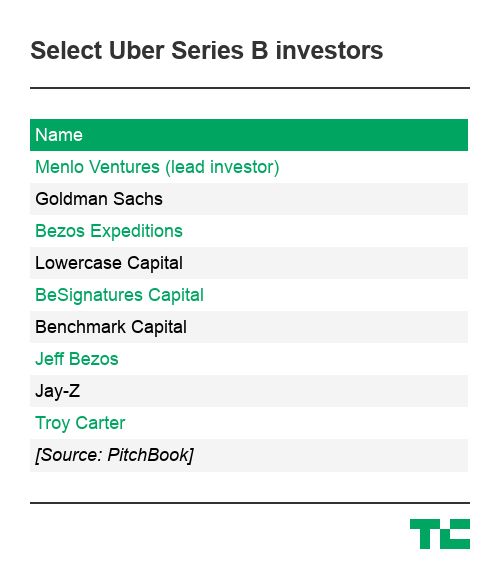
In 2011, the firm led a $32 million Series B funding in a fledgling on-demand car service called Uber, agreeing to value the startup at a colossal $322 million after the company’s first-choice investor, a16z, failed to accept Uber’s sky-high terms. Menlo would go on to invest a total of $66.5 million in the company on expected total returns of up to $3.1 billion.

“I wouldn’t have dared to dream quite this big,” Menlo Ventures partner Shawn Carolan told TechCrunch. Carolan and embattled investor Shervin Pishevar, the former Menlo Ventures partner and founder of Sherpa Capital accused of sexual misconduct, secured Menlo a spot on Uber’s cap table years ago when several firms were vying for a stake.

The pair, according to several discussions with insiders, are polar opposites, representatives of the diverging approaches to deal-making in Silicon Valley. While Pishevar, described to TechCrunch as “overpowering” and “self-promotional,” developed a lasting relationship with Uber co-founder and former chief executive officer Travis Kalanick crucial to the deal, Carolan, a reserved Midwesterner, crunched the numbers and worked to convince his firm that Uber, a young startup with a hot-headed leader, was worth their time and money.

Now, as Uber preps for an imminent initial public offering, the firm wants to shine a light on Carolan, an under-the-radar investor known more for his humility than his portfolio.
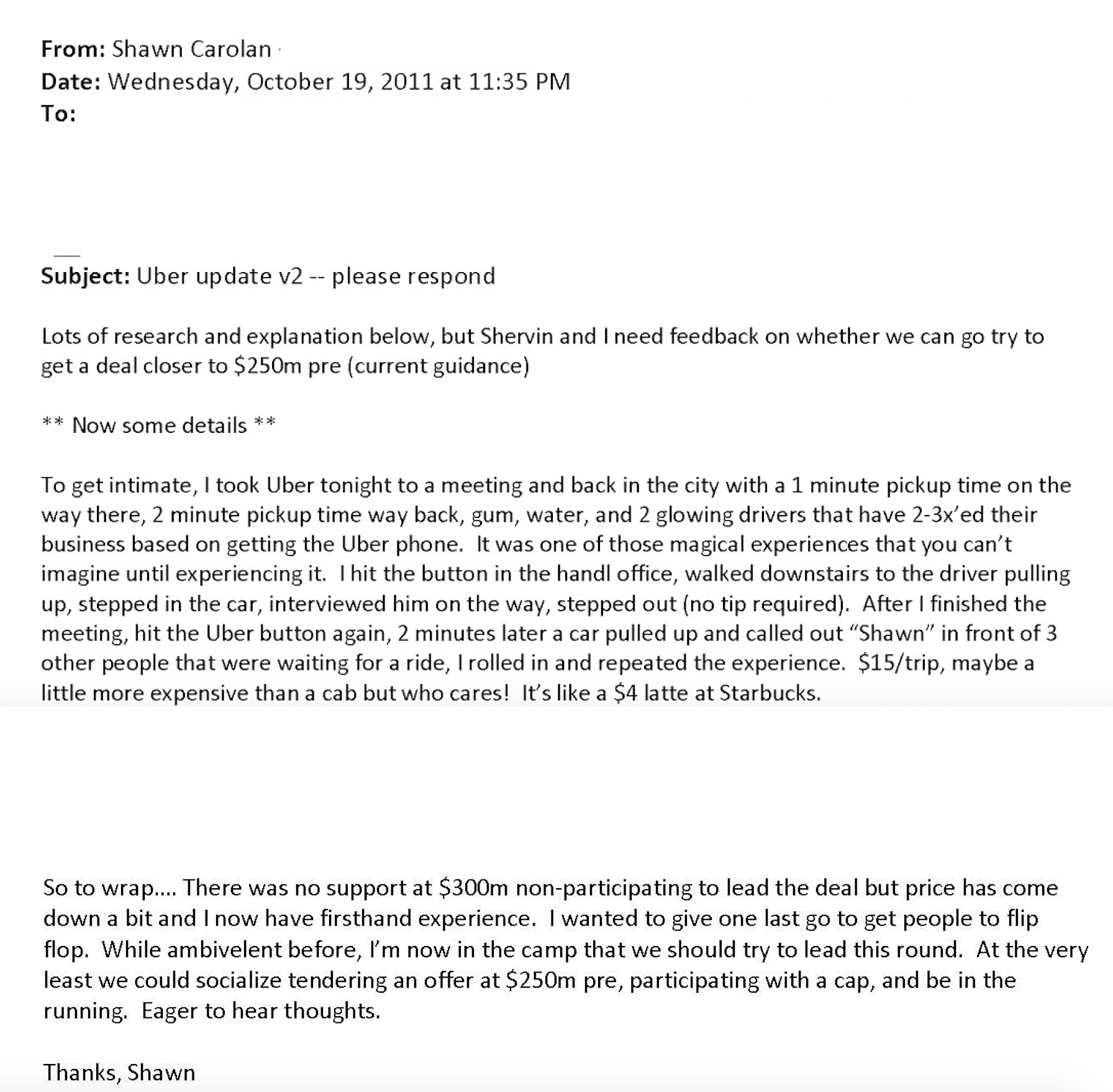
Menlo Ventures partner Shawn Carolan’s last-ditch effort to convince his firm to invest in Uber in late 2011.

A historic IPO

As Uber approaches its IPO, a slew of investors that were in the right place at the right time await a payday of unforeseen scale.

Uber dropped its IPO prospectus in early April. Next week, it’s expected to debut on the New York Stock Exchange at a valuation between $80 billion and $100 billion, up from its most recent private valuation of $72 billion. The IPO will be amidst the largest liquidity events for a U.S. VC-backed technology company in history, on par with Facebook’s 2012 public offering that valued the social media empire at $104 billion.

In addition to Menlo Ventures, the Japanese telecom giant SoftBank, Benchmark, Uber co-founders Travis Kalanick and Garrett Camp, Saudi Arabia’s Public Investment Fund and GV, the investment arm of Alphabet, own stakes in Uber worth billions.

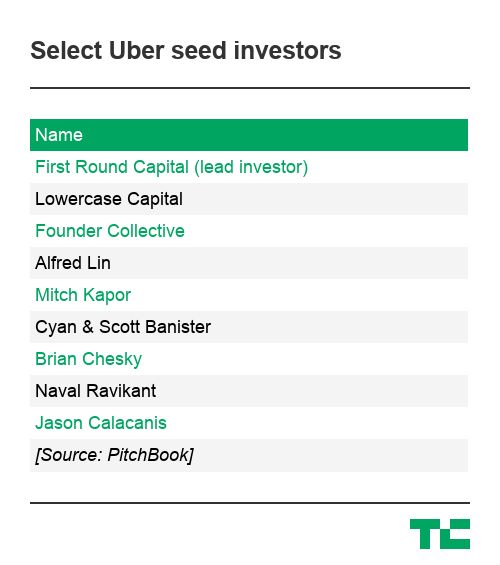
Seed backers like Chris Sacca of Lowercase Capital and Rob Hayes of First Round Capital, who invested in “UberCab” before it had anything to show for itself, will also earn tremendous payouts.
Menlo has already raked in hundreds of millions in profits from its Uber investment, as have several other investors that sold their shares on the secondary market. In 2018, Menlo earned $973 million when a group of investors led by SoftBank purchased nearly half of its Uber stock. The deal represented a 93x return on shares the firm had paid $10.5 million for years prior, according to the firm’s calculations.

Since that transaction, Menlo has expanded its Uber stake through the sale of its portfolio company Jump Bikes to Uber in 2018. The firm had invested $7.5 million in Jump, a provider of a dockless bicycle system, only months before it was acquired by Uber for $200 million. Menlo, as a result, banked another $50 million in Uber stock.

Today, it owns a 2.3 percent stake in Uber worth between $1.85 billion and $2.1 billion, depending on how Uber prices its IPO.

Beers and a term sheet
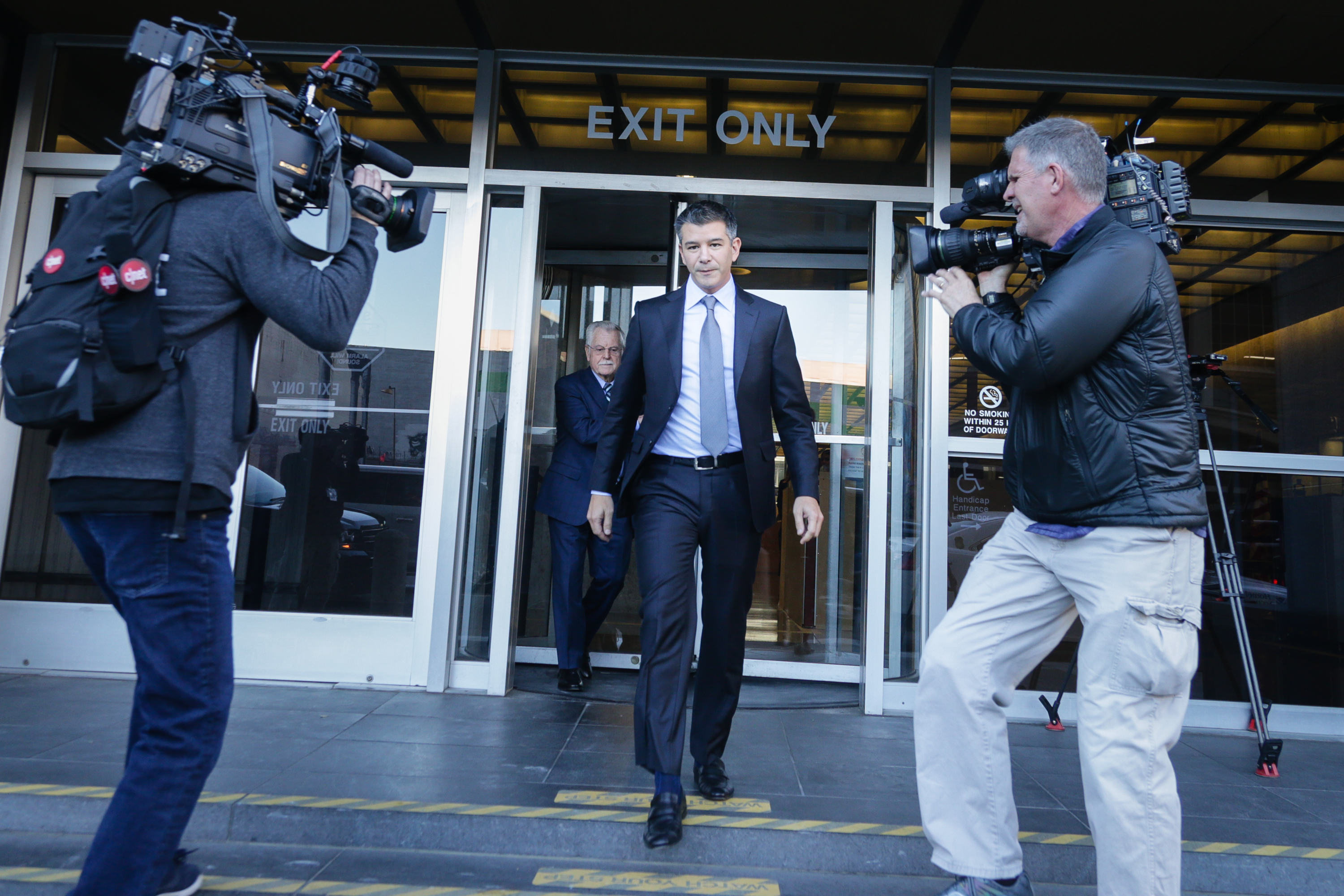
Uber founding CEO Travis Kalanick.

The story of Menlo Ventures’ investment in Uber dates back to 2005 when Carolan first met Travis Kalanick, Uber’s founder and former chief executive. The notorious entrepreneur was fundraising for an earlier company, a peer-to-peer file-sharing startup called Red Swoosh. Menlo didn’t invest, but Kalanick left a lasting impression.

Years later, Benchmark general partner Matt Cohler called Pishevar on his cell phone to let him know Uber had begun raising its Series B. Pishevar didn’t know Kalanick yet but had been introduced to his fast-growing car-sharing business by AngelList founder and Uber backer Naval Ravikant in 2010.

Pishevar was a garish type who would two years later leave Menlo to launch his own firm Sherpa Capital, a backer of Slack, Airbnb, Robinhood, Hyperloop One and more. Carolan was restrained, focused more on metrics than relationships. Together, the pair worked their way onto Uber’s cap table with Pishever serving as the lead investor externally and internally, both men receiving credit as leads.

Venture capitalists often brag about the skill required to land the best deals, but most of the time, it comes down to luck and timing. Menlo, in this case, got really lucky.

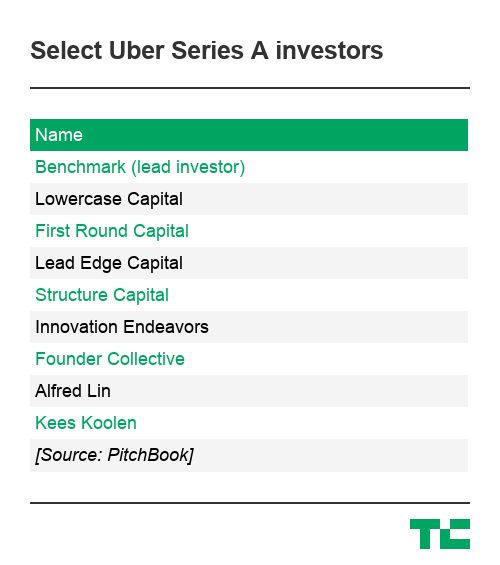
A recent feature on Andreessen Horowitz in Forbes detailed the firm’s biggest misstep: losing Uber. Hours before they were set to sign a term sheet, the firm shifted, offering Uber a lower valuation than what had been promised. Kalanick, known already at that point for his disdain for investors, walked. Little did the Menlo team know they were being used as a “stalking horse for leverage,” according to Forbes’ reporting. So when a16z tried to cheapen the deal, Uber turned immediately to its second-choice, Menlo Ventures.

A16z declined to provide additional details for this story.

“Whenever you have a company of this caliber that has that kind of growth rate, there’s a lot of people that are vying for the opportunity to invest,” Carolan said. “Frankly, there’s never been a company like Uber.”
With a sense of urgency, Pishevar hopped on a plane to Dublin, Ireland at Kalanick’s request. The CEO was speaking at a technology conference called Web Summit. It was there that the term sheets were signed over pints at the Shelbourne Hotel, and a close friendship between Pishevar and Kalanick would begin to blossom. Pishevar, according to The New York Times, later introduced the ride-hail chief to the club scene and Los Angeles celebrity culture. Until Kalanick’s final days as CEO, Pishevar would fiercely defend the founder’s dog-eat-dog style of management. To this day, the two are close friends.

Meanwhile, Carolan was heads down, benchmarking Uber against other tech companies, completing a thorough unit economics analysis and hoping his colleagues wouldn’t be disappointed by the Uber investment, a point of contention among certain Menlo staffers who viewed Uber as a limo dispatch company with an app, not the next billion-dollar business.

“There were a lot of things you had to believe back then and at that moment in time, Uber didn’t paint that picture, [Carolan] was the one who painted that picture,” Mark Siegel, a managing director at Menlo since 1996, told TechCrunch. “And he pounded the table pretty hard.”

After all, Uber was only active in four markets at the time of Menlo’s initial investment: San Francisco, Seattle, Chicago and New York City. Rider bookings were growing fast but were just $1 million per month, with close to zero net revenue after paying drivers. Carolan himself was unconvinced of the business’s longevity until his first ride in an Uber turned him.

Uber declined to confirm early booking figures.

“We had a lot of heartburn over the valuation,” Carolan said. “But it’s the ones you don’t chase, like YouTube, which I kind of dismissed as a lousy business and didn’t chase it. When you see something like Uber that has that type of repeated retention and essentially zero customer acquisition, it’s kind of like, okay, this is just a magical experience that’s going to sell itself.”

Carolan’s commitment was recognized internally but while Uber gained momentum, so did Pishevar. His involvement in Uber brought him notoriety, while Carolan’s role slipped through the cracks. Even when accusations of sexual misconduct against Pishevar surfaced in 2017, his name was often preceded by “early Uber investor.”
Pishevar was accused of sexually harassing several women, including Uber’s very own former head of global expansion, Austin Geidt. The Bloomberg expose highlighting allegations against him came just one month after a report he had been arrested in London for rape. Charges for the reported London incident were later dropped and Pishevar, through his lawyer, has said the other claims were part of a “smear campaign” against him.

Menlo Ventures sought to distance itself from the scandal, naturally, claiming in a series of tweets they had no knowledge of inappropriate behavior during his tenure at the firm.

A self-effacing venture capitalist

A Chicago native, Shawn Carolan joined Menlo Ventures in 2002 as a 28-year-old fresh out of Stanford’s business school. His wife and high school sweetheart, Jennifer Carolan, would make a career as a venture capitalist, too, co-founding Reach Capital, an edtech-focused VC fund coincidentally located next door to Menlo’s San Francisco outpost.
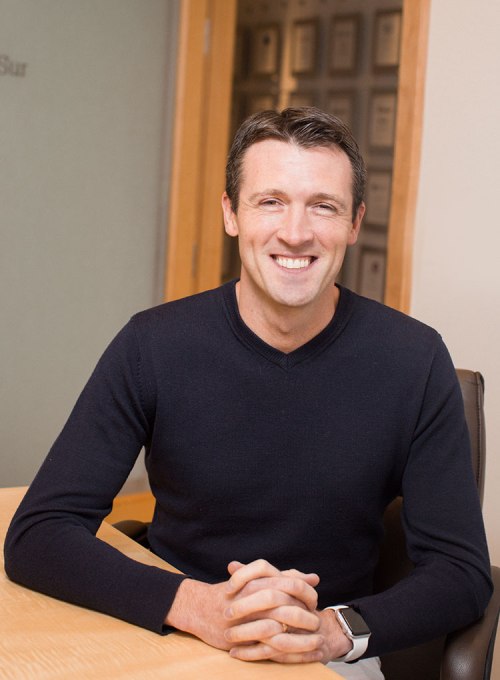
Menlo Ventures partner Shawn Carolan.

In 2009, the Menlo team realized they had overcompensated on enterprise and made the call to pioneer a reinvigorated consumer tech strategy spearheaded largely by Carolan.

In 2011, to bolster the new effort, Carolan hired Pishevar, a rookie VC they hoped would bring a fresh perspective to a firm of engineering geeks. Immediately, Pishevar sourced Square, Jack Dorsey’s hot new payments startup. The team rallied behind him but ultimately, Square went with Kleiner Perkins’s Mary Meeker instead. Later, Pishevar would bring in Pinterest and Snap, mere months after the ephemeral messaging app had launched but the Menlo team passed, according to a source with knowledge of the deals.

In Pishevar’s first six months at Menlo, he invested in Tumblr, Warby Parker, Machine Zone and Uber.

Carolan, for his part, has returned more capital in a single year than any partner in its history, the firm said. In a 12-month period between 2017 to 2018, Roku’s IPO and the Uber stock sale brought in some $2 billion in returns for Menlo, capital that was used to fuel its latest fund, a $500 million vehicle focused on Series B and C-stage startups.

In addition to accumulating a 35.3 percent pre-IPO stake in the digital streaming business Roku, which the firm celebrated with boxes of popcorn implanted with several thousand dollars in cash bonuses for the administrative team, Carolan was the first institutional investor in Siri, the personal assistant application Apple paid a little more than $200 million for in 2010. More recently, he invested in Chime, a mobile banking platform valued at $1.5 billion in March.

Pishevar, since leaving Menlo, has continued to ink deals with high-flying unicorns, including Uber, in which Sherpa invested an additional $200 million. However, since resigning from Sherpa Capital following the sexual misconduct scandal in 2017, he’s kept a much lower profile. Most recently, he signed on as an investor and board member at Bolt Mobility, an electric scooter business in Florida. A 2018 Florida business filing listed him as the company’s sole officer, though the Bolt team recently told BuzzFeed Pishevar was strictly an investor. The Sherpa Capital team, for their part, have relaunched as ACME Capital.

Bolt has not responded to a request for comment.

An implosion

Menlo remained one of the largest institutional backers in Uber for several years, a position that, while lucrative, proved tricky when Uber began to unravel internally.

When Pishevar left Menlo Ventures to build Sherpa Capital in 2013, Carolan assumed the Menlo board observer seat for the next 21 months. Pishevar, now a close friend to Kalanick, stayed on the board as an observer until 2015.

Eventually, Carolan would take a step back from Menlo to focus on his productivity startup, Handle. But when Handle failed to become the rocket ship Carolan had dreamed of, he returned to investing at Menlo full-time with a newfound empathy for founders.

Little did he know he would play a role in the high-profile ouster of one of the most notable tech founders of all time.

In July 2016, talks of Kalanick’s resignation led by Benchmark general partner and Uber board member Bill Gurley began. Menlo had given up its board observer seat by then, but was part of a consortium of four key early Uber investors (Benchmark, First Round Capital and Lowercase Capital) that controlled the preferred share vote, which was needed to make impactful decisions; for example, approving new board seats or remove a founding CEO.

In 2017, it became abundantly clear that Uber would never achieve profitability nor complete its highly anticipated IPO with Kalanick at the helm. Susan Fowler had published her infamous blog post, executives were quitting, remarks on Uber’s toxic culture could be found just about anywhere and the #DeleteUber campaign had turned social media against the ride-hail company.
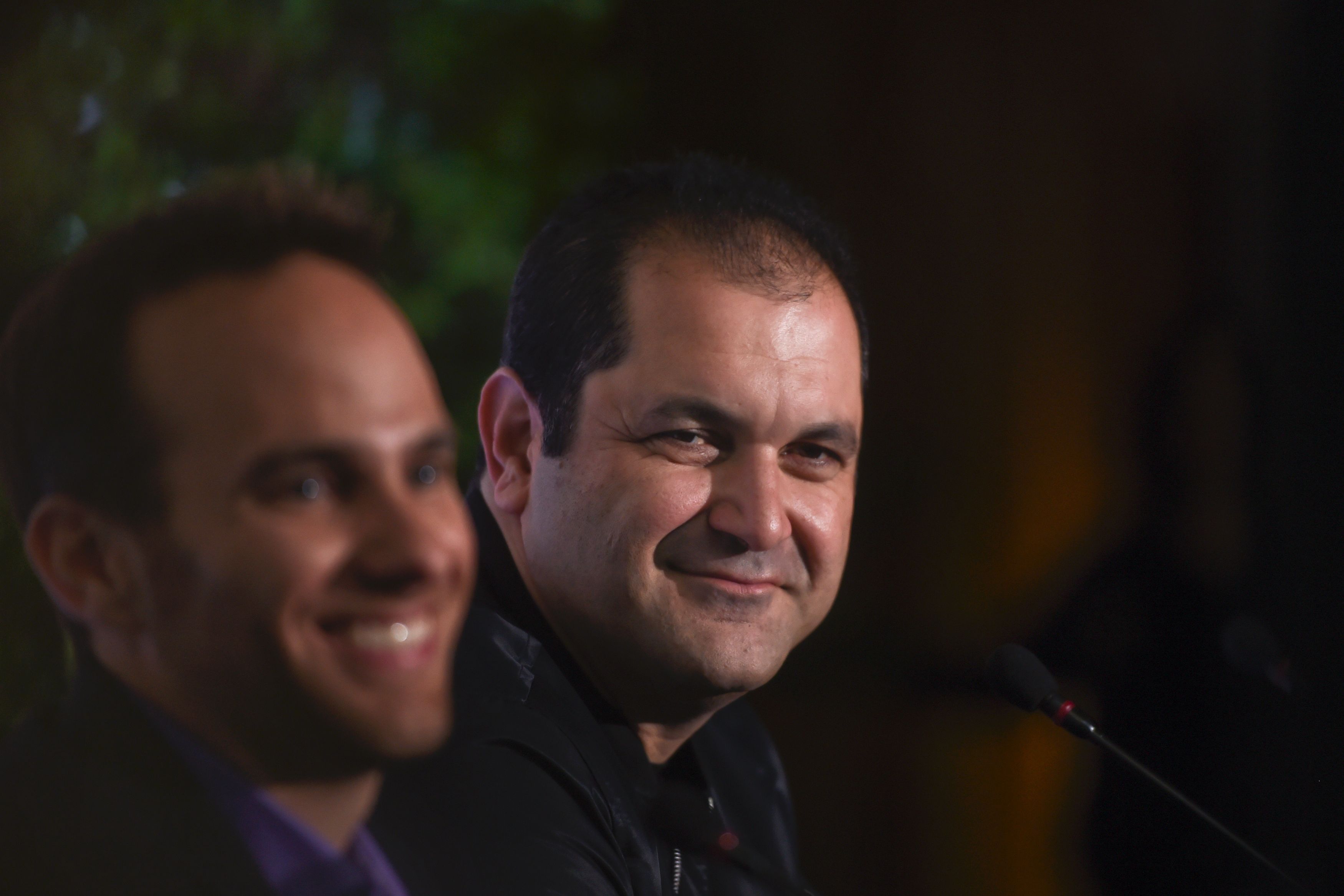
Shervin Pishevar (right) looks on as he gives a press conference during the Web Summit at Parque das Nacoes, in Lisbon on November 10, 2016. (PATRICIA DE MELO MOREIRA/AFP/Getty Images)

Uber was going to implode if the board didn’t act. Benchmark’s Gurley took center stage, calling on Kalanick to resign. Pishevar remained a Kalanick confidant and later when Benchmark sued Kalanick, he published a bizarre open letter in an eleventh-hour attempt to sway the public to rally behind the ousted CEO. Carolan, reluctant to be perceived as anything other than founder friendly, turned against the founder and advocated alongside Gurley for Kalanick’s removal.

“I imagine he wouldn’t be particularly happy with me for having done that but you gotta do what you gotta do sometimes,” Carolan said. “Ultimately, our job is to help that company achieve its mission. It’s not an allegiance to any one person at the company.”

Finally, Kalanick gave up the Uber C-suite in June 2017 and former Expedia Group CEO Dara Khosrowshahi stepped in as his replacement. Sixteen months later, Uber would file confidentially for a 2019 IPO.

A lasting impact

Menlo Ventures leaped into cutting-edge consumer investing at a time when its reputation in The Valley was unremarkable. For years, decades even, the firm shielded itself from PR and declined to take the spotlight as the Andreessen Horowitzes of the world touted their successes.

Today, the firm is more accepting of attention, leveraging its Uber position to attract entrepreneurs and foster new unicorns, like the more recent portfolio additions Chime and Carta.

“It has clearly benefited us in terms of the overall perception of the firm and credibility,” Siegel said, admitting he was one of several Menlo partners dubious of its 2011 Uber investment. “There’s no doubt it has been a huge positive.”

In the years since Uber came along, Menlo has made key additions to its team, marking the beginning of a new era for the timeworn investor. In 2015, it hired Steve Sloane, who became the firm’s youngest partner to date when he was promoted earlier this year. Naomi Ionita, the firm’s only female partner, joined in early 2018. And Grace Ge, a fresh recruit from RRE Ventures in New York, started this week as a senior associate on the venture team. Another yet-to-be-announced hire will begin in June.

Uber, despite narrowly avoiding a complete implosion in 2017, has changed the game for many investors. The returns it will generate in the next several months will refresh the coffers of several venture capital funds. Money tied to Uber will flow toward the next generation of founders for years to come, and the investors responsible for its landmark success will boast about it for the remainder of their careers.

Even if Uber doesn’t turn out to be the Wall Street darling its investors hope — Lyft has struggled to accumulate value on the public markets — the company has indisputably transformed the Silicon Valley playbook for hypergrowth and execution in the gig-economy ecosystem.

Alphabet misses on Q1 revenues of $36.3B; EPS of $9.50 weighed down by the $1.7B European fine

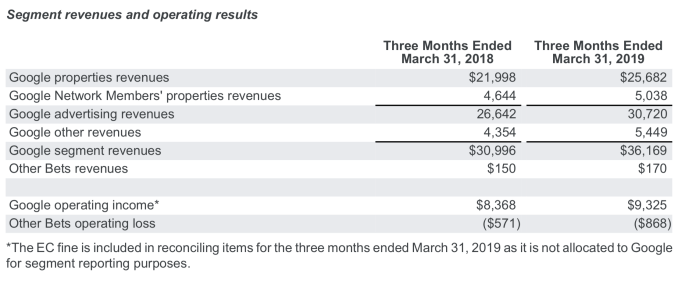
After warning investors that it would be taking a $1.7 billion (€1.5 billion) charge this quarter due to a fine from the European Commission over anticompetitive advertising practices, today Google parent Alphabet reported its quarterly earnings for Q1. Overall it’s a tough quarter for the company that speaks to struggles with its growth. Alphabet reported revenues of $36.3 billion, with diluted earnings per share of $9.50.

Analysts were expecting Alphabet to report GAAP earnings of $10.17 per share, with adjusted EPS expected to be $13.10, on overall revenues of $37.34, according to estimates from Yahoo Finance.

The company’s stock is down by some 4.5 percent in after-hours trading at the moment.

“We delivered robust growth led by mobile search, YouTube, and Cloud with Alphabet revenues of $36.3 billion, up 17% versus last year, or 19% on a constant currency basis,” said Ruth Porat, Chief Financial Officer of Alphabet and Google, in a statement. “We remain focused on, and excited by, the significant growth opportunities across our businesses.”

Google had said that the EU fine is not tax deductible and will result in a direct reduction of its GAAP operating income, GAAP net income and GAAP EPS, so the EPS weight was not a big surprise. But the sales revenue, based primarily on advertising, was also not great: the figure grew 17 percent, compared to a year ago, when it was growing at 26 percent. (Both figures are on straight numbers; on a constant currency basis they are only slightly better for this latest quarter, at 19 percent.)

For some context, in the previous quarter, Alphabet reported that revenues were up 22 percent at $39.3 billion, with an EPS of $12.77. Its stock still dropped after hours

Advertising represented the bulk of Google’s revenues at $30.7 billion, while its “other bets” is still a massively loss-making effort, pulling in an operating loss of $868 million on revenues of only $170 million.

More to come.


Diving into TED2019, the state of social media, and internet behavior

Extra Crunch offers members the opportunity to tune into conference calls led and moderated by the TechCrunch writers you read every day. Last week, TechCrunch’s Anthony Ha gave us his recap of the TED2019 conference and offered key takeaways from the most interesting talks and provocative ideas shared at the event.

Under the theme, ‘Bigger Than Us’, the conference featured talks, Q&A’s, and presentations from a wide array of high-profile speakers, including an appearance from Twitter CEO Jack Dorsey which was the talk of the week. Anthony dives deeper into the questions raised in his onstage interview that kept popping up: How has social media warped our democracy? How can the big online platforms fight back against abuse and misinformation? And what is the Internet good for, anyway?

“…So I would suggest that probably five years ago, the way that we wrote about a lot of these tech companies was too positive and they weren’t as good as we made them sound. Now the pendulum has swung all the way in the other direction, where they’re probably not as bad we make them sound…

…At TED, you’d see the more traditional TED talks about, “Let’s talk about the magic of finding community in the internet.” There were several versions of that talk this year. Some of them very good, but now you have to have that conversation with the acknowledgement that there’s much that is terrible on the internet.”

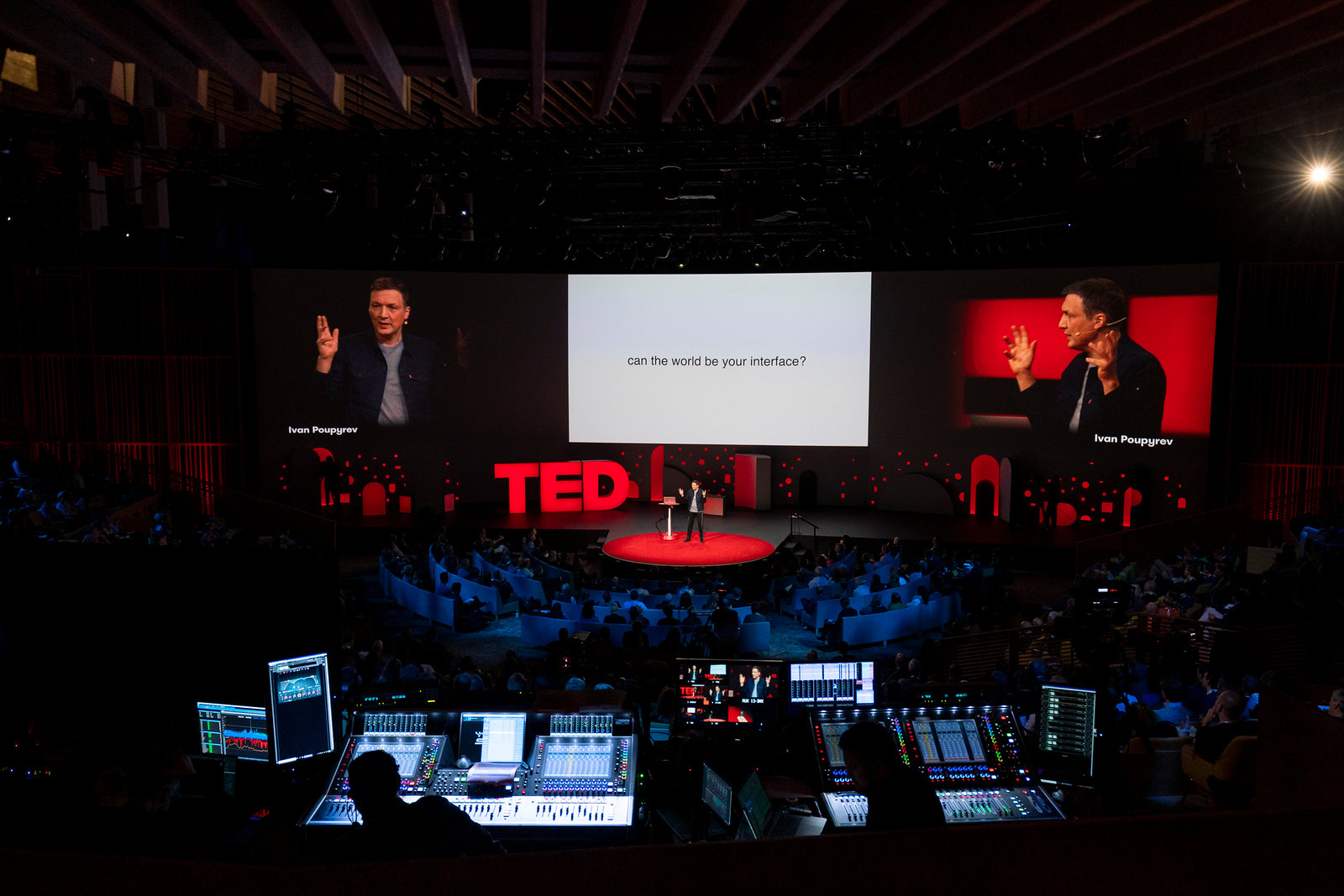
Ivan Poupyrev

Image via Ryan Lash / TED

Anthony also digs into what really differentiates the TED conference from other tech events, what types of people did and should attend the event, and even how he managed to get kicked out of the theater for typing too loud.

For access to the full transcription and the call audio, and for the opportunity to participate in future conference calls, become a member of Extra Crunch. Learn more and try it for free. 

Why did last night’s ‘Game of Thrones’ look so bad? Here comes the science!

Last night’s episode of “Game of Thrones” was a wild ride and inarguably one of an epic show’s more epic moments — if you could see it through the dark and the blotchy video. It turns out even one of the most expensive and meticulously produced shows in history can fall prey to the scourge of low quality streaming and bad TV settings.

The good news is this episode is going to look amazing on Blu-ray or potentially in future, better streams and downloads. The bad news is that millions of people already had to see it in a way its creators surely lament. You deserve to know why this was the case. I’ll be simplifying a bit here because this topic is immensely complex, but here’s what you should know.

(By the way, I can’t entirely avoid spoilers, but I’ll try to stay away from anything significant in words or images.)

It was clear from the opening shots in last night’s episode, “The Longest Night,” that this was going to be a dark one. The army of the dead faces off against the allied living forces in the darkness, made darker by a bespoke storm brought in by, shall we say, a Mr. N.K., to further demoralize the good guys.

If you squint you can just make out the largest army ever assembled

Thematically and cinematographically, setting this chaotic, sprawling battle at night is a powerful creative choice and a valid one, and I don’t question the showrunners, director, and so on for it. But technically speaking, setting this battle at night, and in fog, is just about the absolute worst case scenario for the medium this show is native to: streaming home video. Here’s why.

Compression factor

Video has to be compressed in order to be sent efficiently over the internet, and although we’ve made enormous strides in video compression and the bandwidth available to most homes, there are still fundamental limits.

The master video that HBO put together from the actual footage, FX, and color work that goes into making a piece of modern media would be huge: hundreds of gigabytes if not terabytes. That’s because the master has to include all the information on every pixel in every frame, no exceptions.

Imagine if you tried to “stream” a terabyte-sized video file. You’d have to be able to download 200 megabytes per second for the full 80 minutes of this episode. Few people in the world have that kind of connection — it would basically never stop buffering. Even 20 megabytes per second is asking too much by a long shot. 2 is doable — slightly under the 25 megabit speed (that’s bits… divide by 8 to get bytes) we use to define broadband download speeds.

So how do you turn a large file into a small one? Compression — we’ve been doing it for a long time, and video, though different from other types of data in some ways, is still just a bunch of zeroes and ones. In fact it’s especially susceptible to strong compression because of how one video frame is usually very similar to the last and the next one. There are all kinds of shortcuts you can take that reduce the file size immensely without noticeably impacting the quality of the video. These compression and decompression techniques fit into a system called a “codec.”

But there are exceptions to that, and one of them has to do with how compression handles color and brightness. Basically, when the image is very dark, it can’t display color very well.

The color of winter

Think about it like this: There are only so many ways to describe colors in a few words. If you have one word you can say red, or maybe ochre or vermilion depending on your interlocutor’s vocabulary. But if you have two words you can say dark red, darker red, reddish black, and so on. The codec has a limited vocabulary as well, though its “words” are the numbers of bits it can use to describe a pixel.

This lets it succinctly describe a huge array of colors with very little data by saying, this pixel has this bit value of color, this much brightness, and so on. (I didn’t originally want to get into this, but this is what people are talking about when they say bit depth, or even “highest quality pixels.)

But this also means that there are only so many gradations of color and brightness it can show. Going from a very dark grey to a slightly lighter grey, it might be able to pick 5 intermediate shades. That’s perfectly fine if it’s just on the hem of a dress in the corner of the image. But what if the whole image is limited to that small selection of shades?

Then you get what we see last night. See how Jon (I think) is made up almost entirely of only a handful of different colors (brightnesses of a similar color, really) in with big obvious borders between them?

This issue is called “banding,” and it’s hard not to notice once you see how it works. Images on video can be incredibly detailed, but places where there are subtle changes in color — often a clear sky or some other large but mild gradient — will exhibit large stripes as the codec goes from “darkest dark blue” to “darker dark blue” to “dark blue,” with no “darker darker dark blue” in between.

Check out this image.

Above is a smooth gradient encoded with high color depth. Below that is the same gradient encoded with lossy JPEG encoding — different from what HBO used, obviously, but you get the idea.

Banding has plagued streaming video forever, and it’s hard to avoid even in major productions — it’s just a side effect of representing color digitally. It’s especially distracting because obviously our eyes don’t have that limitation. A high-definition screen may actually show more detail than your eyes can discern from couch distance, but color issues? Our visual systems flag them like crazy. You can minimize it, but it’s always going to be there, until the point when we have as many shades of grey as we have pixels on the screen.

So back to last night’s episode. Practically the entire show took place at night, which removes about 3/4 of the codec’s brightness-color combos right there. It also wasn’t a particularly colorful episode, a directorial or photographic choice that highlighted things like flames and blood, but further limited the ability to digitally represent what was on screen.

It wouldn’t be too bad if the background was black and people were lit well so they popped out, though. The last straw was the introduction of the cloud, fog, or blizzard, whatever you want to call it. This kept he brightness of the background just high enough that the codec had to represent it with one of its handful of dark greys, and the subtle movements of fog and smoke came out as blotchy messes (often called “compression artifacts” as well) as the compression desperately tried to pick what shade was best for a group of pixels.

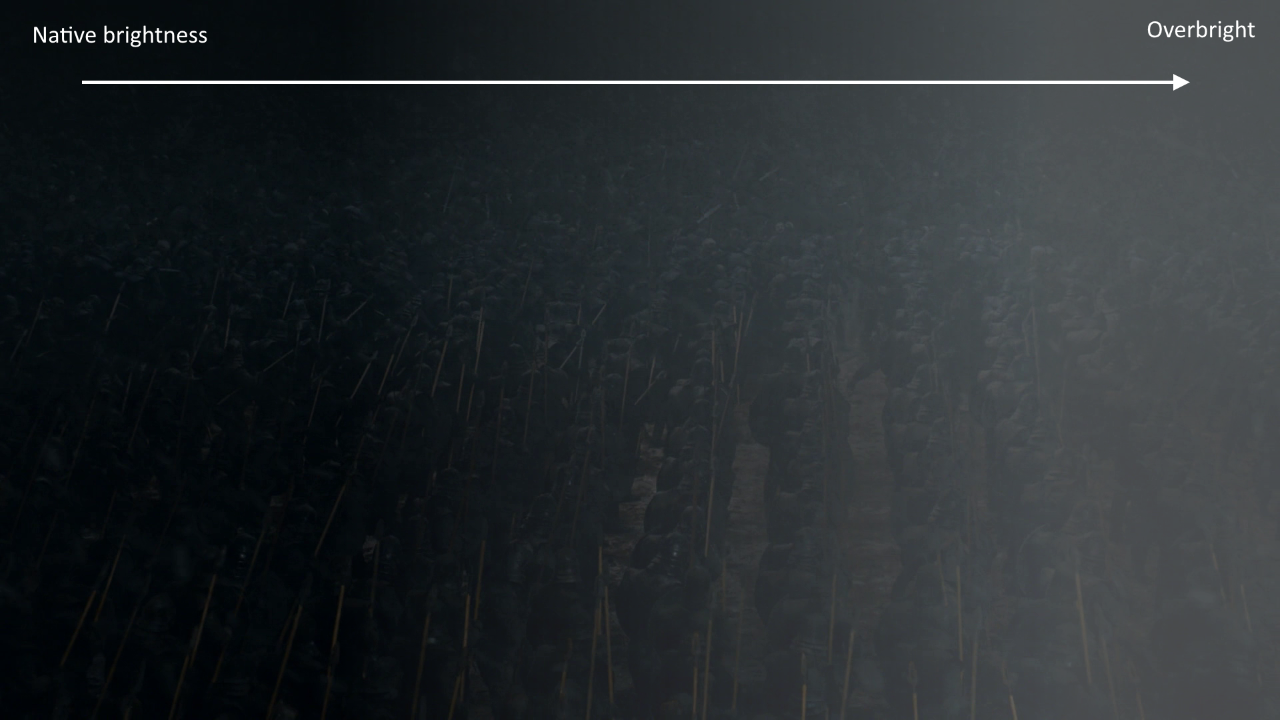
Just brightening it doesn’t fix things, either — because the detail is already crushed into a narrow range of values, you just get a bandy image that never gets completely black, making it look washed out, as you see here:

(Anyway, the darkness is a stylistic choice. You may not agree with it, but that’s how it’s supposed to look and messing with it beyond making the darkest details visible could be counterproductive.)

Now, it should be said that compression doesn’t have to be this bad. For one thing, the more data it is allowed to use, the more gradations it can describe, and the less severe the banding. It’s also possible (though I’m not sure where it’s actually done) to repurpose the rest of the codec’s “vocabulary” to describe a scene where its other color options are limited. That way the full bandwidth can be used to describe a nearly monochromatic scene even though strictly speaking it should be only using a fraction of it.

But neither of these are likely an option for HBO: Increasing the bandwidth of the stream is costly, since this is being sent out to tens of millions of people — a bitrate increase big enough to change the quality would also massively swell their data costs. When you’re distributing to that many people, that also introduces the risk of hated buffering or errors in playback, which are obviously a big no-no. It’s even possible that HBO lowered the bitrate because of network limitations — “Game of Thrones” really is on the frontier of digital distribution.

And using an exotic codec might not be possible because only commonly used commercial ones are really capable of being applied at scale. Kind of like how we try to use standard parts for cars and computers.

This episode almost certainly looked fantastic in the mastering room and FX studios, where they not only had carefully calibrated monitors with which to view it but also were working with brighter footage (it would be darkened to taste by the colorist) and less or no compression. They might not even have seen the “final” version that fans “enjoyed.”

We’ll see the better copy eventually, but in the meantime the choice of darkness, fog, and furious action meant the episode was going to be a muddy, glitchy mess on home TVs.

And while we’re on the topic…

You mean it’s not my TV?

Couple watching TV on their couch.Well… to be honest, it might be that too. What I can tell you is that simply having a “better” TV by specs, such as 4K or a higher refresh rate or whatever, would make almost no difference in this case. Even built-in de-noising and de-banding algorithms would be hard pressed to make sense of “The Long Night.” And one of the best new display technologies, OLED, might even make it look worse! Its “true blacks” are much darker than an LCD’s backlit blacks, so the jump to the darkest grey could be way more jarring.

That said, it’s certainly possible that your TV is also set up poorly. Those of us sensitive to this kind of thing spend forever fiddling with settings and getting everything just right for exactly this kind of situation.

https://platform.twitter.com/widgets.js

Usually “calibration” is actually a pretty simple process of making sure your TV isn’t on the absolute worst settings, which unfortunately many are out of the box. Here’s a very basic three-point guide to “calibrating” your TV:

  1. Go through the “picture” or “video” menu and turn off anything with a special name, like “TrueMotion,” “Dynamic motion,” “Cinema mode,” or anything like that. Most of these make things look worse, especially anything that “smooths” motion. Turn those off first and never ever turn them on again. Don’t mess with brightness, gamma, color space, anything you have to turn up or down from 50 or whatever.
  2. Figure out lighting by putting on a good, well-shot movie in the situation you usually watch stuff — at night maybe, with the hall light on or whatever. While the movie is playing, click through any color presets your TV has. These are often things like “natural,” “game,” “cinema,” “calibrated,” and so on and take effect right away. Some may make the image look too green, or too dark, or whatever. Play around with it and whichever makes it look best, use that one. You can always switch later – I myself switch between a lighter and darker scheme depending on time of day and content.
  3. Don’t worry about HDR, dynamic lighting, and all that stuff for now. There’s a lot of hype about these technologies and they are still in their infancy. Few will work out of the box and the gains may or may not be worth it. The truth is a well shot movie from the ’60s or ’70s can look just as good today as a “high dynamic range” show shot on the latest 8K digital cinema rig. Just focus on making sure the image isn’t being actively interfered with by your TV and you’ll be fine.

Unfortunately none of these things will make “The Long Night” look any better until HBO releases a new version of it. Those ugly bands and artifacts are baked right in. But if you have to blame anyone, blame the streaming infrastructure that wasn’t prepared for a show taking risks in its presentation, risks I would characterize as bold and well executed, unlike the writing in the show lately. Oops, sorry, couldn’t help myself.

If you really want to experience this show the way it was intended, the fanciest TV in the world wouldn’t have helped last night, though when the Blu-ray comes out you’ll be in for a treat. But here’s hoping the next big battle takes place in broad daylight.

Interactive content is coming to Walmart’s Vudu & the BBC

Netflix’s early experiments with interactive content may not have always hit the mark. Its flagship effort on this front, Black Mirror: Bandersnatch, was a frustrating experiment — and now, the subject of a lawsuit. But the industry has woken up to the potential of personalized programming. Not only is Netflix pursuing more interactive content, including perhaps a rom-com, others are following suit with interactive offerings of their own, including Amazon, Google — and now, it seems — Walmart and the BBC.

A couple of months ago, Amazon’s e-book division Audible launched professionally performed audio stories for Alexa devices in order to test whether voice-controlled choose-your-own-adventure style narratives would work on smart speakers, like the Amazon Echo.

YouTube is also developing interactive programming and live specials, including its own choose-your-own-adventure-style shows.

Now, according to a new report from Bloomberg, Walmart is placing its own bet on interactive media — but with an advertising-focused twist. Through its investment in interactive media company Eko, Walmart will debut several new shows for its streaming service Vudu that feature “shoppable” advertisements. That is, instead of just seeing an ad for a product that Walmart carries, customers will be able to buy the products seen in the shows, too.

Bloomberg’s report is light on the details — more is expected at Walmart’s Newfronts announcement this week — but Eko has already developed ads tied to interactive TV where the ad that plays matches the emotion of the viewer/participant, based on their choices within the branching narrative. It also created ads that viewers click their way through, seeing different versions of the ad’s story with each click.

And today, the BBC announced it’s venturing into interactive content for the first time, too.

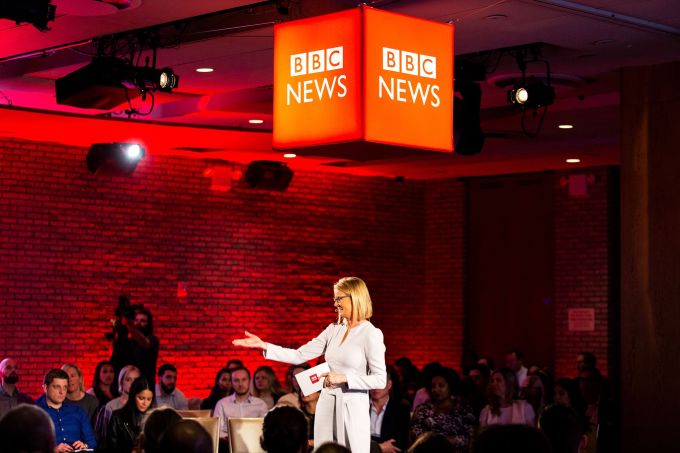
As part of its NewFronts announcements, the broadcaster unveiled its plans for interactive news programming within its technology news show Click.

For the show’s 1,000th episode airing later this year, it will introduce a full-length branching narrative episode, where the experience is personalized and localized to individual viewers. Unlike choose-your-own-adventure style programs that present only a few options to pick from, viewers will also answer questions at the beginning of the show to tailor their experience.

Part of the focus will be on presenting different versions of the program based on the viewer’s own technical knowledge, the BBC said.

A team of a dozen coders is currently building the episode, so the broadcaster can’t yet confirm how many different variations will be available in the end, or what topics will be featured on the episode. However, one topic being considered is lab-grown meat, we’re told.

The BBC says it’s very much planning to make interactivity an ongoing effort going forward.

This collective rush to interactive, personalized programming may lead some to believe this is indeed the next big thing in media and entertainment. But the reality is that these shows are costly to produce and difficult to scale compared with traditional programming. Plus, viewer reaction has been mixed so far.

Some may decide further experiments aren’t worth pursuing if they don’t produce a bump in viewership, subscriber numbers, or advertiser click-throughs — depending on which metric they care about.

In the meantime, though, it will be interesting to see these different approaches to interactive content make their debut.

WeWork files confidentially for IPO

WeWork, the co-working giant now known as The We Company, has submitted confidential documents to the U.S. Securities and Exchange Commission for an initial public offering, the company confirmed in a press release Monday.

According to The New York Times, the business initially filed IPO paperwork in December.

WeWork, valued at $47 billion in January, has raised $8.4 billion in a combination of debt and equity funding since it was founded by Adam Neumann and Miguel McKelvey in 2010.

This story is updating 

Overcast makes it easy to turn clips from podcasts into viral clips

The popular iOS podcasts app Overcast wants to make it easier for people to share clips from their favorite shows across social media. The feature will likely be well-received by podcasters looking to expand their show’s audience, as they’ve previously been limited to sharing their podcast by way of links or audio-only snippets, for the most part. Overcast’s solution, meanwhile, allows anyone to share either an audio or a video clip from any public podcast, the company said in an announcement.

That means a show’s fans can get in on the action — giving their favorite podcast a viral boost by promoting it on social media, where it could reach new listeners.

https://platform.twitter.com/widgets.js

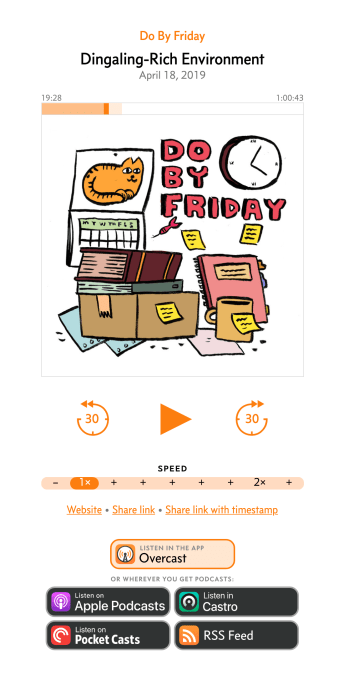
To use the clip-sharing feature in Overcast, you first tap on the “share” button at the top right corner of the app. You can then pick either an audio clip or a portrait, landscape or square video. In the clip-editing interface that appears, you can locate and select the audio clip you want to share. Clips can be up to one minute in length, the company says.

The variety of video formats is designed to appeal to those tasked with marketing a podcast across social media — including Twitter, Instagram, Facebook, or Snapchat — where the supported video aspect ratios may vary. In addition, podcast marketers will be able to remove the Overcast branding from their shared clip to give it a more professional feel.

Overcast’s new feature competes with existing tools for marketing audio across social media — like those from Wavve, Headliner, Spotify-owned Anchor, and others, including, perhaps, Soundcloud. Some of these services offer captions, as well, which podcasters may prefer to Overcast’s clips.

But unlike other rival tools, Overcast’s clip-sharing feature isn’t meant only for podcast creators and marketers — it’s for listeners, too.

Of course, that also could present a problem. Listeners who have an axe to grind could pull a clip that presents a podcaster in a bad light — perhaps, taking something they said out of context in hopes of manufacturing social media outrage. Or maybe they just catch the podcaster on a bad day saying something dumb. Small gaffes that in the past could have been overlooked, could now be used against a podcaster because these viral clips are so easy to create and share.

Time will tell to what extent the feature is adopted and how it’s used, or if the idea makes its way to other apps to become more of a standard.

According to Overcast founder Marco Arment, the clip-sharing feature was inspired by a remark on the Unco podcast by Stephen Hackett, where the problem was discussed in more detail.

In addition to the launch of clips, Overcast’s public sharing page got a small refresh, too. It now features badges to other podcast apps and the RSS feed to the podcast for any show listed in Apple Podcasts.

“It’s important for me to promote other apps like this, and to make it easy even for other people’s customers to benefit from Overcast’s sharing features, because there are much bigger threats than letting other open-ecosystem podcast apps get a few more users,” Arment said.

That “much bigger threats” comment refers to the new trend of podcast “exclusives” — like those on Luminary or Spotify, which aren’t available to the public. Arguably, these aren’t podcasts in the strictest sense of the word — they’re audio programs.

The clips-sharing feature takes the opposite position. The podcasts this feature helps to promote are open and accessible to the public — and now all of the content inside each episode is more accessible, too.

Founders, apply today for our free startup programs at Disrupt SF

As spring takes its sweet time rolling across the northern hemisphere, October may not be the first thing on the minds of early-stage startup founders. But it should be. The experience that is Disrupt San Francisco 2019 takes place October 2-4, and now is precisely the time to make a move that could change the trajectory of your business.

We’re searching the world over for an elite fleet of outstanding early-stage startups to participate in two of our most exciting programs — TC Top Picks and Startup Battlefield. We’ve made it easy for you — fill out one application to be considered for both opportunities.

If your startup is selected as a TC Top Pick company, buckle up for a wild ride at Disrupt. Highly discerning TechCrunch editors review every application and will ultimately select up to five early-stage startups to represent each of the following tech categories: Artificial Intelligence/Machine Learning, Biotech/Healthtech, Blockchain, Fintech, Gaming, Investor Topics, Media, Mobility, Privacy/Security, Retail/E-commerce, Robotics/IoT/Hardware, SaaS, Space and Social Impact/Education. This cadre of top-notch startups each receives a free Startup Alley Exhibitor Package which, among other things, includes a prime location on our exhibition floor. In a classic “but wait, there’s more” moment, you’ll also receive VIP treatment and an inordinate amount of attention from investors and media — because everyone wants to meet the TC Top Pick startups.

Take it from Jana Rosenfelder, co-founder of Actijoy, who had this to say about her TC Top Pick experience at Disrupt SF 2018:

Being a TC Top Pick was a real door-opener because the media paid so much attention, and it made a big impression with people who visited our booth. It gave us more credibility, and everyone listened to us.

Startup Battlefield is TechCrunch’s premier startup competition and bastion of media and investor attention. Does your company have what it takes to go head-to-head against the very best early-stage startups in front of hundreds of thousands of viewers? It won’t cost you anything to enter or participate in our premier pitch competition, but it does require intense preparation and nerves of steel. The startups that are selected for the Startup Battlefield program at Disrupt SF receive free coaching from TechCrunch editors, so they’ll be pitch perfect in front of the judging panel. Want that $100,000 prize? Want glory, adulation and a chance to attract life-changing investors? Yeah, you do. If you need more convincing, take a minute and read our Top 5 reasons to apply for Startup Battlefield.

Disrupt San Francisco 2019 takes place October 2-4, and it’s time to write the next exciting chapter of your entrepreneurial story. Apply here to be a TC Top Pick or to compete in Startup Battlefield. We can’t wait to see you in San Francisco!