Starbucks CEO says Chinese rival Luckin’s ‘heavy discount’ strategy isn’t sustainable

A war of words in the coffee world is brewing after the CEO of Starbucks claimed Chinese upstart Luckin can’t last just days after it filed for a U.S IPO.

Kevin Johnson, who leads the American coffee giant, told CNBC that competitors in China including Luckin have adopted a strategy of building market share using “heavy, heavy discounts” that he believes is not sustainable.

“We’re deploying capital and building 600 new stores per year,” he said. We’re “generating the return on invested capital that we believe is sustainable to continue to build new stores at this rate for many years to come.”

Starbucks claims 30,000 stores worldwide. It has been in China for 20 years and it is aiming to reach 6,000 stores in the country by 2022. Luckin, fuelled by over $550 million in VC money, has quickly scaled to reach 2,370 locations in under two years with plans to add a further 2,500 this year. That would see it overtake Starbucks — which has 3,600 stores across 150 Chinese cities — although that a metric gives a distorted view since Luckin specializes in digital orders and on-demand delivery. That’s in contrast to the retail model operated by Starbucks.

Still, Starbucks has moved to close any perceived gap on service. The U.S. firm struck a partnership with Alibaba last year to tap its Ele.me service for coffee delivery and it is integrating with Alibaba’s e-commerce services.

Despite the competition, Starbuck said in its a quarterly report last week that same-store comparable sales — revenue from existing stores — rose by three percent year-on-year while it grew its new store base by 17 percent. In a further boost, it said its rewards membership program reached 8.3 million with the addition of one million additional customers.

“We’ve set a very good strategic foundation and we’ll continue to drive on the things that differentiate in China,” Johnson added.

Despite that promising progress, the competition is sure to reach boiling point when Luckin does go public.

Valued at $2.9 billion by a set of investors that include Starbucks-backer Blackrock, Luckin’s filing has a placeholder raise of $100 million which could increase as the listing process progresses. The company posted a $475 million loss in 2018, its only full year of business to date, with $125 million in revenue. For the first quarter of 2019, it carded an $85 million loss with total sales of $71 million.

Starbucks doesn’t break out figures for China, but across ‘China/Asia Pacific’ in Q1, it recorded $232 million in operating income on total revenue of $1.29 billion from nearly 9,000 stores.

With a strategy of growth at all cost, Luckin’s numbers are mind-boggling for a listing, let alone for an 18-month-old business.

To quote Alex Wilhelm, former TechCrunch reporter and current editor of our sister publication Crunchbase: “What an amazing F-1 [filing]. I have no idea what this company is worth, how big it will get, or what it’s current health is.”

Starbucks, though, is betting the fad won’t last and that its own business will continue to stand the test of time in China.

Interestingly enough, other companies are already emerging to undercut Luckin — our China-based partner Technode reported that Coffee Box raised $30 million last week — while the model is being replicated in Southeast Asia. For example, in Indonesia, a startup called Fore Coffee has already raised close to $10 million for a digital-first service that uses on-demand partners for delivery.

Sanofi, Cegedim and IBM add a data challenge to the TC Hackathon at VivaTech

Hundreds of the world’s top hackers, coders, developers and creative makers will descend upon TechCrunch Hackathon at VivaTech 2019 on 17-18 May. They’ll burn through two intense days competing to build something amazing. Do you have what it takes to go up against the best?

Competing in the TechCrunch Hackathon at VivaTech is free, but you need to reserve your ticket now before they’re gone. Your ticket gives you access to all three days of VivaTech, plus you’ll get a shot at winning prize money, incubation and hardware in sponsored hack contests. If the judges deem your creation to be the best overall hack, you’ll take home the grand prize — an extra €5,000.

EDHEC will award €5,000 to the team that creates the best product to help students make sure they choose the course of studies and career that’s right for them. Eramet challenges teams to find a solution that can provide their customers with 100 percent transparency on their supply chains for a €5,000 prize.

Now we’re ready to unveil our third data-centric sponsored contest — drumroll please! SanofiCegedimIBM Challenge:

Collective intelligence can help to find smart solutions to make Healthcare professionals’ (HCPs) practice easier and bring better care to people living with cardio-metabolic challenges like diabetes. Sanofi, Cegedim, and IBM will provide anonymized electronic health records, for you to design data-driven solutions for HCPs and their patients. How to optimize time and effort? How to better predict & personalize care? How can we avoid health complications, and allow better decision making? The best product that addresses this challenge will receive €5000 in prize money.

Here’s how the Hackathon works. Teams composed of 4-6 people choose the contest they want to enter when they register. Don’t have a team? No problem. We’ll have a matchmaking session on site and hook you up with a team. Sorry, no one-person teams allowed.

Teams have just 24 hours to design, code and create a solution to the specific challenge. Then, when all you really want to do is collapse and sleep, it’s time to pitch your new product to the hackathon judges — in 60 seconds or less.

It’s intense, grueling, exhausting and fun. The good news is that we provide food — breakfast, lunch, dinner and midnight snacks — throughout the event. Oh, and we’ll have plenty of water, tea, coffee and Red Bull on hand, too. Want more details? Read our hack FAQ.

TechCrunch Hackathon at VivaTech 2019 goes down on 17-18 May at the Expo Porte de Versailles. Come and get your hack on and show the world your mad coding skills. Get your free ticket now and join us in Paris!

Apple defends its takedown of some apps monitoring screen-time

Apple is defending its removal of certain parental control apps from the app store in a new statement.

The company has come under fire for its removal of certain apps that were pitched as tools giving parents more control over their children’s screen-time, but that Apple said relied on technology that was too invasive for private use.

“We recently removed several parental control apps from the App Store, and we did it for a simple reason: they put users’ privacy and security at risk. It’s important to understand why and how this happened,” the company said in a statement

The heart of the issue is the use of mobile device management technologies in the parental control apps that Apple has removed from the app store, the company said.

These device management tools give  control and access over a device’s user location, app use, email accounts, camera permissions and browsing history to a third party.

“We started exploring this use of MDM by non-enterprise developers back in early 2017 and updated our guidelines based on that work in mid-2017,” the company said.

Apple acknowledged that the technology has legitimate uses in the context of businesses looking to monitor and manage corporate devices to control proprietary data and hardware, but, the company said, it is “a clear violation of App Store policies — for a private, consumer-focused app business to install MDM control over a customer’s device.”

The company said it communicated to app developers that they were in violation of App Store guidelines and gave the company 30 days to submit updates to avoid being booted from the App Store.

Indeed, we first reported that Apple was warning developers about screen-time apps in December.

“Several developers released updates to bring their apps in line with these policies,” Apple said in a statement. “Those that didn’t were removed from the App Store.”

Autonomous vehicles make congestion pricing even more critical

Autonomous vehicles will soon be ubiquitous on city streets. Before this happens, we should ask ourselves: Will they whisk us quickly through cities or make traffic worse?

A car is a car, whether self-driving or people driven—taking up a great deal more space than busses, streetcars, or trains—so let’s make sure the cost is right. Traffic has already increased in many cities due to widespread ride-hailing. Once Uber further rolls out autonomous vehicle fleets, calling a car will be cheaper, more competitive—and a potential burden on our streets.

A new study by UC Santa Cruz Professor Adam Millard-Ball in the Journal of Transportation Policy makes a convincing case that self-driving cars will dramatically increase traffic further. Millard-Ball forecasts that the number of cars on the street could grow exponentially as more people are able to take their hands off the steering wheel and just sit back and ride.

Furthermore, when not in use, autonomous vehicles need to go somewhere. There are three options: go back home, park somewhere, or circle around. Most likely, these cars will endlessly circle the streets rather than parking and paying fees.

The rise in ride-hailing speaks to the need to think about congestion pricing — even more so in light of autonomous vehicles potentially circling the city aimlessly in the years to come — in more dynamic terms.

Image courtesy of Getty Images

Existing congestion pricing schemes work a few different ways. Most programs either identify a core part of the city or specific zones within the city to institute a flat or variable rate fee on vehicles that drive into the specified areas. The systems monitor compliance through gantry and camera systems that record license plates, or some version of transponders in vehicles. All congestion pricing systems attach a price to road usage.

Particularly, variable pricing that captures usage throughout the city could lead to different decision-making by autonomous vehicles. Rather than ghosting through the streets waiting to pick up passengers, these cars could instead choose to park in either the core of the city or on the periphery, helping to unclog streets rather than adding to traffic.

Variable pricing increases as traffic increases, thereby pushing some drivers—or in the future self-driving vehicles—off the road and making cars glide more smoothly. In the US, we are most familiar with variable tolling schemes implemented on highways, but congestion pricing systems like those in Singapore and Stockholm include a variable nature to them throughout the congestion zone.

Image courtesy of Getty Images

Congestion pricing could directly counteract an increase in vehicle usage, and ensure self-driving cars pay full freight for the impact they create. New York City will be implementing a congestion zone starting in 2021 that will affect all drivers south of 60th Street entering Manhattan. While the final structure is still to be determined, experts say it could bring in more than $1 billion a year to support public transit upgrades.

Across the pond, London’s policy — first implemented in 2003 — covers a core eight mile square zone and currently costs around $15. From 2002 to 2014, private cars entering the central zone dropped 39%. However, with the rapid increase in ride-hailing brought about by Uber and other companies, congestion has again increased.

In the Washington, D.C., and LA regions, variable pricing — just not in a downtown congestion zone — already provides highway drivers with the option to pay to drive in a free-flowing lane. The cost to consumers is anything but free, because the cost must line up with demand to keep traffic moving. In the Washington, D.C., region, the charges to drive from the city from far-out suburbs peaked near $40. But that was what it cost to keep traffic moving.

Singapore, on the other hand, extends this logic to the core of its city with its congestion pricing model. The city has over 50 points within the designated area in and around the central business district, and each of these points charges between $0 – $3, depending on the time of day and traffic conditions. Stockholm follows a similar logic to Singapore’s system with a total cap of around $11.30 per vehicle per day.

Good, responsive public policy can help us make the right choices. Congestion pricing can serve as a market-based regulator that gets the right number of cars on the street at a given time. At the same time, depending on the fuel mix of cars with gas versus electric, these systems can improve air quality and public health. And the funds from these plans can help support and improve transit systems.

When you ask city leaders what kind of cities they and their residents are trying to build, the resounding answer is cities for people, not cars. Let’s make sure self-driving vehicles help make cities better for everyone.

Report: Travel activity platform GetYourGuide raised €500M led by SoftBank at €1.6B valuation

As we head into the summer tourist season, one of the bigger travel startups in Europe has allegedly bagged a significant round of funding. German blog Deutsche Startups is reporting that GetYourGuide, which lets tourists search for and book tours and other experiences in their destinations of choice from a catalog of some 35,000 activities, has raised €500 million from investors including SoftBank at a valuation of €1.6 billion ($558 million at a valuation of $1.78 billion at current dollar rates).

We’ve reached out to GetYourGuide and SoftBank — which is reportedly making the investment from its Vision Fund — to confirm the news and hopefully provide more details and will update this post as we learn more. Prior to this, Sky in the UK (via tech.eu) reported that GetYourGuide was raising $300 million and that Singapore’s Temasek was also in the round, so that is another potential investor in the mix. If accurate, this latest Series E would be a big leap in funding for the company, which had raised $170 million up to now.

The deal would also be notable as the second big investment out of Europe for SoftBank within the space of a week. Days ago, the mega-investor — which has been taking a leading role in large growth rounds for startups globally through its $100 billion Vision Fund — put $1 billion (€900 million) into German payments provider Wirecard as part of a wider fintech partnership.

GetYourGuide was launched in 2009, and since then it has sold some 25 million tickets — a figure that speaks to a significant acceleration in its activities in the last two years. In 2017, when it last announced funding — a Series D of $75 million led by Battery Ventures — GetYourGuide had said it had passed 10 million tickets sold. (In 2017 it had 15 million active users; it’s not clear how many it has now.)

The success of Airbnb — and observations of its acquisitiveness as it continues to scale — has led to a surge of interest among investors in other fast-growing startups in the travel sector. Just last week, Selina, which runs a network of hostel-style work/live accommodations around the world for digital nomads, raised of $100 million at an $850 million valuation. Other recent fundings in the travel sector have included another travel activities platform, Klook, raising $200 million; AI-based travel platform Hopper raising $100 million; and TripActions raising $154 million.

The growth of all these has also helped to build a market and consumer demand for digital-first, new takes on travel services.

“The major trend here is that it’s not the same tourists than the tourists that you had 10 to 20 years ago,” GetYourGuide’s CEO and co-founder Johannes Reck told TechCrunch in 2017. “[Then] there were these old school tour operators. Really bad reputation. They would all show you the most touristy parts of town… Now because we have so much content around the activity and customer reviews etc it’s becoming much harder for the tour operators to do a bad job… So essentially we’re in a new age of tour supplier, all of which have really tremendous customer satisfaction.”

But at the same time, Airbnb also represents a competitive threat to the smaller fish.

While Airbnb built itself first as a marketplace for people to list and rent out rooms and homes for casual travel accommodation, in its quest to continue building out its business and grow its revenues per user by having more touchpoints with customers beyond simply providing a link to finding a place to stay, Airbnb has in more recent years expanded into more areas such as business travel and travel-related “experiences” to suggest (and sell) activities to tourists once they are staying in their Airbnbs (and even to those who are resident in cities and just looking for things to do).

GetYouGuide’s advantage up to now has been is that activity booking is currently all that it does, making it less of an afterthought and more of the primary purpose of the platform. One key question is whether this new round of funding will now take it into new directions, or whether that focus will be enough for the next stage of growth.

Avengers: Endgame becomes the first film to break $1 billion in an opening weekend

In its opening weekend, “Avengers: Endgame” made breaking box office records look like a snap.

The last film in what Marvel Studios dubbed phase three of its rollout of characters and plots in an ever-expanding cinematic universe is a box office marvel raking in an estimated $1.2 billion at the box office.

Benefiting from a $350 million domestic debut and another $859 million in global box office receipts, it’s clear that the Marvel Studios franchise has achieved super heroic returns for Disney since its 2009 acquisition for $4 billion.

“Avengers: Endgame” hit the billion-dollar mark in five days, faster than its predecessor Avengers:Infinity War, which held the previous record at 11 days (but still not faster than a speeding bullet).

Starring deep breath): Robert Downey Jr., Chris Evans, Mark Ruffalo, Chris Hemsworth, Scarlett Johansson, Brie Larson, Jeremy Renner, Don Cheadle, Paul Rudd, Brie Larson, Karen Gillan, Danai Gurira, Chadwick Boseman (fleetingly), Bradley Cooper and Josh Brolin; the film was an exercise in fan service, but also a thrilling and moving way to say goodbye to the current crop of Earth’s mightiest heroes, according to our reviewer, Anthony Ha.

In all, the 22 films in the Marvel Cinematic Universe have grossed $19.9 billion at the global box office — with the four Avengers films bringing in nearly $6.2 billion.

“Kevin Feige and the Marvel Studios team have continued to challenge notions of what is possible at the movie theater both in terms of storytelling and at the box office,” said Alan Horn, chairman, The Walt Disney Studios, in a statement. “Though Endgame is far from an end for the Marvel Cinematic Universe, these first 22 films constitute a sprawling achievement, and this weekend’s monumental success is a testament to the world they’ve envisioned, the talent involved, and their collective passion, matched by the irrepressible enthusiasm of fans around the world.”

One key to the huge opening weekend for Avengers was its release in China where the film grossed almost as much as it did in the U.S. on opening weekend. The $330.5 million haul made the movie the number one film at the Chinese box office and accounted for a huge chunk of global ticket sales.

“From the very beginning with Iron Man, all we’ve wanted to do was tell stories that brought these characters to life onscreen the way we’ve experienced them as fans of the comics,” said Kevin Feige, President, Marvel Studios, in a statement. “Our directors, Anthony and Joe Russo, and our writers, Christopher Markus and Stephen McFeely, really brought this story home, and I am also incredibly thankful for our cast and filmmakers from across the MCU and all who’ve worked so hard to make these films the best they can be, including the amazing teams at Marvel Studios and Disney. And of course, without Stan Lee and Jack Kirby, none of this would have been possible.”

The demise and rebirth of the ethical engineer

Whatever happened to the ethics of engineering?

We’ve seen just one disastrous news story after another these past few years, almost all knowable and preventable. Planes falling out of the sky. Nuclear power plants melting down. Foreign powers engorging on user data. Environmental testing thrashed. Electrical grids burning states to the ground.

The patterns are not centered around discipline or nationality, nor do these events share an obvious social structure. Facebook machine learning programmers mostly don’t hang with German VW automotive engineers or Japanese nuclear plant designers. They weren’t taught at the same schools, nor share the same textbooks, nor read the same journals.

Instead, there is a more fundamental thread that binds these disparate and heinous stories together: the increasingly noxious alchemy of complexity and capitalism. Only through a rejuvenation of safety culture can we hope to mend the pair.

Unexpected disasters are really “normal accidents”

Before we start to assign blame though, we need to take a step back to look at these technical systems. Automotive emissions, nuclear power plants, airplanes, application platforms, and electrical grids all share one thing in common: they are very complex, highly coupled systems.

They are complex in the sense that they have many individual parts that are connected together in sometimes non-linear ways. They are highly coupled in the sense that perturbations to one component can lead to rapid change in that system’s entire operation.

And so you get a reasonably small safety system on the 737 MAX that downs planes. And you have a reasonably limited API in a social platform that leaks its entire users’ data stream. And you have an electrical grid interacting arboreally that sparks and catches fire killing dozens of people.

All of these outcomes are theoretically preventable, but then, the scale of the interactions in these systems is uncountable. Again, small changes can have enormous effects.

Years ago, Charles Perrow wrote a splendid book connecting the rising complexity and coupledness of technical systems with the increase in catastrophic, but “normal accidents,” which he used as the book’s title. His thesis wasn’t that such disasters are rare and should be shocking, but rather that the very design of these systems guarantees that accidents must occur. No level of testing or systems design can prevent a mistake across billions and billions of interactions. Thus, we get normal accidents.

He writes a dour account of the future of engineering, which may well be too cynical. Engineers have matched some of this growing complexity with more sophisticated tools, mostly derived from greater computing power and better modeling. But there are limits to how far the technical tools can help here given our limits of organizational behavior about complexity in these systems.

Management‘s safety delusion

Markus Pfueller, head attorney of Volkswagen, speaks to the press at the Stadthalle congress center for a test court case involving investors suing automaker Volkswagen AG over financial losses from the diesel emissions scandal on September 10, 2018 in Braunschweig, Germany. (Photo by Alexander Koerner/Getty Images)

Even if engineers are (potentially) acquiring more sophisticated tools, management itself most definitely is not.

Safety is a very slippery concept. No business leader is anti-safety. None. Every single business leader and manager in the world at least pays lip service to the value of safety. Construction sites may be warrens of danger, but they always have a “hard hat is required” sign out front.

Safety may indeed be the first value of almost all of these organizations, but then, you can spend hours inside of a company’s 10-K or 10-Q before finding one iota of a statement about it (except, of course, after disaster strikes).

It’s this intersection of capitalism and complexity where things have gone awry.

One pattern that binds all of these engineering disasters together is that they all had whistleblowers who were aware of the looming danger before it happened. Someone, somewhere knew what was about to transpire, and couldn’t hit the red button to stop the line.

And of course they couldn’t. That’s what happens when the pressure for quarterly earnings, for growth, can be so intense, that no one in an organization has the capability — not even the CEO — to stop the system.

What’s strange is that these knowable disasters are hardly profitable for their creators. PG&E entered bankruptcy. Facebook is facing a multi-billion dollar fine. VW settled its scandal for $14.7 billion. The 737 MAX situation is leading to questions about whether Boeing can remain a going concern.

No shareholder wants to shred worthless stock certificates. So where is the disconnect?

Rebuilding an ethical base within engineering culture

Ethics starts with leadership at the top, and specifically with better communication around safety and regulatory concerns to all stakeholders, but most definitely shareholders. Owners of stock in companies with complex technical products need to be told — again and again — that the companies they own will prioritize safety over immediate profits. The tone must always be to value long-term growth and sustainability.

To those who don’t frequent Wall Street watering holes, it may come as a jolt to learn that such a sales process may well be difficult. Investors don’t like to hear that their return on equity will lose some basis points, and would prefer to just buy a credit-default swap and jump ship when the ship literally and metaphorically sinks.

Yet, short-term traders aren’t the only investors available. The capital markets are diverse, and there are trillions of dollars of wealth handled by managers seeking to invest in long-term growth, without the downsides of inevitable disasters. One key part of investor relations is to acquire the investors that match the culture of the firm. If your investors don’t care about safety, no one else will either.

The upshot of most of these scandals is that there is now an extended graveyard of companies to point to, and that will help with these conversations.

Beyond boardrooms and shareholders though, engineering cultures need to build resiliency to ship and approve products when they are ready. Engineering leaders need to talk to their business executives and explain safety concerns just as much as they need to constantly reenforce that safety and security is a priority for every individual contributor.

Engineering managers probably have the most challenging role, since they both need to sell upwards and downwards within an organization in order to maintain safety standards. The pattern that I have gleaned from reading many reports on disasters over the years indicates that most safety breakdowns start right here. The eng manager starts to prioritize business concerns from their leadership over the safety of their own product. Resistance of these pecuniary impulses is not enough — safety has to be the watchword for everyone.

Finally, for individual contributors and employees, the key is to always be observant, to be thinking about safety and security while conducting engineering work, and to bring up any concerns early and often. Safety requires tenacity. And if the organization you are working for is sufficiently corrupt, then frankly, it might be incumbent on you to pull that proverbial red button and whistleblow to stop the madness.

Here at Extra Crunch, we are trying to do our part to increase awareness of these issues. Our resident humanist, Greg Epstein, interviews and discusses the challenging ethics of our modern technical world with all kinds of thinkers.

Take some of his work as inspiration, since the demise of the ethical engineer doesn’t have to be a fait accompli. Nor do normal accidents — as normal as they are — have to be so common. We can repair capitalism by adding better tools and accountability for all levels of technical organizations. And in the long run — peering into that burgeoning corporate cemetery — that’s an incredible investment for future returns.

Week-in-Review: Tesla’s losses and Elon Musk’s new promises

What a complicated week for Tesla.

The electric car-maker announced this week that it had lost more than $700 million in the first quarter of 2019, an unpleasant surprise for investors that came during its quarterly earnings report.

But that was just like the 3rd or 4th most interesting piece of Tesla news that took place this week. CEO Elon Musk also avoided writing another check to the SEC for his tweeting habit and Tesla showcased some of its self-driving dreams at an event devoted to autonomy.

Let’s check the news hits out one-at-a-time:

  • First, let’s talk Tesla money. On its Q1 earnings call, Tesla CFO Zachary Kirkhorn called it “one of the most complicated quarters.” Investors were already expecting a loss, but a bunch variety of factors led to the $702 million loss which came after two quarters of profitability. Musk had already said that deliveries were lower-than-expected, they ended up shipping 63,000 cars, a nearly one-third drop from the previous quarter. Add that to the partial expiration of the federal electric vehicle tax rebate and there are some answers but still some lingering questions.
  • Next, the company laid out some big promises for its self-driving future, but none was more intriguing than Elon Musk announcing that Tesla was planning to launch a robotaxi network in 2020, though the CEO was strong on the caveats that local laws would pretty much guide how such a service was rolled out.

  • The company’s Autonomy Day wasn’t just about plans to trounce the soon-to-be-public Uber on its own ride-sharing turf, the company also dove into the hardware, specifically its new “full self-driving” computer that has already started shipping in new Model 3, S and X models. If you look — not very closely — you’ll see that it’s actually two independent computers designed around redundancy so that there’s less room for a glitch to leave drivers in danger.
  • Finally, on Friday we learned that Musk and the SEC had reached a deal that let him keep his cash and his Twitter account and avoid being held in contempt of the initial deal. The agreement reach gave Musk a list of topics (list here) that he needs to get pre-approval from Tesla in order to tweet about, a solution that’s probably good for everyone especially the Tesla officials who likely didn’t want to babysit Elon tweeting about anime.

Shoot me tips or feedback
on Twitter @lucasmtny or email
lucas@techcrunch.com

Trends of the week

Here are a few big news items from big companies, with green links to all the sweet, sweet added context.

Special guest

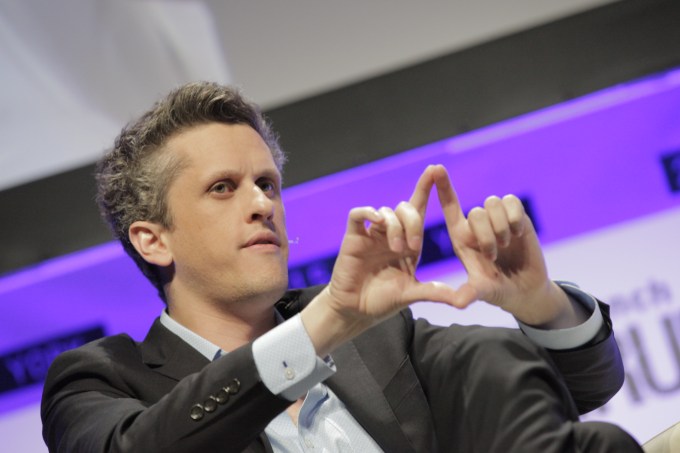
I’m not the first to go wild about enterprise IT, but Box CEO Aaron Levie just published a guest post on TechCrunch about how the world of corporate software has gotten a lot more exciting over the past decade. Check it out.

A new era for enterprise IT

“…We’ve reached a new era of enterprise software and companies are coming around to this model in droves. What seemed unfathomable merely a decade ago is now becoming commonplace…”

Photo by Paul Marotta/Getty Images

GAFA Gaffes

How did the top tech companies screw-up this week? This clearly needs its own section, in order of awfulness:

  1. Facebook gets drilled 3X. Kind of cheating since it’s a list, but I’m all about efficiency:
    [Facebook hit with three privacy investigations in a single day]
  2. Facebook preps for an upcoming major privacy failure fine:
    [Facebook reserves $3B for future FTC fine]

Extra Crunch

Our premium subscription service continues to churn out some awesome long-reads as a channel for our staff’s niche obsessions. We had a great piece this week on the difficulties associated with determining Huawei’s company ownership, especially when that owner might just be the Chinese Communist party.

Why it’s so hard to know who owns Huawei

“…despite selling 59 million smartphones and netting $27 billion in revenue last quarter in its first-ever public earnings report this morning, a strange and tantalizing question shrouds the world’s number two handset manufacturer behind Samsung. Who owns Huawei?”

Here are some of our other top reads this week for premium subscribers — our staff seemed to write a lot about pitching stories this week…

Want more TechCrunch newsletters? Sign up here.

Meet the tech boss, same as the old boss

“Power corrupts, and absolute power corrupts absolutely.” It seems darkly funny, now, that anyone ever dared to dream that tech would be different. But we did, once. We would build new companies in new ways, was the thinking, not like the amoral industrial behemoths of old. The corporate villains of 90s cyberpunk were fresh in our imaginations. We weren’t going to be like that. We were going to show that you could get rich, do good, and treat everyone who worked for or interacted with your business with fundamental decency, all at the same time.

The poster child for this was, of course, Google, whose corporate code of conduct for fifteen years famously included the motto “don’t be evil.” No longer, and the symbolism is all too apt. Since removing that phrase in 2015, we’ve all witnessed reports of widespread sexual harassment, including 13 senior managers fired for it; Project Maven; and Project Dragonfly. Internal backlashes and a mass walkout led to retractions and changes, courtesy of Google employees rather than management … and now we’re seeing multiple reports of management retaliation against those employees.

Facebook? I mean, where do we even begin. Rootkits on teenagers‘ phones. Privacy catastrophe after privacy catastrophe. Admissions that they didn’t do enough to prevent Facebook-fostered violence in Myanmar. Sheryl Sandberg personally ordering opposition research on a Facebook critic. And those are just stories from the last six months alone!

Amazon? Consider how they overwork and underpay delivery drivers and warehouse workers. Apple? Consider how they “deny Chinese users the ability to install the VPN and E2E messaging apps that would allow them to avoid pervasive censorship and surveillance,” to quote Stanford’s Alex Stamos. Microsoft? The grand dame of the Big Five has mostly evolved into a quiet enterprise respectability, but has recently seen “dozens of” reports of sexual harassment and discrimination ignored by HR, along with demands for cancellation of the HoloLens military contract.

Those are the five most valuable publicly traded companies in the world. It’s far from “absolute power,” but it’s far more power than the tech industry has had before. Have we avoided corruption and complacency? Have we done things differently? Have we been better than our predecessors? Not half so much as we hoped back in the giddy early days of the Internet. Not a quarter. Not an eighth.

And it’s mostly so gratuitous. Google didn’t need to try to build a censored search engine for China. They don’t need the money — they’re a giant money-printing machine already — and the Chinese people don’t need their product. Amazon doesn’t need to treat its lower-paid workers with vicious contempt. (It’s true they finally — finally! — raised their minimum wage to $15, but it could very easily afford to make their pay and working conditions substantially better yet.) Facebook doesn’t need to … to increasingly act like a company whose management is composed largely of wide-eyed cultists and/or mustache-twirling villains, basically.

Google should have promoted the organizers of their walkout, but there, at least, you can see why they didn’t. Raw fear. The one thing which truly frightens the management of big tech companies, more than regulators, more than competitors, more than climate change, is their own employees.

Is it that the modern megacorps have inherited from their forebears the obsession with growth at all costs, a religious drive to cast their net over every aspect of the entire world, so it’s still not enough for each of those companies to make billions upon billions from advertising and commerce to spend on their famous — and now sometimes infamous — “moonshot” projects? (Don’t talk to me about the fiduciary duty of maximum profit. Tech senior management can interpret that “duty” however they see fit.)

Is it that any sufficiently large and wealthy organization becomes, in its upper reaches, a nest of would-be Game of Thrones starlets, playing power politics with their pet projects and personal careers, regardless of the costs and repercussions? (At least when they are born of hypergrowth; it’s noticeable that more-mature Apple and Microsoft, while imperfect, still seem by some considerable distance the least objectionable of these Big Five, and Facebook the most so.)

I don’t want to sound like I think the tech industry is guilty of ruining everything. Not at all. The greatest trick the finance industry ever pulled is somehow convincing (some of) the world that it’s the tech industry who are the primary drivers of inequality. As for the many media who seem to be trying to pin recent election outcomes, and all other ills of the world, on tech, well

https://platform.twitter.com/widgets.js

But the existence of greater failures should not blind us to our own, and whether we have failed in an old way or a new one is moot. Accepting this failure is — at least for people like me who were once actually dumb/optimistic enough to believe that things might be different this time — an important step towards trying to build something better.

Bad PR ideas, esports, and the Valley’s talent poaching war

Sending severed heads, and even more PR DON’Ts

I wrote a “master list” of PR DON’Ts earlier this week, and now that list has nearly doubled as my fellow TechCrunch writers continued to experience even more bad behavior around pitches. So, here are another 12 things of what not to do when pitching a startup:

DON’T send severed heads of the writer you want to cover your story

Heads up! It’s weird to send someone’s cranium to them.

This is an odd one, but believe it or not, severed heads seem to roll into our office every couple of months thanks to the advent of 3D printing. Several of us in the New York TechCrunch office received these “gifts” in the past few days (see gifts next), and apparently, I now have a severed head resting on my desk that I get to dispose of on Monday.

Let’s think linearly on this one. Most journalists are writers and presumably understand metaphors. Heads were placed on pikes in the Middle Ages (and sadly, sometimes recently) as a warning to other group members about the risk of challenging whoever did the decapitation. Yes, it might get the attention of the person you are sending their head to, in the same way that burning them in effigy right in front of them can attract eyeballs.

Now, I get it — it’s a demo of something, and maybe it might even be funny for some. But, why take the risk that the recipient is going to see the reasonably obvious metaphorical connection? Use your noggin — no severed heads.

Why your CSO — not your CMO — should pitch your security startup