Labster scores $21M Series B to bring VR to STEM education

Labster, the Denmark headquartered startup building virtual laboratory simulations for STEM students, has raised $21 million in Series B funding.

Leading the round is Owl Ventures, with participation from Balderton Capital, Northzone and Swisscom Ventures. Previous backers Nordic Makers, David Helgason, EduCapital and Entangled Group also followed on, bringing the total raised by the company to date to $35 million.

Launched back in 2013, Labster provides interactive laboratory simulations powered by VR for students that wish to explore lab experiments in biology, chemistry, physics, engineering and general sciences. It offers 70 virtual labs with the aim of increasing participation in STEM curricula, while also improving learning outcomes and retention rates.

“STEM-related careers are increasingly becoming both more in demand and also more important than ever before,” says Labster co-founder Michael Bodekaer. “However, most students will never have access to expensive, high-tech labs, or have enough time in the lab to learn critical skills they’ll need”

Specifically, Labster’s fully interactive virtual lab simulations are designed to engage and stimulate a student’s natural curiosity as they learn. The idea is to provide an environment where can experiment with and explore different lab scenarios — and at less cost than brick ‘n’ mortar labs.

“We aim to provide modern science learning that is cost and time-effective,” says Bodekaer.

More than 150 universities and high schools around the world used Labster’s virtual labs in 2018, a quadrupling of annual growth that put the software in the hands of more than 200,000 students worldwide. Those educational institutions include Harvard, MIT, Stanford, Exeter University and ETH Zurich. Labster has also developed partnerships with industry leaders in technology and education, such as Google and Arizona State University, Lenovo, Pearson and Springer.

Meanwhile, this latest round will be used to accelerate the expansion of Labster’s STEM content catalog and development of new lab simulations. The funding will also enable the company to continue to scale its U.S. operations, including customer support and sales.

“Our main competitor is the status quo i.e. institutions hesitant to adopt new technology even though it’s been proven that virtual labs increase student engagement and achievement,” adds Bodekaer. “There can be several reasons why they are hesitant but the most common one we see is educators not feeling like they have the time or knowledge to implement virtual labs into their teaching. That’s why we are continuously working on our training and on-boarding to help educators get started with virtual labs. Our goal is for educators to feel like we are holding their hand every step of the way and fortunately the feedback we are getting indicates that we are doing a pretty good job of that”.

To that end, Labster is sold as a subscription service to universities and high schools. The edtech company offers two subscription price models: institution accounts and individual student accounts.
Internet connectivity projects unite as Alphabet spinout Loon grabs $125M from SoftBank’s HAPSMobile

Two futuristic projects are coming together to help increase global internet access after Loon, the Google spinout that uses a collection of floating balloons to bring connectivity to remote areas, announced it has raised money from a SoftBank initiative.

HAPSMobile, a SoftBank project that is also focused on increasing global connectivity, is investing $125 million into Loon, according to an announcement from SoftBank made this morning. The agreement includes an option for Loon to make a reciprocal $125 million investment in HAPSMobile and it includes co-operation plans, details of which are below.

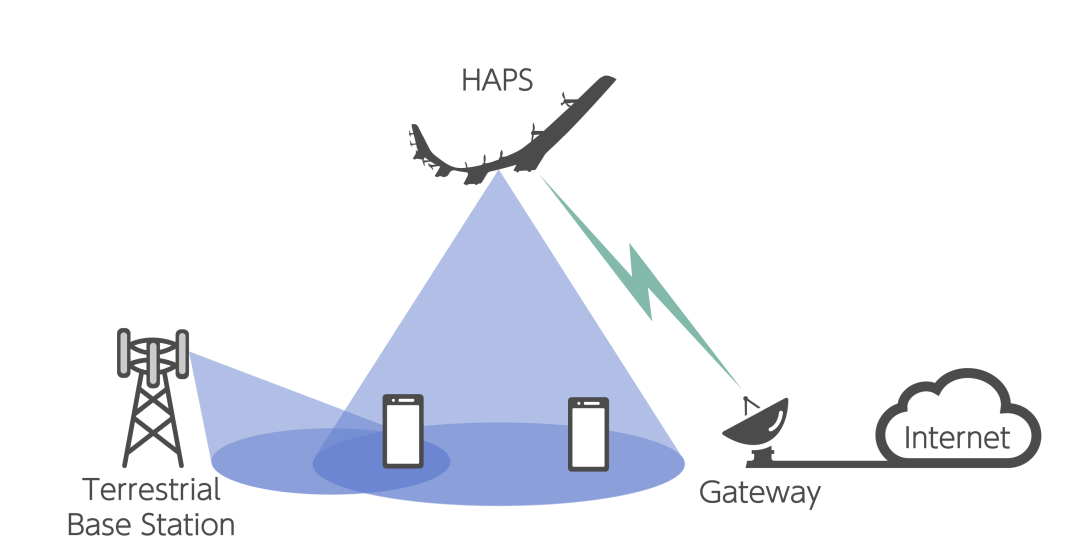
HAPSMobile is a one-year-old joint venture between SoftBank and U.S. company AeroVironment . The company has developed a solar-powered drone that’s designed to deliver 5G connectivity in the same way Facebook has tried in the past. The social network canceled its Aquila drone last year, although it is reported to have teamed up with Airbus for new trials in Australia.

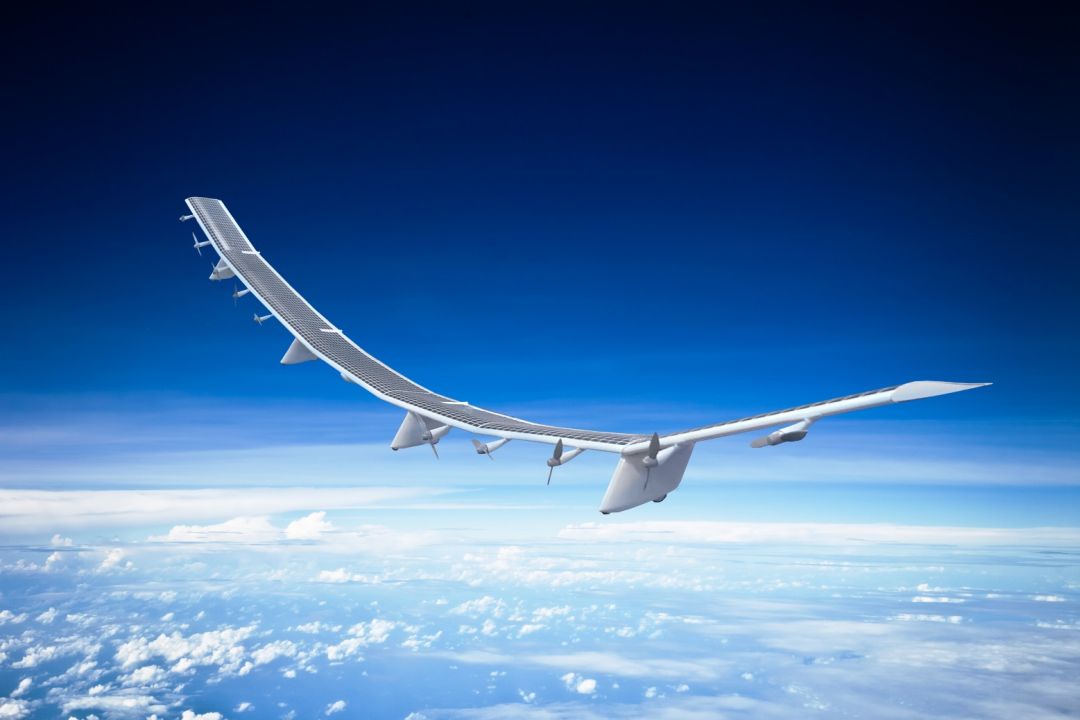
Where Facebook has stumbled, HAPSMobile has made promising progress. The company said that its HAWK 30 drone — pictured below in an impression — has completed its initial development and the first trials are reportedly set to begin this year.

Loon, meanwhile, was one of the first projects to go after the idea of air-based connectivity with a launch in 2013. The business was spun out of X, the ‘moonshot’ division of Alphabet, last year and, though it is still a work in progress, it has certainly developed from an initial crazy idea conceived within Google.

Loon played a role in connecting those affected by flooding in Peru in 2017 and it assisted those devastated by Hurricane Maria in Puerto Rico last year. Loon claims its balloons have flown more than 30 million kms and provided internet access for “hundreds of thousands” of people across the world.

In addition to the capital investment, the two companies have announced a set of initiatives that will help them leverage their collective work and technology.

For starters, they say they will make their crafts/balloons open to use for the other — so HAPSMobile can tap Loon balloons for connectivity and vice-versa — while, connected to that, they will jointly develop a communication payload across both services. They also plan to develop a common ground station that could work with each side’s tech and develop shared connectivity that their airborne hardware can tap.

Loon has already developed fleet management technology because of the nature of its service, which is delivered by a collection of balloons, and that will be optimized for HAPSMobile.

The premise of HAPSMobile is very much like Loon

Outside of tech, the duo said they will create an alliance “to promote the use of high altitude communications solution with regulators and officials worldwide.”

The investment is another signal that shows SoftBank’s appetite in tech investing is not limited to up-and-coming startups via its Vision Fund, more established ventures are indeed also in play. Just yesterday, the Vision Fund announced plans to invest $1 billion in German payment firm Wirecard and its past investments include ARM and Nvidia, although SoftBank has sold its stake in the latter.

How to source hard-to-fill programming positions

The competition is intense for great tech talent, and it’s even harder to find the most qualified people who are also the right fit for your company

This article shares some practical processes that you can add to your human resources function in order to accelerate the programmer pipeline, based on the years I have spent as a hiring focused software engineer at growing startups and now running my own recruiting firm.

Our recruiting strategy is surprisingly simple, and boils down to optimizing various segments of the sourcing funnel: awareness, pageviews, and application submits.

What ties these tactics together, though, is you, your company, what you’re offering, and how you approach the people you want to hire. If you want to build a strong, diverse team, you need to develop a thoughtful, empathetic and proactive approach before you can optimize.

Within the article we cover:

In the article’s appendix, I also provide our company’s 2019 checklist process — eighteen steps that we delegate to manage our sourcing process.

Elon Musk on taking Tesla private: ‘That ship has sailed’

Elon Musk would prefer if Tesla, which is known for its volatile share price and is among the most heavily shorted stock, were a private company, but acknowledged during an earnings call Wednesday that it wasn’t likely.

Musk can dream, can’t he?

“Unfortunately that ship had sailed,” Musk said flatly, in response to a question from Morgan Stanley analyst Adam Jonas.

Musk said Tesla as a public company was a distraction at times and then added “I’m not sure what to do about it.”

The question came up as an increasing number investors, known as shorts, bet that Tesla’s stock will decline. The stock is one of the largest automotive shorts globally, according to S3 Partners.

Taking the company private, a status in which Musk’s other company SpaceX remains, is a sore spot for the billionaire entrepreneur. And one that has caused legal woes and disrupted the stock price.

Musk famously tweeted in August 2018 that he was considering taking Tesla private and had “funding secured. Tesla has published an email Musk sent to employees described his rationale, only to back track a few weeks later and announce the company would remain public. That tweet got the attention of the U.S. Securities and Exchange Commission, which later accused Musk of securities fraud. The parties reached a settlement without admitting wrongdoing.

Under the settlement, Tesla agreed to add two independent directors and Musk would step down as chairman for three years. In December, Tesla added two independent directors to its board — Oracle founder, chairman and CTO Larry Ellison and Walgreens executive Wilson-Thompson.

Despite the settlement, the relationship between Musk and the SEC remains strained. The agency requested a judge hold Musk in contempt for tweets containing allegedly material information. Musk and the SEC are expected to report to the judge Thursday as to whether they have reached a resolution.

Tesla reported Wednesday wider-than-expected loss of $702 million, or $4.10 a share, in the first quarter after disappointing delivery numbers, costs and pricing adjustments to its vehicles threw the automaker off of its profitability track.

While analysts had anticipated a loss — an adjusted loss of $1.15 a share on sales of $5.4 billion for the quarter, according to Factset — actual losses stretched far beyond those expectations.

The loss included $188 million of non-recurring charges. When adjusted for one-time losses, Tesla lost $494 million, or $2.90 a share, compared with a loss of $3.35 a share a year ago. Tesla reported that it also incurred $67 million due to a combination of restructuring and other non-recurring charges.

Tesla plans to launch an insurance product ‘in about a month’

Tesla is developing an insurance product, which could be launched in about a month, CEO Elon Musk said during a call with analysts Wednesday following its first-quarter earnings report.

“It will be much more compelling than anything else out there,” he said.

Musk didn’t provide further details on what the insurance product might look like, but it will most certainly place value on its Autopilot system, an advanced driver assistance system that is considered one of the most robust and at times, most controversial, in the industry.

Musk later added that Tesla already shares information with insurance companies about Autopilot. The information is meant to help reduce insurance rates.

“As we launch our own insurance product next month, we will certainly incorporate that information into the insurance rates,” Musk said.

Tesla has an “information arbitrage opportunity,” Musk said. The is able to capture driving data, giving the company direct knowledge of the risk profile of the driver and car. If customers want to buy Tesla insurance they might have to agree to “not drive the car in a crazy way,” said Musk, who added they can they’ll just have a higher insurance rate.

Companies like insurance startup Root have introduced programs that give Tesla owners a discount if their electric vehicles are equipped with Autopilot.

Tesla reported Wednesday wider-than-expected loss of $702 million, or $4.10 a share, in the first quarter after disappointing delivery numbers, costs and pricing adjustments to its vehicles threw the automaker off of its profitability track.

The loss included $188 million of non-recurring charges. When adjusted for one-time losses, Tesla lost $494 million, or $2.90 a share, compared with a loss of $3.35 a share a year ago. Tesla reported that it also incurred $67 million due to a combination of restructuring and other non-recurring charges.

Tesla’s first-quarter revenues were $4.5 billion, compared to $7.2 billion in the fourth quarter. The company’s operating cash flow less capital expenditures dropped to a loss to $920 million, compared to a positive $910 million in the fourth quarter.

Scientists pull speech directly from the brain

In a feat that could eventually unlock the possibility of speech for people with severe medical conditions, scientists have successfully recreated the speech of healthy subjects by tapping directly into their brains. The technology is a long, long way from practical application but the science is real and the promise is there.

Edward Chang, neurosurgeon at UC San Francisco and co-author of the paper published today in Nature, explained the impact of the team’s work in a press release: “For the first time, this study demonstrates that we can generate entire spoken sentences based on an individual’s brain activity. This is an exhilarating proof of principle that with technology that is already within reach, we should be able to build a device that is clinically viable in patients with speech loss.”

To be perfectly clear, this isn’t some magic machine that you sit in and its translates your thoughts into speech. It’s a complex and invasive process that decodes not exactly what the subject is thinking but what they were actually speaking.

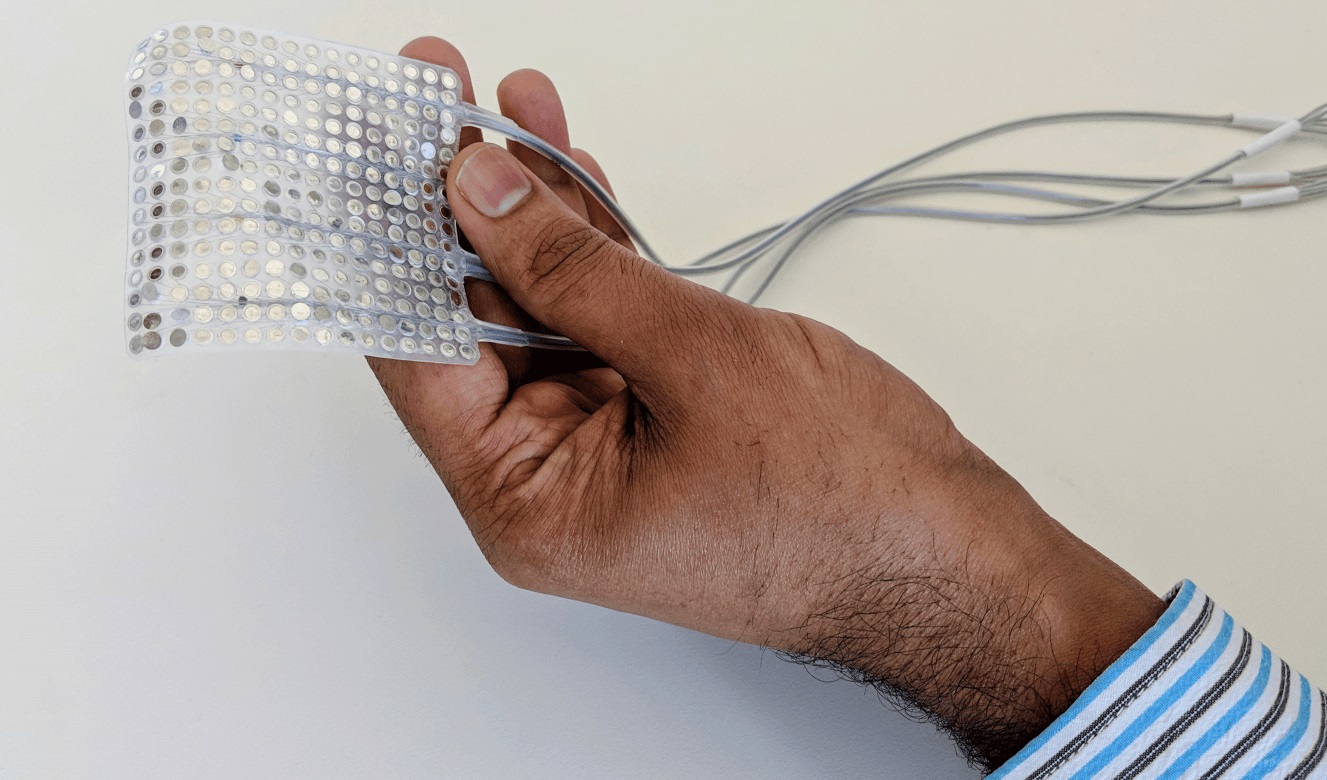
Led by speech scientist Gopala Anumanchipalli, the experiment involved subjects who had already had large electrode arrays implanted in their brains for a different medical procedure. The researchers had these lucky people read out several hundred sentences aloud while closely recording the signals detected by the electrodes.

The electrode array in question.

See, it happens that the researchers know a certain pattern of brain activity that comes after you think of and arrange words (in cortical areas like Wernicke’s and Broca’s) and before the final signals are sent from the motor cortex to your tongue and mouth muscles. There’s a sort of intermediate signal between those that Anumanchipalli and his co-author, grad student Josh Chartier, previously characterized, and which they thought may work for the purposes of reconstructing speech.

Analyzing the audio directly let the team determine what muscles and movements would be involved when (this is pretty established science), and from this they built a sort of virtual model of the person’s vocal system.

They then mapped the brain activity detected during the session to that virtual model using a machine learning system, essentially allowing a recording of a brain to control a recording of a mouth. It’s important to understand that this isn’t turning abstract thoughts into words — it’s understanding the brain’s concrete instructions to the muscles of the face, and determining from those what words those movements would be forming. It’s brain reading, but it isn’t mind reading.

The resulting synthetic speech, while not exactly crystal clear, is certainly intelligible. And set up correctly, it could be capable of outputting 150 words per minute from a person who may otherwise be incapable of speech.

“We still have a ways to go to perfectly mimic spoken language,” said Chartier. “Still, the levels of accuracy we produced here would be an amazing improvement in real-time communication compared to what’s currently available.”

For comparison, a person so afflicted, for instance with a degenerative muscular disease, often has to speak by spelling out words one letter at a time with their gaze. Picture 5-10 words per minute, with other methods for more disabled individuals going even slower. It’s a miracle in a way that they can communicate at all, but this time-consuming and less than natural method is a far cry from the speed and expressiveness of real speech.

If a person was able to use this method, they would be far closer to ordinary speech, though perhaps at the cost of perfect accuracy. But it’s not a magic bullet.

The problem with this method is that it requires a great deal of carefully collected data from what amounts to a healthy speech system, from brain to tip of the tongue. For many people it’s no longer possible to collect this data, and for others the invasive method of collection will make it impossible for a doctor to recommend. And conditions that have prevented a person from ever talking prevent this method from working as well.

The good news is that it’s a start, and there are plenty of conditions it would work for, theoretically. And collecting that critical brain and speech recording data could be done preemptively in cases where a stroke or degeneration is considered a risk.

Apply to participate in the Hackathon at Disrupt San Francisco 2019

Great news for all you coders, hackers, developers and creative tech makers — our onsite Hackathon returns to Disrupt San Francisco 2019 on October 2-4. Applications to hack are open now and if you’re selected, you get to flex your mighty coding skills and go head-to-head against some of the world’s best developers to build something amazing. Even better, participating in the Hackathon doesn’t cost a thing, so hop to it and apply right here.

The Hackathon is a grueling, exhilarating, sleep-deprived experience — and a ton of fun. It puts your skills to the test, tries your endurance and fosters community. Don’t worry, we’ve got you covered in terms of food and drink. Pizza, beer and plenty of coffee will help keep you fueled and focused.

Here’s how the Disrupt SF 2019 Hackathon works. It takes place during the Disrupt conference in a dedicated section of Moscone Convention Center. Only 800 hackers will be accepted to have a day and a half to build projects with sponsored APIs, data sets and other tools.

There will be plenty of sponsors offering prizes (often a nice chunk of cash) to the teams that best address their specific challenges. On top of that, TechCrunch will award a $10,000 grand prize to the best overall hack project.

What kind of sponsored contests can you expect? We’ll announce this year’s sponsors and contests over the next few weeks, but you can get an idea of what’s coming from the sponsored contests, prizes and winners from last year’s Disrupt SF 2018 Hackathon.

Judging begins on the afternoon of day two. Our experts will review all completed projects in a science fair- style format and select 10 finalists. On day three, the 10 finalists each have two minutes to pitch their project on the Extra Crunch Stage. Check out the entire agenda on the Hackathon website.

After the judges confer, sponsor partners will announce the winner of their specific contests and, finally, TechCrunch will announce one overall Hackathon champion and winner of the $10,000 grand prize.

Need more reasons to apply? This is a great opportunity to meet and network with your peers, potential partners or employers. Plus, Hackathon participants receive free Innovator passes to Disrupt for that third day. Sweet.

Remember, it won’t cost you anything to apply to participate in the Hackathon, which takes place at Disrupt San Francisco 2019 on October 2-4 at Moscone North. Don’t miss out on this chance to display your prowess to a global developer community. Apply to the Hackathon today. We can’t wait to see what you create!

Is your company interested in sponsoring or exhibiting at Disrupt SF? Click here.

The Oscars won’t change their rules to exclude streaming

It looks like movies produced by Netflix and other streaming services will be able to compete for next year’s Academy Awards without any changes to eligibility.

After the Netflix Original film “Roma” was nominated for Best Picture at this year’s ceremony and ultimately took home the awards for Best Director, Best Foreign Language Film and Best Cinematography, the Academy’s Board of Directors was mulling possible rule changes.

The crux of the debate seems to be Netflix’s theatrical strategy. The company insisted for years that it was willing to release its movies in theaters, but it would not hold those titles back from the streaming service, which meant that most large chains were unwilling to screen them. Netflix finally eased up on this practice last year, with “Roma” (and a handful of other films) opening in theaters before they launched on Netflix, but with a much shorter theatrical window than is traditional.

Director Steven Spielberg was reportedly an advocate for changing the rules in a way that would have made it harder for Netflix movies to compete — perhaps by requiring that films play exclusively in theaters for four weeks.

Earlier this month, the Department of Justice weighed in, sending a letter to the Academy stating that if it makes eligibility changes that “eliminate competition without procompetitive justification, such conduct may raise antitrust concerns.”

Now the Academy has put out a press release summarizing rules changes voted on by its Board of Governors (like renaming the Foreign Language Film award to International Feature Film).

The release notes that the board voted not to change Rule Two, Eligibility, which describes the theatrical run needed to be eligible for an Oscar. It says that “a film must have a minimum seven-day theatrical run in a Los Angeles County commercial theater, with at least three screenings per day for paid admission” in order to be eligible — but the film can also be released on “nontheatrical media” at the same time.

“We support the theatrical experience as integral to the art of motion pictures, and this weighed heavily in our discussions,” said Academy President John Bailey in a statement. “Our rules currently require theatrical exhibition, and also allow for a broad selection of films to be submitted for Oscars consideration. We plan to further study the profound changes occurring in our industry and continue discussions with our members about these issues.”

Despite declines for the quarter, Tesla is bullish on its overall energy business

Even as its solar business declined in step with its overall earnings, Tesla is bullish on the prospects for the energy side of its business over the course of the year.

The energy business is an unheralded part of Tesla — overshadowed by its headline grabbing (and much larger) auto exploits — that chief executive Elon Musk thinks will generate an increasing share of revenue for the company over time.

Revenues from its solar power and energy storage business fell by 13% from the fourth quarter 2018 and 21% from a year ago period down to $324.7 million from $371.5 million in the fourth quarter of 2018 and $410 million in the year ago quarter.

Solar energy deployments fell from 73 megawatts to 47 megawatts from the fourth to the first quarter, the company said. Those figures were offset by a slight increase in solar deployments.

The company actually introduced a new financing and purchasing model for solar installations in the second quarter — saying in its shareholder letter that residential solar customers can buy directly from the Tesla website, in standardized capacity increments.

“We aim to put customers in a position of cash generation after deployment with only a $99 deposit upfront. That way, there should be no reason for anyone not to have solar generation on their roof,” Musk and chief financial officer Zachary Kirkhorn wrote in the shareholder letter.

Tesla’s battery storage business was hit as the company shifted units from energy storage to installation in its own vehicles.

“Energy storage production in the second half of 2018 was limited by cell production as we routed all available Gigafactory 1 cell capacity to supply Model 3,” the company wrote in its letter. “Some Gigafactory 1 cell production has been routed back to the energy storage business, enabling us to increase production in Q1 by roughly 30% compared to the previous quarter.”

And Musk thinks that the energy business will grow significantly over the course of the year. “We hope that growth rate will continue and battery storage will become a bigger and bigger percentage over time,” Musk said on an analyst call following the earnings release. Potentially, Tesla thinks its energy business could grow by as much as 300%, Musk said. 

Tesla reports $702 million loss in first quarter

Tesla reported Wednesday wider-than-expected loss of $702 million, or $4.10 a share, in the first quarter after disappointing delivery numbers and other setbacks and costs threw the automaker off of its profitability track.

The loss included $188 million of non-recurring charges. When adjusted for one-time losses, Tesla lost $494 million, or $2.90 a share, compared with a loss of $3.35 a share a year ago. Tesla reported that it also incurred $67 million due to a combination of restructuring and other non-recurring charges

Tesla and CEO Elon Musk warned earlier this month that it expected first-quarter profits to be negatively impacted by lower than expected delivery volumes and several pricing adjustments. This was the first earnings report since losing a federal tax credit (more specifically half of it) for its buyers on Jan. 1.

Tesla reported April 9 that it delivered 63,000 electric vehicles in the first quarter of the year, nearly a one-third drop from the previous quarter. Deliveries included about 50,900 Model 3 vehicles and 12,100 Model S and X SUVs.

The results reported Wednesday follow two consecutive quarters of profitability that were fueled by sales of the Model 3. Tesla reported a $139 million profit in the fourth quarter and in October posted its first profit after seven consecutive quarters of losses.

Tesla reported that its cash position decreased by $1.5 billion from the end of 2018  to $2.2 billion mainly due to the repayment of convertible notes, of which $188 million negatively impacted operating cash flow. Tesla paid off its $920 million convertible bond obligation in cash in March.

Here are a few of the highlights:

  • Tesla’s Q4 revenues were $4.5 billion, compared to $7.2 billion in the fourth quarter

Tesla first-quarter earnings follows a series of announcements by the company, including changes to the drivetrain design on the Model S and X that will increase the range of the vehicles about about 10 percent. The newly equipped Model S will now have an EPA estimated range of 370 miles, while the Model X long range variant will be able to travel 325 miles on a single charge. The cars have the same 100 kwH battery packs.

Tesla also held an event centered on its efforts to develop autonomous vehicle technology and included insight and news around its custom-built computer chip, Musk’s plans to launch a robotaxi business in 2020 and a demo ride.