You might think it’s redundant with Instagram Stories, or just don’t want to see high school friends’ boring lives, but ephemeral Snapchat-style Stories now have 500 million daily users across Facebook and Messenger. WhatsApp’s Stories feature Status has 500 million dailies too, and Instagram hit that milestone three months ago. That’s impressive because it means one-third of Facebook’s 1.56 billion daily users are posting or watching Stories each day, up from zero when Facebook launched the feature two years ago.
For reference, Stories inventor Snapchat has just 190 million total daily users. Facebook’s aggressive move to clone Snapchat Stories not just in Instagram but everywhere might have pissed users off at first, but many of them have come around. If you give people a place to put their face at their top of their friends’ phones, they’ll fill it. And if someone dangles a window into the lives of people you know and people you wish you did, you’ll open that window regularly.
The Galaxy Fold has been the most polarizing product I can recall having reviewed. Everyone who saw it wanted to play with the long-promised smartphone paradigm shift. The results, on the other hand, were far more mixed.
If nothing else, the Fold has a remarkably high Q-Rating. Each person who saw me using the product had at least a vague idea of what it was all about. I honestly can’t remember the last time I’ve had that reaction with a non-iPhone device. That’s great from brand perspective. It means a lot of people are curious and potentially open to the notion that the Samsung Galaxy Fold is the future.
Of course, it also means there are a lot of people looking on if you fail.
In some ways, this past week with the Samsung Galaxy Fold has been an extremely public beta. A handful of samples were given out to reviewers. Most worked fine (mine included), but at least three failed. It’s what we in the industry call a “PR nightmare.” Or at least it would be for most companies.
Samsung’s weathered larger storms — most notably with the Galaxy Note 7 a few years back. Of course, that device made it much further along, ultimately resulting in two large-scale recalls. The nature of the two issues was also vastly different. A malfunctioning screen doesn’t put the user at bodily risk like an exploding battery. The optics on these things don’t get much worse than having your smartphone banned from planes.
As of this writing, the Fold is still set to go on sale, most likely this year. To be perfectly frank, the April 26 release date seemed overly optimistic well before the first reports of malfunctioning units. It’s never a great sign when a device is announced in February and is only made available for review a few weeks ahead of launch. It’s kind of like when a studio doesn’t let reviewers watch a film before release. It doesn’t necessarily mean it’s bad, but it’s something to keep an eye on.
That’s the thing. The Galaxy Fold is the kind of device you want badly to succeed. You want it to be great and you want Samsung to sell a billion because it’s a genuinely exciting product after a decade of phones that look mostly the same. There’s also the fact that Samsung has essentially been hyping this thing for eight years, since it debuted a flexible display at CES 2011.
In spite of that, however, the home stretch feels rushed. Samsung no doubt saw the writing on the wall, as companies like Huawei readied their own foldable. And while Royole beat the fold to market, Samsung still had a very good shot at the claim of first commercially viable foldable on the market, with a decade of Galaxy devices under its belt and hand-in-hand work with the Google team to create an Android UX that makes sense on a pair of very different screens.
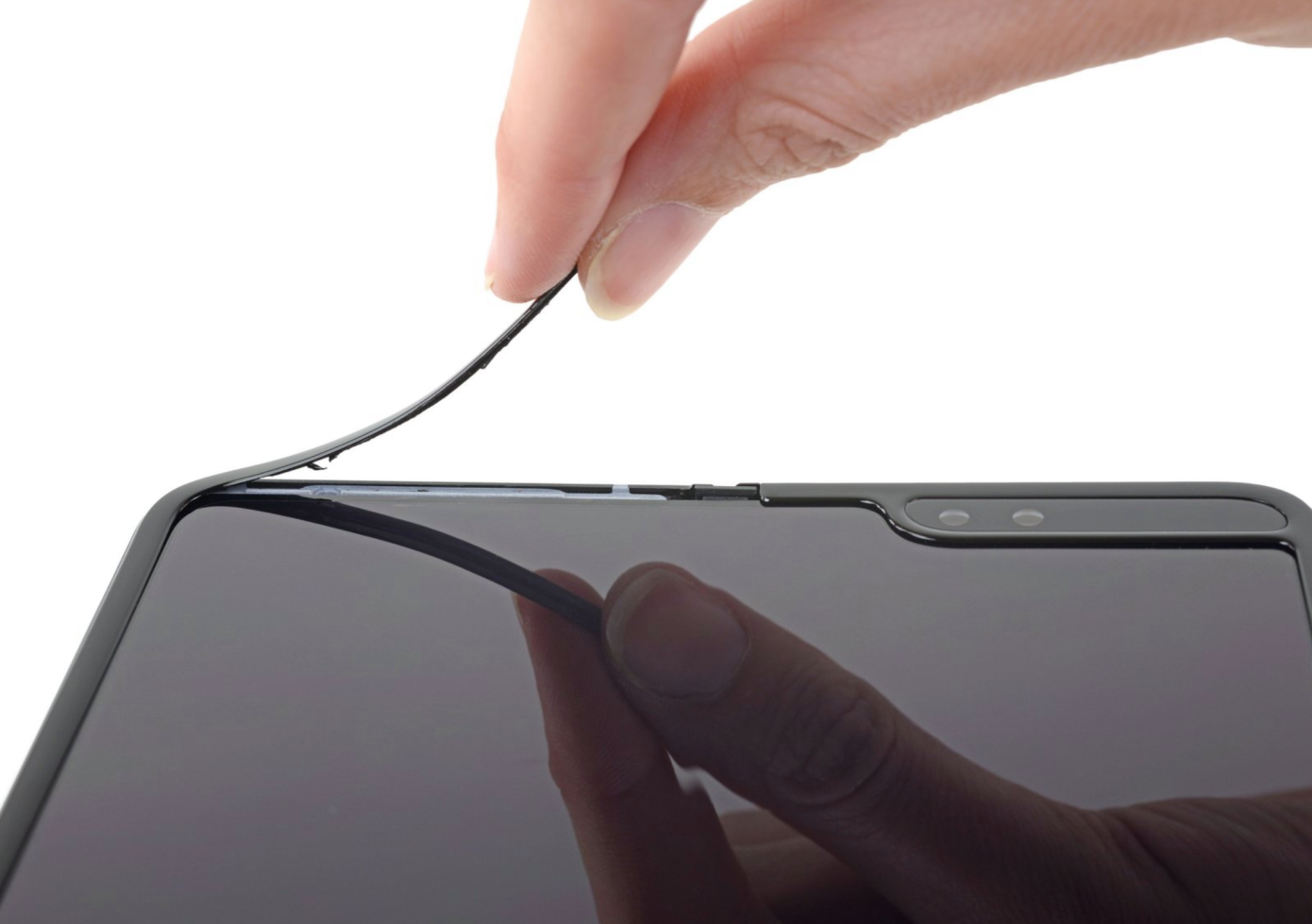
[Source: iFixit]
But this iFixit teardown speaks volumes. “Alarmingly” isn’t the kind of word you want/expect to hear about a company like Samsung, but there it is, followed directly by “fragile” — itself repeated five times over the course of the write-up. iFixit’s findings match up pretty closely with Samsung’s own reports:
A fragile display means knocking it the wrong way can result in disaster.
A gap in the hinges allows dirt and other particles to wedge themselves between the folding mechanism and screen.
Don’t peel off the protective layer. I know it looks like you should, but this is probably the easiest way to wreck your $2,000 phone that doesn’t involve a firearm or blender.
What makes all of this doubly unfortunate is that Samsung has about as much experience as anyone making a rugged phone that works. I feel confident that the company will do just that in future generations, but unless the company can come back with definitive evidence that it’s overhauled the product ahead of launch, this is a difficult product to recommend.
Samsung knew the first-gen Galaxy Fold would be a hard sell, of course. The company was pretty transparent about the fact that the experimental form factor, coupled with the $1,980 price tag, meant the device will only appeal to a small segment of early adopters.
Even so, the company managed to sell out of preorders — though it didn’t say how large that initial run was. Nor are we sure how many users have canceled in the wake of this past week’s events. Certainly no one would blame them for doing so at this point.
But while the apocalyptic shit-posters among us will declare the death of the foldable before it was ever truly born, whatever doesn’t kill Samsung has only made it stronger. And this misfire could ultimately do that for both the company and the category, courtesy of its informal beta testing.
Rewind a mere week or so ago (seriously, it’s only been that long), when we finally got our hands on the Galaxy Fold. I was impressed. And I certainly wasn’t alone. Admittedly, there’s a bit of a glow that first time you see a device that’s seemingly been teased forever. The fact that it exists feels like a kind of victory in and of itself. But the Fold does an admirable job marrying Samsung’s hardware expertise with a new form factor. And more importantly, it’s real and works as advertised — well, mostly, at least.
The truth is, I’ve mostly enjoyed my time with the Galaxy Fold. And indeed, it’s been fun chronicling it on a (nearly) daily basis. There are some things the form factor is great for — like looking at Google Maps or propping it up to watch YouTube videos on the elliptical machine at the gym. There are others when the bulky form factor left me wanting to go back to my regular old smartphone — but those trade-offs are to be expected.
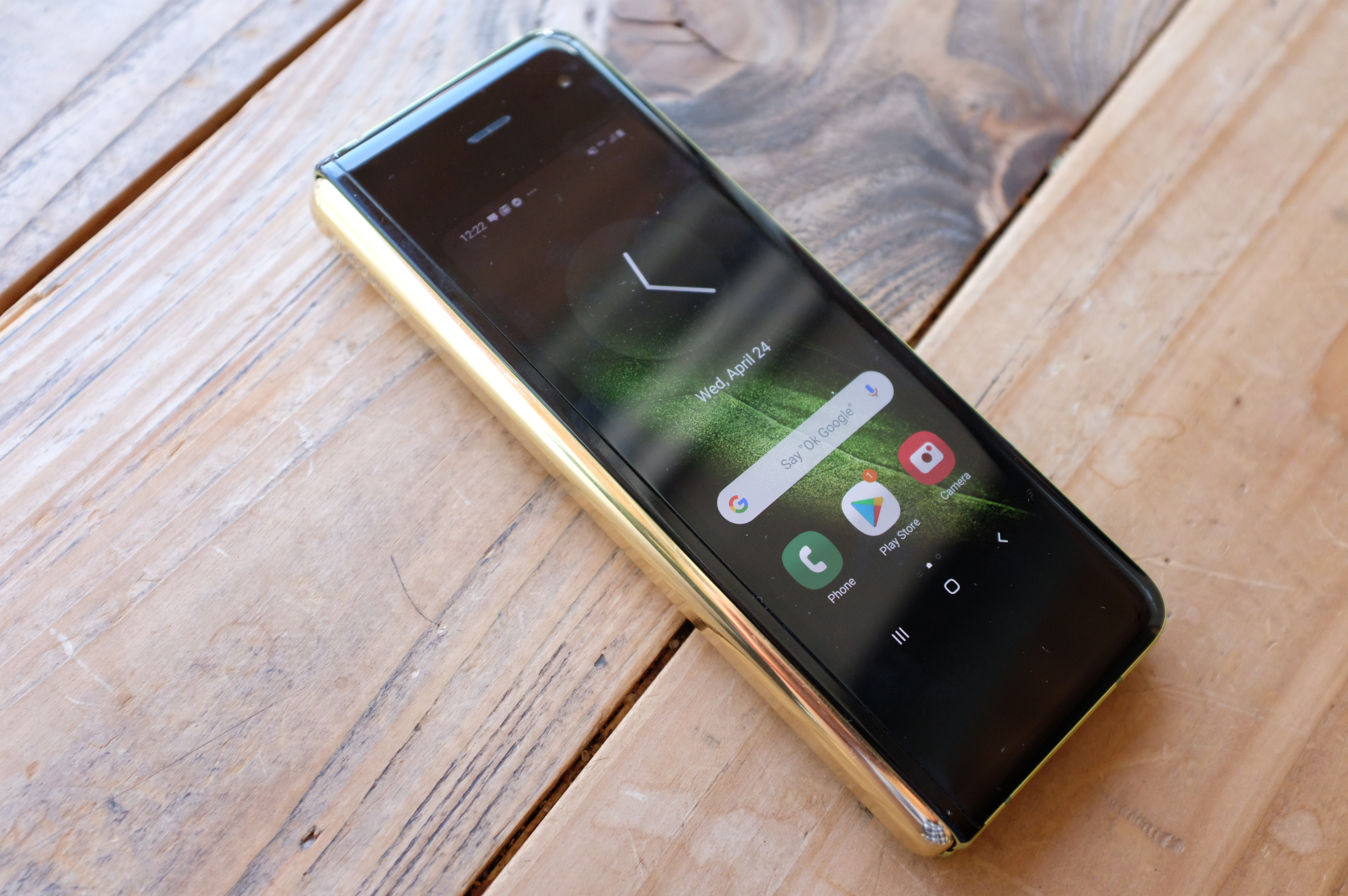
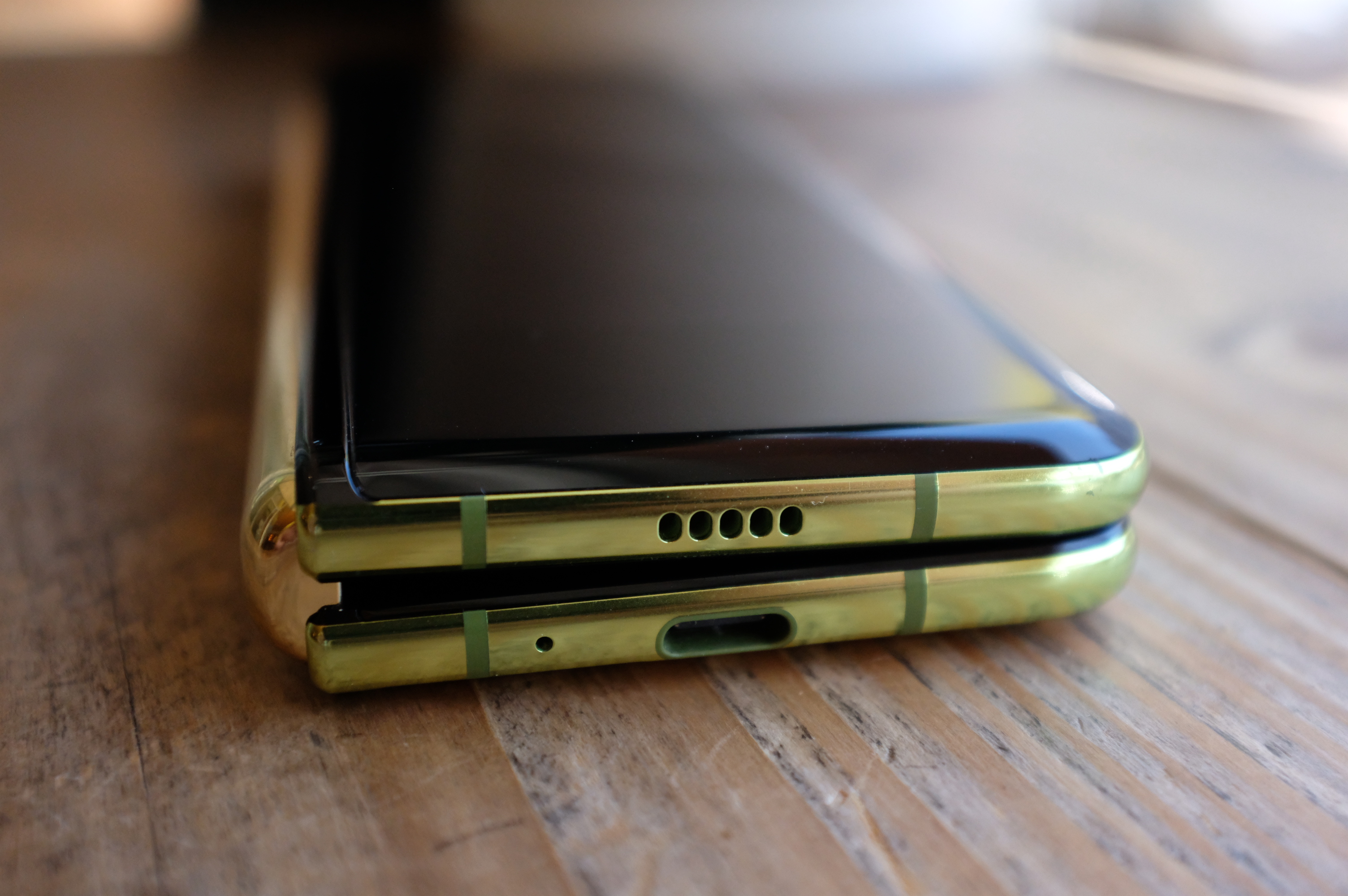
I both like the Fold’s design and understand the criticism. Samsung’s done a good job maintaining the Galaxy line’s iconic design language. The foldable looks right at home alongside the S and Note. That said, the rounded backing adds some bulk to the product. And while open, the device is thinner than an iPhone, when folded, it’s more than double the thickness, owing to a gap between the displays. It’s quite skinny in this mode, however, so it should slip nicely into all but the tightest pants pockets.
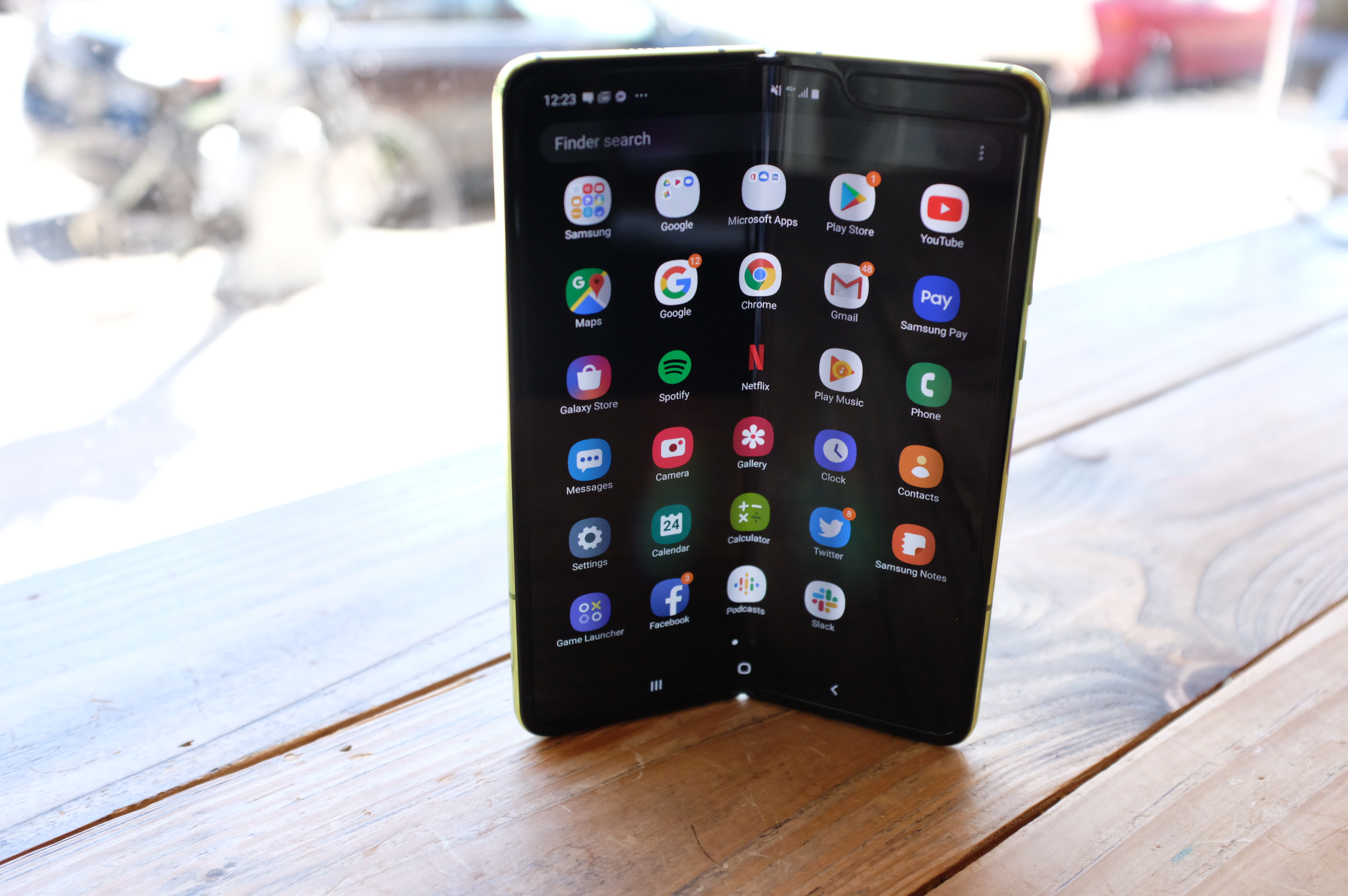
In practice, the folding mechanism might be the most impressive part of the product. The inside features several interlocking gears that allow the product to open and shut with ease and let users interact with the device at various states of unfold. I found myself using the device with it open at a 90-degree angle quite a bit, resting in my hand like an open book. The Fold features a pair of magnets on its edges, which let you close it with a satisfying snap. It’s weirdly therapeutic.
Really, the biggest strike against the device from a purely aesthetic standpoint is that it’s not the Mate X. Announced by Huawei a few days after the Fold’s big unveil, the device takes a decidedly more minimalist approach to the category. It’s an elegant design that features less device and more screen, and, honestly, the kind of thing I don’t think most of us expected until at least the second-generation product.
The gulf between the two devices is especially apparent when it comes to the front screen. The front of the screen is around two-fifths bezel, leaving room for a 4.6-inch display with an awkward aspect ratio. The Mate X, meanwhile, features a 6.6-inch front-facing AND 6.4-inch rear-facing display (not to mention the larger eight-inch internal display to the Fold’s 7.3).
There’s reason to recommend the Fold over the Mate X, as well. I can’t speak to the difference in user experience, having only briefly interacted with the Huawei, but the price point is a biggie. The Mate X starts at an even more absurd $2,600, thanks in part to the fact that it will only be available in a 5G version, adding another layer of niche.
That price, mind you, is converted from euros, because 1) The product was announced at MWC in Barcelona and 2) U.S. availability is likely to be a nonstarter again, as the company continues to struggle with U.S. regulators.
Of course, the Fold’s U.S. availability is also in limbo at the moment, albeit for very different reasons.
I ultimately spent little time interacting with the front screen. It’s good for checking notifications and the like, but attempting to type on that skinny screen is close to impossible, with shades of the new Palm device, which implements its own shortcuts to get around those shortcomings. The inside, meanwhile, takes a butterfly keyboard approach, so you can type with both thumbs while holding it open like a book.
There’s also the issue of app optimization. A lot of this can be chalked up to an early version of a first-gen device. But as with every new device, the equation of how much developer time to invest is largely dependent on product adoption. If the Fold and future Fold’s aren’t a success, developers are going to be far less inclined to invest the hours.
This is most painfully obvious when it comes to App Continuity, one of the device’s primary selling points from a software perspective. When working as advertised, it makes a compelling case for the dual screens. Open something on the front and expand your canvas by unfolding the device. Google is among the companies that worked directly with Samsung to optimize apps this way, and it’s particularly handy with Maps. I used it a fair amount on my trip last week to Berkeley (shout out to the fine people at Pegasus Books on Shattuck).
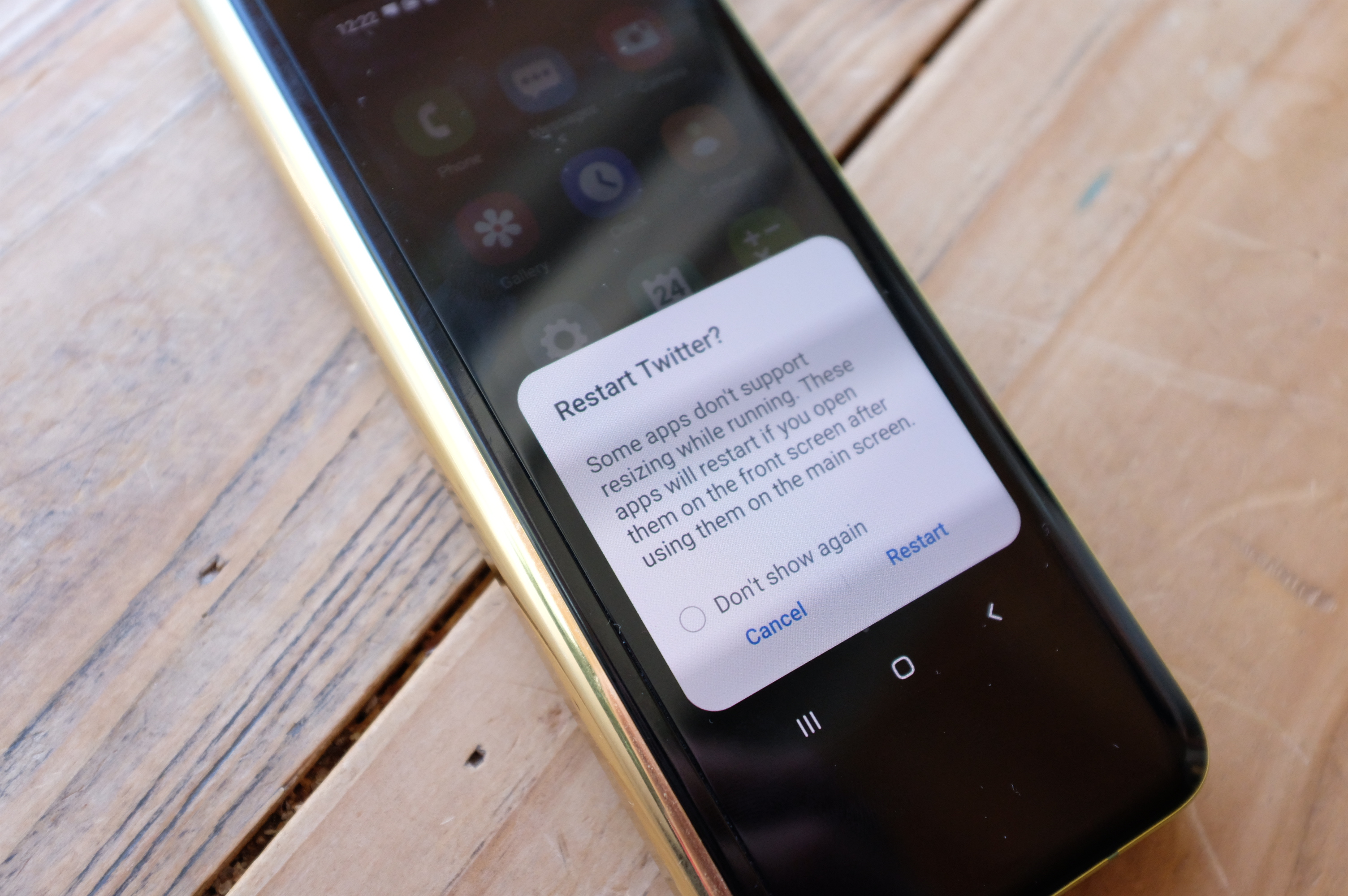
When an app isn’t optimized, Samsung compels you to restart it, or else you get a nasty case of letterbox bars that retain the aspect ratio of the front screen. Continuity isn’t designed to work the other way, either — opening something on the large screen and then transferring to the front. That’s a bit trickier, as shutting the phone is designed to offer a kind of finality to that session, like hitting the power button to put the device to sleep.
I get that, and like many other pieces here, it will be interesting to see how people utilize it. Aside from the obvious hardware concerns, much of the work on the second-generation device will center around learnings from how users interact with this model. I know I surprised myself when I ended up using the 7.3-inch screen to snap photos. It felt silly — like those people who bring iPads to photograph events. But it’s ultimately a much better viewfinder than that measly 4.6-incher.
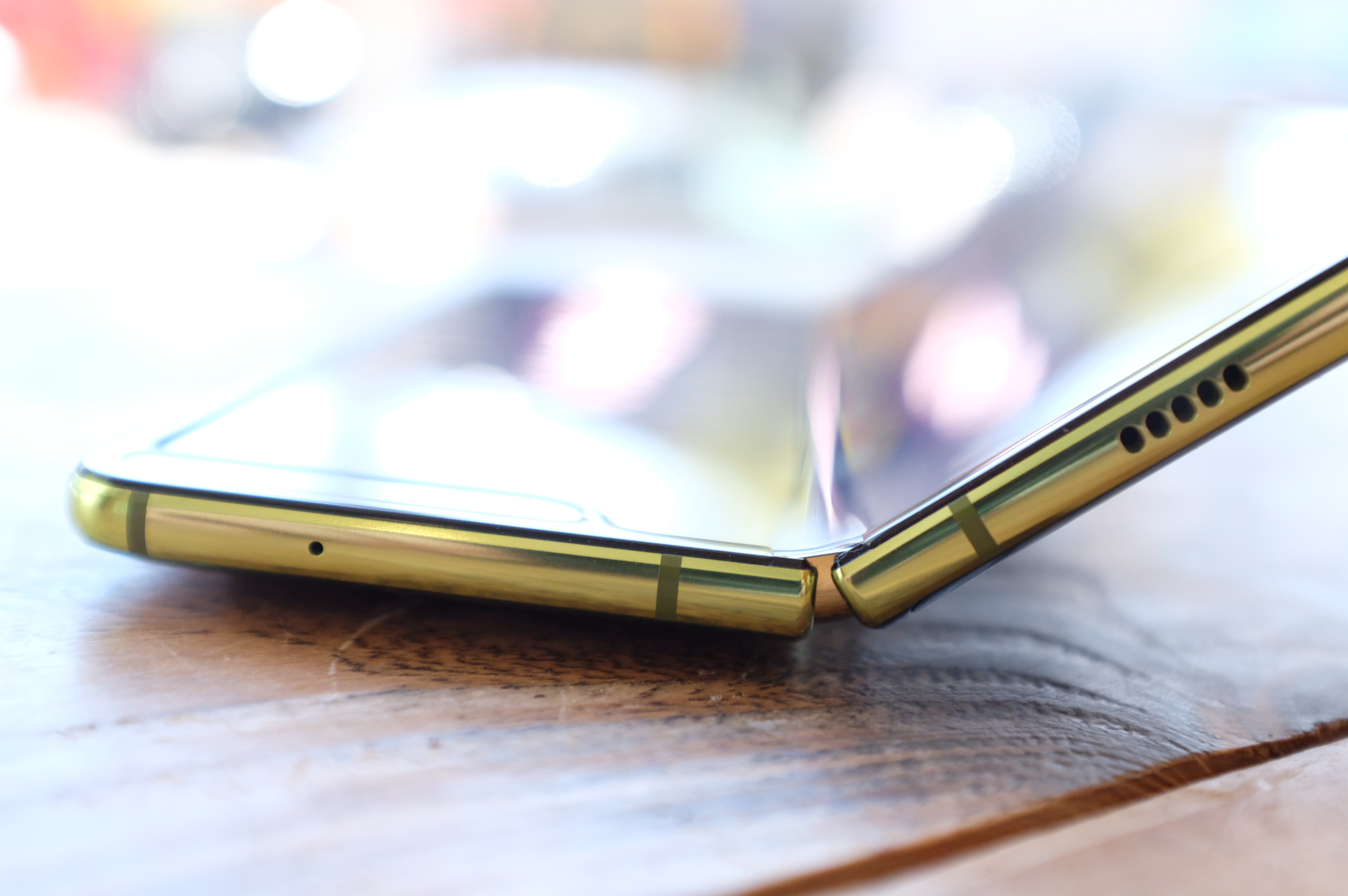
That’s really just the tip of the iceberg for the inside screen, of course. The size, which is somewhere between phablet and mini tablet, provides ample real estate that can still be held in one hand. It’s a great size for short videos. I’ve watched a lot of YouTube on this thing, though the speakers (a small series of holes on the upper and lower edges) leave a lot to be desired.
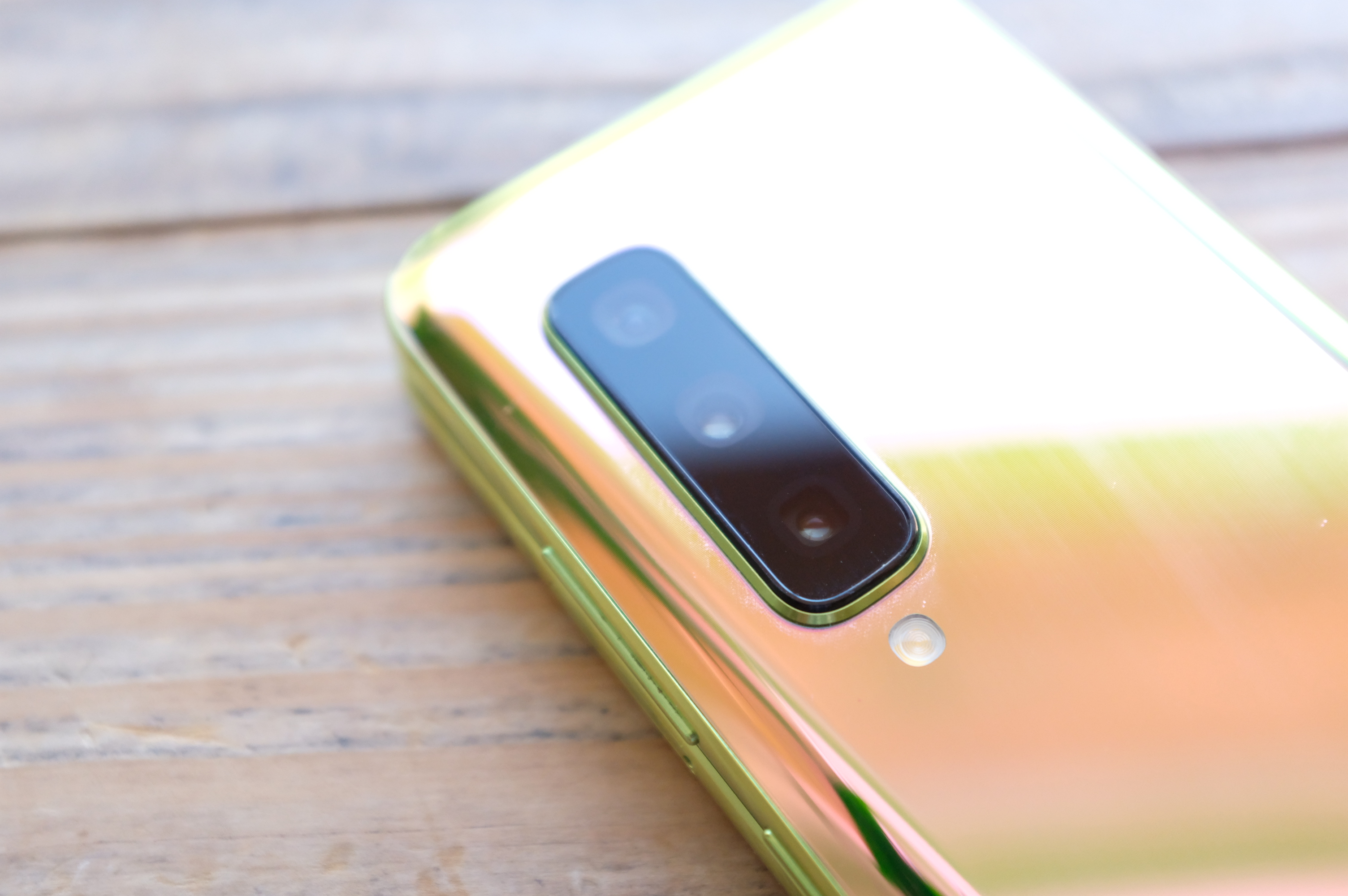
And the seam. I found myself uttering the phrase “it could be worse” a lot. Like so much of the general aesthetic (including the odd green-gold color of my Fold’s casing), it’s lighting-dependent. There are plenty of times when you don’t see it all, and other when the glare hits it and makes it look like a line right down the center.
I realized after snapping a couple of photos that it’s particularly apparent in many shots. That probably gives a false impression of its prominence. It sucks that there’s one at all, but it’s not a surprise, given the nature of the design. You mostly don’t notice it, until your finger swipes across it. And even then it’s subtle and totally not a dealbreaker, unlike, say, the massive gap that made the ZTE Axon M look like two phones pasted together.
I love the ability to stand the device up by having it open at a 90-degree angle, so I can watch videos while brushing my teeth. But this orientation blocks the bottom speakers, hampering the already iffy sound. Thankfully, your $1,980 will get you a pair of the excellent Galaxy Buds in box. It’s hard to imagine Apple bundling AirPods with the next iPhone, but I guess stranger things have happened, right?
Multi-Active Window is the other key software piece. It’s something that has been available on other Samsung devices and certainly makes sense here. Open an app, swipe left from the right side of the screen and a tray will open. From there, you can open up to three apps on the display. Once open, the windows feature a small tab at the top that lets you rearrange them.
It’s handy. I used it the most during those times I had a video playing on an exercise machine, so I didn’t have to close out of everything to check emails and Twitter. I’m a gym multi-tasker. I’m sorry, it’s just who I am now.
It worked quite well on the whole, courtesy of robust internals, including 12GB of RAM and a Snapdragon 855. The primary issue I ran into was how some of the apps maintained that half-screen format after I closed out and reopened. I’m sure some people will prefer that, and I’m honestly not sure what the ideal solution is there.
The Fold’s also got a beefy battery on board. Like Huawei’s, it’s split in two — one on either side of the fold. They work out to a beefy 4,380 mAh. That’s just slightly less than Huawei’s 4,500, but again, the Mate X is 5G by default — which means it’s going to burn through mAhs at a faster rate.
Ultimately, the Fold’s greatest strength is Samsung itself. I understand why you probably just did a double take there in the wake of the company’s latest hardware scandal, but the fact is that the company knows how to build phones. The Fold was very much built atop the foundation of the successful Galaxy line, even while it presents a curious little fork in the family tree.
That means a solid and well-thought-out user experience outside of the whole fold thing.
That list includes great cameras with excellent software features and clever tricks like the new Wireless PowerShare, which lets you fold up the phone and charge up those Galaxy Buds or another phone while it’s plugged in. For better or worse, it also includes Bixby. Our model was a European version that didn’t have the full version, but I think I’ve made my thoughts on the smart assistant pretty well known over the last couple of years.
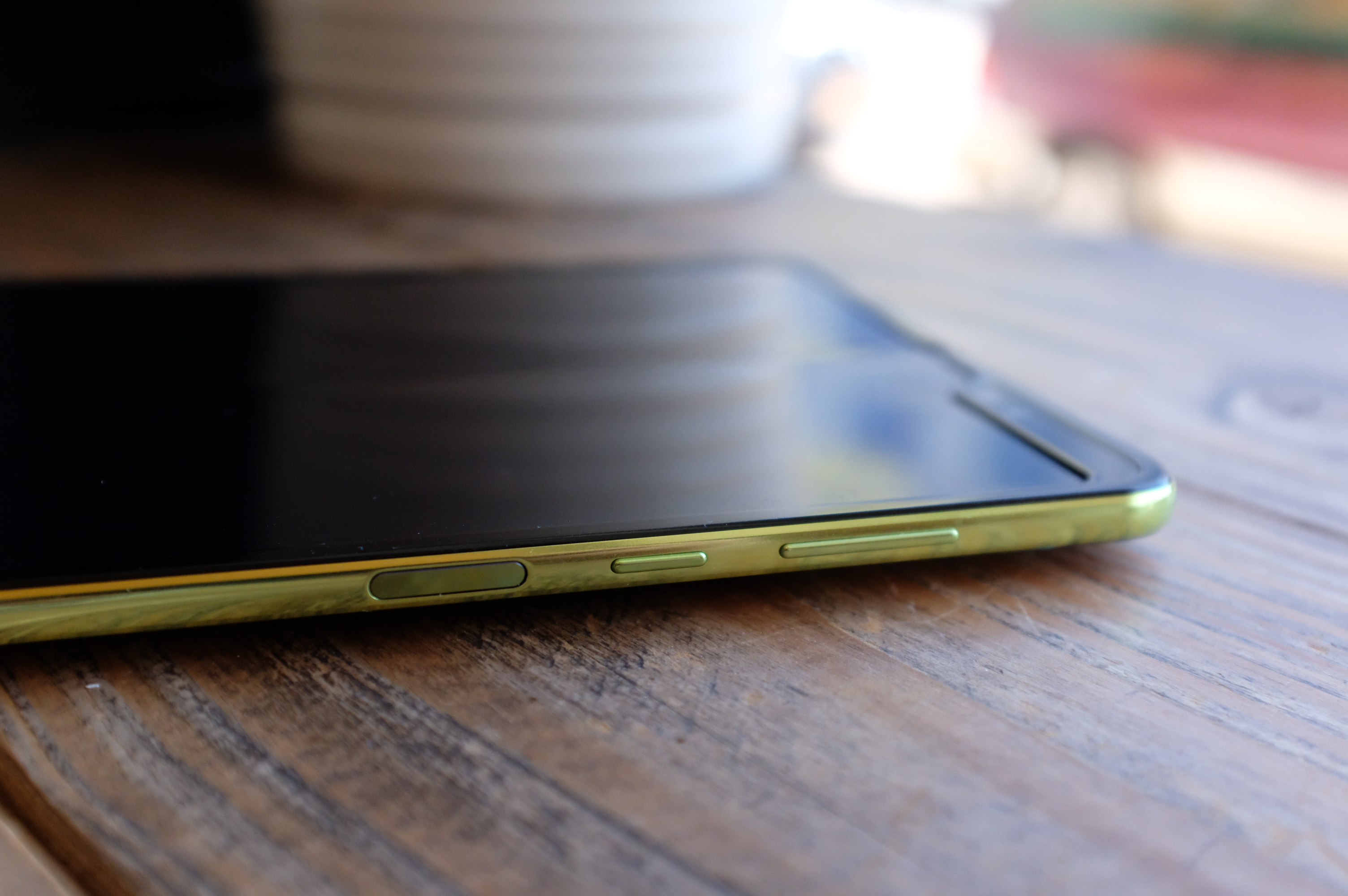
The devoted Bixby button is very much here. And yes, I very much accidentally pressed it a whole bunch. The headphone jack, on the other hand, is conspicuously absent, which is no doubt a big driver behind the decision to include Galaxy Buds. The Fold is an anomaly in a number of ways, but it’s hard to shake the feeling that this might finally represent the beginning of the end for the port on Samsung’s premium devices.
Also absent is the S Pen. The stylus began life on the Note line and has since branched out to other Samsung devices. I suspect the company would have had a tough time squeezing in space for it alongside the dual batteries, and maybe it’s saving something for future generations, but this does feel like the ideal screen size for that accessory.
I’m parting ways with the Fold this week, per Samsung’s instructions. Unlike other products, giving it up won’t feel that tough. There wasn’t a point in the past week when the Fold didn’t feel like overkill. There were, however, times when my iPhone XS screen felt downright tiny after switching back.
In many ways, the foldable phone still feels like the future, and the Fold feels like a stop along the way. There are a lot of first-gen issues that should be/should have been hammered out before mass producing this device. That said, there are certain aspects that can only really be figured out in real-world testing. Take the fact that Samsung subjected the device to 200,000 mechanical open and closes. That’s a lot, and probably more than the life of just about any of these devices, but people don’t open and close like machines. And when it comes to the screen, well, a little dirt is bound to get between the gears, both metaphorically and literally.
As I close this Galaxy Fold a final time, it seems safe to say that the device represents a potentially exciting future for a stagnant smartphone space. But that’s the thing about the future — it’s just not here yet.
As Slack gathered with its growing customer base this week at the Frontiers Conference in San Francisco, it announced several enhancements to the product including extending collaboration to folks who want to stick with email instead of hanging with their co-workers in Slack .
Some habits are tough to break and using email as your file sharing and collaboration tool is one of them. Email is great for certain types of communications, but it was never really designed to be a full-fledged communications tool. While a tool like Slack might not ever fully replace email, it is going after it hard.
But Andy Pflaum, director of project management at Slack says, rather than fight those folks, Slack decided to make it easier to include them with a new email and calendar bridge that enables team members who might not have made the leap to Slack to continue to be kept in the loop.
Instead of opening Slack and seeing the thread, the message will come to these stragglers in their trusty old email inbox, just the way they like it. Earlier this month the company announced tighter integration between Slack and Outlook calendar and email (building on a similar integration with GMail and Google Calendar) where emails and calendar entries can be shared inside Slack. Pflaum says that the company is trying to take that email and calendar bridge idea one step further.
The non-Slack users would get an email instead with the Slack thread. It bundles together multiple responses to a thread in which the person has been engaging in an email, so the recipient isn’t getting an email for every response, according to Pflaum.
The person can respond by clicking a Slack button in the email and having Slack open, or they can simply reply to the email and the response will go to Slack automatically. If they choose the former, it might be a sneaky way to get them used to using Slack instead of email, but Pflaum says that it is not necessarily the intent.
Slack is simply responding to a request by customers to have this ability because apparently there are a percentage of people who would prefer to continue working inside email. The ability to open Slack to reply will be available soon. The ability to reply to Slack with the Reply button will be available later this year.
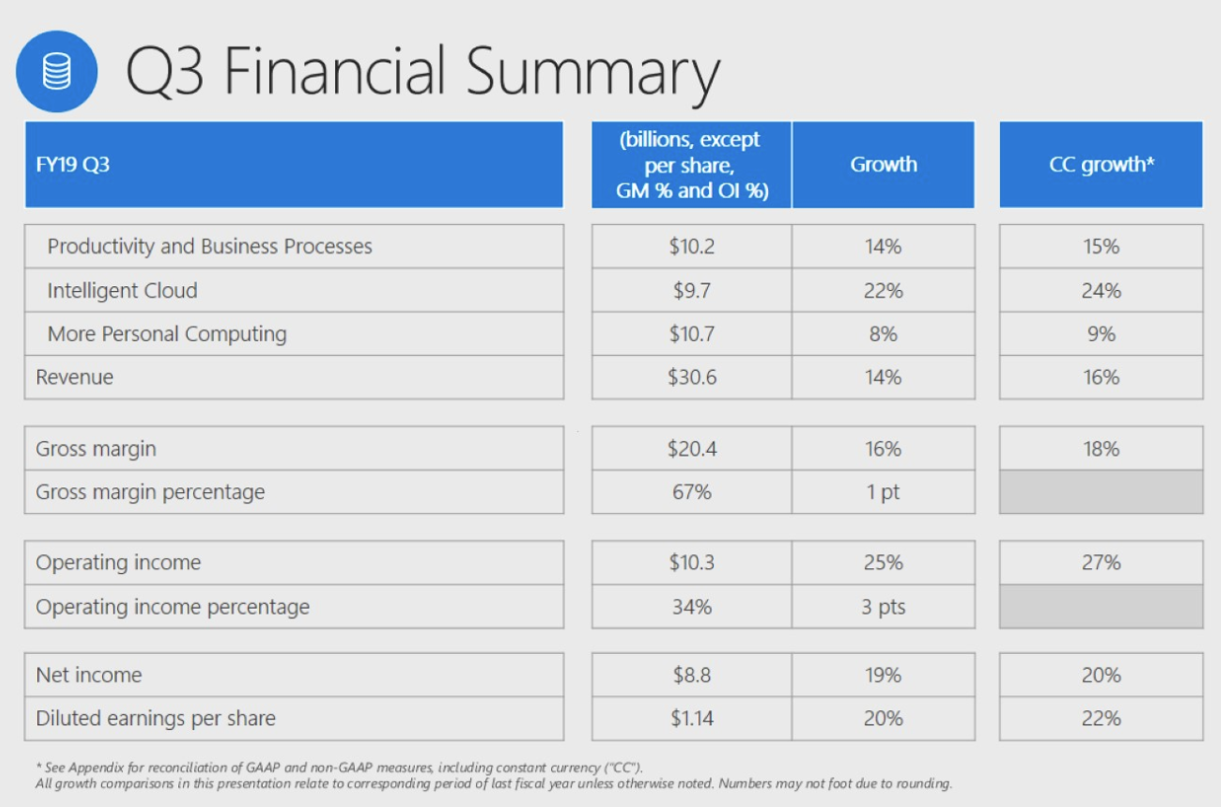
Microsoft reported its quarterly earnings for Q3 2019 today. Overall, Wall Street expected earnings of about $1 per share and revenue of $29.84 billion. The company handily beat this with revenue of $30.6 billion (up 14 percent from the year-ago quarter) and earnings per share of $1.14.
With Microsoft focusing heavily on its cloud business, with both Azure and its other cloud-based services, it’s no surprise that this is also what Wall Street really cares about. The expectation here, according to some analysts, was that the company would hit a run rate of about $38.5 billion.
And indeed, Microsoft Azure had a pretty good quarter, with revenue growing 73 percent. That’s a bit lower than last quarter’s results, but only by a fraction, and shows that there is plenty of growth left for Microsoft’s cloud infrastructure business.
Azure’s growth slowed somewhat in recent quarters. In some ways, that’s to be expected, though. Microsoft’s cloud is now a massive business and posting 100 percent growth when you have a run rate of almost $40 billion becomes a bit harder.
“Demand for our cloud offerings drove commercial cloud revenue to $9.6 billion this quarter, up 41% year-over-year,” said Amy Hood, executive vice president and chief financial officer of Microsoft. “We continue to drive growth in revenue and operating income with consistent execution from our sales teams and partners and targeted strategic investments.”
The company’s ‘intelligent cloud’ segment, which includes Azure and other cloud- and server-based products, reported revenue of $9.7 billion, up 22 percent from the year-ago quarter.
Microsoft’s productivity applications also fared well, with total revenue up by 14 percent to $10.2 billion. Here, revenue from LinkedIn also increased by 27 percent and the company highlighted that LinkedIn sessions also increased 24 percent.
Other highlights of the report include an increase in Surface revenue of 21 percent, which was expected given the number of new devices the company released in recent quarters.
“Leading organizations of every size in every industry trust the Microsoft cloud. We are accelerating our innovation across the cloud and edge so our customers can build the digital capability increasingly required to compete and grow,” said Satya Nadella, CEO of Microsoft.
For more financial details, you can find the full report here.
A massive penalty hangs over Facebook’s head, but it otherwise had a very strong Q1 earnings report. Facebook reached 2.38 billion monthly users, up 2.5 percent from 2.32 billion in Q4 2018 when it grew 2.2 percent, and it now has 1.56 billion daily active users, up 2.63 percent from 1.52 billion last quarter when it grew 2 percent. Facebook pulled in $15.08 in revenue, up 26 percent year-over-year compared to Refinitiv’s consensus estimates of $14.98 billion in revenue. Facebook recorded earnings per share of $0.85 compared to estimates of $1.63 EPS. However, that’s beacuse Facebook has set aside $3 billion to cover a potential FTC fine that it’s still resolving. Without that fine, it owuld have had an EPS of $1.89.
Facebook’s share price rose 4.89 percent to $191.50 after closing before earnings at $182.58, way up from its recent low of $124.06 in December. Wall Street seems to have already priced in the potential FTC fine. Facebook has agreed to strict oversight of how it handled user privacy in a 2011 deal with the FTC. It promised to not misrepresent its privacy practices or change privacy controls without user permission, and it’s now being investigated for potentially breaking those terms.
Facebook wrote in its earnings release about the FTC fine that:
“In the first quarter of 2019, we reasonably estimated a probable loss and recorded an accrual of $3.0 billion in connection with the inquiry of the FTC into our platform and user data practices, which accrual is included in accrued expenses and other current liabilities on our condensed consolidated balance sheet. We estimate that the range of loss in this matter is $3.0 billion to $5.0 billion. The matter remains unresolved, and there can be no assurance as to the timing or the terms of any final outcome.”
This is the first earnings report of a full quarter following Facebook’s worst-ever security breach in September that impacted 50 million users, shaking confidence in the social network’s privacy and security. It’s also the first full quarter in which Facebook sold its own branded hardware — its Portal video chat device that was well received by critics except for the fact that it was made by Facebook.
Yet the defining story continues to be Facebook’s struggle with claims that its developer platform endangered user privacy and steamrolled competitors in search of growth. The fact that Facebook isn’t losing massive numbers of users after years of sustained scandals is a testament to how deeply its woven itself into people’s lives.
When it comes to planning for a potential asteroid strike on planet Earth, The U.S. National Aeronautics and Space Administration and Federal Emergency Management Agency don’t want to miss a thing.
Alongside international partners like the European Space Agency’s Space Situational Awareness-NEO Segment and the International Asteroid Warning Network (IAWN), NASA’s Planetary Defense Coordination Office will participate in a “tabletop exercise” that will simulate a scenario for how to respond to an asteroid on an impact trajectory with the Earth (it’s unclear whether Billy Bob Thornton, Bruce Willis, Ben Affleck, or Liv Tyler will participate).
NASA and its partners have actually been on the lookout for potentially calamitous near earth objects (which are asteroids, comets, or unidentified objects that come within 30 million miles of Earth) for more than 20 years.
The tabletop exercise is a simulation used in disaster management planning to help inform organizations that would be relevant to mobilization and response of important aspects of a possible disaster and identify ways to respond.
“These exercises have really helped us in the planetary defense community to understand what our colleagues on the disaster management side need to know,” said Lindley Johnson, NASA’s Planetary Defense Officer, in a statement. “This exercise will help us develop more effective communications with each other and with our governments.”
The scenario these organizations are going to wrestle with involves the fictional identification of NEO that was identified on March 26, and that astronomers believe may be potentially hazardous to Earth. The scientists speculate that the asteroid could pose a 1 in 100 chance of hitting the Earth in 2027 (the 1 in 100 chance is actually the real threshold for initiating plans to respond to an asteroid strike by the global community).
From there, participants in the simulation will discuss potential preparations for reconnaissance and deflection missions — as well as planning to mitigate the potential impact from a strike.
“NASA and FEMA will continue to conduct periodic exercises with a continually widening community of U.S. government agencies and international partners,” said Johnson, in a statement. “They are a great way for us to learn how to work together and meet each other’s needs and the objectives laid out in the White House National NEO Preparedness Action Plan.”
This isn’t the first time NASA has joined a NEO impact exercise. So far, NASA has completed six impact exercises: three international exercises in 2013, 2015, and 2017 and another three with FEMA (those included representatives from the Department of Defense and the State Department as well).
“What emergency managers want to know is when, where and how an asteroid would impact, and the type and extent of damage that could occur,” said Leviticus Lewis of the Response Operations Division for FEMA.
NASA did not say whether it has put any contingency plans in place for an “Independence Day” scenario.
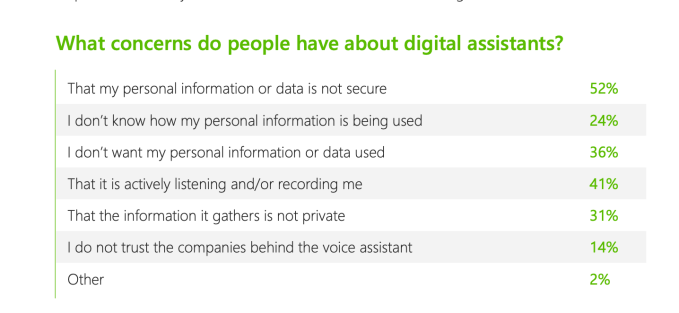
Forty-one percent of voice assistant users are concerned about trust, privacy and passive listening, according to a new report from Microsoft focused on consumer adoption of voice and digital assistants. And perhaps people should be concerned — all the major voice assistants, including those from Google, Amazon, Apple and Samsung as well as Microsoft, employ humans who review the voice data collected from end users.
But people didn’t seem to know that was the case. So when Bloomberg recently reported on the global team at Amazon who reviews audio clips from commands spoken to Alexa, some backlash occurred. In addition to the discovery that our A.I. helpers also have a human connection, there were concerns over the type of data the Amazon employees and contractors were hearing — criminal activity and even assaults in a few cases, as well as the otherwise odd, funny or embarrassing things the smart speakers picked up.
The report said the team auditing Alexa commands has had access to location data and, in some cases, can find a customer’s home address. This is because the team has access to the latitude and longitude coordinates associated with a voice clip, which can be easily pasted into Google Maps to tie the clip to where it came from. Bloomberg said it wasn’t clear how many people had access to the system where the location information was stored.
This is precisely the kind of privacy violation that could impact user trust in the popular Echo speakers and other Alexa devices — and, by extent, other voice assistant platforms.
While some users may not have realized the extent of human involvement on Alexa’s backend, Microsoft’s study indicates an overall wariness around the potential for privacy violations and abuse of trust that could occur on these digital assistant platforms.
For example, 52 percent of those surveyed by Microsoft said they worried their personal information or data was not secure, and 24 percent said they don’t know how it’s being used. 36 percent said they didn’t even want their personal information or data to be used at all.
These numbers indicate that the assistant platforms should offer all users the ability to easily and permanently opt out of the data collection practices — one click to say that their voice recording and private information will go nowhere, and will never be seen.
41 percent of people also worried their voice assistant was actively listening or recording them, and 31 percent believed the information the assistant collected from them was not private.
14 percent also said they didn’t trust the companies behind the voice assistant — meaning Amazon, Google and all the others.
“The onus is now on tech builders to respond, incorporate feedback and start building a foundation of trust,” the report warns. “It is up to today’s tech builders to create a secure conversational landscape where consumers feel safe.”
Though the study indicates people have worries about their personal information, it doesn’t necessarily mean people want to entirely shut off access to that data — some may want to offer their email and home address so Amazon can ship an item to their home, when they order it by voice, for instance. Other people may even opt into sharing more information if offered a tangible reward of some kind, the report also notes.
Despite all these worries, people largely said they performed using voice instead of keyboards and touch screens. Even at this early stage, 57 percent said they would rather speak to a digital assistant; and 34 percent say they like to both type and speak, as needed.
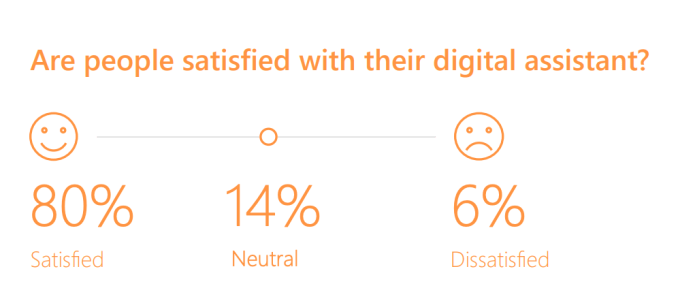
A majority — 80 percent — said they were “somewhat” or “very” satisfied with their digital assistants. Over 66 percent said they used digital assistants weekly, and 19 percent used them daily. (This refers to not just voice, but any digital assistant, we should note).
These high satisfaction numbers mean digital and voice assistants are not likely going away, but the mistrust issues and potential for abuse could lead consumers to decrease their use — or even switch brands to one that offered more security in time.
Imagine, for example, if Amazon et al. failed to clamp down on employee access to data, as Apple launched a mass market voice device for the home, similar in functionality and pricing to a Google Home mini or Echo Dot. That could shift the voice landscape further down the road.
The full report, which also examines voice trends and adoption rates, is here.
Last week, at TechCrunch’s robotics event at UC Berkeley, we sat down with four VCs who are making a range of bets on robotics companies, from drone technologies to robots whose immediate applications aren’t yet clear. Featuring Peter Barrett of Playground Global, Helen Liang of FoundersX Ventures, Eric Migicovsky of Y Combinator and Andy Wheeler of GV (pictured above), we covered a lot of terrain (no pun intended), including whether last-mile delivery robots make sense and how much robots should be expected to do without human intervention.
We also discussed climate change and how it factors into their bets, and why the many private enterprises focused on creating fully automated vehicles may need to do much more to empower the cities in which they plan to operate. You can find excerpts of our talk below; you can also watch the full conversation, along with the many other discussions that took place last week, right here.
If you’re planning to attend TC Sessions: Mobility 2019 on July 10, then get ready to network like never before. And by that, we mean easily. TC’s day-long event — dedicated to the future of mobility and transportation — features discussions, demos and workshops with the brightest founders, technologists and investors in these industries.
With more than 1,000 people attending, a simple tool to help you connect with the right people would be awesome. We have just the thing for you. It’s called CrunchMatch and — even better news — it’s free.
CrunchMatch, TechCrunch’s business match-making service, helps you find and network with people based on specific mutual business criteria, goals and interests. Connecting with lots of people may be interesting, but connecting with the right people produces results. CrunchMatch’s automated platform can help you make the most of your limited time.
If you’re not already familiar with CrunchMatch, here’s how it works. Watch for an email to all ticket holders when CrunchMatch goes live. Fill out your profile with your specific details — your role (technologist, founder, investor, etc.) and who you want to connect with. CrunchMatch will make meet-up suggestions, which you can approve or decline.
We can’t wait to see you in San Jose. If you haven’t purchased your ticket yet, do it now before the prices go up. Early-Bird Tickets are available for $195 — you save $100. Students can book a ticket for just $45 here.
Listen up, because we have even more ways to participate in TC Sessions: Mobility 2019.
Speakers/Demo Applications
We’re always looking for speakers/demos for our events. Apply here.
Sponsorship Opportunities
Fill out this form and someone from our sales team will get right back to you about sponsorship opportunities for this event.
TC Sessions: Mobility 2019 takes place in San Jose, Calif. on July 10. Join your community, explore the future of mobility and transportation and make productive connections with the influential people who can help you reach your goals.
Airbnb is looking to book a place in the streaming media business. The company best known for its controversial marketplace of on-demand accommodations is now plotting a foray into becoming a production studio, according to a report in Reuters.
Tons of companies in Silicon Valley have taken to producing marketing features and print magazines as an exercise in branding, but Airbnb is reportedly looking to take this a step further.
The company already has a glossy magazine published by Hearst, and according to the Reuters report, that effort will be central to the company’s media plans going forward.
Video seems to be the next playground for big companies flush with cash that want to differentiate themselves in the market. Apple has a streaming service it intends to launch, Amazon already does, and Walmart has one, too.
With its built-in user base of 500 million travelers, the company told Reuters that it already has partners that want to partner on productions.
Airbnb has already made one series for Apple. It’s a documentary series called “Home” that features quirky homes from around the world and the owners that built them. It’s also got another documentary production in the works, “Gay Chorus Deep South,” which records the travels of San Francisco’s Gay Men’s Chorus as it takes a trip through the “Deep South,” Reuters reported.
“We’re very much in the R&D phase here. It’s not just limited to video. It could be audible. It could be physical,” Airbnb spokesperson Chris Lehane, told Reuters. “The more we put content out there, the more you’re going to bring people to the platform.”
If nothing else, the Airbnb shows could raise the visibility of the service among a new audience that’s reluctant to book time in strangers’ homes.
 Tech talks of the day