Huawei’s P30 Pro excels on the camera front

It’s been a month since Huawei unveiled its latest flagship device — the Huawei P30 Pro. I’ve played with the P30 and P30 Pro for a few weeks and I’ve been impressed with the camera system.

The P30 Pro is the successor to the P20 Pro and features improvements across the board. It could have been a truly remarkable phone, but some issues still hold it back compared to more traditional Android phones, such as the Google Pixel 3 or OnePlus 6T.
A flagship device

The P30 Pro is by far the most premium device in the P line. It features a gigantic 6.47-inch OLED display, a small teardrop notch near the top, an integrated fingerprint sensor in the display and a lot of cameras.

Before diving into the camera system, let’s talk about the overall feel of the device. Compared to last year’s P20 Pro, the company removed the fingerprint sensor at the bottom of the screen and made the notch smaller. The fingerprint sensor doesn’t perform as well as a dedicated fingerprint sensor, but it gets the job done.

It has become hard to differentiate smartphones based on design as it looks a lot like the OnePlus 6T or the Samsung Galaxy S10. The display features a 19.5:9 aspect ratio with a 2340×1080 resolution, and it is curved around the edges.

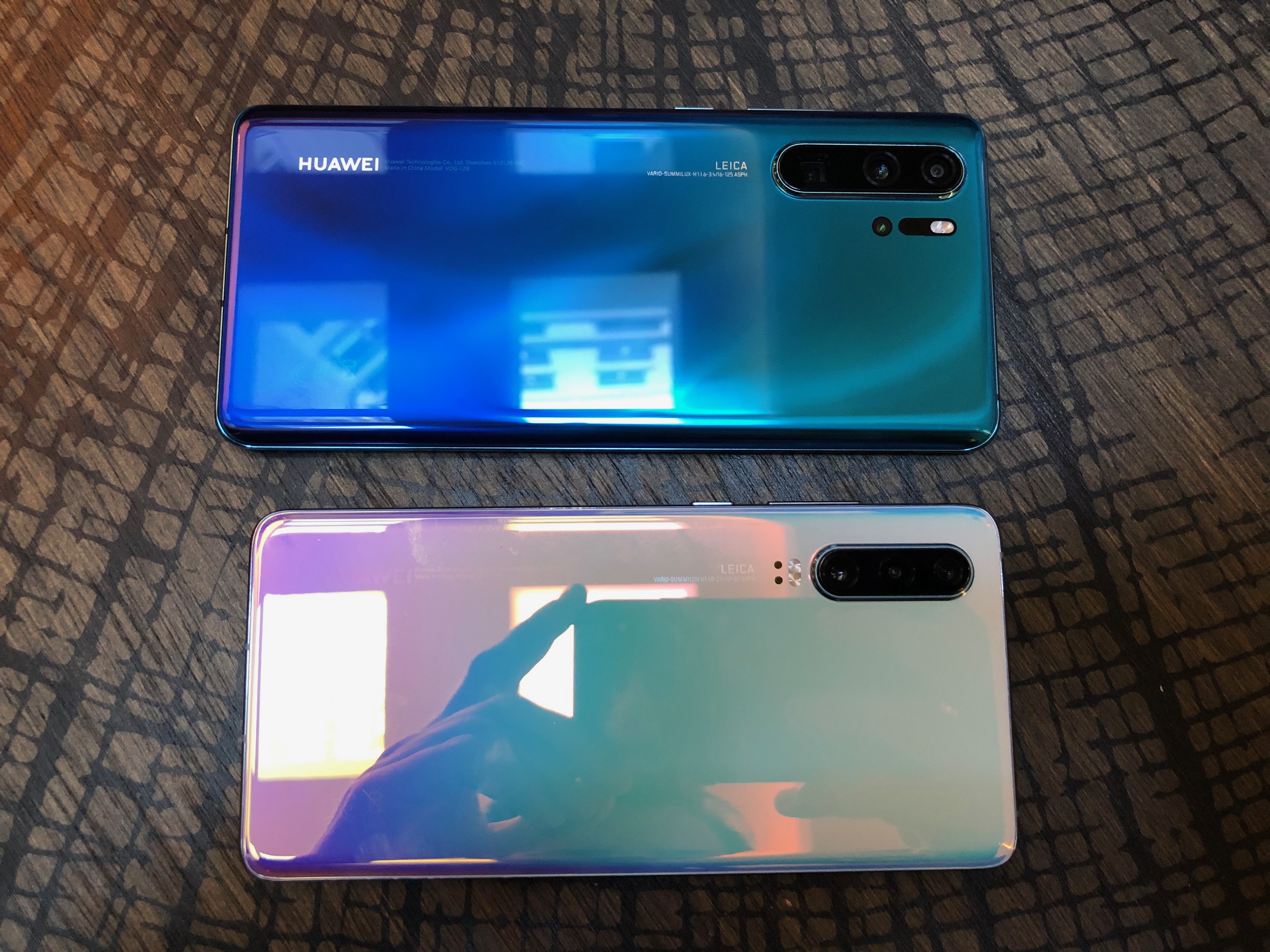
The result is a phone with gentle curves. The industrial design is less angular, even though the top and bottom edges of the device have been flattened. Huawei uses an aluminum frame and a glass with colorful gradients on the back of the device.
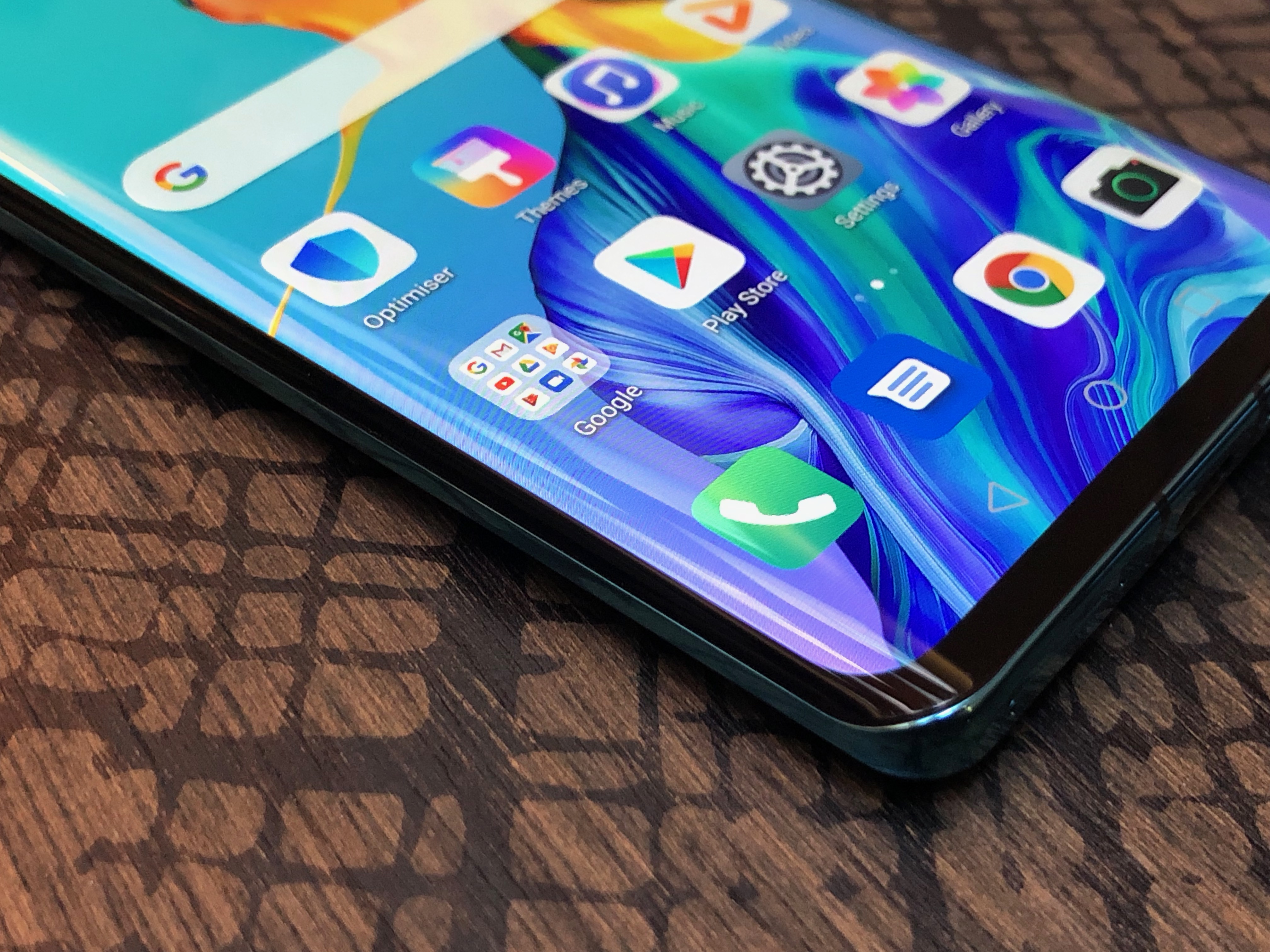
Unfortunately, the curved display doesn’t work so well in practice. If you open an app with a unified white background, such as Gmail, you can see some odd-looking shadows near the edges.

Below the surface, the P30 Pro uses a Kirin 980 system-on-a-chip. Huawei’s homemade chip performs well. To be honest, smartphones have been performing well for a few years now. It’s hard to complain about performance anymore.

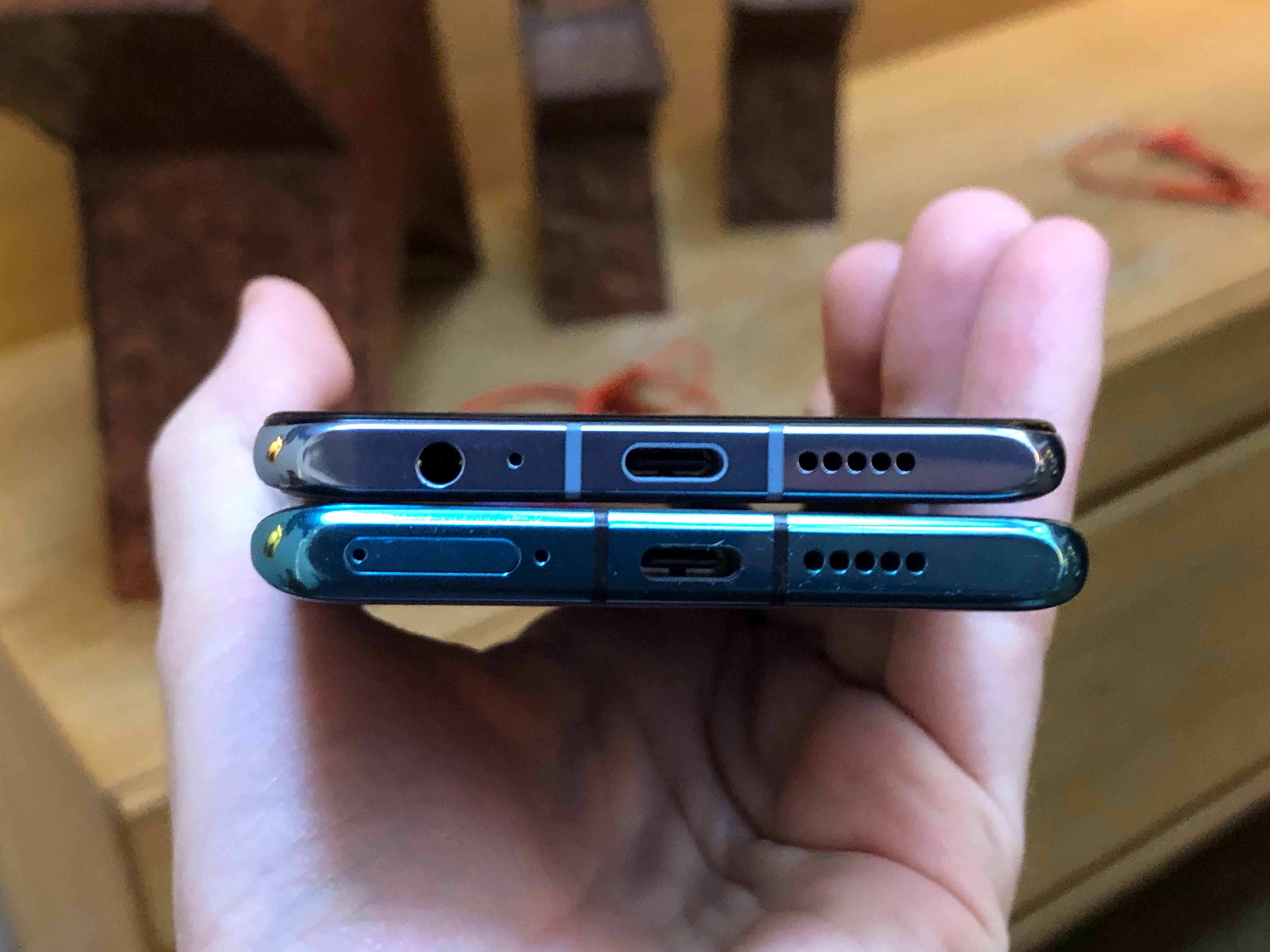
The phone features a headphone jack, a 40W USB-C charging port and an impressive 4,200 mAh battery. For the first time, Huawei added wireless charging to the P series (up to 15W).

You can also charge another phone or an accessory with reverse wireless charging, just like on the Samsung Galaxy S10. Unfortunately, you have to manually activate the feature in the settings every time you want to use it.

Huawei has also removed the speaker grill at the top of the display. The company now vibrates the screen in order to turn the screen into a tiny speaker for your calls. In my experience, it works well.

While the phone ships with Android Pie, Huawei still puts a lot of software customization with its EMUI user interface. There are a dozen useless Huawei apps that probably make sense in China, but don’t necessarily need to be there if you use Google apps.

For instance, the HiCare app keeps sending me notifications. The onboarding process is also quite confusing as some screens refer to Huawei features while others refer to standard Android features. It definitely won’t be a good experience for non tech-savvy people.


(P30 Pro on the left, P30 on the right)

Four cameras to rule them all

The P20 Pro already had some great camera sensors and paved the way for night photos in recent Android devices. The P30 Pro camera system can be summed up in two words — more and better.

The P30 Pro now features not one, not two, not three but f-o-u-r sensors on the back of the device.

  • The main camera is a 40 MP 27mm sensor with an f/1.6 aperture and optical image stabilization.
  • There’s a 20 MP ultra-wide angle lens (16mm) with an f/2.2 aperture.
  • The 8 MP telephoto lens provides nearly 5x optical zoom compared to the main lens (125mm) with an f/3.4 aperture and optical image stabilization.
  • There’s a new time-of-flight sensor below the flash of the P30 Pro. The phone projects infrared light and captures the reflection with this new sensor.

It has become a sort of a meme already — yes, the zoom works incredibly well on the P30 Pro. In addition to packing a lot of megapixels in the main sensor, the company added a telephoto lens with a periscope design. The sensor features a mirror to beam the light at a right angle and put more layers of glass in the sensor without making the phone too thick.


And it works incredibly well in daylight. Unfortunately, you won’t be able to use the telephoto lens at night as it doesn’t performa as well as the main camera.

The company also combines the main camera sensor with the telephoto sensor to let you capture photos with a 10x zoom with a hybrid digital-optical zoom.

In addition to hardware improvements, Huawei has also worked on the algorithms that process your shots. Night mode performs incredibly well. You just have to hold your phone for 8 seconds so that it can capture as much light as possible. Here’s what it looks like in a completely dark room vs. an iPhone X:

Huawei has also improved HDR processing and portrait photos. That new time-of-flight sensor works well when it comes to distinguishing a face from the background for instance.

Once again, Huawei is a bit too heavy-handed with post-processing. If you use your camera with the Master AI setting, colors are too saturated. The grass appears much greener than it is in reality. Skin smoothing with the selfie camera still feels weird too. The phone also aggressively smoothes surfaces on dark shots.

When you pick a smartphone brand, you also pick a certain photography style. I’m not a fan of saturated photos, so Huawei’s bias toward unnatural colors doesn’t work in my favor.

But if you like extremely vivid shots with insanely good sensors the P30 Pro is for you. That array of lenses also opens up a lot of possibilities and gives you more flexibility.
Fine prints

The P30 Pro isn’t available in the U.S. But the company has already covered the streets of major European cities with P30 Pro ads. It costs P30 Pro for €999 ($1,130) for 128GB of storage — there are more expensive options with more storage.

Huawei also unveiled a smaller device — the P30. It’s always interesting to look at the compromises of the more affordable model.

On that front, there’s a lot to like about the P30. For €799 ($900) with 128GB, you get a solid phone. It has a 6.1-inch OLED display and shares a lot of specifications with its bigger version.

The P30 features the same system-on-a-chip, the same teardrop notch, the same fingerprint sensor in the display, the same screen resolution. Surprisingly, the P30 Pro doesn’t have a headphone jack while the P30 has one.

There are some things you won’t find on the P30, such as wireless charging or the curved display. While the edges of the device are slightly curved, the display itself is completely flat. And I think it looks better.

Cameras are slightly worse on the P30, and you won’t be able to zoom in as aggressively. Here’s the full rundown:

  • A 40 MP main sensor with an f/1.8 aperture and optical image stabilization.
  • A 16 MP ultra-wide angle lens with an f/2.2 aperture.
  • An 8 MP telephoto lens that should provide 3x optical zoom.
  • No time-of-flight sensor.

In the end, it really depends what you’re looking for. The P30 Pro definitely has the best cameras of the P series. But the P30 is also an attractive phone for those looking for a smaller device.

Huawei has once again pushed the limits of what you can pack in a smartphone when it comes to cameras. While iOS and Android are more mature than ever, it’s fascinating to see that hardware improvements are not slowing down.

Indian court lifts ban on TikTok in India

An Indian state court has reversed its ban on TikTok, allowing the short video app to return to both Apple and Google’s app stores, according to a report this morning from Reuters. Earlier this month, India’s Ministry of Electronics and Information Technology had ordered TikTok be removed from app stores, after a High Court in Madras determined the app was encouraging pornography and other illicit content.

Though the removal only affected new users who were looking to download TikTok’s app to their devices for the first time — not those who already had it installed — the ban was a major blow to TikTok’s Chinese owner Bytedance. The company said in a court filing the ban was resulting in a $500,000 daily loss, and was putting more than 250 jobs at risk.

India had become a large and growing market for TikTok, with nearly 300 million users in the country out of over 1 billion total downloads, according to Sensor Tower. (TikTok notes it had over 120 million monthly actives in India.)

India had also accounted for 27 percent of TikTok’s total installs between December 2017 and December 2018, Sensor Tower found, which meant the app was a huge source of TikTok’s overall growth.

However, some Indian politicians and parents believe the app’s content is inappropriate, particularly with regard to its use by minors. And the Tamil Nadu court — which ruled against TikTok — said the app could expose children to sexual predators, as well.

TikTok, meanwhile, had argued that a “very miniscule” proportion of its videos were inappropriate, and that it had removed over 6 million videos that had violated its terms of use and community guidelines after reviewing content created by users in India.

The ban, had it been upheld, could have foretold increased legal action and regulation against other social media apps in India.

This wasn’t the first time TikTok has come under fire by government regulators.

In February, the FTC in the U.S. fined TikTok $5.7 million for violating children’s privacy law (COPPA) and required the app to implement an age gate.

Bytedance, in a statement, welcomed the court’s decision to reverse the ban, saying:

We are glad about this decision and we believe it is also greatly welcomed by our thriving community in India, who use TikTok as a platform to showcase their creativity. We are grateful for the opportunity to continue serving our users better. While we’re pleased that our efforts to fight against misuse of the platform has been recognised, the work is never “done” on our end. We are committed to continuously enhancing our safety features as a testament to our ongoing commitment to our users in India

Samsung Galaxy Fold teardown reveals ‘alarmingly fragile’ display

While Samsung performs its own internal investigations, the folks at iFixit had plenty to say about the Galaxy Fold in their own teardown. The writeup is a bit of a rollercoaster ride, admiring the “ambitious first-generation device,” while noting some clear flaws in the way the foldable was put together.

There’s a full 19 step breakdown of the product that adheres to the site’s customarily thorough breakdown, but the key takeaway here is the “alarmingly fragile” display mechanism. “Alarmingly” isn’t the kind of word you see tossed around lightly on a site like iFixit .

“Initial findings from the inspection of reported issues on the display showed that they could be associated with impact on the top and bottom exposed areas of the hinge,” Samsung wrote on Monday when it official pushed the Fold’s release back to an undisclosed date. That certainly appears to confirm the relatively fragile nature.

iFixit also did the unthinkable, pealing back the protective display, which has been mistaken for the user replaceable adhesive plastic Samsung’s other devices ship with. As expected, it didn’t go great. “In all known cases (including ours!), removing this layer kills the display,” the site writes. “The display could technically function without the layer, but it is so tightly adhered and the display is so fragile that it’s difficult to remove without applying display-breaking pressure.”

The site was suitably impressed with the hinge mechanism, but notes that “large gaps around the spine let dirt right in, possibly getting trapped between hinge and display.” That’s in line with one of the two points in Samsung’s own reporting of “an instance where substances found inside the device affected the display performance.”

The teardown appears to confirm fears that the issues could ultimately be broader than a few defective review units. Hopefully Samsung will push things back enough to properly address the above.

MongoDB to acquire open source mobile database Realm, startup that raised $40M

MongoDB announced today that is acquiring Realm, an open source database geared for mobile applications. The startup raised over $40 million before being acquired, but the companies did not share the purchase price.

It’s the kind of acquisition that makes a lot of sense. Both companies are built on the premise that data is the center of application development, although they both come at it from a bit of different angle. With Realm, Mongo gets a strong mobile solution, adding to MongoDB Mobile, and it also gets the technology, user base and engineering talent that Realm brings to the table.

Eliot Horowitz, MongoDB co-founder and CTO sees a company that will blend well with his. “Realm and MongoDB are a natural fit because we share a vision that when developers can interact naturally with data, they are happier and more productive, and because our products are complementary,” he wrote in a company blog post announcing the deal.

Realm has more than 100,000 developers using its product with 350 companies using its data synchronization tools to move data between mobile devices and the cloud, using the Realm Platform, according to the company.

As you would expect in a deal like this, Realm CEO David Ratner sees this as a way to expose Realm to more customers faster and to accelerate the roadmap more quickly than it could alone. “The combination of MongoDB and Realm will establish the modern standard for mobile application development and data synchronization for a new generation of connected applications and services. MongoDB and Realm are fully committed to investing in the Realm Database and the future of data synchronization, and taking both to the next phase of their evolution,” Ratner wrote in a blog post announcing the deal to customers.

The deal is expected to close in June or July, and the companies are working on integrations and will be announcing details at the MongoDB World customer conference in mid-June.

Mint founder Aaron Patzer launches Vital, an ER management tool that integrates with electronic health records

Aaron Patzer launched Mint to help consumers organize their finances. Now he’s raised $5.2 million from investors to launch Vital to bring that consumer-focused mindset to emergency rooms and hospitals to help them organize patient flow.

Patzer co-founded the company with his brother-in-law Justin Schrager, a Doctor of Emergency Medicine at Emory University Hospital. The serial entrepreneur invested a million dollars and two years of peer-reviewed academic study and technical research and development to create Vital, according to a company statement.

Investors in the seed round include First Round Capital and DFJ, Bragiel Brothers, Meridian Street Capital, Refactor Capital and SV Angel. Alongside angel investors Vivek Garipalli, the chief executive of CloverHealth and Nat Turner and Zach Weinberg, the founders of Flatiron Health, these investors are hoping that Patzer can repeat the magic he brought to financial services in the healthcare industry.

“The HITECH* Act was well-intentioned, but now hospitals rely on outdated, slow, and inefficient software – and nowhere is it more painful than in the emergency room,” said Patzer, in a statement. “Doctors and nurses often put more time into paperwork and data entry than patient care. Vital uses smart, easy tech to reverse that, cutting wait times in half, reducing provider burnout and saving hospitals millions of dollars.”

Vital isn’t so much replacing the current system of electronic health records as providing a software integration layer that makes those systems easier to use, according to the company.

It’s basically a two sided application with a survey for incoming patients. An admitting nurse begins the record and as a next step a patient receives a text to add details like height, weight, recent surgeries, medications and allergies, just as they would on a paper form. Patients can also submit a photo of themselves and their insurance card to speed the process.

The information is then fed back into a tracking board that doctors and nurses use to prioritize care. A triage nurse then reviews the data, affirms that it is correct by taking vital signs and assessing patients.

All of that data is fed into an algorithm that analyzes the available information to predict a course of treatment and help staff in the emergency room prioritize who needs care first.

Vital’s selling the service to emergency rooms with a starting sticker price of $10,000 per month.

“Vital successfully built software with a modern, no-training-required interface, while also meeting HIPAA compliance. It’s what people expect from consumer software, but rarely see in healthcare,” says First Round investor Josh Kopelman, who’s taking a seat on the company’s board of directors. “Turning massive amounts of complex and regulated data into clean, easy products is what Mint.com did for money, and we’re proud to back a solution that’ll do the same in life and death situations.”

In some ways, Vital looks like the patient-facing admissions side of a coin that companies like Qventus have raised tens of millions of dollars to solve at the systems level.

Momentus seeks up to $25 million as it inks deals to transport cargo beyond low Earth orbit

Just nine months after launching from Y Combinator with a new propulsion technology, Momentus has inked its first customers for its transportation technology that can take cargo beyond geostationary orbit — and ultimately to a lunar orbit.

With those customers in tow, the company is also out fundraising, looking for up to $25 million in fresh financing, according to chief executive Mikhail Kokorich.

“It’s the first low-cost transportation way to deliver a low payload from low Earth orbit to geo orbit and to the Moon,” says Kokorich of the company’s technology. 

Both Exolaunch and Deimos Space will use Momentus spacecraft to take their satellites beyond the drop positions they’d occupy by hitching a ride on a SpaceX, Soyuz, Long March or Ariane rocket.

The service can deliver 300 kilograms or 400 kilograms within low Earth orbit and up to 100 kilograms to a lunar orbit, according to Kokorich — for a cost of around $3.4 million.

That’s radically cheaper than solutions that are currently on offer. Momentus uses rockets from any of the big private vendors to get its vessels into space and from there its own propulsion technologies and spacecrafts will haul a small cargo (roughly the size of a kitchen table) anywhere else it needs to go, Kokorich says.

Momentus solves one of the major problems for the new space industry, Kokorich says. Big rockets under development from SpaceX, Ariane, Soyuz and Blue Origin are great for getting payloads to low Earth orbit, but aren’t great for depositing cargo at different points in space. “You don’t need all this payload in the same orbit, so you need the second leg in multi-modal logistics,” says Kokorich. That’s where Momentus comes in, he says.

Last year when SpaceX launched its smallsat express mission, the mission was considered a success because SpaceX was able to unleash its historic payload into space, but, according to Kokorich, the outcome was less than desirable for the companies whose payload SpaceX delivered.

“The satellites that ended up in the same orbit are in a mess,” says Kokorich.

How to avoid PR disasters, the new web, and who owns Huawei?

Soon: Live conference call with Anthony Ha on TED

At 2pm EST / 11am PST, we will have TechCrunch writer Anthony Ha talking live with Extra Crunch readers about all things TED conference, which was last week in Vancouver. Come armed with your questions, or send us an email if you want us to ask on your behalf. Arman is fielding them at arman.tabatabai@techcrunch.com. Call details will be sent to subscribers an hour before the call.

How to pitch to a (tech) journalist

I wrote a two-set piece yesterday about how to work with journalists. While written with founders and startups in mind, the lessons apply to pretty much anyone who works with the media or wants to.

The key — as with everything in life — is building relationships. You want to know the people who cover your company. You want them to know you too. That doesn’t mean you have to chat with them every day, but it does mean that making a quality human connection will take you far.

Google Fit comes to iOS

Google today announced that Google Fit, the company’s fitness tracking app that launched on Android back in 2014, is now available on iOS.

It definitely took Google a while to bring the app to iOS. Until today, the only way to get your Fit data on your iPhone was in a special section of the Wear OS app on the iPhone. Without a Wear OS device, though, that section would’ve been empty.

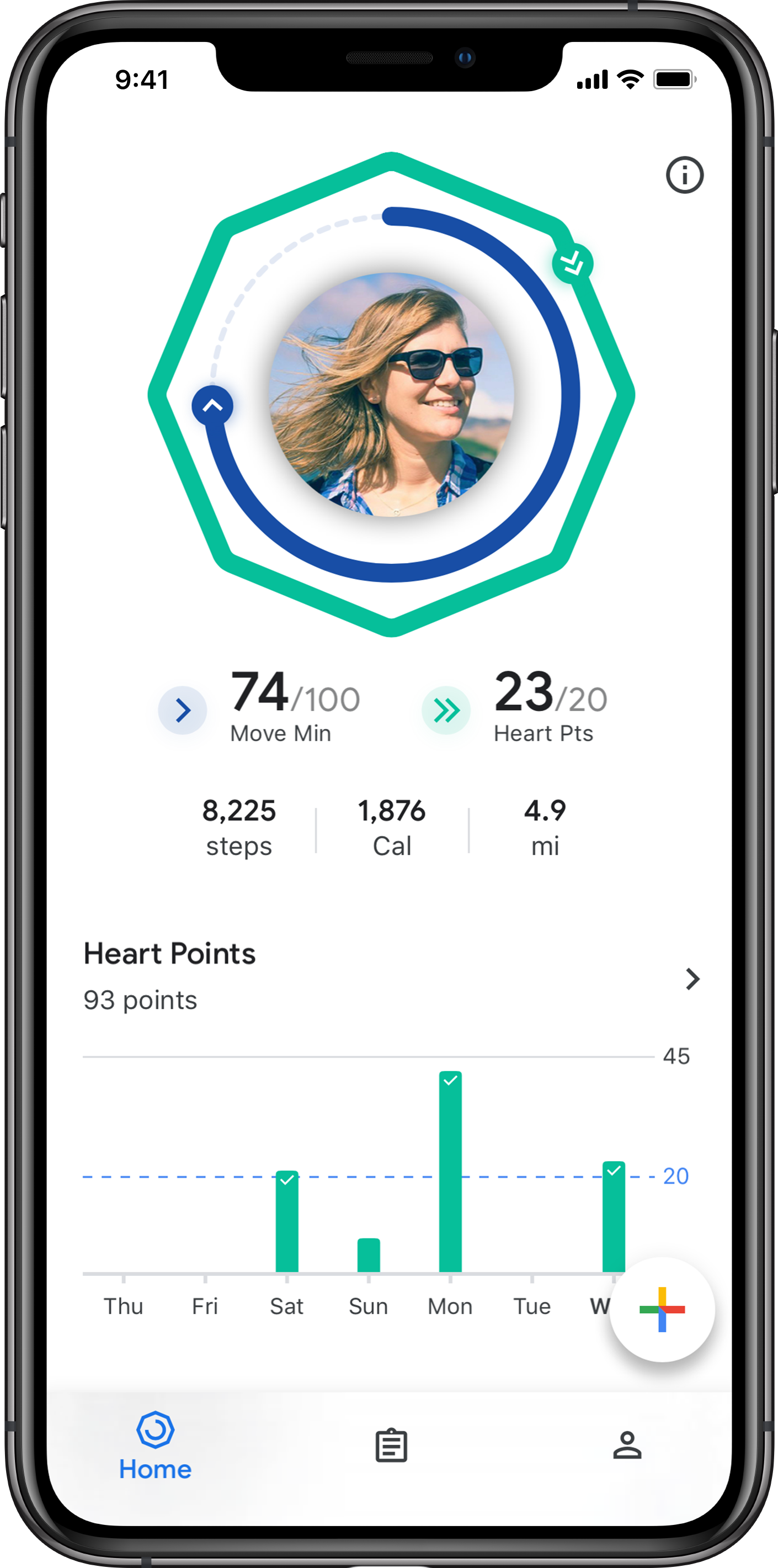
If you’ve seen the Fit app on Android, then the iOS version will look very familiar. It features the same focus on Move Minutes and Heart Point, as well as the ability to pick up different activities based on your movement. You can also connect the app with apps connected to Apple Health like Sleep Cycle, Nike Run Club or Headspace can also sync with Google Fit.

Indeed, as a Google spokesperson told me, all of the movement data in the app also comes from Apple’s Health app — or from a Wear OS smartwatch, though few iOS users have opted to cross streams and use a Wear OS watch with their iPhones.

Since Apple Health already tracks your movement data, I’m not sure all that many iOS users will make the switch to Google Fit. It’s still good to see Google bring its service to this competing platform for those who maybe use multiple devices

Pew: U.S. adult Twitter users tend to be younger, more demographic; 10% create 80% of tweets

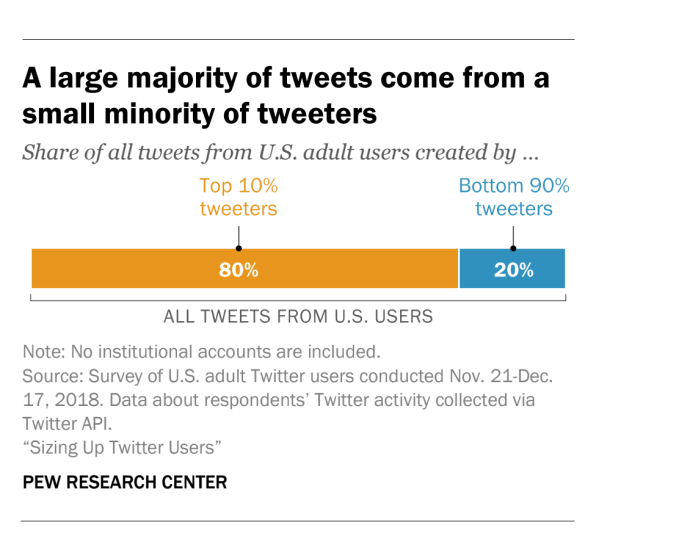
A new report out this morning from Pew Research Center offers insight into the U.S. adult Twitter population. The firm’s research indicates the Twitterverse tends to skew younger and more Democratic than the general public. It also notes that the activity on Twitter is dominated by a small percentage — most users rarely tweet, while the most prolific 10 percent are responsible for 80 percent of tweets from U.S. adults.

Pew says only around 22 percent of American adults today use Twitter, and they are representative of the broader population in some ways, but not in others.

For starters, Twitter’s U.S. adult users tend to be younger.

The study found the median age of Twitter users is 40, compared with the median age of U.S. adults, which is 47. Though less pronounced than the age differences, Twitter users also tend to have higher levels of household income and educational attainment, compared with the general population.

42 percent of adult Twitter users in the U.S. have at least a bachelor’s degree, which is 11 percentage points higher than the share of the public with this level of education (31%). Likely related to this is a higher income level. 41 percent of Twitter users have a household income above $75,000, which is 9 points higher than the same figure in the general population (32%).

A major difference — and a notable one, given yesterday’s sit-down between Twitter CEO Jack Dorsey and President Trump — is Pew’s discovery that 36 percent of Twitter U.S. adult users identify with the Democratic Party, versus 30 percent of U.S. adults (the latter, as per a November 2018 survey). Meanwhile, 21 percent of Twitter users identify as Republicans, versus 26 percent of U.S. adults. Political independents make up 29 percent of Twitter users, and a similar 27 percent of the general population.

Despite these differences, there are areas where Twitter users are more like the general U.S. adult population — specifically, in terms of the gender and racial makeup, Pew says.

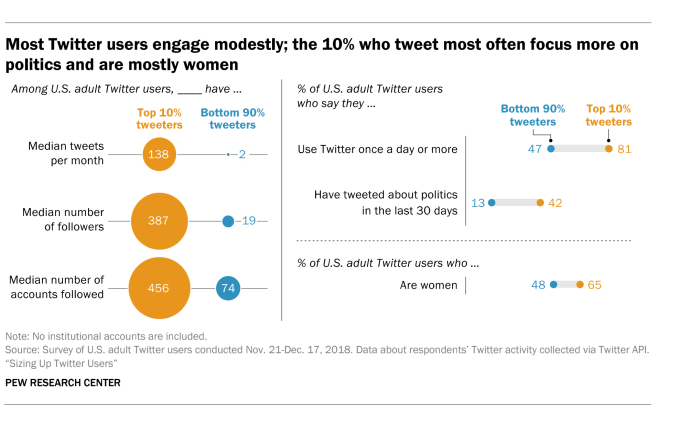
In addition to the makeup of the adult population on Twitter, Pew also researched the activity on the platform, and found that the median user only tweets twice per month.

That means the conversation on Twitter is dominated by extremely active (or, in their parlance, “extremely online“) users. That means a large majority of Twitter’s content is created by a small number — 10 percent of users are responsible for 80 percent of all tweets from U.S. adults on Twitter.

The median user in this top 10 percent creates 138 tweets per month, favorites 70 posts per month, follows 456 accounts and has 387 followers. They tend to be women (65% are), and tend to tweet about politics (69% say they do.) They also more often use automated methods to tweet (25% do).

Meanwhile, the median users in the bottom 90 percent creates 2 tweets per month, favorites 1 post per month, follows 74 accounts, and has 19 followers. 48 percent are women, and 39 percent tweet about politics. Only 13 percent say they tweeted about politics in the last 30 days, compared with 42 percent of the top 10 percent of users. They are also less likely to use automated methods of tweeting, as only 15 percent do.

These differences lead to other ways where how the Twitterverse feels about key issues — like equality or immigration — differs from the general public, with viewpoints that lean more Democratic.

It’s worth noting, too, how the small amount of activity from a large group of Twitter users also speaks to Twitter’s inability to grow its monthly active user base (MAUs).

This week, Twitter reported its first quarter earnings and noted that its MAUs were 330 million in Q1, down by 6 million users from a year ago. Twitter now prefers to report on its monetizable daily active users — a metric that favors the app’s heavier users.

Pew’s research was conducted Nov. 21, 2018 through Dec. 17, 2018, among 2,791 U.S. adult Twitter users. The full report is available from Pew’s website.


Managed By Q launches a new task management feature for office managers

Managed By Q, the office management platform recently acquired by WeWork, has today announced the launch of Task Management.

The feature comes to Managed By Q by way of Hivy, a startup acquired by MBQ back in 2017, that focuses on connecting a company’s employees to the office manager that handles their requests.

Pre-Hivy, collecting requests and tracking projects across a large number of employees was a tedious, fragmented process. Hivy created a dashboard that organizes all those requests in a single place.

Since the acquisition, Managed By Q and Hivy have been working to integrate their respective platforms. Where Managed By Q connects office managers to the right vendor or MBQ operator to handle the job, the new Task Management system will connect office managers with the employees making the requests in the first place, essentially putting the entire pipeline in a single place.

Obviously, the path to full integration was a long one.

“What I think matters most,” said Hivy cofounder Pauline Tordeur, speaking about the process of intertwining two separate products, “is that we knew why we were doing this and what the future would look like when we integrate. Having this vision and outlook from the very beginning is important.”

The timing is interesting in that this is the first product announcement Managed By Q has made since it was acquired by WeWork.

“It’s hard to describe the feeling,” said Managed By Q cofounder and CEO Dan Teran of being acquired by The We Company. “There is a perception of WeWork from the outside, but since I’ve been spending a lot of time getting to learn the business firsthand, I think there is just so much potential.”

He noted that Managed By Q is indeed setting out to do with WeWork what it just completed with Hivy.

“We set out to build the operating system for space, and one of the biggest things we missed is the space itself,” said Teran. “That’s actually the hardest part for most people. So now that becomes another ingredient we can deliver to our customers.”