SoftBank to invest $1B into German digital payments provider Wirecard in new fintech partnership

SoftBank is making a huge investment into one of the providers of the kind of digital commerce infrastructure that underpins many of the companies that it backs. Today, Wirecard — a digital payments provider based out of Germany — announced that SoftBank Group is investing around €900 million ($1 billion) as part of a broader digital payments partnership, to help Wirecard expand into Japan and South Korea, as well as build and provide financial services to SoftBank’s extensive list of portfolio companies, which includes the likes of Uber, OpenDoor Labs, WeWork, Grab, DoorDash, Alibaba and more.

“Under the [Memorandum of Understanding], SoftBank Group will seek to support Wirecard’s geographic expansion into Japan and South Korea, as well as providing collaboration opportunities within SoftBank Group’s global portfolio in digital payments, data-analytics/AI and other innovative digital financial services,” Wirecard noted in a statement. Wirecard added that the deal is also likely to include a “joint exploration of new product and service offers in digital lending in order to leverage from high quality customer portfolios, strong liquidity and other innovative financing solutions.”

Wirecard is publicly traded and currently has a market cap of €17.18 billion (around $19 billion). It competes with the likes of Adyen, FirstData, WorldPay, Stripe and more. Having had its start as far back as 1999 in working with online gambling sites, today it also works with challenger banks and other new fintech startups like Number26 and TransferWise.

But the investment to expand in Asia comes at a somewhat thorny time for Wirecard. The company has been facing an inquiry in Singapore over fraud allegations both in Asia and its home market of Germany. It has denied the allegations.

“As global innovators, we focus heavily on expanding our networks and creating opportunities for companies with groundbreaking ideas,” Wirecard CEO Markus Braun, said in a statement. “In SoftBank we have found a partner that shares both our passion for new technologies and drive to spearhead the latest innovations, all on a global scale. In addition, through this potential partnership, we will expand our reach and products to the East Asian markets, thereby further strengthening our position in Asia.”

Wirecard said that as part of the deal, it will issue convertible bonds with a term of five years exclusively to SoftBank, convertible to 6,923,076 ordinary Wirecard shares (currently corresponding to approximately 5.6% of common stock) at €130 per Wirecard share. The deal is subject to the approval of Wirecard’s Annual Shareholders meeting, which will be held on 18 June 2019.

Wirecard offers end-to-end services covering all aspects of payments, with a particular emphasis on digital transactions. It also provides card issuing, risk management, data analytics and related services.

SoftBank has become one of the world’s most influential investors with its $100 billion Vision Fund. It’s not clear which division of SoftBank is leading this particular transaction — the news announcement specifies only that “an affiliate of SoftBank” is making the investment — but despite the Vision Fund being located in London, it’s made relatively few fintech investments in Europe out of the Vision Fund. For that reason, this stake in Wirecard, based out of Munich, is also notable.

The first involved leading a $440 million round for OakNorth Holdings, a digital banking startup. It is also reportedly a partner in a new Abu Dhabi $400 million European investment fund.


A court ruling ‘chalking’ illegal could make way for more privacy-invasive tech

If you’ve ever had a parking ticket, there’s a good chance you know what “chalking” is.

A federal appeals court ruled this week that the practice of marking a car tires unconstitutional, a violation of your Fourth Amendment rights against unwarranted searches and seizures.

For years traffic enforcement officers have marked car tires with chalk to see when they check back if a car has moved. It’s often used in places where parking meters aren’t available. Parking violations often serve as a key source of revenue for local municipalities.

That struck a nerve with one local resident of Saginaw, Michigan. Local resident Alison Taylor took the city to court after receiving more than a dozen citations in a year, alleging a local parking enforcement officer, Tabitha Hoskins, named defendant alongside the city in the case, was violating her constitutional rights.

The city initially won but the U.S. Sixth Circuit Appeals Court reversed the decision, said that chalking is a form of trespass that requires a warrant, similar to attaching a tracker to a car to monitor its real-time location, according to the court’s ruling.

While the Fourth Amendment generally protects Americans from law enforcement searching your house or devices without a court-approved warrant to obtain evidence of a crime, Taylor argued that those protections equally apply to obtaining information about whether her car was moved or not.

According to the court, the parking enforcement officer — a local government employee — trespassed on Taylor’s car “because the City made intentional physical contact with Taylor’s vehicle.” The court found that the chalking was an “attempt to find something or to obtain information” from the car — albeit in a low-tech way — specifically to determine if the vehicle has “been parked in the same location for a certain period of time.”

What may seem like a victory to anyone who’s ever wanted to fight a parking ticket, some are worried that the legal precedent could lead to the adoption of more privacy-invasive technologies instead.

“As cities begin to comply with the Sixth Circuit’s decision, it is crucial that they avoid adopting even more problematic practices,” said Nathan Freed Wessler, senior staff attorney with the ACLU’s Speech, Privacy, and Technology project.

“Any attempt to enforce parking rules by building pervasive databases of vehicle location data or similar information would raise grave privacy concerns and run up against the Fourth Amendment,” he said.

Other cities are already using more advanced technologies like automatic license plate recognition (ALPR) systems to scan plates to see if a vehicle has moved from one place to another. ALPR remains controversial but arguably still legal at the federal level — even if these plate scanners have faced challenges at the local level.

Rights groups like the Electronic Frontier Foundation warn that creating databases of scanned license plate is “invasive” for residents’ privacy. Police don’t currently need a warrant to search through these vast databases. The EFF is campaigning to require a warrant to search ALPR databases.

Meanwhile, there are tech-ready and privacy-minded solutions to the parking enforcement problem, experts say.

Orin Kerr, a law professor at the University of Southern California, said in a tweet that it “seems easy enough these days for parking enforcers to just take a photo of the car, or even just a close-up photo of the tire.”

Saginaw hasn’t yet responded to the ruling. City manager Tim Morales was unavailable for comment when reached Tuesday.

Getaround acquires European car rental platform Drivy for $300 million

Getaround, the peer-to-peer car-sharing startup that launched at TC Disrupt back in 2011, is making moves to become a global car rental service. Today, the Softbank-backed startup announced its acquisition of Drivy, a Paris-headquartered car-sharing startup that operates in 170 European cities.

“We were obviously looking at what our European strategy was and how we would expand out of the U.S. and into other parts of the world,” Getaround CEO Sam Zaid told TechCrunch. “When we started looking at Europe, it became clear Drivy was the market leader. They also shared the same vision.”

This marks Getaround’s first expansion out of the U.S.  As part of the deal, Drivy founder and CEO Paulin Dementhon will run the company’s operations in Europe as CEO for the continent.

“Getaround is an ideal partner for us because our companies are aligned in so many ways while being complimentary on key aspects of our business, like geography or fleet acquisition,” Dementhon said in a statement. “I look forward to seeing what we can accomplish together.”

Combined with Drivy, Getaround now has more than five million users. Moving forward, Getaround has its eyes set on becoming a truly global company.

“The objective here is to build the iconic brand for consumers in car share and next-generation mobility, and be one of those companies with a global footprint,” Zaid said. “Servicing people living in their home cities but also when they travel to other cities across the world.”

This acquisition and plans for expansion are undoubtedly fueled by the $300 million Series D round Getaround raised in August from SoftBank.

Audible now offers live customer service through Alexa devices

Alexa devices just got a new use case: live customer service help. This morning, Amazon’s e-book company Audible announced the first live customer service experience on Alexa devices, activated through voice commands. Instead of dialing a phone number or writing an email, Audible customers can ask Alexa to reach Audible on their behalf. They’re then connected to a customer service expert who can help them with their account, resolve technical problems, answer questions, and even make book recommendations.

To use the option, Alexa device owners just have to say “Alexa, call Audible,” to get started.

This is not the first time Amazon (or in this case, a subsidiary) has tried to connect users to live help through a hardware device. In previous years, Amazon offered a service called Mayday on its Fire tablets that could put people immediately in touch with Amazon’s own customer service agents. However, that service shut down last June. 

With Alexa devices, however, the process of reaching out to customer service may feel more natural than on tablets, because Echo owners already know how to use their devices to call friends, drop-in on family members, and otherwise. Echo devices have supported Alexa calling since 2017, for example, and the ability to call businesses following select voice commands since December.

Similarly, the new Audible voice command is able to trigger a call to the e-book company’s customer service department, as Alexa apps are assigned a phone number to facilitate these sorts of outbound calls.

“At Audible, we are always looking to further personalize the listening experience on behalf of the millions of customers we serve,” said Abhinav Mathur, Audible’s Senior Vice President of Global Customer Care, in a statement. “Audible isn’t just a destination, it’s a lifestyle that keeps people entertained and inspired while going about their daily routines, so we’re thrilled to offer listeners hands-free customer support from a live person while they cook, craft, or relax at home. Enjoying Audible on Alexa has never been so easy and convenient, and we hope this innovation ushers in a new era of customer service,” he added.

Audible already supported several other Alexa commands before today, including “Alexa, play my book,” “Alexa, read faster,” Alexa, next chapter,” “Alexa, what’s free on Audible?” and others.

The new customer service voice command is currently available to Alexa device owners in the U.S., 24/7.

Twitter to offer report option for misleading election tweets

Twitter is adding a dedicated report option that enables users to tell it about misleading tweets related to voting — starting with elections taking place in India and the European Union .

From tomorrow users in India can report tweets they believe are trying to mislead voters — such as disinformation related to the date or location of polling stations; or fake claims about identity requirements for being able to vote — by tapping on the arrow menu of the suspicious tweet and selecting the ‘report tweet’ option then choosing: ‘It’s misleading about voting’.

Twitter says the tool will go live for the Indian Lok Sabha elections from tomorrow, and will launch in all European Union member states on April 29 — ahead of elections for the EU parliament next month.

The ‘misleading to voters’ option will persist in the list of available choices for reporting tweets for seven days after each election ends, Twitter said in a blog post announcing the feature.

It also said it intends to roll the vote-focused feature out to “other elections globally throughout the rest of the year”, without providing further detail on which elections and markets it will prioritize for getting the tool.

“Our teams have been trained and we recently enhanced our appeals process in the event that we make the wrong call,” Twitter added.

In recent months the European Commission has been ramping up pressure on tech platforms to scrub disinformation ahead of elections to the EU parliament — issuing monthly reports on progress, or, well, the lack of it.

This follows a Commission initiative last year which saw major tech and ad platforms — including Facebook, Google and Twitter — sign up to a voluntary Code of Practice on disinformation, committing themselves to take some non-prescribed actions to disrupt the ad revenues of disinformation agents and make political ads more transparent on their platform.

Another strand of the Code looks to have contributed to the development of Twitter’s new ‘misleading to voters’ report option — with signatories committing to:

  • Empower consumers to report disinformation and access different news sources, while improving the visibility and findability of authoritative content;

In the latest progress report on the Code, which was published by the Commission yesterday but covers steps taken by the platforms in March 2019, it noted some progress made — but said it’s still not enough.

“Further technical improvements as well as sharing of methodology and data sets for fake accounts are necessary to allow third-party experts, fact-checkers and researchers to carry out independent evaluation,” EC commissioners warned in a joint statement.

In the case of Twitter the company was commended for having made political ad libraries publicly accessible but criticized (along with Google) for not doing more to improve transparency around issue-based advertising.

“It is regrettable that Google and Twitter have not yet reported further progress regarding transparency of issue-based advertising, meaning issues that are sources of important debate during elections,” the Commission said. 

It also reported that Twitter had provided figures on actions undertaken against spam and fake accounts but had failed to explain how these actions relate to activity in the EU.

“Twitter did not report on any actions to improve the scrutiny of ad placements or provide any metrics with respect to its commitments in this area,” it also noted.

The EC says it will assess the Code’s initial 12-month period by the end of 2019 — and take a view on whether it needs to step in and propose regulation to control online disinformation. (Something which some individual EU Member States are already doing.)

Ford invests $500m in Rivian and intends to build a vehicle on Rivian’s EV platform

Rivian today announced a major investment from Ford. The 115-year old automaker is investing $500 million into the Michigan-based EV startup. Along with the cash, Ford announced plans to build a vehicle on Rivian’s electric vehicle platform.

“This strategic partnership marks another key milestone in our drive to accelerate the transition to sustainable mobility,” said RJ Scaringe, Rivian founder and CEO, said in a released statement. “Ford has a long-standing commitment to sustainability, with Bill Ford being one of the industry’s earliest advocates, and we are excited to use our technology to get more electric vehicles on the road.”

This investment comes two months after Rivian netted $700 million from a funding round that was lead by Amazon.

Rivian was founded in 2009 by RJ Scaringe but operated in stealth until late 2018 when it unveiled its stunning electric pickup and SUV. Today, the company has more than 750 employees split between four development locations in the U.S. and an office in the U.K. The bulk of its employees are in Michigan to be close to an expansive automotive supply chain.

Rivian chassis

Today’s announcement stopped short about detailing the vehicle Ford intends on building on Rivian’s platform. It’s likely whatever Ford produces will have similar capabilities of the two products Rivian announced last year. Rivian’s five-passenger R1T pickup and seven-passenger R1S SUV both feature over 400 miles of range and the startup previously stated they would be available in late 2020.

Ford already has several electric vehicles in production and in the works. Along with small electric vehicles, Ford is developing an electric version of its best-selling model, the F-150 pickup.

With this investment, Rivian will stay an independent company. Following regulatory approval, Joe Hinrichs, Ford’s president of Automotive, will join Rivian’s board.


Docker developers can now build Arm containers on their desktops

Docker and Arm today announced a major new partnership that will see the two companies collaborate in bringing improved support for the Arm platform to Docker’s tools.

The main idea here is to make it easy for Docker developers to build their applications for the Arm platform right from their x86 desktops and then deploy them to the cloud (including the Arm-based AWS EC2 A1 instances), edge and IoT devices. Developers will be able to build their containers for Arm just like they do today, without the need for any cross-compliation.

This new capability, which will work for applications written in Javascript/Node.js, Python, Java, C++, Ruby, .NET core, Go, Rust and PHP, will become available as a tech preview next week, when Docker hosts its annual North American developer conference in San Francisco.

Typically, developers would have to build the containers they want to run on the Arm platform on an Arm-based server. With this system, which is the first result of this new partnership, Docker essentially emulates an Arm chip on the PC for building these images.

“Overnight, the 2 million Docker developers that are out there can use the Docker commands they already know and become Arm developers,” Docker EVP of Business Development David Messina told me. “Docker, just like we’ve done many times over, has simplified and streamlined processes and made them simpler and accessible to developers. And in this case, we’re making x86 developers on their laptops Arm developers overnight.”

Given that cloud-based Arm servers like Amazon’s A1 instances are often signficantly cheaper than x86 machines, users can achieve some immediate cost benefits by using this new system and running their containers on Arm.

For Docker, this partnership opens up new opportunities, especially in areas where Arm chips are already strong, including edge and IoT scenarios. Arm, similarly, is interested in strengthening its developer ecosystem by making it easier to develop for its platform. The easier it is to build apps for the platform, the more likely developers are to then run them on servers that feature chips from Arm’s partners.

“Arm’s perspective on the infrastructure really spans all the way from the endpoint, all the way through the edge to the cloud data center, because we are one of the few companies that have a presence all the way through that entire path,” Mohamed Awad, Arm’s VP of Marketing, Infrastructure Line of Business, said. “It’s that perspective that drove us to make sure that we engage Docker in a meaningful way and have a meaningful relationship with them. We are seeing compute and the infrastructure sort of transforming itself right now from the old model of centralized compute, general purpose architecture, to a more distributed and more heterogeneous compute system.”

Developers, however, Awad rightly noted, don’t want to have to deal with this complexity, yet they also increasingly need to ensure that their applications run on a wide variety of platform and that they can move them around as needed. “For us, this is about enabling developers and freeing them from lock-in on any particular area and allowing them to choose the right compute for the right job that is the most efficient for them,” Awad said.

Mesina noted that the promise of Docker has long been to remove the dependence of applications from the infrastructure they run on. Adding Arm support simply extends this promise to an additional platform. He also stressed that the work on this was driven by the company’s enterprise customers. These are the users who have already set up their systems for cloud-native development with Docker’s tools — at least for their x86 development. Those customers are now looking at developing for their edge devices, too, and that often means developing for Arm-based devices.

Awad and Messina both stressed that developers really don’t have to learn anything new to make this work. All of the usual Docker commands will just work.


Embrace raises $4.5M for its mobile application performance management platform

Embrace, an LA-based startup that offers a mobile-first application performance management platform, today announced that it has raised a $4.5 million funding round led by Pritzker Group Venture Capital. This brings the company’s total funding to $7 million. New investors Greycroft, Miramar Ventures and Vy Captial also participated in this round, as did previous investors Eniac Ventures, The Chernin Group, Techstars Ventures, Tikhon Bernstam of Parse and others.

Current Embrace customers include the likes of Home Depot, Headspace, OKCupid, Boxed, Thrive Market and TuneIn. These companies use the service to get a better view of how their apps perform on their users’ devices.

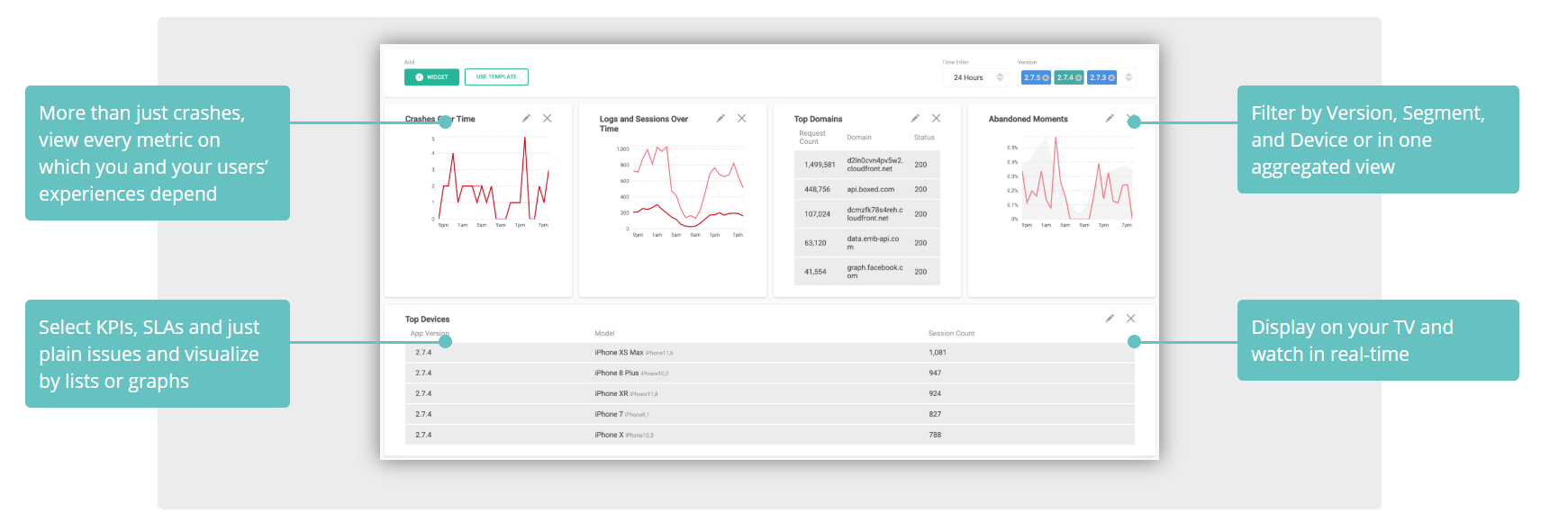
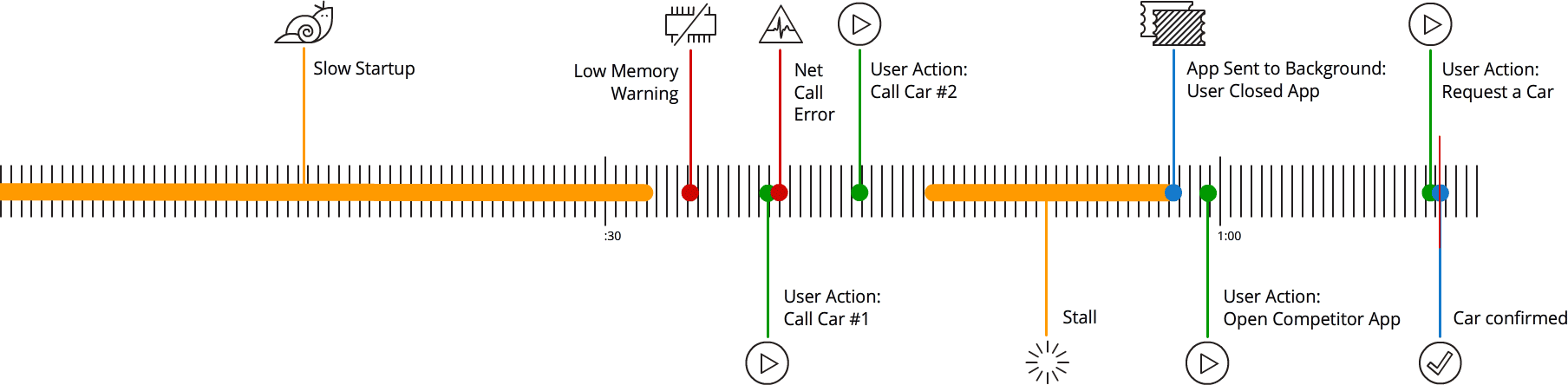
As Embrace CEO and co-founder Eric Futoran, who also co-founded entertainment company Scopely, argues, too many similar services mostly focus on crashes, yet those only constitute a small number of the actual user experience issues in most apps. “To a large extent, crashes are solved,” he told me. “The crash percentages are often 99.8 percent crash-free and yet users are still complaining.”

That’s because there are plenty of other issues beyond code exceptions, which many tools focus on almost exclusively, that can force an app to close (think memory issues or the OS shutting down the app because it uses too many CPU cycles). “To users, that looks like a crash. Your app closed. But in no way, that’s a crash from a technical perspective,” Futoran noted.

Raising this new round, Futoran told me, was pretty easy. Indeed, Pritzker approached the company. “It was not fundraising,” he said. “They sat us down and said, ‘we want to fund you guys,’ which I find pretty unusual. So I’ve been calling it a pre-emptive round.” He also noted that having Pritzker involved should help open up the mid-west market for Embrace, which is mostly focusing on enterprise customers (though Futoran’s definition of ‘enterprise’ includes the likes of digital-first companies like Headspace).

“We saw many organizations trust Embrace’s seamless and innovative optimization platform to quickly identify and resolve any user-impacting issues within their apps, and we’re optimistic about the future of the company in this growing market,” said Gabe Greenbaum, an LA-based Partner for Pritzker Group Venture Capital. “We look forward to this next stage in the company’s growth journey and are honored to partner with Eric and Fredric to help them achieve their vision.”

The company plans to use the new funding to increase its go-to-market capabilities, and grow its team to build out its technology.


Databricks open-sources Delta Lake to make data lakes more reliable

Databricks, the company founded by the original developers of the Apache Spark big data analytics engine, today announced that it has open-sourced Delta Lake, a storage layer that makes it easier to ensure data integrity as new data flows into an enterprise’s data lake by bringing ACID transactions to these vast data repositories.

Delta Lake, which has long been a proprietary part of Databrick’s offering, is already in production use by companies like Viacom, Edmunds, Riot Games and McGraw Hill.

The tool provides the ability to enforce specific schemas (which can be changed as necessary), to create snapshots and to ingest streaming data or backfill the lake as a batch job. Delta Lake also uses the Spark engine to handle the metadata of the data lake (which by itself is often a big data problem). Over time, Databricks also plans to add an audit trail, among other things.

“Today nearly every company has a data lake they are trying to gain insights from, but data lakes have proven to lack data reliability. Delta Lake has eliminated these challenges for hundreds of enterprises. By making Delta Lake open source, developers will be able to easily build reliable data lakes and turn them into ‘Delta Lakes’,” said Ali Ghodsi, co-founder and CEO at Databricks.

What’s important to note here is that Delta lake runs on top of existing data lakes and is compatible with the Apache spark APIs.

The company is still looking at how the project will be governed in the future. “We are still exploring different models of open source project governance, but the GitHub model is well understood and presents a good trade-off between the ability to accept contributions and governance overhead,” Ghodsi said. “One thing we know for sure is we want to foster a vibrant community, as we see this as a critical piece of technology for increasing data reliability on data lakes. This is why we chose to go with a permissive open source license model: Apache License v2, same license that Apache Spark uses.”

To invite this community, Databricks plans to take outside contributions, just like the Spark project.

“We want Delta Lake technology to be used everywhere on-prem and in the cloud by small and large enterprises,” said Ghodsi. “This approach is the fastest way to build something that can become a standard by having the community provide direction and contribute to the development efforts.” That’s also why the company decided against a Commons Clause licenses that some open-source companies now use to prevent others (and especially large clouds) from using their open source tools in their own commercial SaaS offerings. “We believe the Commons Clause license is restrictive and will discourage adoption. Our primary goal with Delta Lake is to drive adoption on-prem as well as in the cloud.”

R/GA Ventures incubator to nurture enterprise blockchain startups in Portland, OR

R/GA Ventures, a company that acts as investment arm and startup incubator for R/GA corporate client work, announced plans to open a new studio in Portland devoted to encouraging startups working on enterprise blockchain projects.

R/GA itself has a three-pronged purpose. It helps companies like Samsung, Google and Verizon (which owns this publication) in the product concept and design phase. It will also sometimes build products conceived in the design phase for the same clients. As an extension of that work, the company, which is owned by Interpublic Group, a group of marketing and advertising agencies, opened the Ventures arm five years ago with the aim of encouraging start-ups to do some of that innovation work for them and extend the company.

The blockchain project is the lates piece, and the idea behind it is to connect these startups with their corporate clients, who are interested in developing enterprise blockchain solutions in verticals such insurance, healthcare and sports; while building up a blockchain development center in Portland. The goal may be helping the corporate clients, but the startups are independent entities with their own sales and marketing approaches. The company may also invest a modest amount of money in the companies.

Nick Coronges, the global chief technology officer for R/GA, says they are looking at real-world applications of blockchain with the understanding that it’s still very early days for distributed ledger and blockchain applications, and they are looking for ways to explore the utility of it in business.

“I think one of the assumptions that we make going into this is that blockchain, as we currently understand it is probably going to go through a lot of iterations. And it may be bigger in the next few years…we may talk about it as a kind of ecosystem or a set of adjacent technologies that are related to blockchain, and this idea of decentralized data processing systems,” he explained.

He added, “The main thing that we look for is cases where you have multiple participants in some type of workflow, requiring access and some kind of accountability, transparency and control over data.”

The company has partnered with several intuitions on this project including Moda, Umpqua Bank, Portland State University, Oregon Health & Science University, Business Oregon, ConsenSys and blockchain research firm Smith and Crown.

The first cohort of blockchain startups will begin working at the end of July in an office space in Portland.