Why it’s so hard to know who owns Huawei

It’s one of the greatest technology “startup” success stories of the personal computer and smartphone eras. Yet, despite selling 59 million smartphones and netting $27 billion in revenue last quarter in its first-ever public earnings report this morning, a strange and tantalizing question shrouds the world’s number two handset manufacturer behind Samsung.

Who owns Huawei?

To hear the company tell it, it’s 100% employee-owned. In a statement circulated last week, it said that “Huawei is a private company wholly owned by its employees. No government agency or outside organization holds shares in Huawei or has any control over Huawei.”

That’s a simple statement, but oh is it so much more complicated.

As with all things related to Huawei, which outside of its 5G archrival Qualcomm is probably the tech company most entrenched in geopolitics today, the story is never as simple as it appears at first glance.

Blueland launches with a suite of eco-friendly cleaning supplies designed to reduce plastic waste

Sarah Paiji had the idea to launch the eco-friendly refillable cleaning supply retailer Blueland after hearing about the abundance of microplastics in the water she was using to dilute her child’s baby formula.

Paiji wanted to cut back on her plastic consumption, and reduce her contribution to the overabundance of plastic waste in the environment, but felt that as a consumer she didn’t have a choice. So the former venture capital investor from the consumer startup brand studio Launch set out to create one.

The answer she came up with is Blueland, a new line of cleaning products that launches today. Blueland’s cleaners — a bathroom cleaner, glass cleaner, and multi-purpose cleaner —  are sold as tablets that customers add to the cleaning containers the company provides.

“These cleaners are mostly water,” says Paiji. “I’m paying for a plastic bottle that I don’t really need and water which I have at home for free.”

By adding water to the company’s cleaning formulation in refillable containers the company sells, Blueland thinks its customers over time can eliminate the need for 100 billion single-use plastic bottles in the U.S.
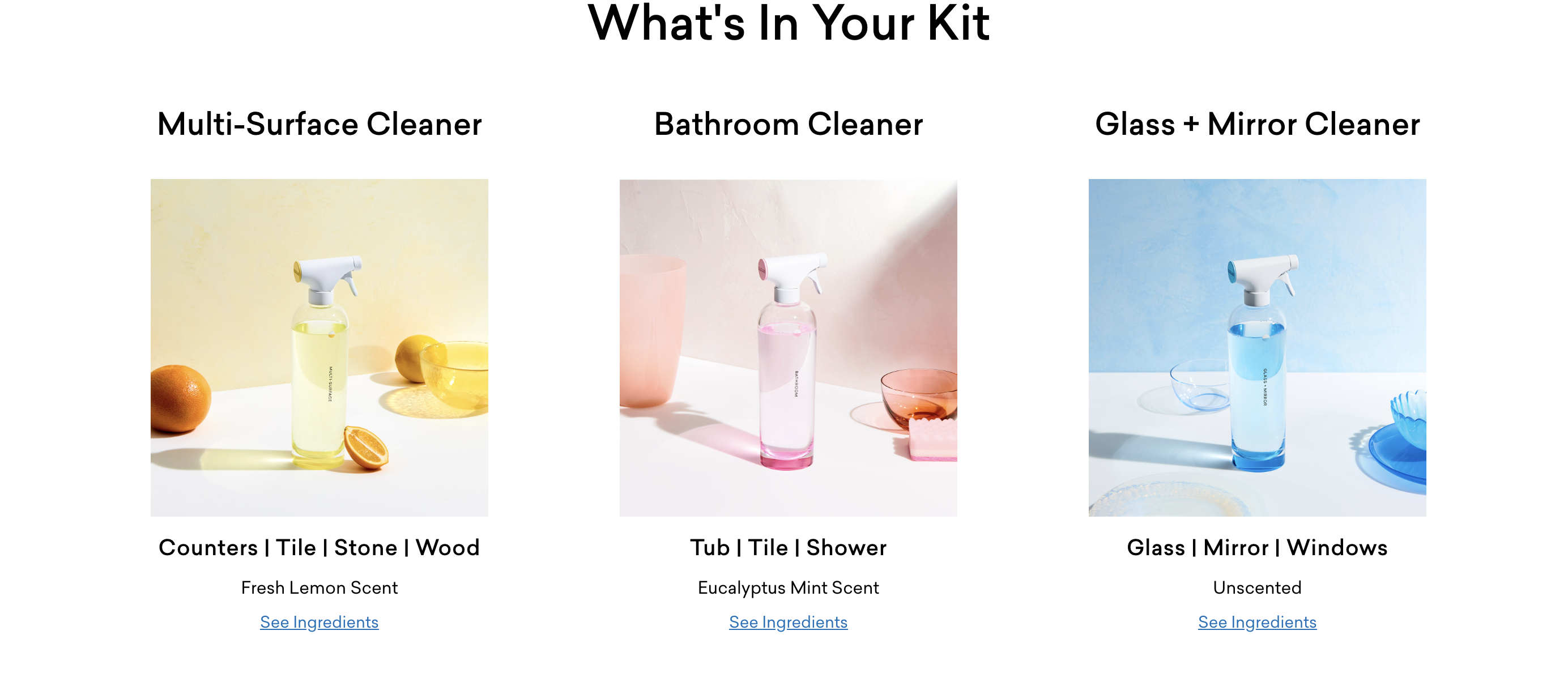
Blueland cleaning products/Image courtesy of Blueland

To provide the initial marketing push and continue its product development and sales efforts, the company has raised $3 million in a new round of funding from Global Founders Capital, Comcast Ventures, Cross Culture Ventures, BAM Ventures, along with individual investors like Justin Timberlake and the founder of the Los Angeles-based sustainable fast food chain, Sweetgreen, Nicholas Jammet; and sustainable online food retailer, Thrive Market, Nick Green.

After coming up with the idea Paiji had to find a manufacturer, who’d be willing to help reinvent an entire product category for a startup retailer.

Blueland also wasn’t Paiji’s first choice for a new startup idea. That would have been a botox bar that would sell cosmetic treatments to folks who wanted treatments, but didn’t want to pay high prices for them.

After putting the brakes on the botox business, Paiji reached out on LinkedIn to Syed Naqzi, the director of research and development at Method with her pitch for the cleaning product business.

With Naqzi on board, the company began filing patents for its unique process and the products it’s bringing to market, says Paiji. “Everything is proprietary everything is backed by patents,” she says.

While Paiji won’t disclose who the manufacturing partner is for the cleaning supplies, she did note that the company was in an adjacent consumables category to cleaners.

Within a year of reaching out to Naqzi last April, Paiji had a product supplier and the $3 million she needed to go to market.

Blueland refills/Image courtesy of Blueland

Joining Paiji and Naqzi in setting up the business was John Moscari, a fellow Harvard Business School classmate of Paiji’s who’d launched a company called Bundle Organics.

The company’s refills cost $2 and the initial cleanup kits clock in at $30. “With the refills it’s unequivocally cheaper than buying a full bottle on the market,” says Paiji.

The refills are 300 times lighter and 200 times smaller than traditional packaging for cleaning supplies and the company has plans to develop new products with similar packaging footprints across adjacent categories each quarter.

Just from a shipping perspective alone we cut out 90% because one to one we’re that much smaller,” says Paiji. 

Other, far larger, companies are thinking about their waste streams and end of life issues around their products — an issue which is becoming more important since China tightened the regulations around the scrap materials it would collect — and the amount of contamination those pallets of scrap could contain.

Last year, a coalition of major manufacturers of consumer packaged goods and foods formed Loop — an ambitious project to create zero-waste supply chains for their products with consumers who’d opt in.

Taking their cues from the milkman models of years long passed, companies like Procter & Gamble, Nestle, PepsiCo, Unilever, worked with the company TerraCycle to develop an updated version of the plan.

Consumers get refillable containers and as they use up the items, they can call a Loop pick up driver to take their containers away to be refilled or send them off at a UPS store.

Paiji argues that Blueland does something different — with lower carbon emissions coming from the process and a greater impact on reuse.

“We’ve completely invented a new form factor for this,” she says. “And we’re providing a more convenient way for people to reuse and refill.”

Blueland box/Image courtesy of Blueland


Daily Crunch: Samsung delays the Galaxy Fold

The Daily Crunch is TechCrunch’s roundup of our biggest and most important stories. If you’d like to get this delivered to your inbox every day at around 9am Pacific, you can subscribe here.

1. Samsung reportedly pushes back Galaxy Fold release

Four days out from the Galaxy Fold’s official release date, Samsung is pushing things back a bit, according to a report from The Wall Street Journal. There’s no firm time frame for the launch, though the phone is still expected “in the coming weeks.”

TechCrunch’s reviewer Brian Heater says he hasn’t experienced any issues with his device, but a number of others reported malfunctioning displays.

2. Tencent’s latest investment is an app that teaches grannies in China to dance

Called Tangdou, or “sugar beans” in Chinese, the app announced that it has raised a Series C funding round led by Tencent.

3. SiriusXM’s new streaming-only ‘Essential’ plan targets smart speaker owners

The company has launched a new plan called SiriusXM Essential, targeting those who listen in-home and on mobile devices. The streaming-only plan is also more affordable — $8 per month, versus the $15.99 per month (and up) plans for SiriusXM’s satellite radio service for cars.

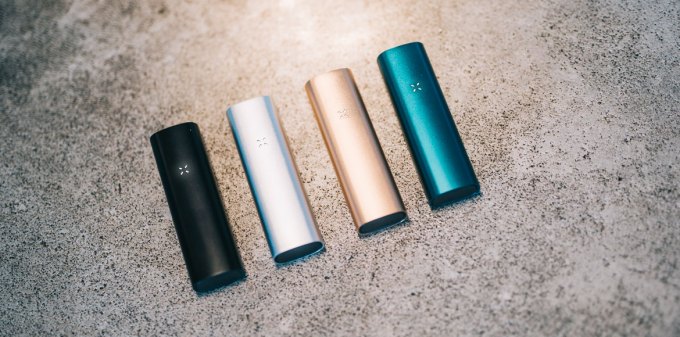
4. Confirmed: Pax Labs raises $420M at a valuation of $1.7B

That’s right, $420 million for a vape maker. CEO Bharat Vasan said, “This financing round allows us to invest in new products and new markets, including international growth in markets like Canada and exploring opportunities in hemp-based CBD extracts.”

5. Sony launches a taxi-hailing app to rival Uber in Tokyo

The service is a joint venture between Sony, its payment services subsidiary and five licensed taxi companies. Because ride-hailing with civilian cars is illegal in Japan, the service will focus on connecting licensed taxis with passengers.

6. The Exit: an AI startup’s McPivot

An in-depth interview with investor Adam Fisher about the recent McDonald’s acquisition of Dynamic Yield. (Extra Crunch membership required.)

7. This week’s TechCrunch podcasts

This week’s episode of Equity addresses the aforementioned cannabis vaping round, followed up by an Equity Shot about the Fastly S-1. Meanwhile, on Original Content we reviewed Donald Glover’s “Guava Island” and discussed the new season of “Game of Thrones.”

Samsung confirms Galaxy Fold delay, shares ‘initial findings’ on faulty units

Samsung has just confirmed that it will delay the release of the Galaxy Fold. Confirming this morning’s report, the company sent TechCrunch a statement noting that the foldable will not make its previously announced Friday ship date.

Once again, no details on availability are forthcoming — which is honestly probably for the best, as the company assesses the situation. The news follows reports of malfunctioning displays from multiple reviewers. They were in the minority — ours is still working just fine — but three or four in such a small sample size is enough to raise concern.

The company says it will “announce the release date in the coming weeks.”

The statement is understandably still a bit defensive, but this time out, Samsung actually has “initial findings” to share from those faulty units. According to the company,

Initial findings from the inspection of reported issues on the display showed that they could be associated with impact on the top and bottom exposed areas of the hinge. There was also an instance where substances found inside the device affected the display performance.

It’s bad news for the device that’s being positioned as the future of both Samsung and the mobile space in general, but the company’s been through worse PR and come out largely unscathed. The Galaxy Note 7 ultimately did little to damage Samsung’s bottomline, thanks to a booming component business. And that product was already shipping — resulting in two separate recalls.

At least here the company was able to delay the device before it started shipping. It’s hard to say precisely how widespread these issues are — and preproduction units are notorious for having issues. But the statement does appear to a cautious admission that there’s more going on here than just reviewers accidentally peeling back the protective layer.


JCPenney explains why it dropped Apple Pay

JCPenney quietly ditched Apple Pay this month. The decision was announced in response to a customer complaint on Twitter, but without any context or further explanation at the time. JCPenney had first rolled out Apple Pay into testing in 2015, then expanded to all its U.S. stores the following year, and later to its mobile app.

The retailer now claims the move was necessitated by the April 13, 2019 deadline in the U.S. for supporting EMV contactless chip functionality.

As of this date, all terminals at U.S. merchants locations that accept contactless payments must actively support EMV contactless chip functionality, and the legacy MSD (magnetic stripe data) contactless technology must be retired.

JCPenney was not ready to comply, it seems, so it switched off all contactless payment options as a result. However, it hasn’t ruled out re-enabling them later on, it seems.

https://platform.twitter.com/widgets.js

In a statement provided to TechCrunch, JCPenney explained its decision:

A third-party credit card brand made the requirement for all merchants to actively support EMV contactless functionality effective April 13, retiring the legacy MSD contactless technology in place. Given the resources and lead time associated with meeting the new mandate, JCPenney chose to suspend all contactless payment options until a later date. Customers still have the ability to complete their transactions manually by inserting or swiping their physical credit cards at our point-of-sale terminals in stores, an option employed by the vast majority of JCPenney shoppers.

It’s worth noting, too, is that JCPenney is hinting here at low Apple Pay adoption among its customer base — as the “vast majority” of shoppers pay using a physical card.

That means the retailer’s decision to re-enable Apple Pay at a later date may still be in question — especially as this change allows JCPenney to fully take back ownership of customer purchase data.

Customer data is an important part of JCPenney’s plan to get the business back on its feet. Under new CEO Jill Soltau, who took the job last October, the retailer has been closing underperforming stores, hiring new execs to focus on merchandise selection, and eliminating its low-margin items, noted Bloomberg following the company’s most recent earnings. It’s also reducing inventory and adjusting its buying process to ensure it doesn’t end up with excess inventory going forward.

And, as Soltau explained to investors in February, the retailer is rethinking its pricing and promotions strategies, too.

“I think that’s one of the key initiatives that we’ll be working on here in the coming months because we’re not being as strategic in how we speak to the customer and engage with the customer through our pricing and promotion,” she said. “And I would frankly say it might be a little bit confusing, and you might not know exactly when you can get the best value at JCPenney,” the CEO added.

Customer purchase data allows a retailer to better target its customers with relevant promotions, as stores are able to collect the customer’s name and card number at point of sale, which they can then combine with other demographic data like the customer’s address, phone and email.

Apple Pay, meanwhile, prevents this level of access — something that customers like, but retailers traditionally have not. In fact, the lack of access to customer data was one reason why retailers were hesitant to warm up to Apple Pay in the first place, and spent years developing their rival solution, CurrentC, which ultimately failed.

Today, many major retailers incentivize customers to use their own payments solution instead of Apple Pay — as with Walmart Pay, Sam’s Club’s Scan-and-Go, or like Target does with its store card, which can be combined with Cartwheel discounts in a single barcode scanned at point-of-sale.

Apple Pay is also a more secure method of payment, which today’s consumers prefer — particularly in the case of retailers who have suffered major data breaches, like JCPenney has in the past. Plus, Apple Pay allows shoppers to carry only their phone — not a wallet stuffed with physical cards.

The removal of Apple Pay from JCPenney stores was first reported by MacRumors, following the retailer’s tweet. 9to5Mac also noted Apple Pay was pulled from the JCPenney app.

JCPenney today has over 800 stores in 49 states.

Despite being dropped by JCPenney, Apple Pay remains a top mobile payment solution. In January, it was accepted by 74 of the top 100 U.S. merchants, and 65 percent of all retail locations across the country.


Facebook makes its first browser API contribution

Facebook today announced that it has made its first major API contribution to Google’s Chrome browser. Together with Google, Facebook’s team created an API proposal to contribute code to the browser, which is a first for the company. The code, like so much of Facebook’s work on web tools and standards, focuses on making the user experience a bit smoother and faster. In this case, that means shortening the time between a click or keystroke and the browser reacting to that.

The first trial for this new system will launch with Chrome 74.

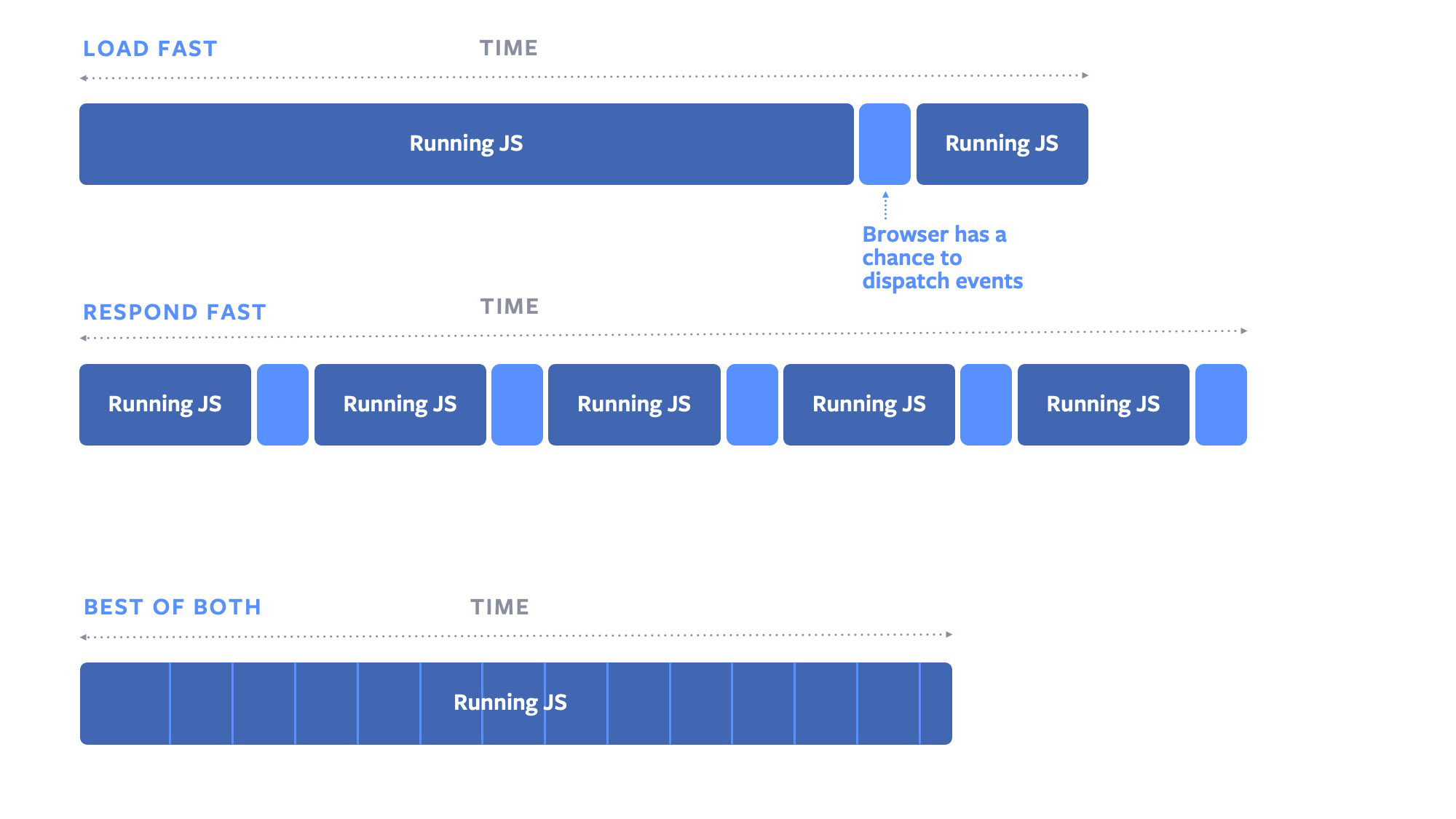
Typically, a browser’s JavaScript engine handles how code is executed and when it will halt for a moment to see if there are any pending input events that it needs to react to. Because even modern JavaScript engines that run on multi-core machines are still essentially single-threaded, the engine can only really do one thing at a time, so the trick is to figure out how to best combine code execution with checking for input events.

“Like many other sites, we deal with this issue by breaking the JavaScript up into smaller blocks. While the page is loading, we run a bit of JavaScript, and then we yield and pass control back to the browser,” the Facebook team explains in today’s announcement. “The browser can then check its input event queue and see whether there is anything it needs to tell the page about. Then the browser can go back to running the JavaScript blocks as they get added.”

Every time the browser goes through that cycle, though, and checks for new events, processes them, a bit of extra time passes. You do this too many times, and loading the page slows down. But if you only check for inputs at slower intervals, the user experience degrades as the browser takes longer to react.

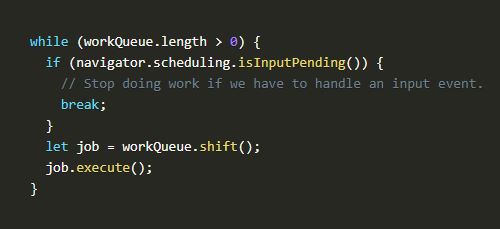
To fix this, Facebook’s engineers created the isInputPending API, which eliminates this tradeoff. The API, which Facebook also brought to the W3C Web Performance Working Group, allows developers to check whether there are any inputs pending while their code is executing.

With this, the code simply checks if there’s something to react to, without having to fully yield control back to the browser and then passing it back to the JavaScript engine.

For now this is just a trial — and since developers have to integrate this into their code, it’s not something that will automatically speed up your browser once Chrome 74 launches. If the trial is successful, though, chances are developers will make use of it (and Facebook surely will do so itself) and that other browser vendors will integrate into through own engines, too.

“The process of bringing isInputPending to Chrome represents a new method of developing web standards at Facebook,” the team says. “We hope to continue driving new APIs and to ramp up our contributions to open source web browsers. Down the road, we could potentially build this API directly into React’s concurrent mode so developers would get the API benefits out of the box. In addition, isInputPending is now part of a larger effort to build scheduling primitives into the web.”

Down To Shop is a tongue-in-cheek mobile shopping network

Cyrus Summerlin and Max Hellerstin, who previously created the Push for Pizza app (which allowed users to order a pizza with the push of a button), are officially launching their new startup today, Down to Shop.

The app bills itself as both a modern reinvention of QVC and “the funnest way to shop.” It allows users to watch funny videos featuring products that can be purchased directly from the app.

In an email, Hellerstein said the pair created Down to Shop out of dissatisfaction with existing advertising and e-commerce. Summerlin described it as “a hypermedia commerce platform.”

“We’ve created a self aware, fun and entertaining, interactive environment that gets customers to engage with brands like never before — because they want to,” Summerlin said. “What a concept!”

To do this, Down to Shop says it has recruited a creative team of Upright Citizens Brigade alums and Instagram influencers like Wahlid Mohammad to star in its shows, which are written, filmed and edited in the startup’s Los Angeles studios. The content is built around four-week seasons, with daily episodes across five shows each season.

Down to Shop

You can actually download the iOS app now, then swipe through different videos and games. Judging from the videos available at launch, the app is holding true to its promise of “content first, advertising second,” with laidback, tongue-in-cheek shows that also happen to feature promoted products.

By playing games and watching videos, you also earn Clout, the in-app currency that be used to make purchases. As for the products available to purchase, the company says it’s already working with more than 60 brands, including Sustain Condoms, Dirty Lemon (water) and Pretty Litter (cat litter).

Down to Shop’s investors include Greycroft, Lerer Hippeau and Firstmark. The startup isn’t disclosing the size of its funding, but according a regulatory filing, it raised $5.9 million last fall.


Tesla Autonomy day is here. Here’s how to watch

It’s a big week for Tesla and it’s kicking off April 22 with “Autonomy Investor Day.”

What is Autonomy Investor Day, you ask? The details are vague, but it’s supposed to be a demonstration that explains and showcases Tesla’s autonomous driving technology.

CEO Elon Musk put it a bit more dramatically when he tweeted earlier this month: “On April 22, Investor Autonomy Day, Tesla will free investors from the tyranny of having to drive their own car.”

https://platform.twitter.com/widgets.js

Tesla will live stream the event, which is being held at its headquarters in Palo Alto, at 11 a.m. PT. at livestream.tesla.com. You can also watch it here on the Tesla YouTube channel.

Like so many events surrounding Tesla, there is already drama attached to autonomy day. Tesla was granted a temporary restraining order Friday against a short seller and vocal Twitter critic who recently photographed a Model 3 that was being filmed ahead of the autonomy investor day.

PlainSite.org posted the restraining order, in which Tesla claims Randeep Hothi “stalked, harassed and endangered” employees driving in a Model 3 bearing manufacturer plates and mounted with camera equipment. Tesla claims the individual followed the vehicle for 35 minutes and at one point swerved so close to the vehicle that the side collision avoidance safety feature was triggered.

https://platform.twitter.com/widgets.js

Tesla vehicles are not considered fully autonomous, or Level 4, a designation by SAE that means the car can handle all aspects of driving in certain conditions without human intervention.

Instead, Tesla vehicles are “Level 2,” a more advanced driver assistance system than most other vehicles on the road today. Musk has promised that the advanced driver assistance capabilities on Tesla vehicles will continue to improve until eventually reaching that full automation high-water mark.

Tesla offers two different advanced driver assistance packages to customers: Autopilot and Full Self-Driving. Autopilot is ADAS that offers a combination of adaptive cruise control and lane steering and is now a standard feature on new cars. The price of vehicles has been adjusted higher to reflect the addition of Autopilot as a standard feature.

Full Self-Driving, or FSD, costs an additional $5,000. FSD includes Summon as well as Navigate on Autopilot, an active guidance system that navigates a car from a highway on-ramp to off-ramp, including interchanges and making lane changes. Once drivers enter a destination into the navigation system, they can enable “Navigate on Autopilot” for that trip.

Tesla continues to improve Navigate on Autopilot and the broader FSD system through over-the-air software updates. The company says on its website that FSD will soon be able to recognize and respond to traffic lights and stop signs and automatically driving on city streets. 

Beyond Meat files for a public offering

Beyond Meat, the meat replacement company whose packages of Beyond Burgers line grocery store aisles across America, has filed for an initial public offering.

The company is looking to raise roughly $200 million in the stock sale for its portfolio of burger, chicken and sausage replacements, selling 8.75 million shares of common stock at an upper limit of $21 per share that would value Beyond Meat at more than $1 billion.

The Los Angeles-based company’s public offering should be a nice windfall for the Chicago-based investors DNS Capital, an investment firm managing the private wealth of the Pritzker family, and Cleveland Avenue, founded by former McDonald’s executive Don Thompson; as well as the venture capital firms Kleiner Perkins and Obvious Ventures.

Another winner from the Beyond Meat public offering is the corporate investment arm of Tyson Foods . The meat processor and marketer invested in Beyond Meat back in 2016.

All told, Beyond Meat has raised $122 million from investors, including Obvious Ventures, Kleiner Perkins, Cleveland Avenue, DNS Capital, Tyson Ventures, Bill Gates, S2G Ventures and a whole host of other firms, according to Crunchbase.

While Beyond Meat has increased its revenues steadily — from $16.2 million when it began selling its wares in 2016 to $87.9 million in 2018 — the company is still a loss-generating machine. Its operations were in the red to the tune of $29.9 million in 2018, down from $30.4 million a year earlier.

With the public offering, Beyond Meat becomes the first venture-backed meat replacement company to list its shares, but there are other startups waiting to follow suit. Impossible Burger is another well-financed startup making burger alternatives, as is the current king of animal-free condiments, Just, which is looking at lab-grown meat on its product roadmap.

Supporting all of this investment activity is the potential to carve out a huge chunk of the $270 billion consumers spent on meat in the U.S. in 2017 alone. Globally, consumers bought $1.4 trillion of meat, according to data from Fitch Solutions Macro Research cited by the company.

Meanwhile, consumption of plant-based meat replacements in the U.S. is growing at a steady clip. In the first half of 2018, Americans bought $670 million of meat replacement products, according to a Nielsen study commissioned by the Plant Based Food Association.

Audioburst raises $10M to build A.I.-powered infotainment systems for cars, ad solutions

Audioburst, a startup that uses A.I. technology to extract the best bits from podcasts and talk radio to create new listening experiences, has raised an additional $10 million in strategic funding from Dentsu and Hyundai Motor Company. The new round is focused on helping Audioburst further expand into advertising and in vehicles. It also precedes the company’s planned launch into Japan at the end of 2019.

Dentsu and Hyundai join Audioburst’s other strategic investors, Samsung Ventures, Nippon Broadcasting, and Advanced Media, Inc., and bring the company’s total raise to date to $25 million.

The startup today ingests and indexes millions of audio segments per day then uses A.I. technology — including Automatic Speech Recognition and Natural Language Understanding — to create products like a searchable library of audio, personalized audio feeds and news briefs, notifications, and more.

Through an API, partners can integrate Audioburst’s personalized feeds into their own smart speakers, mobile, in-car infotainment systems, and other products.

The investment from the international ad agency Dentsu, headquartered in Tokyo, will see the company working with Audioburst to create a market for personalized audio in Japan. Brands will leverage the technology to target listeners with more personalized ads, based on an improved understanding of customers’ interests.

“Personalized advertising in the radio space has been limited to-date. In addition, the emergence of voice-activated services and audio content have provided a rapidly growing advertising opportunity for our clients,” noted Hideki Ishibashi, Managing Director of Dentsu Innovation Initiative, in a statement.

Audioburst is not alone in working to create personalized listening experiences as a channel for advertising — Spotify, for example, is doing this with music. And this year, it even opened up its flagship product, the personalized Discover Weekly playlist, to brand sponsorships. Pandora also lets advertisers personalize their messages by leveraging listener data. And as podcasts have become a new priority for streaming services like this, ad personalization will follow as listeners stream more non-music audio.

Meanwhile, Audioburst will work with Hyundai — who contributed half ($5M) of the $10M investment — to develop a new in-car infotainment system that includes a personalized audio search experience and playlists that customers can access via voice commands.

“At Hyundai, our mission is to have our cars connected by 2020 and provide our customers with the best possible in-car experience,” said Dr. Yun-seong Hwang, Vice President of Hyundai Motor Company. “Partnering and investing in Audioburst ensures we will lead the charge in a data-driven first class audio experience.”

Hyundai’s investment follows a December 2018 Audioburst partnership with LGE, which focused on building new infotainment systems for automakers. That deal was the first to use Audioburst’s Deep Analysis API, which adds an additional level of metadata categorization in order provide a more in-depth understanding of the content users searched for. The Hyundai deal will now leverage this API, as well.

Audioburst also has strategic partnerships with Bytedance, Bose, Harman, and more.