Y Combinator grad, Fuzzbuzz lands $2.7M seed round to deliver fuzzing as service

Fuzzbuzz, a graduate of the most recent Y Combinator class, got the kind of news every early-stage startup wants to hear when it landed a $2.7 million seed round to help deliver a special class of automated software testing known as fuzzing in the form of a cloud service.

Fuel Capital led the round. Homebrew and Susa Ventures also participated along with various angel investors including Docker co-founder Solomon Hykes, Mesosphere co-founder Florian Leibert and Looker co-founder Ben Porterfield.

What Fuzzbuzz does specifically is automate fuzzing at scale, says co-founder and CEO Andrei Serban. “It’s a type of automated software testing that can perform thousands of tests per second,” he explained. Fuzzbuzz, is also taking advantage of artificial intelligence and machine learning underpinnings to use feedback from the results to generate new tests automatically, so that it should get smarter as it goes along.

The goal is to cover as much of the code as possible, much faster and more efficiently than human testers ever could, and find vulnerabilities and bugs. It’s the kind of testing every company generating code would obviously want to do, but the problem is that up until now the process has been expensive and required highly specialized security engineers to undertake. Companies like Google and Facebook are able to hire these kinds of people to build fuzzing solutions, but for the most part, it’s been out of reach for your average company.

Serban says his co-founder, Everest Munro-Zeisberger, worked on the Google Chrome fuzzing team, which has surfaced more than 15,000 bugs using this technique. He wanted to put this type of testing in reach of anyone.

“Today, anyone can start fuzzing on Fuzzbuzz in less than 20 minutes. We hook directly into GitHub and your CI/CD pipeline, categorize and de-duplicate each bug found, and then notify you through tools like Slack and Jira. Using the Fuzzbuzz CLI, developers can then test and fix the bug locally before pushing their code back up to GitHub,” the company wrote in a blog post announcing the funding.

It’s still early days, and the startup is working with some initial customers. The funding should help the three founders, Serban, Munro-Zesberger and Sabera Hussain; to hire more engineers and bring a more complete solution to market. It’s an ambitious undertaking, but if it succeeds in creating a fuzzing service, it could mean delivering code with fewer bugs and that would be good for everyone.
Apple expands global recycling programs, announces new Material Recovery Lab in Austin

Apple announced today a further investment in its recycling programs and related e-waste efforts, which includes an expansion of its recycling program for consumers and the announcement of a new, 9,000-square-foot Material Recovery Lab based in Austin, Texas, focused on discovering future recycling processes. The company also reported the success of its existing efforts around recycling and refurbishing older Apple devices, and keeping electronic waste from landfills.

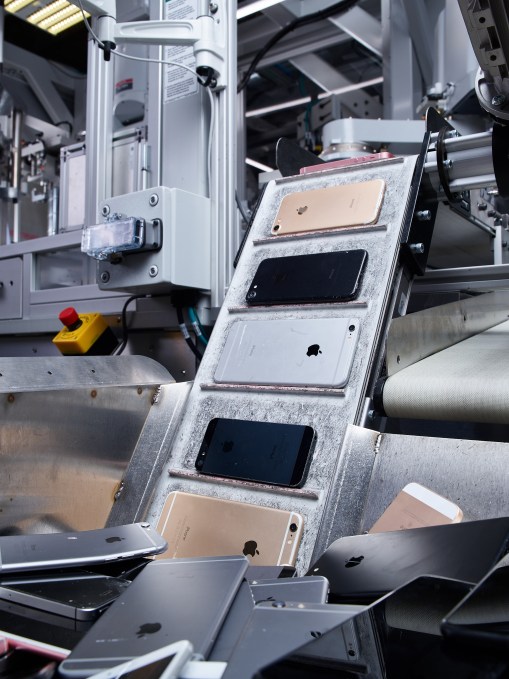
The expansion of the recycling program will quadruple the number of locations in the U.S. where consumers can send their iPhones to be disassembled by Daisy, the recycling robot Apple introduced last year — also just ahead of Earth Day.

The robot was developed in-house by Apple engineers, and is able to disassemble different types of iPhone models at a rate of 200 iPhones per hour.

Daisy can now disassemble and recycle used iPhones returned to Best Buy stores in the U.S. and KPN retailers in the Netherlands. Customers can also send in iPhones for recycling through the Apple Store or through Apple’s Trade In program online.

When Daisy was first introduced, it could disassemble 9 different iPhone models. Now, it can handle 15. This allows Apple to recover parts for re-use. That includes iPhone batteries, which are now sent back upstream in Apple’s supply chain where they’re combined with scrap, allowing cobalt to be recovered for the first time.

Apple also uses 100 percent recycled tin in the main logic boards of 11 different products, and notes its aluminum alloy made from 100 percent recycled aluminum reduced the carbon footprint of the new MacBook Air and Mac mini by nearly half.

Apple says Daisy can disassemble 1.2 million devices per year, and it has received nearly a million devices through its various programs.

It also in 2018 refurbished over 7.8 million Apple devices for resale, and diverted over 48,000 metric tons of electronic waste from landfills.

This year, aluminum recovered through Apple’s Trade In program will be remelted into the enclosures for the MacBook Air.

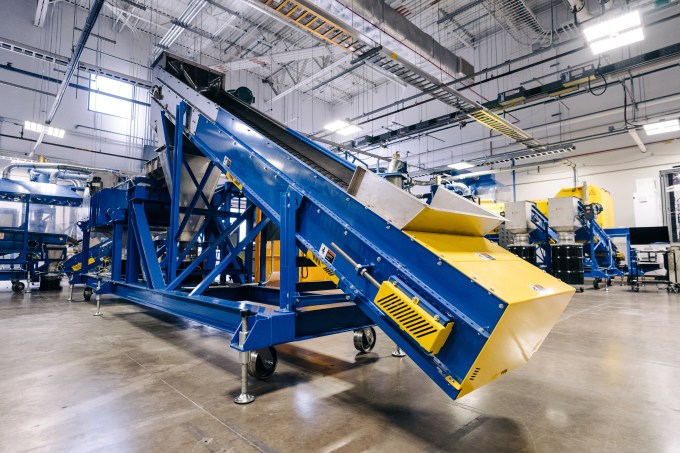
The company announced today another significant investment in its recycling efforts with the opening of a Material Recovery Lab in Austin, which will work with Apple engineers and academia on coming up with more solutions to recycling industry challenges. The lab also houses large equipment, typically found at e-waste facilities, to aid in this research. (See above)

“Advanced recycling must become an important part of the electronics supply chain, and Apple is pioneering a new path to help push our industry forward,” said Lisa Jackson, Apple’s vice president of Environment, Policy and Social Initiatives, in a statement. “We work hard to design products that our customers can rely on for a long time. When it comes time to recycle them, we hope that the convenience and benefit of our programs will encourage everyone to bring in their old devices.”

Along with the news around recycling efforts, Apple also released its 2019 Environment report, which contains additional information on the company’s climate change solutions.

On Earth Day (April 22), Apple will host environmentally themed sessions at its stores and feature environmentally conscious apps and games on its App Store collections, as well.

Why we’re looking into the Mueller Report

After nearly two years of investigation and months of delays — not to mention partisan bickering the whole time, Special Counsel Robert Mueller’s report on the president’s campaign and Russian interference in the 2016 election is out today.

We’re not a politics news site but we’re still looking into it — tech has figured more prominently than ever in the last few years and understanding its role in what could be a major political event is crucial for the industry and government both.

The report and discussion thereof is bound to be highly politically charged from the get-go and the repercussions from what is disclosed therein are sure to reach many in and out of office. But there are also interesting threads to pull as far as events and conspiracies that could only exist online or using modern technology and services, and for these the perspective of technology, not politics, reporting may be best suited to add context and interpretation.

What do we expect to find in the report that is of particular interest to the tech world?

The topic that is most relevant and least explored already is the nature of Russia’s most direct involvement in the 2016 election, namely the hack of the Democratic National Committee email server, attributed to Russia’s GRU intelligence unit, and funneling of this information to WikiLeaks and the Trump campaign. The recent arrest of Julian Assange may prove relevant here.

The report will illuminate many things relating to these events, not necessarily technical details — although they may have been furnished by any number of parties — but plans, dates, people involved, and networks through which the hack and resulting data were communicated. Why was this added to Mueller’s pile in the first place? What about Assange? Who knew about the hack and when, and what does that imply?

Another topic, which seems more well trodden but about which we can never seem to know enough, is the origin and extent of Russian “troll farm” activity through the so-called Internet Research Agency. We’ve seen a great deal of their work as part of the ongoing barbecue of Facebook’s leadership, and to a lesser extent other social media platforms, but there’s much we don’t know as well.

Was there coordination with some U.S. entities? How was the content created, and the topics chosen? Was there a stated outcome, such as dividing the electorate or damaging Clinton’s reputation? Was this contiguous with earlier operations? How, if at all, did it change once Trump was named the Republican candidate, and was this related to other communications with his campaign?

The last of our topics of most likely interest is that of the technological methods employed by Mueller in his investigation. Previous investigations of this scale into the activities of sitting presidents and their campaigns have occurred in completely different eras, when things like emails, metadata, and encrypted messaging weren’t, as they are today, commonplace.

How did Mueller pursue and collect privileged communications on, for example, private email servers and hosted web services? What services and networks were contacted, and how did they respond? How were the U.S.’ surveillance tools employed? What about location service from tech giants or telecoms? Was other garden-variety metadata — the type we are often told is harmless and which is often unregulated — used in the investigation to any effect?

We will be poring over the report with these thoughts and ideas in mind but also with an eye to any other interesting tech-related item that may appear. Perhaps that private server used “admin/password” as their login. Perhaps GRU agents were communicating using a cryptographic method known to be unsafe. Perhaps the vice-president uses a Palm Pre?

We’ll leave the politics to cable news and D.C. insiders, but tech is key to this report and we aim to explain why and how.

The consumer version of BBM is shutting down on May 31

It might be time to move on from BBM. The consumer version of the BlackBerry Messenger will shut down on May 31. Emtek, the Indonesia-based company that partnered with BlackBerry in 2016, just announced the closure. It’s important to note, BBM will still exist and BlackBerry today revealed a plan to open its enterprise-version of BBM to general consumers.

Starting today, BBM Enterprise will be available through the Google Play Store and eventually from the Apple App Store. The service will be free for the one year and after that, $2.49 for six months of service. This version of the software, like the consumer version, still features group chats, voice and video calls, and the ability to edit and retract messages.

As explained by BlackBerry, BBMe features end-to-end encryption.

BBMe can be downloaded on any device that uses Android, iOS, Windows or MAC operating systems. The sender and recipient each have unique public/private encryption and signing keys. These keys are generated on the device by a FIPS 140-2 certified cryptographic library and are not controlled by BlackBerry. Each message uses a new symmetric key for message encryption. Additionally, TLS encryption between the device and BlackBerry’s infrastructure protects BBMe messages from eavesdropping or manipulation.

BBM is one of the oldest smartphone messaging services. Research in Motion, BlackBerry’s original name, released the messenger in 2005. It quickly became a selling point for BlackBerry devices. BBM wasn’t perfect and occasionally crashed, but it was a robust, feature-filled messaging app when most of the world was still using SMS. Eventually with the downfall of RIM and eventually BlackBerry, BBM fell behind iMessage, WhatsApp, and other independent messaging platforms. Emtek’s partnership with BlackBerry was supposed to bring the service into the current age, but some say the consumer version ended up bloated with games, channels and ads. BlackBerry’s BBMe lacks a lot of those extra features so consumers might find it a better platform for communicating.

VCs bet on cannabis vaping, ED meds and mobile fertility clinics

Hello and welcome back to Equity, TechCrunch’s venture capital-focused podcast, where we unpack the numbers behind the headlines.

This week was a bit of a reunion with Kate and Alex on as usual, with the addition of Extra Crunch denizen extraordinaire Danny Crichton. Danny, you may recall, has been a semi-regular Equity co-host over the past year.

As Kate explains up front, Equity is out a day early this week due to the Big TechCrunch Robotics Affair in Berkeley today. We’ll be back on Friday with IPO news regarding Zoom and Pinterest and we can’t wait.

Ok, all that sorted, what did we talk about? Alex wanted to talk about some market signals that he reads as bullish. Whatever went wrong at the end of 2018 has healed over he thinks because there have been a whole lot of supergiant venture capital rounds and some other stuff.

Next, we gave an example of one of those supergiant rounds in the works. The reported Pax round, which could put $400 million into the cannabis vaping company, intrigues us, especially because Pax is the corporate sibling of JUUL, the now-famous e-cigarette company what sold just over a third of itself for nearly $13 billion last year. A truly staggering deal.

Then we turned to Brex, the fintech startup that was back in the news this week. Why? Because it raised a $100 million debt round as startups of that sort do. Brex provides a credit card made specifically for startups that require no personal-guarantee. Yeah, risky, we know. We talked about that risk and Brex’s plan to target Fortune 500 business in the future.

Rounds for Ro, Kindbody and Carrot Fertility made it a busy week for healthtech, too. Ro is raising at a $500 million valuation to support its three digital health brands: Roman, Rory and Zero. Meanwhile, a pair of fertility startups, Kindbody and Carrot, brought in $15 million and $11 million, respectively.

With Danny back on the show, we extended our reach and discussed the latest in the chip and sensor world. NXP, fresh off a failed, multi-billion dollar exit to Qualcomm put money into Hawkeye Technology, a China-based company working in the car sensor space. Equity’s regular hosts mostly nodded as Danny dropped a lot of knowledge.

All that and we had some fun. We’ll be back before you know it.

Equity drops every Friday at 6:00 am PT, so subscribe to us on Apple PodcastsOvercast, Pocket Casts, Downcast and all the casts.

Google & Amazon reach an agreement to bring their streaming apps to each others’ platforms

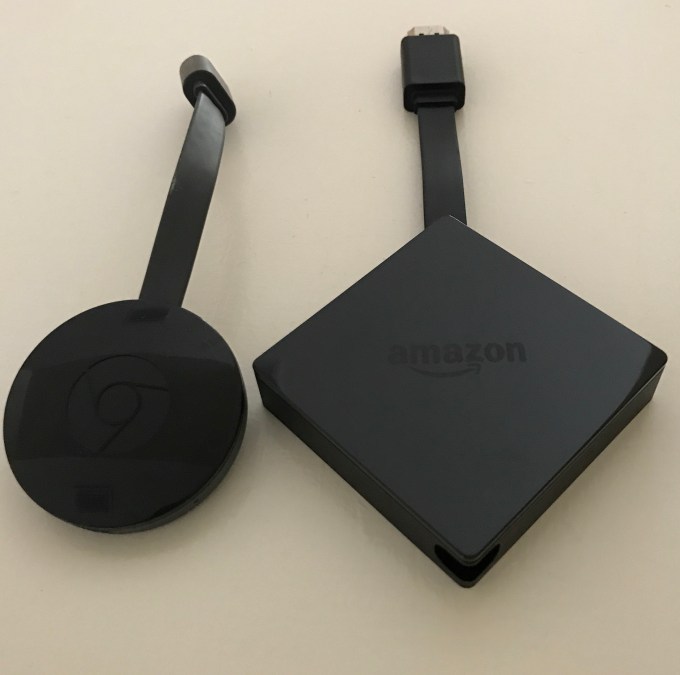
Google and Amazon are burying the hatchet to better serve users of their respective streaming video platforms, the companies announced this morning. In the months ahead, the official YouTube app will come to Amazon Fire TV devices and Fire TV Edition smart TVs, while the Prime Video app will come to Chromecast and other devices with Chromecast built-in.

Prime Video will also become broadly available across the Android TV partner ecosystem, and YouTube’s sister apps — YouTube TV and YouTube Kids — will come to Fire TV later in the year.

Google says YouTube users on Fire TV will be able to sign in, have full access to their library, and play videos in 4K HDR at 60 fps on supported devices.

Prime Video app users, meanwhile, will be able to stream from the Prime Video catalog, including Amazon’s original programming, 4K videos, and access their Prime Video Channel subscriptions. They can also use Amazon’s X-Ray feature in the app.

The truce follows several years of bad relations between the two tech giants, who compete across a number verticals — including their streaming TV platforms and services and, more recently, smart speakers like Echo and Google Home.

Chromecast devices and other Google hardware has been off and on banned from Amazon’s retail site, as a result of their disagreements.

The companies in 2017 entered another feud — this time over Amazon’s implementation of a YouTube player on its Echo Show, which Google said it did without consultation. It pulled Amazon’s access from YouTube, then Amazon worked around the problem by sending Echo users to the YouTube homepage instead.

Today, many of Google’s hardware devices are still unavailable for sale on Amazon, including its smart speakers and other smart home devices, which are direct competitors with Amazon products, like Echo. (A search for “google home mini,” for example, displays Sponsored Listings and Best Seller recommendations for Amazon’s Echo Dot instead.)

None of this is good for consumers, of course — especially because the two customer bases overlap. Someone who has a Chromecast may want to watch videos on Prime Video, for example, or shop Google products on Amazon.com. And everyone watches YouTube.

The new agreement will only focus on streaming services, we understand. It won’t impact Amazon.com’s assortment or other concerns around hardware. 

Amazon has a history of anti-competitive behavior when it comes to dealing with rivals.

The retailer, for years, was at odds with Apple until finally coming to an agreement in 2017 to allow the Prime Video app on Apple TV and the Apple TV to return to Amazon.

In the end, these back-and-forth battles backfired on all involved. Roku emerged as the dominant streaming platform in the U.S., as it played a neutral role and supported all apps and services equally. Amazon has only begun to catch up, thanks to price cuts on Fire TV hardware and fairly popular underground community focused on using its “firesticks” for piracy.

“We are excited to work with Amazon to launch the official YouTube apps on Fire TV devices worldwide,” said Heather Rivera, Global Head of Product Partnerships at YouTube, in a statement. “Bringing our flagship YouTube experience to Amazon Fire TV gives our users even more ways to watch the videos and creators they love.”

“We’re excited to bring the Prime Video app to Chromecast and Android TV devices, and to give our customers convenient access to the shows and movies they love,” added Andrew Bennett, Head of Worldwide Business Development for Prime Video. “Whether watching the latest season of The Marvelous Mrs. Maisel, catching teams go head-to-head on Thursday Night Football or renting a new-release movie, customers will have even more ways to stream what they want, whenever they want, no matter where they are.”


Astroscreen raises $1M to detect social media manipulation with machine learning

In an era of social media manipulation and disinformation, we could sure use some help from innovative entrepreneurs. Social networks are now critical to how the public consumes and shares the news. But these networks were never built for an informed debate about the news. They were built to reward virality. That means they are open to manipulation for commercial and political gain.

Fake social media accounts – bots (automated) and ‘sock-puppets’ (human-run) – can be used in a highly organized way to spread and amplify minor controversies or fabricated and misleading content, eventually influencing other influencers and even news organizations. And brands are hugely open to this threat. The use of such disinformation to discredit brands has the potential for very costly and damaging disruption when up to 60% of a company’s market value can lie in its brand.

Astroscreen is a startup which uses machine learning and disinformation analysts to detect social media manipulation. It’s now secured $1M in initial funding to progress its technology. And it has a heritage which suggests it at least has a shot at achieving this.

Its techniques include coordinated activity detection, linguistic fingerprinting and fake account and botnet detection.

The funding round was led by Speedinvest, Luminous Ventures, UCL Technology Fund, which is managed by AlbionVC in collaboration with UCLB, AISeed, and the London Co-investment Fund.

Astroscreen CEO Ali Tehrani previously founded a machine-learning news analytics company which he sold in 2015 before fake news gained widespread attention. He said: “While I was building my previous start-up I saw at first-hand how biased, polarising news articles were shared and artificially amplified by vast numbers of fake accounts. This gave the stories high levels of exposure and authenticity they wouldn’t have had on their own.”

Astroscreen’s CTO Juan Echeverria, whose Ph.D. at UCL was on fake account detection on social networks, made headlines in January 2017 with the discovery of a massive botnet managing some 350,000 separate accounts on Twitter.

Ali Tehrani also thinks social networks are effectively holed-below the waterline on this whole issue: “Social media platforms themselves cannot solve this problem because they’re looking for scalable solutions to maintain their software margins. If they devoted sufficient resources, their profits would look more like a newspaper publisher than a tech company. So, they’re focused on detecting collective anomalies – accounts and behavior that deviate from the norm for their userbase as a whole. But this is only good at detecting spam accounts and highly automated behavior, not the sophisticated techniques of disinformation campaigns.”

Astroscreen takes a different approach, combining machine-learning and human intelligence to detect contextual (instead of collective) anomalies – behavior that deviates from the norm for a specific topic. It monitors social networks for signs of disinformation attacks, informing brands if they’re under attack at the earliest stages and giving them enough time to mitigate the negative effects.

Lomax Ward, partner, Luminous Ventures, said: “The abuse of social media is a
significant societal issue and Astroscreen’s defence mechanisms are a key part of the solution.”

Marketing platform startup Adverity raises $12.4M in round led by Felix Capital

Marketers get a lot of incoming from the data they have to deal with, bound up in hundreds of spreadsheets and reports, making it time consuming and tricky to get value out of. Tech companies like Datorama and Funnel.io have appeared to try and lighten this load.

Adverity is a data intelligence platform also playing his this space by applying AI to produce actionable insights in real-time.

Founded in 2015, it’s a cloud agnostic SaaS platform compatible with Amazon, Google and Microsoft which provides data to destinations such as SQL databases, Snowflake, AWS Redshift, SAP HANA. Its business model is based on yearly subscription fees.

It’s now closed an €11 million ($12.4 million) Series B funding round, bringing the total amount raised to date to €15 million ($17 million). The investment is led by London-based Felix Capital, with participation from Silicon Valley’s Sapphire Ventures and the SAP.iO fund. The company now plans to use its war chest to expand into the US market.

In addition to the latest round of investors, Adverity continues to be backed by existing investors including, Speedinvest, Mangrove Capital (early backer of Skype, Wix.com and Walkman), 42cap, and local Austrian company the AWS Founders Fund.

Adverity’s latest AI-powered product Presense is currently under closed beta testing for selected clients and will be launched later this year.

Alexander Igelsböck, CEO and Co-Founder of Adverity, commented: “Every company wants and needs to be data-driven. This is especially true in marketing where the fragmentation of data, and complexity in getting insights from it, poses a huge challenge for CMOs. Adverity’s mission is to solve those challenges by eliminating the hurdles facing companies today.”

Adverity’s clients include companies such as IKEA, Red Bull, Mediacom, Mindshare and IPG. Headquartered in Vienna, Austria, the company has offices across London, Sofia and Frankfurt.

Sasha Astafyeva, Principal at Felix Capital, commented: “Data is a powerful tool for engaging customers and Adverity helps marketers harness the power of their data to make better decisions, grow their business and better serve their customers.”

The company’s founding members are Alexander Igelsböck, Martin Brunthaler and Andreas Glänzer. Igelsböck previously headed a startup incubator in Austria (KochAbo GmbH) and prior to that was VP Product Management at VeriSign Inc, where he met Brunthaler, who was Director of Engineering. Glänzer’s experience was gained in a sales role at Google and as Regional Head of iProspect. The three previously founded a price comparison technology company that was acquired by Heise Media in Germany.

Weengs, the UK logistics startup for online retailers, collects £6.5M Series A

Weengs, the U.K. logistics startup for e-commerce businesses that need a more convenient way of getting online orders to customers, has raised £6.5 million in Series A funding. Leading the round is venture capital firm Oxford Capital, with Weeng’s seed investors, including Local Globe, Cherry Ventures and VentureFriends, following on.

Founded by Alex Christodolou and Greg Zontanos, provides small and medium-sized online stores of various kinds, including eBay and Amazon power sellers and brick ‘n’ mortar stores with an e-commerce component, with a “ship-from-store” logistics solution that handles collection, packing and delivery.

The basic premise is that time costs money, which can make e-commerce quite prohibitive. By outsourcing time-consuming and labour intensive logistics, store owners can put their time into other more profitable and differentiating aspects of their business, such as sales and marketing, and customer experience.

To make this work, Weengs collects orders daily from retailers’ stores, and professionally packs them back at the Weengs warehouse before they are shipped to customers via the couriers the company partners with.

Weengs says it can pack and ship a broad range of products globally, including less obvious items such as plants to musical instruments, electronics and everyday items like cosmetics. It has developed algorithms to pick the most appropriate courier service based on the item and customer priorities.

“Our business is part of the rising omnichannel opportunity we are seeing in retail,” says Pier Ronzi, Weeng’s more recently added co-founder and CEO. “Increasingly, it makes sense for retailers to ship-from-store. Basically cities and stores are becoming distributed inventories that retailers can leverage to increase their business and Weengs helps them [by] offering a one-stop-shop solution for their fulfilment while they can focus on their core activity”.

Since Weengs’ seed round, the team has grown to 70 people and saw Ronzi, who previously worked at McKinsey&Co, join the company. The startup now has around 400 retailers as customers and says it has fulfilled more than 500,000 online orders to date.

“We have learnt that our service saves retailers a huge amount of time and that is the key to our value proposition versus, for example, price,” says Ronzi. Prior to Weengs, customers typically handled fulfilment themselves or used costly fulfilment centres.

To that end, Weengs says it will use the new funding to invest heavily in its new warehouse and accompanying automation and technology. The plan is to “supercharge” operations to be able to fulfil more than 15,000 e-commerce orders per day.

Explains the Weengs CEO: “The packing operations today is mainly manual. In the new automated warehouse we are implementing a process governed by our software and leveraging a packing machine that automatically performs the packing operations: the order item is fed to the machine and, at the end of a quick automated process, the order comes out packed in a very high standard and bespoke box, labelled and ready to be handed over to the carriers. The process becomes heavily automated but we still add the human touch for value added activities such as preparation of fragile items and supervision of the whole process”.

Amazon China to close local marketplace and place more focus on cross-border

Amazon has finally given up the fight with Chinese online shopping giants to capture the domestic market. On Thursday, the Seattle-based ecommerce company announced it will shut down its marketplace on Amazon.cn, which connects mainland Chinese buyers and sellers, while other units of its local venture will stay intact.

“We are working closely with our sellers to ensure a smooth transition and to continue to deliver the best customer experience possible,” an Amazon spokesperson told TechCrunch, adding that this segment of the business will end on July 18.

The partial retreat, first reported by Reuters and Bloomberg, is indicative of the relentless ecommerce race in China where Alibaba and JD.com dominate, with newcomer Pinduoduo closing on the incumbents’ heels.

But this is hardly the end of Amazon’s China story. The American giant has over the years attracted waves of cross-border sellers, many of whom have hailed from China’s traditional export industry looking to sell cheaply manufactured goods to consumers around the world for lucrative margins. To date, Chinese export suppliers are able to sell to 12 countries that include India, Japan, Australia, Canada, the United States, and five Western European countries.

Other global ecommerce players also have their eyes set on the massive raft of goods flowing out of China, though each comes with a different geographic focus. Alibaba-backed Lazada, for example, is the bridge between Chinese merchants and Southeast Asian shoppers, while Jumia, which just listed in the U.S., exports from China to Africa.

“The biggest appeal [of exporting through Amazon] is the low costs because we are close to a lot of supply chain resources,” a Shenzhen-based vendor selling water-resistant placemats on Amazon told TechCrunch.

In the meantime, China has developed a big craving for imported goods as middle-class consumers now demand higher quality products. Amazon is in the import business, too, although it lags far behind more entrenched players such as Alibaba, of which Tmall Global takes the lead with 29 percent market share in the cross-border ecommerce space according to data from iResearch, dwarfing Amazon’s 6 percent.

That could change if Amazon finds a prominent local partner. Rumors have swirled for months that Amazon was reportedly in talks to merge its import unit with Kaola, the cross-border shopping business run by Chinese internet giant Netease with a 22.6 percent market share.

Not to be forgotten, Amazon also offers cloud computing services to Chinese enterprises although, in this space, it’s again in a direct face-off with Alibaba Cloud, the dominant player in China. Lastly, China remains the largest market for Kindle, so pivotal that the e-reader launched a localized model just for China.

“Over the past few years, we have been evolving our China online retail business to increasingly emphasize cross-border sales, and in return we’ve seen very strong response from Chinese customers,” said the Amazon spokesperson. “Amazon’s commitment to China remains strong—we have built a solid foundation here in a number of successful businesses and we will continue to invest and grow in China across Amazon Global Store, Global Selling, AWS, Kindle devices and content.”