Coinbase launches in 11 countries with crypto-to-crypto conversions only

Coinbase is currently only available in 32 countries around the world — mostly in North America, Europe, Australia and Singapore. Today, the company is aggressively expanding by opening 11 countries at once in Latin America and South East Asia. But there’s a trick — there’s no crypto-to-fiat conversions.

Coinbase competitor Binance has taken the crypto world by storm by focusing on crypto-to-crypto conversions. You can only fund and withdraw cryptocurrencies from your Binance account. And if you want to buy some crypto assets, you need to convert crypto assets you already own. For instance, if you want to buy Litecoin, you need to convert Ethereum into Litecoin.

That strategy has paid off as it is much easier to start accepting customers in new countries if you don’t need to connect the exchange with the traditional banking infrastructure.

So Coinbase is doing the same thing and opening crypto-to-crypto conversions and trading in Argentina, Mexico, Peru, Colombia, Chile, India, Hong Kong, South Korea, Indonesia, the Philippines and New Zealand.

Eventually, the company could add crypto-to-fiat conversions in some of those new markets. “We may add fiat to crypto support depending on the different demands and requirements of each of the countries,” a Coinbase spokesperson told me.

Both Coinbase and Coinbase Pro are now available in those new countries. Coinbase also says that crypto-to-crypto transactions now represent the majority of trades on Coinbase.

This is also a great way to get started with cryptocurrencies. If somebody wants to send you some Bitcoin, you can start accepting payments on your Coinbase account. This could be interesting for cross-border payments in particular.

Coinbase supports a stablecoin called USDC. This crypto asset is directly indexed on the value of USD. So if you think the cryptocurrency market is going down, you can convert your assets into USDC to make sure the value of your assets won’t fluctuate too much. But USDC might not be available from day one in today’s new markets.

“USDC is available in most of the recently supported countries through Coinbase Pro. As we continue to receive feedback from our customers, we’ll support USDC in more markets and platforms based on what will offer them the best trading experience,” a Coinbase spokesperson told me.

Disclosure: I own small amounts of various cryptocurrencies.

Acting as the data integrator between hospitals and digital health apps brings Redox $33 million

Investors have forked over $33 million in a new round of funding for Redox, hoping that the company can execute on its bid to serve as the link between healthcare providers and the technology companies bringing new digital services to market.

The financing comes just two months after Redox sealed a deal with Microsoft to act as the integration partner connecting Microsoft’s Teams product to electronic health records through the Fast Healthcare Interoperability Resources standard.

Redox sits at a critically important crossroads in the modern healthcare industry. It’s founder, a former employee at the electronic health record software provider Epic, knows more than most about the central position that data occupies in U.S. healthcare at the moment.

What we’re doing we’re building the platform and connector to help health systems integrate with technologies in the cloud,” says chief executive, Luke Bonney. 

Bonney served as a team lead in various divisions at Epic before launching Redox and the Madison, Wis.-based company was crafted with the challenges other vendors faced when trying to integrate with legacy systems like the health record provider.

“The fundamental problem is helping a large health system use a third party tool that they want to use,” says Bonney. And the biggest obstacle is finding a way to organize the data coming from healthcare providers into a format that application developers can work with, he said. 

Investors including RRE Ventures, Intermountain Ventures, .406 Ventures joined new investor Battery Ventures in financing the $33 million round. As part of the deal, Battery Ventures general partner Chelsea Stoner will take a seat on the company’s board.

Application developers pay for the number of integrations they have with a health system, and Redox enables them to connect through a standard application programming interface, according to the company. 

Its approach allows secure messaging across any format associated with an organization’s electronic health record (EHR), the company said. 

Redox works with over 450 healthcare providers and hundreds of application developers, the company said.

High profile healthcare networks that work with the company include AdventHealth, Atrium Health, Brigham & Women’s, Clarify Health, Cleveland Clinic, Geisinger, HCA, Healthgrades, Intermountain Healthcare, Invitae, Fitbit, Memorial Sloan Kettering, Microsoft, Ochsner, OSF HealthCare, PointClickCare, R1, ResMed, Stryker, UCSF, University of Pennsylvania, and WellStar.


NuvoAir raises $3M to help patients monitor respiratory diseases with AI

With air quality not improving any time soon (hello pollution!) respiratory conditions are on the rise. This has created an opportunity for startups to employ smartphones to monitor respiratory diseases with apps and smart devices.

ResApp’s smartphone app, called ResAppDx, diagnoses a wide range of respiratory illnesses accurately by using cough sounds. Healthymize listens for signals of COPD (chronic obstructive pulmonary disease) when you make calls.

NuvoAir is a new digital therapeutics startup which is also tackling this problem. It’s now closed a financing round of $3M led by venture capital firm Industrifonden, one of the largest life science and tech investors in the Nordics. The round also saw participation from existing investor Investment AB Spiltan.

Aria, NuvoAir’s digital therapeutics software, sends a patient personalized care suggestions based their condition.

NuvoAir aims to make respiratory diseases measurable and more treatable. Established in 2015, NuvoAir launched a smartphone-connected “spirometer”, making real-time lung function assessment possible at home. It’s now collected over 500,000 spirometry tests in the last three years. These tests power its machine learning algorithms to provide insights to patients, their physicians and pharma companies.

Lorenzo Consoli CEO of NuvoAir. “This investment and partnership can significantly advance our focus on digital therapeutics and bring to market new smart devices to help patients manage their condition while improving physicians’ clinical decisions”.

Terry Gou will resign as Foxconn’s chairman to run for president of Taiwan

Foxconn chairman Terry Gou officially announced on Wednesday that he will run for president of Taiwan. Gou will step down from leading the company (also known as Hon Hai Precision Industry Co. Ltd), one of Apple’s most important manufacturers, in order to campaign for the nomination of the Kuomintang, the pro-China opposition party.

Taiwan’s economy and complicated relationship with China will be at the heart of the 2020 presidential campaign, as incumbent Tsai Ing-wen defends her position against not only candidates from the Kuomintang and other parties, but also a challenger from her own party, the Democratic Progressive Party, William Lai, who entered the race last month.

Gou earlier said that his presidential aspirations had been blessed by Mazu, the sea goddess who is one of the most important Taoist and Buddhist deities. Gou founded Foxconn in 1974 and has held no political office, but his campaign will be helped by his business reputation and reported $7 billion net worth.

Gou’s lack of government experience may be balanced in the mind of voters by his relationships with Donald Trump and China’s government. Foxconn has committed to building a $10 billion factory in Wisconsin and even though Taiwan’s sovereignity is not recognized by China, which views the country as a rogue province, Foxconn has more plants there than in any other country.

Twitter acquihires highlight sharing app Highly

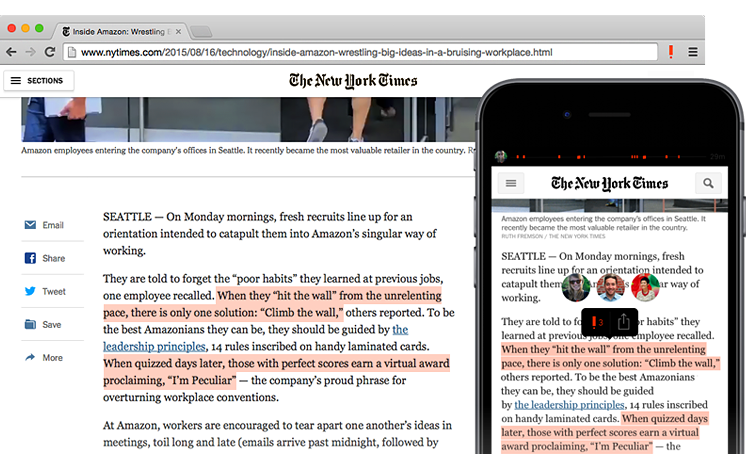
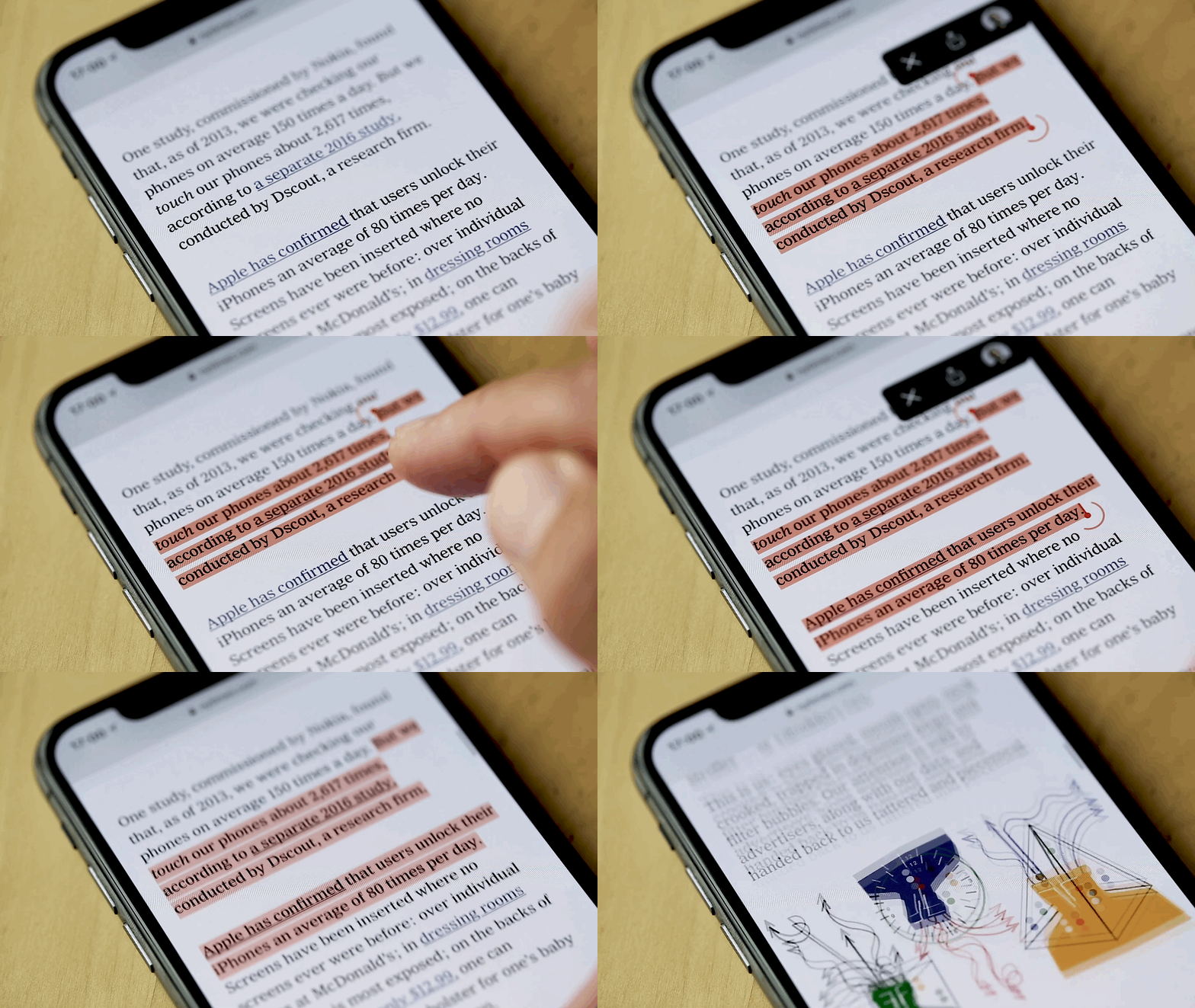
Quotes from articles work much better than links on Twitter, so the social giant is scooping up the team behind highlight sharing app Highly. This talent could help Twitter build its own version of Highly or develop other ways to excerpt the best content from websites and get it into the timeline.

Highly will shut down its iOS and Slack app on April 26th, though it promises that “No highlights will be harmed”. It’s also making its paid “Crowd Control” for private highlight sharing plus Highly For Teams free in the meantime.

Twitter confirmed to TechCrunch that the deal was an acquihire, and a spokesperson provided this statement: “We are excited to welcome the Highly team to Twitter. Their expertise will accelerate our product and design thinking around making Twitter more conversational.” We’ve asked about what data portability options Highly will offer.

“Social highlights can make sharing stories online feel personal, efficient and alive — like retelling a story to a friend, over coffee. They give people shared context and spark meaningful conversations” the Highly team writes.

Quotes can make the difference between someone breezing past a link they don’t want to leave Twitter to explore, and getting a peek at what’s smart about an article so they know if it’s worth diving deeper. Many people use OneShot to generate Twitter-formatted screenshots of posts. But Highly lets you just rub your finger over text to turn it into an image with a link back to the article for easy tweeting. You could also search an archive of your past highlights, and follow curators who spot the best quotes. Its browser extensions and native app let you highlight from wherever your read.

“Sharing highlights, not headlines — sharing thinking instead of lazily linking — helps spark the kind of conversation that leaves participants and observers alike a bit better off than they started. We’d like to see more of this” the Highly teams writes. That’s why it’s joining Twitter to work on improving conversation health. Founded in 2014, Highly had raised a seed round in 2017.


Audi self-driving unit taps newcomer Aeva for its unique lidar

Audi’s self-driving unit has tapped a startup with a unique approach to lidar as it ramps up testing in Munich using a fleet of autonomous electric e-tron crossover vehicles.

Audi subsidiary Autonomous Intelligent Driving, or AID, said Wednesday it’s using lidar sensors developed by Aeva, a startup founded just two years ago by veterans of Apple and Nikon.

Aeva, a Mountain View, Calif.,-based company started by Soroush Salehian, and Mina Rezk, have developed what they describe as “4D lidar” that can measure distance as well as instant velocity without losing range and all while preventing interference from the sun or other sensors. Move past the 4D branding-speak, and the tech is compelling.

Lidar, or light detection and ranging radar, measures distance. It’s considered by many (with Tesla as one exception) in the emerging automated driving industry as a critical and necessary sensor. And for years, that industry has been dominated by Velodyne.

Today, there are dozens of lidar startups that have popped up with promises of technological breakthroughs that will offer lower cost sensors with better resolution and accuracy than Velodyne. It’s a promise that is fraught with challenges, notably the ability to scale up manufacturing.

Traditional lidar sensors are able to determine distance by sending out high-power pulses of light outside the visible spectrum and then tracking how long it takes for each of those pulses to return. As they come back, the direction of, and distance to, whatever that pulse hits are recorded as a point and eventually forms a 3D map.

Aeva’s sensors emit a continuous low power laser, which allows them to sense instant velocity of every point in the frame at ranges up to 300 meters, the company says. In other words, Aeva’s sensors can determine distance and direction as well as speed of the objects coming to or moving away from it.

This is a handy perception feature for autonomous vehicles operating in an environment of objects that travel at different speeds like pedestrians, bicycles, and vehicles.

Aeva, backed by investors including Lux Capital and Canaan Partners, says its sensors are also unique because they’re “free” from interference from other sensors or sunlight.

It was this combination of long range perception, instantaneous velocity measurements at cm/s precision and robustness to interferences that sold AID CTO Alexandre Haag on the Aeva sensors.

Aeva spent the past 18 months going through a validation process with Audi and parent company Volkswagen. This announcement confirms that Aeva has made it past a critical hurdle in Audi’s AV plans. Aeva’s sensors are already on Audi e-tron development vehicles in Munich. The automaker plans to bring autonomous driving to urban mobility services within the next few years.

Interference is possible and can cause a stream of random points on a 3D map if the lidar is pointed directly at the sun or if there are multiple sensors on the same vehicle. Lidar companies have instituted various techniques to prevent interference patterns; autonomous vehicle developers also account for potential interference problems from the sun and snow by creating algorithms to reject these kinds of outliers.

Still, Salehian argues that interference is a significant challenge.

When you talk about challenge of building to scale and designing for mass scale, it’s not just about how easily they can be manufactured, Salehian contends. “It’s also about having these things work in unison together on a row. So when you’re talking about hundreds of thousands of these cars, that’s a big deal.”

Google Cloud brings on 27-year SAP veteran as it doubles down on enterprise adoption

Thomas Kurian, the newly-minted CEO of Google Cloud, used the company’s Cloud Next conference last week to lay out his vision for the future of Google’s cloud computing platform. That vision involves, in part, a hiring spree to give businesses that want to work with Google more people to talk to and get help from. Unsurprisingly, Kurian is also looking to put his stamp on the executive team, too, and today announced that former SAP executive Robert Enslin is joining Google Cloud as its new President of Global Customer Operations.

Enslin’s hire is another clear signal that Kurian is focused on enterprise customers. Enslin, after all, is a veteran of the enterprise business, with 27 years at SAP, where he served on the company’s executive board until he announced his resignation from the company earlier this month. After leading various parts of SAP, including as president of its cloud product portfolio, president of SAP North America and CEO of SAP Japan, Enslin announced that he had “a few more aspirations to fulfill.” Those aspirations, we now know, include helping Google Cloud expand its lineup of enterprise customers.

“Rob brings great international experience to his role having worked in South Africa, Europe, Asia and the United States—this global perspective will be invaluable as we expand Google Cloud into established industries and growth markets around the world,” Kurian writes in today’s announcement.

For the last two years, Google Cloud already had a President of Global Customer Operations, though, in the form of Paul-Henri Ferrand, a former Dell exec who was brought on by Google Cloud’s former CEO Diane Greene . Kurian says that Ferrand “has decided to take on a new challenge within Google.”


Unpacking Pinterest’s IPO expectations

For seven years, Pinterest has been considered a “unicorn,” boasting a valuation larger than $1 billion since its 2012 Series C funding round. Before that, it was considered an underdog, puzzling some investors with its “digital pinboard” and preference for “quality growth.”

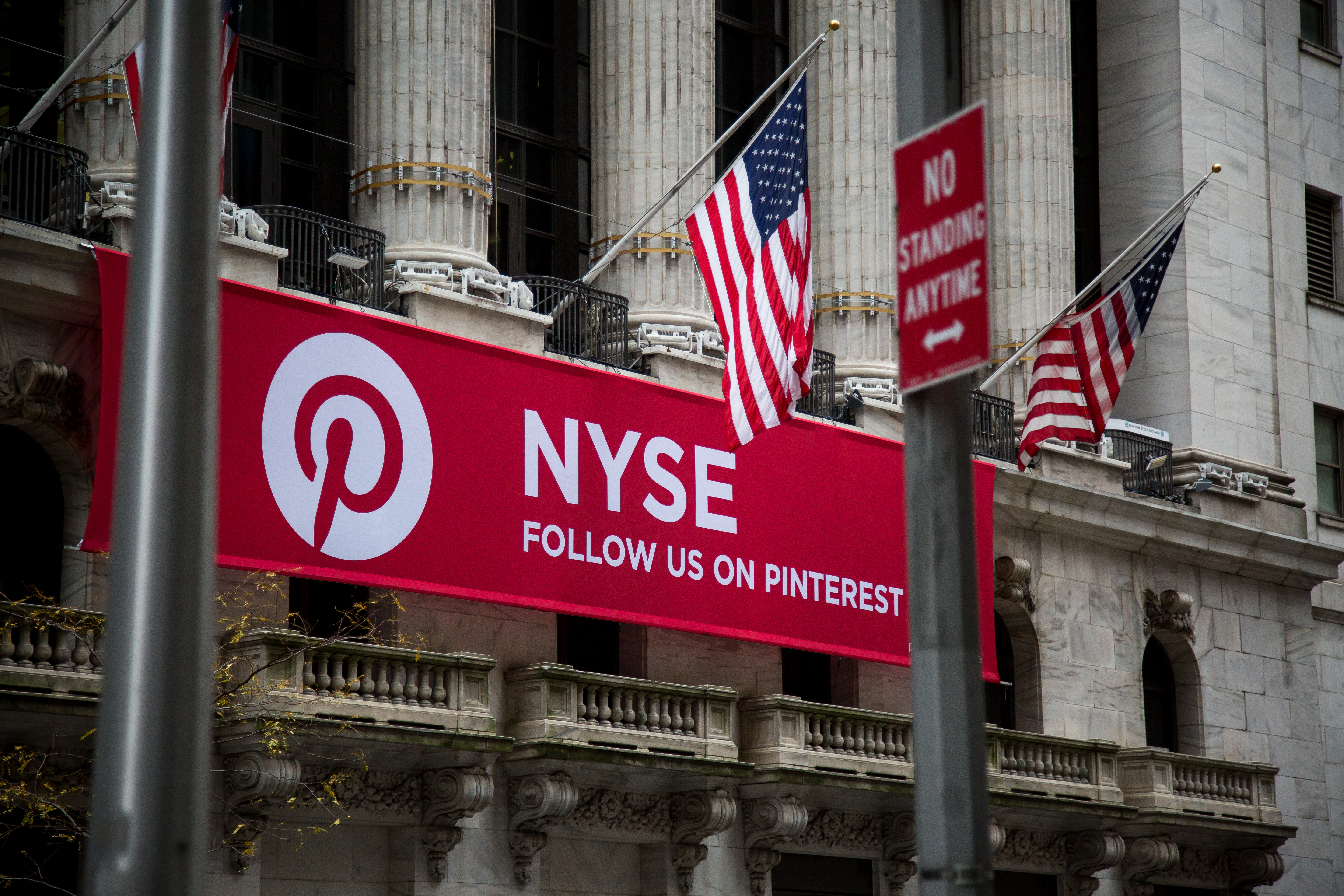
Now, as the company takes its final step toward its Thursday NYSE initial public offering, it’s being called an “undercorn.”

Pinterest plans to sell shares of its stock, titled “PINS,” at $15 to $17 apiece, less than the roughly $21 per share it charged private market investors to participate in its mid-2017 Series H, its last private financing. That IPO price translates into a mid-range valuation of $10.64 billion, or nearly $2 billion under the $12.3 billion valuation it garnered after its last round, hence “undercorn.”

There are many potential causes to a down round like this. In the case of Pinterest, it’s probably less a result of newly public Lyft’s poor performance on the stock market and more a result of its own reputation for slow growth. Pinterest is a disciplined company that’s carved a clear path to profitability. It has invested a lot of time and energy into building a positive, diverse culture and a product devoid of trolls and hate speech — time some believe should have been spent focused on rapid growth and scale.

Sure, if Pinterest had tossed its values aside and blitzscaled, maybe it would debut with a larger initial market cap, but its corporate culture will be key to its long-term value, and investors are going to get rich off its IPO either way. So Pinterest is an undercorn — who cares?

Pinterest isn’t too nice

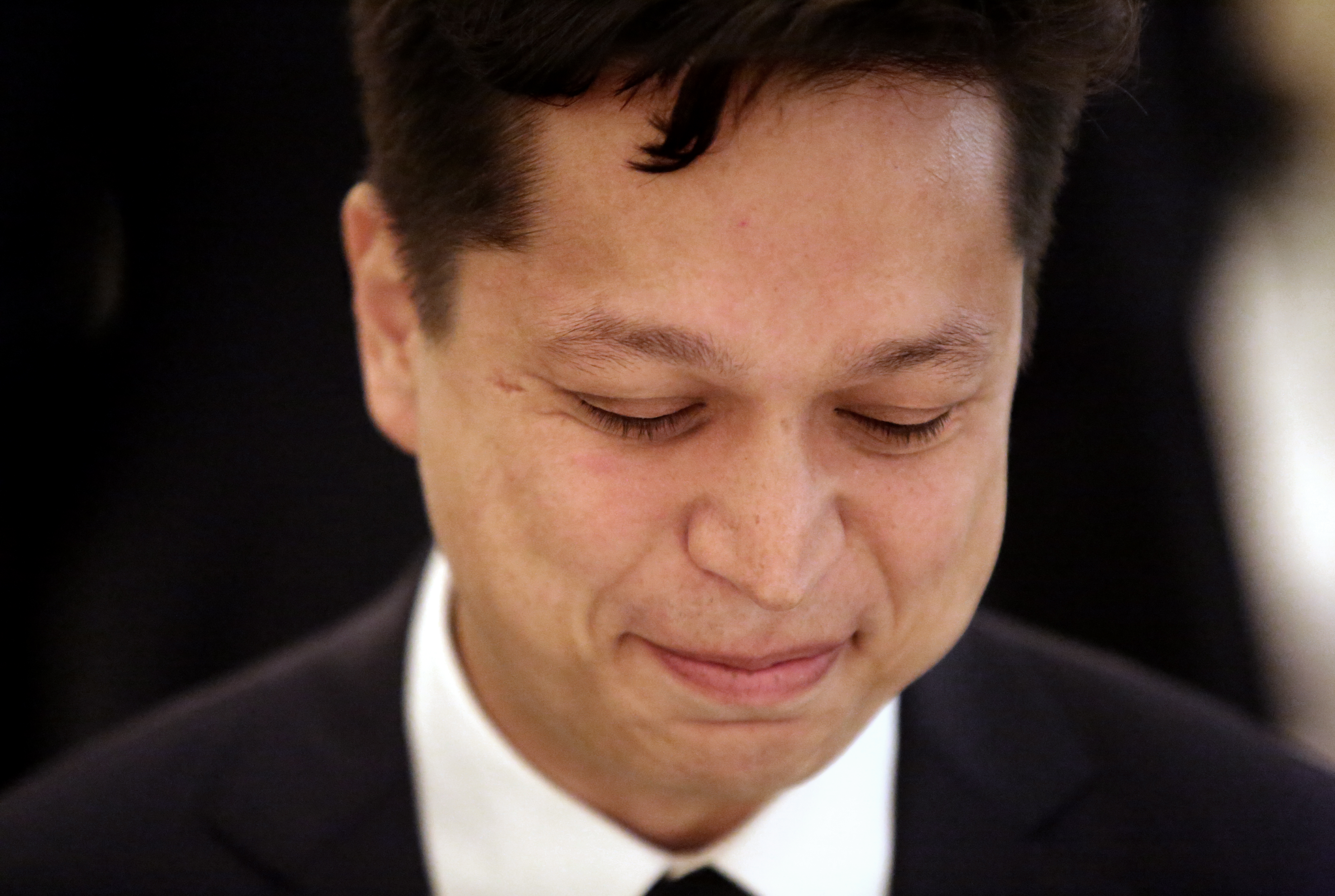
Ben Silbermann, chief executive officer of Pinterest. Photographer: Yana Paskova/Bloomberg via Getty Images

Founded in 2010, Pinterest is one of the youngest members of the newly dubbed “A-PLUS” cohort of unicorns, made up of Airbnb, Pinterest, Lyft, Uber and Slack. Compared to its peers, Pinterest has raised a modest $1.47 billion in equity funding from Bessemer Venture Partners, which holds a 13.1 percent pre-IPO stake, FirstMark Capital (9.8 percent), Andreessen Horowitz (9.6 percent), Fidelity Investments (7.1 percent) and Valiant Capital Partners (6 percent), according to the company’s IPO filing.

Today, Pinterest counts more than 250 million monthly active users, despite a company culture that many have said has slowed progress. Co-founder and chief executive officer Ben Silbermann, as The New York Times pointed out in a recent profile, is not your typical unicorn CEO. He has refused to adopt the move fast and break things mentality, and shied away from the press and focused on “quality growth” and a supportive company culture.

Even with Pinterest’s new status as an undercorn, Bessemer still owns a stake worth upwards of $1 billion. At a midpoint price, FirstMark and a16z’s shares will be worth about $700 million each. Pinterest employees may be too nice to make decisions as quick as other unicorns, as is the claim in CNBC’s recent piece on the company, but the company wouldn’t be where it is today if it completely lacked a “strategic direction.”

“Being nice and having core values and making decisions with intent is to their overall benefit,” Eric Kim, the co-founder of consumer tech investment firm Goodwater Capital, told TechCrunch. “They’ve done an amazing job at being very disciplined with a focus on top lines.”

IPO prospects

More often than not, businesses accrue value at IPO. Look at Zoom, for example; the under-the-radar video conferencing business is expected to increase its valuation nine times over in its IPO, expected tomorrow.

It’s a disappointment to late-stage investors when the opposite happens for one obvious reason: They may not see a return on their investment. If Pinterest indeed becomes an undercorn next week, the new investors that participated in its Series H may have to hold on to their stock longer than planned in hopes its value climbs over time. That, right there, is the worst thing about being an undercorn. These titles are otherwise just nonsense.

Pinterest’s valuation has long radically exceeded its revenues — a factor that surely paved the way for a down round — yet it was touted as a tech marvel, a unicorn among unicorns. In recent years, its valuation has swelled from $4.75 billion in 2014 to $10.47 billion in 2015 to, finally, $12.3 billion in 2017. Meanwhile, Pinterest posted revenues of $299 million in 2016, $473 million in 2017 and $756 million in 2018. There’s no denying the company’s clear path to profitability, as its losses are shrinking year-over-year while profits grow, but 2018’s revenues are still 16 times less than Pinterest’s “decacorn” valuation.

Silicon Valley has a tendency to over-value unprofitable consumer-facing businesses; Pinterest’s down round IPO could be a sign of Wall Street’s reckoning with Silicon Valley’s vanity metrics. Pinterest, however, isn’t the first unicorn to take a hit to its valuation at IPO. Both Box, the cloud-based content management platform, and payments company Square were undercorns when they went public, for example. Square has since thrived as a public company, while Box is currently trading around its initial share price.

“The recovery is all about execution as a public company when everything is much more transparent,” Monique Skruzny, CEO of InspIR Group, an advisory firm focused on investor relations, told TechCrunch. “The IPO is the beginning of a company’s long-term relationship with the public markets and the public markets have to make money. Going public at a valuation that may not necessarily be what some might think or consider to be the top leaves room for upside going forward.”

For Pinterest, continuing to cut losses and surpassing $1 billion in revenue this year is key. Given its history, financial metrics and the generally favorable market conditions, it looks poised to make that happen.

The bottom line is Pinterest, given its slow growth and inflated valuation, was probably always doomed to be nicknamed an undercorn. Its culture, however, shouldn’t be to blame for its new status. After all, a $10 billion IPO is something for the tech industry to be proud of, not to criticize.

In the words of former investor and Evernote co-founder Phil Libin, who joined me on the Equity podcast last week to talk IPOs: “Who would criticize a company who sacrifices growth because they have important culture? Losers, honestly.”

“If they didn’t have the culture and the people they wouldn’t have made anything,” he added.

Walt Disney and Badoo join companies pledging money to rebuild Notre-Dame

Walt Disney and dating app Badoo are the latest companies to pledge funds for the rebuilding of Notre-Dame after the historic cathedral sustained severe damage in a fire earlier this week. Disney is giving $5 million to help reconstruct the 800-year-old Parisian landmark, while Badoo will donate all of its April profits from its 22 million users in France.

They join several other companies that have already promised money, including Apple and a €100 million (about $113 million) pledge from Groupe Artemis, the holding company of French billionaire François-Henri Pinault. Pinault is the owner of luxury brand conglomerate Kering, which counts Gucci and Saint Laurent in its portfolio.

In total, about $1 billion in total has been pledged from individuals and companies. President Emmanuel Macron has set an ambitious five-year plan to restore Notre-Dame, though restoration experts say it may take as many as 15 years.

In a statement, Walt Disney chairman and chief executive officer Bob Iger said “Notre-Dame is a beacon of hope and beauty that has defined the heart of Paris and the soul of France for centuries, inspiring awe and reverence for its art and architecture and for its enduring place in human history. The Walt Disney Company stands with our friends and neighbor in the community, offering our heartfelt support as well as a $5 million donation for the restoration of this irreplacable masterpiece.”

Badoo made its announcement in a tweet earlier today.

https://platform.twitter.com/widgets.js

As researchers pursue links between the bacteria and human health, startups stand to benefit

In 2009, the National Institutes of Health launched a five-year, $150 million project to stimulate research into a new field of medicine examining the connections between the millions of bacteria living in the human gut and overall human health.

Spurred by the advancements in genetics from a decade earlier, this new field of research would map not just the human genome, but the genetic sequences of the microbes living in the body to ascertain their function and the role they played in ensuring the health of the humans they inhabited.

A decade later, investors are encouraging the commercialization of these tools with hundreds of millions in financing for startup companies with names like uBiome, Viome, Finch Therapeutics, Kallyope, Second Genome, Human Longevity, Maat Pharma, Seed and many, many more.

In all, these companies have raised well over half a billion dollars.

Some of these companies, like Finch Therapeutics, Second Genome, and Maat Pharma are squarely in the clinical world of big pharma — developing treatments for disease through standard research techniques and clinical trials.

Others, like uBiome and Viome, have gone directly to consumers first. Looking to build up a body of knowledge about the microbiome through consumer microbiome analysis kits that will give customers a snapshot of the microbes living in their gut ,and offer basic recommendations on how changes in diet could improve their overall health.
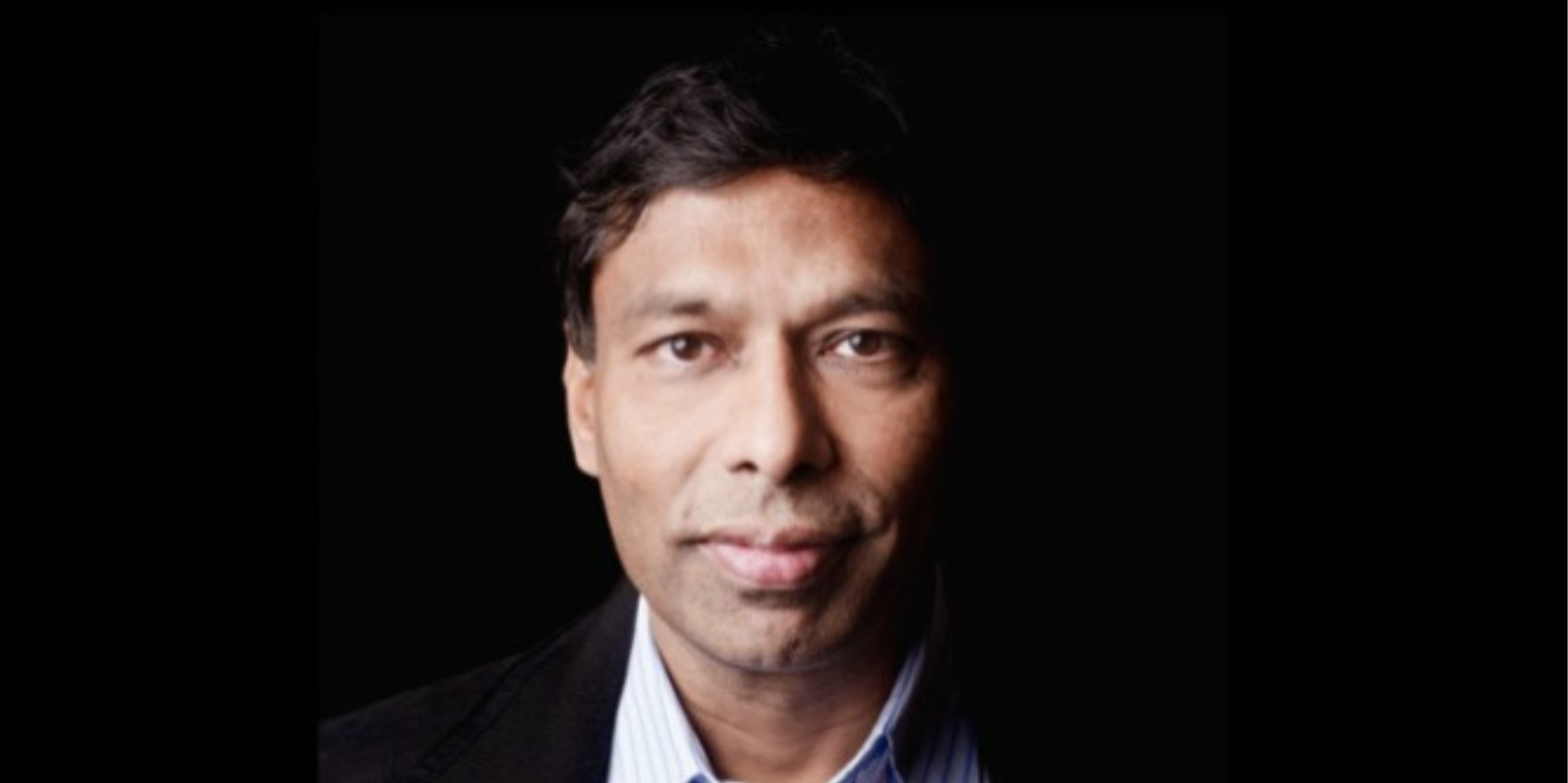
Viome chief executive and co-founder, Naveen Jain

These companies are operating in the regulatory gray area that governs supplements and nutraceuticals, which means they aren’t subject to regulatory approval.

But as they look for validation and acceptance in retail stores and scientific journals, they’re beginning to focus on clinically validated trials to prove that the science behind their recommendations is sound — and so that they can move further up the value chain into drug development. It’s like the strategy that 23andMe used to collect a body of genetic knowledge that the company is now offering up to drug companies so they can collaborate on developing new treatments for diseases.

Earlier this year, uBiome, which has raised over $100 million from investors for its microbiome testing kits since its launch in 2012, laid off over 50 employees in a move the company said was designed to refocus its efforts on drug development.

Now, Viome has raised $25 million as it pursues roughly 15 clinical research trials and looks to move into developing treatments of its own.

The goal of the trials is “to show that our intervention that we’re recommending actually produces results,” says Jain.

Recent scientific research has shown that focusing on microbiome health can reduce the disease burden or slow progression for a variety of illnesses including depression, osteoarthritis, functional bowel diseases, and multiple sclerosis.
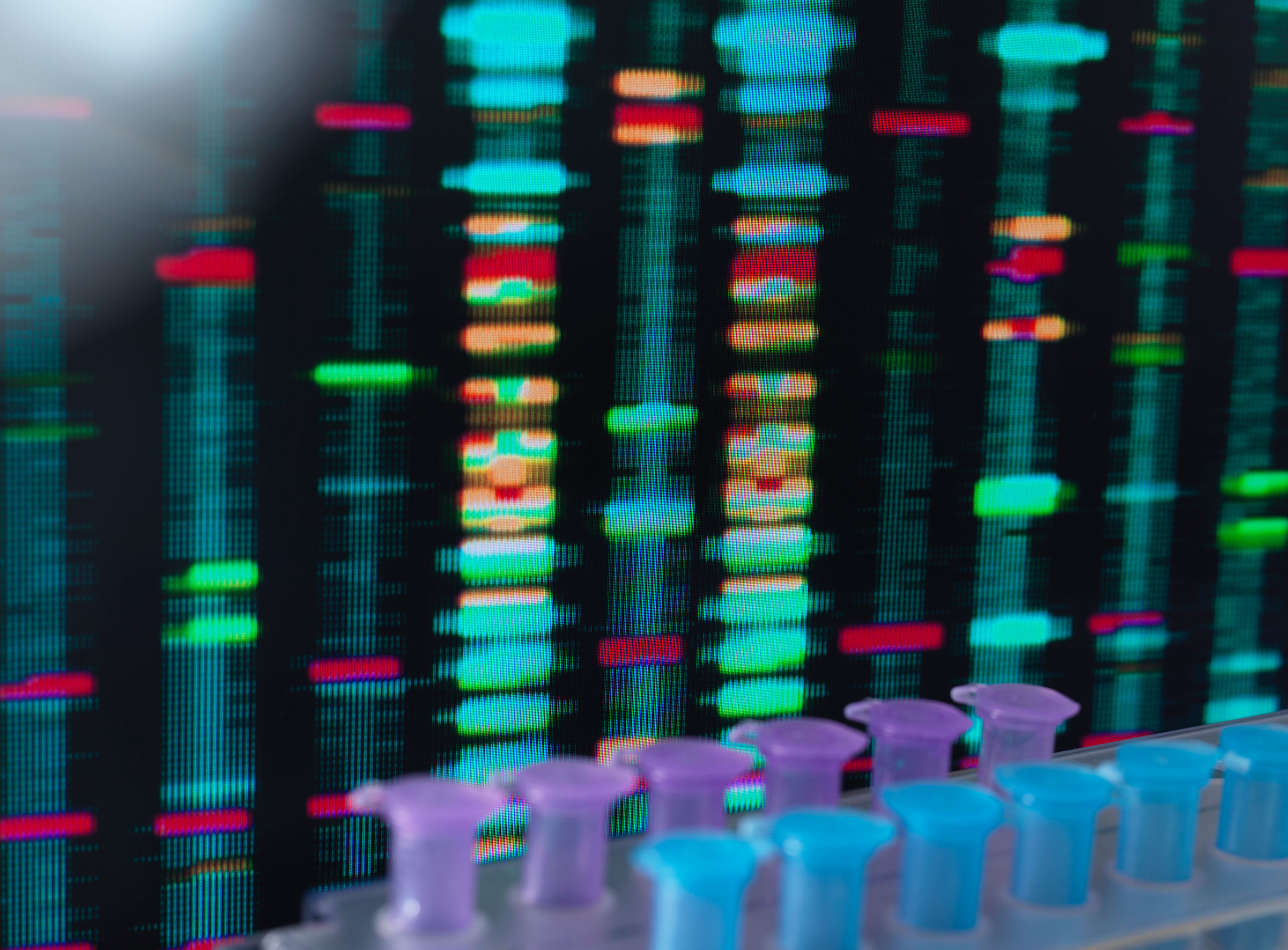
Photo: Andrew Brookes/Getty Images

For its part, Viome is focusing on colorectal cancer, breast cancer, depression and anxiety, diabetes and obesity, Crohn’s disease, colitis and digestive disorders.

While Viome has lagged behind other companies in filing patents and publishing papers, the new $25 million in funding from new and existing investors including Khosla Ventures, Bold Capital, Marc Benioff, Physician Partners, Hambrecht Healthcare Growth Venture Fund, and Matthew Harris of Global Infrastructure Partners will likely change that.

What separates Viome from other companies in the direct-to-consumer microbiome space is its testing technology, according to Jain. The company is the first spinout from Jain’s BlueDot venture, which was founded to commercialize orphaned technology coming from various national research laboratories around the country.

Viome’s tests have their origins in tech that BlueDot pulled from Los Alamos National Laboratory which is a variant on sequencing ribonucleic acid, the messenger mechanism which provides instructions to cells on what they should be producing.

Jain and his team of scientists argue that by sequencing RNA they can see the signaling pathway and metabolic pathway for how bacteria are producing chemicals in the body that can benefit or harm human health.

Viome and uBiome both benefited from their embrace by the “quantified self,” biohacking, and wellness communities that are looking for ways to optimize health using homeopathic or natural remedies for many diseases.
Image courtesy of Shutterstock

“Three years ago the microbiome was a very niche market and now the market is more mainstream. Now that it is mainstream it has to work for people,” says Jain. “It can’t simply be a research tool for the self-quantified people. It has to deliver value.”

That’s why the company is beginning to develop its clinical trials — a process that Jain said came with some growing pains.

A brief scan of customer reviews for the company’s product on consumer reporting websites reveals that not everyone has embraced Viome’s products and services and Jain attributed those reviews to the company’s decision to receive CLIA certification — something Jain said was necessary to proceed with the clinical trial research.

“We had growing pains last November and December. We were growing fast and we wanted to become a clinically certified lab…. That certification took a month [then] once we got the federal certification and we needed to get the state certification,” Jain says. “In those three months we got a lot of unhappy customers.”

Some industry observers ascribe the struggles of microbiome-focused startups less to their movement into clinical trials and more to the simple fact that these companies tackled the market too early, while much of the science remains unproven.

“The microbiome space is incredibly important too. But there is both on the scientific side a wealth of information that is still to be uncovered and the collection and understanding of that data needs to be moving that field forward,” said one entrepreneur in the consumer health market. “But the process [for] consumers is still too early.”

That’s likely one reason why both Viome and uBiome are looking to develop treatments.
Photo courtesy of Getty Images

“We are going to break even or lose money on selling the kits,” says Jain. “Once we understand why people have insomnia, diabetes and depression, then we can come up with a personalized set of nutrients that each person needs… Some could be new types of probiotics or prebiotics.”

Meanwhile, uBiome is touting its own patent portfolio as indicative of the real science behind its services (although most of the patents are around the technology it uses to sequence and analyze microbiome health, not any treatment protocols based on its analysis).

The company’s chief officers and researchers hold the first, second, and third spots as top microbiome inventors in terms of portfolio size and they hold the second, third, and fourth spots in terms of patent quality. This study provides a case study of how in-depth patent analyses can identify early indicators of technology and investment trends from large patent databases, according to a statement from uBiome last month.

The patents cover the method and analysis of their microbiome test kits, as well as the diagnostics and therapeutics of conditions ranging from cardiovascular disease, endocrine conditions, autoimmune disorders, neurological disorders, and more, the company said.

Both Jain and uBiome chief executive Jessica Richman are unlikely standard bearers for the potential of microbiome treatments. Neither have a background in science, but both believe strongly in the need to give consumers access to the potential benefits of the science quickly.

“The NIH-funded Human Microbiome Project (HMP) was a five-year, $173 million endeavor to better understand the human microbiome that ran from 2007 to August 2012. We started our crowdfunding campaign on Indiegogo in November 2012– right after it ended,” Richman said in an interview published on the Y Combinator site. “We wanted to take the results of the HMP and bring them directly to the public, enabling all of us to learn about our microbiomes and participate in science as soon as possible– without waiting years and years for the results to trickle down into products and services that people could use.”

For Jain, Viome represents an opportunity to give back and a chance to develop a cure for the disease that killed his father.

It is more than a company to me it is a mission to me it is my promise to my dad to making it right,” Jain says. “It’s also part of paying it forward.”