Daily Crunch: Apple and Qualcomm settle their patent dispute

The Daily Crunch is TechCrunch’s roundup of our biggest and most important stories. If you’d like to get this delivered to your inbox every day at around 9am Pacific, you can subscribe here.

1. Apple and Qualcomm are ending their legal battles

In a standoff that has been brewing since 2017, Apple argued that Qualcomm was charging too much for patent licensing. After Apple shifted to using Intel chips, Qualcomm moved to get iPhone imports banned in countries around the world for patent infringement.

The two companies have just announced a settlement, with both agreeing to drop all litigation with the other worldwide.

2. Stripe acquires Touchtech, updates APIs to prep for strong customer authentication in Europe

Touchtech Payments is a startup out of Ireland that works with banks to help them build and manage Strong Customer Authentication, a verification process that will typically require customers to provide two different forms of authentication in order to process transactions.

3. Jack Dorsey says it’s time to rethink the fundamental dynamics of Twitter

For most of the interview, Dorsey outlined steps that Twitter has taken to combat abuse and misinformation, but the TED’s Chris Anderson explained why the company’s critics sometimes find those steps so insufficient and unsatisfying. He compared Twitter to the Titanic, and Dorsey to the captain, listening calmly to passengers’ concerns about the iceberg up ahead.

Billionaire Richard Liu, founder and chief executive officer of JD.com Inc., listens during an interview in Beijing, China, on Wednesday, Oct. 19, 2016. Photographer: Qilai Shen/Bloomberg via Getty Images

4. Student sues JD.com’s billionaire CEO Richard Liu for alleged rape

Four months after local prosecutors decided not to press charges, a Chinese student has filed a lawsuit against JD.com founder and chief executive Richard Liu, alleging the billionaire businessman raped her in Minnesota back in August.

5. Lyric raises $160M Series B led by Airbnb

Lyric is a hospitality platform for business travelers. The company secures its own inventory in multi-family residential buildings through partnerships with landlords. It then brings in its designers to beautify the place and pack it full of amenities, including coffee from a local roaster and a fully functional kitchen.

6. Twitter to launch a ‘hide replies’ feature, plus other changes to its reporting process

Speaking of Twitter and its attempts to improve conversational health: Twitter announced the “Hide Replies” feature is set to launch in June. This puts the original poster in control of which tweets appear in a conversation thread.

7. Netflix added 9.6M subscribers in Q1, with revenue of $4.5B

The earnings letter also says Netflix will be testing something new in Q2 by releasing weekly top 10 lists of popular content for U.K. viewers: “For those who want to watch what others are watching, this may make choosing titles even easier.”


Google Cloud, McDonald’s big tech acquisition, and motivating an engineering team

Our live conference call on Google Cloud Next

Last week at its conference in San Francisco, Google Cloud unveiled a bevy of new features, and we also got to hear for the first time from its head honcho, Thomas Kurian . TechCrunch was on the scene, with enterprise editor Frederic Lardinois and enterprise reporter Ron Miller covering all aspects of this major conference.

They conducted a live conference call with Extra Crunch members last week. In case you missed it, we’ve posted the transcript for members.

New Series: The Exit (this time with Dynamic Yield)

We talk a lot at Extra Crunch about starting companies up, but how do startups exit?

Lucas Matney, one of TechCrunch’s San Francisco-based writers, is developing a new series exploring why certain companies successfully exit. In this inaugural interview, he talks with venture capitalist Adam Fisher of Bessemer about his investment in Dynamic Yield, an adtech (but not really ad-based) startup that exited to (of all places) McDonald’s for a reported $300 million.

Lucas Matney: McDonald’s certainly seems like a bit of an unexpected buyer considering the early history of the company, but at what point in the company’s life cycle did it make sense that they would want to buy this tech? Or are you still a little surprised that this is the deal that went through?

Adam Fisher: Oh, yeah, with these kind of things you have to be skeptical until you see it in writing, and even then, skeptical. You know, as a VC, I’ve seen too many deals never mature to an offer, or even after the offer it’s pulled away. I mean, the less traditional the buyer, the more worried you have to be that something strange will happen, that somebody will change their mind, that somebody will get fired, that something unrelated will happen on the macro level.

So, you know, we were obviously skeptical until there was an offer.

But it was very clear, at a certain point, that the level of engagement was so high and so immense that they were serious, that this wasn’t just an idea that popped up after the had met Dynamic Yield, that they had been thinking about making such an acquisition for quite a while beforehand.

How-to video maker Jumprope launches to leapfrog YouTube

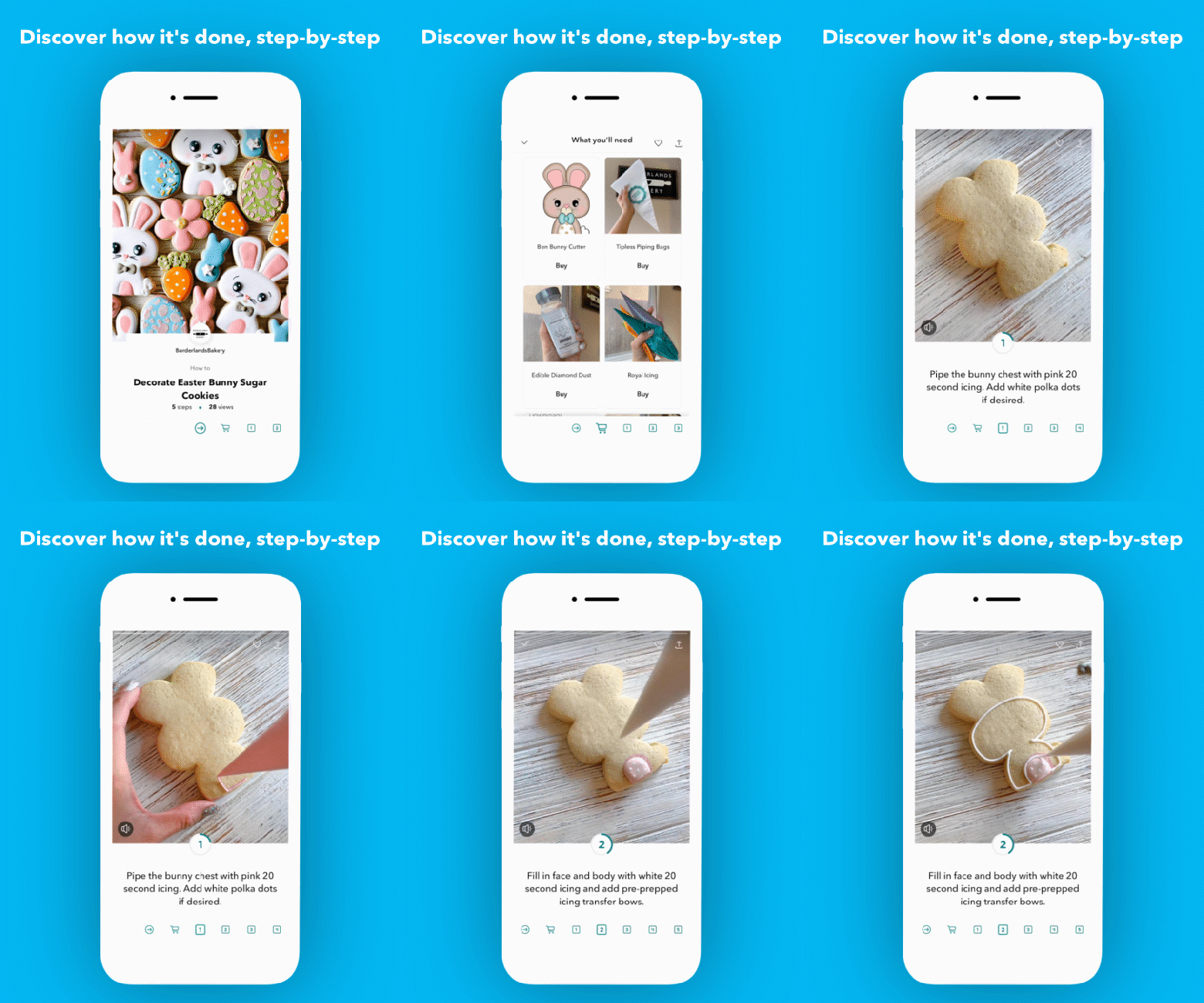
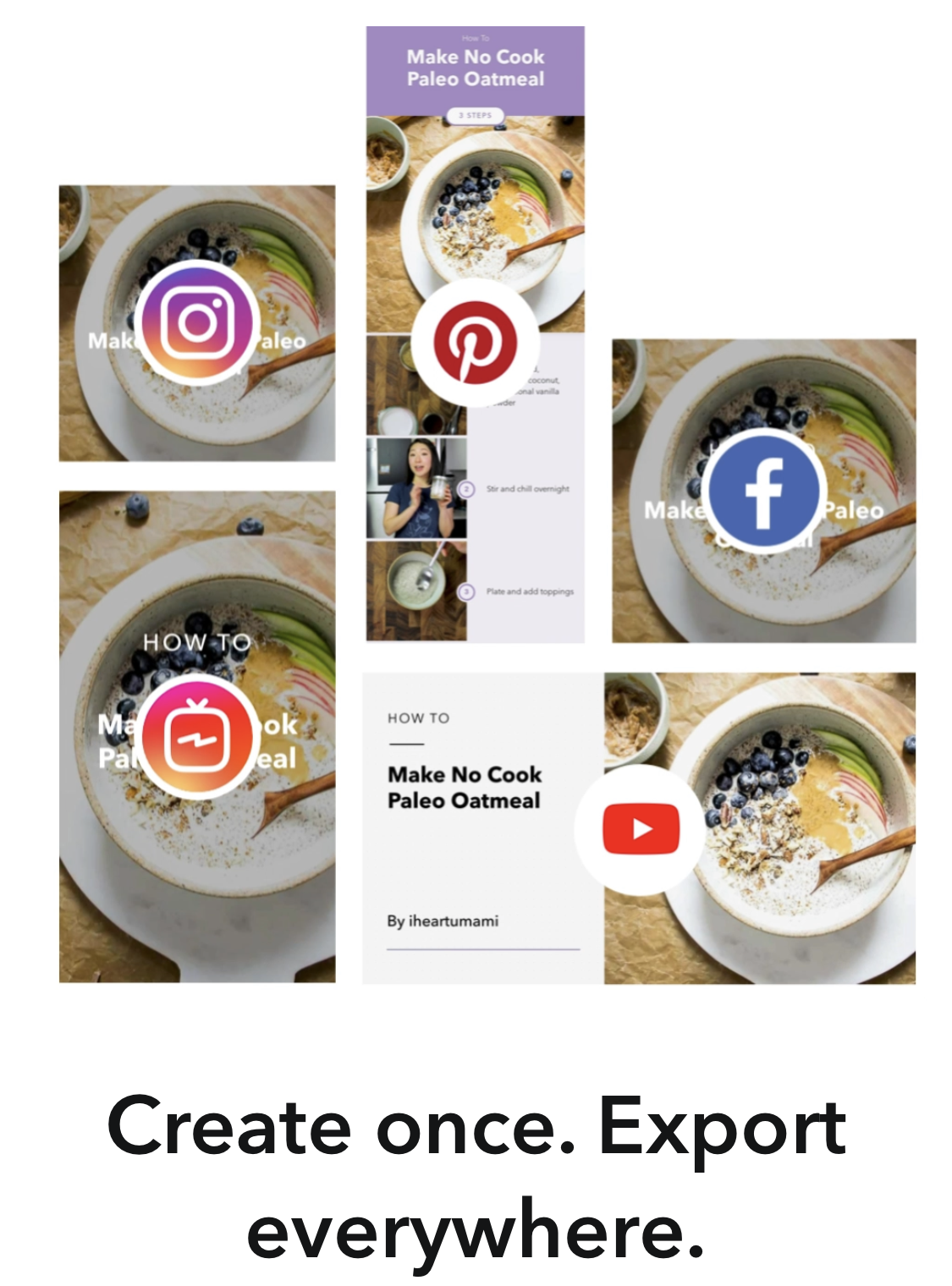
Sick of pausing and rewinding YouTube tutorials to replay that tricky part? Jumprope is a new instructional social network offering a powerful how-to video slideshow creation tool. Jumprope helps people make step-by-step guides to cooking, beauty, crafts, parenting and more using voice-overed looping GIFs for each phase. And creators can export their whole lesson for sharing on Instagram, YouTube, or wherever.

Jumprope officially launches its iOS app today with plenty of how-tos for making chocolate chip bars, Easter eggs, flower boxes, or fierce eyebrows. “By switching from free-form linear video to something much more structured, we can make it much easier for people to share their knowledge and hacks” says Jumprope co-founder and CEO Jake Poses.

The rise of Snapchat Stories and Pinterest have made people comfortable jumping on camera and showing off their niche interests. By building a new medium, Jumprope could become the home for rapid-fire learning. And since viewers will have tons of purchase intent for the makeup, art supplies, or equipment they’ll need to follow along, Jumprope could make serious cash off of ads or affiliate commerce.

The opportunity to bring instruction manuals into the mobile video era has attracted a $4.5 million seed round led by Lightspeed Venture Partners and joined by strategic angels like Adobe Chief Product Officer Scott Belsky and Thumbtack co-founders Marco Zappacosta and Jonathan Swanson. People are already devouring casual education content on HGTV and the Food Network, but Jumprope democratizes its creation.

Jumprope co-founders (from left): CTO Travis Johnson and CEO Jake Poses

The idea came from a deeply personal place for Poses. “My brother has pretty severe learning differences, and so growing up with him gave me this appreciation for figuring out how to break things down and explain them to people” Poses reveals. “I think that attached me to this problem of ‘how do you organize information so its simple and easy to understand?’. Lots and lots of people have this information trapped in their heads because there isn’t an a way to easily share that.”

Poses was formerly the VP of product at Thumbtack where he helped grow the company from 8 to 500 people and a $1.25 billion valuation. He teamed up with AppNexus’ VP of engineering Travis Johnson, who’d been leading a 50-person team of coders. “The product takes people who have knowledge and passion but not the skill to make video [and gives them] guard rails that make it easy to communicate” Poses explains.

Disrupting incumbents like YouTube’s grip on viewers might take years, but Jumprope sees its guide creation and export tool as a way to infiltrate and steal their users. That strategy mirrors how TikTok’s watermarked exports colonized the web

How To Make A Jumprope.

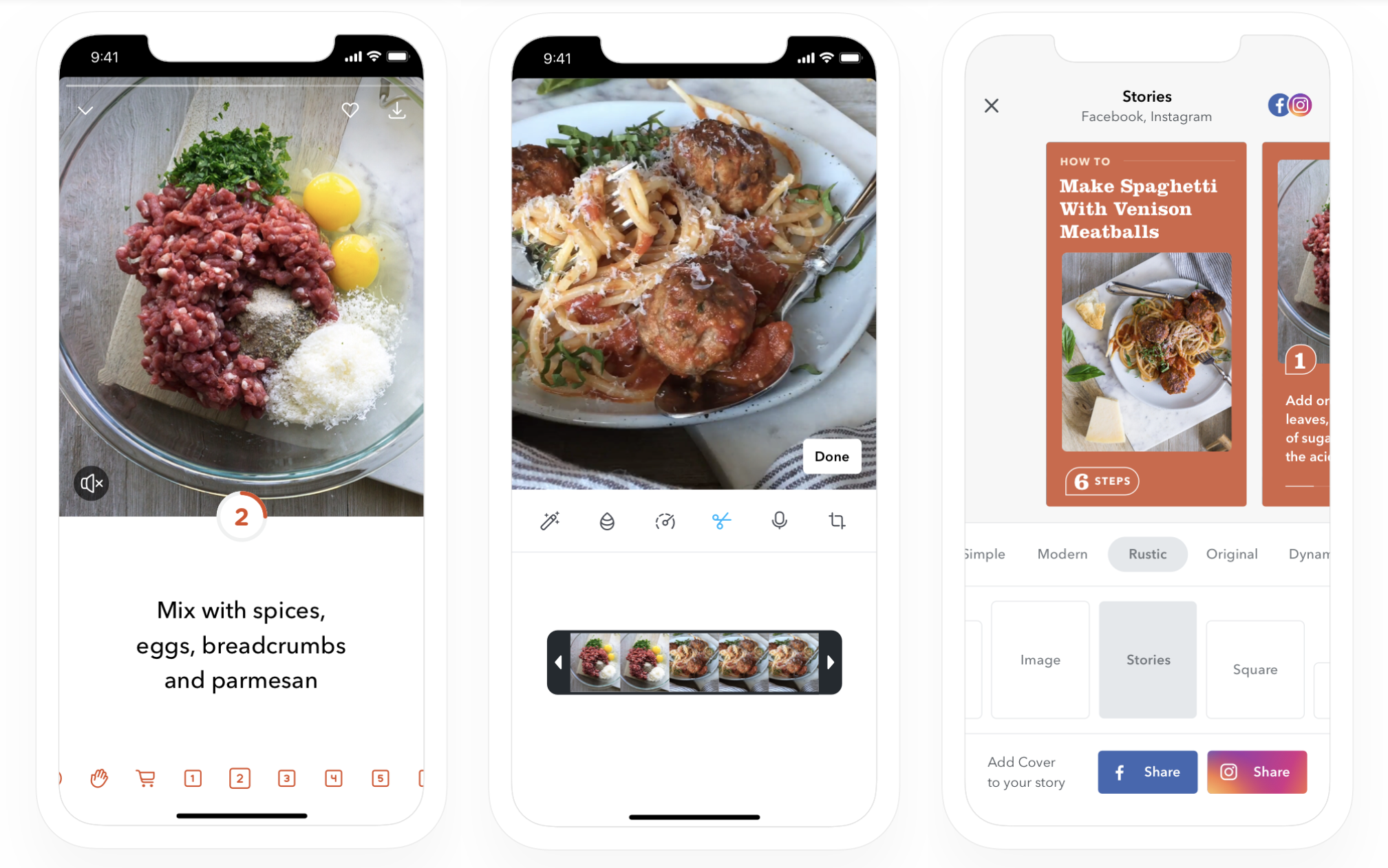
Jumprope lays out everything you’ll need to upload, including a cover image, introduction video, supplies list, and all your steps. For each, you’ll record a video that you can then enhance with voice over, increased speed, music, and filters.

Creators are free to suggest their own products or enter affiliate links to monetize their videos. Once it has enough viewers, Jumprope plans to introduce advertising, but it could also add tipping, subscriptions, paid how-tos, or brand sponsorship options down the line. Creators can export their lessons with five different border themes and seven different aspect ratios for posting to Instagram’s feed, IGTV, Snapchat Stories, YouTube, or embedding on their blog.
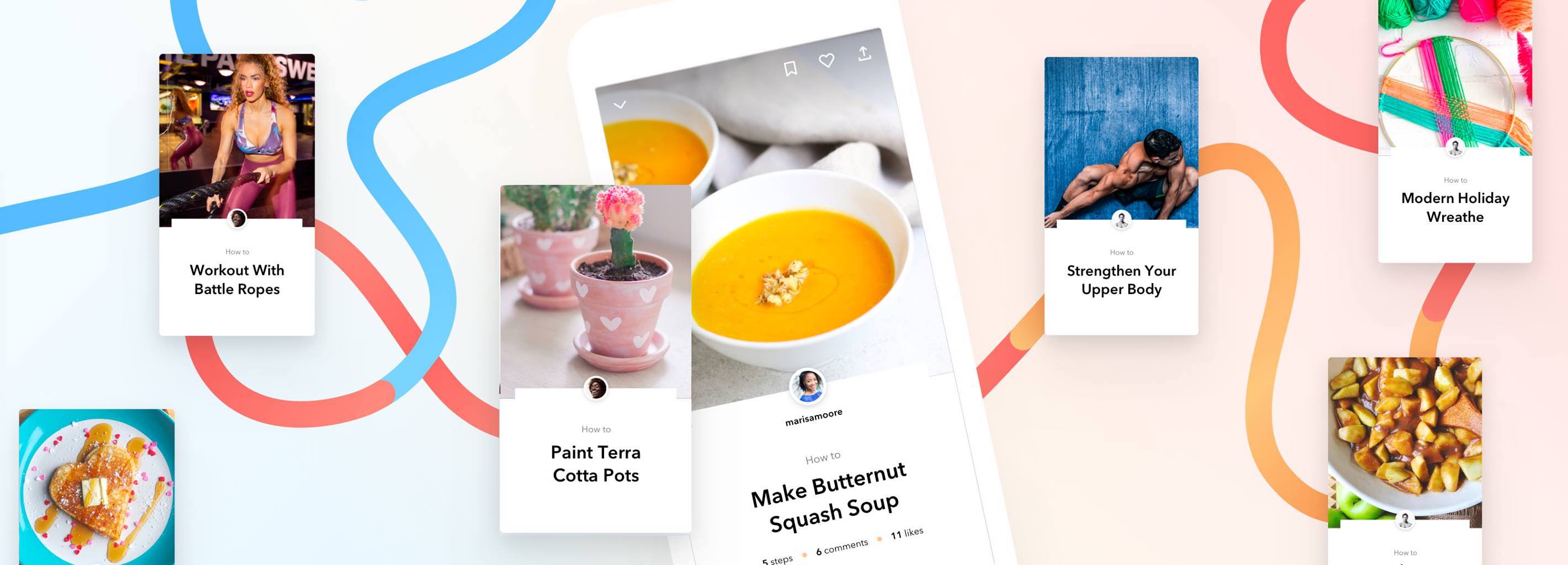
“Like with Stories, you basically tap through at your own pace” Poses says of the viewing experience. Jumprope offers some rudimentary discovery through categories, themed collections, or what’s new and popular. The startup has done extensive legwork to sign up featured creators in all its top categories. That means Jumprope’s catalog is already extensive, with food guides ranging from cinnabuns to pot roasts to how to perfectly chop an onion. 

“You’re not constantly dealing with the frustration of cooking something and trying to start and stop the video with greasy hands. And if you don’t want all the details, you can tap through it much faster” than trying to skim a YouTube video or blog post, Poses tells me. Next the company wants to build a commenting feature where you can leave notes, substitution suggestions, and more on each step of a guide.

Poses claims there’s no one building a direct competitor to its mobile video how-to editor. But he admits it will be an uphill climb to displace viewership on Instagram and YouTube. One challenge facing Jumprope is that most people aren’t hunting down how-to videos every day. The app will have to work to remind users it exists and that they shouldn’t just go with the lazy default of letting Google recommend the videos it hosts.

The internet has gathered communities around every conceivable interest. But greater access to creation and consumption necessitates better tools for production and curation. As we move from a material to an experiential culture, people crave skills that will help them forge memories and contribute to the world around them. Jumprope makes it a lot less work to leap into the life of a guru.

Google Home’s Philips Hue integration can now wake you up gently

Maybe you love the sound of your alarm clock blaring in the morning, heralding a new day full of joy and adventure. More likely, though, you don’t. If you prefer a more gentle wakeup (and have invested in some smart home technology), here’s some good news: Google Home now lets you use your Philips Hue lights to wake you up by slowly changing the light in your room.

Philips first announced this integration at CES earlier this year, with a planned rollout in March. Looks like that took a little while longer, as Google and Philips gently brought this feature to life.

Just like you can use your Home to turn on ‘Gentle Wake,’ which starts changing your lights 30 minutes before your wake-up time to mimic a sunrise, you can also go the opposite way and have the lights mimics sunset as you get read to go to bed. You can either trigger these light changes through an alarm or with a command that starts them immediately.

While the price of white Hue bulbs has come down in recent years, colored hue lights remain rather pricey, with single bulbs going for around $40. If that doesn’t hold you back, though, the Gentle Sleep and Wake features are now available in the U.S., U.K., Canada, Australia, Singapore and India in English only.

The Exit: an AI startup’s McPivot

Five years ago, Dynamic Yield was courting an investment from The New York Times as it looked to shift how publishers paywalled their content. Last month, Chicago-based fast food king McDonald’s bought the Israeli company for $300 million, a source told TechCrunch, with the purpose of rethinking how people order drive-thru chicken nuggets.

The pivot from courting the grey lady to the golden arches isn’t as drastic as it sounds. In a lot of ways, it’s the result of the company learning to say “no” to certain customers. At least, that’s what Bessemer’s Adam Fisher tells us.

The Exit is a new series at TechCrunch. It’s an exit interview of sorts with a VC who was in the right place at the right time but made the right call on an investment that paid off. 

Fisher

Fisher was Dynamic Yield founder Liad Agmon’s first call when he started looking for funds from institutional investors. Bessemer bankrolled the bulk of a $1.7 million funding round which valued the startup at $5 million pre-money back in 2013. The firm ended up putting about $15 million into Dynamic Yield, which raised ~$85 million in total from backers including Marker Capital, Union Tech Ventures, Baidu and The New York Times.

Fisher and I chatted at length about the company’s challenging rise and how Israel’s tech scene is still being underestimated. Fisher has 11 years at Bessemer under his belt and 14 exits including Wix, Intucell, Ravello and Leaba.

The interview has been edited for length and clarity. 


Saying “No”

Lucas Matney: So, right off the bat, how exactly did this tool initially built for publishers end up becoming something that McDonalds wanted?

Adam Fisher: I mean, the story of Dynamic Yield is unique. Liad, the founder and CEO, he was an entrepreneur in residence in our Herzliya office back in 2011. I’d identified him earlier from his previous company, and I just said, ‘Well, that’s the kind of guy I’d love to work with.’ I didn’t like his previous company, but there was something about his charisma, his technology background, his youth, which I just felt like “Wow, he’s going to do something interesting.” And so when he sold his previous company, coincidentally to another Chicago based company called Sears, I invited him and I think he found it very flattering, so he joined us as an EIR.

Help TechCrunch find the best startup growth marketing agencies

While billions of people are now online, thousands of companies large and small are using every channel they can to reach them. Companies like Slack, Airbnb, Pinterest, Instagram, and Dropbox have become dominant players in their market in the course of a few years, but how did they do it? As traditional marketing channels, like newspapers, TV, and PR, become less effective, how do startups go from zero users to their first one million customers?

Today, we’re launching a new initiative to help founders find the best growth marketing agencies in tech. If you’ve worked with a talented growth team that has helped your company scale, please fill out this two-minute nomination form.

Growth marketing is an interdisciplinary term that applies product management, engineering, analytics, and marketing techniques to solve one of the most gnarly challenges for startups: getting more people to use your product.

While technological barriers are lower and digital marketing channels are more affordable, it’s still exceptionally difficult for early-stage companies to acquire, retain, and monetize new users. Channels like SEO and email are saturated and newer marketing channels underperform over time. Entrepreneurs need to be more creative and strategic to win their market, and fortunately there are services that can help.    

Growth marketing is one of our latest efforts to make it easier and faster for founders to find the best service providers in the world. Whether it’s lawyers, brand designers, or growth marketers, we rely on founder nominations, like yours, to determine who we feature on our shortlist of Extra Crunch Verified Experts.

So, if you’ve worked with an awesome growth marketing agency, fill out this nomination form, and be on the lookout for profiles of our top founder-approved agencies in the next few weeks.  

Have any questions? Email ec_editors@techcrunch.com.

Apple may combine ‘Find My iPhone’ & ‘Find My Friends’ apps, launch a Tile-like tracking device

Apple is working to combine its tracking apps, “Find My iPhone” and “Find My Friends” into one unified app available on both iOS and Mac, according to a new report from the Apple news site 9to5Mac. In addition, the report says, Apple is developing a hardware product that can be attached to other items that Apple customers want to track — similar to what the Bluetooth tracker Tile offers today.

The idea is the new, unified app would then serve as a way to track anything — Apple devices, other important items like a handbag or backpack, as well as the location of family members and trusted friends. And all of this information would be securely synced to iCloud.

Meanwhile, the new hardware — codenamed “B389,” the report says — would represent a threat to Tile and other Bluetooth trackers on the market, as Apple would be able to capitalize on its massive install base of iPhones and other Apple devices to develop its own crowdsourced tracking-and-finding network.

The new hardware tag will be paired to a user’s iCloud account and users will be able to receive notifications when a device, like their iPhone, gets too far away from the tag. Users will also be able to configure locations to be ignored, and can opt to share a tag’s location with friends or family.

And like Tile, when the item with the tag attached goes missing, users could then put the tag into a “Lost” mode that would alert the owner when it’s found. The “finding” takes place by way of a crowdsourced network that includes every other Apple device owner who’s opted in to use this same tracking service, it would seem.

A large crowdsourced network is today one of Tile’s key advantages.

To date, the company has sold 15 million Tiles, which now connect to 4 million items daily with a 90 percent success rate, thanks to its own community-find feature. A competitive product from Apple could eat away at Tile’s business, while also serving as a new source of device revenue for Apple — and perhaps subscription revenues, too, for access to the crowd-finding network.

The reported merger of Apple’s two tracking applications comes at a time when Apple is rethinking how it wants to position its apps. Another recent report from 9to5Mac had confirmed Apple’s plans to break up iTunes, and instead bring new Music, Podcasts, and TV apps to Mac users. Apple will revamp its Books app, as part of these changes, too, the report said.

It’s worth noting that there’s a big leak at Apple right now, and 9to5Mac is benefitting.

In addition to the news about the unified apps, Tile-like tracker, and the breakup of iTunes, the site also leaked a big preview of iOS 13, which is said to include a system-wide dark mode, new gestures, visual changes, and more. And just yesterday, the site reported that Apple is working on a feature that will allow users to pair a Mac with an iPad, to use as a secondary display — something offered today by companies like Luna Display or Duet Display.

As for the new, unified “Find My…” app and hardware tag, no timeline to a public release is yet known.


Apple Pay comes to Uber Eats in nearly 20 markets

Apple Pay has been a payment option in Uber’s app since fall 2014, but the payment option hadn’t made its way over to Uber’s food delivery app, Uber Eats. Now, that’s changing. Uber today announced that users who want to use Apple Pay can finally do so using FaceID or TouchID in the Uber Eats app, instead of filling out their billing information.

Uber and Uber Eats had previously supported a range of payment options, including credit and debit cards, plus PayPal and Venmo. The latter — Venmo — was just introduced to Uber’s apps in 2018, after it found that over 6 million payments in Venmo had mentioned “Uber” in the last year. Venmo is also a useful service for when you need to split the cost of food orders and rides with friends, it had said.

Apple Pay is a direct challenger to PayPal and Venmo, both of which offer payment solutions for native mobile apps. But big-name brands are drawn to Apple Pay because of the ease of use of a built-in payment option, which can help increase conversion rates.

Today, Apple Pay works in apps like Fandango, Groupon, Airbnb, Hotel Tonight, Etsy, Staples, Instacart, Lyft, and many others. Plus, several of Uber Eats’ competitors already offer Apple Pay, including Postmates, Grubhub, Seamless, and other food-and-drink ordering apps like those Starbucks, Dunkin, Chipotle, and Panera.

Uber touts Apple Pay’s privacy and security in its announcement — noting that the service means actual card numbers aren’t stored on the device or on Apple’s servers. Instead, a unique Device Account Number is assigned, encrypted, and stored in the Secure Element on the end user’s device, it explains. Then each transaction is authorized with a one-time unique dynamic security code.

Apple Pay will roll out to Uber Eats starting in the coming weeks to nearly 20 markets, including Belgium, Canada, France, Hong Kong, Ireland, Italy, Japan, New Zealand, Poland, Portugal, Spain, Sweden, Switzerland, Taiwan, Netherlands, the United Arab Emirates, United Kingdom and United States.

EAT Club acquires Taro to expand its corporate lunch program

EAT Club, the lunch delivery service that counts companies like Facebook, Postmates and others as customers, has acquired meal delivery service Taro. Financial terms of the deal were not disclosed.

Taro’s business model worked by shipping pre-made meals directly to consumers. With the acquisition, however, Taro will no longer serve customers directly. Instead, it will be folded into EAT Club’s corporate program that enables employees to select their individually-packed lunch.

“EAT Club is the only food delivery service for businesses that treats eating in the workplace as a personalized culinary experience,” Taro co-founder and CEO Krishna Mehra said in a statement. “When we set out to expand our reach and distribution beyond family dinners, EAT Club emerged as a natural partner with its unique approach of delivering employees individualized selection within a collaborative atmosphere. EAT Club is making it possible for thousands of new workers to experience Taro’s food and flavors, and we are proud to join forces with them in increasing workplace satisfaction.”

What attracted EAT Club to Taro was its emphasis on healthy, authentic meals, and its approach to managing food production and distribution, EAT Club CEO Doug Leeds told TechCrunch.

“They’ve built some really interesting things we want to keep competitively secret on the equipment side,” Leeds said. “From top to bottom, we were pretty excited about what we were seeing at Taro. We’re going to take their people, tech, recipes and food production processes, and apply them to our existing customer.”

Leeds, the former CEO of IAC Publishing, joined EAT Club last year. Despite his short tenure, this marks the second acquisition under his leadership. Last year, EAT Club acquired lunch box delivery service Farm Hill.

EAT Club has served more than 17 million meals to employees to date, which comes out to about 25,000 meals a day. Given the amount of energy required for that level of production, EAT Club has implemented what it’s calling a Zero Carbon Initiative. Through the initiative, EAT Club will offset its carbon footprint by matching its electricity usage with renewable energy generation. EAT Club also plans to make all of its packaging either recyclable or compostable and support landfill recapture programs.

“By far, the biggest carbon impact of our business is in the delivery — the transportation aspect,” Leeds said. “But we wanted to go further than that. In our production, it was in all of the energy we used to cook food. We wanted to see what is the actual carbon footprint of the entire operation.”

On the employee-side, EAT Club plans to provide stronger commuter benefits and is looking to move its Los Angeles-based office to a location closer to the metro line, Leeds said. To date, EAT Club has raised more than $46 million from investors like August Capital, Trinity Ventures and Sodexo Ventures.

Verified Expert Brand Designer: Lake Buckley

In 2017, Lake Buckley turned down an in-house role at Patagonia to launch her freelance design career in a 400 sq. ft studio in Brooklyn, NY. Since then, the RISD-trained designer and art director has helped founders bring their mission-driven brand to life. We spoke with Lake about why she chose to become an independent designer, what makes a successful client collaboration, and what projects she’s most proud of (hint: one of them involves fig wasps).


Why she likes working with founders:

I think entrepreneurs are less jaded. They’re putting a lot more on the line and so because of that, oftentimes, they’re going to be a bit more awake at the switch, a bit more passionate, and down to do things in a non-traditional way. I really enjoy the level of excitement that they bring to the table because there is no one forcing them to start their own company. It’s coming from a place of genuine belief in their idea. It’s contagious. I think it’s important to maintain a sense that you’re doing things out of choice, not because you’re forced to. I really appreciate that energy coming from founders.

On her ideal client:

“I am excited about companies that care about design and are interested in taking risks and having a unique visual perspective. I love it when there is room to be humorous, bizarre, and slightly whimsical. I have a bold POV, and I look for clients that celebrate that.”

“Lake created an entire illustration system, a photography system, a color system, elements for a tone of voice, and a detailed strategy for deploying each of these elements in harmony.” A media executive in NYC

Below, you’ll find the rest of the founder reviews, the full interview, and more details like pricing and fee structures. This profile is part of our ongoing series covering startup brand designers and agencies with whom founders love to work, based on this survey and our own research. The survey is open indefinitely, so please fill it out if you haven’t already.


The Interview

Yvonne Leow: Can you tell me how you got started in design?

Lake Buckley: I’ve always been a maker. As a kid, I had a hundred projects going on at once. Knitting shoes, baking bread, drawing, making short movies with my brothers, etc. As I got older, I continued to study design and art as well as environmental science. The art gallery world that I had been exposed too felt too insular, and I enjoyed the practical nature of design and the myriad applications of it. I studied art and science in undergrad but I wanted a more formal design training, so I pursued graphic design at RISD for my graduate degree.