Maine lawmakers pass bill to protect ISPs from selling browsing data

Good news!

Maine lawmakers have passed a bill that will prevent internet providers from selling consumers’ private internet data to advertisers.

The state’s senate unanimously passed the bill 35-0 on Thursday following an earlier vote by state representatives 96-45 in favor of the bill.

The bill, if signed into law by state governor Janet Mills, will force the national and smaller regional internet providers operating in the state to first obtain permission from residents before their data can be sold or passed onto advertisers or other third parties.

Maine has about 1.3 million residents.

The Republican-controlled Federal Communications Commission voted in 2017 to allow internet providers to sell customers’ private and personal internet data and browsing histories — including which websites a user visits and for how long — to advertisers for the biggest buck. Congress later passed the measure into law.

At the time, the ACLU explained how this rule change affected ordinary Americans:

Your internet provider sees everything you do online. Even if the website you’re visiting is encrypted, your ISP can still see the website name, how frequently you visit the website, and how long you’re there for. And, because you are a paying customer, your ISP knows your social security number, full legal name, address, and bank account information. Linking all that information can reveal a lot about you – for example, if you are visiting a religious website or a support site for people with a particular illness.

In its latest remarks, the ACLU — which along with the Open Technology Institute and New America helped to draft the legislation — praised lawmakers for passing the bill, calling it the “strongest” internet privacy bill of any state.

“Today, the Maine legislature did what the U.S. Congress has thus far failed to do and voted to put consumer privacy before corporate profits,” said Oamshri Amarasingham, advocacy director at the ACLU of Maine, in  a statement.

“Nobody should have to choose between using the internet and protecting their own data,” she said.

What to expect from Apple’s WWDC 2019

Last year’s WWDC was a rare step away from hardware for the company, without a single device announcement. In fact, Apple’s gadget lines have largely been the subject of quiet releases over the past year. Ahead of the big Apple TV unveil, the company issued several press releases highlighting minor updates to flagship lines.

Just last week, it did the same for the MacBook, with a quiet announcement around the latest attempt to resolve longstanding issues with the malfunctioning keyboards. Next week’s developer show, on the other hand, is shaping up to be something altogether different. All signs point to a load of big announcements, including, potentially, some Pro hardware.

After a fairly slow I/O and Build, Apple could really make a splash here. The company’s not immune from larger industry trends, and is at a kind of crossroads at the moment. Its last financial call highlighted a shifting focus away from hardware, toward services and content. It makes sense — after all, smartphone sales have slowed across the board, just as the company started making massive investments in content through Apple TV+.

Of course, WWDC is, at its heart, a developer show. And while Monday’s kick-off keynote is very much for the public at large, the true nature of the show is highlighting what’s new with Apple’s various operating systems. Let’s start with the biggie.

iOS 13

The leaks have already started, and the big news so far is system-wide Dark Mode, following in the footsteps of MacOS. Easier on the eyes and battery, expect the update to take much the same form as it did on desktop, starting with Apple’s own apps, with more third-party partners arriving in the following months. Given how much more aggressive and engaged the iOS development community tends to be, however, I’d anticipate them falling in line a lot quicker this time out.

Bloomberg’s got a bunch of additional features for iOS 13, which has reportedly been operating under the codename “Yukon” (apparently Apple’s already at work on iOS 14, Azul, as well, which will have a 5G and AR focus).

Unsurprisingly, the Health app is getting a makeover. In fact, expect health to be a big focus for the company yet again at the event (see also: Apple Watch). Native support for Duet Display, like second screen iPad functionality, has been rumored to be in the works for a while. On a personal note, I can say it’s been a game changer for me, and native support will only make things better.

Mail, Maps and Home are said to be receiving updates as well. There will be bug fixes throughout, as well, said to make the system operate better on new and old systems alike. It’s a nice upgrade and, perhaps, tacit acknowledgment of the fact that consumers are simply holding onto their devices for longer these days.

MacOS 10.15Much like the smartphone, the PC is very much in a transitional space — though its identity crisis has been ongoing since it was completely overshadowed by the smartphone. For many Windows PC makers, that’s meant novel approaches like second screens, which were all the rage at Computex in Taipei this week.
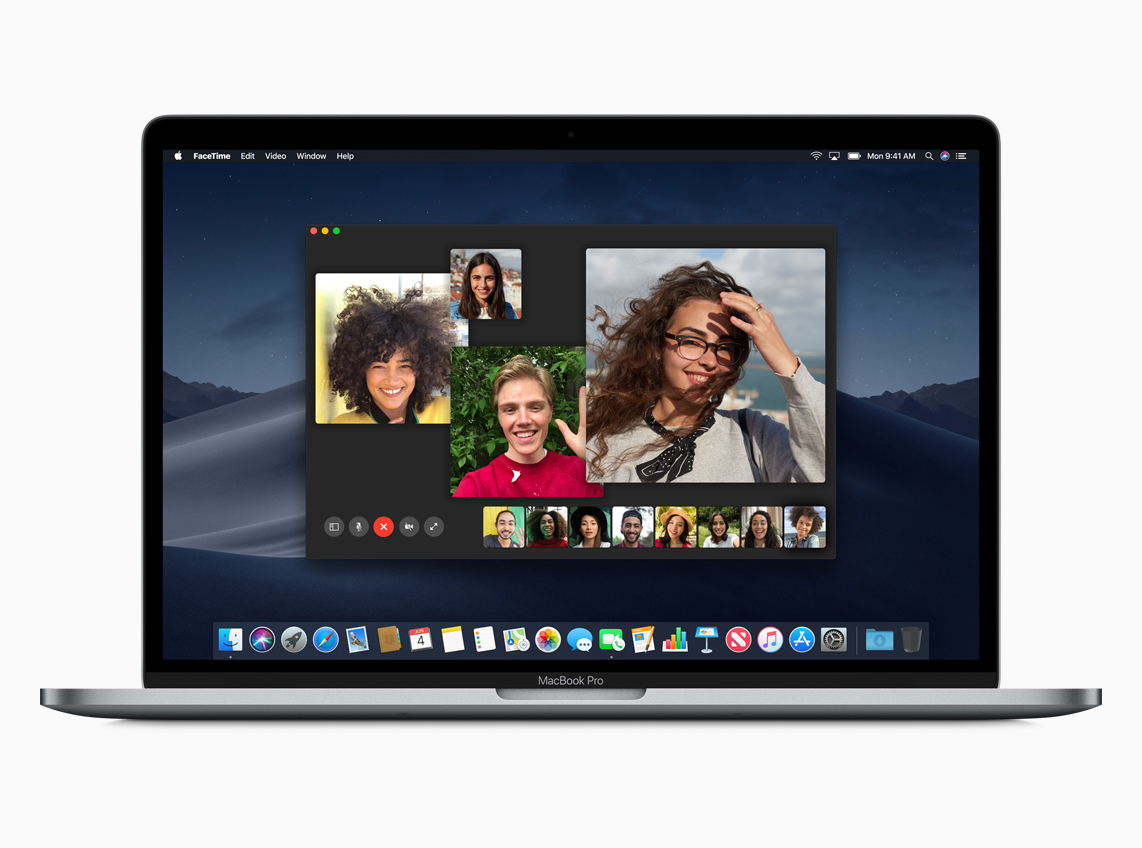
For Apple, however, that means definitively reclaiming the throne of king of the creative professionals, after an influx of competition from the likes of Microsoft and Samsung. But to start things off, the company’s going to once again borrow liberally from iOS.

Last year the company showed off a trio of apps — News, Stocks and Voice Memos — as a preview of the upcoming ability to port iOS apps to the desktop. That attempt to foster Mac app development, codenamed Marzipan (Apple’s all in on the fun codenames this year) will take center stage. Other iOS cribbed features include Screen Time, iMessage effects and Siri shortcuts, along with updates to a handful of existing Mac apps.

Mac hardware
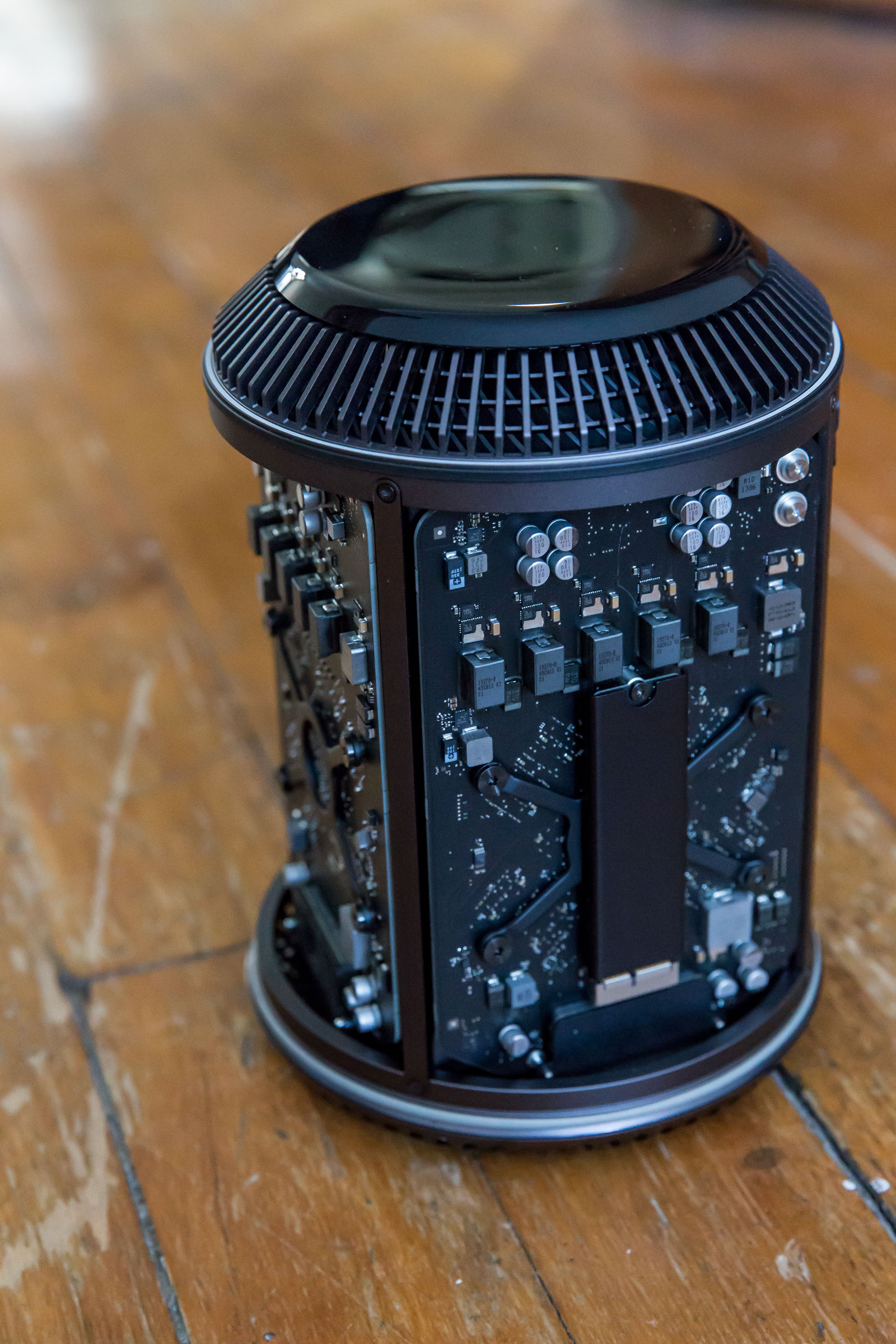
What’s really exciting here, however, is the long-awaited arrival of Mac Pro. I’m going to tell you to take this one with a grain of salt, just because, well, we’ve all been burned before. As previously noted, Apple hit pause on the category, which plans to completely revamp the high-end desktop. The iMac Pro has addressed the need for some, but for many pros with demanding workflows, there’s been a trash can-shaped hole in their heart.

Just about all signs appear to point to the the long-awaited refresh arriving next week. Ditto for a recently rumored 31.6-inch, 6K pro display, which would fit nicely alongside the Pro and the smoldering ashes of your checkbook.

Also
Apple’s most recent event was all about Apple TV. The company had a LOT to show off on that front, and while the redesigned app has already arrived, expect the company to continue talking up Apple TV+, the forthcoming billion-dollar, cable-killing, premium-content offering from the company.

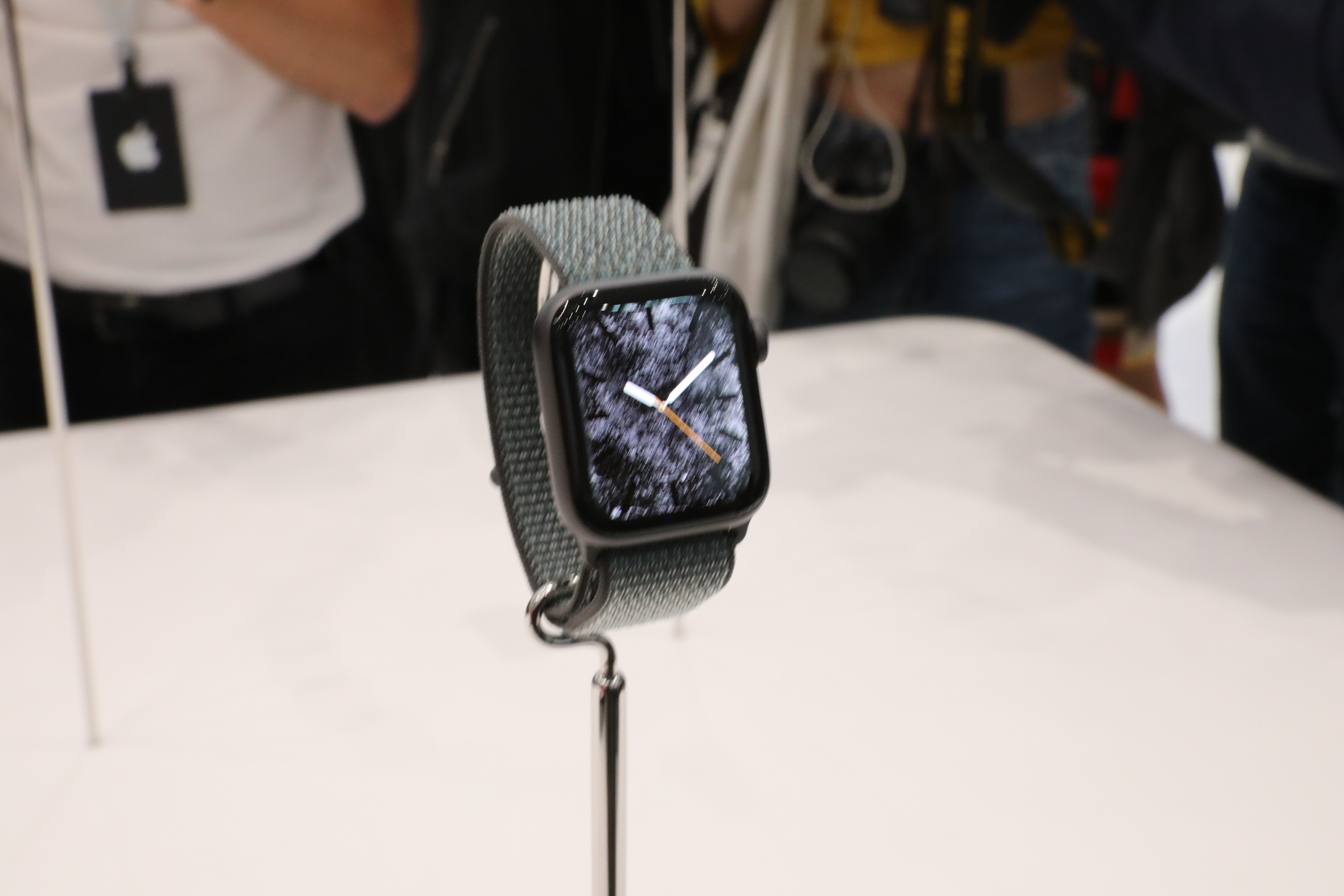
Last time Apple talked up the Apple Watch, it had some transit news to discuss. That goes live in New York tomorrow, by the way. This time out, expect a lot on the health front. That’s been the company’s focus for a while now, both as a way to distinguish the product from a flood of fellow wearables and to get it taken more seriously by the FDA and, by extension, healthcare providers. Menstrual tracking and a feature for keeping track of medications appear to be in the works.

So, too, are new Voice Memos, Calculator and Apple Books apps.

The party gets started Monday at 10AM PT / 1PM ET. We’ll be there with a live blog, breaking news and unicorn skull shards in tow.

Uber lost another $1B last quarter

Uber posted losses of $1 billion on revenue of $3.1 billion for the first quarter of 2019 in what was the company’s first earnings report as a public company.

Amid both positive and negative stock predictions, NYSE: UBER fluctuated ahead of the news, ultimately closing down .25 percent at $39.90 per share.

Analysts anticipated an adjusted net loss per share of 76 cents on earnings of about $3.1 billion, according to FactSet. Uber, in its IPO paperwork, said it expected first-quarter losses to fall between $1 billion and $1.1 billion.

Uber has traded below its IPO price in the three weeks since its rocky debut on The New York Stock Exchange. The company priced its IPO at $45 per share in early May, raising $8.1 billion in the process. The following morning, the business opened at a disappointing $42 a share, sending shockwaves through the tech ecosystem, which had predicted an IPO pop on par with Lyft’s, at least.

Uber’s performance on the public market has been a letdown. Investors, even Wall Street experts, had anticipated an initial market cap in the ballpark of $100 billion. Instead, Uber currently sits at a valuation of about $67 billion, or $5 billion lower than the $72 billion valuation it earned with its last private financing.

Uber’s competitor Lyft, for its part, is trading well below its IPO price of $72 per share, closing down 2.5 percent Thursday at $56 apiece. Its market cap today is approximately $16 billion, or just above its $15.1 billion Series I valuation. Lyft posted its first earnings report just days before Uber completed its historic IPO earlier this month.

Lyft posted first-quarter revenues of $776 million on losses of $1.14 billion, including $894 million in IPO-related expenses. The company’s revenues surpassed Wall Street estimates of $740 million while losses came in much higher than expected.

“The first quarter was a strong start to an important year, our first as a public company,” Lyft co-founder and chief executive officer Logan Green said in a statement. “Our performance was driven by the increased demand for our network and multi-modal platform, as Active Riders grew 46 percent and revenue grew 95 percent year-over-year. Transportation is one of the largest segments of our economy and we are still in the very early stages of an enormous secular shift from personal car ownership to Transportation-as-a-Service.”

Lyft said adjusted net losses came in at $211.5 million compared to $228.4 million in the first quarter of 2018. It expects revenue of more than $800 million on adjusted EBITDA losses of between $270 million and $280 million for the second-quarter of 2019. For the entire year, Lyft projects roughly $3.3 billion in total revenue on adjusted EBITDA losses of about $1.2 billion.

Pinterest, another well-known unicorn to recently IPO, shared tepid financials it what was also its first earnings report as a public company. The visual search engine posted revenues of $202 million on losses of $41.4 million for the three months ending March 31, 2019. The numbers surpassed Wall Street’s revenue estimates of about $200 million and represented significant growth from last year’s Q1 revenues of $131 million. Losses, however, came in roughly three times higher than estimates of 32 cents per share.

Pinterest went public in April, rising 25 percent during its first day trading on the NYSE. The company is now trading well below its $45 IPO price, however, closing Thursday at $25.5 per share with a market cap of about $14 billion.

Uber and Lyft’s lukewarm IPOs have shed light on Wall Street’s uncertainty toward highly priced unicorns. Many are now questioning how future venture-backed companies, particularly those in unproven industries like ride-hailing or autonomous vehicles, will fare as public companies.

This post is updating.

‘Gato Roboto’ and ‘Dig Dog’ put pixelated pets to work in gleeful gaming homages

Drawing inspiration from games of yore but with dog and cat protagonists that signal light adventures rather than grim, dark ones, Gato Roboto and Dig Dog are easy to recommend to anyone looking to waste a couple hours this weekend. Not only that, but the latter was developed in a fascinating and inspiring way.

Both games share a 1-bit aesthetic that goes back many years but most recently was popularized by the inimitable Downwell and recently used to wonderful effect in both Return of the Obra Dinn and Minit. This is a limitation that frees the developer from certain concerns while also challenging them to present the player with all the information they need with only two colors, or in Dig Dog’s case a couple more (but not a lot).

In the latter game, you play as a dog, digging for bones among a series of procedurally generated landscapes populated by enemies and hazards. Dig Dug is the obvious callback in the name, but gameplay is more bouncy and spontaneous rather than the slower, strategic digging of the arcade classic.

On every stage you’re tasked with collecting a bone that’s somewhere near the bottom, while avoiding various types of enemies and traps or, if you so choose, destroying them and occasionally yielding coins. These coins can be traded with a merchant who appears on some stages, offering various gameplay perks like a longer dash or higher jump.

Get it! Get the bone!

The simple controls let you jump, dig, and do a midair dash that kills enemies — that’s pretty much it. The rest is down to moment-to-moment choices: dig around that enemy or go through them? If I go this way will I trap myself in this hole? Is it worth attacking that bat nest for a coin or will it be too hard to get out alive?

Collected bones contribute towards unlocking new stages with different, more dangerous enemies and devious traps. It gives a sense of progression even when you only get a bone or two, as does your dog rocketing back upwards in a brief but satisfying zoomies celebration every time. So even when you die, and you will die a lot, you feel like you’re working towards something.

It’s a great time-waster and you won’t exhaust its challenges for hours of gameplay; it’s also very easy to pick up and play a few stages of, since a whole life might last less than a minute. At $4 it’s an easy one to recommend.

Interestingly, Dig Dog was developed by its creator with only minimal use of his hands. A repetitive stress condition made it painful and inadvisable for him to code using the keyboard, so he uses a voice-based coding system instead. If I had been told I couldn’t type any more, I’d probably just take up a new career, so I admire Rusty Moyher for his tenacity. He made a video about the process here, if you’re curious:

Gato Roboto, for Switch and PC, is a much more complicated game, though not nearly so much as its inspirations, the NES classics Metroid and Blaster Master. In Gato Roboto, as in those games, you explore a large world filled with monsters and tunnels, fighting bosses and outfitting yourself with new abilities, which in turn let you explore the world further.

This one isn’t as big and open as recent popular “metroidvanias” like Hollow Knight or Ori and the Blind Forest — it’s really much more like a linear action-adventure game in the style of metroidvanias.

The idea is that you’ve crash-landed on a planet after tracking a mysterious signal, but the spaceman aboard the ship is trapped — you play his cat, Kiki, who must explore the planet in his stead.

At first (or shall I say fur-st) you really are just a cat, but you’re soon equipped with a power suit that lets you jump and shoot like any other action game. However, you frequently have to jump out of it to get into a smaller tunnel or enter water, in which the suit can’t operate (and the cat only barely). In this respect it’s a bit like Blaster Master, in which your pilot could dismount and explore caves in top-down fashion — an innovation that made the game one of my favorites for the system. (If you haven’t played the Switch remake, Blaster Master Zero, I implore you to.)

Gato Roboto isn’t as taxing or complex as its predecessors, but it’s not really meant to be. It’s a non-stop romp where you always have a goal or an obstacle to overcome. The 1-bit graphics are so well executed that I stopped noticing them after a minute or two — the pixel art is very clear and only rarely does the lack of color cause any confusion whatever.

Like Dig Dog and Downwell before it, you can pick up color schemes to change the palette, a purely aesthetic choice but a fun collectible (some are quite horrid). The occasional secret and branching path keeps your brain working a little bit, but not too much.

The game is friendly and forgiving, but I will say that the bosses present rather serious difficulty spikes, and you may, as I did, find yourself dying over and over to them because they’re a hundred times more dangerous than ordinary enemies or environmental hazards. Fortunately the game is (kitty) littered with save points and, for the most part, the bosses are not overlong encounters. I still raged pretty hard on a couple of them.

It’s twice the price of Dig Dog, a whopping $8. I can safely say it’s worth the price of two coffees. Don’t hesitate.

These pleasant distractions should while away a few hours, and to me they represent a healthy gaming culture that can look back on its past and find inspiration, then choose to make something new and old at the same time.

Ferrari’s first plug-in hybrid is here. And it’s faster than ever.

Ferrari has finally cracked open the door for electrification. The Italian supercar manufacturer unveiled the SF90 Stradale, its first plug-in hybrid.

Purists might turn their noses up to Stradale’s mere 15.5 miles of all electric range. But it’s a milestone for Ferrari nonetheless and marks a shift in the company’s views and portfolio.

Now, some of the important nuts and bolts. The Stradale has a V8 turbo engine that produces 780 cv (or about 769 horsepower), which the company says is the highest power output of any 8-cylinder Ferraris in its history. Another 216 hp is produced by three electric motors. The motors are located between the engine and 8-speed dual clutch transmission on the rear axle, and two on the front axle.

When combined, the vehicle can travel from 0 to 62 miles per hour in 2.5 seconds.

You can check out the video below to see the supercar in action. Wait — and listen — for the moment when the driver switches to electric power.

The driver can place the Stradale in eDrive mode — Ferrari’s branding for all-electric mode. When the internal combustion engine is turned off, the two independent front motors can deliver a maximum speed of about 83 mph. That’s slow compared to car’s top speed of 211 mph, which is achieved when the combustion engine is activated. Reverse only uses eDrive mode.

https://platform.twitter.com/widgets.js

The default setting for the Stradale is to run as a hybrid. The vehicle can also has a performance setting, a mode that keeps the internal gas engine running because the priority is more on charging the battery than on efficiency. This mode gives the driver instant and full power.

Then there’s the tech inside the vehicle. The aeronautically cockpit has a head-up display unit that projects information on the front windscreen and in driver’s field of view. Ferrari has adopted a “hands on the wheel” philosphy in its design. The touch controls are on the steering wheel, which includes a small touch pad on the right hand. Voice and cruise controls are on the left-hand spoke of the wheel.

Ferrari has also taken design cues from Formula 1. For instance, the rotary switch for cruise control is a solution derived directly from the Formula 1 car

Ferrari hasn’t released details on the price yet, nor has it provided information on when the Stradale is coming to market.

Audi works with Fleetonomy to monitor and manage fleet utilization for its on demand program

Audi just completed a trial with Israeli company Fleetonomy as part of a potential wider rollout of the Israeli company’s fleet monitoring and management services designed to improve utilization.

Using Fleetonomy’s tools that provide predictive analytics of fleet utilization, Audi was able to improve the overall efficiency and utilization of its on-demand services.

Audi has always aspired to provide a great experience by advancing through innovation and technology. By taking an innovative multi-service approach, Fleetonomy’s platform showed great success in improving fleet efficiency while simultaneously reducing costs associated with utilization and operation according to fleet constraints,” said Nils Noack, Mobility Strategy, Audi Business Innovation GmbH. “We’re looking forward to exploring further the opportunity to leverage Fleetonomy’s AI-based fleet management platforms and to pushing Audi’s vision of innovative mobility services.”

Car companies around the world are rolling out on-demand or rental programs for their fleets as a way to replace traditional car ownership. Audi launched its on demand program back in 2015 and has a new version, Audi Select, which rolled out in 2018.

Using data from Germany and San Francisco,  Fleetonomy was able to predict demand and move supply of the Audi fleet around to rebalance vehicle availability in real-time, the company said.

“As the industry transforms, automotive manufacturers are expanding their role as providers of on-demand transportation services and are looking for efficient ways to manage their fleets according to dynamic demand and supply,” said Fleetnomy Co-Founder & CEO Israel Duanis, in a statement. “Fleetonomy provides unique fleet management solutions that help fleet operators automate, optimize and manage smart transportation services that meet current and future industry needs. We are very excited to have taken part in this project and are confident that Fleetonomy can positively influence overall efficiency, as well as enhance Audi’s smart transportation management capabilities in the future”.

Late last year, Fleetonomy snagged $3 million from investors including Vertex Ventures, with participation from Kardan Ventures and VectoIQ.

Now the company will look to expand on its success with other automakers as well as deepen its relationship with Audi.

Google Play cracks down on marijuana apps, loot boxes and more

On Wednesday, Google<a href=”https://techcrunch.com/2019/05/29/following-ftc-complaint-google-rolls-out-new-policies-around-kids-apps-on-google-play/”&gt; rolled out new policies around kids’ apps on Google Play following an FTC complaint claiming a lack of attention to app’s compliance with children’s privacy laws, and other rules around content. However, kids’ apps weren’t the only area being addressed this week. As it turns out, Google also cracked down on loot boxes, marijuana apps, while also expanding sections detailing prohibitions around hate speech, sexual content, and counterfeit goods, among other things.

The two more notable changes include a crackdown on “loot boxes” and a ban on apps that offer marijuana delivery — while the service providers’ apps can remain, the actual ordering process has to take place outside of the app itself, Google said.

Specifically, Google will no longer allow apps offering the ability to order marijuana through an in-app shopping cart, those that assist users in the delivery or pickup of marijuana, or those that facilitate the sale of THC products.

This isn’t a huge surprise — Apple already bans apps that allow for the sale of marijuana, tobacco, or other controlled substances in a similar fashion. On iOS, apps like Eaze and Weedmaps are allowed, but they don’t offer an ordering function. That’s the same policy Google is now applying on Google Play, too.

This is a complex subject for Google, Apple, and other app marketplace providers to tackle. Though some states have legalized the sale of marijuana, the laws vary. And it’s still illegal according to the federal government. Opting out of playing middleman here is probably the right step for app marketplace platforms.

That said, we understand Google has no intention of outright banning marijuana ordering and delivery apps.

The company knows they’re popular and wants them to stay. It’s even giving them a grace period of a 30 days to make changes, and is working with the affected app developers to ensure they’ll remain accessible.

“These apps simply need to move the shopping cart flow outside of the app itself to be compliant with this new policy,” a spokesperson explained. “We’ve been in contact with many of the developers and are working with them to answer any technical questions and help them implement the changes without customer disruption.”

Another big change impacts loot boxes — a form of gambling popular among gamers. Essentially, people pay a fee to receive a random selection of in-game items, some of which may be rare or valuable. Loot boxes have been heavily criticized for a variety of reasons, including their negative effect on gameplay and how they’re often marketed to children.

Last week, a new Senate bill was introduced with bipartisan support that would prohibit the sale of loot boxes to children, and fine those in violation.

Google Play hasn’t gone so far as to ban loot boxes entirely, but instead says games have to now disclose the odds of getting each item.

In addition to these changes, Google rolled out a handful of more minor updates, detailed on its Developer Policy Center website. 

Here, Google says it has expanded the definition of what it considers sexual content to include a variety of new examples, like illustrations of sexual poses, content depicts sexual aids and fetishes, and depictions of nudity that wouldn’t be appropriate in a public context. It also added “content that is lewd or profane,” according to Android Police which compared the old and new versions of the policy.

Definitions that are somewhat “open to interpretation” is something that Apple commonly uses to gain better editorial control over its own App Store. By adding a ban of “lewd or profane” content, Google can opt to reject apps that aren’t covered by other examples.

Google also expanded its list of examples around hate speech to include: “compilations of assertions intended to prove that a protected group is inhuman, inferior or worthy of being hated;” “apps that contain theories about a protected group possessing negative characteristics (e.g. malicious, corrupt, evil, etc.), or explicitly or implicitly claims the group is a threat;” and “content or speech trying to encourage others to believe that people should be hated or discriminated against because they are a member of a protected group.”

Additional changes include an update to the Intellectual Property policy that more clearly prohibits the sale or promotion for sale of counterfeit goods within an app; a clarification of the User Generated Content policy to explicitly prohibit monetization features that encourage objectionable behavior by users; and an update the Gambling policy with more examples.

A Google spokesperson says the company regularly updates its Play Store developer policies in accordance with best practices and legal regulations around the world. However, the most recent set of changes to err on the side of getting ahead of increased regulation — not only in terms of kids’ apps and data privacy, but also other areas now under legal scrutiny, like loot boxes and marijuana sales.


The Slack origin story

Let’s rewind a decade.

It’s 2009. Vancouver, Canada.

Stewart Butterfield, known already for his part in building Flickr, a photo-sharing service acquired by Yahoo in 2005, decided to try his hand — again — at building a game. Flickr had been a failed attempt at a game called Game Neverending followed by a big pivot. This time, Butterfield would make it work.

To make his dreams a reality, he joined forces with Flickr’s original chief software architect Cal Henderson, as well as former Flickr employees Eric Costello and Serguei Mourachov, who like himself, had served some time at Yahoo after the acquisition. Together, they would build Tiny Speck, the company behind an artful, non-combat massively multiplayer online game.

Years later, Butterfield would pull off a pivot more massive than his last. Slack, born from the ashes of his fantastical game, would lead a shift toward online productivity tools that fundamentally change the way people work.

Glitch is born

In mid-2009, former TechCrunch reporter-turned-venture-capitalist M.G. Siegler wrote one of the first stories on Butterfield’s mysterious startup plans.

“So what is Tiny Speck all about?” Siegler wrote. “That is still not entirely clear. The word on the street has been that it’s some kind of new social gaming endeavor, but all they’ll say on the site is ‘we are working on something huge and fun and we need help.’”

https://platform.twitter.com/widgets.js

Siegler would go on to invest in Slack as a general partner at GV, the venture capital arm of Alphabet .

“Clearly this is a creative project,” Siegler added. “It almost sounds like they’re making an animated movie. As awesome as that would be, with people like Henderson on board, you can bet there’s impressive engineering going on to turn this all into a game of some sort (if that is in fact what this is all about).”

After months of speculation, Tiny Speck unveiled its project: Glitch, an online game set inside the brains of 11 giants. It would be free with in-game purchases available and eventually, a paid subscription for power users.

Susan Fowler’s memoir has a title and a release date

Susan Fowler’s forthcoming memoir, titled “Whistleblower,” is scheduled to hit bookshelves March 3, 2020. The book will be available for pre-order beginning June 12.

In late 2017, Penguin Random House imprint Viking Books acquired the rights to the memoir, which chronicles the harassment and discrimination Fowler faced during her tenure as a site reliability engineer at Uber.

Her memoir “will expose the systemic flaws rampant in the startup culture,” with “previously unreported details of what happened after she went public with the harassment and discrimination she faced [at Uber],” according to Viking. Additionally, it will touch on themes such as women’s role in the American economy, navigating challenging work environments, with an “eye-popping depiction and broad indictment of a work culture where a woman can do absolutely everything right and still encounter tremendous obstacles.”

Twenty-eight-year-old Fowler is best known for her infamous blog post, “Reflecting On One Very, Very Strange Year At Uber,” published in 2017. The 3,000-word essay detailed the sexist bro-culture rampant at the fast-growing ride-hailing giant, as well as its human resources department’s negligence. Unintentionally, the writing made Fowler an overnight celebrity in the tech world, with leaders praising her for her bravery.

The blog post sparked a movement that ultimately led to the ouster of Uber’s founding chief executive officer, Travis Kalanick, and some 20 other Uber employees accused of sexual harassment or other inappropriate behavior. Kalanick was replaced by former Expedia chief Dara Khosrowshahi, who has since led the business’ highly anticipated initial public offering.

Fowler, alongside Tarana Burke, Ashley Judd and others, was named a Time Person of the Year in 2017, named on Vanity Fair’s New Establishment List, along with countless other accolades.

Exercising her writing chops, Fowler joined Stripe as the editor-in-chief of its quarterly publication, Increment, before getting scooped up by The New York Times, where she now works as an editor of the opinion section. Previously, she authored two books on computer programming.

In addition to “Whistleblower,” a movie documenting Fowler’s story is in the works. Oscar-nominated “Hidden Figures” screenwriter Allison Schroeder and former Disney executive and producer Kristin Burr have signed on to develop the film, titled “Disruptors.”

“The Disaster Artist” producer Erin Westerman is credited with landing the project for Good Universe, an independent film production company, and will oversee its production. Westerman told Deadline in late 2017 that the “project is an anthem for women and an important reminder of the power of one female voice.”


‘Lion King’ director Jon Favreau explains why he’s remaking an animated classic

Disney has been cranking out live action remakes of its animated classics for the past few years — in fact, Guy Ritchie’s take on “Aladdin” is currently at the top of the box office.

But these distinctions get tricky with the growing reliance on computer generated visual effects. “The Jungle Book,” for example, mostly features a single live actor interacting with CGI animals. And “The Lion King” (scheduled for release on July 19) takes that approach even further: Everything you seen onscreen has been created on a computer.

I got a chance to visit the “Lion King” set in December 2017, where I participated in a group interview with Jon Favreau, who directed both “The Jungle Book” and this new film. When asked whether he considers this a live action or animated movie, he said, “It’s difficult, because it’s neither, really.”

“There’s no real animals and there’s no real cameras and there’s not even any performance that’s being captured,” Favreau acknowledged. “There’s underlying [performance] data that’s real, but everything is coming through the hands of artists.”

At the same time, he argued that it would be “misleading” to call this an animated film. For one thing, the visuals aren’t stylized in the way you’d expect in a cartoon. Instead, the aim was to create animals that look even more realistic than the ones in “The Jungle Book” — Favreau said the footage should feel like “a BBC documentary,” albeit one where the animals talk and sing.

“Between the quality of the rendering and the techniques we’re using, it starts to hopefully feel like you’re watching something that’s not a visual effects production, but something where you’re just looking into a world that’s very realistic,” he continued. “And emotionally, feels as realistic as if you’re watching live creatures. And that’s kind of the trick here, because I don’t think anybody wants to see another animated ‘Lion King,’ because it still holds up really, really well.”

To achieve this, Favreau said he wanted this to have “the feeling of a live action shoot,” including the way he shot with the actors (Donald Glover plays Simba, Beyoncé plays Nala and James Earl Jones returns as Mufasa). Given the goal of creating realistic animals, Favreau said the traditional motion capture approach didn’t make sense, but he still wanted the actors to “overlap and perform together and improvise and do whatever we want.”

So he brought them to a soundproofed stage, and they performed “standing up, almost like you would in a motion capture stage — except no tracking markers, no data, no metadata’s being recorded, it’s only long-lens video cameras to get their faces and performances.”

Favreau compared this to shooting with Robert Downey Jr. and Gwyneth Paltrow on the original “Iron Man,” where he “tried to have multiple cameras and let Gwyneth and Robert improv when I could, because there’s so much of the movie you can’t change, because it’s visual effects.”

And even when he wasn’t working with actors, Favreau still “shot” the scenes with live action cinematographer Caleb Deschanel. That meant building a virtual world using the Unity game engine, then adding the digital equivalent of real-world production elements like lights and dolly tracks to block and film seen in that world. The filmmakers could use iPads to add, move and eliminate those elements, and could put on Vive VR headsets to explore the world.

“That’s the way I learned how to direct,” Favreau said. “It wasn’t sitting, looking over somebody’s shoulder [on a] computer. It was being in a real location. There’s something about being in a real 3D environment that makes it — I don’t know, just the parts of my brain are firing that fire on a real movie.”

To be clear, those virtual scenes aren’t what you’ll actually seen onscreen. Instead, they provide guidance for the animators to create far more detailed shots. Favreau said that in a sense, he was trying to resist the complete freedom that the computer generated approach can bring.

“I find that what the flexibility of digital production has done is given the opportunity for people to postpone being decisive,” he said. “It used to be if, you know, you built a big animatronic dinosaur, you had to make sure you got that shot right and framed right and it worked … And so, part of this experiment is to see if we really lock in early, as animated films do, and spend all of our time refining.”

As for why he’s going through all this effort to remake a film that, by his own admission, holds up really well, Favreau said he was inspired by the success of the stage play: “People will go see the stage show, and they’ll also see the movie, and you could love both of them and see them as two different things.” Similarly, he said his team set out to “create something that feels like a completely different medium than either of those two.”