The misunderstandings of 18-month-old Luckin’s $500m IPO

Luckin Coffee is the most energizing IPO in recent memory, and not just because it sells caffeine.

Most venture-backed startups can take a decade to reach the public markets. Luckin cut that time down to about 18 months. Founder Jenny Qian Zhiya opened a trial coffee shop in Beijing, with a focus on rapid coffee delivery and mobile app ordering. Fast forward to today, and the company’s 2,370 stores conducted nearly 17 million transactions in the most recent quarter ending March 31.

Now Luckin — which can barely offer year-over-year comparables — intends to list its American depository shares (ADSs) on Nasdaq in the coming weeks, hoping to raise over $500 million through the IPO.

Understanding and going long or short on this company requires that we drop the facile analogies (aka it’s Starbucks!), understand the context of startup growth in China, and take a (rare) bet on a high-flying growth company in the public markets.

The incredibly useless Starbucks analogy

Lonely Planet via Getty Images

There is nothing in the United States that compares to Luckin. But that hasn’t stopped journalists, financial analysts, and what I suspect is Luckin’s own PR folks from making the obvious coffee chain comparison.

Uber offers shareable video of drivers’ ‘journey’

A new feature rolling out to Uber drivers offers a semi-customized look at their “journey” with the company. On the face of its, the video is similar to sort offered up by Facebook on the occasion of anniversaries. Here, it pairs a driver’s stats with jaunty music and animation, highlighting how long they’ve been driving and when they started with the service.

The video pulls other journey metrics that it’s already begun sharing with riders through the app, including fun stats like the number of sunrises and sunsets they’ve “driven through,” the total of five-star trips and the longest streak of five star trips.

https://platform.twitter.com/widgets.js

Uber shared the feature with drivers, who can opt into making it visible in the app. Doing so will show passengers on a prompt upon the driver’s arrival to provide additional insight with the person with whom they’ll be sharing a car. A number of drivers have also begun to share the feature through social media like Twitter, which can be easily accessed with a search.

https://platform.twitter.com/widgets.js

The feature appears to have arrived for many over the weekend, rolling out to all drivers and Uber Eats partners globally who have made more than 100 trips. It arrives in the wake of the company’s (admittedly underwhelming) IPO. It also also debuts in the face of last week’s strikes by taxi worker advocacy groups protesting the company’s role in the growing gig economy.

After criticism over moderator treatment, Facebook raises wages and boosts support for contractors

Facebook has been repeatedly (and rightly) hammered for its treatment of the content moderators who ensure the site doesn’t end up becoming a river of images, videos and articles embodying the worst of humanity.

Those workers, and the hundreds (if not thousands) of other contractors Facebook employs to cook  food, provide security, and transportation for the social media giant’s highly compensated staff, are getting a little salary boost and a commitment to better care for the toll these jobs can take on some workers.

“Today we’re committing to pay everyone who does contract work at Facebook in the US a wage that’s more reflective of local costs of living,” the company said in a statement. “And for those who review content on our site to make sure it follows our community standards, we’re going even further. We’re going to provide them a higher base wage, additional benefits, and more supportive programs given the nature of their jobs.”

Contractors in the U.S. were being paid a $15 minimum wage, received 15 paid days off for holidays, sick time, and vacation; and received a $4,000 new child benefit for parents that don’t receive paid leave. Since 2016, Facebook also required employees assigned to the company to be provided with comprehensive healthcare.

Now, it’s boosting those wages in San Francisco, Washington, New York, and the San Francisco Bay Area to a $20 minimum wage, and $18 in Seattle.

“After reviewing a number of factors including third-party guidelines, we’re committing to a higher standard that better reflects local costs of living,” the company said. “We’ll be implementing these changes by mid-next year and we’re working to develop similar standards for other countries.”

Those raises apply to contractors that don’t work on content moderation. For contractors involved in moderation, the company committed to a $22 per hour minimum wage in the Bay Area, New York, and Washington; $20 per-hour in Seattle; and $18 per hour in other metro areas outside the U.S.

Facebook also said it will institute a similar program for international standards going forward. That’s important since a bulk of the company’s content moderation work is actually done overseas, in places like the Philippines.

Content moderators will also have access to “ongoing well-being and resiliency training.” Facebook also said it was adding preferences to let reviewers customize how they want to view content — including an option to blur graphic images by default before reviewing them. Facebook will also provide around-the-clock on-site counseling, and surveying moderators at partner sites about what reviewers actually need.

Last month, the company said it convened its first vendor partner summit at its Menlo Park, Calif. offices and is now working to standardize contracts with its global vendors. To ensure that vendors are meeting their commitments, the company is going to hold unannounced onsite checks and a biannual audit and compliance program for content review teams.

Boost Mobile says hackers broke into customer accounts

Boost Mobile, a virtual mobile network owned by Sprint, has confirmed hackers have broken into an unknown number of customer accounts.

The company quietly posted a notification of its data breach almost exactly two months after March 14 when Boost said the breach happened.

“Boost.com experienced unauthorized online account activity in which an unauthorized person accessed your account through your Boost phone number and Boost.com PIN code,” said the notification. “The Boost Mobile fraud team discovered the incident and was able to implement a permanent solution to prevent similar unauthorized account activity.”

It’s not known exactly how the hackers obtained customer PINs — or how many Boost customers are affected. The company also notified the California attorney general, which companies are required to do if more than 500 people in the state are affected by the same security incident.

Boost Mobile reportedly had 15 million customers in 2018.

The hackers used those phone numbers and account PINs to break into customer accounts using the company’s website Boost.com, said the notification. These codes can be used to alter account settings. Hackers can automate account logins using lists of exposed usernames and passwords — or in this case phone numbers and PIN codes —in what’s known as a credential stuffing attack.

Boost said it has sent a text to affected customers with a temporary PIN.

A spokesperson for Sprint did not immediately comment. We’ll have more when we get it.

Daily Crunch: Amazon doubles down on its partner program

The Daily Crunch is TechCrunch’s roundup of our biggest and most important stories. If you’d like to get this delivered to your inbox every day at around 9am Pacific, you can subscribe here.

1. Amazon offers employees $10K and 3 months’ pay to start their own delivery businesses

Amazon’s partner program, first announced last year, includes access to the company’s delivery technology, hands-on training and a suite of other discounts for assets and services.

Now, the company says it also will fund former employees’ startup costs up to $10,000, as well as the equivalent of three months of their last gross salary.

2. Uber launches PIN feature to cut wait times at US airports, starting in Portland

Uber first developed the PIN feature — where it gives riders a one-time six-digit numeric code in an effort to speed up pickup times — to serve high-volume, high-density event venues.

3. CO2 in the atmosphere just exceeded 415 parts per million for the first time in human history

Congratulations, humanity!

4. Friend portability is the must-have Facebook regulation

Josh Constine argues that the FTC needs to create an escape route for users from Facebook, so that worthy alternatives become viable options.

5. Hotstar, Disney’s Indian streaming service, sets new global record for live viewership

Around 18.6 million users simultaneously tuned into Hotstar’s website and app to watch the deciding game of the 12th edition of the Indian Premier League cricket tournament.

6. AWS remains in firm control of the cloud infrastructure market

Cloud infrastructure is a huge, growing market, and the companies behind Amazon are growing even faster. Yet it seems no matter how fast they grow, Amazon remains a dot on the horizon. (Extra Crunch membership required.)

7. This week’s TechCrunch podcasts

The team at Equity looks at Uber’s disappointing first day of public trading. Meanwhile, over at Original Content, we reviewed Netflix’s Ted Bundy film, “Extremely Wicked, Shockingly Evil and Vile.”

Spotify brings its slimmed-down ‘Lite’ app to India

Spotify has launched a more slimmed-down version of its streaming music app in India, only months after its public debut in the country. The Android-only app, Spotify Lite is only 11 MB in size compared with 30 MB for the main app — a change that’s common to apps targeting emerging markets where bandwidth and storage space are concerns.

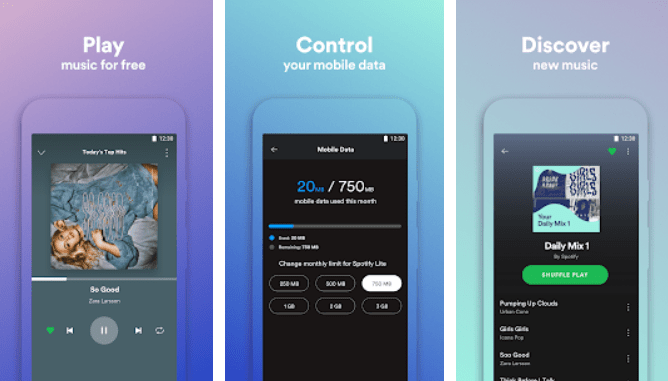
The company had already tested Spotify Lite in other areas, including Indonesia, Philippines, Malaysia, Mexico, Brazil, and others. The app has a similar look as the main app, and offers the same key features in terms of being able to play music on demand, discover new music you might like, and save songs for offline listening. However, it also lets you keep track of your mobile data by showing you how much you’ve consumed during the month, and set a monthly limit for Spotify Lite’s use of that data.

The app can be used as an alternative or alongside the main Spotify app, depending on the users’ needs.

The first version of Spotify Lite launched in Brazil in June 2018, so it’s still a relatively new app. Today, the app is publicly available in 22 countries including, now India. It has around 2.1 million installs, according to data from Sensor Tower. India has only produced a few thousand downloads for Spotify Lite so far, as it’s just gone live.

That said, India will be a key market for Spotify Lite going forward, given the heated competition for streaming music services in a region where millions of internet users are coming online for the first time. Already, Apple, Amazon, and Google are running their own music services in India, where they face competition from local players Gaana, JioSaavn, and others. Catering to the unique needs of the Indian market’s user base will help Spotify better compete with these rivals.

“Lite” apps are now a common way to reach Indian users. Google offers a handful of lightweight “Go”-branded apps, like Google Go, Gmail Go, Files Go, YouTube Go, Google Maps Go and Google Assistant Go in the country. There’s also Facebook LiteInstagram LiteMessenger LiteTwitter LiteUber Lite, TikTok Lite, and, as of last week, Tinder Lite, too.

The news of Spotify Lite’s Indian launch was first reported by a newswire report featured on news site The News Minute. The report quoted Amarjit Batra, Managing Director for Spotify India, as saying the Lite app was a big step towards better localization of Spotify’s service as it “enables users to play millions of songs for free, takes up less space on phones, and saves data when used on the go.”

Reached for comment, Spotify confirmed the launch to TechCrunch, but referred to it as a test and noted its “beta” labeling.

“At Spotify, we routinely conduct a number of tests, including the Spotify Lite Beta, in an effort to improve our user experience,” a Spotify spokesperson said. “Some of those tests end up paving the path for our broader user experience and others serve only as an important learning. We aren’t going to comment on specific tests at this time,” they added.

Slack aims to be the most important software company in the world, says CEO

Slack this morning disclosed estimated preliminary financial results for the first quarter of 2019 ahead of a direct listing planned for June 20.

Citing an addition of paid customers, the workplace messaging service posted revenues of about $134 million, up 66 percent from $81 million in the first quarter of 2018. Losses from operations increased from $26 million in Q1 2018 to roughly $39 million this year.

In addition to filing updated paperwork, the Slack executive team gathered on Monday to make a final pitch to potential shareholders, emphasizing its goal of replacing email within enterprises across the world.

“People deserve to do the best work of their lives,” Slack co-founder and chief executive officer Stewart Butterfield said in a video released alongside a livestream of its investor day event. “This desire of feeling aligned with your team, of removing confusion, of getting clarity; the desire for support in doing the best work of your life, that’s universal, that’s deeply human. It appeals to people with all kinds of roles, in all kinds of industries, at all scales of organization and all cultures.”

“We believe that whoever is able to unlock that potential for people … is going to be the most important software company in the world. We aim to be that company,” he added.”

Slack, valued at more than $7 billion with its last round of venture capital funding, plans to list on the NYSE under the ticker symbol “SK.”

The business filed to go public in April as other well-known tech companies were finalizing their initial public offerings. Following Uber’s disastrous IPO last week, public and private market investors alike will be keeping a close-eye on Slack’s stock market performance, which may determine Wall Street’s future appetite for Silicon Valley’s unicorns.

Though some of the recent tech IPOs performed famously, like Zoom, Uber and Lyft’s performance has served as a cautionary tale for going out in poor market conditions with lofty valuations. Uber began trading last week at below its IPO price of $45 and is today down significantly at just $36 per share. Lyft, for its part, is selling for $47.5 apiece today after pricing at $72 per share in March.

Slack isn’t losing billions per year like Uber but it’s also not as close to profitability as expected. In the year ending January 31, 2019, Slack posted a net loss of $138.9 million and revenue of $400.6 million. That’s compared to a loss of $140.1 million on revenue of $220.5 million for the year ending January 31, 2018. In its S-1, the company attributed its losses to scaling the business and capitalizing on its market opportunity.

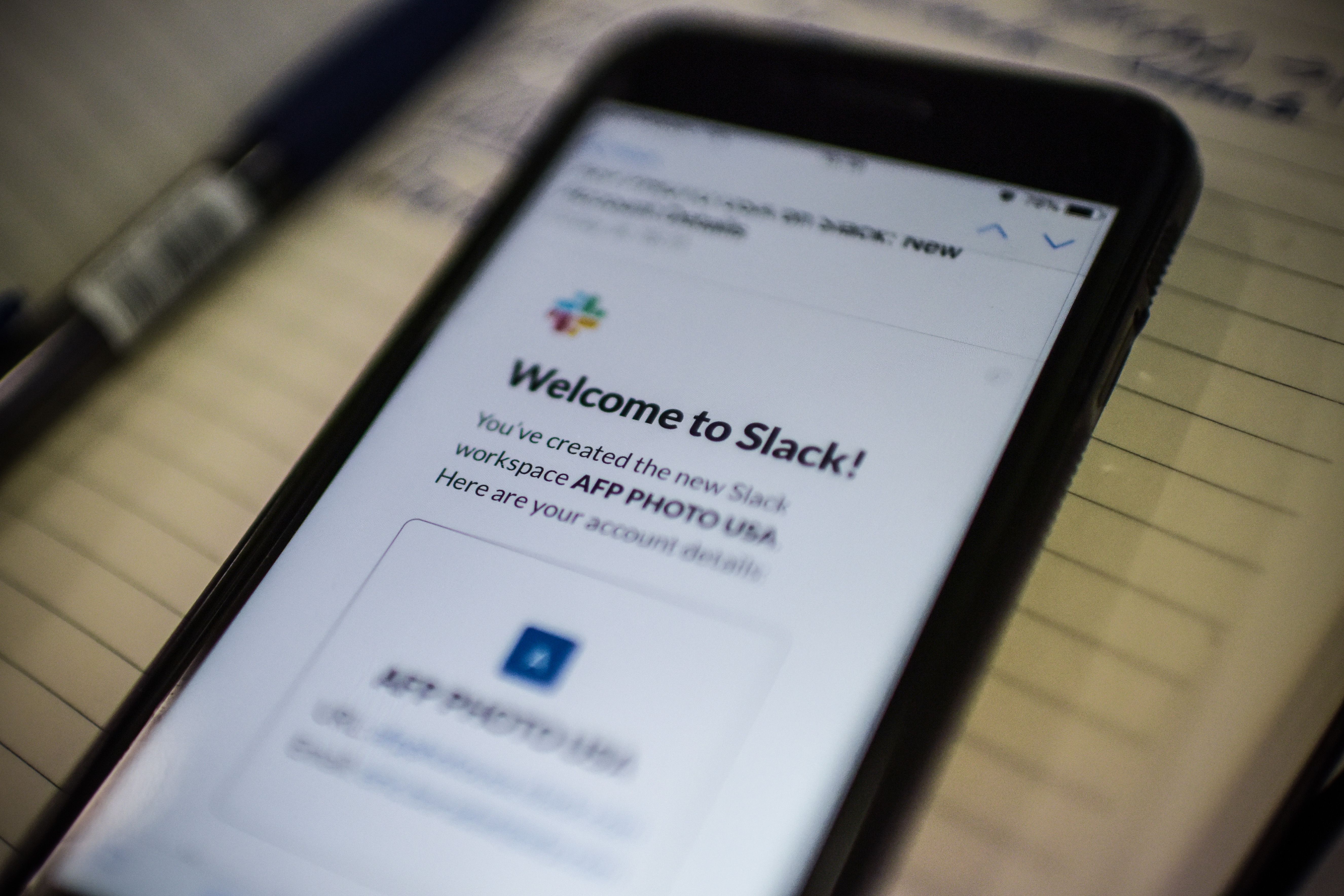
Workplace messaging startup Slack said Monday, February 4, 2019 it had filed a confidential registration for an initial public offering, becoming the latest of a group of richly valued tech enterprises to look to Wall Street. (Photo by Eric BARADAT / AFP) (Photo credit should read ERIC BARADAT/AFP/Getty Images)

Slack currently boasts more than 10 million daily active users across more than 600,000 organizations — 88,000 on the paid plan and 550,000 on the free plan.

Slack has been able to bypass the traditional roadshow process expected of an IPO-ready business, opting for a path to Wall Street popularized by Spotify in 2018. The company plans to complete a direct listing, which allows companies to forgo issuing new shares and instead sell existing shares held by insiders, employees and investors directly to the market, in mid-June. The date, however, is subject to change.

Slack has previously raised a total of $1.2 billion in funding from investors, including Accel, Andreessen Horowitz, Social Capital, SoftBank, Google Ventures and Kleiner Perkins.

SpaceX’s Crew Dragon is having trouble — and that’s okay

We may be poised on the precipice of a new era of spaceflight, but leaping prematurely off it would be a costly mistake — which is why the delays and failures of SpaceX’s Crew Dragon, the new spacecraft that will likely be soonest to take humans to space, are a matter for concern but not worry. In space, you expect the unexpected.

The sudden explosion of a Crew Dragon test capsule is frightening and frankly embarrassing to a company so heavily focused on an image of futurity and reliability. And a failed parachute deployment doesn’t inspire confidence either. But any historian of the space industry will tell you it’s rare that something with rockets on it doesn’t blow up at some point during development.

The Commercial Crew program was established back in 2010 with the goal of sending a crewed mission to the International Space Station, aboard a new spacecraft, well before the end of the decade. The timeline was understood to be flexible, but budgetary, logistic, and technical issues have continually pushed dates further and further out.

While it was once estimated that the first crewed flights might happen in 2018, that year passed without even a  first test flight from either of the contracted spacecraft providers, Boeing and SpaceX. That changed in March with the latter’s successful first test flight of Crew Dragon (loaded with cargo, not people). And Boeing’s Starliner is scheduled for flight later this year. Dogged by delays, the companies’ years of hard work seemed to be paying off at last.

Then this disaster on the test pad occurred: Not just a tipped-over Starship shell or a booster lost to heavy seas, but a full-on explosion of a craft meant for crewed missions, an event which, there’s no way around it, would have been instantly lethal to anyone inside.

Of course, there wasn’t anyone inside. Because this was a test of systems that have not been finalized or brought up to spec. It failed, spectacularly, but that is how rockets tend to fail — with spectacle.

We saw this happen only because someone unwisely had recorded it and distributed the video online. Had they not, we would have heard there was an anomaly during the test and that this capsule was rendered unusable. That kind of phrasing, which goes back many decades in the industry, can mean many things, and its ambiguity is intentional — it’s meant to shield the public from the harsh reality of spaceflight, the risk inherent in the act of riding a bomb faster than sound to a place that’s trying to kill you.

Rockets and capsules and spacecraft have failed since the very beginning, and they will continue to because no one is satisfied with simply refining a design from the ’60s forever. Making advances in space means engineering at the very frontier of what’s possible — indeed, it frequently means expanding that frontier and doing what others thought impossible.

The recent failure in a parachute deployment test is equally alarming — since such a failure could conceivably be equally catastrophic — but again, as SpaceX’s representatives have put it again and again, “This is why we test.”

Previous, nearly identical tests of the parachutes didn’t fail completely (there are four chutes; one was made to fail on purpose, but in the recent test the others did not deploy either), but likely indicated modes of failure that the engineers needed to see. Just like pumping up a pressure vessel to well beyond its rated PSI in order to see how it performs under stress, this is about creating controlled failures in carefully observed environments. You invite failure into your home today so it doesn’t kick the door down on launch day.

It must also be said that these equipment failures are occurring within a larger context of making spaceflight far, far safer than it ever was. No one should entertain the illusion that spaceflight will ever be completely safe — nothing is, least of all traveling at thousands of miles per hour through a lethal vacuum or reentering the atmosphere within arm’s reach of temperatures hot enough to melt steel. But companies like SpaceX and Boeing (though its reputation for safety has been tarnished of late in a more lasting fashion) are making damn sure they’re doing everything they can to reduce that risk.

The shift from Russia’s amazingly reliable but aged Soyuz capsules to new spacecraft with entirely new capabilities is not a simple or easy one. These new craft have been developed from scratch with systems that will ultimately make them safer and more reliable than any in history. But right now both companies are still in the egg-breaking part of the omelette process.

This is not all to say that there will be no effect from these accidents. Confidence is thinned; missions are delayed; costs are incurred; competitors are emboldened. And pragmatically speaking, it seems unlikely that SpaceX will put a crew in space this year, given the severity of these events and the increased scrutiny the capsule and its testing will endure. But it’s all part of the process.

Delays are inherent to the space industry. It can be done fast, but it has to be done right. It’s disappointing when the dream of having a U.S.-built spacecraft delivering astronauts to the ISS is put off again and again, but the rewards for patience will be enormous. It’s done when it’s done. You wouldn’t want it a day before — especially if you were the one riding in it.


The Pentagon and CIA have a secret missile that shreds targets with giant flying knives

A report by The Wall Street Journal last week revealed a secretive U.S. military weapon designed explicitly to reduce civilian casualties in targeted strikes. Unlike a traditional hellfire missile dispatched from an aerial drone, the missile variant packs no payload, no explosive. The catch? It drops 100 pounds of metal on a target, shredding them to pieces with six giant knives.

As the WSJ reports, the weapon, developed under the Obama administration, is only deployed in special circumstances. Known as the R9X, it is specifically designed for precision operations in which a normal explosive hellfire missile would result in civilian deaths.

The paper was able to confirm two operations that employed the R9X, one this January by the Department of Defense that killed Jamal al-Badawi. The second took place in Syria two years ago, resulting in the death of Al Qaeda leader Ahmad Hasan Abu Khayr al-Masri.

The weapon, nicknamed the “ninja bomb,” woudn’t be the first time the U.S. military has relied on the remarkably deadly combination of metal and gravity. In both Korea and Vietnam, the U.S. military deployed so-called “Lazy Dog” bombs — two-inch metal projectiles that rained down from the sky by the hundreds, picking up speed before making deadly impact.

While the effect was often grisly, the bombs left no unexploded material behind — a perk (if you can call it that) not unlike the grim benefit of minimizing civilian casualties by dropping 100 pounds of sharp metal onto the heads of your enemies.

Adobe brings new Amazon and Google integrations to Magento

It’s only been a few months since Adobe launched its Commerce Cloud, based on its $1.6 billion acquisition of Magento. Today, at its Imagine 2019 conference, the company announced a number of updates to Magento that focus on expanding the platform’s reach for the small- and mid-size businesses that use the service.

When Adobe acquired Magento, many of these smaller companies that use the service worried that Adobe would mostly focus on its existing base of large enterprise customers — the kind of companies that already use its Experience Cloud. Today’s set of the announcements is, in many ways, meant to alleviate these fears.

The two most important pieces of news for Magento users are its new integrations with Amazon and Google.

On the Amazon side, merchants can now automatically manage and maintain their inventory on Amazon right from the Magento backend. They can set pricing rules for the Amazon Sales Channel, manage multiple Amazon brands with multiple Amazon accounts and, in return, get access to Amazon’s product data, too.

Access to this new feature is now available to all Magento users through a free extension that’s now available in the Magento Marketplace.

“For many brands and merchants, creating an Amazon storefront is not simple,” Jason Woosley, Vice President, Commerce Product & Platform at Adobe, told me. “It requires you to manage a whole host of new operational challenges. You introduce a new platform that your team has to learn how to use, how to manage and maintain. And if your teams are already maxed out, it’s going to require you to hire additional staff or make tradeoffs against your roadmap that don’t deliver against your business.”

As for Google, Magento today launched a native integration with Google Shopping (also through a free extension) that will allow Magento admins to manage their Google ads from their Magento dashboard and manage their Google Merchant Center accounts. This will allow them to manage their Google marketing campaigns right from Magento. Here, too, the idea is to allow merchants to use the tools they are already familiar with to expand their reach into other platforms, which typically involved switching back and forth between services and trying to keep them in sync.

Adobe also today announced that the Progressive Web Application (PWA) Studio, which allows more advanced Magento users to build more app-like online stores, now supports PayPal’s Braintree as a payment option. Woosley expects that PWA’s are the way forward for many Magento customers, especially in emerging markets.