Updated Apple TV app arrives ahead of Apple TV+’s fall launch

Here’s a big Apple TV update. Not THE big Apple TV update. The whole Apple TV+ thing is still forthcoming, but this major update to the app should go a ways toward setting the stage for its arrival in the fall.

The new version of the app arrives today across a slew of different platforms, including iPhone, iPad, Apple TV and all of Samsung’s 2019 Smart TVs (and select 2018 models) — per the announcement the company made earlier this year at the big TV+ event.

That event also offered previews of a lot of what’s new here. The whole thing breaks down into three key categories: Apple TV channels, a new recommendation system for iTunes movies and TV shows and a new dedicated kids section.

Channels are the biggest change here — it’s essentially Apple’s push to transform Apple TV into its cable provider. Available channels include HBO, Starz, Showtime, Smithsonian Channel, EPIX and Tastemade, with CBS All-Access and MTV Hits coming in the future.

A big piece of the offering is the ability to download and watch shows offline, so users can, say, download episodes of Game of Thrones for a long flight. This is, notably, the first time HBO has offered that ability to a third party. Apple won’t say what the download limit is, but it’s likely large enough that most users won’t hit.

Once subscribed, channels will be available through Family Sharing, with up to six accounts using their Apple ID. Speaking of families, the update also includes a devoted kids section, which includes, curated family friendly TVs and movies.

Apple’s apply editorial curation across the board here, similar to what it’s done with other apps like Books and Music. The app uses a combination algorithms and editorial curation, designed to help users figure out what to watch next before scrolling to the end of the page.

In addition to the above, select Samsung, Vizio, LG and Sony sets will be able to access it using app mirroring.

Crowned by Burger King, meat replacement company Impossible Foods raises $300 million

After being crowned by Burger King as the first meat replacement patty to roll out nationally with one of the largest fast food chains, Impossible Foods has raised $300 million in capital.

The financing brings the company’s total equity raise to $750 million — and provides a sizable pool of funds to draw from as it continues to compete with its newly-publicly traded rival, Beyond Meat.

Both companies are looking to provide plant-based replacements for animal proteins, but while Beyond Meat has focused on consumers in the grocery store, Impossible Foods has focused on restaurants and business-to-business sales.

That focus paid off earlier this year with the announcement of the Impossible Whopper, and its subsequent nationwide rollout only a month later.

The Impossible Burger is now sold in more than 7,000 restaurants in the U.S. and Europe and has been a top-selling item and a driver of new foot traffic, according to the company. However, since it’s actually driving new foot traffic to restaurants, the product’s impact as a meat replacement is arguable. There’s no data from the company on whether people are actually buying less meat, or whether new customers are entering stores.

Investors don’t seem to mind. And given the success of Beyond Meat’s public offering earlier this year, Impossible Foods has a benchmark it can reference to illustrate the appetite institutional investors have for meat replacement companies.

Indeed, even corporate America has taken notice, with Tyson Foods hatching plans to bring its own meat replacement product to market in the coming years.

Previous investors Temasek, the investment arm of the Singaporean government, and Horizons Ventures, the personal venture fund of Hong Kong multi-billionaire Li Ka Shing, led the new financing, which also included a host of celebrity investors.

Jay Brown, Kirk Cousins, Paul George, Jay Z, Trevor Noah, Alexis Ohanian, Kal Penn, Katy Perry Questlove, Ruby Rose, Phil Rosenthal, Jaden Smith, Serena Williams, will.i.am and Zedd, also joined the financing round, making Impossible Foods officially the coolest cap table I’ve ever seen (no offense to Beyond Meat backer Leonardo DiCaprio).

Institutional investors like Khosla Ventures, Bill Gates, Google Ventures, UBS, Viking Global Investors, Sailing Capital, and Open Philanthropy Project also back the company.

The presence of Impossible Foods’ Asian investors point to the hunger for protein replacements on the continent where the quality of meat is an issue and rising demand is putting increasing pressure on companies looking to feed the continent’s newly wealthy consumers more high quality protein.

There’s a compelling reason to hope that both companies succeed in their mission to reduce demand for animal protein around the world. Animal husbandry and industrial farming contribute heavily to rising greenhouse gas emissions (which is kind of a huge problem).

And it seems that the strategy is working in Asia. Sales across the continent are rising, according to the company, in restaurants across Hong Kong, Singapore and Macau.

Founded in 2011 by former pediatrician and Stanford biochemistry professor, Dr. Patrick O. Brown, Impossible Foods’ plant-based burger may be the second greatest invention by a Doc Brown since the 80s.

Impossible Foods is also hiring extensively in Oakland, Calif., where the company has its largest plant. It has already added to its executive team since the new funding, bringing on Sheetal Shah, a former chief operations officer at Verifone to oversee the company’s manufacturing, supply chain and logistics.


Yes, Americans can opt-out of airport facial recognition. Here’s how

Whether you like it or not, facial recognition tech to check in for your flight will soon be coming to an airport near you.

Over a dozen U.S. airports are already rolling out the technology, with many more to go before the U.S. government hits its target of enrolling the largest 20 airports in the country before 2021.

Facial recognition is highly controversial and has many divided. On the one hand, it reduces paper tickets and meant to be easier for travelers to check in at the airport before their flight. But facial recognition also has technical problems. According to a Homeland Security watchdog, the facial recognition systems used at airports only worked in 85 percent in some cases. Homeland Security said the system is getting better over time and will be up to scratch by the supposed 2021 deadline — even if the watchdog has its doubts.

Many also remain fearful of the privacy and legal concerns. After all, it’s not Customs and Border Protection collecting your facial recognition data directly — it’s the airlines — and they pass it onto the government.

Delta debuted the tech last year, scanning faces before passengers fly. JetBlue also followed suit, and many more airlines are expected to sign up. That data is used to verify boarding passes before travelers get to their gate. But it’s also passed onto Customs and Border Protection to check passengers against their watchlists — and to crack down on those who overstay their visas.

Clearly that’s rattling travelers. In a recent Twitter exchange with JetBlue, the airline said customers are “able to opt out of this procedure.”

That’s technically true, although you might not know it if you’re at one of the many U.S. airports. The Electronic Frontier Foundation found that it’s not easy to opt-out but it is possible.

A sign allowing U.S. citizens to opt-out of facial scans. (Image: Twitter/Juli Lyskawa)

If you’re a U.S. citizen, you can opt out by telling an officer or airline employee at the time of a facial recognition scan. You’ll need your U.S. passport with you — even if you’re flying domestically. Border officials or airline staff will manually check your passport or boarding pass like they would normally do before you’ve boarded a plane.

Be on the lookout for any signs that say you can opt-out, but also be mindful that there may be none at all. You may have to opt-out multiple times from arriving at the airport until you reach your airplane seat.

“It might sound trite, but right now, the key to opting out of face recognition is to be vigilant,” wrote EFF’s Jason Kelley.

Bad news if you’re not an American: you will not be allowed to opt-out.

“Once the biometric exit program is a nationally-scaled, established program, foreign nationals will be required to biometrically confirm their exit from the United States at the final [boarding] point,” said CBP spokesperson Jennifer Gabris in an earlier email to TechCrunch. “This has been and is a Congressional mandate,” she said.

There are a few exceptions, such as Canadian citizens who don’t require a visa to enter the U.S. are exempt, and diplomatic and government visa holders.

Facial recognition data collected by the airlines on U.S. citizens is stored by Customs and Border Protection for between 12 hours and two weeks, and 75 years for non-citizens. That data is stored in several government databases, which border officials can pull up when you’re arriving or leaving the U.S.

Why should you opt-out? As an American, it’s your right to refuse. Homeland Security once said Americans who didn’t want their faces scanned at the airport should “refrain from traveling.” Now all it takes is a “no, thanks.”

Read more:

Supreme Court rules against Apple allowing an App Store antitrust case to proceed

The U.S. Supreme Court ruled 5-4 against Apple on Monday on a case involving whether or not a group of iPhone users will be allowed to bring an antitrust lawsuit against the company regarding its App Store practices. The iPhone owners allege that Apple’s 30 percent commission on App Store sales is passed along to users, representing an unlawful and unfair use of Apple’s monopoly power.

Apple had moved to have the case dismissed, arguing that consumers were buying their apps from the developers — not from Apple. And it was the developers who were setting the prices. The court disagreed, saying that Apple contracts with the third-party developers to sell the 2 million apps that are live today on its App Store, keeping its 30 percent commission on every sale along the way.

In addition, the court ruled in favor of the iPhone owners’ lawsuit proceeding for several other reasons. It said that any person injured by an antitrust violation may sue to recover damages, and that ruling in favor of Apple would have prevented consumers from suing monopolistic retailers who took commissions on sales — not just those who marked up the price it paid a supplier or manufacturer for a good or service. This would have created a hole where retailers could restructure their practices to avoid antitrust claims, the court said.

“Apple’s line-drawing does not make a lot of sense, other than as a way to gerrymander Apple out of this and similar lawsuits,” the opinion, authored by Justice Kavanaugh, read.

“If a retailer has engaged in unlawful monopolistic conduct that has caused consumers to pay higher-than-competitive prices, it does not matter how the retailer structured its relationship with an upstream manufacturer
or supplier—whether, for example, the retailer employed a markup or kept a commission,” stated the court.

The iPhone owners also said that Apple’s monopoly on the aftermarket for apps means they’re forced to pay higher prices than if the environment was more competitive. In a different environment, they could have chosen between paying Apple’s higher price and other less costly alternatives.

Instead, iPhone owners say that developers are forced to mark up their prices in order to cover Apple’s “demanded profit.”

We’ve seen this in action already, of course. One recent example is Spotify, whose music app was $9.99 per month if you subscribed on the web, but was $12.99 per month if you subscribed on iOS — a move it made to recoup the commission, but also to make a point about Apple’s monopoly power. And following a complaint in March from Spotify, the EU is preparing to investigate Apple for anti-competitive behavior.

Other large app developers have also ditched selling through Apple. Amazon, for example, redirects many purchases to the browser — like those for books, music, movies, and TV shows, for example. Netflix just dropped in-app subscriptions on iOS in December because of this so-called “Apple tax.” And Fornite maker Epic Games, which also bypassed the Google Play Store at launch, upcharges for in-app purchases on iOS.

Apple’s stock is down by more than 5 percent as of the time of writing.

Mailchimp expands from email to full marketing platform, says it will make $700M in 2019

Mailchimp, a bootstrapped startup out of Atlanta, Georgia, is known best as a popular tool for organizations to manage their customer-facing email activities — a profitable business that its CEO told TechCrunch has now grown to around 11 million customers and is on track for $700 million in revenue in 2019.

To help hit that number, Mailchimp is taking the wraps off a significant update aimed at catapulting it into the next level of business services. Beginning later this week, Mailchimp will start to offer a full marketing platform aimed at smaller organizations.

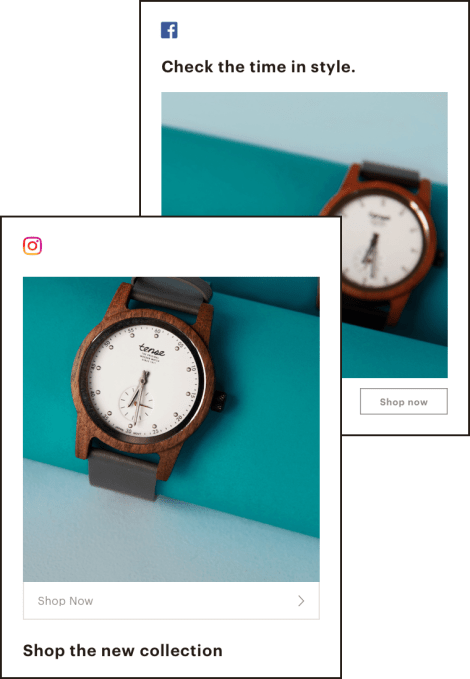
Going beyond the email that it has been offering for 20 years, the new platform will feature technology to record and track customer leads, the ability to purchase domains and build sites, ad retargeting on Facebook and Instagram, social media management and business intelligence that leverages a new move in the artificial intelligence to provide recommendations to users on how and when to market to whom.

When the service goes live on Wednesday, Mailchimp also plans a pretty significant shift of its pricing into four tiers of free, $9.99/month, $14.99/month or $299/month (up from the current pricing of free, $10/month, $199/month) — with those fees scaling depending on usage and features.

(Existing paid customers maintain current pricing structure and features for the time being and can move to the new packages at any time, the company said. New customers will sign up to the new pricing starting May 15.)
The expansion is part of a longer-term strategic play to widen Mailchimp’s scope by building more services for the typically-underserved but collectively large small business segment. Even as multinationals like Amazon and other large companies continue to feel like they are eating up the mom-and-pop independent business model, SMBs continue to make up 48 percent of the GDP in the US.

And within that, marketing is one of those areas that small businesses might not have invested in much traditionally but are increasingly turning to as so much transactional activity has moved to digital platforms — be it smartphones, computers, or just the tech that powers the TV you watch or music you listen to.

In March, we reported that Mailchimp quietly acquired a small Shopify competitor called LemonStand to start to build more e-commerce tools for its users. And the new marketing platform is the next step in that strategy.

“We still see a big need for small businesses to have something like this,” Ben Chestnut, Mailchimp’s co-founder and CEO, said in an interview. Enterprises have a range of options when it comes to marketing tools, he added, “but small businesses don’t.” The mantra for many building tech for the SMB sector has traditionally been “dumbed down and cheap,” in his words. “We agreed that cheap was good, but not dumbed down. We want to empower them.”

The new services launch also comes at a time when an increasing number of companies are closing in on the small business opportunity, with e-commerce companies like Square, Shopify and PayPal also widening their portfolio of products. (These days, Square is a Mailchimp partner, Shopify is not.)

Marketing is something that Mailchimp had already been dabbling with over the last two years — indeed, customer-facing email services is essentially a form of marketing, too. Other launches have included a Postcards service, offering companies very simple landing pages online (about 10 percent of Mailchimp’s customers do not have their own web sites, Chestnut said), and a tool for companies to create Google, Facebook and Instagram ads.

Mailchimp itself has a big marketing presence already: it says that daily, more than 1.25 million e-commerce orders are generated through Mailchimp campaigns; over 450 million e-commerce orders were made through Mailchimp campaigns in 2018; and its customers have sold over $250 million in goods through multivariate + A/B campaigns run through Mailchimp.

There are clearly a lot of others vying to be the go-to platform for small businesses to do their business — “Google, Facebook, a lot of the big players see the magic and are moving to the space more and more,” Chestnut said — but Mailchimp’s unique selling point — or so it hopes — is that it’s the platform that has no vested interests in other business areas, and will therefore be as focused as the small businesses themselves are. That includes, for example, no upcharging regardless of the platform where you choose to run a campaign.

“We are Switzerland,” Chestnut said.

YouTube’s Bumper Machine offers an automated way to create six-second ads

After introducing a six-second “Bumper” ad format back in 2016, YouTube is unveiling a new tool that uses machine learning to automatically pull out a six-second version from a longer ad.

It might seem a little ridiculous to try to compress (say) a 90-second video into a six-second message. In fact, Debbie Weinstein, Google’s vice president of YouTube and video global solutions, acknowledged that there was some skepticism when Bumper ads were first announced, with advertisers wondering, “Can we actually tell our story in six seconds?”

However, Weinstein argued, “We learned over time that creatives love constraints. They’ve historically been constrained to 30 seconds, and then 15 seconds, and constrained by whatever dimensions of a particular media format.”

For some advertisers, she said, a Bumper may simply be a short teaser for a longer ad. For others, the format could provide a way to break down a 30-second ad into a sequence of six-second clips.

And with Bumper Machine — which YouTube is currently alpha testing, which will then lead into beta testing and eventually general availability — advertisers will have a tool to create a Bumper by scanning a longer ad for “key elements,” like a voiceover or a tight focus on human beings or logos or products. The result always ends with “the final call to action in the last two-to-three seconds of the video,” Weinstein said.

For example, as an early test, GrubHub took a 13-second ad and used Bumper machine to create the six-second version below.

Weinstein suggested that Bumper Machine could be used by “many different advertisers of all shapes and sizes” — some of them might be smaller advertisers who want to create Bumpers with as little time and effort as possible, while larger brands and agencies may treat them as more of a “jumping off point,” which can be refined or serve as inspiration.

Either way, Weinstein isn’t expecting advertisers to just start posting machine-created Bumpers willy-nilly. The idea is to always have “some level of human review.”

“You’ll get three to four executions, the best guesses that the machine is going to make,” she said. “A human is going to go through and decide which of the three or four is best, or decide all of them are great, or do some light editing on top of that.”

Amazon offers employees $10K and 3 months’ pay to start their own delivery businesses

Following news of Amazon’s plans to reduce Prime shipping down to one day, the company this morning announced an expansion of its Delivery Service Partner program, which now includes a new incentive that encourages existing Amazon employees to start their own package delivery company. The partner program, first announced last year, includes access to Amazon’s delivery technology, hands-on training, and a suite of other discounts for assets and services like vehicle leasing and insurance. For employees, it now includes a $10,000 incentive, too.

The retailer says it will fund the startup costs up to $10,000 as well as the equivalent of three months of the former employee’s last gross salary, to give the employees the ability to get their new business off the ground without worrying about a break in pay.

Amazon had said last year that people were able to start their own delivery business with only $10,000. At the time, military veterans were able to get that $10K reimbursed, as Amazon was investing a million into a program that funded their startup costs.

The new incentive to do the same for any employee — and offer them three months’ pay on top of that — is a much broader commitment. And it’s one that makes sense given Amazon’s lofty ambitions to double the speed of its shipments.

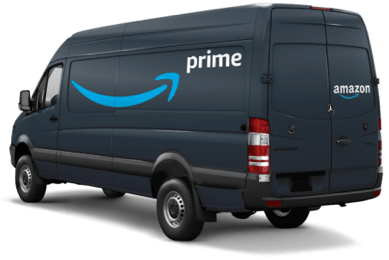
Employees — or any other entrepreneur — who wants to become a delivery partner, are able to lease customized blue delivery vans with the Amazon smile logo on the side, and take advantage of other discounts including fuel, insurance, branded uniforms and more.
Before the launch of the partner program, Amazon had relied on its Amazon Flex crowdsourced workforce to help it deliver packages to help it reduce costs. But these gig workers often faced too much uncertainty with regard to their pay because of things like fluctuating gas prices that cut into profits, lack of insurance, and the general, logistic challenges that come from trying to deliver packages from a smaller, unbranded personal vehicle.

Delivery partners, meanwhile, could earn as much as $300,000 in annual profit by growing their fleet to 40 vehicles, Amazon claims. The company said last year it expected that hundreds of small business owners will come to hire tens of thousands of drivers across the U.S.

That is already happening. Since the launch of the program in June 2018, over 200 small businesses have hired “thousands” of local drivers, Amazon says this morning. It expects to add hundreds more small businesses this year, as well.

The incentive to employees also comes at a time when Amazon is increasing automation in its warehouses that will potentially put some workers out of jobs. A report from Reuters this morning noted that Amazon is rolling out machines that will automate a job that’s currently held by thousands of workers: boxing customer orders. Some of these workers could be candidates for the delivery partner program now, given they may be looking for what’s next — before they’re laid off.

For Amazon, the funds it’s investing today to help employees transition to this new business could be recouped over time as the retailer reduces its reliance on USPS, UPS, and FedEx by shifting more of its business over to its own delivery network where it has control. In the near-term, however, all of Amazon’s delivery partners will benefit from its plans to spend $800 million to make 1-day shipping the new Prime default.

The employee incentives are available in the U.S., and now the U.K., and Spain.

ServiceNow acquihires mobile analytics startup Appsee

In a carefully framed deal, ServiceNow announced this morning that it has acquired the intellectual property and key personnel of mobile analytics company, Appsee for an undisclosed price. Under the terms of the deal, the co-founders and R&D team will be joining ServiceNow after the deal closes.

It’s worth noting that ServiceNow did not acquire Appsee’s customers, and the company is expected to wind down its existing business over the next 12 months.

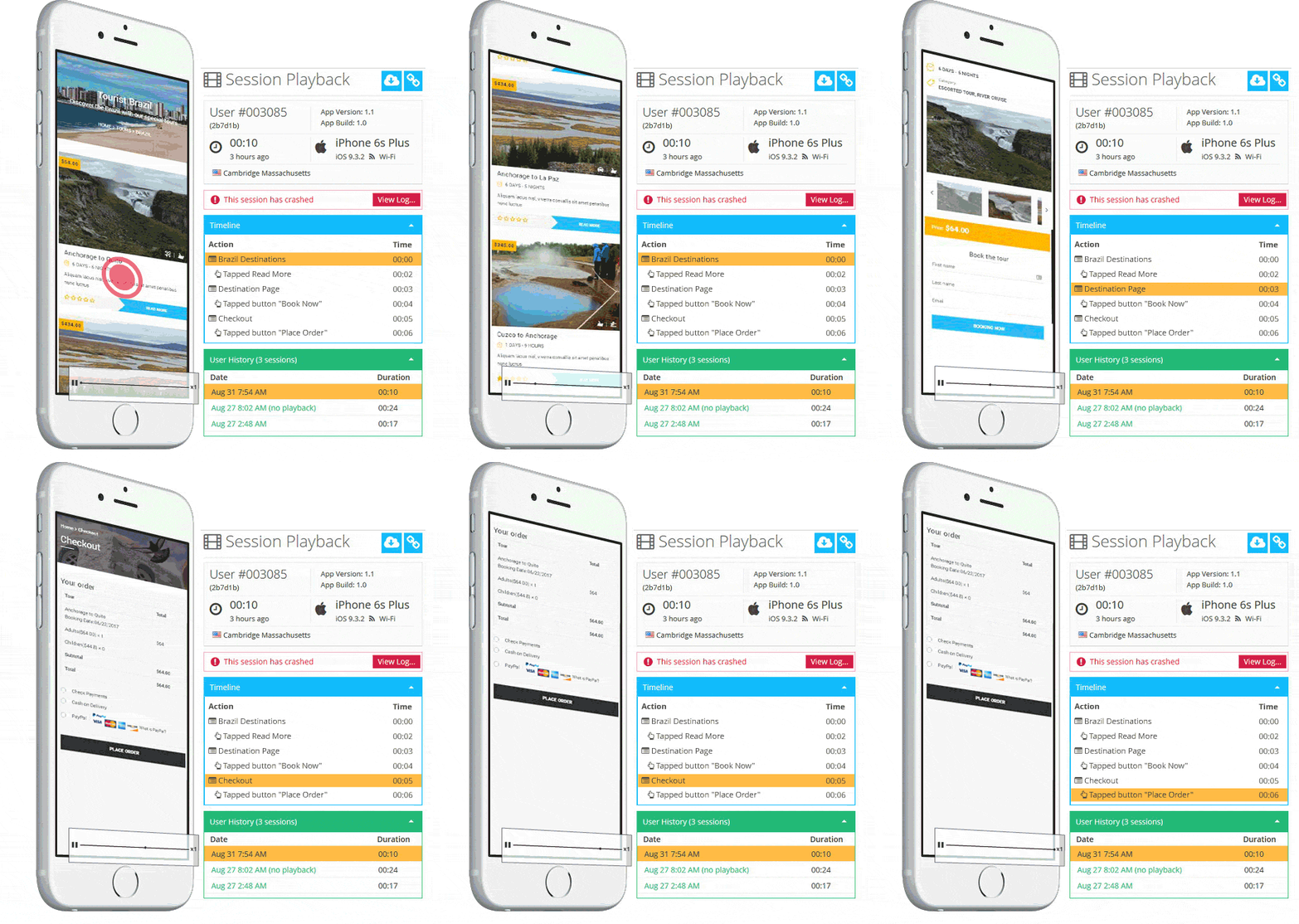
Appsee provides more than pure numerical analytics. As the name it implies, it lets developers see what the user is seeing by recording an interaction and seeing what went right or wrong as the person used the program.

Appsee session playback in action.

GIF courtesy of Appsee.

ServiceNow wants to take that functionality and incorporate it into its Now Platform, which enables customers to create customized service applications for their businesses, or use mobile applications it has created out of the box.

The company sees this as a way to improve the UI and build more usable apps. “We’ll be able to use Appsee for our mobile app and browser analytics. This can be used across all three of our workflows, and with this level of visibility our customers will be able to see how customers or employees are engaging [with the application]. With these analytics, ServiceNow will be able to provide insights on user behavior. In turn, this will help us provide an improved UI for customers,” a company spokesperson told TechCrunch.

Just last week at its Knowledge 19 customer conference in New York City, the company announced Now Mobile a new tool for performing tasks like ordering a new laptop or searching for the holiday calendar, and a mobile on-boarding tool for new employees. Both of these will be available in the company’s next release and could benefit from the Appsee functionality to improve the overall design of these products after it releases them to users.

Appsee has always been focused on capturing user activity. Over the years it has layered on more traditional analytics like DAUs (daily active users) and crash rates, the kind of metrics that can give companies insights into their user experience, but they combine that with the visual record to help see more detail about exactly what was happening, along with myriad of other features, all of which will be incorporated into the ServiceNow platform moving forward.

The deal is expected to close by the end of Q2 2019.

Uber launches PIN feature to cut wait times at airports, starting in Portland

Uber is piloting a new PIN feature at the Portland International Airport that will give riders a one-time 6-digit numeric code in an effort to speed up pickup times and reduce traffic congestion.

The PIN, or personal identification number, feature kicks off Monday at the Portland Airport, which can average around 400 Uber rides an hour at peak time.

Uber initially developed the PIN-matching solution in 2016 to serve high-volume, high-density event venues — situations that require moving potentially thousands of people in a constrained area. It’s been used at more than 60 events globally since then, including the Kentucky Derby and a Formula 1 race in Australia, according to Uber.

Uber saw an opportunity to apply the feature at airports as traffic congestion and demand for app-based rides at these locations grew. The company’s Seattle-based airports team adapted the feature and tested it at the Bangalore airport in India. Portland is the first U.S. airport to participate in the pilot.

How it works

Once riders order their UberX, they make their way to the dedicated pickup zone. The app will briefly give riders information on how the PIN feature works. A 6-digit personal identification number is then assigned to the rider, who is instructed to provide it to the first available driver.

Meanwhile, the driver, who has received a pickup opportunity at the airport, heads to the pickup location and will get in a queue, waiting for the next available rider. (Drivers will be allowed to accept or snooze if they’re busy. Four minutes is the snooze duration time.)

The rider PIN is given to the driver, who types in the one-time numeric code into the app. The ride commences as normal, although Uber still recommends the rider go through the standard verification checks before setting off in the vehicle.

What’s next

The PIN feature will likely head to other airports, if the Portland pilot is successful.

“We’ve made quite a big investment in the space,” Sondra Batbold, an Uber product manager, told TechCrunch, referring to building out Uber’s airports team. “If we zoom out and think about how much unprecedented growth airports are experiencing all over the world, it’s an important strategic partnership for us to work really closely with airports.”

In other words, Uber sees a lot of potential at airports.

That doesn’t mean Uber will offer PIN matching at every airport, Batbold said. At some locations, it will be more efficient to retain existing pickup models due to capacity constraints and curb space availability.

India’s Locus raises $22 million to expand its logistics management business

Locus, an Indian startup that uses AI to help businesses map out their logistics, has raised $22 million in Series B funding to expand its operations in international markets.

The financing round for the four-year-old startup was led by Falcon Edge Capital and Tiger Global Management . Existing investors Exfinity Venture Partners and Blume Ventures also participated in the round. The startup has raised $29 million to date, Nishith Rastogi, co-founder and CEO of Locus, told TechCrunch in an interview.

Locus works with companies that operate in FMCG, logistics, and e-commerce spaces. Some of its clients include Tata Group companies, Myntra, BigBasket, Lenskart, and Bluedart. It helps these clients automate their logistics workload — tasks such as planning, organizing, transporting and tracking of inventories, and finding the best path to reach a destination — that have traditionally required intensive human labor.

“Say a Lenskart representative is visiting a house or an office to offer an eye checkup, and suddenly two more people there are interested in getting their eyes checked. The representative could attend these two new potential clients, or wrap things up with the first client and take care of his or her next appointment,” said Rastogi.

Locus looks at a client’s past data, identifies patterns, and automates these kind of decisions on a large scale. In an example shared earlier with TechCrunch, Rastogi talked about how Locus had built a scanner for ecommerce companies for measuring products.

Rastogi said he will use the fresh capital to develop products and expand Locus in Southeast Asian and North American markets. The startup says half of its 110 people workforce outside of India. Half of the IP it has built and the revenue it generates comes from its team outside of India.

He said the startup has spent the recent quarters studying these international markets, and has secured some anchor clients to expand the business. Locus is operationally profitable already and any additional capital goes into expanding its business, he added.

The logistics market in India has long been riddled with challenges. A growing number of startups, including BlackBuck — which raised $150 million last week — have emerged in recent years to tackle these problems.

The new funding also illustrates Tiger Global Management’s new strategy for the Indian market. The VC fund, which has invested in B2C businesses Flipkart and Ola in India, has made a number of investments in B2B startups in recent months. Last month, it invested $90 million in agri-tech supply chain startup Ninjacart, and weeks later, it gave cloud-based solutions provider Zenoti $50 million.