Sweden reopens rape case against Julian Assange

Sweden’s prosecution authority has reopened a preliminary investigation into Wikileaks founder Julian Assange on an allegation of rape dating back to 2010.

It said today it will issue a European Arrest Warrant for Assange, and submit an application for a detention order to Uppsala District Court — as the suspected crime took place in Enköping municipality.

An earlier attempt by the Swedish prosecution authority to investigate the alleged sex crime was dropped after Assange fled to the Ecuadorian embassy in London, UK, in 2012.

A second sex crime allegation against Assange involving a separate Swedish woman cannot be reopened as the legal time-limit on pursuing a case has been exceeded.

The Wikileaks founder was arrested at the Ecuadorian embassy in London last month, after it withdrew diplomatic asylum. He was then quickly found guilty of breaching his 2012 bail conditions. A judge at Southwark Crown Court sentenced him to 50 weeks earlier this month. He is now serving that sentence in the UK’s Belmarsh prison.

Sweden’s deputy director of public prosecution, Eva-Marie Persson, said today that any conflict between the European Arrest Warrant and an existing US extradition request for Assange will be decided by UK authorities.

It would be up to UK courts — and potentially the home secretary, Sajid Javid — to make a final decision where to send Assange if there are conflicting extradition requests.

Once in UK police custody last month the Wikileaks founder was also almost immediately rearrested on behalf of the U.S. — which is seeking his extradition on a charge of conspiracy to hack into a classified computer relating to the leaking of military secrets to Wikileaks by whistleblower, Chelsea Manning.

“I am well aware of the fact that an extradition process is ongoing in the UK and that he could be extradited to the US. In the event of a conflict between a European Arrest Warrant and a request for extradition from the US, UK authorities will decide on the order of priority. The outcome of this process is impossible to predict. However, in my view the Swedish case can proceed concurrently with the proceedings in the UK,” said Persson in a statement regarding potential extradition conflict.

In wider comments regarding reopening the case she said simply that circumstances have changed.

“On account of Julian Assange leaving the Ecuadorian embassy, the circumstances in this case have changed. I take the view that there exists the possibility to take the case forward.”

She also noted that UK authorities have told her office Assange must serve 25 weeks of his sentence before he can be released.

Reopening the investigation against Assange means “a number of investigative measures will take place”, she added, suggesting her office could seek to question Assange while he is detained in UK prison — while noting he would have to agree to co-operate with any interview.

“In my opinion a new interview with the suspect is required. It may be necessary, with the support of a European Investigation Order, to request an interview with [Assange] be held in the UK. Such an interview, however, requires [hi]s consent,” she said.

Wikileaks’ editor-in-chief, Kristinn Hrafnsson, has responded to Sweden reopening the rape allegation investigation with a statement in which he claims the country is doing so “under intense political pressure” and that the case “has been mishandled throughout”.

He also denies Assange ever sought to evade the investigation, despite fleeing to and remaining within the Ecuadorian Embassy for seven years, and suggests that a fresh investigation “will give Julian a chance to clear his name”.

In a statement in UK court ahead of his sentencing for breaching bail conditions Assange apologized “unreservedly to those who consider that I have disrespected them by the way I have pursued my case”, adding that he regretted his decision to flee.

“Assange was always willing to answer any questions from the Swedish authorities and repeatedly offered to do so, over six years. The widespread media assertion that Assange ‘evaded’ Swedish questioning is false,” Hrafnsson writes now, leaving little wiggle room should Assange decline to be interviewed by Swedish prosecutors while behind bars in the UK.

https://platform.twitter.com/widgets.js

Last month a cross-party coalition of 70 UK MPs wrote to the home secretary calling for him to “champion action” to ensure Assange is extradited to Sweden should prosecutors request it, as they now have.

Their letter called for Javid to “stand with the victims of sexual violence and seek to ensure the case against Mr Assange can now be properly investigated”, to ensure “due process” is followed for the complainant.

Parliamentarians also pointed out that the legal expiry date in this case of alleged rape is August 2020, meaning there’s only a short window to take a case against Assange to court — arguing that the Swedish prosecutors should therefore be given priority in any extradition conflict with the US.

https://platform.twitter.com/widgets.js

Assange is challenging the US extradition request — appearing at a court hearing May 2, via videolink, to say he did not consent to being sent to the US, per the Guardian, while the court heard that the extradition process would take “many months”.

Equity Shot transcribed: Judging Uber’s less-than-grand opening day

Another day, another episode of Equity. This time it was an emergency episode, because Uber (finally) went public and a lot of financial folks were quite looking forward to how it would perform on opening day. Turns out it didn’t do so well.

Kate and Alex had a lot of questions about why? Was it the company’s fault? Was it simply the macro market? Was it something else altogether? And then there was the fact that it wasn’t a great week for the stock market or U.S.-China trade relations.

But don’t cry for Uber. As Kate Clark reported, the ride-hailing company still has $8.1 billion to play with to grow itself into a more profitable company.

And now we watch as Uber navigates the public markets.

Kate: Uber was a different story [than Lyft]. I think we expected a really similar pricing scheme, but we saw Uber set a price range of 44 to $50 per share. And they ultimately priced at $45 per share only to sink pretty significantly right off the bat. They began trading this morning at $42 a share and now they’re-

Alex: Shocking.

Kate: Yeah. Now they’re, what? Floating at around $41. So they’re dropping. I think everybody is a little bit surprised by that.

Alex: Yeah. So the reason why we thought they were going to raise their range was because it felt a bit conservative. The 44 to $50 per share IPO target range for Uber felt like almost a mulligan. Like, “We’ll put it out there. We’ll get 3X demanded at the top end. We’ll raise the range four or five bucks a share, price it towards the top into that, get the valuation where we want it.”

Alex: And to see them price it 45 is shocking.

For access to the full transcription, become a member of Extra Crunch. Learn more and try it for free. 

From crypto winter to crypto weirder

Captain Kirk and neo-Dadaists. Repugnant markets and legendary cryptographers. “Digital couture” auctioned by CryptoKitties developers. Distributed autonomous art organizations. A keynote speech looking back from 2047 at the near-apocalypse of 2026, from which we were saved by a new, fully tokenized economy. Yes, that’s right: NYC Blockchain Week has begun.

Where to begin? I suppose with context. This week’s series of cryptocurrency conferences kicked off with “Ethereal,” hosted by Consensys, a company/incubator/studio mostly devoted to decentralized software and services built atop the Ethereum blockchain … although they also acquired an asteroid-mining company last year. Subsequently they laid off 13% of their staff, in the depths of the notorious “crypto winter” that followed the crypto bubble which ended abruptly last January.

You read it here first, though: we are now moving from crypto winter into crypto weirder.

In fairness, the Ethereum community has long been home to the starry-eyed idealists, utopians, and … let’s diplomatically call them “original thinkers” … of the blockchain world. Eyebrow-raising proposals are nothing new. At the same time, Ethereum’s programmability also attracts many hard-headed money people increasingly fascinated by the prospects and potential profits of “DeFi,” decentralized finance.

DeFi, to oversimplify, incorporates and transcends the ICO craze of 2017-18 (most of which were Ethereum tokens) into decentralized platforms for loans, currency stabilization, insurance, clearinghouses, even derivatives, and much more. Its current poster child is the MakerDAO, a “stablecoin” system, i.e. a token intended to maintain a constant dollar value, maintained not by direct fiat collateral but by a complex architecture of cryptocurrency loans orchestrated by smart contracts.

But if you ask DeFi’s true believers, MakerDAO is merely an initial proof-of-concept of the larger DeFi vision. Its long-term prospects are immense, spanning all of the many tentacles of Wall Street and the financial industry, and immensely valuable. Assuming regulators are willing to play ball, of course…

And so the attendees at Ethereal are a colorful mix of serious financial and legal types. In the first group: former hedge-fund billionaire Michael Novogratz, or Rocket Lawyer CEO Charley Moore, there to announce the beta launch of their “Rocket Wallet” offering “legal contract execution and payments on the Ethereum blockchain.” In the second category: the abovementioned starry-eyed dreamers, weirdos, and artists, with whom you might find yourself discussing the dangers of a generalized on-chain AI ArtDAO which might run amok and transform the planet (and humanity) not into paperclips but into a planet-scale work of art. I suppose there are worse ways to go.

Do I sound dismissive? Au contraire; I’m all about the dreamers and weirdos. (I mean, I am one, although I was probably the only attendee whose pet Ethereum project is explicitly designed to never have any monetary value. Even the dreamers generally still want to get rich.) The most interesting thing about the blockchain / cryptocurrency space is that it is full of people who do not hesitate to question some of the most basic underpinnings of our society, our social constructs so fundamental they are often mistaken for laws of nature.

The concept of money. The existence of financial intermediaries. The partitioning of the world into geographically defined nation-states. That sort of thing. What’s more, they question them with an eye towards improving or even replacing them, generally with (admittedly usually at-best-half-baked) iterations and solutions in mind. Such people are definitionally weird, and tend to view the status quo so skeptically that they believe it’s inevitably headed for some kind of apocalyptic demise … but their questions are valuable even if you don’t agree with their answers.

Not least when they highlight genuine problems with the way things currently work. Leah Callon-Butler of intimate.io spoke at Ethereal about “repugnant markets,” which are entirely legal but which face such social disapproval that ordinary business and transactions face substantial difficulties. In the US, of course, that generally means sex — and not even porn. Within the last few years, Chase Bank has refused to process payments for a condom company; Square rejected Early to Bed, a woman-owned sex toy store; and CES banned a sex toy after they gave it an award. One can’t help but think that there has to be a better way.

Similarly, sure, it’s amusing that, after announcing a partnership with Mattereum (who I’ve written about before) to track the provenance of collectible memorabilia, William Shatner got into a Twitter fight about the fine technical details of data storage on the Ethereum blockchain — and won by dint of being completely correct! — but it also highlights the fact that provenance is a really hard problem, and existing solutions are deeply imperfect at best.

So bring on the crypto weirder, says me. Speculation, trying to make money from the oft-inexplicable ups and downs of the “crypto casino,” is boring and breeds scams, hucksters, bad faith, fraud, and outright robbery. Actually trying to build distributed networks and platforms, which do old things in new disintermediated ways, or better yet entirely new things — now that’s interesting, even if/when 90+% of them fail. The crypto weirder means more of the latter and less of the former. It’s about time.

CO2 in the atmosphere just exceeded 415 parts per million for the first time in human history

The human race has broken another record on its race to ecological collapse. Congratulations humanity!

For the first time in human history — not recorded history, but since humans have existed on Earth — carbon dioxide in the atmosphere has topped 415 parts per million, reaching 415.26 parts per million, according to sensors at the Mauna Loa Observatory, a research outpost of the National Oceanic and Atmospheric Agency.

CO2 emissions over time as recorded by measurements of Arctic ice and the Mauna Loa Observatory. Courtesy of the Scripps Institution of Oceanography.

The macabre milestone was noted on Twitter by the climate reporter Eric Holthaus, based on the data recorded and presented by the Scripps Institution of Oceanography at the University of California, San Diego.

If the threshold seems unremarkable (it shouldn’t), it’s yet another indication of the unprecedented territory humanity is now charting as it blazes new trails toward environmental catastrophe.

Just last week a report revealed that at least 1 million species were at risk of extinction thanks to human activity and the carbon emissions that are a byproduct of economic development.

That’s on top of news that climate change, which has been inextricably linked to carbon emissions, will cost the U.S. alone some $500 billion per year by 2090.

The increasing proportion of carbon dioxide in the atmosphere is important because of its heat absorbing properties. The land and seas on the planet absorb and emit heat and that heat is trapped in carbon dioxide molecules. The NOAA likens CO2 to leaving bricks in a fireplace, that still emit heat after a fire goes out.

Greenhouse gases contribute to the planet maintaining a temperature that can sustain life, but too much can impact the entire ecosystem that sustains us. That’s what’s happening now. As the NOAA notes, “increases in greenhouse gases have tipped the Earth’s energy budget out of balance, trapping additional heat and raising Earth’s average temperature.”

The properties of CO2 also mean that it adds to the greenhouse effect in a way that other emissions do not, thanks to its ability to absorb wavelengths of thermal energy that things like water vapor can’t. That’s why increase of atmospheric carbon dioxide are responsible for about two-thirds of the total energy imbalance causing Earth’s temperature to rise, according to the NOAA.

Two years after WannaCry, a million computers remain at risk

Two years ago today, a powerful ransomware began spreading across the world.

WannaCry began encrypting hundreds of thousands of computers in over 150 countries in a matter of hours. It was the first time that ransomware, a malware that encrypts a user’s files and demands cryptocurrency in ransom to unlock them, had spread across the world in what looked like a coordinated cyberattack.

It was spreading like wildfire. Hospitals across the U.K. declared a “major incident” after they were knocked offline by the malware. Government systems, railway networks and private companies were also hit.

Security researchers quickly realized the malware was spreading like a computer worm, across computers and over the network, using the Windows SMB protocol. Suspicion soon fell on a batch of highly classified hacking tools developed by the National Security Agency, which weeks earlier had been been stolen and published online for anyone to use.

“It’s real,” said Kevin Beaumont, a U.K.-based security researcher at the time. “The shit is going to hit the fan big style.”

WannaCry relied on stolen NSA-developed exploits, DoublePulsar and EternalBlue, to hack into Windows PCs and spread through the network. (Image: file photo)

An unknown hacker group — later believed to be working for North Korea — had taken those published NSA cyberweapons and launched their attack — likely not realizing how far the spread would go. The hackers used the NSA’s backdoor, DoublePulsar, to create a persistent backdoor that was used to deliver the WannaCry ransomware. Using the EternalBlue exploit, the ransomware spread to every other unpatched computer on the network.

A single vulnerable and internet-exposed system was enough to wreak havoc.

Microsoft, already aware of the theft of hacking tools targeting its operating systems, had released patches. But consumers and companies alike moved slowly to patch their systems.

In just a few hours, the ransomware had caused billions of dollars in damages. Bitcoin wallets associated with the ransomware were filling up by victims to get their files back — more often than not in vain

Marcus Hutchins, a malware reverse engineer and security researcher, cut his week-long vacation short, got to work, and using data from his malware tracking system had found what became WannaCry’s kill switch — a domain name embedded in the code, which he registered and immediately saw the number of infections grind to a halt. Hutchins, who pleaded guilty to unrelated computer crimes last month, was hailed a hero for stemming the spread of the attack. Many have called for leniency if not a full presidential pardon for his efforts.

Trust in the intelligence services collapsed overnight. Lawmakers demanded to know how the NSA planned to mop up the hurricane of damage it had caused. It also kicked off a heated debate about how the government hoards vulnerabilities to use as offensive weapons to conduct surveillance or espionage — or when it should disclose bugs to vendors in order to get them fixed.

A month later, the world braced itself for a second round of cyberattacks in what felt like what would soon become the norm.

NotPetya, another ransomware which researchers also found a kill switch for, used the same DoublePulsar and EternalBlue exploits to ravish shipping giants, supermarkets and advertising agencies, which were left reeling from the attacks.

Two years on, the threat posed by the leaked NSA tools remains a concern.

As many as 1.7 million internet-connected endpoints are still vulnerable to the exploits, according to the latest data. Data generated by Shodan, a search engine for exposed databases and devices, puts the figure at the million mark — with most of the vulnerable devices in the U.S. But that only accounts for devices directly connected to the internet and not the potentially millions more devices connected to those infected servers. The number of vulnerable devices is likely significantly higher.

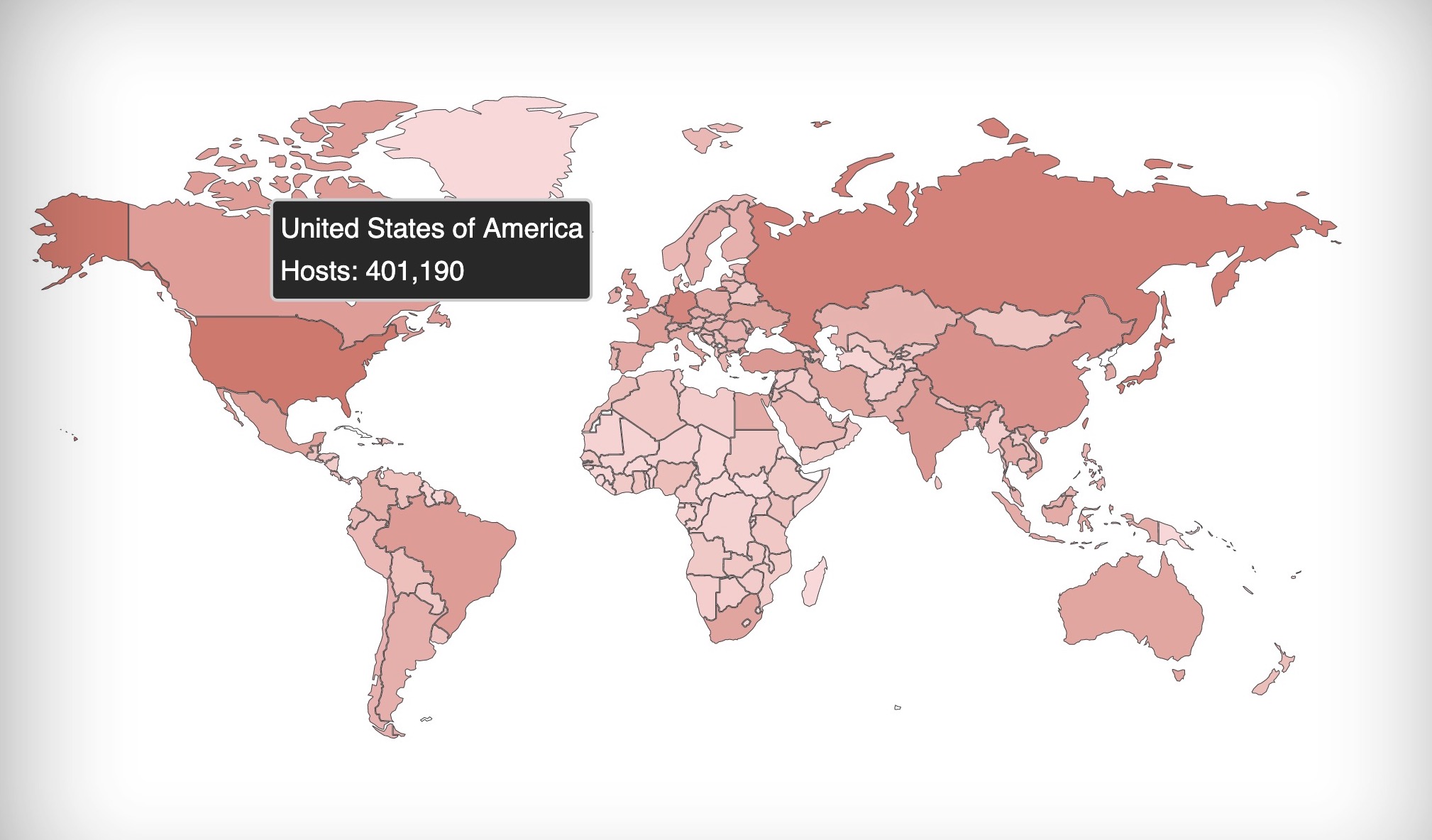
More than 400,000 exposed systems in the U.S. alone can be exploited using NSA’s stolen hacking tools. (Image: Shodan)

WannaCry continues to spread and occasionally still infects its targets. Beaumont said in a tweet Sunday that the ransomware remains largely neutered, unable to unpack and begin encrypting data, for reasons that remain a mystery.

But the exposed NSA tools, which remain at large and able to infect vulnerable computers, continue to be used to deliver all sorts of malware — and new victims continue to appear.

Just weeks before city of Atlanta was hit by ransomware, cybersecurity expert Jake Williams found its networks had been infected by the NSA tools. More recently, the NSA tools have been repurposed to infect networks with cryptocurrency mining code to generate money from the vast pools of processing power. Others have used the exploits to covertly ensnare thousands of computers to harness their bandwidth to launch distributed denial-of-service attacks by pummeling other systems with massive amounts of internet traffic.

WannaCry caused panic. Systems were down, data was lost, and money had to be spent. It was a wakeup call that society needed to do better at basic cybersecurity.

But with a million-plus unpatched devices still at risk, there remains ample opportunity for further abuse. What we may not have forgotten two years on, clearly more can be done to learn from the failings of the past.

Read more:

Hotstar, Disney’s Indian streaming service, sets new global record for live viewership

India’s video streaming giant Hotstar, owned by Disney, today set a new global benchmark for the number of people an OTT service can draw to a live event.

Some 18.6 million users simultaneously tuned into Hotstar’s website and app to watch the deciding game of the 12th edition of the Indian Premier League (IPL) cricket tournament. The streaming giant, which competes with Netflix and Amazon in India, broke its own “global best” 10.3 million concurrent views milestone that it had set last year.

Hotstar topped the 10 million concurrent viewership mark a number of times during this year’s 51-day IPL season. More than 12.7 million viewers huddled to watch an earlier game in the tournament (between Royal Challengers Bangalore and Mumbai Indians), a spokesperson for the service said. In mid-April, Hotstar said that the cricket series had already garnered 267 million overall viewership, creating a new record for the streamer. (Last year’s IPL had clocked 202 million over viewership.)

Fans of Mumbai Indians celebrate their team’s victory against Chennai Super Kings in IPL cricket tournament in India.

These figures coming out of India, the fastest growing internet market, are astounding, to say the least. In comparison, a 2012 live-stream of skydiver Felix Baumgartner jumping from near-space to the Earth’s surface, remains the most concurrently viewed video on YouTube. It amassed about 8 million concurrent viewers. The live viewership of the royal wedding between Prince Harry and Meghan Markle was also a blip in comparison.

As Netflix and Amazon scramble to find the right content strategy to lure Indians, Hotstar and its local parent firm Star India have aggressively focused on securing broadcast and streaming rights to various cricket series. Cricket is almost followed like a religion in India.

In 2017, Star India, then owned by 21st Century Fox, secured rights to broadcast and stream IPL cricket tournaments for five years for a sum of roughly $2.5 billion. Facebook had also participated in the bidding, offering north of $600 million for streaming. (Star India was part of 21st Century Fox’s business that Disney acquired for $71.3 billion earlier this year.)

That bet has largely paid off. Hotstar said last month that its service has amassed 300 million monthly active users, up from 150 million it had reported last year. In comparison, both Netflix and Amazon Prime Video have less than 30 million subscribers in India, according to industry estimates.

In the last two years, Hotstar has expanded to three international markets — the U.S., Canada, and most recently, the UK — to chase new audiences. The streaming service is hoping to attract Indians living overseas and anyone else who is interested in Bollywood movies and cricket, Ipsita Dasgupta, president of Hotstar’s international operations, told TechCrunch in an interview.

The streaming service plans to enter Sri Lanka, Pakistan, Nepal, Middle East, Australia, and New Zealand in the next few quarters, Dasgupta said.

That’s not to say that Hotstar has a clear path ahead. According to several estimates, the streaming service typically sees a sharp decline in its user base after the conclusion of an IPL season. Despite the massive engagement it generates, it remains operationally unprofitable, people familiar with Hotstar’s finances said.

The ad-supported streaming service offers about 80 percent of its content catalog — which includes titles produced by Star India, and shows and movies syndicated from international partners HBO, ABC, and Showtime among others — for no cost to users. One of the most watched international shows on the platform, “Game of Thrones,” will be ending soon, too.

The upcoming World Cup cricket tournament, which Hotstar will stream in India, should help it avoid the major headache for sometime. In the meanwhile, the service is aggressively expanding its original shows slate in the nation. One of the shows is a remake of BBC/NBC’s popular “The Office.”

Where cannabis investors see the next big wave? In precision dosing

Women and seniors are joining the cannabis movement, and that’s presenting new investing opportunities, according to a panel of cannabis investors who we interviewed several days ago at an event organized by the cross-border venture firm DCM.

Specifically, they say, expect to see an uptick in products of all types that make it easier to consume small and controlled amounts of THC, the main psychoactive ingredient in pot.

The trend isn’t so surprising. Anecdotally, women increasingly see cannabis as a potential way to take the edge off without getting plastered, which is not a small concern. Women’s bodies are affected differently by alcohol than are men’s, including because they produce less of a particular enzyme that breaks down alcohol in the body. They’re also working more, drinking more, and developing cirrhosis at a faster rate. According to the Centers for Disease Control and Prevention, the related death rate for women ages 45 to 64 soared a stunning 57 percent between 2000 and 2015, compared with men, whose death rate owing to cirrhosis rose 21 percent over the same period (which is also bad news).

Meanwhile, the case for seniors is even more widely understood. Many live with chronic pain, including because of arthritis or osteoporosis or sometimes autoimmune diseases that can cause fatigue, joint pain and worse. A growing number is also addicted to OxyContin and other pain killers and looking for a way to lessen their dependence of them.

For both, cannabis isn’t viewed as scandalously as it once was, either. Former Speaker of the House John Boehner — who is pushing 70 and long opposed he legalization of marijuana — even joined the board of cannabis distributor Acreage Holdings last summer, alongside former Massachusetts Governor Bill Weld (age 73).

One product promising newcomers a more predictable experience with cannabis is a two-year-old, Woodland, Ca.-based vaporizer company called Indose, whose smart tagline is “greatness comes with control.” The outfit, which just closed on $3.5 million in funding led by Casa Verde Capital, enables users to adjust how many milligrams of THC they are inhaling from a modest 1 to 2 milligrams, to a more impactful 3 to 4 milligrams, per puff.

Dosist, a Santa Monica, Ca.-based maker of vape pens, similarly appeals to new users, including because it vibrates when a user has inhaled for three-seconds, a way to help that person calibrate his or her experience. (Dosist also markets strains that it formulates in ways that accessible to new users, including selling one strain called simply “Sleep,” and another called “Bliss.”)

There there are so-called sublinguals, or products delivered under the tongue, like cannabis tinctures, which are becoming highly popular among newer cannabis users, largely because the THC dosage is easier to manage. In fact, the cannabis wholesale ordering platform Leaflink has said that cannabis-infused sublingual and tincture products, drops, tablets and strips were the fastest growing cannabis product categories last year.

Yet perhaps the biggest opportunity going forward may be edibles. They can take longer to make an impact, given they must be absorbed by a user’s digestive system (sublinguals bypass the digestive system), but look around, and you may start to note they’re becoming more mainstream in a hurry. DCM, for example, just bet $5 million on a startup that’s rolling out a beverage brand this summer that will sell flavored THC-infused shots. That company’s target market, as we wrote earlier this week, is women who’ve probably never smoked a joint yet are becoming “canna curious,” much like one of the firm’s cofounders, a former consumer packaged goods exec who began experimenting with cannabis herself last year.

And more form factors may be on the horizon. As Karan Wadhera, a managing director at Casa Verde Capital, told us during the panel discussion: “There’s a massive market opportunity out there in many areas” now that the industry has “started to show us that people really do care about actual precise dosing.”

Narbe Alexandrian, the president of the cannabis investment firm Canopy Rivers, fully agreed. He told attendees that “when you look at consumer data and you look at intenders,” meaning those who currently don’t use cannabis but are likely to try a cannabis product once it becomes federally legalized and “you then look at rejectors,” considered in the industry to be people who haven’t used cannabis in the last six months and aren’t likely to consider future use, “a lot of them have tried cannabis but were turned off by it because they had a weed brownie that hit them too hard, and they never want to touch the substance again.”

The opportunity to sell then micro-dosing products is “huge,” said Alexandrian, adding that currently, many retailers are largely focused on how many milligrams they are selling, instead of focusing on the products themselves. “So they’re thinking about selling a 100-milligram beverage for $10 and a 50-milligram beverage for $5” and forcing the customer to figure out how to dilute what they are buying in order to find that balance.

Meanwhile, panelist Emily Paxhis — who six years ago cofounded the cannabis-focused investment firm Poseidon Asset Management and has amassed stakes in numerous fast-growing startups since, including Pax Labs and Juul — echoed the sentiments of both men, saying that she’s “very interested in lower-dose platforms,” especially as women begin seeking out more “moderate dosing” opportunities, “something akin to having a glass of wine or glass of beer, as opposed to, ‘I’m buying straight in for the double martini lunch.’”

Added Paxhis, “There are many ways we can educate the consumer and help them feel more comfortable with [cannabis], and having these lower-dose products in the market is a great way to do it.”

Friend portability is the must-have Facebook regulation

Choice for consumers compels fair treatment by corporations. When people can easily move to a competitor, it creates a natural market dynamic coercing a business to act right. When we can’t, other regulations just leave us trapped with a pig in a fresh coat of lipstick.

That’s why as the FTC considers how many billions to fine Facebook or which executives to stick with personal liability or whether to go full-tilt and break up the company, I implore it to consider the root of how Facebook gets away with abusing user privacy: there’s no simple way to switch to an alternative.
If Facebook users are fed up with the surveillance, security breaches, false news, or hatred, there’s no western general purpose social network with scale for them to join. Twitter is for short-form public content, Snapchat is for ephemeral communication. Tumblr is neglected. Google+ is dead. Instagram is owned by Facebook. And the rest are either Chinese, single-purpose, or tiny.

No, I don’t expect the FTC to launch its own “Fedbook” social network. But what it can do is pave an escape route from Facebook so worthy alternatives become viable options. That’s why the FTC must require Facebook offer truly interoperable data portability for the social graph.

In other words, the government should pass regulations forcing Facebook to let you export your friend list to other social networks in a privacy-safe way. This would allow you to connect with or follow those people elsewhere so you could leave Facebook without losing touch with your friends. The increased threat of people ditching Facebook for competitors would create a much stronger incentive to protect users and society.

The slate of potential regulations for Facebook currently being discussed by the FTC’s heads include a $3 billion to $5 billion fine or greater, holding Facebook CEO personally liable for violations of an FTC consent decree, creating new privacy and compliance positions including one held by executive that could be filled by Zuckerberg, creating an independent oversight committee to review privacy and product decisions, accordng to the New York Times and Washington Post. More extreme measures like restricting how Facebook collects and uses data for ad targeting, blocking future acquisitions, or breaking up the company are still possible but seemingly less likely.
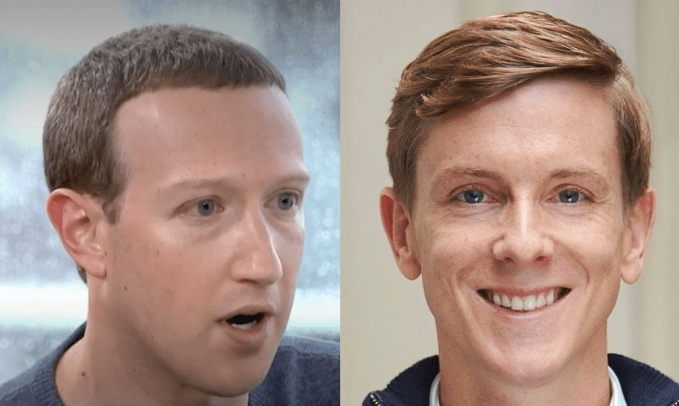
Facebook co-founder Chris Hughes (right) recently wrote a scathing call to break up Facebook.

Breaking apart Facebook is a tantalizing punishment for the company’s wrongdoings. Still, I somewhat agree with Zuckerberg’s response to co-founder Chris Hughes’ call to split up the company, which he said “isn’t going to do anything to help” directly fix Facebook’s privacy or misinformation issues. Given Facebook likely wouldn’t try to make more acquisitions of big social networks under all this scrutiny, it’d benefit from voluntarily pledging not to attempt these buys for at least three to five years. Otherwise, regulators could impose that ban, which might be more politically attainable with fewer messy downstream effects,

Yet without this data portability regulation, Facebook can pay a fine and go back to business as usual. It can accept additional privacy oversight without fundamentally changing its product. It can become liable for upholding the bare minimum letter of the law while still breaking the spirit. And even if it was broken up, users still couldn’t switch from Facebook to Instagram, or from Instagram and WhatsApp to somewhere new.

Facebook Kills Competition With User Lock-In

When faced with competition in the past, Facebook has snapped into action improving itself. Fearing Google+ in 2011, Zuckerberg vowed “Carthage must be destroyed” and the company scrambled to launch Messenger, the Timeline profile, Graph Search, photo improvements and more. After realizing the importance of mobile in 2012, Facebook redesigned its app, reorganized its teams, and demanded employees carry Android phones for “dogfooding” testing. And when Snapchat was still rapidly growing into a rival, Facebook cloned its Stories and is now adopting the philosophy of ephemerality.
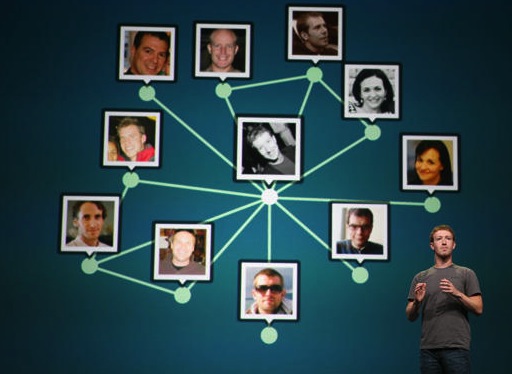
Mark Zuckerberg visualizes his social graph at a Facebook conference

Each time Facebook felt threatened, it was spurred to improve its product for consumers. But once it had defeated its competitors, muted their growth, or confined them to a niche purpose, Facebook’s privacy policies worsened. Anti-trust scholar Dina Srinivasan explains this in her summary of her paper “The Anti-Trust Case Against Facebook”:

“When dozens of companies competed in an attempt to win market share, and all competing products were priced at zero—privacy quickly emerged as a key differentiator. When Facebook entered the market it specifically promised users: “We do not and will not use cookies to collect private information from any user.” Competition didn’t only restrain Facebook’s ability to track users. It restrained every social network from trying to engage in this behavior . . .  the exit of competition greenlit a change in conduct by the sole surviving firm. By early 2014, dozens of rivals that initially competed with Facebook had effectively exited the market. In June of 2014, rival Google announced it would shut down its competitive social network, ceding the social network market to Facebook.

For Facebook, the network effects of more than a billion users on a closed-communications protocol further locked in the market in its favor. These circumstances—the exit of competition and the lock-in of consumers—finally allowed Facebook to get consumers to agree to something they had resisted from the beginning. Almost simultaneous with Google’s exit, Facebook announced (also in June of 2014) that it would begin to track users’ behavior on websites and apps across the Internet and use the data gleaned from such surveillance to target and influence consumers. Shortly thereafter, it started tracking non-users too. It uses the “like” buttons and other software licenses to do so.”
This is why the FTC must seek regulation that not only punishes Facebook for wrongdoings, but that lets consumers do the same. Users can punch holes in Facebook by leaving, both depriving it of ad revenue and reducing its network effect for others. Empowering them with the ability to take their friend list with them gives users a taller seat at the table. I’m calling for what University Of Chicago professors Luigi Zingales and Guy Rolnik termed a Social Data Portability Act.

Luckily, Facebook already has a framework for this data portability through a feature called Find Friends. You connect your Facebook account to another app, and you can find your Facebook friends who are already on that app.

But the problem is that in the past, Facebook has repeatedly blocked competitors from using Find Friends. That includes cutting off Twitter, Vine, Voxer, and MessageMe, while Phhhoto was blocked from letting you find your Instagram friends…six months before Instagram copied Phhhoto’s core back-and-forth GIF feature and named it Boomerang. Then there’s the issue that you need an active Facebook account to use Find Friends. That nullifies its utility as a way to bring your social graph with you when you leave Facebook.
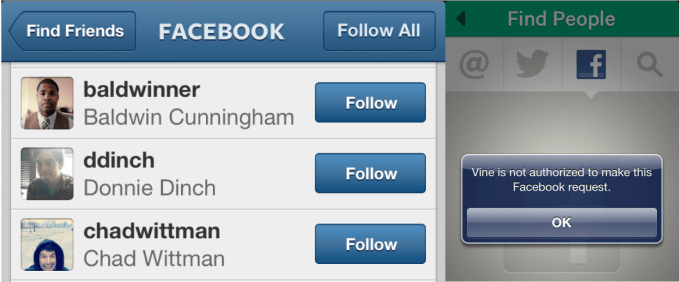
Facebook’s “Find Friends” feature used to let Twitter users follow their Facebook friends, but Facebook later cut off access for competitors including Twitter and Vine seen here

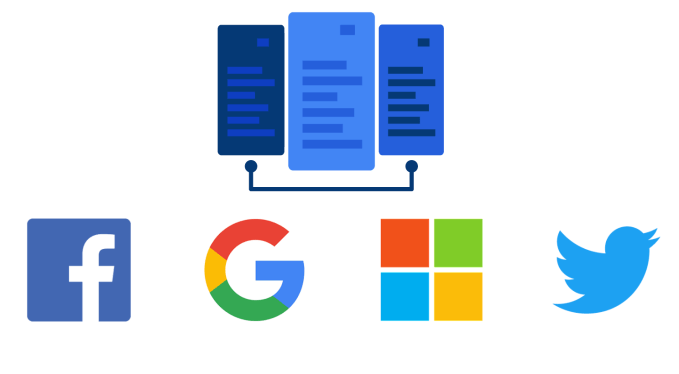
The social network does offer a way to “Download Your Information” which is helpful for exporting photos, status updates, messages, and other data about you. Yet the friend list can only be exported as a text list of names in HTML or JSON format. Names aren’t linked to their corresponding Facebook profiles or any unique identifier, so there’s no way to find your friend John Smith amongst everyone with that name on another app. And less than 5 percent of my 2800 connections had used the little-known option to allow friends to export their email address. What about the big “Data Transfer Project” Facebook announced 10 months ago in partnership with Google, Twitter, and Microsoft to provide more portability? It’s released nothing so far, raising questions of whether it was vaporware designed to ward off regulators.

Essentially, this all means that Facebook provides zero portability for your friendships. That’s what regulators need to change. There’s already precedent for this. The Telecommunications Act of 1996 saw FCC require phone service carriers to allow customers to easily port their numbers to another carrier rather than having to be assigned a new number. If you think of a phone number as a method by which friends connect with you, it would be reasonable for regulators to declare that the modern equivalent — your social network friend connections — must be similarly portable.

How To Unchain Our Friendships

Facebook should be required to let you export a truly interoperable friend list that can be imported into other apps in a privacy-safe way.

To do that, Facebook should allow you to download a version of the list that feature hashed versions of the phone numbers and email addresses friends used to sign up. You wouldn’t be able to read that contact info or freely import and spam people. But Facebook could be required to share documentation teaching developers of other apps to build a feature that safely cross-checks the hashed numbers and email addresses against those of people who had signed up for their app. That developer wouldn’t be able to read the contact info from Facebook either, or store any useful data about people who hadn’t signed up for their app. But if the phone number or email address of someone in your exported Facebook friend list matched one of their users, they could offer to let you connect with or follow them.

This system would let you save your social graph, delete your Facebook account, and then find your friends on other apps without ever jeopardizing the privacy of their contact info. Users would no longer be locked into Facebook and could freely choose to move their friendships to whatever social network treats them best. And Facebook wouldn’t be able to block competitors from using it.

The result would much more closely align the goals of users, Facebook, and the regulators. Facebook wouldn’t merely be responsible to the government for technically complying with new fines, oversight, or liability. It would finally have to compete to provide the best social app rather than relying on its network effect to handcuff users to its service.
This same model of data portability regulation could be expanded to any app with over 1 billion users, or even 100 million users to ensure YouTube, Twitter, Snapchat, or Reddit couldn’t lock down users either. By only applying the rule to apps with a sufficiently large user base, the regulation wouldn’t hinder new startup entrants to the market and accidentally create a moat around well-funded incumbents like Facebook that can afford the engineering chore. Data portability regulation combined with a fine, liability, oversight, and a ban on future acquisitions of social networks could set Facebook straight without breaking it up.

Users have a lot of complaints about Facebook that go beyond strictly privacy. But their recourse is always limited because for many functions there’s nowhere else to go, and it’s too hard to go there. By fixing the latter, the FTC could stimulate the rise of Facebook alternatives so that users rather regulators can play king-maker.


Week-in-Review: Google impersonates Apple and Bezos eyes the moon

After Mark Zuckerberg’s privacy mea culpa at F8 last week, Google got its turn at I/O to promise consumers that their data wasn’t going anywhere that they didn’t want it to go. In short: they aimed to take a page from Apple.

For Google, a clear strategy at the event was essentially highlighting how it wasn’t collecting user data in certain circumstances; those circumstances seemed to be largely focused on whenever the data wasn’t all that useful to Google to begin with.

Google received applause for “privacy commitments” on its new Next Home Max like not cloud-uploading a 3D mesh of a user’s face that’s used for tailoring information, as though doing it in the cloud would make any sense for the company to do. Keeping information on-device was still the exception to the rule at I/O this week, the cloud is still where Google keeps its sharpest wits.

Shoot me tips or feedback
on Twitter @lucasmtny or email
lucas@techcrunch.com

Are expectations so low that we expect Google to keeps everything that we enter on its services forever? While the company has introduced opt-out auto-delete features for information like location data and web history, Google still writes the rules for you handle your own data, specifying that you still allow the data to stay on Google servers for either 3 or 18 months, periods of time that still allow Google to hold onto the most relevant of your info in order to surface information.

Privacy is a product of tradeoffs when you’re online, but companies like Google often seem to communicate that trading information is an inevitability of getting a tailored experience.

Look at a product from Apple like News+, one would imagine that the only way a service could understand what you like to read is by handing that user information to the service owner and sending those suggestions back down. Apple instead handles this by sending users a package of articles and by using on-device processing, the company is able to suggest your next article without publishers or Apple knowing what it is that you’re reading across the network of sites.

Apple is of course reliant on a business model that’s focused on selling hardware not advertising, and thus they’re in a bit more understandable of a position when it comes to eschewing personal data collection in most circumstances.

The company made some partial progress towards righting privacy wrongs, but the biggest winner in the company’s privacy rebrand was meant to be Google.

My colleague Josh had a less cynical view on Google’s promises, though we both share the opinion that Facebook doesn’t deserve much trust in its new privacy “mission,” here’s his piece that runs counter to about everything above:

Facebook talked privacy, Google actually built it

Trends of the week

Here are a few big news items from big companies, with green links to all the sweet, sweet added context.

  • Bezos’ moon moonshot
    Amazon’s CEO is psyched about the moon but he’s not planning to put HQ2 on it, he wants his rocket company Blue Origin to plant its newly-unveiled lunar lander on the surface. At a dedicated event, Bezos discussed some of the company’s plans to turn the moon into a future home for humanity. “It’s time to go back to the Moon. This time to stay,” Bezos said.
  • No five-star rating for Uber opening
    After several weeks of headlines surrounding Lyft’s disappointing public debut, Uber got its turn Friday. The result was none too pretty, after opening at the lowest end of its range, the company still dove in first day trading ending the day with a share price of $41.50. The company has an uphill road to profitability, but as it looks to cut costs, some Uber drivers showcased at a protest that they were already feeling the squeeze.
  • Elon’s tweets land him in more trouble
    Elon’s tweet about the cave-diver, calling him a “pedo guy” is going to trial after all. You can peep the legal documents alongside out full story here.
  • I have you now
    This week, I wrote a feature on a tiny Czech game studio that’s built the most popular VR game on the market. It involves light sabers and EDM and a music-mixing CEO who had plenty to say about banking $20 million in revenue and opting not to raise any outside cash along the way.

AP Photo/Jeff Chiu

GAFA Gaffes

How did the top tech companies screw up this week? This clearly needs its own section, in order of awfulness:

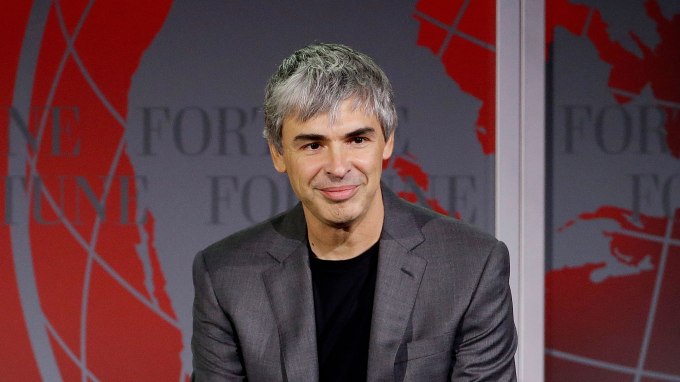
  1. Googlers want some acknowledgment from the top:
    [Google employees demand Larry Page address walkout and retaliation]
  2. Protestors take to the skies during Google’s privacy keynote:
    [Protestors fly banner-towing plane over Google I/O]

Extra Crunch

Our premium subscription service continues to churn out some great pieces. We had a fascinating piece go up this week where my colleague Eric chatted with some of Silicon Valley’s most prolific investors about where the puck is moving on media investments. Here’s one tidbit from Sequoia’s Stephanie Zhan:

Where top VCs are investing in media, entertainment & gaming

At Sequoia, we see incredible potential for the world of gaming and entertainment. Among others, we are excited about: The next virtual third place where consumers are hanging out with friends. In the past, your local Starbucks or AIM would have been your go-to place to see and be seen. Today…

Here are some of our other top reads this week for premium subscribers, check out the read butting heads with growing discontent for office Slack usage…

Want more TechCrunch newsletters? Sign up here.

After burning through $1 billion, Jawbone’s Hosain Rahman has raised $65 million more

Not everyone gets a second chance in Silicon Valley. Entrepreneur Hosain Rahman has been given many more than that. Though his last company, Jawbone, which produced wireless speakers and Bluetooth earpieces, went kaput in 2017 after burning up $1 billion in venture funding over the course of ten years, Rahman has managed to raise $65.4 million for his new company. So shows a new SEC filing that, coincidentally or otherwise, was processed late yesterday while most of the world’s attention was focused on Uber’s IPO.

The company, Jawbone Health, isn’t brand new. According to reports of two years ago and Rahman’s LinkedIn bio, he began working in earnest on his newest endeavor when the original Jawbone was running on fumes in the summer of 2017.

In fact, according to LinkedIn, Jawbone Health now employs 51 people, including people who worked with Rahman previously. Among these is the new outfit’s VP of engineering, Jonathan Hummel, who’d been a senior engineering manager at Jawbone during the last two years of its life. Others are new to the organization because of its focus on healthcare. These include Yaniv Kerem, Jawbone Health’s VP of Informatics, whose last job was as an emergency medical physician with Kaiser Permanente.

Certainly, the company has a very different mission than even the wearable fitness trackers that Jawbone began making as a kind of Hail Mary pass whose failure signaled to some the end of the wearables industry — though it was really just the end of Jawbone.

Whether Rahman can do better with Jawbone Health will be interesting to see. As he told reporter Kara Swisher last fall, what Jawbone Health is selling is a “personalized subscription service where we take all of this continuous health data about you and we combine that with a lot of machine intelligence . . .”

The idea is to prevent the avoidable diseases that wind up killing two-thirds of us owing to bad-decision making and plain-old inattention. “If you catch that stuff early and you change your behavior or whatnot, you can push out half of those deaths and save 70 percent of the cost,” he told her.

Jawbone Health is making its own devices, Rahman added. They will come free with the service.

One obvious concern for the new company is competition. Where Jawbone made attractive, wireless speakers ahead of many other companies whose products now litter our homes, Rahman is seemingly late to the party with Jawbone Health. There are already rings that track sleep activity and heart rate; bracelets that come with built-in accelerometers, heart rate sensors, and temperature sensors; and even textiles that unlock biometric insights. That’s saying nothing of the Apple Watch, which has already put plenty of startups out of business.

Rahman says one of Jawbone Health’s biggest differentiators is that the product and service are “clinical grade.” That’s not necessarily enough of a selling point for many consumers. After all, humans don’t have the best track record when it comes to taking care of themselves. Still, he now has $65 million to prove out his theory.

The new funding, atop of so much lost already, is sure to frustrate some founders who’ve been given fewer opportunities. It may also confuse others who’ve either worked with or funded Rahman in the past.

Then again, Rahman wouldn’t be the first founder to bounce back from failure, and he has plenty to prove. That may work in the favor of his new backers, including SignalFire and Refactor Capital in the Bay Area, and Polymath Ventures and Meraas in the United Arab Emirates.

We’ll have more on the company soon.