Iguazio brings its data science platform to Azure and Azure Stack

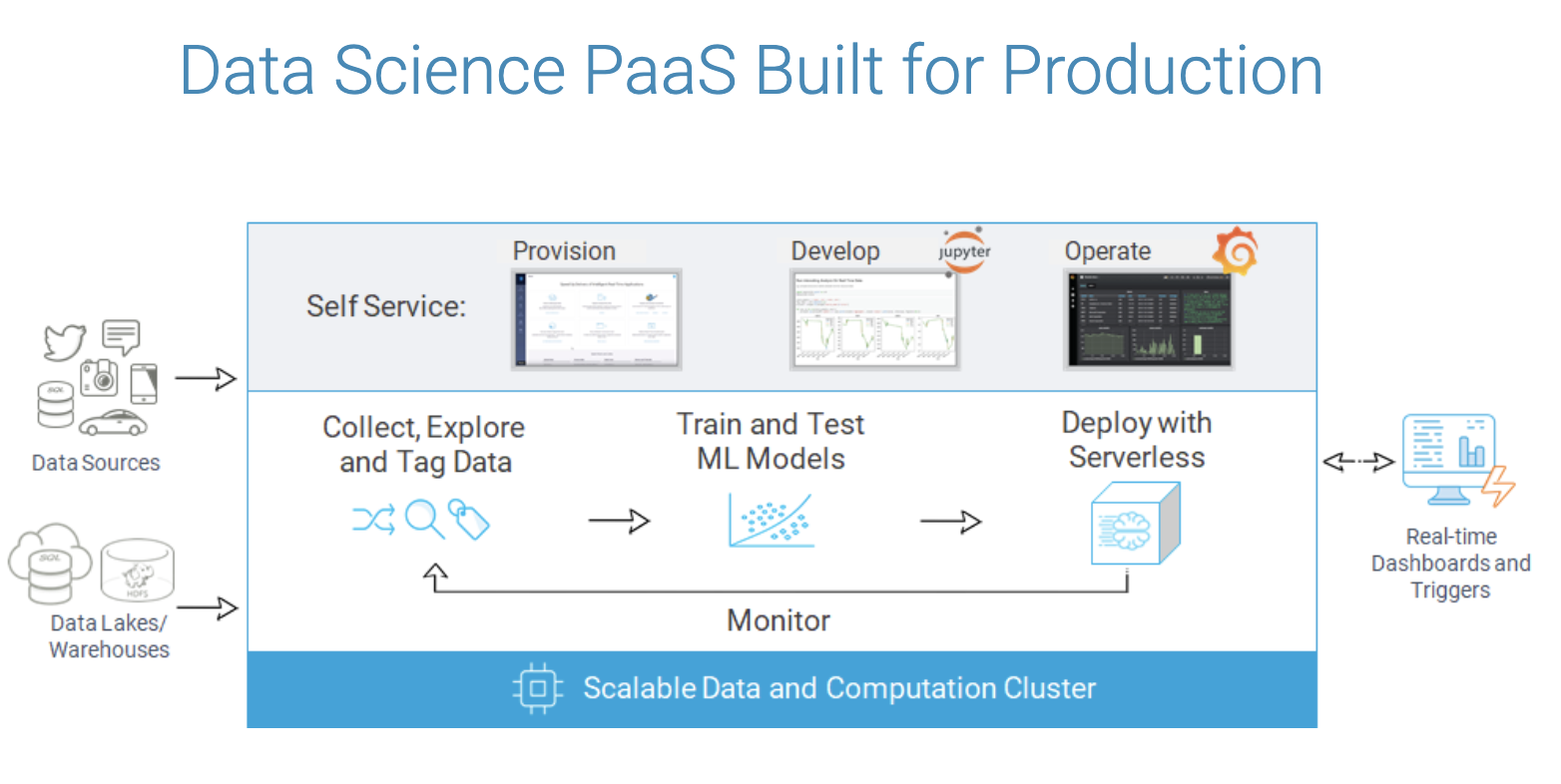
Iguazio, an end-to-end platform that allows data scientists to take machine learning models from data ingestion to training, testing and production, today announced that it is bringing its solution to Microsoft’s Azure cloud and Azure Stack on-premises platform.

The 80-person company, which has received a total of $48 million in funding to date, aims to make it easier for data scientists to do the work they are actually paid to do. The company argues that a lot of the work that data scientists do today is about managing the infrastructure and handling integrations, not building the machine learning models.

“We see that machine learning pipelines are way more complex than people think,” Iguazio CEO Asaf Somekh told me. “People think this is good stuff, but it’s actually horrible. We’re trying to simplify that.”

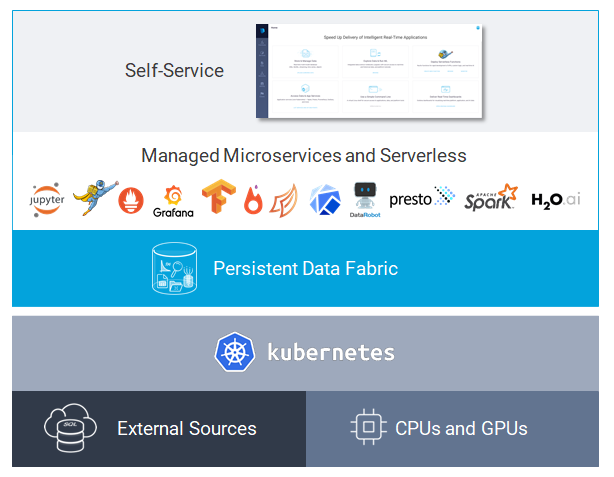
To do this, Iguazio is betting on open source. It uses standard tools and API to pull in data from a wide variety of sources, which is then stored in its real-time in-memory database, which can handle streaming data, as well as time series data, tables and files. It also uses standard Jupyter notebooks instead of some form of proprietary format, but what’s maybe most interesting is that the company also built and open-platform for building data science pipelines. To build the models, Iguazio also uses KubeFlow, a machine learning toolkit for the Kubernetes container platform.

Given that Azure and Azure Stack are essentially the same platform, as far as the APIs are concerned, Iguazio can then take its software and run it both in the cloud and on premises. Soon, it’ll also bring its service to Microsoft’s Azure Data Box Edge, Microsoft’s hardware solution for storing and analyzing data at the edge, which can be equipped with FPGAs for deploying machine learning models.

“Partnering with Iguazio, we can offer additional options for AI applications in the cloud to also run on the edge. Iguazio provides an additional path to run AI on the edge beyond our current Microsoft Azure Machine Learning inferencing on the edge,” said Henry Jerez, Principal Group Product Manager at Microsoft’s Intelligent Edge Solutions Platform Group. “This new marketplace option provides an additional alternate path for our customers to bring intelligence close to the data sources for applications such as predictive maintenance and real-time recommendation engines.”

The Azure solution joins Iguazio’s existing options to deploy its services on top of AWS and Google Cloud Platform.

Tencent replaces hit mobile game PUBG with a Chinese government-friendly alternative

China’s new rules on video games, introduced last month, are having an effect on the country’s gamers. Today, Tencent replaced hugely popular battle royale shooter game PUBG with a more government-friendly alternative that seems primed to pull in significant revenue.

The company introduced ‘Game for Peace’ in a Weibo post at the same time as PUBG — which stands for Player Unknown Battlegrounds — was delisted from China. The title had been in wide testing but without revenue, and now it seems Tencent gave up on securing a license to monetize the title.

In its place, Game for Peace is very much the type of game that will pass the demands of China’s game censorship body. Last month, the country’s State Administration of Press and Publication released a series of demands for new titles, including bans on corpses and blood, references of imperial history and gambling. The new Tencent title bears a striking resemblance to PUBG but there are no dead bodies, while it plays up to a nationalist theme with a focus on China’s air force — or, per the Weibo message, “the blue sky warriors that guard our country’s airspace” — and their battle against terrorists.

Game for Peace was developed by Krafton, the Korea-based publisher formerly known as BlueHole which made PUBG. Beyond visual similarities, Reuters reported that the games are twinned since some player found that their progress and achievements on PUBG had transferred over to the new game.

Tencent representatives declined to comment on the new game or the end of PUBG’s ‘beta testing’ period in China when contacted by TechCrunch. But a company rep apparently told Reuters that “they are very different genres of games.”

Tencent’s new ‘Game for Peace’ title is almost exactly the same as its popular PUBG game, which it is replacing [Image via Weibo]

Fortnite may have grabbed the attention for its explosive growth — we previously reported that the game helped publisher Epic Games bank a profit of $3 billion last year — but PUBG has more quietly become a fixture among mobile gamers, particularly in Asia.

At the end of last year, Krafton told The Verge that it was past 200 million registered gamers, with 30 million players each day. According to app analytics company Sensor Tower, PUBG grossed more than $65 million from mobile players in March thanks to 83 percent growth which saw it even beat Fortnite. There is also a desktop version.

PUBG made more money than Fortnite on mobile in March 2019, according to data from Sensor Tower

That is really the point of Tencent’s switcheroo: to make money.

The company suffered at the hands of China’s gaming license freeze last year, and a regulatory-compliant title like Game for Peace has a good shot at getting the green light for monetization — through the sale of virtual items and seasonal memberships.

Indeed, analysts at China Renaissance believe the new title could rake in as much as $1.5 billion in annual revenue, according to the Reuters report. That’s a lot to get excited about and resuscitating gaming will be an important part of Tencent’s strategy this year — which has already seen it restructure its business to focus emerging units like cloud computing, and pledge to use its technology to “do good.”

HeyJobs, a ‘talent acquisition’ platform out of Berlin, raises $12M Series A

HeyJobs, a three year-old Berlin startup that helps large employers scale recruitment, has raised $12 million in Series A funding.

The round id led by Notion Capital, with participation from existing investors Creathor Ventures, Rocket Internet’s GFC, and newly re-branded Heartcore Capital.

Founded in 2016 and launched the following year, HeyJobs aims to tackle the recruitment problem European employers are facing due to steep declines in available workforce as the so-called the “boomer” generation nears retirement (this is seeing Germany alone losing 500,000 workers annually, apparently).

The HeyJobs platform leverages machine learning in an attempt to make high skilled recruitment more scalable. It promises to match talent with job profiles and draw in the best candidates via targeted marketing and a “personalized application and assessment flow”.

“We use a fully automated technological approach to help candidates find jobs and companies find employees,” says HeyJobs co-founder and CEO Marius Luther.

“For example, we deploy multiple machine learning algorithms to find the right potential candidates for a specific role (asking ‘who are the most likely candidates for an intensive care nurse role in East London?’). Our technology then makes sure candidates see the job proposal on channels such as Facebook, Instagram, job platforms and across the web”.

In addition, Luther says that HeyJobs’ personalized assessment ensures that the company only delivers high quality, hireable candidates to employers, something he dubs as “predictable hiring” at scale.

“Our clients are typically the talent acquisition teams of employers with high volume recruitment needs,” he explains. “In Germany, 8/10 largest employers (by headcount) are our clients. Typical industries would be logistics (i.e. DPD, UPS), retail (i.e. Vodafone) & hospitality (i.e. h-hotels, Five Guys). However our real customer is the non-academic job seeker who is looking for a job that will help him/her live a more fulfilling life — be it by being paid more, switching to better employment conditions or finding a job closer to home”.

To that end, HeyJobs says it is now serving over 500 enterprise clients including United Parcel Service, PayPal, FiveGuys, Vodafone, and Securitas. The company generates revenue via a range of business models, from subscription to per-hire success fees.

“The cost per hire is typically a fraction of what clients would pay job boards on a per-post basis or what they would pay to staffing firms on a per hire basis,” adds the HeyJobs CEO.

Match Group records solid first-quarter revenue thanks to an increase in Tinder subscribers

Match Group’s revenue saw solid growth in the first quarter thanks to an increase in Tinder subscribers. The company, whose portfolio of dating apps also includes Match.com, PlentyOfFish, OkCupid and Hinge, among others, said in its earnings report today that total quarterly revenue grew 14% year over year to $465 million. If the effects of foreign exchange aren’t included, growth would have been 18%.

Net earnings attributable to shareholders grew 23% to $123 million, or 42 cents per share, from $99.7 million, or 33 cents in the same period a year ago. Operating income increased 6% to $119 million from $112 million. During the first quarter of 2019 and 2018, Match Group recorded an income tax benefit of $28 million and $12 million, respectively, related to the exercise of vesting of stock-based awards.

During the first quarter, Tinder average subscribers were 4.7 million, up from 384,000 in the previous quarter and 1.3 million year over year. In total, Match Group’s average subscribers increased 16% to 8.6 million, up from 7.4 million a year ago. Match Group said the growth in subscribers and increase in average revenue per user (ARPU) at Tinder boosted its revenue, but it was partially offset by foreign exchange effects. ARPU was flat year-over-year, but without foreign exchange effects, it would have increased by 4% to 60 cents.

The company said its adjusted EBITDA (earnings before interest, tax, depreciation and amortization) growth was impacted by the higher cost of generating revenue, specifically in-app purchase fees because revenue increasingly comes through mobile app stores, and higher legal costs, but offset by lower selling and marketing expenses. Adjusted EBITDA grew 13% to $155 million from $138 million.

During the first quarter, Match Group restructured its executive team, appointing three new general managers to oversee regions in Asia in order to gain more users there and focus on international growth. Its first-quarter earnings presentation highlighted opportunities in India, where Tinder is the highest-grossing Android app according to App Annie; Japan, where Match Group now owns two of the top five dating apps (Pairs is number one in Japan, while Tinder is ranks at fourth); and Southeast Asia, where Tinder is now within the top 10 grossing apps in six countries.

The company did not break down earnings by country, but during the first quarter, it had a total of 8,613,000 million average subscribers, with 4,361,000 in North America and 4,252,000 internationally. Total ARPU was 58 cents: 60 cents in North America and 56 cents internationally. Total revenue was $ $464.6 million, and of that $454 million was direct revenue, split between $237.8 million from North America and $216.2 million from international (indirect revenue is revenue that does not come directly from Match Group’s end users, and most of that is advertising revenue.

India’s edtech startup CollegeDekho raises $8 million to connect students with colleges

Indian edtech startup CollegeDekho, which helps students connect with prospective colleges and keep track of exams, has raised $8 million in Series B round.

The new financing round for the four-year-old Gurgaon-based startup was led by its parent company Girnarsoft Education and London-based private equity investor Man Capital, which also participated in the startup’s Series A round last year.

Ruchir Arora, founder and CEO of CollegeDekho told TechCrunch in an interview that the startup will use the capital to expand its presence in more schools and also begin connecting students with international educational institutions. The startup, which has raised $13 million to date, will also ramp up its research and development efforts.

CollegeDekho, hindi for search for college, maintains a website that helps students identify the right career choices for them. The website has a chatbot that answers some of the questions students have while logging their responses and other website activities such as the kind of colleges they are searching for on the platform, their preferred location and budget.

Arora said the startup, which also has about 3,000 call centre representatives and counsellors, builds profiles of students to make college recommendations. He said each month the site observes more than five million sessions from students. Last year, more than 8,000 students used CollegeDekho to take admission in a college.

Parents in India, a country of 1.3 billion people with not the best literacy record, see education as an upward mobility for their children. Each year, more than six to seven million students go to a college. But because of a range of factors that can include cultural stigma, many students end up choosing wrong path and thus don’t excel in college. Indeed, many students ultimately don’t pursue the subject they are best suited for, Arora said, and that’s where CollegeDekho aims to make an impact.

Most high school students in India often gravitate toward engineering or medical college, as a result of which, each year India produces many engineers and doctors who struggle for years to find a job. Arora said his startup looks at more than 2,000 career paths a student could pursue.

What works in favor of Arora is that the country will continue to turn out millions of students each year who will be looking to go to a college soon. It also helps that CollegeDekho is operationally profitable, Arora said, adding that it generates about $3.2 million in revenue in a year. Any additional cash that the startup raises will go into its expansion, he said.

CollegeDekho charges a nominal fee from students, and also takes a cut when they join a college. More than 36,000 educational institutes are listed on CollegeDekho. The startup also works with more than 400 colleges to conduct an exam for direct admission, and there too it earns a cut.

India’s education market, estimated to be grow to $5.7 billion by next year, has emerged as a lucrative opportunity for startups and VCs alike. Bangalore-based Byju’s, which helps millions of students in India prepare for competitive exams, raised $540 million from Naspers and others late last year. Unacademy, which like Byju’s offers online tutoring to students, has raised more than $38.5 million to date.

A legion of other education startups today are vying for the attention of students in the nation. Noida-based AskIITians, not much far from the offices of CollegeDekho, aims to help school-going students prepare for medical and engineering exams. Extramarks, also based in Noida, operates in the same space as AskIITians. Reliance Industries, owned and controlled by India’s richest man Mukesh Ambani, bought 38.5 percent stake in the startup three years ago.

Binance says more than $40 million in bitcoin stolen in ‘large scale’ hack

Cryptocurrency exchange Binance has confirmed a “large scale” data breach, in which hackers stole more than $40 million in cryptocurrency

In a statement, the company said hackers stole API keys, two-factor codes and other information in the attack.

Binance traced the cryptocurrency theft — more than 7,000 bitcoins at the time of writing — to a single wallet after the hackers stole the contents of the company’s bitcoin hot wallet. Binance, the world’s largest cryptocurrency exchange by volume, said the theft impacted about 2 percent of its total bitcoin holdings.

“All of our other wallets are secure and unharmed,” said the statement.

“The hackers had the patience to wait, and execute well-orchestrated actions through multiple seemingly independent accounts at the most opportune time,” the statement read. “The transaction is structured in a way that passed our existing security checks. It was unfortunate that we were not able to block this withdrawal before it was executed.”

“Once executed, the withdrawal triggered various alarms in our system. We stopped all withdrawals immediately after that,” the statement said.

Binance said its secure asset fund for users (SAFU) will cover user losses.

Until the company’s investigation is complete, deposits and withdrawals will remain suspended but trading will remain open.

Binance chief executive Changpeng Zhao is set to hold a Twitter ask-me-anything session in the coming hours. TechCrunch will bring you more once we have it.

Read more:

Google rethinks navigation with launch of ‘Portals’ on Chrome Canary

Google announced today it has launched a new page transition experience for the Chrome web browser called “Portals.” The technology is something the company has been developing for some time, and is designed to offer an alternative to using IFrames. In fact, the company described Portals as being more like “IFrames that you can navigate” — because, unlike a traditional IFrame, which gives a window into another website, a Portal actually lets you go through to that other website.

In a demo of Portals’ potential, Google showed off how they could be used on a meal planning website. The example site they used aggregated recipes from other sites around the web. Normally, you’d have to click through to the destination website in order to see the recipe’s details, like the cooking steps, ingredients, and other information. With Portals, however, you could browse the various recipes on the main meal planning website – then, when you found a recipe you wanted to save, you could launch it in a Portal. For example, you could click the main website’s “Share” button which would load the destination website in this pop-up like view of the destination webpage. You could then save the recipe directly to your favorite pinboard or social network.

In the demo, the recipe was being saved to a fake social network called “Nom Nom.” When the user clicked “Share,” Nom Nom’s domain actually opened within the portal, while the original meal planning website persisted in the background, ready for you to return.

This works because a function in Portals allows the origin page to share context with the destination. In other words, it really is like a “portal” to another site, not a view of it.

When the recipe was saved and shared, the user could then close the Portal to return to the original meal planning site and continue to browse for more recipes.

Another function in portals is the ability for the origin site to hand off information to a destination site.

To continue the recipe example, when the user found a recipe they wanted to cook they were able to hand off the ingredients list from recipe site to an online grocery service’s website through the Portal. And while the destination site loads, the Portal can display an animation to offer a more pleasant transition experience for the end user.

Google said it has now launched the Portals API as an experimental feature behind a flag in Canary (#enable-portals), and is looking for developer community feedback.

Fearing an escalation of the trade war with China, stock markets plummet… then rally

Stock markets declined today as investors worried about the potential for an escalating trade war with China sold off shares.

Markets had been trading near or above all-time highs before President Donald Trump threatened to significantly increase tariffs on Chinese goods. The news sent stock markets into a free-fall in mid-day trading, but the markets staged a late-day surge to end the day with only modest declines.

The escalating war of words between U.S. and Chinese officials and trade negotiators sent markets plummeting. Roughly $200 billion worth of Chinese imports are at issue, with the President threatening to bump tariffs to 25% up from 10%.

At one point, the Dow Jones Industrial Average was down over 600 points before ending the day at 66 points down thanks to a late-day rally, which made up most of the losses.

The heart of the issue between the U.S. and China is American negotiators accusing the Beijing government of reneging on commitments it had already made in trade talks.

Investors were fearful that tariffs on Chinese goods could mean a slowdown in U.S. exports and cause some belt-tightening among consumers who would see prices rise for a number of goods.

Facebook talked privacy, Google actually built it

Mark Zuckerberg: “The future is private”. Sundar Pichai: ~The present is private~. While both CEO’s made protecting user data a central theme of their conference keynotes this month, Facebook’s product updates were mostly vague vaporware while Google’s were either ready to ship or ready to demo. The contrast highlights the divergence in strategy between the two tech giants.

For Facebook, privacy is a talking point meant to boost confidence in sharing, deter regulators, and repair its battered image. For Google, privacy is functional, going hand-in-hand with on-device data processing to make features faster and more widely accessible.

Everyone wants tech to be more private, but we must discern between promises and delivery. Like “mobile”, “on-demand”, “AI”, and “blockchain” before it, “privacy” can’t be taken at face value. We deserve improvements to the core of how our software and hardware work, not cosmetic add-ons and instantiations no one is asking for.

AMY OSBORNE/AFP/Getty Images

At Facebook’s F8 last week, we heard from Zuckerberg about how “Privacy gives us the freedom to be ourselves” and he reiterated how that would happen through ephemerality and secure data storage. He said Messenger and Instagram Direct will become encrypted…eventually…which Zuckerberg had already announced in January and detailed in March. We didn’t get the Clear History feature that Zuckerberg made the privacy centerpiece of his 2018 conference, or anything about the Data Transfer Project that’s been silent for the 10 months since it’s reveal.

What users did get was a clumsy joke from Zuckerberg about how “I get that a lot of people aren’t sure that we’re serious about this. I know that we don’t exactly have the strongest reputation on privacy right now to put it lightly. But I’m committed to doing this well.” No one laughed. At least he admitted that “It’s not going to happen overnight.”

But it shouldn’t have to. Facebook made its first massive privacy mistake in 2007 with Beacon, which quietly relayed your off-site ecommerce and web activity to your friends. It’s had 12 years, a deal with the FTC promising to improve, countless screwups and apologies, the democracy-shaking Cambridge Analytica scandal, and hours of being grilled by congress to get serious about the problem. That makes it clear that if “the future is private”, then the past wasn’t. Facebook is too late here to receive the benefit of the doubt.

At Google’s I/O, we saw demos from Pichai showing how “our work on privacy and security is never done. And we want to do more to stay ahead of constantly evolving user expectations.” Instead of waiting to fall so far behind that users demand more privacy, Google has been steadily working on it for the past decade since it introduced Chrome incognito mode. It’s changed directions away from using Gmail content to target ads and allowing any developer to request access to your email. And now when the company is hit with scandals, it’s typically over its frightening efficiency as with its cancelled Project Maven AI military tech, not its creepiness.

Google made more progress on privacy in low-key updates in the runup to I/O than Facebook did on stage. In the past month it launched the ability to use your Android device as a physical security key, and a new auto-delete feature rolling out in the coming weeks that erases your web and app activity after 3 or 18 months. Then in its keynote today, it published “privacy commitments” for Made By Google products like Nest detailing exactly how they use your data and your control over that. For example, the new Nest Home Max does all its Face Match processing on device so facial recognition data isn’t sent to Google. Failing to note there’s a microphone in its Nest security alarm did cause an uproar in February, but the company has already course-corrected

That concept of on-device processing is a hallmark of the new Android 10 Q operating system. Opening in beta to developers today, it comes with almost 50 new security and privacy features like TLS 1.3 support and Mac address randomization. Google Assistant will now be better protected, Pichai told a cheering crowd. “Further advances in deep learning have allowed us to combine and shrink the 100 gigabyte models down to half a gigabyte — small enough to bring it onto mobile devices.” This makes Assistant not only more private, but fast enough that it’s quicker to navigate your phone by voice than touch. Here, privacy and utility intertwine.

The result is that Google can listen to video chats and caption them for you in real-time, transcribe in-person conversations, or relay aloud your typed responses to a phone call without transmitting audio data to the cloud. That could be a huge help if you’re hearing or vision impaired, or just have your hands full. A lot of the new Assistant features coming to Google Pixel phones this year will even work in Airplane mode. Pichai says that “Gboard is already using federated learning to improve next word prediction, as well as emoji prediction across 10s of millions of devices” by using on-phone processing so only improvements to Google’s AI are sent to the company, not what you typed.

Google’s senior director of Android Stephanie Cuthbertson hammered the idea home, noting that “On device machine learning powers everything from these incredible breakthroughs like Live Captions to helpful everyday features like Smart Reply. And it does this with no user input ever leaving the phone, all of which protects user privacy.” Apple pioneered much of the on-device processing, and many Google features still rely on cloud computing, but it’s swiftly progressing.

When Google does make privacy announcements about things that aren’t about to ship, they’re significant and will be worth the wait. Chrome will implement anti-fingerprinting tech and change cookies to be more private so only the site that created them can use them. And Incognito Mode will soon come to the Google Maps and Search apps.

Pichai didn’t have to rely on grand proclamations, cringey jokes, or imaginary product changes to get his message across. Privacy isn’t just a means to an end for Google. It’s not a PR strategy. And it’s not some theoretical part of tomorrow like it is for Zuckerberg and Facebook. It’s now a natural part of building user-first technology…after 20 years of more cavalier attitudes towards data. That new approach is why the company dedicated to organizing the world’s information is getting so little backlash.

With privacy, it’s all about show, don’t tell.

Waymo and Lyft partner to scale self-driving robotaxi service in Phoenix

Waymo is partnering with Lyft to bring self-driving vehicles onto the ride-hailing network in Phoenix as the company ramps up its commercial robotaxi service.

Waymo will add 10 of its self-driving vehicles on Lyft platform over the next few months, according to CEO John Krafcik. Once Waymo vehicles are on the platform, Lyft users in the area will have the option to select a Waymo directly from the Lyft app for eligible rides.

“This first step in our partnership will allow us to introduce the Waymo Driver to Lyft users, enabling them to take what for many will be their first ride in a self-driving vehicle,” Krafcik said in a blog posted Tuesday.

The companies didn’t provide further details about the partnership, but it appears to be similiar to Lyft’s relationship with Aptiv . Under that partnership, Aptiv’s self-driving vehicles operate on Lyft’s ride-hailing platform in Las Vegas. As of last month, the vehicles had provided more than 40,000 paid autonomous rides in Las Vegas via the Lyft app.