Google’s big VR news is that there is no VR news

Google seems to be waking up from its VR daydream. The company’s ambitious plans to leverage the smartphones that people already own to power VR experiences went unmentioned at its I/O developer conference.

After spending 2016 and 2017 making big promises for how the company would shape the mobile VR market and ensure that its Daydream platform would dominate, Google has largely abandoned its plans letting the headsets gather dust and its VR content in the Play Store.

The only virtual reality news to emerge is that the company’s newest Pixel smartphones won’t support the company’s own VR platform, The Verge reports.

The company released two generations of Daydream View headsets for its mobile platform in 2016 and 2017 but there were no updates last year and not a single onstage mention of the platform or headset this year.

Google detailed plans during a dedicated VR I/O 2017 keynote to bring standalone devices to market via partnerships with HTC and Lenovo. HTC ended up bailing on the program, and after Lenovo released its Mirage Solo device long after estimated, Google failed to bring updates and prioritize bringing content that leveraged the new WorldSense tracking tech. The company is now largely pitching the device as a developer kit, though one wonders what exactly they’re developing for.

Facebook’s VR arm Oculus has announced and released two standalone VR headsets since Google last announced new VR hardware onstage at an event.

“On the VR front, our focus right now is much more on services and the bright spots where we see VR being really useful,” Google VR/AR head Clay Bavor told CNET in an interview, noting that they are still experimenting with hardware.

Google tests faster image loading in Chrome Canary

Google today announced a change coming to Chrome that will help image-heavy websites load more quickly — but the addition for now is only available in the experimental version of the web browser, Chrome Canary. Explained Chrome Product Manager Tal Oppenheimer, speaking at the Google I/O conference on Tuesday, the company is rolling out a new way to create a better image loading experience on websites that leverages “lazy loading” — a technique that only loads images on a website when they’re actually needed.

“Modern websites are more visual than ever, using lots of beautiful high resolution imagery,” said Oppenheimer. “But loading all those images at once can slow down the browser, and can waste the user’s data by loading unnecessary images that the user never actually sees,” she continued. “So it’s often better to load images only as they’re actually needed — a technique known as ‘lazy loading.’ We know it can be a lot of work for developers to use their own JavaScript solutions. And it can be hard to get the quality experience you want for your business. So we wanted to make it incredibly simple to have a great image loading experience on your site,” Oppenheimer added.

Starting today behind a flag in Chrome Canary (loading=”lazy”), you can try out the new image loading experience after adding the new loading attributes to your image tags. Chrome then takes care of the rest by taking into account factors like the user’s connection speed to determine when to load images. It will also check the first two kilobytes of the different images on the site in order to add a placeholder in the right size.

The end result is a smoother experience for image heavy websites, all without the need to write any extra code to enable this image loading experience.

The feature makes sense for those using the web browser with limited connectivity, where trying to browse today’s media rich web can really slow things down. This would allow those users to reach all the same websites as those with high speed connections with fewer issues.

The company didn’t say when such a feature would make its way out of the experimental version of Chrome to the flagship product.

Google’s Flutter framework spreads its wings and goes multi-platform

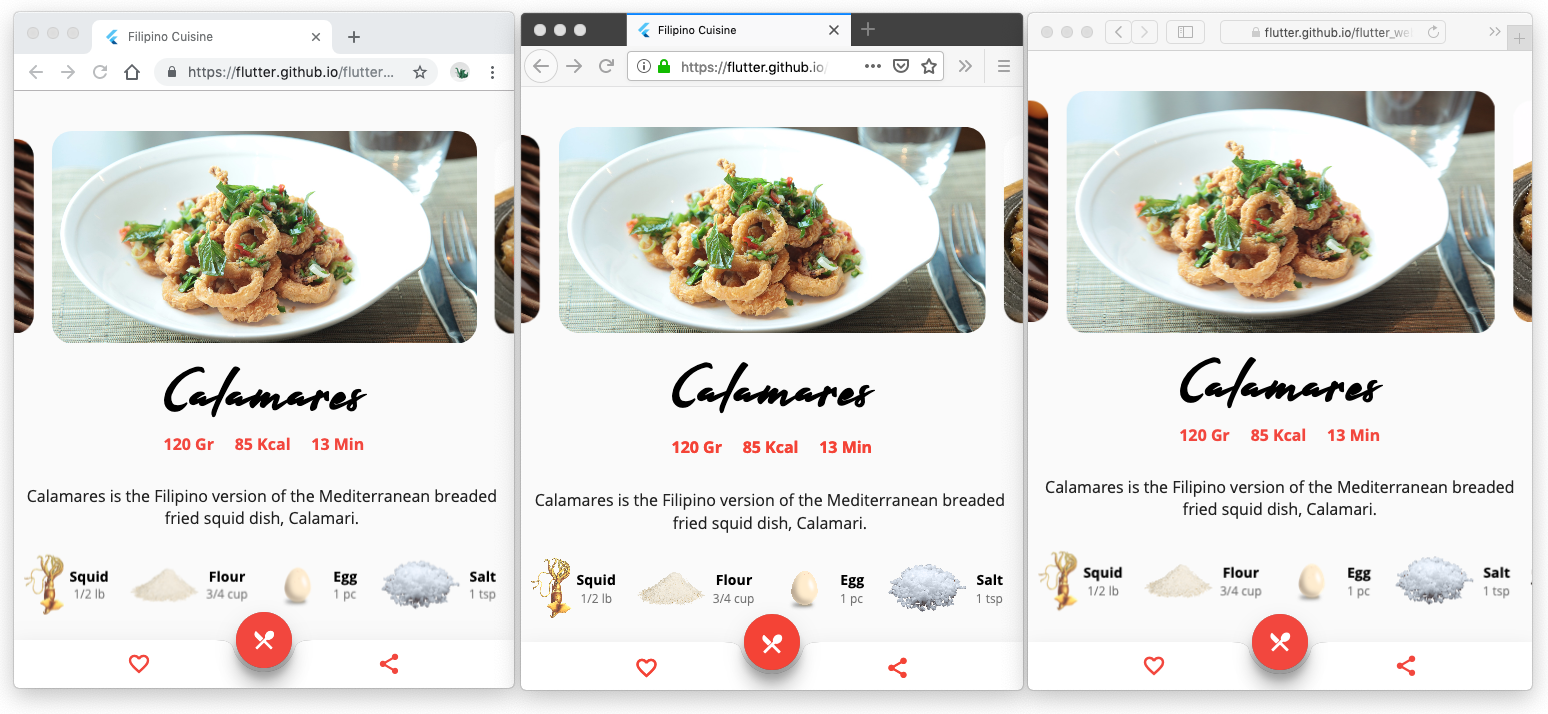
Google’s Flutter UI toolkit for cross-platform development may only be two years old, but it has quickly become the framework of choice for many developers. Until now, though, ‘cross-platform’ only referred to Android and iOS. Late last year, Google announced that it would also take flutter beyond mobile and to the web. Today, at its I/O developer conference, it’s doing exactly that with the launch of the first technical preview of Flutter for the web

Google also today announced that Flutter developers will soon be able to target macOS, Windows and Linux and that the company itself is already using the framework to power some experiences on the Google Home Hub as it looks to bring Flutter to more embedded devices, too.

“We built Flutter from the ground up to be this beautiful, fast, productive, open-source toolkit for building tailored experiences, originally for mobile,” Google’s group product manager for Flutter, Tim Sneath, told me. “The big news for this week is that we are finally opening Flutter up beyond just mobile to really lean into our broader vision for Flutter as our general-purpose, portable UI toolkit for mobile, we, embedded and desktop.”

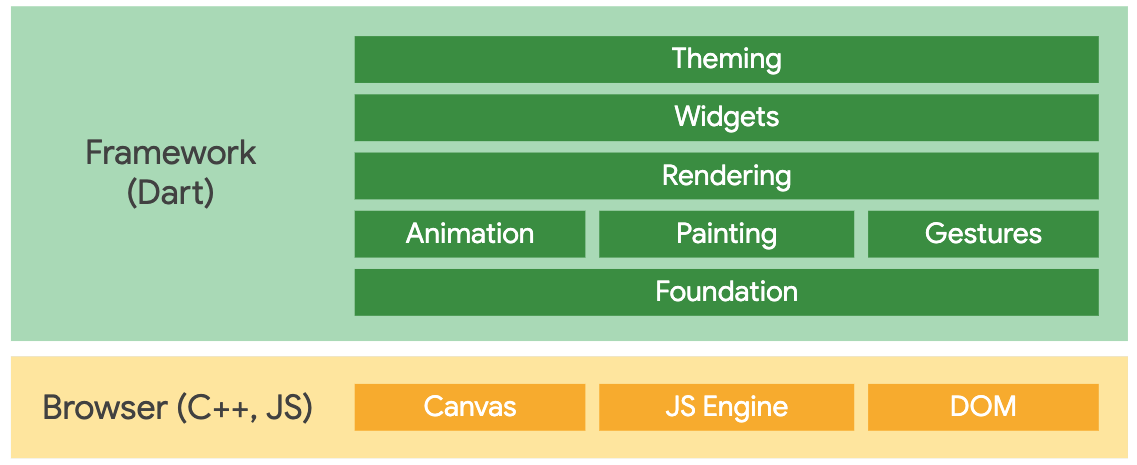
By default, Flutter apps are written in Google’s Dart language, which can be compiled to JavaScript. In that respect, bringing Flutter to the browser seems straightforward, but getting the Flutter engine up to production quality in the browser took some engineering work. The team, Sneath noted, was especially keen on making sure that Flutter would work just as well in the browser as it does on mobile and to ensure that both the developer and user experience remain the same.

“The challenge is really how to bring it down to the client and create these rich Flutter-based experiences that can take advantage of the standards-based web,” he said. Going to the web also means addressing basic things like resizable windows, but also support for interacting with keyboards and mice.

Those same requirements also apply to the desktop, of course, where the code isn’t quite production-ready yet. Developers, however, can now start experimenting with these features. The team says that the macOS version is currently the most mature, though if you are brave enough, you can try building for Windows and Linux, too.

The team also wanted to build this in a way that there will be one Flutter code base and that there would be no need to fork the framework or the applications that developers build on top of it to support these different platforms. “Our expectation is that we will be able to deliver one framework for all of these places,” said Sneath and stressed that we’re talking about native code, even on the desktop, not a web app that pretends to be a desktop app.

Sneath showed me a demo of the New York Times puzzle app on mobile and the web and the experience was identical. That’s the ideal scenario for Flutter developers, of course.

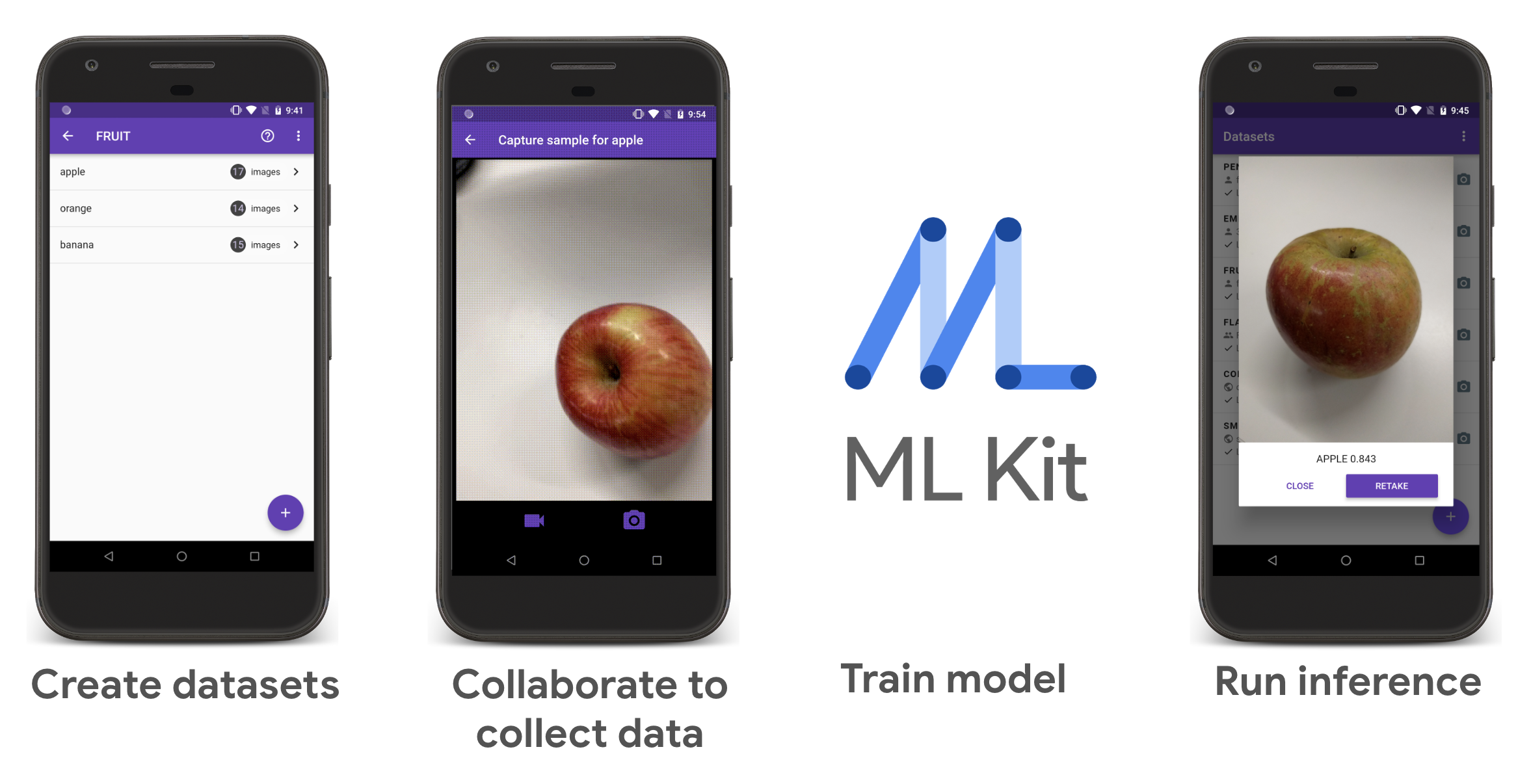
With today’s update, Google is also introducing a few new features to the core Flutter experience. These include new widgets for iOS and Google’s Material Design, support for Dart 2.3’s UI-as-code features and more. The Flutter team also announced an ML Kit Custom Image Classifier for Flutter to help developers build image classification workflows into their apps. “You can collect training data using the phone’s camera, invite others to contribute to your datasets, trigger model training, and use trained models, all from the same app,” the team writes in today’s announcement.

Looking ahead, the team plans to introduce improved support for text selection and copy/paste, support for plugins and out-of-the box support for new technologies like Progressive Web Apps.

Red Hat and Microsoft are cozying up some more with Azure Red Hat OpenShift

It won’t be long before Red Hat becomes part of IBM, the result of the $34 billion acquisition last year that is still making its way to completion. For now, Red Hat continues as a stand-alone company, and is if to flex its independence muscles, it announced its second agreement in two days with Microsoft Azure, Redmond’s public cloud infrastructure offering. This one involving running Red Hat OpenShift on Azure.

OpenShift is RedHat’s Kubernetes offering. The thinking is that you can start with OpenShift in your data center, then as you begin to shift to the cloud, you can move to Azure Red Hat OpenShift — such a catchy name — without any fuss, as you have the same management tools you have been used to using.

As Red Hat becomes part of IBM, it sees that it’s more important than ever to maintain its sense of autonomy in the eyes of developers and operations customers, as it holds its final customer conference as an independent company. Red Hat executive vice president and president, of products and technologies certainly sees it that way. “I think [the partnership] is a testament to, even with moving to IBM at some point soon, that we are going to be  separate and really keep our Switzerland status and give the same experience for developers and operators across anyone’s cloud,” he told TechCrunch.

It’s essential to see this announcement in the context of both IBM’s and Microsoft’s increasing focus on the hybrid cloud, and also in the continuing requirement for cloud companies to find ways to work together, even when it doesn’t always seem to make sense, because as Microsoft CEO Satya Nadella has said, customers will demand it. Red Hat has a big enterprise customer presence and so does Microsoft. If you put them together, it could be the beginning of a beautiful friendship.

Scott Guthrie, executive vice president for the cloud and AI group at Microsoft understands that. “Microsoft and Red Hat share a common goal of empowering enterprises to create a hybrid cloud environment that meets their current and future business needs. Azure Red Hat OpenShift combines the enterprise leadership of Azure with the power of Red Hat OpenShift to simplify container management on Kubernetes and help customers innovate on their cloud journeys,” he said in a statement.

This news comes on the heels of yesterday’s announcement, also involving Kubernetes. TechCrunch’s own Frederic Lardinois described it this way:

What’s most interesting here, however, is KEDA, a new open-source collaboration between Red Hat and Microsoft that helps developers deploy serverless, event-driven containers. Kubernetes-based event-driven autoscaling, or KEDA, as the tool is called, allows users to build their own event-driven applications on top of Kubernetes. KEDA handles the triggers to respond to events that happen in other services and scales workloads as needed.

Azure Red Hat OpenShift is available now on Azure. The companies are working on some other integrations too including Red Hat Enterprise Linux (RHEL) running on Azure and Red Hat Enterprise Linux 8 support in Microsoft SQL Server 2019.

Lyft lost $1.14B in Q1 2019 on $776M in revenue

In its first-ever earnings report as a public company, Lyft (NASDAQ: LYFT) failed to display progress toward profitability.

The ride-hailing business, which raised $2 billion in a March initial public offering, posted first-quarter revenues of $776 million on losses of $1.14 billion, including $894 million of stock-based compensation and related payroll tax expenses. The company’s earnings surpassed Wall Street estimates of $740 million in revenue on $274.1 million, or $3.77 a share, in losses.

Lyft began rising in after-hours trading as a result.

“The first quarter was a strong start to an important year, our first as a public company,” Lyft co-founder and chief executive officer Logan Green said in a statement.  “Our performance was driven by the increased demand for our network and multi-modal platform, as Active Riders grew 46 percent and revenue grew 95 percent year-over-year. Transportation is one of the largest segments of our economy and we are still in the very early stages of an enormous secular shift from personal car ownership to Transportation-as-a-Service.”

The company said adjusted net losses came in at $211.5 million compared to $228.4 million in the first quarter of 2018. Next quarter, Lyft expects revenue of more than $800 million on adjusted EBITDA losses of between $270 million and $280 million. For the entire year, Lyft projects roughly $3.3 billion in total revenue on EBITDA losses of about $1.2 billion.

Lyft was the first of a cohort of venture-backed ‘unicorns,’ including Pinterest, Zoom and soon, Uber — which will make its long-overdue debut on the New York Stock Exchange later this week — to complete a public offering in 2019. Despite a sizeable IPO pop, Lyft shares have only sunk since its first appearance on the Nasdaq. Lyft hit a share price of $87 on its first day of trading, up from a $74 IPO price. However, in the weeks post-IPO its floated closer to the $60 mark, closing Tuesday down 2 percent at $59.41.

Lyft has never posted a profit and its founders John Zimmer and Green have made it clear they expect to invest in the company’s growth for the next several years as it expands its multimodal offerings and ultimately launches operations overseas.

“The road ahead represents a massive opportunity to serve our communities and drive value for our stockholders, Lyft’s co-founders wrote in the company’s IPO prospectus. “We take this responsibility to serve our communities and stockholders seriously, and we look forward to proving that with actions and results. If we told you we were building the world’s best canal, railroad or highway infrastructure, you’d understand that this would take time. In that same light, the opportunity ahead requires continued long-term thinking, focus and execution.”

This story is updating.

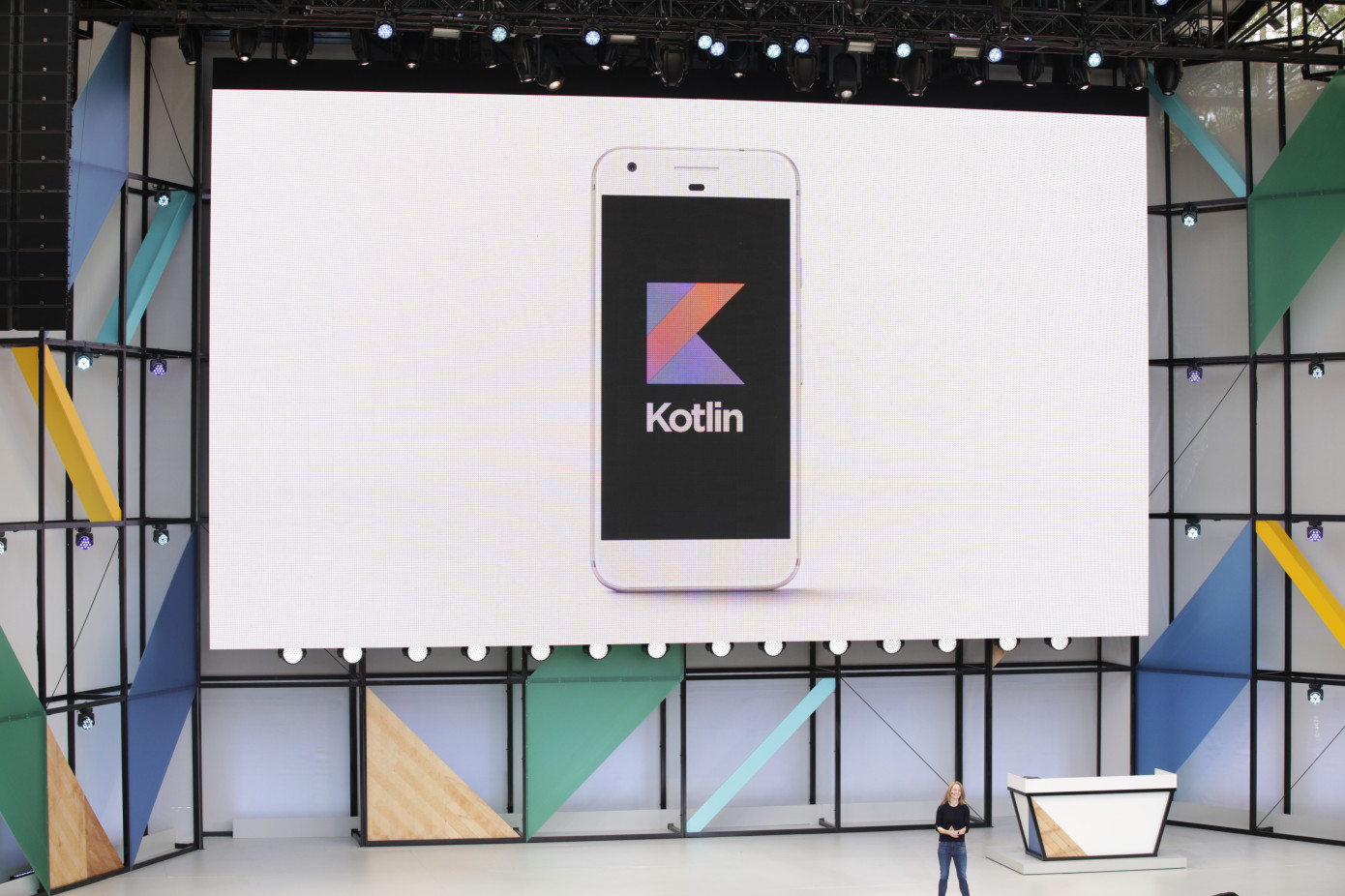
Kotlin is now Google’s preferred language for Android app development

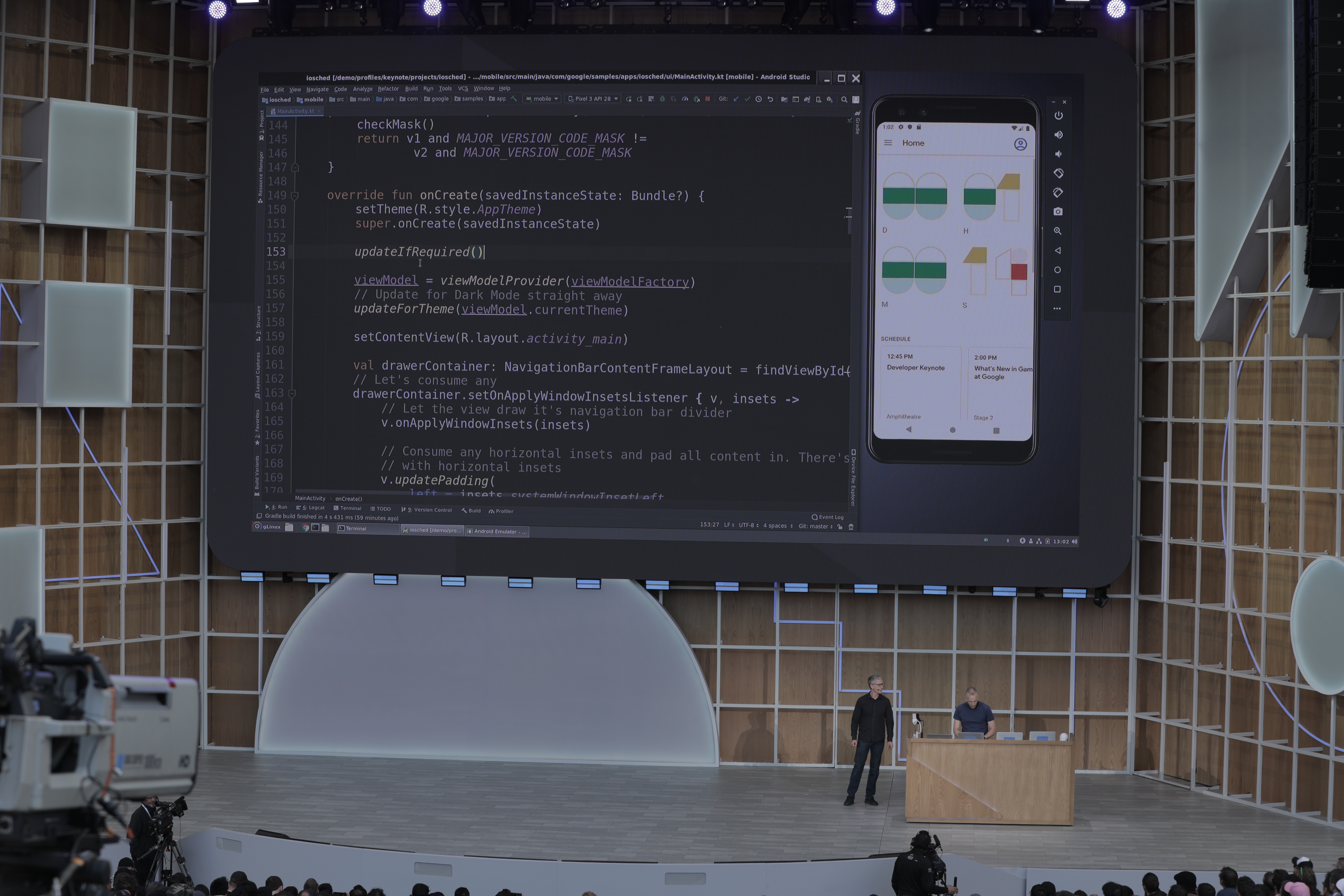
Google today announced that the Kotlin programming language is now its preferred language for Android app developers.

“Android development will become increasingly Kotlin-first,” Google writes in today’s announcement. “Many new Jetpack APIs and features will be offered first in Kotlin. If you’re starting a new project, you should write it in Kotlin; code written in Kotlin often mean much less code for you–less code to type, test, and maintain.”

It was only two years ago at I/O 2017 that Google announced support for Kotlin in its Android Studio IDE. That came as a bit of a surprise, given that Java had long been the preferred language for Android app development, but few announcements at that year’s I/O got more applause. Over the course of the last two years, Kotlin’s popularity has only increased. More than 50% of professional Android developers now use the language to develop their apps, Google says, and in the latest Stack Overflow developer survey, it ranks as the fourth-most loved programming language.

With that, it makes sense for Google to increase its Kotlin support. “We’re announcing that the next big step that we’re taking is that we’re going Kotlin-first,” Chet Haase, Chief Advocate for Android, said.

“We understand that not everybody is on Kotlin right now, but we believe that you should get there,” Haase said. “There may be valid reasons for you to still be using the C++ and Java programming languages and that’s totally fine. These are not going away.”

Google now lets developers build games for its smart displays

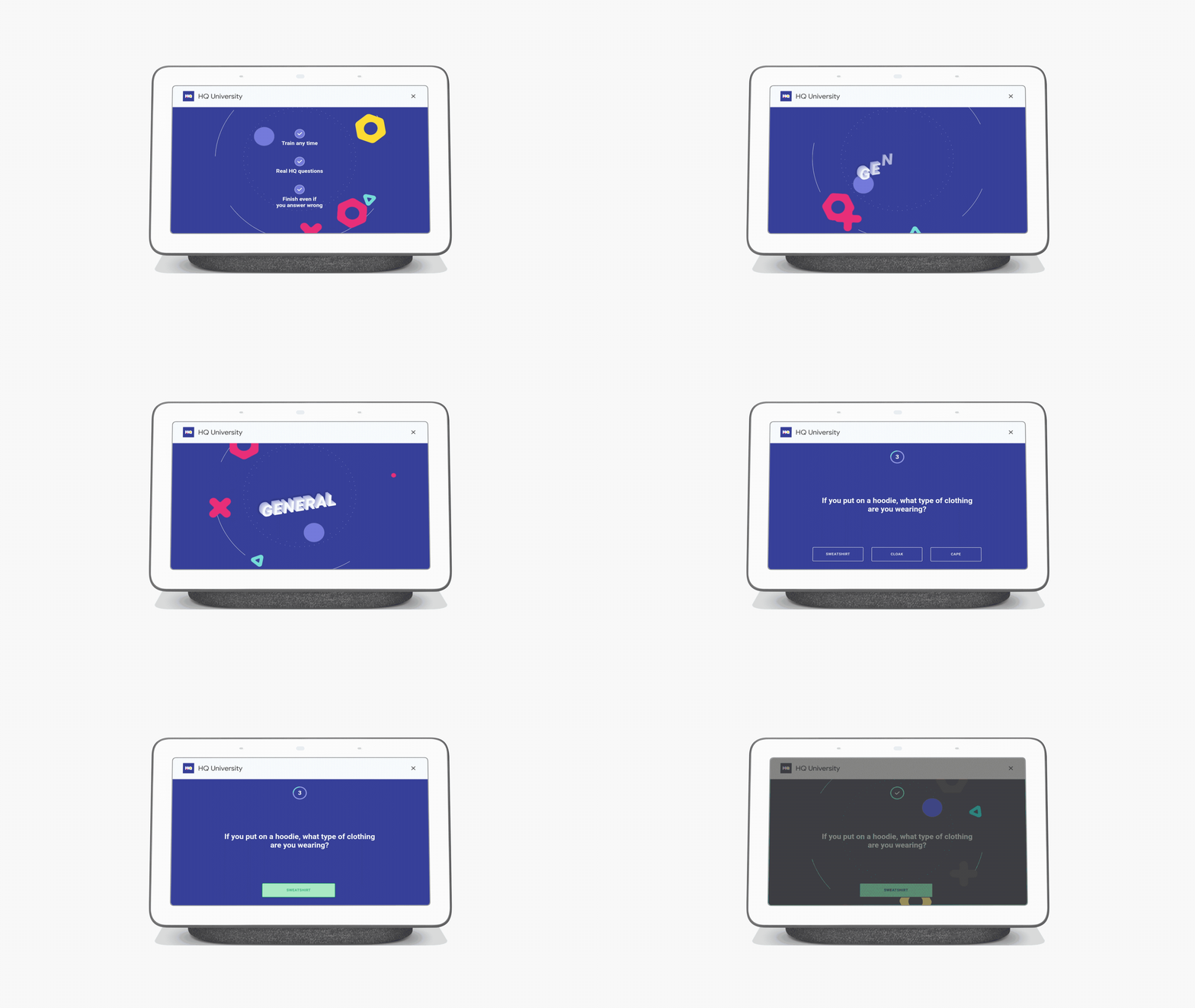
At its I/O developer conference, Google today announced that it is opening up its Smart Display platform to developers. Until now, there was no real way for developers to target devices like the newly-renamed Nest Hub. Only Google’s own first-party services got full access to the display. Now, however, Developers will be able to start developing Google Assistant actions for these displays, starting with games.

I wouldn’t expect that we’ll see very complex and highly-graphical games on smart displays, but this is a good surface for word games or similar casual games. We are talking about relatively low-end hardware, after all. The fact that the games are based on HTML, CSS and JavaScript also enforces some limits to what developers can do with this platform. Given that Google itself is now using its Flutter multi-platform framework to build some of its own smart display experiences, chances are that developers, too, will be able to bring their games to these devices in the same way, too.

To enable this, Google is launching Interactive Canvas, a new API that allows developers to create full-screen experiences. This will actually work across Android and smart displays.

Over time, the company plans to open up the smart display platform to other third-party experiences as well. When exactly that will happen remains to be seen, though. The only timeline Google is committing to is ‘soon.’

Google launches new Assistant developer tools

At its I/O conference, Google today announced a slew of new tools for developers who want to build experiences for the company’s Assistant platform. These range from the ability to build games for smart displays like the Google Home Hub and the launch of App Actions for taking users from an Assistant answer to their native apps, to a new Local Home SDK that allows developers to run their smart home code locally on Google Home Speakers and Nest Displays.

This Local Home SDK, may actually be the most important announcement in this list, given that it turns these devices into a real hardware hub for these smart home devices and provides local compute capacity without the round-trip to the cloud. The first set of partners include Philips, Wemo, TP-Link and LIFX, but the SDK will become available to all developers next month.

In addition, this SDK will make it easier for new users to set up their smart devices in the Google Home app. Google tested this feature with GE last October and is now ready to roll it out to additional partners.

Developers who want to take people from the Assistant to the right spot inside of their native apps, Google announced a preview of App Actions last year. Health and fitness, finance, banking, ridesharing and food ordering apps can now make use of these built-in intents. “If I wanted to track my run with Nike Run Club, I could just say ‘Hey Google, start my run in Nike Run Club’ and the app will automatically start tracking my run,” Google explains in today’s announcement.

For how-to sites, Google also announced extended markup support that allows them to prepare their content for inclusion in Google Assistant answers on smart displays and in Google Search using standard schema.org markup.

You can read more about the new ability to write games for smart displays here, but this is clearly just a first step and Google plans to open up the platform to more third-party experiences over time.

Google launches Jetpack Compose, an open-source, Kotlin-based UI development toolkit

Google today announced the first preview of Jetpack Compose, a new open-source UI toolkit for Kotlin developers who want to use a reactive programming model similar to what React Native and Vue.js.

Jetpack Compose is an unbundled toolkit that is part of Google’s overall Android Jetpack set of software components for Android developers, but there is no requirement to use any other Jetpack components. With Jetpack Compose, Google is essentially bringing the UI-as-code philosophy to Android development. Compose’s UI components are fully declarative and allow developers to create layouts by simply describing what the UI should look like in their code. The Compose framework will handle all the gory details of UI optimization for the developer.

Developers can mix and match the Jetpack Compose APIs and view with those based on Android’s native APIs. Out of the box, Jetpack Compose also natively supports Google’s Material Design.

As part of today’s overall Jetpack update, Google is also launching a number of new Jetpack components and features. These range from support for building apps for Android for Cars and Android Auto to an Enterprise library for making it easier to integrate apps with Enterprise Mobility Management solutions and built-in benchmarking tools

The standout feature, though, is probably CameraX, a new library that allows developers to build camera-centric features and applications that gives developers access to essentially the same features as the native Android camera app.

Bubble-driven boom in M&As hides steep costs long-term

Driven by ultra-easy central bank policy, global merger and acquisition activity is exploding. The value of transactions in the first eight months of 2018 reached $3.3 trillion worldwide, a 39% increase from 2017, and the market can expect another record-setting year in 2019. What does this mean? The data suggests that optimism about the efficacy of M&As has never been higher. Businesses are increasingly looking to M&As as the way to grow.

Growth is good, but growth can also be cancerous. Financial and strategic calculus may suggest a perfect fit between two companies, but that calculus is mostly irrelevant to the long-term success of an M&A transaction. What looks on paper to be a perfect fit ends up in protracted conflict arising from a mismatch of cultures, values and ideologies. Those intangible factors are often only obvious in hindsight, and it is tempting for decision makers to ignore them because of their very intangibility; after all, if it is not part of the model, it cannot possibly exist, right?

Most acquisitions fail. That is the sobering reality. 

Issues of high executive turnover, labored transition periods and lowered production standards arise when businesses either jump into a deal too quickly or leave internal disagreements unchecked for too long. It is not a secret that M&As have drawbacks, and a lot of ink has been spilled outlining the potential pitfalls of mergers and acquisitions. For a lot of companies, staying private and addressing issues internally is the best path to steady growth. It may not make for a bold headline or improve a company’s financial valuation, but there are real benefits to avoiding M&As altogether.

Facebook’s WhatsApp and Instagram acquisitions will rank among the most successful in all of tech. Yet, even with that success, issues of culture and values have come to the fore longer term.

Late-stage executive churn

In 2003, the Harvard Business Review looked at executive churn within targeted companies. It reported, “On average, about a quarter of the executives in acquired top management teams leave within the first year, a departure rate about three times higher than in comparable companies that haven’t been acquired. An additional 15% depart in the second year, roughly double the normal turnover rate.”

Upon further research, the Harvard Business Review survey found that “executives continued to depart at twice the normal rate for a minimum of nine years after the acquisition.” If we look at a company like Facebook, the Harvard study’s churn timeline doesn’t seem so far-fetched.

Back in 2012, Mark Zuckerberg was unjustly mocked for what was then an unthinkable $1 billion bid to buy Instagram. Five years later, Instagram was seen as perhaps Facebook’s most successful acquisition. Then, from disagreements with Facebook and the urge to start something new, Kevin Systrom and Mike Krieger, the co-founders of Instagram, exited the company at the end of last year. Nicole Jackson Colaco, Instagram’s director of Public Policy, left the company in early 2018. Around the same time, Keith Peiris, Instagram’s AR/Camera product lead, moved on as well. According to TechCrunch, “Instagram’s COO Marne Levine who was known as a strong unifying force, went back to lead partnerships at Facebook. Without an immediate replacement named, Instagram started to look more like just a product division within Facebook.”

Growth is good, but growth can also be cancerous.

Loss of autonomy — and even the perceived loss of autonomy — can be a prime driver of executive churn at targeted companies. In 2018, Facebook also lost Jan Koum, a board member and the co-founder of WhatsApp, the company Zuckerberg acquired in 2014 for $19 billion. Many speculated that Koum’s departure came after concerns about data privacy and Facebook’s advertising model. In either case, Koum’s departure was born out of concern for his company’s ability to function autonomously within Facebook — a concern, we’re learning, that was justified.

What we see here is the exodus of key decision-makers at two targeted companies. With Instagram and WhatsApp, Facebook is now left to move these properties forward without the help of critical executives who know the products they created more intimately than their acquirer ever could. It’s yet to be seen how much and in what ways these personnel changes will hurt Facebook’s bottom line. Facebook is still reporting substantial revenue growth year-over-year, but these recent departures make for a cloudier outlook. Keep in mind that WhatsApp and Instagram would count as major successes.

Righting the ship

Fortune ran an article in 2014 outlining some of the problems with acquisitions. One of the companies they reported on was Aptean, a roughly 1,500-person business software company formed in 2012 from a merger of CDC Software and Consona. Both CDC Software and Consona were the product of several previous acquisitions. The company had become a daisy chain of acquired businesses strung together under one name.

According to Aptean’s own chief architect, “The result was 30 companies that were really never integrated with each other. We had 30 vertically organized separate companies doing their own things, with their own tools. Everything from HR to software delivery and launch was in the hands of the product teams. There were attempts to try and solve that but there was really no interest.”

Aptean, like so many other companies, was not prepared for the herculean task of retraining and acclimating hundreds of workers. It can take years to onboard new teams, requiring long adjustment periods for employees who need to learn new systems and management styles. According to Forbes,”Worker experiences can vary dramatically even if values are aligned. You can speed up assimilation with focus, resources, support, communication and transparency, but it still takes time.”

Early M&A struggles can be managed, but it takes recognition at the point of conflict.

Acquisitions are often initiated to solve a problem then and there, so long acclimation periods require time most businesses don’t have or are unwilling to give. Aptean was willing to put in the work to shore up foreseeable issues that come from a business model built on mergers and acquisitions. If there’s one thing to learn from Aptean it’s that early M&A struggles can be managed, but it takes recognition at the point of conflict to enact a plan to remedy the situation.

One fairly recent M&A that has received a lot of attention is Amazon’s purchase of Whole Foods. If we look at Whole Foods one year after the acquisition, a familiar narrative to Facebook and Aptean arises, only now Amazon and Whole Foods have the added challenge of competing in the retail space while maintaining customer satisfaction.

Growing pains

Similar to Instagram and Whatsapp, Whole Foods was a big fish in a big pond that has been swallowed by a blue whale. To what end? As The Wall Street Journal points out, “More than a dozen executives and senior managers have left since Amazon acquired Whole Foods last year, according to former employees and recruiters steering them to new jobs.”

There appears to be little harmony between Amazon and Whole Foods right now, and the bruises are already showing. Whole Foods may be reporting a 19% rise in sales year-over-year, but customers are complaining about the quality of their produce. Businesses are weary of steep price hikes for prime shelving space, and perhaps most concerning of all, Amazon — the blue whale — isn’t getting the return on its investment.

Late last year, Forbes ran an article about the Amazon-Whole Foods deal, writing, “Amazon, even after acquiring Whole Foods for $13.7 billion in 2017 and offering two-hour grocery delivery service, is finding little success in the grocery business.” It may be that Amazon’s plans for Whole Foods are far-reaching and require several years to fall into place, but just like Facebook, the company is encountering problems now that if gone unaddressed could jeopardize the viability of the acquisition. Bloomberg reported that, “The number of Amazon Prime members who shop for groceries at least once a month declined in 2018 compared with 2017… The drop was surprising given the company’s Whole Foods investment and expansion of two-hour delivery service Prime Now.”

In the short-term, we see that shoppers at Whole Foods are unhappy, vendors are feeling pinched and Amazon is losing money to Walmart and Kroger and Target (businesses with more physical stores to service online orders). Looking ahead, Amazon’s plans for Whole Foods are ambitious, and with proper management of these early issues, this acquisition could prove beneficial to both companies, but only time will tell.

The perks of going it alone

An overwhelming majority of companies that engage in M&As are public. The reason for this is because public companies are accountable to their shareholders, who demand revenue growth year-over-year. The fastest way for a business to demonstrate growth and reinvest capital is to acquire another company. When financial valuations, shareholders and exit strategies are top of mind for a business, little attention is paid to company culture.

Good company culture is becoming harder to find as businesses increasingly turn to M&As to solve their problems.

Now consider a private company that avoids M&As. Over time, that company can benefit immensely from its autonomy. Money that would have otherwise been used to buy a competing business can be reinvested into R&D and far-reaching growth projects that may not suit the revenue timeline of a shareholder. Executive turnover is lower, which leads to lower churn, company-wide. These benefits contribute to company culture. Demonstrating good company culture means that employees stay longer and are given the opportunity to work on projects that excite them. Good company culture is becoming harder to find as businesses increasingly turn to M&As to solve their problems.

Look before you leap

Ultimately, expectations and creative control have always loomed large over the fate of any merger or acquisition. It is natural for a business to want to absorb the brain trust of a competing company. Buying out a business to integrate its products into your suite can be a sound financial practice as well. But when things go south — whether that be through executive churn at the targeted company or problems with integration — people rarely point to the baked-in complications associated with M&As as a responsible party.

With each acquisition, a business may be forfeiting a part of its core DNA. There are issues of long-term employee retention and ideological compatibility that weigh heavy on any M&A. What’s more, acquisitions can require 10-year implementation plans (or longer), but with such a high turnover rate, it becomes incredibly difficult to make the transition work.

In the abstract, warning against these issues can come off as patronizing. But with this year expected to bring more M&A activity than 2018, the best way for businesses to assess the merits of a merger or acquisition tomorrow is to study the troubles befallen many high-profile companies today.