Gett raises $200M at $1.5B valuation for its B2B ride-hailing service, aims for 2020 IPO

As Uber gears up for an IPO, one of its smaller rivals has raised some money as it prepares to take its own turn on the public market. Gett — the ride-hailing startup that focuses primarily on the business market, currently in Israel, the UK, Russia and New York — has picked up $200 million in a mix of debt and equity at a post-money valuation of $1.5 billion. Gett’s founder and CEO Dave Waiser said in an interview that this will likely be the last round the company takes before an IPO by Q1 of 2020.

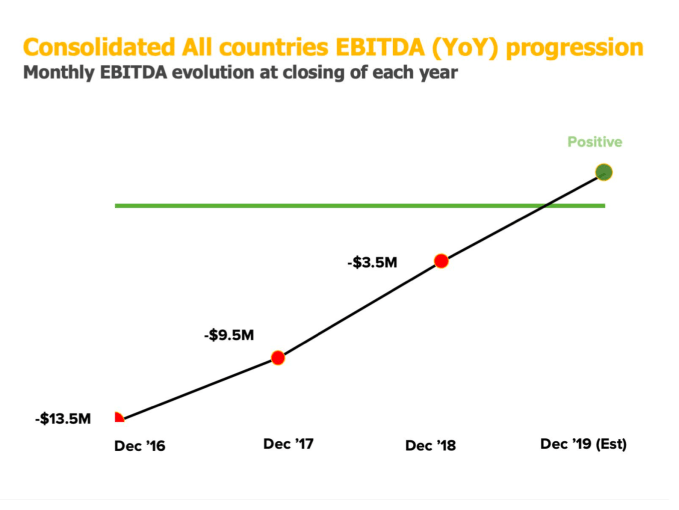
He also projects that the company will be operationally profitable — Ebitda positive and breakeven — by the end of this year.

“We are still thinking about the venue,” he said of the IPO. “It might be London, or it might be New York.”

This latest round of funding — which would bring Israel-based Gett’s total raised to $790 million — comes from all of the company’s existing investors. These include carmaker VW, Access and its founder Len Blavatnik, Kreos, MCI and more. It is an extension and closing of the round that we reported back in June 2018 at a $1.4 billion valuation: the expansion to $200 million from $80 million is why the valuation has also gone up.

With operations in cities across just four countries — the UK (where in contrast to Uber it provides a service for London’s traditional black cab drivers to pick up in-app rides to complement classic on-street hailing), Russia, Israel and New York in the US — Gett’s pared-down approach is overshadowed by Lyft in the US and Uber globally in terms of size. But the latter two companies’ growth stories come with massive losses: Uber’s racked up $1 billion in losses in just the previous quarter, for example. That’s one reason why Waiser believes that Gett’s proposition to the market remains a unique and compelling one.

“A year ago, profitability was not a very popular topic,” he said. “In Uber and Lyft we see two great companies, but even as they grow revenues, their losses are growing. What is really unique for Gett is that our success, and our improvements in revenues, are in parallel with our Ebitda improving.” As Gett itself gears up to go public, it’s also releasing more figures, which mark this as a three-year trend:
Within its smaller footprint, meanwhile, Gett is less intent on being “number-one” as it is about continuing to see traction and usage from the higher-end customers that it targets. Waiser declined to provide any numbers to me on total number of rides or drivers, which is not a surprise, since these metrics would easily look tiny compared to numbers from its bigger rivals.

But he notes that as of Q4 2018, Get Business Solutions had 20,000 companies on its books, up 63 percent on a year before; and that the New York business, branded as Juno, remains a “solid number three.”

There have been various rumors swirling about the company over the last several months, so I took the opportunity of this fundraise to ask Waiser about some of them.

Last December, the German media reported that Volkswagen was preparing to write down $300 million of its Gett investment in an increasingly competitive market in Gett’s wheelhouse, where it is not the only one targeting corporates and other business users. Waiser described the report as “bad journalism.”

“There were no audit reports to support those claims, and it was damaging to report that,” he said, pointing out also that VW participating in this round is a mark of its ongoing support.

Some months before the VW rumor, it was reported that Gett was looking to sell off Juno, the ride-hailing service that it acquired in 2017 for $200 million, to move out of the US market. Waiser dismissed this report, too:

“There is no plan to sell Juno,” he stated, noting that the US — which is essentially only New York right now — has been a crucial part of the company’s growth story. “It’s the only player in the US that might become national while remaining financially disciplined.” He added that Juno has been one of the strongest performers within the Gett footprint, “already contribution margin positive.”

However, when I asked him if that is just as likely to be a sales pitch to a prospective buyer as it is his own description of the company today, he declined to answer specifically. His response does leave the door open for different outcomes.

“I don’t want to say anything that will come across as speculation,” he said. “The business right now looks different from Uber’s and Lyft’s, and that gives options to us and others about the US opportunity.”
Nokia Chairman Risto Siilasmaa backs machine learning startup Aito.ai

Aito, a Helsinki-based machine learning startup that is developing “predictive database” technology, has raised €1 million in pre-seed funding, including from Nokia Chairman Risto Siilasmaa (via his investment company First Fellow Partners).

Others backing the round are Hermitage, UMO Capital, together with funding from Business Finland. Previous Aito investors include Futurice and the company’s own founders Vesa-Pekka Grönfors, Antti Rauhala, Kai Inkinen.

Aiming to replace current machine learning tools that have a steep learning curve and generate only single-purpose models, Aito has built a predictive database for developers. Specifically, it lets users search existing information, make predictions, and find hidden correlations.

Crucially, the results are said to fully explainable and the tech can be integrated into existing software as easy as integrating an SQL query.

“The idea of an unconventional approach to AI and machine learning dates back for more than ten years,” Aito co-founder Vesa-Pekka Grönfors tells me. “Antti, co-founder and chief scientist of Aito, started working with the concept already at the end of his studies and continued through the following years as a Lead Data Scientist at Futurice [the European consultancy company]”.

More broadly, Aito is founded on the premise that software developers are the new AI developers. There are some 23 million software developers in the world, and they increasingly work with machine learning or AI-related features, meaning its no longer only the domain of data scientists only.

“They require tools that are quick to adopt, support agile workflows and are familiar without specific knowledge of data science,” adds Grönfors.

“Aito.ai is a predictive database for developers who value quick time to market. It’s familiar as a database, yet provides the intelligence of machine learning… Predictions, recommendations, and explanations are provided in milliseconds over a beautiful API, using the entire Aito database as training data. Where traditional database gives the user, for example, five past purchases of an e-commerce customer, Aito can automatically predict the next likely purchases and explain what lead to such prediction”.

As an example, a subscription business could feed their product, financial, user and event data into Aito, and get out various business critical predictions and insights such as: predict demand, explain conversion, predict churn, optimise pricing, personalize content, recommend products, maximize lifetime value and more.

Already being tested in the wild, Aito is currently being used to automatically suggest categories for documents uploaded to contract management system; to find relevant movies based on similarity; and to automate conversational UI workflows and provide predictions on which customer complaints will escalate.

“Futurice, where Aito was spun off from, uses Aito to find who knows about a certain topic within an organization. Simply by typing a term, Aito uncovers the people with such knowledge based on several internal data sources, with no taxonomy or tagging needed,” says Grönfors.

Meanwhile, the Aito business model is a classic enterprise SaaS developer play: the pricing model is based on the size of a user’s dataset and volume of queries. Pricing starts from €6 per day and there is a free trial period.

Urban Jungle raises £2.5M to make insurance accessible to ‘generation rent’

Urban Jungle, a digital insurance startup targeting so-called “generation rent” with a range of insurance products, has raised £2.5 million in seed funding round.

The round is said to be backed by a mixture of new and previous investors, including Rob Devey, ex CEO of Prudential UK, and Simon Rogerson, CEO of Octopus Group.

Described as challenging traditional insurance providers by catering for U.K. renters who have historically been underserved by the insurance industry, Urban Jungle offers contents insurance, gadget insurance and tenants liability policies.

This includes a contents insurance product focused on house and flat sharers. The startup also offers a pay-as-you-go policy, and says it is committed to transparent pricing policy terms.

“We are fixing home insurance, which has a load of problems to work on,” says Urban Jungle co-founder Jimmy Williams. “Of all of types of personal insurance, it’s still the one most bought and managed offline, mostly through estate agents, banks and mortgage brokers. Prices are high, terms are complex, and there are fees for everything”.

Alongside this, Williams says customers are often asked far too many questions about things that are outside their control, which they resent, and are becoming increasingly aware of outdated and unfair pricing. “Much of this is caused by insurers’ inability to use new sources of data appropriately,” he adds.

In contrast, Urban Jungle aims to be cheaper, and easier for customers to buy, manage and claim. It also wants to provide cover better suited to customers’ needs.

“All of this is enabled through technology,” says Williams. “We automate the vast majority of processes to make things super quick, and keep our costs very low. We also use data in smart ways to customise the cover we offer to customers, and make pricing fairer”.

To that end, Urban Jungle claims 15,000 plus customers and says it’s growing over 30 percent per month. Meanwhile, today’s newly disclosed funding brings the total raised by the U.K. company to £3.7 million to date.

Tourlane raises a $47M C round led by Sequoia and Spark Capital

There still exists an old-fashioned problem in travel: group travel which requires individuals and groups to plan and book personalized, multi-day tours online.

Tourlane is a major player in this sector and has today announced it’s raised $47 million in a round led by Sequoia and Spark Capital alongside investors from the B round, including DN Capital and HV Holtzbrinck Ventures. This Series C funding comes 6 months after the B, and will be used for further international expansion, hiring and product development.

Julian Stiefel, Co-CEO & cofounder of Tourlane said in a statement: “The additional capital will help us strengthen our position and continue our international growth to create the best experience in travel. We’re thrilled to continue working with our high-class investors and are extremely proud of the hard work, commitment and effort of our great team at Tourlane.”

Tourlane works directly with service providers and offers customers flights, accommodations, tours, activities, and transfer options in one place, thus saving time when coordinating multiple bookings from different vendors or working with offline travel agents. The platform provides real-time pricing, availability, instant trip visualization, and drag-and-drop adjustments to make multi-day trip planning easier.

Andrew Reed, Partner at Sequoia, said: “Tourlane’s impressive growth and passionate community of users reinforce the uniqueness of what they’re doing. Tourlane is truly redefining the way people experience travel.”

Tourlane employs more than 200 people.

Brankas wants to bring Southeast Asia’s banks and e-commerce into the digital era

Fintech continues to be among the biggest topics driving startups and investment in Southeast Asia. The region’s ‘internet economy’ is forecast to grow massively as its 600 million people increasingly come online — already Southeast Asia more internet users (350 million) than the U.S. has people but developing a robust payment landscape underpins those heady growth forecasts.

Beyond the most prevalent consumer brands — such as ride-hailing giants Grab and Go-Jek — and the outsiders pouring money into the region — including Tencent and Alibaba — fintech startups take a different approach to other parts of the world. Unlike Europe or the U.S, where disruption is the name of the game, Southeast Asian fintech is about third parties working with the system to make it more efficient and wide-ranging. That’s because credit card ownership is low double digits, and transfers from bank accounts — which aren’t universally operated by all consumers — represent an estimated [PDF] half of all online purchases.

The most visible niches attracting investor attention and capital is the data-play — companies that operate as super aggregators of financial services, such as insurance or loans — but there’s also an increasing number of startups that enable banks to kickstart their digital strategy.

Brankas, an Indonesia-based startup that operates regionally, is one such young company — it operates a platform that gives banks and financial companies the tech to roll out digital products and embrace online services.

The company takes its cue from Western success stories — U.S-based Plaid (a Disrupt alum no less) is valued at $2.65 billion while, in Europe, Tink and Bud have both raised big sums from investors — to offer a service that essentially provides the digital plumbing to ease Southeast Asia’s financial incumbents into the digital era.

“What we’re doing is similar to banking API infrastructure,” Brankas CEO and co-founder Todd Schweitzer told TechCrunch in an interview. “The difference being that in Southeast Asia it is very early days and little to no regulation.”

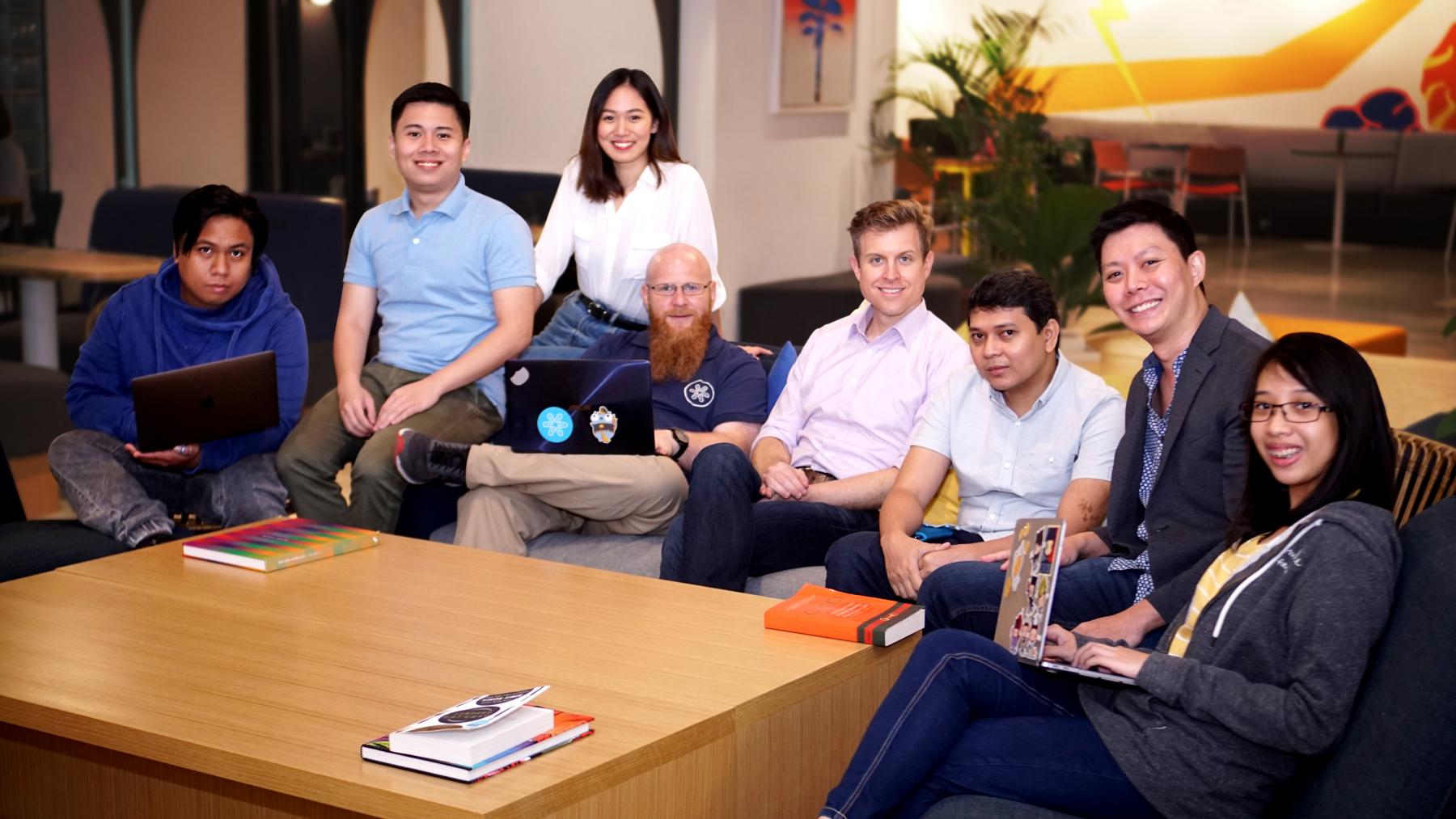
A selection of the Brankas team with CEO and co-founder Todd Schweitzer (seated fourth from right)

Former management consultant Schweitzer founded the startup in 2016 with Kenneth Shaw, his former classmate in California who had been CTO of Southeast Asian online marketplace Multiply.com. They describe themselves as “now longtime Southeast Asia residents.”

Brankas — which means safe in Indonesia’s Bahasa language — graduated Plug And Play’s first incubator in Southeast Asia and it grew from being a service managing multiple bank accounts to a platform that digitizes banking. Today, it is headquartered in Jakarta with 25 staff — 15 of whom are engineers — across that office and another in Manila, Philippines.

The company raised an undisclosed investment from investors, including Singapore fintech fund Dymon Asia, earlier this year and now its founders have their eyes on growth.

The service is currently operational in Singapore, Indonesia, the Philippines and Vietnam. Schweitzer said the plan is to expand to Thailand and Malaysia around the middle of 2019.

“We are excited to partner with Todd and Kenneth as they build out open banking infrastructure in the region. Brankas enables seamless connections between financial institutions, merchants and fintechs. This is critical for the next stage of growth of the digital ecosystem in Southeast Asia,” Dymon Asia partner Chris Kaptein told TechCrunch.

So what does the plumbing service for financial organizations actual entail? Brankas focuses on two distinct audiences at this point: banks and financial companies, and companies providing online services, predominantly e-commerce.

For banks, Brankas uses its APIs and systems to essentially slot new services into their platform.

Schweitzer said banks are aware that they need to offer “more open” services. Even in the event that they can figure out what that means in terms of product, they typically don’t have the in-house team to build and manage the tech stack, let alone make it “productized” — i.e. usage by their customers.

“Banks here in Southeast Asia aren’t investing in consumer banking,” he explained,” because the bulk of their revenue comes from traditional corporate lending.”

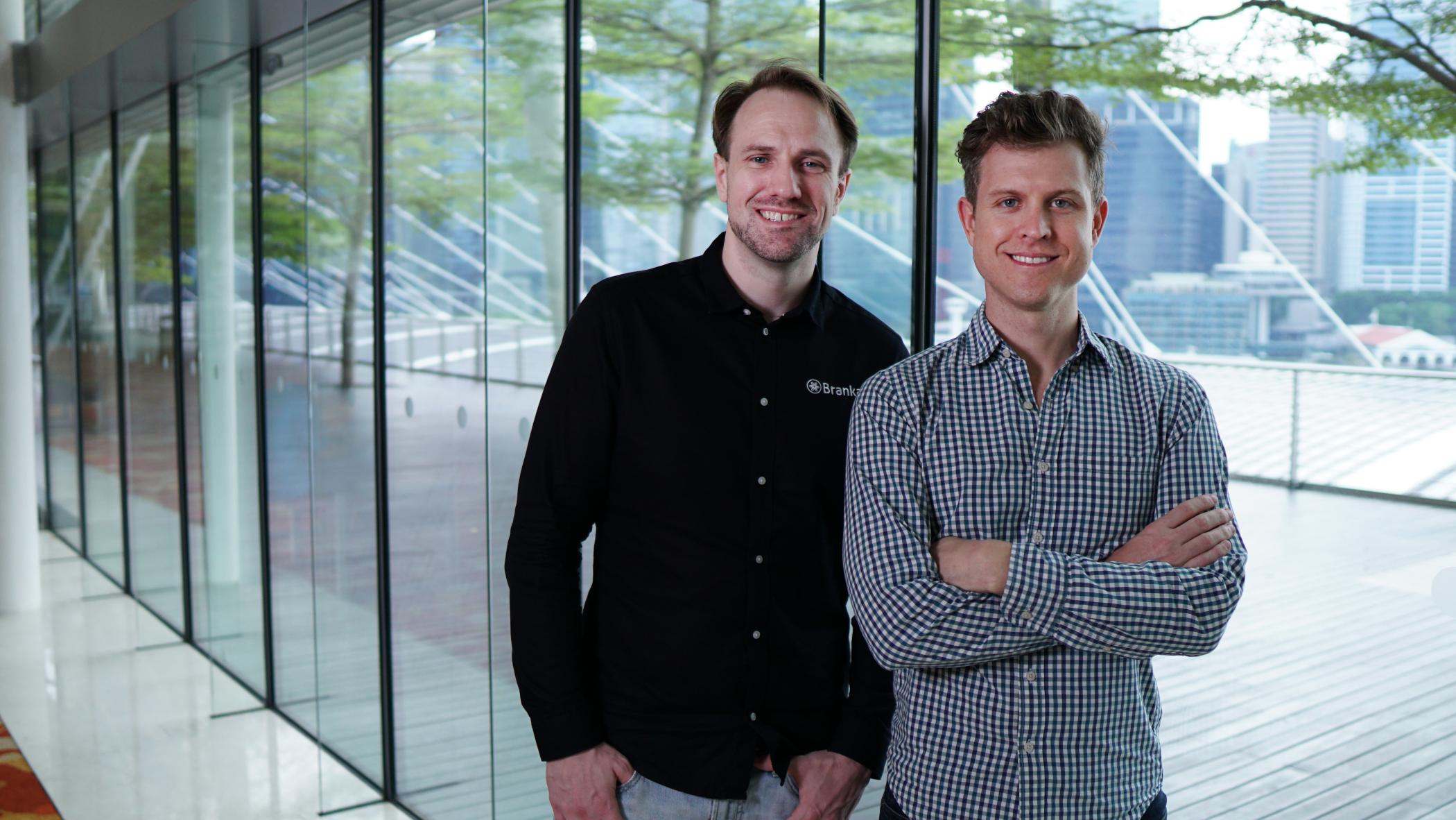
Brankas co-founder Kenneth Shaw (left) and Todd Schweitzer (right)

For those using banks and collecting money from consumers, the end play is different. The challenges are often similar. For example, most consumers in Southeast Asia use bank transfers to pay for online. That works for collecting payment in theory, but there is no system that optimized for that — actually making sure the correct amount money is in from the correct customer.

Schweitzer recalled a story of how he visited an unnamed (but high profile) e-commerce company’s office and noticed “a whole floor of people who hit refresh on online banking systems to figure out who had made the transfer.”

The Brankas system helps handle that local complexity, and other areas like direct payouts without middlemen, or batched and real-time payments for gig workers and others who receive daily payouts. Other products in the pipeline include credit scoring, a much-needed resource across the region.

To date, Brankas has picked up partnerships with six banks in Indonesia, three in the Philippines and one in Vietnam, where it is in talks to add others. Schweitzer said it has “dozens” of customers across e-commerce, consumer finance and insurance verticals. The startup is also a part of Indonesia’s Open API Sandbox hosted by the country’s Central Bank.

“Today, we address the domestic, non-card payments market in ASEAN,” he told TechCrunch. “That includes everything from bank transfer fees to domestic remittance fees, POS merchant fees, payment aggregator fees and more.”

That alone, he estimates, is worth $7.8 billion in Indonesia, Southeast Asia’s largest economy. Then there’s the rest of the region to factor in, too.

Luckin Coffee plans to raise over $500M in US IPO

Luckin Coffee, the ambitious Chinese upstart that’s going after Starbucks, could raise nearly $600 million from its upcoming IPO. That’s according to a price range released by the Chinese startup.

In a new filing, Luckin said it plans to sell 30 million shares at an initial range of $15-$17. That gives an estimated raise of $450 million to $510 million, but it could be bumped up if underwriters take up the additional allocation of 4.5 million shares. So, as a grand total, the listing could raise $586.5 million if the full offering is bought at the top of the range.

The company will list on the Nasdaq as ‘LK.’

Luckin filed to go public last month, just weeks after it closed a $150 million Series B+ funding round led by New York private equity firm Blackrock, which interestingly holds a 6.58 percent stake in Starbucks. The deal valued Luckin at $2.9 billion and it took the three-year-old company to $550 million raised from investors to date.

The company has burned through incredible amounts of cash as it tries to quickly build a brand that can rival Starbucks, and the presence that the U.S. firm has built over the last 20 years in China. Through aggressive promotions and coupons, the company posted a $475 million loss in 2018, its only full year of business to date, with $125 million in revenue. For the first quarter of 2019, it carded an $85 million loss with total sales of $71 million.

Starbucks CEO Kevin Johnson has been vocally dismissive of the viability of that strategy of “heavy, heavy discounts.”

“We’re deploying capital and building 600 new stores per year. [We’re] generating the return on invested capital that we believe is sustainable to continue to build new stores at this rate for many years to come,” he told CNBC in a recent interview.

Starbucks claims 30,000 stores worldwide. It has been in China for 20 years and it is aiming to reach 6,000 stores in the country by 2022. Luckin, fuelled by that VC money, has quickly scaled to reach 2,370 locations in under two years with plans to add a further 2,500 this year. That would see it overtake Starbucks — which has 3,600 stores across 150 Chinese cities — although that a metric gives a distorted view since Luckin specializes in digital orders and on-demand delivery. That’s in contrast to the retail model operated by Starbucks.

Apple and Google Play remove three dating apps after FTC warning about underage users

The Federal Trade Commission said today that Google and Apple have removed three dating apps from their app stores because they could potentially be used by sexual predators to find children. In a parental advisory, FTC attorney Lisa Weintraub Schifferle wrote that FastMeet, Meet24 and Meet4U, all made by Ukrainian company Wildec, appeared to violate the Children’s Online Privacy Protection Act (COPPA) and the FTC Act.

In a letter sent to Wildec at the beginning of May, the FTC said the apps did not prevent users who say they are under 13 from using the apps or being visible to other users. While testing Meet24’s search function, FTC staff were able to find users near their location who said they were as young as 12 years old.

COPPA requires app developers to obtain verifiable consent from parents before asking children under 13 for personal information. The FTC told Wildec that its failure to do so appears to violate COPPA because the company “appear[s] to have actual knowledge that children are using your apps.” The agency also said it will review the apps again during the next month to see if they comply with the law.

Even on apps with safety measures, child exploitation is still a serious issue. For example, earlier this year the UK government began looking into legislation to require age verification checks for dating app users after a Sunday Times report found more than 30 cases of child rape linked to apps like Tinder and Grindr since 2015.

TechCrunch has emailed Wildec for comment.

Apple Watch may be getting more independent at WWDC

Apple may be preparing some tweaks to watchOS that will leave you fumbling for your phone less often.

Bloomberg’s Mark Gurman just published a long list of software tweaks his sources say are coming to iOS, watchOS and macOS at WWDC. One of the most interesting takeaways from the report is that Apple is reportedly planning to remove one of the final Watch/iPhone dependencies and will be bolstering up some of its stock apps.

Apple may be adding a watchOS version of the App Store to the wrist computer, allowing users to add third-party capabilities to the Watch without having to delve into the Watch app on their iPhones.

Additionally, Bloomberg reports that watchOS will be getting version of some iOS stock apps that weren’t previously available, including the Calculator app, Voice Memos, Apple Books (for audiobooks) and functionality to send Animoji/Memoji stickers. The company will reportedly also be adding a pair of health apps, one called “Dose,” that helps users keep track of taking pills and “Cycles” an app to track menstrual cycles.

WWDC begins June 3, TechCrunch will be there to provide you with all of the updates to Apple’s software ecosystem.

iOS reportedly getting its very own swipe-to-type keyboard

Apple may be bringing an Android favorite to iOS at its software developers conference next month. Bloomberg’s Mark Gurman has published a big list of little software tweaks his sources say are coming to iOS at WWDC.

One of the more interesting notes is that Apple is reportedly going to be releasing its own swipe-to-text keyboard on iOS, something that has long been natively supported in Android. Users would no longer have to tap away on their keyboards in order to text and would be able to use the first-party keyboard to type just by dragging their finger between letters to form words.

Users desperate for the functionality on iOS haven’t had to look far as it’s been supported by adding a third-party keyboard through the App Store and enabling it in settings. We’ll see if Apple has anything new to bring to the keyboard’s mechanics.

WWDC begins June 3.

New study shows human development is destroying the planet at an unprecedented rate

“We are eroding the very foundations of our economies, livelihoods, food security, health and quality of life worldwide.”

That’s the word from Sir Robert Watson, the chair of a massive multinational research effort to survey the impact of human development on the natural world.

In the most comprehensive effort undertaken to date, some 145 expert authors from 50 countries working with another 310 contributing authors spent the last three years compiling and assessing changes in global biodiversity over a 50-year period for a study conducted under the auspices of the Intergovernmental Science-Policy Platform on Biodiversity and Ecosystem Services (IPBES).

They found there are now 1 million species that are threatened with extinction; that more than one-third of the world’s land surface and 75% of all freshwater resources are devoted to crop or livestock production; that 60 billion tons of renewable and non-renewable resources are extracted globally every year; that land degradation has reduced the productivity of global land surface area by 23% and roughly $577 billion worth of crops are at risk from pollinator loss annually; and, finally, that up to 300 million people are at increased risk of floods and hurricanes because of the loss of coastal habitats.

“The overwhelming evidence of the IPBES Global Assessment, from a wide range of different fields of knowledge, presents an ominous picture,” said Watson in a statement. “The health of ecosystems on which we and all other species depend is deteriorating more rapidly than ever.”

Ultimately, Watson says that the world needs to adopt something akin to a Green New Deal to reverse course and protect the planet and its inhabitants from catastrophic destruction caused by humanity’s development.

“Through ‘transformative change’, nature can still be conserved, restored and used sustainably – this is also key to meeting most other global goals. By transformative change, we mean a fundamental, system-wide reorganization across technological, economic and social factors, including paradigms, goals and values,” Watson said in a statement.

The report was culled from 15,000 scientific and government sources as well as indigenous and local knowledge, according to the study’s authors.

“Biodiversity and nature’s contributions to people are our common heritage and humanity’s most important life-supporting ‘safety net’. But our safety net is stretched almost to breaking point,” said Prof. Sandra Díaz (Argentina), who co-chaired the Assessment with Prof. Josef Settele (Germany) and Prof. Eduardo S. Brondízio (Brazil and USA). “The diversity within species, between species and of ecosystems, as well as many fundamental contributions we derive from nature, are declining fast, although we still have the means to ensure a sustainable future for people and the planet.”

The abundance of native species on land has fallen by 20%, with the losses coming in the last hundred years. Currently 40% of amphibians, 33% of coral and a third of all marine mammals are threatened with extinction, while 10% of insects and 9% of all domesticated breeds of mammals used for food and agriculture had gone extinct by 2016. Another 1,000 breeds of animals are currently threatened.

“Ecosystems, species, wild populations, local varieties and breeds of domesticated plants and animals are shrinking, deteriorating or vanishing. The essential, interconnected web of life on Earth is getting smaller and increasingly frayed,” said Settele, in a statement. “This loss is a direct result of human activity and constitutes a direct threat to human well-being in all regions of the world.”

The main causes of these changes to plant and animal life are increased usage of land and sea for cultivation and food production; exploitation of animal life for human industry; climate change; pollution; and inter-species competition with a foreign species.

These findings on biodiversity have broad repercussions well beyond the threat of mass extinction of several species. They will also impact the ability for nations to alleviate problems of poverty, hunger, clean water access, urban development, climate change mitigation and sustainable land use, according to the report.

“To better understand and, more importantly, to address the main causes of damage to biodiversity and nature’s contributions to people, we need to understand the history and global interconnection of complex demographic and economic indirect drivers of change, as well as the social values that underpin them,” said Prof. Brondízio. “Key indirect drivers include increased population and per capita consumption; technological innovation, which in some cases has lowered and in other cases increased the damage to nature; and, critically, issues of governance and accountability.”