NBCUniversal’s scannable ShoppableTV takes viewers directly to e-commerce sites

NBCUniversal is launching a new feature it hopes will increase conversion rates for advertisers. Called ShoppableTV, it displays QR codes during specific moments in TV shows and take viewers directly to e-commerce sites once scanned. The company says this is the first time QR codes have been used on national TV to drive direct sales.

During a test run on TODAY, the media conglomerate claims ShoppableTV generated thousands of scans and six figures in sales “within minutes.” NBCUniversal says networks that plan to start using ShoppableTV soon include NBC, NBC Sports, Telemundo, Bravo, E!, CNBC Prime and USA Network.

ShoppableTV is the latest initiative by NBCUniversal to remove points of friction that lower advertising conversion rates. Other ones include a partnership with Sky (which, like NBCUniversal, is owned by Comcast) to develop targeted advertising for TV and a machine learning tool named the Context Intelligence Platform that picks the best moments in a show to place specific commercials by scanning scripts, closed captions and visual descriptions.

In a press statement, NBCUniversal’s head of marketing Josh Feldman said “By pairing brands with our premium content, owning every stage of the purchase funnel and removing the barriers consumers traditionally encounter between seeing a product and making a purchase, we’re giving marketers a direct sales channel to millions of viewers across the country.”

The EU will reportedly investigate Apple following anti-competition complaint from Spotify

The spat between Spotify and Apple is going to be the focus on a new investigation from the EU, according to a report from the FT.

The paper reported today that the European Commission (EC), the EU’s regulatory body, plans to launch a competition inquiry around Spotify’s claim that the iPhone-maker uses its position as the gatekeeper of the App Store to “deliberately disadvantage other app developers.”

In a complaint filed to the EC in March, Spotify said Apple has “tilted the playing field” by operating iOS, the platform, and the App Store for distribution, as well as its own Spotify rival, Apple Music.

In particular, Spotify CEO Daniel Ek has said that Apple “locks” developers and their platform, which includes a 30 percent cut of in-app spending. Ek also claimed Apple Music has unfair advantages over rivals like Spotify, while he expressed concern that Apple controls communication between users and app publishers, “including placing unfair restrictions on marketing and promotions that benefit consumers.”

Spotify’s announcement was unprecedented — Ek claimed many other developers feel the same way, but do not want to upset Apple by speaking up. The EU is sure to tap into that silent base if the investigation does indeed go ahead as the FT claims.

Apple bit back at Spotify’s claims, but its response was more a rebuttal — or alternative angle — on those complaints. Apple did not directly address any of the demands that Spotify put forward, and those include alternative payment options (as offered in the Google Play store) and equal treatment for Apple apps and those from third-parties like Spotify.

The EU is gaining a reputation as a tough opponent that’s reining in U.S. tech giants.

Aside from its GDPR initiative, it has a history of taking action on apparent monopolies in tech.

Google fined €1.49 billion ($1.67 billion) in March of this year over antitrust violations in search ad brokering, for example. Google was fined a record $5 billion last year over Android abuses and there have been calls to look into breaking the search company up. Inevitably, Facebook has come under the spotlight for a series of privacy concerns, particularly around elections.

Pressure from the EU has already led to the social network introduce clear terms and conditions around its use of data for advertising, while it may also change its rules limiting overseas ad spending around EU elections following concern from Brussels.

Despite what some in the U.S. may think, the EU’s competition commissioner, Margrethe Vestager, has said publicly that she is against breaking companies up. Instead, Vestager has pledged to regulate data access.

“To break up a company, to break up private property would be very far-reaching and you would need to have a very strong case that it would produce better results for consumers in the marketplace than what you could do with more mainstream tools. We’re dealing with private property. Businesses that are built and invested in and become successful because of their innovation,” she said in an interview at SXSW earlier this year.

Thunes raises $10M to make financial services more accessible in emerging markets

Cross-border fintech continues to be an area of interest for venture capitalists. The latest deal sees GGV Capital — the U.S-China firm that’s backed Xiaomi, Airbnb, Square and others — lead a $10 million investment in Singapore-based startup Thunes.

Other investors in the Series A round are not being disclosed at this point.

Thunes — which is slang for money in French and is pronounced ‘tunes’ — is not your typical startup. Its service is a b2b play that provides payment solutions for companies and services that deal with consumers and need new features, increased interoperability and flexibility for users. It makes money on a fee basis per transaction and, in the case of cross border, a small markup on exchange rates using mid-market rates for reference.

The company was founded in February of this year when TransferTo, a company that provided services like mobile top-up cross-border split itself in two. Thunes is the b2b play that uses TransferTo’s underlying technology, while DT One was spun out to cover the consumer business of top-up and mobile rewards.

The investment, then, is a first outside raise for Thunes, which had previously been financed by TransferTo, which is a profitable business, according to Thunes executive chairman Peter De Caluwe.

De Caluwe, who is also CEO of DT One, told TechCrunch that Thunes reached $3 billion in payment volumes over the last 12 months. His goal for this year is double that to $6 billion and already, he said, it is “on track to get there.” (Steve Vickers, who previously led Xiaomi in Southeast Asia and has worked with Grab, is Thunes CEO.)

Thunes works with customers across the world in North America, Central America, Latin America, Africa, Europe and Asia, but it is looking particularly at Southeast Asia and the wider Asia continent for growth with this new capital. It is not a consuming facing brand, but its biggest customers include PayPal and Mpesa — where it has worked to connect the two payment interfaces in Africa — and India’s Paytm and ride-hailing Grab, which it helps to pay drivers.

In the case of Grab — the $14 billion company backed by SoftBank’s Vision Fund — De Caluwe said Thunes helps it to pay “millions” of drivers per day. Grab uses Thunes’ real-time payment system to help drivers, many of whom need a daily paycheck, to convert their earnings to money in Grab’s wallet, their bank account or cash pick-up locations.

It’s hard to define exactly what Thunes’ role is, but De Caluwe roughly calls it “the swift of the emerging markets.” That’s to mean that it enables interoperability between different wallets, banks in different countries and newer payment systems, too. It also provides feature — like the instant payout option used by Grab — to enable this mesh of financial endpoints to work efficiently — because right now the proliferation of mobile wallets can feel siloed to the ‘regular’ banking infrastructure.

De Caluwe said that Thunes will work to add more destinations, support for more countries, more partners and more features. So growth across the board with this money. It is also looking to increase its team from the current headcount of 60 to around 110 by the end of this year.

Singapore is HQ but Thunes also has staff located in London and Nairobi offices, with some employees in the U.S. — they share a Miami office with DT One — and others remote in India and Indonesia. A Dubai office, covering the important and lucrative Middle East region, is in the process of being opened.

The company is also looking to raise additional capital to support continued growth. De Caluwe said a Series A+ and Series B is tentatively timed for the end of this year or early next year. The Thunes executive chairman sees massive potential since he believes the company “doesn’t have much competition.”

That’s echoed by GGV managing partner Jenny Lee .

“In China and the U.S, currency is homogenous and payment systems are established,” Lee told TechCrunch in an interview. “But in Southeast Asia right now, a huge number of the population is just getting on the internet and there are not a lot of established players.”

GGV has just opened its first office in Singapore — Lee herself is Singaporean — and the company intends to make fintech a major focus of its deals in the region. To date, Thunes is just its second investment in Southeast Asia, so there is certainly more to come.

Gillmor Gang: Live on Tape

https://techcrunch.com/wp-content/themes/techcrunch-2017/features/shortcodes/vidible-callback-js.php?id=0

The Gillmor Gang — Doc Searls, Michael Markman, Keith Teare, and Steve Gillmor . Recorded live Thursday April 25, 2019. Streamed live to Twitter, or just slightly after the fact. Luminary and the podcast wars, @jack, and the Democrats in the Age of Bidenomics.

Produced and directed by Tina Chase Gillmor @tinagillmor

@dsearls, @mickeleh, @kteare, @stevegillmor, @gillmorgang

Liner Notes

Live chat stream

The Gillmor Gang on Facebook

Equity transcribed: New a16z funds, a $200M round and the latest from WeWork and Slack

Welcome back to this week’s transcribed edition of Equity, TechCrunch’s venture capital-focused podcast that unpacks the numbers behind the headlines.

This week, Crunchbase News’s Alex Wilhelm and Extra Crunch’s Danny Crichton connected from their respective sides of the States to run through a rash of news about Divvy, Cheddar, SoftBank’s Vision Fund and Andreessen Horowitz. Plus, they got into the WeWork IPO:

Alex: We should move on to a business that we’ve never talked about on the show before WeWork.

Danny: To be clear, it’s not WeWork. It is the WeCompany.

Alex: But you have to put in quotes because no one knows what that is.

Danny: Sounds like a rollercoaster manufacturing company. So give us the top line numbers cause I never get tired of hearing them.

Alex: No, no, no. First we have to tell them the news Danny, what is the news then I will do the numbers.

Danny: Okay so the news was, so they originally had filed privately with the SEC to do their S1 in December and they didn’t pull it right? Or are they sort of delayed it but you know these filings don;t just disappear from the SEC but they refiled their S1 earlier or according to, I believe the Wall Street Journal, on Monday and that means that they’re sort of ready to go public and probably updated it with their Q1 figures.

For access to the full transcription, become a member of Extra Crunch. Learn more and try it for free. 

We are leaving older adults out of the digital world

May is national Older Americans Month, and this year’s theme is Connect, Create, Contribute. One area in particular threatens to prevent older adults from making those connections: the digital divide.

Nationally, one-third of adults ages 65 and older say they’ve never used the internet, and half don’t have internet access at home. Of those who do use the internet, nearly half say they need someone else’s help to set up or use a new digital device. Even in San Francisco – the home of technology giants like Twitter, Facebook, and Google – 40% of older adults do not have basic digital literacy skills, and of those, more than half do not use the internet at all.

Mastering digital technology has become a key component of what it means to fully participate in society. If we do not provide technology access and training to older adults, we shut them out from society, worsening an already worrisome trend of isolation and loneliness among the elderly.

As a researcher working directly with isolated older adults to provide low-cost internet, tablets, and digital training through the Tech Allies program, led by the non-profit Little Brothers Friends of the Elderly, I regularly hear this sentiment from seniors.

I visit Tech Allies participants – whose ages range from 62 to 98 – both before and after their eight weeks of one-on-one technology training. We talk about their experiences with and perspectives on technology today. In reflecting on why he and other older adults would want to learn to use the internet, one elder told me, “We feel like we’re standing outside a building that we have no access to.”

Another woman shared that because she doesn’t have internet access or know how to use technology, she feels, “I’m just not part of this world anymore. In certain facets of society, I just can’t join…. Some [things] just are not possible if you are not in the flow of the internet.”

In contrast to concerns about technology use increasing isolation among younger populations, the communication and connection possible online can be especially valuable for older adults who are homebound, live far away from family, or have lost the loved ones they relied on for social support in their younger years. Elders can use online tools to connect with friends and family via messaging platforms, video chat, and social media even if they can no longer physically visit them.

Older adults can find online support groups for people who share their medical conditions. And they can engage with the outside world through news, blogs, streaming platforms, and email, even if they are no longer able to move about as easily as they once could. As one elder told me, “I can’t really move that easily without a caretaker and I only have her a few hours a day so [the tablet] … has been a great companion for me and it gets me connected with other people.”

Image courtesy of Getty Images

For older adults in particular, the risks associated with social isolation are profound. Loneliness among older adults has been associated with depressioncardiovascular disease,functional decline, and death. Technology can serve as an important tool to help reduce these risks, but only if we provide older adults with the skills they need to access our digital world.

But we can close this gap. Our research shows that Tech Allies measurably improves older adults’ use of technology and confidence in key digital skills. Programs like this, which embed technology training in existing community-based organizations, should be expanded, with increased funding prioritized at local, state, and federal levels and with greater involvement of technology companies and investors. If we spent even a fraction of the $8 billion invested in digital health companies alone last year on tailoring these tools for older adults, we could drastically expand usability, training, and access to broadband and devices.

Support from technology companies could take many forms. Beyond expanding device donation programs, technology companies should design devices specifically for older adults (when your hand is shaky, swiping can be tough…) and should have tech support call lines tailored to older adults less familiar with the internet (cache and cookies and clouds, oh my!).

Furthermore, broadband providers like Comcast and AT&T should streamline the enrollment process for their affordable internet programs and expand eligibility. Partnerships between service providers and community-based organizations focused on older adults will be key in ensuring that these efforts actually meet the needs of older adults.

To be sure, many older adults also express a lack of interest in technology. For some, this reflects a true lack of desire to use digital tools. But for others it reflects an underlying fear of technology and lack of skills. Appropriate training can help to quell those fears and generate interest. In particular, great care must be paid to online safety training. Older adults are more likely to fall victim to online scams, putting their personal information at risk, but with tailored digital literacy training, they can learn to navigate the internet safely and securely.

The importance of digital inclusion is not going to disappear with the generational changes of the coming decades. Technology is continuously evolving, and with each new digital innovation come challenges for even younger adults to adapt.

With greater investment in providing accessible devices, broadband, and digital training, technology has the potential to become a powerful tool for reducing loneliness among older adults, empowering them to connect, create, and contribute online. As one elder put it, “It’s time to catch up, you know, and join the world.”

Week-in-Review: the iPhone fades and SpaceX confirms an explosion

After a dozen years of riding high, the iPhone is showing signs of weakness in a struggling smartphone market where Apple is still managing to be the biggest loser.

Here’s a snapshot of where things are at…

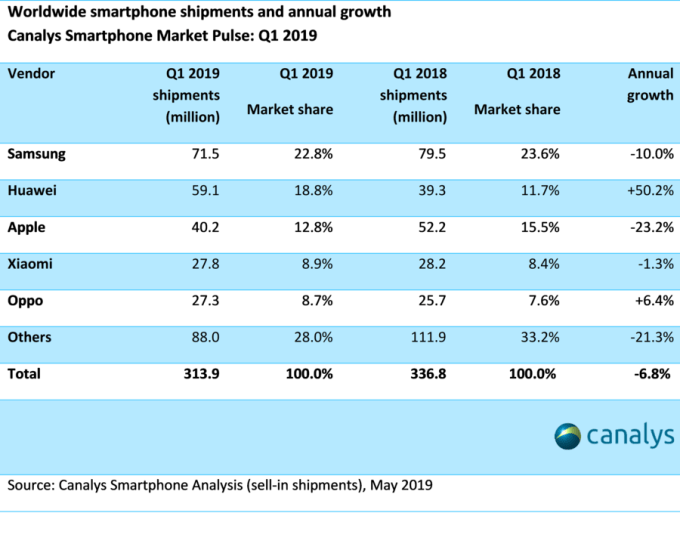
Apple hasn’t been broadcasting its quarterly unit sales the past few quarters so we’ll have to lean on external researchers, but even the rosiest portrayal from Canalys suggests that the Cupertino giant saw a 23% drop in year-over-year iPhone unit sales, selling 40.2 million iPhones in Q2 of this year compared to 52.2 million iPhones a year ago.

That egregious drop takes Apple to its lowest Q2 unit sales since 2013, though the company has been solidly been bumping up the average selling price in a move that has largely been working, though iPhone revenue was down 15% year-over-year as well.

It’s not Apple’s cross to bear alone, the broader smartphone market has been in decline, down 6.8% year-over-year, according to the same report. But the iPhone’s decline contributed to roughly half of the global market’s missing units while China’s smartphone triumvirate of Huawei, Oppo and Xiaomi managed to buoy the broader sector from diving even lower.

Huawei’s unit sales shot up over 50%.

Apple wasn’t the only non-Chinese phone maker wallowing in misery. Google cited a rough market for smartphones after delivering disappointing earnings, while Samsung saw a 10 percent decline in unit sales this quarter according to Canalys.

Shoot me tips or feedback
on Twitter @lucasmtny or email
lucas@techcrunch.com

The smartphone market has had 6 straight quarters of year-over-year sales declines. This was the lowest quarter of smartphone unit sales in nearly 5 years. Whether Apple can better perform might be a question of how they can seek to differentiate themselves in China while still managing to squeeze consistent revenues from markets where it leads.

More doom-and-gloom from my buddy Brian Heater here:

iPhone hard hit as global smartphone shipments nosedive

Onto the cheerier topic of dead robots…

AMY OSBORNE/AFP/Getty Images

Trends of the week

Here are a few big news items from big companies, with green links to all the sweet, sweet added context.

  • Zuckerberg tries again
    Facebook is dead as you know it, or at least that what CEO Mark Zuckerberg wants you to think after his audacious relaunch of the company as a lover of privacy. The company gave its Facebook app and desktop site a major facelift and spoke at length about being better. Sitting in the audience, I couldn’t help but think that Zuckerberg was spinning for extra credit with decisions that had long been made. More from my colleague Josh Constine.
  • SpaceX cops to an explosion
    Elon Musk’s space company may have to push back its timeline for a manned launch after the company confirmed that its Dragon crew capsule exploded during testing. The disappointing development suggests SpaceX has some more work ahead of it before it’s ready to safely transport humans into space.
  • Another dead robot
    Cozmo won’t be scooting into any new homes, the startup behind the cute little robot is dead after the dissolution of a new funding round. Anki had raised a staggering $182 million over the course of its life and had sold 1.5 million of the curious, little wheeled bots, but now it seems to face the same lonely death as Jibo, which similarly perished a couple months ago.
  • Palantir not so nice after all
    Peter Thiel’s Palantir has long held onto this very nefarious reputation as an evil company that’s working with government agencies and screwing over progressive ideals in the process. It wasn’t always super clear how true this was because it kind of seemed like Alex Karp and company was just scrambling to get private sector customers so it could justify its private valuation ahead of an IPO. Well, turns out the company is shitty after all.
  • Headset hullabaloo
    The VR market may be dead, but don’t tell that to the companies making VR headsets. Yes, the new headsets still all bulky and weird but they are undoubtedly better. Oculus’ introduction of the Quest (reviewed here by me) and Rift S (review from me, again) next month might just add a little life to the dead VR dreams, and if that doesn’t work Valve has a $1,000 option it’s now hocking.

Forward-looking statement

What’s coming up next week? Well, you can expect a bunch of Microsoft news at its Build developer conference and there will also assuredly be a lot emerging from Google I/O where I’ll be spending a couple days next week. Here’s what we think is coming…

What to expect from Google I/O 2019

“…It’s shaping up to be a biggie, too, if this week’s Google earnings call was any indication. Sundar Pichai teased out a number of upcoming offerings from the company that we can expect to see on full display at the show…”

HVEPhoto/Getty Images

GAFA Gaffes

How did the top tech companies screw-up this week? This clearly needs its own section, in order of awfulness: (This week was admittedly a little light on the gaffes, but don’t be too disappointed, that’s good!)

  1. Googlers aren’t happy about workplace retaliation:
    [Google employees are staging a sit-in to protest reported retaliation]
  2. Researchers studying Facebook’s ad platform aren’t getting the access, they say they need:
    [Facebook accused of blocking wider efforts to study its ad platform]
  3. Apple wades into anti-competitive criticism with latest app bans:
    [Apple defends its takedown of some apps monitoring screen-time]

Horacio Villalobos//Corbis/Getty Images

Extra Crunch

Our premium subscription service roars ahead. We had a fascinating piece go up this week diving into Slack’s financial filings that discovered some discrepancies in the VC funding that was reported versus what was actually raised:

The curious case of Slack’s missing $162 million

“…Given that most of the stories covering Slack derived from the company’s own announcements, you would expect that those stories and the data in the S-1 would match. In short: they do, somewhat…”

Here are some of our other top reads this week for premium subscribers — you should catch up with our full Niantic deep-dive if you have’t already, this list is a nice primer though…

Want more TechCrunch newsletters? Sign up here.

Facebook is pivoting

“The future is private,” said Mark Zuckerberg of Facebook’s roadmap, after conceding “we don’t exactly have the strongest reputation on privacy right now, to put it lightly.” But it’s easy to see why he would genuinely want that … now. Facebook’s seemingly endless series of privacy debacles have been disastrous for the company’s reputation.

Not its revenue, mind you; but revenue is famously a lagging indicator in the tech industry. Companies which, like Facebook, effectively become utilities, tend to maximize their income just as their use becomes ubiquitous — not because people especially like them any more, but because there seems to be no better alternative. (See also: Craigslist. PayPal. An obscure little company called MySpace which you may have heard of once.)

But “the future is private,” the vision of Facebook as a platform for groups and individuals sharing end-to-end-encrypted messages, the content of which it cannot be criticized for because it is literally incapable of knowing, sounds like a pretty gargantuan shift in business model, too. “Senator, we sell ads,” is another famous Zuckerberg quote. Won’t end-to-end encryption, and the de-emphasis of the continuously scrollable News Feed in favor of more discrete communications, strip Facebook of both valuable ad space and valuable ad-targeting information?

Probably. But it’s already painfully clear that Facebook wants to do far more than just sell ads against News Feed attention to make money. That got them where they are, but it has its limits, and of late, it’s also attracted a volcano of furious attention, and a fake-news firestorm. So don’t look where their puck is; look where it’s going. Look at Facebook Marketplace; look at Facebook’s cryptocurrency plans; look at their purchase of WhatsApp and how Facebook Messenger was broken out into its own app.

It seems clear that what Facebook really wants next is for Messenger to become WeChat for the rest of the world. An impregnable walled garden, used for business communications as well as personal. One which dominates not just messaging but commerce. A platform capable of transcending — and replacing — credit cards.

That would be enormously lucrative. That would also immensely reduce public and regulatory scrutiny and outrage: when outrages and atrocities are plotted and performed over Messenger, as they inevitably will be, Facebook will point out, quite correctly, that it is mathematically impossible for them to monitor and censor those messages, and that by keeping it mathematically impossible they are preserving their users’ privacy.

Does that sound hypocritical? What a narrow, short-sighted view. The irony is that it’s now entirely possible to envision a thriving future for Facebook which does not really include — well — Facebook. One in which Instagram is the king of all social media, while Messenger/WhatsApp rule messaging, occupy the half-trillion dollar international-remittances space, and also take basis points from millions of daily transactions performed on them …

…while what we used to know as “Facebook,” that once-famous app and web site, languishes as a neglected relic, used by a diminishing and increasingly middle-aged audience for event planning and sporadic life updates, yet another zombie social medium like LiveJournal and MySpace and so many others before. But one which birthed new, stronger, more evolved, corporate titans before it withered away: online gardens not merely “walled” but “domed like Wakanda,” more resistant to regulation, less prone to unpleasant emergent properties and summons to testify to the Senate. Love or hate this idea, you have to concede that it would be, if it succeeded, the mother of all pivots.

Great teams, UBI, data retention policies, and Amazon HQ2

3 key secrets to building extraordinary teams

David Cancel, the CEO and founder of Drift, wrote a deep dive on how to think about finding and recruiting the kinds of people who build incredible startups. Among the factors he looks at:

Scrappiness (Importance: 35%)

The four most telling words a new hire can say: “I’ll figure it out.” If you find someone who says that (and can follow through on it), you know you’ve found someone with drive — someone who will plunge headfirst into any challenge and help move the company forward. But to clarify, the type of drive I look for in new hires is different from traditional ambition. Because traditionally ambitious people, while hard workers, tend to obsess over their own personal rise up the corporate ladder. They always have an eye on that next title change, from manager to director, director to VP, or VP to C-suite, and that influences how they perform. That’s why a decade ago, while running my previous company Performable, I added a new requirement to our job descriptions: “Scrappiness.” Today, it’s one of our leadership principles at Drift.

Scrappy people don’t rely on titles or defined sets of responsibilities. Instead, they do whatever it takes to get the job done, even when no one is looking, and even if the tasks they’re performing could be considered “beneath their title.”

Takeaways from F8 and Facebook’s next phase

We had a greatly informative conference call with our very own Josh Constine and Frederic Lardinois, who were checking in from Facebook’s F8 conference in San Jose this week. In case you weren’t able to join us, the transcript and audio have been posted for Extra Crunch members:

Original Content podcast: The battle of opinions over ‘Game of Thrones’ and the Battle of Winterfell

This post and podcast contain spoilers for “Game of Thrones” and  “Avengers: Endgame.”

“The Long Night,” the much-anticipated “Game of Thrones” episode where the living and the dead meet in a desperate, epic battle, wasn’t entirely embraced by the show’s fans. Instead, many have complained about the episode’s (literal) darkness, while others were disappointed by the apparent disappearance of the show’s old ruthlessness.

But your hosts at the Original Content podcast (joined this week by our original co-host Darrell Etherington) were pretty happy with the episode, as revealed in an appropriately super-sized discussion.

Yes, the darkness was an issue, but the creative team used that darkness to eerily beautiful effect. On the right screen, everything in the episode was a grand and terrifying spectacle. And while we quibbled with some of the storytelling choices, we also screamed with surprise at the episode’s ending.

The other big question is what the death of the Night King means for the final three episodes of the show. Time will tell, but for now we’re hoping for a return to the initial focus on political scheming and moral compromise.

As if that wasn’t enough for one podcast, we also review the other big pop cultural event of the past week “Avengers: Endgame” — and in doing so, we capture the exact moment when Jordan realized that “Endgame” won’t be the last Marvel movie.

You can listen in the player below, subscribe using Apple Podcasts or find us in your podcast player of choice. If you like the show, please let us know by leaving a review on Apple. You can also send us feedback directly. (Or suggest shows and movies for us to review!)