Former YouTube star sentenced to ten years in prison for child porn

Former Youtube star Austin Jones has been sentenced to ten years in a US federal prison after pleading guilty to persuading underage girls to send him explicit videos of themselves.

Jones, who made a name for himself online singing covers of songs, was arrested and charged in 2017 with two counts of producing child pornography.

He later pled guilty to one charge of receiving child pornography — admitting in a plea agreement that in 2016 and 2017 he enticed six girls to to produce and send explicit videos to “prove” they were his “biggest fan”, per Buzzfeed.

“Production and receipt of child pornography are extraordinarily serious offenses that threaten the safety of our children and communities,” it quotes assistant U.S. Attorney Katherine Neff Welsh writing in a sentencing memo. “Jones’s actions took something from his victims and their families that they will never be able to get back.”

At the height of his YouTube fame Jones had around 540,000 subscribers to his channel and more than 20M video views.

In a 2015 apology vlog, after reports emerged of Jones asking young fans to send him twerking videos, he claimed it never went further than that. “There were never any nudes, never any physical contact, it never happened,” he said then.

But in his plea agreement Jones admitted to attempting to persuade more than thirty underage fans to send him explicit photos or videos.

YouTube removed Jones’ channel after he pled guilty in February — saying it had violated its community guidelines. But the Google -owned company initially refused to shutter it, telling the BBC a few days earlier that while it does have a policy of removing content when a person is convicted of a crime “in some cases” it does so only if the content is closely related to the crime committed.

Describing her experience in a vlog also posted to YouTube, one former fan she had received messages from Jones asking her for twerking videos prior to his 2015 apology video when she was 14-years-old.

“I just don’t understand how these people can let the fame get to their heads that much that they think it’s alright to do something to people like this,” she said. “It’s so messed up. But the fact that his fanbase was these vulnerable, insecure young girls makes it so much worse than it already is… He knew that that was his fanbase and he took advantage of that.”

Startups Weekly: Will the Seattle tech scene ever reach its full potential?

Greetings from Seattle, the land of Amazon, Microsoft, two of the world’s richest men and some startups.

I’m always surprised the Seattle startup ecosystem hasn’t grown to compete with the likes of Silicon Valley — or at least Boston and New York City — since the dot-com boom. Today, it’s the strongest it’s has been due to the successes of companies like the newly minted unicorn Outreach, trucking business Convoy and, of course, the dog walking startup Rover. But the city still lags behind, failing to adopt the culture of entrepreneurship that defines San Francisco.

I spent a lot of time wondering why it hasn’t reached its full potential. Is it because Microsoft and Amazon pay their employees so well they don’t have the same urge to build something from the ground up? Is it a lack of access to capital? Is the city not attracting top talent? If you have thoughts, send them my way.

“We think part of the issue is a lack of capital and a lack of help,” Rover and Pioneer Square Labs co-founder Greg Gottesman told TechCrunch earlier this year. “If we can provide a little bit of both of those things, we can really put Seattle where it deserves to be, should be and will be.”

Despite its shortcomings, there is still some action in the city I want to highlight this week. A same-day delivery business, Dolly, is on the rise. The startup told me on Thursday it had raised a $7.5 million round from Unlock Venture Partners, Maveron and Jeff Wilke, the chief executive officer of Amazon Worldwide Consumer. Maveron, if you remember, is the VC fund co-founded by Starbucks founder Howard Schultz.

In other Seattle news, Madrona Venture Group, a well-regarded fund, raised an additional $100 million this week. Typically, Madrona focuses on companies based in the Pacific Northwest, but this fund will deploy capital throughout the entire U.S. Hmmm, that’s not necessarily a good sign for Seattle founders, but great progress for the ecosystem nonetheless.

If you’re interested in learning more about Seattle tech, I’ve covered it a bit because it’s my hometown! Start with this story, which dives deep into a Seattle accelerator that’s working hard to encourage entrepreneurship in the city. Alright, on to other news.

Want more TechCrunch newsletters? Sign up here.

IPO corner!

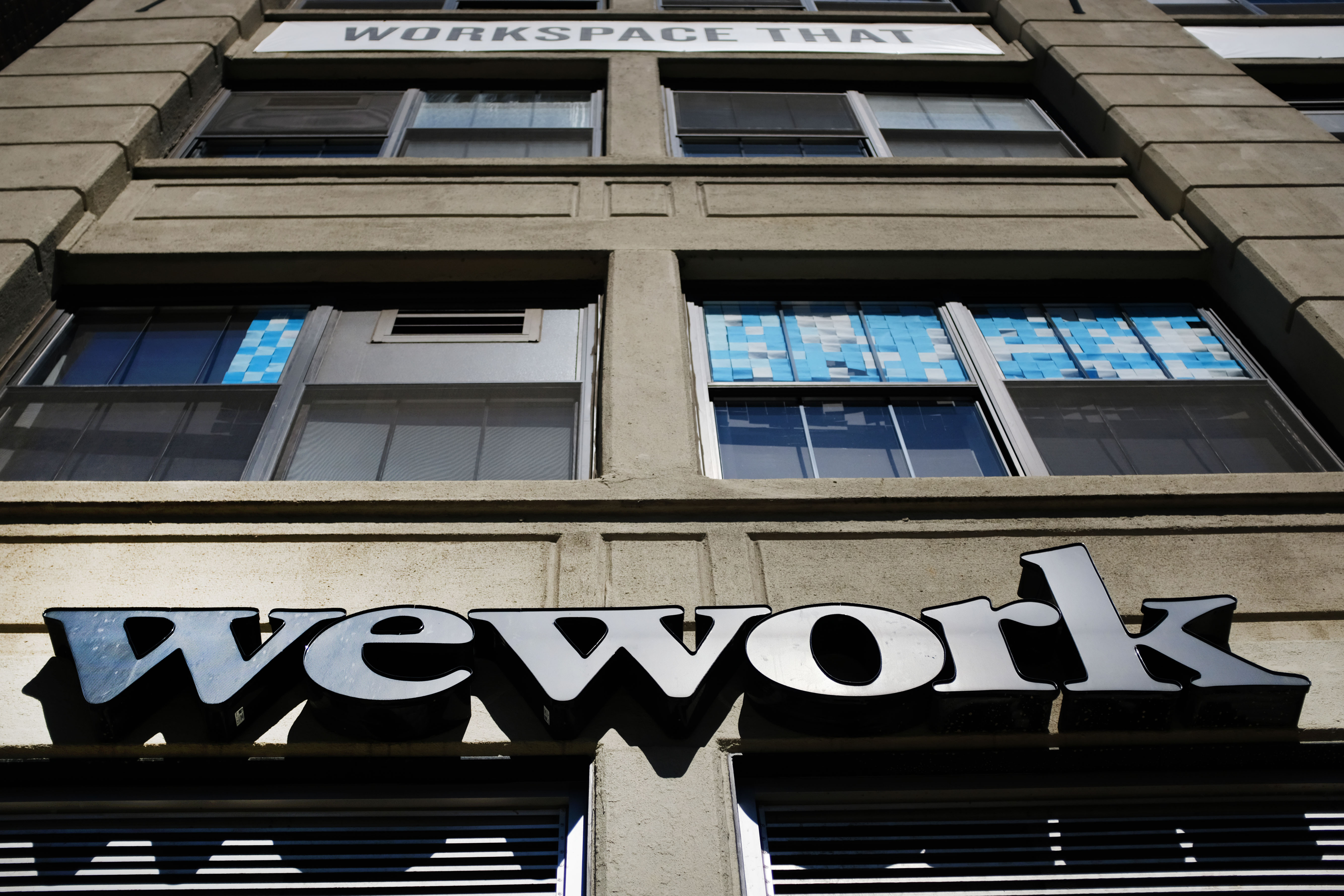
WeWork: The co-working giant now known as The We Company submitted confidential IPO documents to the SEC, the company confirmed in a press release Monday. Is this the next massive startup win or a house of cards waiting to be toppled by the glare of the public markets? TechCrunch’s Danny Crichton investigates.

Slack: The business is in its final steps toward a much-anticipated direct listing, with one source telling TechCrunch the listing will be complete within 45 days. The WSJ reported this week that Slack will make an online presentation to potential shareholders on May 13. This week, we dug deep into Slack’s S-1 and decided to evaluate just how well the tech press, us included, did in covering the company. For the most part, the tech press did decently well, except for one curious, $162 million gap.

Uber: Finally! That ride-hailing company is going public next week. That latest news? Uber co-founder Travis Kalanick won’t be ringing the opening bell. Uber would not be where it is today without Kalanick, but him being there would surely be a reminder of Uber’s rocky past.

Beyond Meat: Shares of the company surged up 135 percent in their market opener last week, valuing the company as high as $3.52 billion. Volatility was so high on the company’s stock that the Nasdaq had to pause trading of “BYND” shares.

Micro-mobility instability:

Ofo has run into its fair share of issues, laying off hundreds of workers, shutting down its international division and more. Now, you can buy a piece of the startup’s history.

https://platform.twitter.com/widgets.js

In other micro-mobility news, Lyft’s head of scooter & bikes Liam O’Connor, who was hired to help transportation company Lyft build its bike and scooter operations, has left after seven months with the newly-public company. TechCrunch’s Ingrid Lunden has the scoop. Plus, Bird, the electric scooter unicorn doing its best to overcome regulatory barriers, has made its way back to San Francisco. Bird is using its business license in San Francisco to introduce monthly personal rentals in the city. The program enables people to rent a scooter for $24.99 a month with no cap on the number of rides. We’ll how that goes.

WTF?

For some reason, people are giving Magic Leap more money. The company has secured another $280 million in a deal with Japan’s largest mobile operator, Docomo. Do you know what that means? The developer fo AR/VR headsets has raised a total of $2.6 billion. We’re just as confused as you.

Brand new venture capital funds:

Unshackled Ventures raised $20 million. 

https://platform.twitter.com/widgets.js

Jungle Ventures closed on $175 million.

And Toyota AI Ventures launched a $100 million fund.

Startup Capital

Uber investors exit

I have the inside story on Menlo Ventures early Uber stake and TechCrunch’s Connie Loizos goes deep with early Uber backer Bradley Tusk.

Extra Crunch!

This week, we offer TechCrunch Extra Crunch subscribers exclusive tips on building extraordinary teams. Plus, the final piece in TechCrunch’s Greg Kumparak’s series on Niantic, the fast-growing developer of Pokemon Go. If you recall, we’ve captured much of Niantic’s ongoing story in the first three parts of our EC-1, from its beginnings as an “entrepreneurial lab” within Google, to its spin-out as an independent company and the launch of Pokémon GO, to its ongoing focus on becoming a platform for others to build augmented reality products upon.

If you enjoy this newsletter, be sure to check out TechCrunch’s venture-focused podcast, Equity. In this week’s episode, available here, Crunchbase News editor-in-chief Alex Wilhelm and TechCrunch’s Danny Crichton chat about updates at the Vision Fund, Cheddar’s big exit and more of this week’s headlines.

Uber is facing Australian class action suit alleging ‘unlawful conduct’

As it gears up to go public Uber is facing legacy baggage down under: A class action lawsuit has been filed in Australia on behalf of around 6,000 taxi and hire car drivers and license owners, Reuters reported Friday.

The suit was filed Friday at the Victoria Supreme Court by personal injury and compensation law firm, Maurice Blackburn. It’s seeking compensation on behalf of thousands of taxi and hire car drivers and operators who believe they lost income or saw a fall in the value of their licence as a result of what it dubs “Uber’s unlawful conduct”.

The firm is still registering additional participants online — specifically those who were licensed to operate in four states, Victoria, Western Australian, New South Wales and Queensland, between a selection of dates spanning 2014 to 2017.

The argument behind the case is that Uber started operating illegally in the four states in 2014, by offering its UberX service which used vehicles and drivers without “the proper licences, accreditations and authorizations”, as it puts it — thereby leading to a drop in income and licence value for the plaintiffs in the class action. 

State laws were subsequently changed to put ride-hailing on a lawful footing so the case is focused on Uber’s past business conduct, with Maurice Blackburn alleging it operated unlawfully in each of the states for a period of time — hence the varying dates for registering participants. 

In a press release the firm writes that the case has been about 18 months in the making, noting too that the ‘no win, no fee’ class action is being underwritten by “one of the world’s largest litigation funders, Harbour”.

“Make no mistake, this will be a landmark case regarding the alleged illegal operations of Uber in Australia and the devastating impact that has had on the lives of hard-working and law-abiding citizens here,” said Maurice Blackburn’s national head of class actions, Andrew Watson, in a statement.

“It is not acceptable for a business to place itself above the law and operate illegally to the disadvantage of others. We’ve got a strong case, a strong team and substantial support from thousands of drivers, operators and licence owners nationwide,” he added.

The firm takes the view it has a better chance of winning compensation for plaintiffs by suing Uber, rather than the government for failing to enforce relevant regulations — pointing, for example, to Uber’s use of the controversial ‘Greyball’ software, which it describes as a “devious program”.

In 2017 the New York Times reported that Uber was using the software to identify members of code enforcement authorities or city officials trying to gather data about it offering service in areas where it’s prohibited and block their access to prevent their ability to enforce local rules.

“Uber sells the idea that it does things differently, but in reality and as we allege, this has meant operating unlawfully, using devious programs like ‘Greyball’. All of this caused extensive loss and damage to law-abiding taxi and hire car drivers, operators and licence holders across the country,” said senior associate at Maurice Blackburn, Elizabeth O’Shea, in another supporting statement.

“Uber came in and exploited people by operating outside of regulations and it was Uber’s conduct that led to horrible losses being suffered by our group members. For those reasons, we are targeting the multi-billion dollar company Uber and its associated entities to provide redress to those affected.”

The firm’s PR also includes a statement from lead plaintiff, Nick Andrianakis, a taxi driver, operator and licence owner from Brunswick, Melbourne, describing the impact of “a life’s work being stripped away from you”.

We’ve reached out to Uber for comment on the class action suit.

In a statement given to Reuters the company denied it operated illegally, telling the news agency: “Uber denies this allegation and, if a claim is served making it, the claim will be vigorously defended.”

The law firm told the news agency that the level of damages being sought could run into “hundreds of millions of dollars” — while emphasizing that any compensation would be determined as part of the case or via settlement negotiations.

While Uber’s statement to Reuters implies it has no intention of seeking a settlement to make this latest legacy legal headache go away, two months ago it did just that in the case of a separate US class-action focused on driver pay and benefits.

In that case Uber agreed to pay $20 million to settle a suit, brought six years ago, which had claimed Uber classified its drivers as contractors to avoid paying them a minimum wage and providing benefits.

Though $20M is considerably less than Uber might have been on the hook for had an appeals court not overturned an earlier decision to grant class-action status to hundreds of thousands of drivers in California and Massachusetts — ruling instead that its arbitration agreements were valid and enforceable.

That decision reduced the number of drivers in the suit to around 13,600.

Lego introduces a new STEM Star Wars kit

No one does brand synergy quite like Lego. The company’s been one of the biggest Star Wars licensers over the years, and for the first time, it’s applying one of the most valuable pieces of IP to its own line of STEM kits, Lego Boost.

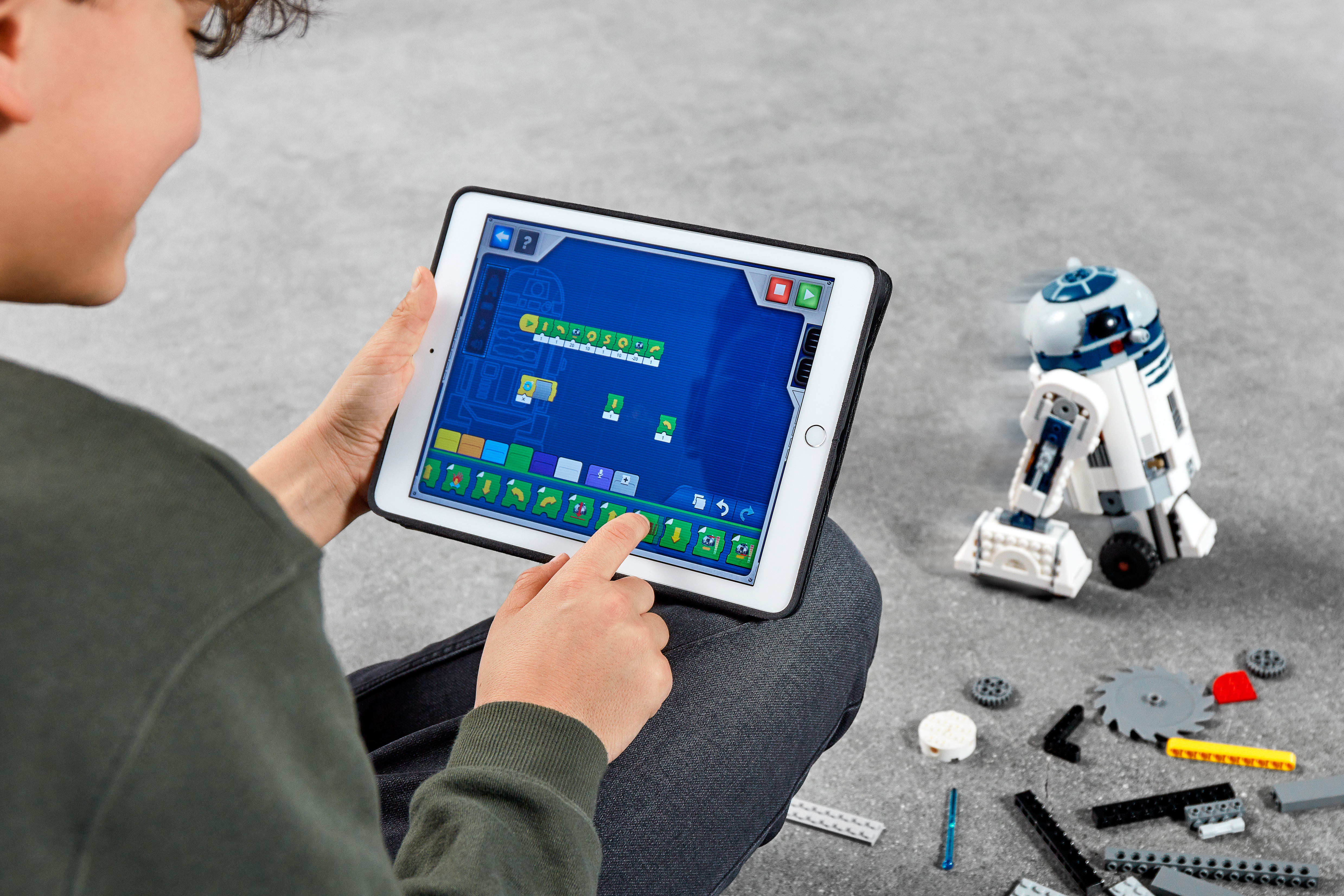
For this year’s Star Wars Day, the Danish company is announcing the arrival of the Lego Star Wars Boost Droid Commander set, which uses the underlying educational property as a jumping off point to build a trio of classic robots from the series.

Kids can use the kit to build R2-D2, Gonk and the Mouse Droid, commanding them on 40 different missions, while learning to build and code in the process. It looks like an effective way to disguise the whole learning bit behind one of history’s most beloved film series. It’s similar to the approach taken by littleBits’ Droid Inventor Kit a few years back — though Lego’s got a pretty remarkable track record of using Star Wars IP.

The set includes 1,177 pieces coupled with color and distance sensors and an interactive motor to get the robots moving. All of that works with a new Boost Star Wars app, which will be available for Android, iOS and Fire devices, featuring such missions as assisting an X-wing flight and seeking those sneaky rebels.

The system arrives on September 1, timed for the release of Star Wars: The Rise of Skywalker, the final film in the sequel trilogy.

Coinbase loses its first CTO after just one year in the job

Coinbase, the $8 billion-valued crypto exchange, has lost its CTO after Balaji Srinivasan announced his departure from the company.

Srinivasan became the U.S. company’s first CTO one year ago after it acquired Earn.com, where he was CEO and co-founder. Given the tenure — one year and one day — it looks like Srinivasan’s departure comes after he served the minimum agreed period with Coinbase.

A high-profile figure in the crypto space who has also spent time with Coinbase and Earn investor A16z, Srinivasan announced his move on Twitter. He declined to go into specifics but told TechCrunch that he plans to take time off to get fit, among other things, before launching into his next product.

https://platform.twitter.com/widgets.js

Coinbase CEO Brian Armstrong paid tribute to Srinivasan’s “incredible contributions” to the company.

Srinivasan’s time at Coinbase saw the company ramp up its expansion efforts. Those include the launch of its own USDC stablecoin, the expansion (and planned expansion) of assets sold to consumers and ‘pro’ traders, and a wider global push. Away from consumers, it launched a slew of services for retail investors and today its services also include staking and over-the-counter trading.

There’s also Coinbase’s own VC arm for doing deals with promising startups and, also on the M&A side, the firm has continued making acquisitions and acquihires. This year, it has snapped up Y Combinator graduate Blockspring and Neutrino, whose founders controversially once worked for surveillance firm Hacking Team, in what were its eleventh and twelfth acquisitions to date.

Talent retention appears to be becoming a bit of an issue at Coinbase.

Srinivasan’s exit comes a month after Dan Romero, the company’s head of international, left after a five-year stint. According to Coindesk, the company has seen at least a dozen senior or mid-level executives leave since October when it raised $300 million led by Tiger Global.

A glitch is breaking all Firefox extensions

Did you just open Firefox only to find all of your extensions disabled and/or otherwise not working?

You’re not alone, and it’s nothing you did.

Reports are pouring in of a glitch that has spontaneously disabled effectively all Firefox extensions.

Each extension is now being listed as a “legacy” extension, alongside a warning that it “could not be verified for use in Firefox and has been disabled”.

A ticket submitted to Mozilla’s Bugzilla bug tracker first hit at around 5:40 PM Pacific, and suggests the sudden failure is due to a code signing certificate built into the browser that expired just after 5 PM (or midnight on May 4th in UTC time).

Because the glitch stems from an underlying certificate, re-installing extensions won’t work — if you try, you’ll likely just be met with a different error message. Getting extensions back for everyone is going to require Mozilla to issue a patch.

In a post on the company’s forum, Mozilla Add-ons Community Manager Caitlin Neiman writes:

At about 6:10 PST we received a report that a certificate issue for Firefox is causing add-ons to stop working and add-on installs to fail.

Our team is actively working on a fix. We will update as soon as we have more information.

Meanwhile, on Twitter:

https://platform.twitter.com/widgets.js

Watch Rocket Lab launch its second orbital mission of 2019 late tonight

Fast-growing launch provider Rocket Lab is launching its second orbital payload of the year late tonight by our reckoning, early in the evening at the launch site in New Zealand. It will carry three experimental satellites to low Earth orbit, and you can watch it live.

The launch is Rocket Lab’s fifth orbital mission, and while it aims to eventually provide launches at a cadence of weeks, it’ll be some time before that’s possible — for now every couple months is what they can manage. But with $140 million in new funding, that should change pretty quickly.

The payloads going up tonight/tomorrow are:

  • SPARC-1: The Space Plug and Play Architecture Research CubeSat is an Air Force Research Lab they’re working on with the Swedish for years now. It’s a new design for a 6U craft with a reconfigurable orbital radio transceiver, intended to “support live experimentation with different waveforms and protocols useful to communications missions.” Plus a camera for checking out the scene up there.
  • Falcon ODE: This Orbital Debris Experiment will release two stainless steel ball bearings on known trajectories in space that will help calibrate ground-based debris-detection systems.
  • Harbinger: A scary-sounding small satellite and the heaviest single micro-sat to be lofted by Rocket Lab’s electron launch vehicle so far. This one, also from the Air Force, uses a synthetic aperture radar to observe Earth regardless of illumination or cloud cover. It’s a demonstrator for rapid production techniques and standardized parts meant to accelerate deployment of new spacecraft.

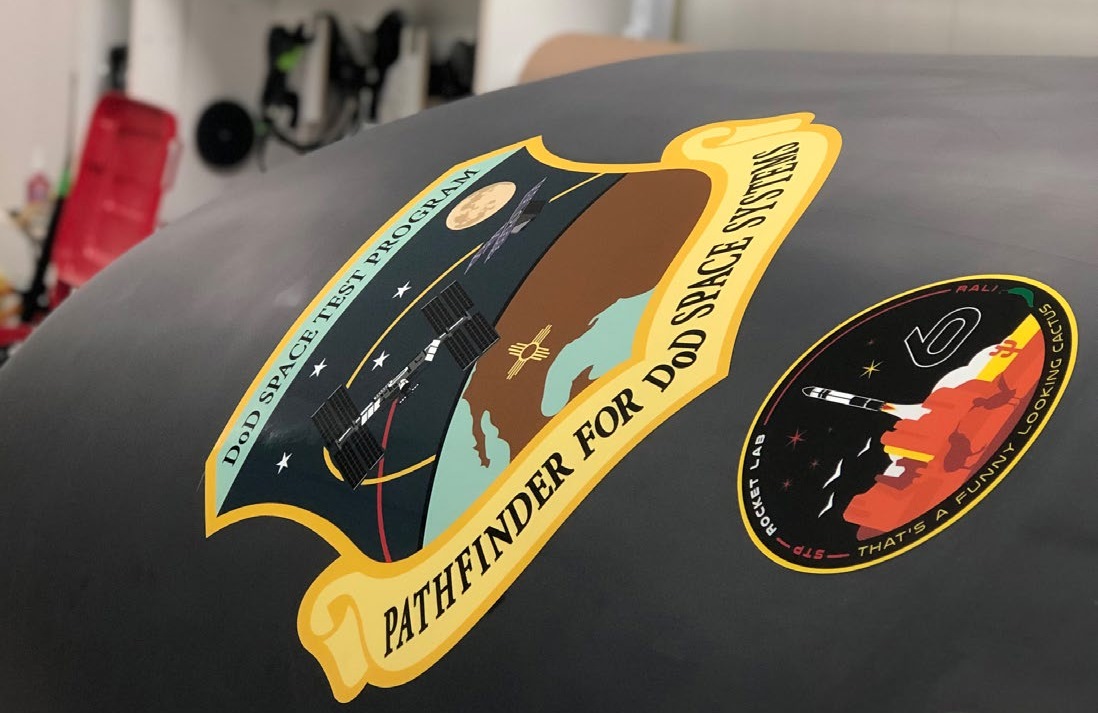
Fairing of the Falcon-ODE payload.

All told its contents comprise 180 kilograms, or nearly 400 pounds, the heaviest load Electron has yet taken off with.

Lift-off is set for 6 PM local time in New Zealand, which corresponds to 11 PM Pacific time here in the U.S. If weather impinges on the opportunity, there’s no worries — this launch window stays open for two weeks. You can watch the whole thing starting a few minutes before 11 at Rocket Lab’s website.

https://platform.twitter.com/widgets.js

Security lapse exposed a Chinese smart city surveillance system

Smart cities are designed to make life easier for their residents: better traffic management by clearing routes, making sure the public transport is running on time and having cameras keeping a watchful eye from above.

But what happens when that data leaks? One such database was open for weeks for anyone to look inside.

Security researcher John Wethington found a smart city database accessible from a web browser without a password. He passed details of the database to TechCrunch in an effort to get the data secured.

The database was an Elasticsearch database, storing gigabytes of data — including facial recognition scans on hundreds of people over several months. The data was hosted by Chinese tech giant Alibaba. The customer, which Alibaba did not name, tapped into the tech giant’s artificial intelligence-powered cloud platform, known as City Brain.

“This is a database project created by a customer and hosted on the Alibaba Cloud platform,” said an Alibaba spokesperson. “Customers are always advised to protect their data by setting a secure password.”

“We have already informed the customer about this incident so they can immediately address the issue. As a public cloud provider, we do not have the right to access the content in the customer database,” the spokesperson added.

But while Alibaba may not have visibility into the system, we did.

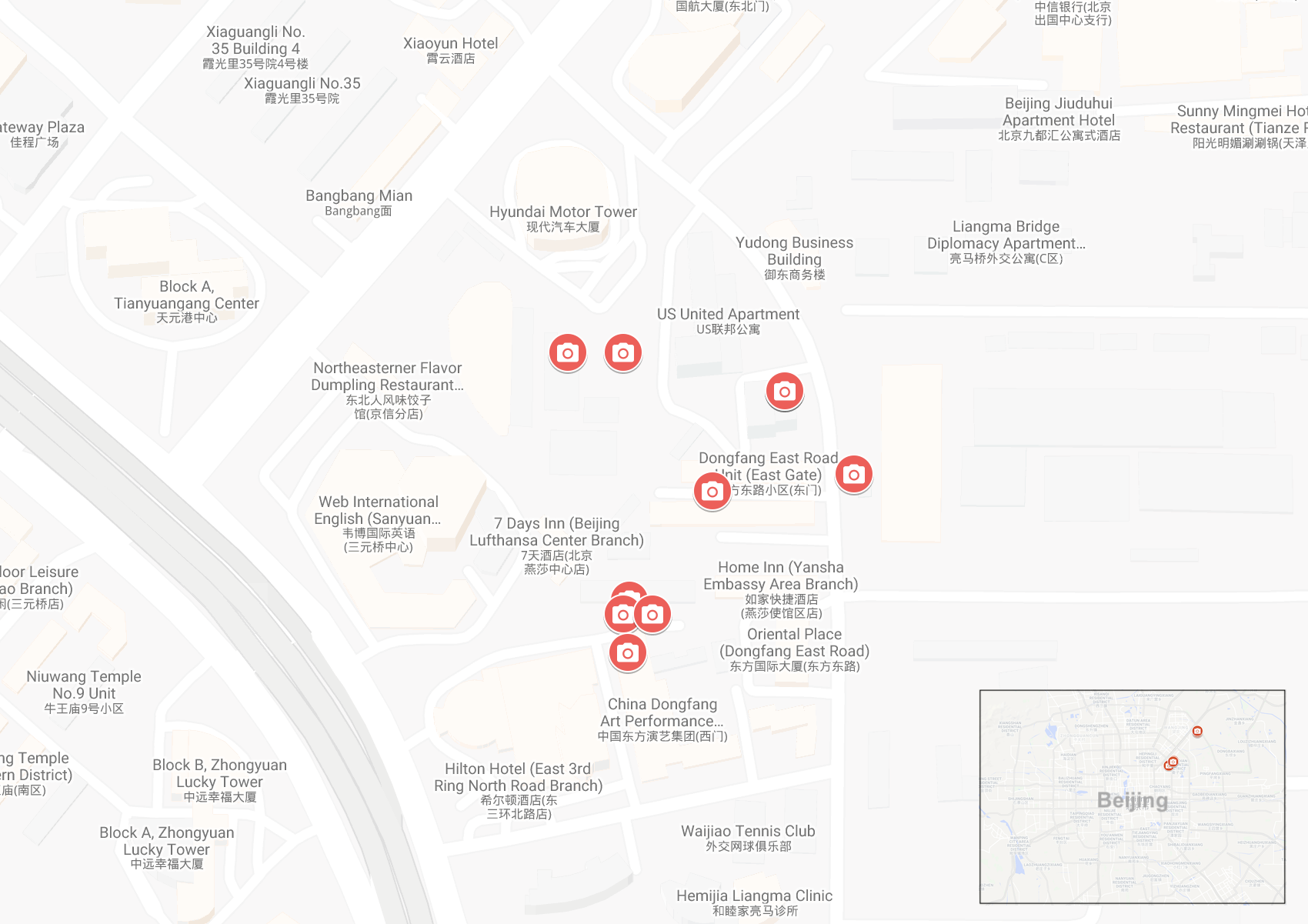
The location of the smart city’s many cameras in Beijing (Image: supplied)

While artificial intelligence-powered smart city technology provides insights into how a city is operating, the use of facial recognition and surveillance projects have come under heavy scrutiny from civil liberties advocates. Despite privacy concerns, smart city and surveillance systems are slowly making their way into other cities both in China and abroad, like Kuala Lumpur, and soon the West.

“It’s not difficult to imagine the potential for abuse that would exist if a platform like this were brought to the U.S. with no civilian and governmental regulations or oversight,” said Wethington. “While businesses cannot simply plug in to FBI data sets today it would not be hard for them to access other state or local criminal databases and begin to create their own profiles on customers or adversaries.”

We don’t know the customer of this leaky database, but its contents offered a rare insight into how a smart city system works.

The system monitors the residents around at least two small housing communities in eastern Beijing, the largest of which is Liangmaqiao, known as the city’s embassy district. The system is made up of several data collection points, including cameras designed to collect facial recognition data.

The exposed data contains enough information to pinpoint where people went, when and for how long, allowing anyone with access to the data — including police — to build up a picture of a person’s day-to-day life.

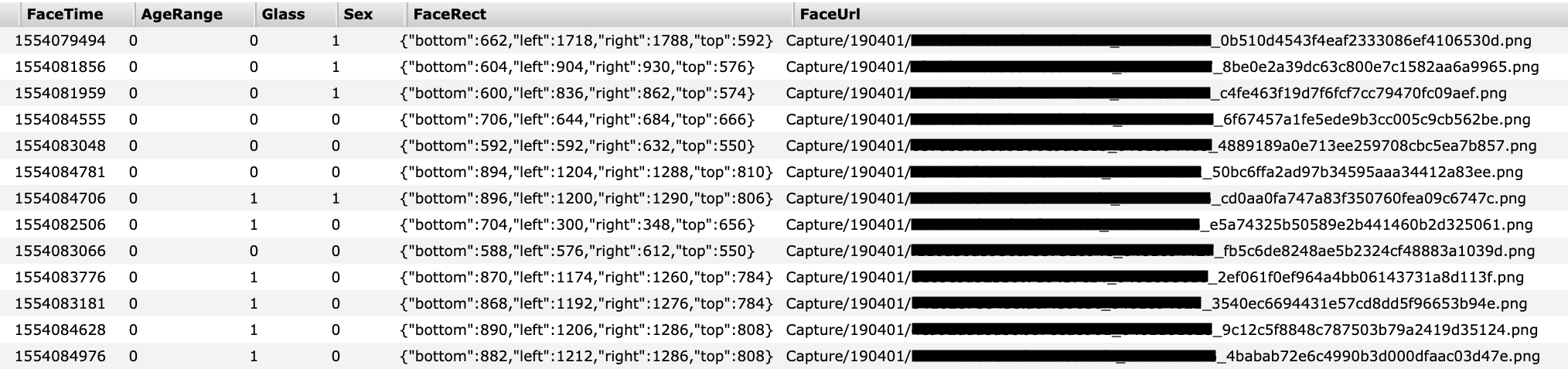
A portion of the database containing facial recognition scans (Image: supplied)

Alibaba provides technologies like City Brain to customers to understand the data they collect from various sources, including license plate readers, door access controls, smart things and internet-connected devices and facial recognition.

Using City Brain’s data-crunching back-end, the cameras can process various facial details, such as if a person’s eyes or mouth are open, if they’re wearing sunglasses, or a mask — common during periods of heavy smog — and if a person is smiling or even has a beard.

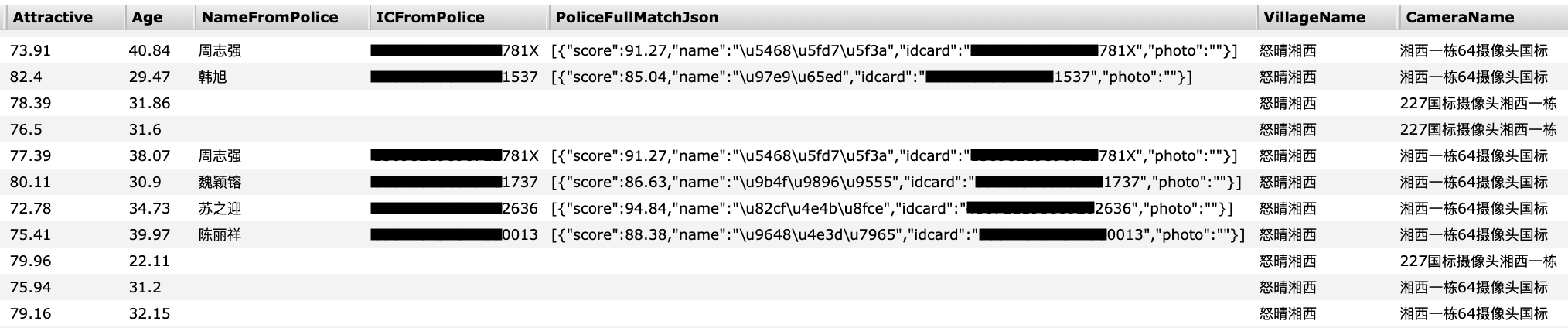
The database also contained a subject’s approximate age as well as an “attractive” score, according to the database fields.

But the capabilities of the system have a darker side, particularly given the complicated politics of China.

The system also uses its facial recognition systems to detect ethnicities and labels them — such as “汉族” for Han Chinese, the main ethnic group of China — and also “维族” — or Uyghur Muslims, an ethnic minority under persecution by Beijing.

Where ethnicities can help police identify suspects in an area even if they don’t have a name to match, the data can be used for abuse.

The Chinese government has detained more than a million Uyghurs in internment camps in the past year, according to a United Nations human rights committee. It’s part of a massive crackdown by Beijing on the ethnic minority group. Just this week, details emerged of an app used by police to track Uyghur Muslims.

We also found that the customer’s system also pulls in data from the police and uses that information to detect people of interest or criminal suspects, suggesting it may be a government customer.

Facial recognition scans would match against police records in real time (Image: supplied)

Each time a person is detected, the database would trigger a “warning” noting the date, time, location and a corresponding note. Several records seen by TechCrunch include suspects’ names and their national identification card number.

“Key personnel alert by the public security bureau: “[name] [location]” – 177 camera detects key individual(s),” one translated record reads, courtesy of TechCrunch’s Rita Liao. (The named security bureau is China’s federal police department, the Ministry of Public Security.)

In other words, the record shows a camera at a certain point detected a person’s face whose information matched a police watchlist.

Many of the records associated with a watchlist flag would include the reason why, such as if a recognized person was a “drug addict” or “released from prison.”

The system is also programmed to alert the customer in the event of building access control issues, smoke alarms and equipment failures — such as when cameras go offline.

The customer’s system also has the capability to monitor for Wi-Fi-enabled devices, such as phones and computers, using sensors built by Chinese networking tech maker Renzixing and placed around the district. The database collects the dates and times that pass through its wireless network radius. Fields in the Wi-Fi-device logging table suggest the system can collect IMEI and IMSI numbers, used to uniquely identify a cellular user.

Although the customer’s smart city system was on a small scale with only a few dozen sensors, cameras and data collection points, the amount of data it collected in a short space of time was staggering.

In the past week alone, the database had grown in size — suggesting it’s still actively collecting data.

“The weaponization and abuse of A.I. is a very real threat to the privacy and security of every individual,” said Wethington. “We should carefully look at how this technology is already being abused by other countries and businesses before permitting them to be deployed here.”

It’s hard to know if facial recognition systems like this are good or bad. There’s no real line in the sand separating good uses from bad uses. Facial and object recognition systems can spot criminals on the run and detect weapons ahead of mass shootings. But some worry about the repercussions of being watched every day — even jaywalkers don’t get a free pass. The pervasiveness of these systems remain a privacy concern for civil liberties groups.

But as these systems develop and become more powerful and ubiquitous, companies might be better placed to first and foremost make sure its massive data banks don’t inadvertently leak.

Why carriers keep your data longer

Your wireless carrier knows where you are as you read this on your phone—otherwise, it couldn’t connect your phone in the first place.

But your wireless carrier also has a memory. It knows where you took your phone in the last hour, the last week, the last month, the last year—and maybe even the last five years.

That gives it an enormous warehouse of data on your whereabouts that can help your wireless carrier fix coverage gaps while revealing much more. Depending on the density of cell sites around you at any one point, the location data triangulated from them can not only highlight your home and office but point to the bars you frequented, the houses at which you spent the night, and the offices of therapists you visited.

Trump’s tariffs could knock Tesla’s Autopilot off course

The White House has refused to exempt the “brain” of Tesla’s Autopilot technology from punitive import tariffs, a decision that could endanger the company’s self-driving ambitions, TechCrunch has learned.

At a special “autonomy day” event last week, Tesla CEO Elon Musk unveiled advanced Autopilot 3.0 hardware, including a new custom chip intended to enable full self-driving (FSD) operation for all of its new vehicles. This hardware is now standard in all new Model 3, S and X vehicles. Customers pay an additional $6,000 for the software upgrade called FSD.

The self-driving hardware lives within the Autopilot ECU (or engine control unit), a module that Tesla describes as the “brain of the vehicle.” This module is assembled in Shanghai, China, by a company called Quanta Computer.

Tesla’s plans could be affected by a previously unreported decision last month by the White House not to grant the automaker an exemption from 25% tariffs. President Trump imposed these tariffs last year on a range of imports, including electronics, in an effort to reduce the U.S. trade deficit with China.

Tesla has suggested that the tariffs could force it to cease making its self-driving computers in China, thus delaying their introduction and even reducing vehicle safety.

“The imposed tariffs are forcing us to either source a new supplier, pass the cost increase to the end customer, or reduce operational costs within our internal operations, all having a reverse impact for what [we believe] to be the intention of the tariff,” the company wrote in an application to the United States Trade Representative (USTR) on November 16, requesting relief from the tariffs.

But on March 15, the USTR’s general counsel informed Tesla that it was denying the company’s request because it “concerns a product strategically important or related to ‘Made in China 2025’ or other Chinese industrial programs.” The USTR also rejected a retroactive exemption request for legacy Autopilot 2.5 hardware, for the same reason.

Made in China

Made In China 2025 is China’s strategic plan to move away from manufacturing to produce higher value goods, particularly in the areas of AI, electric vehicles and robotics. The White House sees the effort as a direct threat to U.S. domestic technology and automotive companies.

However, U.S. firms have long been among the largest beneficiaries of Chinese manufacturing expertise. Tesla’s Autopilot manufacturing partner in Shanghai, Quanta, has also worked with Apple, Amazon and Verizon.

“Tesla was unable to find a [U.S.] manufacturer with the requisite expertise to produce the Autopilot ECU 3.0 with the required specifications, at the volume requested and under the timelines necessary for Tesla’s continued growth,” the company wrote.

Tesla claimed that using Quanta would not help China reach a goal for 80 percent of domestic EV sales to come from Chinese companies by 2025. “To the contrary, if granted, the exclusion request would ensure that Tesla is able to maintain its technological and competitive advantage gained by manufacturing EVs and finished lithium-ion batteries in the United States,” it wrote.

Tesla also pointed out that more than 75 percent of the value of the new computer’s printed circuit board actually originates from outside of China. For instance, Tesla’s new cutting-edge neural network chips, which are a critical piece of Autopilot 3.0, are being made by Samsung in Austin, Texas.

The Tariff Effect

But the White House wasn’t buying it, and the USTR’s rejection is likely to hit Tesla hard. The company has already told investors that it could not guarantee hitting its gross margin targets now that it has begun selling the lowest-priced Model 3 variant.

“These tariffs detract from our continuous growth and sustainability in a very difficult industry,” wrote Tesla.

Last week, the automaker posted a $702 million loss in the first quarter of 2019, on the back of lower than expected deliveries, and it just announced its intention to raise about $2.7 billion by selling a mix of debt and equity. The company originally said it intended to raise $2.3 billion in convertible notes and equity, then upped the total offering just a day later, according to regulatory filings.

Tesla is selling 3.1 million shares at a price of $243 per share through underwriters Goldman Sachs and Citigroup and boosted its convertible notes offering to $1.6 billion, according to filings. Musk is also doubling down on his own investment and now intends to buy up to 102,880 shares in stock worth $25 million.

With limited ability to increase prices or reduce costs, Tesla’s other option would be to relocate manufacturing to the United States. But that comes with its own difficulties, according to the company.

“Tesla’s decision to begin production [of the new Autopilot computer took] six months from development to production,” it wrote in its application. “With condensed timelines such as this, there is no leeway to test out a supplier that does not already have considerable experience … Choosing any other supplier would have delayed the program by 18 months with clean room setup, line validation, and staff training.”

Safety concerns

Even more critically, given that Tesla’s existing Autopilot technology has been linked with multiple crashes and several deaths, the company believes that such a move would also have safety implications: “Sourcing a new supplier increases the risk of poor part quality leading to possible quality issues that would impact the safety of our vehicles and the final product… We cannot risk our customers’ lives due to a defect from a supplier.”

The tariffs could even disrupt Tesla’s ongoing research into artificial intelligence, machine learning and computer vision, it fears.

“Tesla’s leadership position is contingent on our ability to deploy these advancements and components at volume, which we would be unable to do under the current tariff structure,” stated its application. Musk told investors yesterday that autonomy would eventually make Tesla a $500 billion company, a more than ten-fold increase to its valuation today.   

Despite its strong wording to the USTR, Tesla has only mentioned the tariffs in investor filings in passing, where it focused on their impact on its bottom line: “Recently increased import duties on certain components used in our products that are sourced from China may increase our costs and negatively impact our operating results.”

Tesla declined to comment on this story.

Greg Linden is an economist at the University of California, Berkeley, specializing in the global supply chain for electronics. “For speed and high-volume, China is the place,” he told TechCrunch in a recent interview. “U.S. companies headed down the China road for board assembly about 25 years ago and never looked back. Component suppliers followed, and now China has a heft for high-volume electronics that no country can match.”

Linden has calculated that a U.S.-assembled Apple iPhone could add up to $40 per unit in cost, and estimates that building Autopilot 3.0 hardware in the U.S. would result in an increase of the same order of magnitude.

Lingering exemption requests

Tesla has several more tariff exemption requests outstanding with the U.S. government. A request to exempt the Model 3’s car computer, including its media control unit, connectivity board and advanced driver assistance system (ADAS) hardware, was filed at the end of December. Most recently, Tesla last week asked to be excluded from tariffs for specialized aluminum sheets from Japan, needed for lithium-ion battery cell manufacture at its Gigafactory in Sparks, Nevada.

But it is not all bad news for Musk on the trade front. Last July, The Boring Company requested relief from tariffs on Chinese-made tunneling machinery. It claimed that an inability to source tunnel boring machine parts from China would cost jobs and delay its proposed underground Loop transit system between Baltimore and Washington DC by up to two years.

On March 19, the USTR granted a retroactive exemption for imports of tunneling machinery.

Ironically, the autonomous electric vehicles intended for the Baltimore to DC Loop are based on Tesla cars that will likely rely on new Autopilot systems being built, at least for the moment, in China.