WorldCover raises $6M round for emerging markets climate insurance

WorldCover, a New York and Africa-based climate insurance provider to smallholder farmers, has raised a $6 million Series A round led by MS&AD Ventures.

Y-Combinator, Western Technology Investment, and EchoVC also participated in the round.

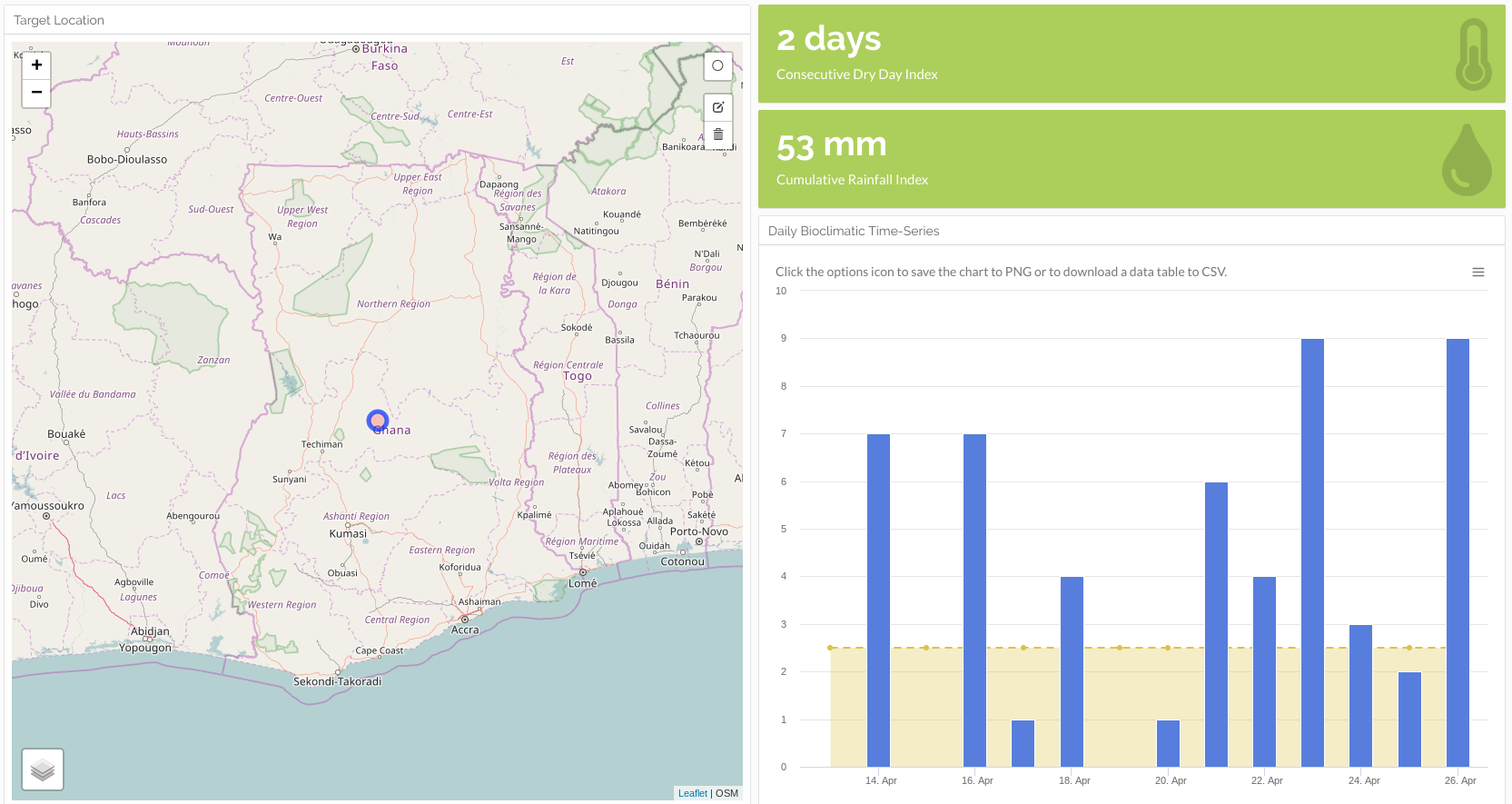
WorldCover’s platform uses satellite imagery, on-ground sensors, mobile phones, and data analytics to create insurance options for farmers whose crops yields are affected adversely by weather events—primarily lack of rain.

The startup currently operates in Ghana, Uganda, and Kenya . With the new funding WorldCover aims to expand its insurance offerings to more emerging market countries.

“We’re looking at India, Mexico, Brazil, Indonesia. India could be first on an 18 month timeline for a launch,” WorldCover co-founder and chief executive Chris Sheehan said in an interview.

The company has served over 30,000 farmers across its Africa operations. Smallholder farmers as those earning all or nearly all of their income from agriculture, farming on 10 to 20 acres of land, and earning around $500 to $5000, according to Sheehan.

Farmer’s connect to WorldCover by creating an account on its USSD mobile app. From there they can input their region, crop type, determine how much insurance they would like to buy and use mobile money to purchase a plan. WorldCover works with payments providers such as M-Pesa in Kenya and MTN Mobile Money in Ghana.

The service works on a sliding scale, where a customer can receive anywhere from 5x to 15x the amount of premium they have paid.  If there is an adverse weather event, namely lack of rain, the farmer can file claim via mobile phone. WorldCover then uses its data-analytics metrics to assess it, and if approved, the farmer will receive an insurance payment via mobile-money.

Common crops farmed by WorldCover clients include maize, rice, and peanuts. It looks to add coffee, cocoa, and cashews to its coverage list.

For the moment, WorldCover only insures for events such as rainfall risk, but in the future it will look to include other weather events, such as tropical storms, in its insurance programs and platform data-analytics.

The startup’s founder clarified that WorldCover’s model does not assess or provide insurance payouts specifically for climate change, though it does directly connect to the company’s business.

“We insure for adverse weather events that we believe climate change factors are exacerbating,” Sheehan explained. WorldCover also resells the risk of its policy-holders to global reinsurers, such as Swiss Re and Nephila.

On the potential market size for WordCover’s business, he highlights a 2018 Lloyd’s study that identified $163 billion of assets at risk, including agriculture, in emerging markets from negative, climate change related events.

“That’s what WorldCover wants to go after…These are the kind of micro-systemic risks we think we can model and then create a micro product for a smallholder farmer that they can understand and will give them protection,” he said.

With the round, the startup will look to possibilities to update its platform to offer farming advice to smallholder farmers, in addition to insurance coverage.

WorldCover investor and EchoVC founder Eghosa Omoigui believes the startup’s insurance offerings can actually help farmers improve yield. “Weather-risk drives a lot of decisions with these farmers on what to plant, when to plant, and how much to plant,” he said. “With the crop insurance option, the farmer says, ‘Instead of one hector, I can now plant two or three, because I’m covered.”

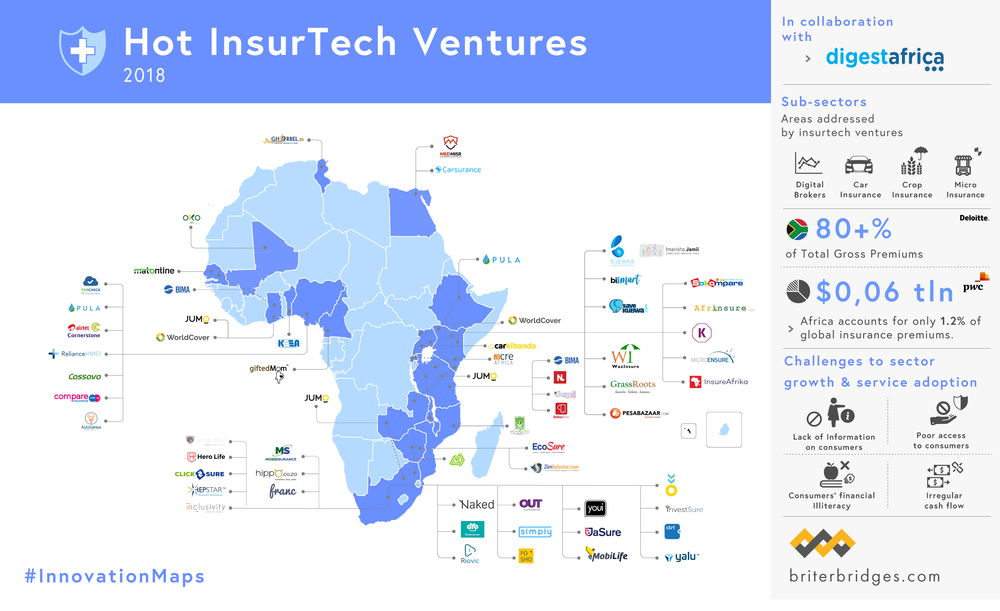
Insurance technologyis another sector in Africa’s tech landscape filling up with venture-backed startups. Other insurance startups focusing on agriculture include Accion Venture Lab backed Pula and South Africa based Mobbisurance.

With its new round and plans for global expansion, WorldCover joins a growing list of startups that have developed business models in Africa before raising rounds toward entering new markets abroad.

In 2018, Nigerian payment startup Paga announced plans to move into Asia and Latin America after raising $10 million. In 2019, South African tech-transit startup FlexClub partnered with Uber Mexico after a seed-raise. And Lagos based fintech startup TeamAPT announced in Q1 it was looking to expand globally after a $5 million Series A round.


Palantir’s software was used for deportations, documents show

Data mining firm Palantir’s software was used by a US government agency during an operation in 2017 in which immigrants crossing the border were arrested for deportation, newly released documents (PDF) have shown, contradicting the $20 billion firm’s earlier public statements.

The Immigration and Customs Enforcement documents, obtained by advocacy organization Mijente through Freedom of Information Act litigation, notes that agents of ICE’s Enforcement and Removal Operations used Palantir’s software to build profiles of immigrant children and their family members for the prosecution and arrest of any undocumented person they encountered in their investigation.

When an ICE investigation agent located an unaccompanied minor, the documents reveal, they were instructed to log the “arrival in the Investigative Case Management (ICM) system.” ICM is a software platform developed by Palantir for “managing and investigating complex cases,” according to a description on the company’s website.

The findings of Palantir’s involvement, first reported by The Intercept, is in contrast to the Silicon Valley firm’s previous claims. The firm told The New York Times last year that it only works with ICE’s Homeland Security Investigations (HSI) division, which is responsible for cross-border criminal investigations.

“The other major directorate, Enforcement and Removal Operations, or E.R.O., is responsible for interior civil immigration enforcement, including deportation and detention of undocumented immigrants. We do not work for E.R.O,” a spokesperson was quoted as saying.

TechCrunch has reached out to Palantir for additional comment.

Mijente, which had separately reported last year that Palantir was among the handful of firms working with ICE, urged the Silicon Valley company to drop its contract with ICE and called on the firm’s investors to not invest in a company that “played a key role in family separation.”

The findings this week further underscore the vast tentacles of billionaire Peter Thiel’s data mining company’s surveillance and reach. “Palantir, a software firm headquartered in Palo Alto, California, has a history of government contracts involving military, intelligence, and law enforcement agencies.

The firm was founded by Thiel, the PayPal co-creator-turned-investor who is one of President Trump’s most vocal supporters in Silicon Valley. It develops software that helps agents analyze massive amounts of personal data — phone numbers, addresses, financial information, social media profiles — and build profiles for prosecution and arrest,” Mijente said.

And it comes at a time when a growing number of tech giants are facing backlash from their employees and other citizens alike over their tech being used by the government for questionable objectives.

YouTube confirms plans to make Originals available for free

YouTube Chief Business Officer Robert Kyncl reaffirmed the company’s plans to take its Originals out from behind the paywall, making them free and ad-supported.

Kyncl was speaking at YouTube’s annual Brandcast event, where the Google-owned company lays out its plans for advertisers (with lots of razzle dazzle provided by musicians and YouTube stars). Since last fall, the YouTube has acknowledged that it’s moving towards an ad-supported model for its Originals, and tonight, Kyncl said that all original programming moving forward will have an ad-supported window.

He didn’t say anything more about that window, but it sounds like YouTube isn’t fully abandoning paid subscriptions yet. Still, everything on its slate should be available for free at some point. That includes the first two seasons of the “Karate Kid” follow-up “Cobra Kai” — season one will be available for free from August 29 to September 11, and then season two will become available.

“While every other media company is racing to put their content behind the paywall, we’re headed in the opposite direction by making our original content available for free,” Kyncl said.

He also announced that “Cobra Kai” will be returning for a third season next year, as will Kevin Hart’s comedic fitness series “What The Fit.” And he said YouTube is also working on an Originals project with Justin Bieber, although the company isn’t sharing any other information about it.

In addition, the team behind the popular Dude Perfect YouTube channel is working on a documentary that goes behind-the-scenes of their tour this summer. Other projects that YouTube announced today (though they weren’t mentioned on-stage) include a documentary about Paris Hilton, expanded Lollapalooza coverage and YouTube’s first interactive special, “A Heist with Markiplier.”

In addition to Kyncl, YouTube CEO Susan Wojcicki spoke at the event, where she declared, “Primetime is now personal, and it’s happening on our cellphones. Every one of us has a new primetime.”

She also addressed the question of “responsibility,” which presumably refers to removing hate speech and misinformation from the platform Wojcicki described this as “my number one priority,” and said YouTube is removing millions of bad videos every quarter, most of which “have not received a single view.”

“I recognize that there is still work to be done, but we are committed to getting this right,” she said.

Why you don’t want Tumblr sold to exploitative Pornhub

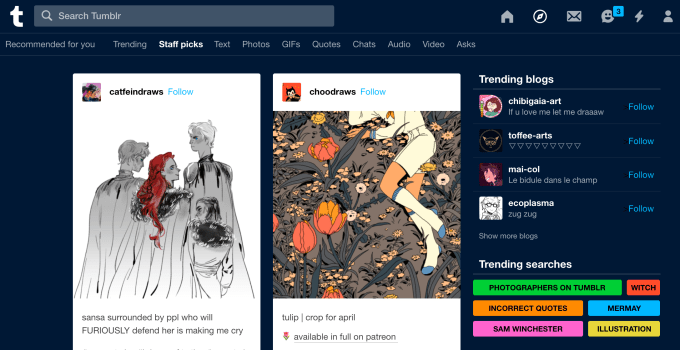
Tumblr has been squandered ever since it was bought for $1.1 billion in 2013 by Yahoo, now part of Verizon Media Group. Without proper strategy or talent, the blogging tool and early meme-sharing network fell into decline while Medium and Instagram soared. Yahoo wrote down Tumblr’s value by $230 million in 2016. Then last year, Verizon evicted Tumblr’s huge and loyal base of porn bloggers, leaving no viable platform for independent adult content creators and curators.

Now the Wall Street Journal reports that TechCrunch parent company Verizon is considering selling Tumblr.

Many immediately hoped it’d change hands to an owner who’d embrace pornography, such as social media darling Pornhub. BuzzFeed quickly reported that Pornhub VP Corey Price told it “We’re extremely interested in acquiring the platform and are very much looking forward to one day restoring it to its former glory with NSFW content.”

But given Pornhub parent company MindGeek’s record of exploitation of adult performers, that could be a disastrous proceeding for the world of kink.

Outside of Pornhub, MindGeek owns many of the top porn streaming sites like YouPorn, RedTube, and GayTube. Widespread piracy of porn films by those sites has made it tough for performers to earn a living. Many smaller studios or performers don’t have the legal or financial resources to file constant copyright infringement takedown notices, and MindGeek’s sites have been accused of allow re-uploads of videos days after taking them down.

The truly insidious part is that MindGeek has also bought up a bunch of the top porn production studios including Brazzers, Babes.com, and Digital Playground. MindGeek has been accused of allowing those studios’ films to be pirated by its own streaming sites. That lets MindGeek earn and keep streaming ad revenue without giving performers a proper cut.

The result has been a massive decline in the wages of porn performers and the number of films being made. This is turn pushes performers into more rough and extreme porn genres they’re not comfortable with, or into other sex work like prostitution that can be dangerous. We reached out to Verizon Media Group which told us “we don’t comment on rumors, and we’re awaiting comment on piracy issues from MindGeek.

If Pornhub and MindGeek succeed in acquiring Tumblr to strengthen their near monopoly, they could end up exploiting porn bloggers and the performers they post about too. You could imagine the photos and GIFs in diverse porn genres that populated Tumblr getting scraped and shared across MindGeek’s network of sites beyond the bloggers’ or performers’ control. Or Tumblr’s porn blogs could be used to funnel traffic towards MindGeek’s crooked streaming sites, exacerbating the piracy problem. A more optimistic view is would be that Pornhub’s newer features that let performers set up their own paywalls could help Tumblr curators earn money for themselves…and MindGeek. If Pornhub managed to turn Tumblr around, it would deal a stern lesson to platforms that were quick to ban adult content.

Since many of the puritanical US government’s elected officials likely see porn performers as godless heathens undeserving of protection, they’re unlikely to try to safeguard the profession with anti-trust or fair payout regulation. The SESTA-FOSTA law that went into effect last year intending to stop sex trafficking ended up pushing sites like Tumblr, Facebook, and Patreon towards tougher crack downs on porn, nudity, or even innocent discussions about sex within support communities for LGTBQ people and other underprivileged minorities.

Unfortunately, MindGeek’s massive footprint means it might be willing to bid the highest price for Tumblr. If Verizon does sell Tumblr, it should seek a buyer with an upstanding record for how it treats creators. But Verizon could also modernize Tumblr to emphasize what’s differentiated about it in today’s tech landscape versus when it was founded in 2007. Obviously, it could reopen to porn. But there are also family friendly opportunities.

Tumblr was one of the first big meme-sharing communities, even spawning its own format of screenshots of progressively crazier replies to a short text post. Yet in 2019, the top meme networks like Instagram, Reddit, and Imgur aren’t actually built for distributing massive ‘dumps’ of memes. They don’t understand which you’ve already seen to prevent showing re-runs, or how remixes of an original meme all relate and should be linked. Tumblr could build meme-specific features that give users more curational power than Reddit and Imgur, but more freedom of expression under less pressure than Instagram.

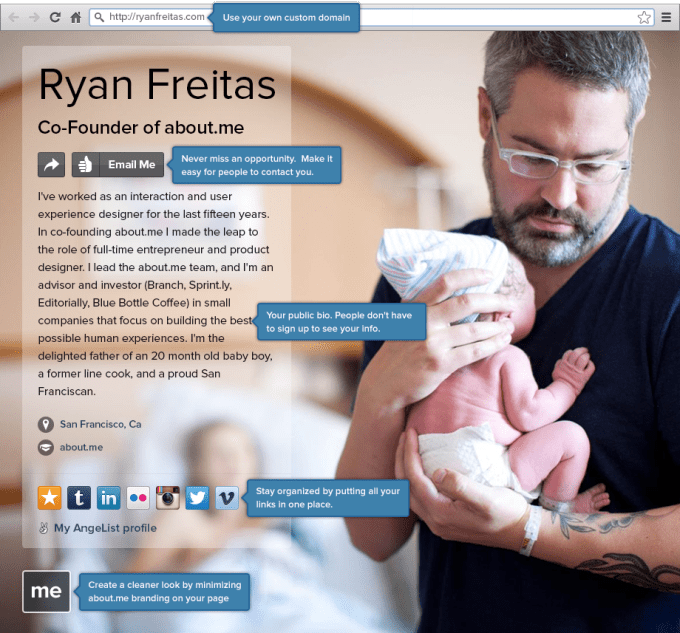
Tumblr could also be repurposed into a “your Internet homepage” platform. Most social networks are so desperate to keep users on their apps that they restrict or deemphasize the ability to promote your other web presences. They also often focus on a narrow set of content types like photos and videos on Instagram. This leaves users who don’t have their own dedicated websites without a central hub where they can freely express their identity and link to profiles elsewhere. This is a huge opportunity for Tumblr, which has already established itself an open-ended self-expression platform open to a variety of content formats.

AOL, which was combined with Yahoo to form the Verizon Media Group, previously owned a web profile platform called About.me, but sold it back to its creator Tony Conrad in 2013. Tumblr could assume much of About.me’s functionality as a directory of someone’s presences on other apps, and add that to its blogging platform. Instead of being locked into Instagram and Pinterest’s grids and standardized designs, Tumblr could let people create a homepage collage representing their prismatic identities.

Tumblr’s already been waning in popularity for years, so Verizon might not have a lot to lose by giving Tumblr a year to execute on this strategy before selling it for surely much less than it bought it for in 2013. Tumblr’s remaining users deserve better than the platform fading into nothing or being sold to the unscrupulous.

If any pornography industry professionals want to weigh in, please contact this article’s author Josh Constine via phone/text or Signal encrypted messenger at (585)750-5674 or joshc ‘at’ techcrunch dot com.

Watch SpaceX launch an ISS resupply mission and make a drone ship landing tonight

It’s time for another SpaceX launch, and though tonight’s (technically early tomorrow morning’s) isn’t as historic as the Falcon Heavy, it’s always impressive to see a Falcon 9 lift off with supplies for the International Space Station. But inclement weather threatens to delay delivery.

CRS-17 will be taking two tons of supplies and other items to the ISS, including the new Orbiting Carbon Observatory-3, an experiment to generate algae for human consumption on board (they won’t be trying it this time round), and a cool new multi-experiment microgravity platform called Hermes.

The full scientific payload is described in this NASA blog post from a few weeks back. Naturally the Dragon capsule (this one flew in August 2017 as well, it’s worth noting) also carries food and other supplies as well. The first stage will return to the surface and attempt to land on the drone ship Of Course I Still Love You, which will be cruising the Atlantic waiting for its passenger.

The launch is less than 24 hours after SpaceX issued a statement regarding the explosion of a Crew Dragon capsule during testing. The cause of the “anomaly” is yet to be determined, but it’s important to note that this is a completely different platform than the now proven and reliable Falcon 9/Cargo Dragon combo that has flown dozens of commercial missions.

Takeoff is set for 3:11 AM Eastern time in Cape Canaveral, with streams starting about 45 minutes beforehand — but there’s a good chance tonight’s launch will be scrubbed because of bad weather.

“We’ve been monitoring an area of disturbed weather over the Bahamas for the past few days, and that area of disturbed weather is encroaching upon the Space Coast,” said Air Force launch weather officer Will Ulrich in a NASA update. Right now there’s about a 40 percent chance of a successful launch.

This would be the second delay for CRS-17, which was put off from May 1st to the 3rd late in April. Don’t worry, though — the crew in the ISS has more than enough to get by for quite some time. The next launch opportunity would be within 24 hours, too. We’ll update this post if there’s a definite hold put on the launch.

If it’s a go, you’ll be able to watch the launch below:

Early Uber advisor Bradley Tusk looks back — and forward — on the eve of its IPO

Bradley Tusk’s story is well-known by now. A political operative who managed Michael Bloomberg’s successful third mayoral campaign, Tusk soon turned a bonus from his powerful boss into an opportunity that most people can only dream about. He launched his own business to help clients navigate turbulent regulatory waters, and one of his first calls came from Uber. Which paid him in stock.

Tusk has since used some of that wealth to create numerous other businesses, including the venture firm Tusk Ventures, which has more shiny new holdings, such as stakes in the e-scooter company Bird, the insurance company Lemonade, and the cannabis delivery startup Eaze.

We caught up with Tusk today after his return from a New York Met’s game to ask how he’s feeling about Uber’s IPO, what he’s expecting for tomorrow, and what moments he remembers best from his work with the now 10-year-old company.

TC: Your Uber shares have climbed astronomically over the years. You’d said you were looking to cash out a big part of your stake when SoftBank acquired 15 percent of the company last year. Are you selling the rest tomorrow?

BT: I still have a lock-up, but when that’s over, I’ll sell as it makes sense.

TC: Uber is reportedly offering 180 million shares at $44 to $50 apiece for its public debut, meaning its valuation could top $91.5 billion. How important is IPO pricing?

BT: On the one hand, it’s everything because you’re putting a number out there that’s in some ways subjective, and if it works, you work [as a banker] and if it doesn’t, you don’t. It’s the moment of truth in some ways.

But if you decide, I’d rather price [the offering] at 10 percent less because it will result in a 20 percent increase [right away], that’s not an unreasonable strategy, and as someone who has to wait six months, I don’t mind it at all.

TC: Looking at Uber’s core platform and its “other bets,” where do you expect to see the most growth?

BT: I’d say the other stuff for two reasons. First, Uber Freight could be scaled to a bunch of vertical beyond logistics for trucking. I also think Uber being Uber that they’ll come up with something we don’t know about yet, like they’ve done three times now. And when they do, that will account for a lot of growth.

TC: Uber last month transferred some of the cost of developing self-driving cars onto outside investors Toyota, Denso, and SoftBank. Was that the right move? It sounded at some point like Dara Khosrowshahi was thinking about selling the business outright.

BT: Yes, because I think autonomous is no any longer believed to be a market where the first [mover] wins. People understand more segments and issues and that the cost of development is higher than anyone ever anticipated. Autonomous vehicles will be developed in different ways by different people and [these players] will all be adding partners and spreading risk and bringing in additional resources . . .

TC: And will they work closely with cities? Can Uber gain traction with its self-driving technologies if it doesn’t? Can any of these companies?

BT: On the one hand, Uber has more experience dealing with city government than anyone else working on autonomous vehicles and that counts for something. We saw what happened when Amazon tried to deal with local politics in New York.

Once you scale, I think you’ll have federal pre-emption. It’s one thing for every city, town, and state to set their own traffic rules, but if we’re in a moment where some cars are autonomous and some aren’t and we have arbitrary differences — say you realize you’re in New Jersey and so have to have your hands on the wheel — [it’ll be a mess]. If Congress were a rational, functional, deliberate [governing body], it would [start figuring this out].

TC: Assuming it doesn’t, how much does that slow down these efforts?

BT: If it doesn’t, that’s when the notion of dealing with cities and states really comes into play. The downside is even if you had everyone [in local government] working with you, the odds of them adopting the same rules [across cities and states] seems unlikely, but these companies may have to make it work, at least as a backup.

TC: Have you stayed in touch with Travis?

BT: Yes.

TC: What do you think of his current plans to turn more empty or underused real estate in places that on-demand services, like fully equipped kitchens that restaurants can use to fulfill takeout demand

BT:  I think it’s really interesting, especially the food piece, where you have these two trends moving along at the same time. First, people seem not to want to cook as much as they used to, and I think that’s a full-on change in society, not a fad or a blip. Also, restaurants’ margins are really low and the cost of operating restaurants is really high. So I think what we’ll see are more restaurants that maintain one physical restaurant as almost a branding exercise, a loss leader that helps them build their name — then they’ll make the money on delivery.

TC: Are you investing in these types of businesses, too?

BAT: I don’t think Travis is raising money, as I understand it. [Laughs.] But I suspect that at some point, we’ll do some work with Travis one way or another.

TC: Lyft and Uber use different methodologies to account for “Active Riders.” Uber defines it as a unique consumer who completes a ride share or rents a scooter or has an Uber Eats meal delivered at least once in any given month, then averages that number of monthly users for the quarter. Lyft, which of course doesn’t have a food delivery service yet, just defines active riders as all riders who take at least one ride on its platform during a quarter. Which better represents engagement, in your view?

BT: You could argue that Lyft is now where you’d expect a public company to be, where was you’re saying is, this is the [total addressable market]. Once a company is public, it’s much more, these are our earnings, this is how our performance impacted our revenue. You could argue that Lyft is where Uber may end up having to go [in terms of how it calculates this figure].

TC: Riders use both apps, drivers use both apps. Do you ever see these companies merging? As you likely remember, they talked in 2014, Travis confirmed in an interview in 2016, but he said disagreements over pricing ultimately doomed the deal.

BT: I don’t even know if they could get through the FTC for approval if you add up their collective share in the ride-share marketplace. And now that they’re both public companies, the ability to challenge them will be harder, unless Waymo or some other robo company tries taking away their market share.

TC: Do you see Uber making money at some point? 

TC: Yeah. I think it may be the result of more and more partnerships around ride sharing in different markets. I also think they’ll be able to take the Uber Eats and Uber Freight concepts and keep building out other things from these. Eats gets into package delivery, for example. If all of those things come to fruition, Uber will be profitable.

TC: How many years did you advise Uber?

BT: I started in 2011, and finished in 2015.

TC: What are you proudest of? 

BT: Even more than a particular market — because eventually we won all over the U.S. — it’s this notion that if you give people a really easy way to advocate for themselves, they’ll get involved. The notion that everyone is apathetic isn’t actually true, and we used that to fight taxis everywhere, including when Uber was not a valuable company and we were taking on the [much-deeper-pocketed] taxi industry.

Our thesis was right and the execution all-in-all worked, and it’s really one of the insights that’s now propelling the work in mobile voting that I’m doing. I’m operating on the assumption that if you increase turnout by making it easier and more convenient for people to engage in the process, politicians will change their behavior.

TC: Travis Kalanick is obviously a strong leader and seemingly stubborn, too. What was one suggestion you made to him that he didn’t take yet could have changed things for the company, in potentially a meaningful way?

BT: This wasn’t to him, but I suggested a few years ago that Uber provide benefits for all drivers. At the time, it wasn’t met with a lot of optimism, but i think the world is heading in that direction anyway, and I think they could have saved money by having a lower churn rate than what they have, as well as improved their optics and reputation.

TC: You have a lot of promising bets in your portfolio right now. Do you see any of these getting anywhere near the scale of Uber or is this a once-in-a-decade type company?

BT: i think something can. I hope something in my portfolio in will. I think every  VC will tell you that every day, they see deals with [total addressable markets] in the low trillions. The number of companies that can convert that into revenue [and reach an Uber-like valuation] is few and far between, but someone will pull it off, in some sector.

TC: The company is hitting the market soon. What are you doing to celebrate?

BT: When I sold a chunk of my shares to SoftBank — close to half — psychologically it had the impact [that I would otherwise experience tomorrow]. You know, we were able to benefit from this thing. Anything I wanted to do could then happen. So it isn’t that it’s not a huge deal. I just think it would be ten times more anxiety producing for me if that hadn’t happened.

Life-size robo-dinosaur and ostrich backpack hint at how first birds got off the ground

Everyone knows birds descended from dinosaurs, but exactly how that happened is the subject of much study and debate. To help clear things up, these researchers went all out and just straight up built a robotic dinosaur to test their theory: that these proto-birds flapped their “wings” well before they ever flew.

Now, this isn’t some hyper-controversial position or anything. It’s pretty reasonable when you think about it: natural selection tends to emphasize existing features rather than invent them from scratch. If these critters had, say, moved from being quadrupedal to being bipedal and had some extra limbs up front, it would make sense that over a few million years those limbs would evolve into something useful.

But when did it start, and how? To investigate, Jing-Shan Zhao of Tsinghua University in Beijing looked into an animal called Caudipteryx, a ground-dwelling animal with “feathered forelimbs that could be considered “proto-wings.”

Based on the well-preserved fossil record of this bird-dino crossover, the researchers estimated a number of physiological metrics, such as the creature’s top speed and the rhythm with which it would run. From this they could estimate forces on other parts of the body — just as someone studying a human jogger would be able to say that such and such a joint is under this or that amount of stress.

What they found was that, in theory, these “natural frequencies” and biophysics of the Caudipteryx’s body would cause its little baby wings to flap up and down in a way suggestive of actual flight. Of course they wouldn’t provide any lift, but this natural rhythm and movement may have been the seed which grew over generations into something greater.

To give this theory a bit of practical punch, the researchers then constructed a pair of unusual mechanical items: a pair of replica Caudipteryx wings for a juvenile ostrich to wear, and a robotic dinosaur that imitated the original’s gait. A bit fanciful, sure — but why shouldn’t science get a little crazy now and then?

In the case of the ostrich backpack, they literally just built a replica of the dino-wings and attached it to the bird, then had the bird run. Sensors on board the device verified what the researchers observed: that the wings flapped naturally as a result of the body’s motion and vibrations from the feet impacting the ground.

The robot is a life-size reconstruction based on a complete fossil of the animal, made of 3D-printed parts, to which the ostrich’s fantasy wings could also be affixed. The researchers’ theoretical model predicted that the flapping would be most pronounced as the speed of the bird approached 2.31 meters per second — and that’s just what they observed in the stationary model imitating gaits corresponding to various running speeds.

You can see another gif over at the Nature blog. As the researchers summarize:

These analyses suggest that the impetus of the evolution of powered flight in the theropod lineage that lead to Aves may have been an entirely natural phenomenon produced by bipedal motion in the presence of feathered forelimbs.

Just how legit is this? Well, I’m not a paleontologist. And an ostrich isn’t a Caudipteryx. And the robot isn’t exactly convincing to look at. We’ll let the scholarly community pass judgment on this paper and its evidence (don’t worry, it’s been peer reviewed), but I think it’s fantastic that the researchers took this route to test their theory. A few years ago this kind of thing would be far more difficult to do, and although it seems a little silly when you watch it (especially in gif form), there’s a lot to be said for this kind of real-life tinkering when so much of science is occurring in computer simulations.

The paper was published today in the journal PLOS Computational Biology.

Activision Blizzard has five franchises lined up for its new Call of Duty esports league

Activision Blizzard said it has lined up five franchises for a new, city-based Call of Duty esports league.

Atlanta, Dallas, New York, Paris and Toronto will all play host to franchise teams that will compete in a professional league based on what is perhaps Activision Blizzard’s most successful title, the company announced after its earnings call earlier today.

Each city is partnering with existing Overwatch League team owners to leverage the existing framework that Activision has labored over for the past few years to lay the groundwork for a global, city-based Call of Duty league, the company said.

The first teams are Atlanta Esports Ventures, the joint venture owned by Cox Enterprises and Province Inc.; the Envy Gaming esports team which has been active in Call of Duty competitive play since 2007 and with Dallas Fuel Overwatch league team; New York’s Sterling.VC, a sports media company backed by Sterling Equities (owners of the New York Mets); c0ntact Gaming, which owns the Overwatch League team Paris Eternal and the Paris-based Call of Duty team; and Toronto’s OverActive Media.

“The upcoming launch of our new Call of Duty esports league reaffirms our leadership role in the development of professional esports. We have already sold Call of Duty teams in Atlanta, Dallas, New York, Paris and Toronto to existing Overwatch League team owners, and we will announce additional owners and markets later this year,” said Bobby Kotick, chief executive of Activision Blizzard. “Our owners value our professional, global city-based model, the success we have had with broadcast partners, sponsors and licensees, and the passion with which our players have responded to our events.”

The announcement came on the heels of an earnings announcement that saw the company report earnings of $1.825 billion for the quarter, beating its outlook of $1.715 billion but down slightly from the year ago period when the company brought in almost $2 billion.

The company credited esports and its  Overwatch League and the newly announced Call of Duty city-based league (including selling its first five teams to cities) for contributing to the better-than-expected numbers.

A quiet London-based payments startup just raised among the biggest Series A rounds ever in Europe

You probably haven’t heard of Checkout, a digital payments processing company that was founded in 2012 in London. Apparently, however, investors have been keeping tabs on the low-flying company and like what they see. Today, Checkout announced that it has raised $230 million in Series A funding at a valuation just shy of $2 billion co-led by Insight Partners and DST Global, with participation from GIC, the Singaporean sovereign-wealth fund; Blossom Capital; Endeavor Catalyst; and other, unnamed strategic investors.

It’s the first institutional round for the company; it’s also one of the the biggest Series A rounds ever for a European company.

What’s so special about Checkout that investors felt compelled to write such big checks? In a sea filled with fin-tech startups, it’s hard to know at first glance what differentiates it, or whether investors merely spy a huge opportunity, particularly given the company’s recent revenue numbers.

Checkout helps businesses — including Samsung, Adidas, Deliveroo, and Virgin, among others — accept a range of payment types across their online stores around the world.  According to the WSJ, the fees from these services adds up to a lot, too. It says Checkout’s European business generated $46.8 million in gross revenue and $6.7 million in profit in 2017, information it dug up through Companies House, the United Kingdom’s registrar of companies.

It’s obviously part of two huge trends that seem to be lifting all boats, too — that of the ongoing boom in online shopping, and the growing number of businesses using online payments. Little wonder that investors poured into payments startups last year more than four times what they invested in them in 2017 ($22 billion, according to Dow Jones VentureSource data cited by the WSJ).  Little wonder, too, that payments startups that have gone public are faring well, including the global payments company Adyen, which IPO’d on the Euronext in June of last year and has mostly seen its shares move in one direction (upwards) since. The company, valued at $2.3 billion by investors in 2015, is now valued at nearly $21 billion.

Though Checkout’s Series A is stunning for its size, according to Dealroom data, it isn’t the largest for a European company, though nearly.

In 2015, the U.K.-based biotech company Immunocore closed on $320 million in Series A funding. In 2017, another U.K. fintech, OakNorth, a digital bank that focuses on loans for small and medium enterprises, raised $200 million in Series A funding. (It has gone on to raised roughly $850 million altogether.)

Meanwhile, TradePlus24, a two-year-old, Zurich, Switzerland-based fintech company raised $120 million in Series A funding in January of this year. TradePlus24 sells to small and mid-size companies, insuring their account receivables against default and selling them secured credit lines.

Microsoft makes a push to simplify machine learning

Ahead of its Build conference, Microsoft today released a slew of new machine learning products and tweaks to some of its existing services. These range from no-code tools to hosted notebooks, with a number of new APIs and other services in-between. The core theme, here, though, is that Microsoft is continuing its strategy of democratizing access to AI.

Ahead of the release, I sat down with Microsoft’s Eri Boyd, the company’s corporate vice president of its AI platform, to discuss Microsoft’s take on this space, where it competes heavily with the likes of Google and AWS, as well as numerous, often more specialized startups. And to some degree, the actual machine learning technologies have become table stakes. Everybody now offers pre-trained models, open-source tools and the platforms to train, build and deploy models. If one company doesn’t have pre-trained models for some use cases that its competitors support, it’s only a matter of time before it will. It’s the auxiliary services and the overall developer experience, though, where companies like Microsoft, with its long history of developing these tools, can differentiate themselves.

Microsoft’s Eric Boyd

“AI is really impacting the way the world does business,” Boyd said. “We see 75% of commercial enterprises are doing more with AI in the next several years. It’s tripled in the last couple years, according to Gartner. And so, we’re really seeing an explosion in the amount of work that’s coming from there. As people are driving this forward, as companies are driving this forward, developers are on the front lines, trying to figure out how to move their companies forward, how to build these models and how to build these applications, and help scale with all the changes that are moving through this.”

What these companies — and their developers — need is more powerful tools that allow them to become more productive and build their models faster. At Microsoft, where these companies are often large enterprises, that also includes being able to scale up to the needs of an enterprise and offer the security guarantees they need.

As companies start adopting machine learning, though, they are now also getting to a point where they have moved from a few tests to maybe running a hundred models in production. That comes with its own challenges. “They are trying to figure out how to manage the life cycle of these models,” he said. “How do I think of the operational cycle? How do I think about a new model that I’m ready to deploy? When is it ready to go?”

Only a few years ago, the industry started moving to a DevOps model for managing code. What Microsoft essentially wants to move to is MLOps for managing models. “It’s very similar to DevOps, but there’s some distinct differences in terms of how the tools operate,” Boyd noted. “At Microsoft, we’re really focusing on how do we solve these problems to make developers way more productive, using these enterprise tools to drive these changes that they need across their organization.” This means thinking about how to bring concepts like source control and continuous development to machine learning models, for example, and that will take new tools.

It’s no surprise then that adding more MLOps capabilities is a major part of today’s releases. The company is integrating some of these functions into Azure DevOps, for example, that allows them to trigger release pipelines. The company is also giving developers and data scientists tools for model version control, for example, to track and manage their assets and to share machine learning pipelines.

These are very much tools for advanced machine learning practitioners, though. On the other side of the spectrum, Microsoft also announced a number of automated machine learning tools, including one that essentially automates all of the processes, as well as a visual model builder, which grew out of the Azure ML Studio. As Boyd told me, even companies like British Petroleum and Oregon’s Deschutes Brewery (try their Black Butte Porter if you get a chance) now use these tools.

“We’ve added a bunch of features into automated machine learning to simplify how people are trying to use this kind of work,” Boyd noted.

Microsoft today also launched a number of new services in its Cognitive Services lineup, including a new personalization service, an API for recognizing handwriting and another one for transcribing conversations with multiple speakers. The personalization service stands out here because it uses reinforcement learning, a different machine learning technique from most other Cognitive Services tools, and because it is far easier to implement than similar services. For business users, there’s also the Form Recognizer, which makes extracting data from forms easy.

What’s more interesting that the specific features, though, is that Microsoft is shifting its emphasis here a little bit. “We’re moving away from some of the first-level problems of ‘here’s the table stakes, you have to have an AI platform,’ to much more sophisticated use cases around the operations of these algorithms, the simplification of them, new user experiences to really simplify how developers work and much richer cognitive services,” Boyd explained.