San Diego’s eSub raises $12 million for its construction management software

The San Diego-based software developer eSub Construction Software has raised $12 million in a new round of financing for its project management platform for contractors.

The company’s funding was led by Catalyst Investors with participation from previous investor Revolution Ventures.

Software for the construction industry is becoming a big business and attracting more capital from investors. Construction management software vendor Procore is now worth $3 billion, thanks to a $75 million investment late last year from Tiger Global.

Indeed, unicorns are galloping across the construction industry these days. SoftBank  kicked off 2018 by investing $865 million in Katerra — one of many early mega-deals from the firm’s giant Vision Fund — which touts itself as a one-stop shop for everything from planning to permitting to filling new building construction. In November, another software developer that was contending for the construction market, PlanGrid, was acquired by Autodesk in an $875 million transaction.

Slotting in the space where project developers outsource to contractors and crews, eSub provides oversight on operations in the field for developers. The company’s software is integrated with its strategic backer, Autodesk, as well as construction estimation and accounting software to provide an overview and budget for the entire construction process from design through the build on-site.

“eSUB takes a differentiated approach to solving the needs of the construction industry. By creating an easy-to-use, purpose-built platform, the company empowers trade contractors to have their own system of record and productivity optimization solutions,” said Bihler. “We’re excited to be part of this next stage of growth.”

Last year, eSub estimates that investors put roughly $3.1 billion in financing into construction technology companies, but the startup maintains that the bulk of those investments overlooked trade contractors, which represent some $1.1 trillion of construction spending.

“Trade contractors are the lifeblood of the construction industry,” said Wendy Rogers, founder and CEO of eSUB. “They are the true builders who construct commercial construction projects. However, they are underserved by the majority of disjointed point solutions in the marketplace and are forced to utilize systems that are developed for general contractors.”

Agritech startup TaniGroup raises $10M to help Indonesia’s farmers grow

In 2016, former World Bank analyst Eka Pamitra teamed up with five friends to start a business that would help farmers in their native Indonesia. Today their company — TaniGroup — closed a $10 million Series A round that’s aimed at expanding its service nationwide with the support of the government.

TaniGroup works for more than 25,000 farmers in Indonesia to help them get fairer rates for their crops, and grow their businesses. It does that in two ways: it operates a b2b platform that helps farmers sell their produce direct to retailers, which reaches a registered user base of 400 SMEs and 10,000 consumers. The company also manages a microloan fund that grants farmers access to working capital for growth.

TaniHub is the sales service and TaniFund is, as the name suggests, the microloan fund. The fund arrived in 2017 when the product had landed initial traction, and it is registered with the Financial Services Authority (OJK) and a member of Indonesian Fintech Lenders Association (AFPI).

Pamitra said a combination of factors mean TaniGroup can help farmers grow their overall income by 60 percent or more. That’s is driven more by sale volumes than price, the latter of which he said is usually 30-40 percent higher than traditional reseller channels.

“The most important thing is not necessarily pricing, farmers care more about the certainty of sales,” he explained to TechCrunch in an interview. “Many are afraid to plant too many crops because local aggregators or middlemen don’t have the capacity to absorb everything.”

“The fund focuses on preferred farmers we want to fund to help produce more or release them from the middlemen that currently fund them,” Pamitra added.

While middlemen have a reputation for operating like cartels and adding costs and complications, Pamitra said that in many cases they are actually farmers who help coordinate sales with others. For example, going to other farmers if they need additional produce to fulfill a higher-than-usual order that they can’t complete themselves.

“Some middlemen are the smartest in their group of farmers. We try to empower them through TaniFund; they often start teaching others their tips and can have a positive impact,” he said.

The company plans to spend its new money on general growth, which will include hiring more staff, improving the tech, expanding logistics and upgrading warehouses. That’s much needed since the government `has tapped the startup to help improve Indonesia’s farming community — Pamitra said TaniGroup has been given access to government research on farmers which includes a database of some 3 million farmers. (President Joko Widodo previously namechecked the startup as a company that is helping Indonesia’s agricultural industry.)

For now, TaniGroup’s ambitions are firmly focused on Indonesia but Pamitra said there is a belief that the business can expand overseas. Already it has exported orders to markets like Switzerland, Singapore, Malaysia and beyond, but there is real potential to expand the farmer network into new markets, he said. Officials from the Malaysia government have already expressed interest in making such a move, but Pamitra admitted that “there’s a lot to do here” in Indonesia first.

TaniGroup raised its Series A from Openspace Ventures — which led the round — Intudo Ventures, Golden Gate Ventures and The DFS Lab, a fintech accelerator that’s funded by the Bill and Melinda Gates Foundation. The startup previously raised an undisclosed seed round last April from Alpha JWC Ventures and several angel
investors.

Equalum grabs $18M Series B to help companies ingest data faster

Equalum, an Israeli startup, which helps companies gather data from a variety of enterprise sources, announced an $18 million Series B investment today.

The round was led by Planven Investments . Other participants included United Ventures and prior investors Innovation Endeavors and GE Ventures along with a group of unnamed individuals. Today’s haul brings the total raised to $25 million, according to data provided by the company.

Equalum CEO and founder Nir Livneh says his company essentially acts as the data pipes to feed artificial intelligence, machine and more traditional business intelligence requirements. “Equalum is a real-time data ingestion platform. The idea of the platform is to be able to [gather] data coming from a bunch of enterprise system sources and be able to centralize that data and send it in real-time into analytic environments and feed those analytic environments,” Livneh explained.

He sees the money from this round as a way to continue to expand the original vision he had for the company. His approach in many ways is a classic Series B play. “I think the original thesis was validated. We have proven that we can go into Fortune 100 companies and get our solution adopted quickly,” he said. The next step is to expand beyond the original set of several dozen large customers and accelerate growth.

The company was founded in 2015 in Tel Aviv in Israel. It still maintains its R&D arm there today with sales, marketing and management in Silicon Valley. Interestingly, its first customer was GE, which was also an early investor via GE Ventures.

Livneh says that he sees lots of room to grow in this market, which he says is still dominated by legacy vendors. He believes he can swoop in and replace aging offerings by offering a more modern and streamlined approach to data collection. Time will tell if he is right.

Under-the-radar payments app True Balance just clocked $100M in GMV in India

Away from the limelight of urban cities, where an increasingly growing number of firms are fighting for a piece of India’s digital payments market, a South Korean startup’s app is quietly helping millions of Indians pay digitally and enjoy many financial services for the first time.

The app, called True Balance, began its life as a tool to help users easily find their mobile balance, or topping up pre-pay mobile credit. But in its four years journey, its ambition has significantly grown beyond that. Today, it serves as a digital wallet app that helps users pay their mobile and electricity bills, and it also lets users pay later.

One thing that has not changed for the parent company of True Balance, BalanceHero, which employs under 200 people, is its consumer focus. It is strictly catering to people in tier two and tier three markets — often dubbed as India 2 and India 3 — who have relatively limited access to the internet, and lower financial power. And it remains operational just in India.

Even as India is already the second largest internet market with more than 500 million users, more than half of its popular remains offline. In recent years, the nation has become a battleground for Silicon Valley giants and Chinese firms that are increasingly trying to win existing users and bring the rest of the population online.

And like many other companies, BalanceHero’s bet on India is beginning to pay off. The startup told TechCrunch today that it has clocked $100 million in GMV sales and has amassed about 60 million registered users. Yongsung Yoo, a spokesperson for the startup, added that BalanceHero, which has raised $42 million to date, is also nearing profitability.

The South Korean firm’s playbook is different from many other players that are racing to claim a slice of India’s burgeoning digital payments market. True Balance competes with the likes of Paytm, MobiKwik, Google, Amazon, and Walmart-owned Flipkart, though its competitors are still largely catering to the urban parts of India.

In the last two years, many firms have begun to explore smaller cities and towns, but their services are still too out-of-the-world for local residents. Raising awareness about digital services is a big challenge in such markets, Yoo said, so the startup is relying on existing users to help others make their first transactions and in paying bills.

Yoo said the startup rewards these “digital agents” with cashback and other benefits. For these digital agents, many of whom do not have a day job, True Balance has emerged as a side project to make extra money.

Later this year, Yoo said the startup, which recently also added support for UPI in its service, will open an e-commerce store on its app and also offer insurance to users. To accelerate its growth and expansion, True Balance is in final stages of raising between $50 million to $70 million in a new round that it expects to close in July this year, Yoo said.

Lian Li’s DK-05 is a standing desk with a cool twist

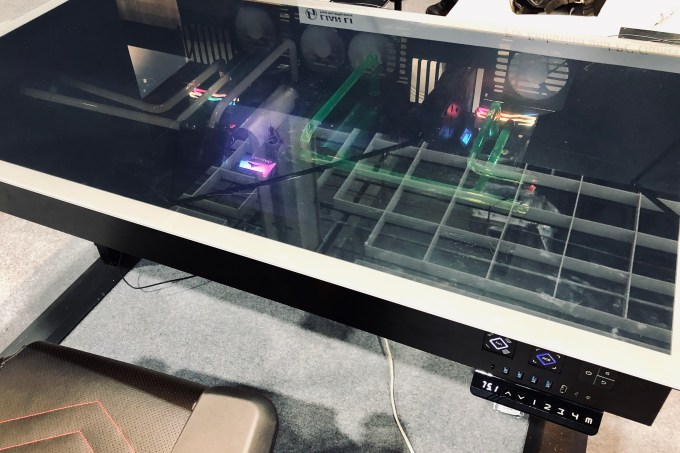
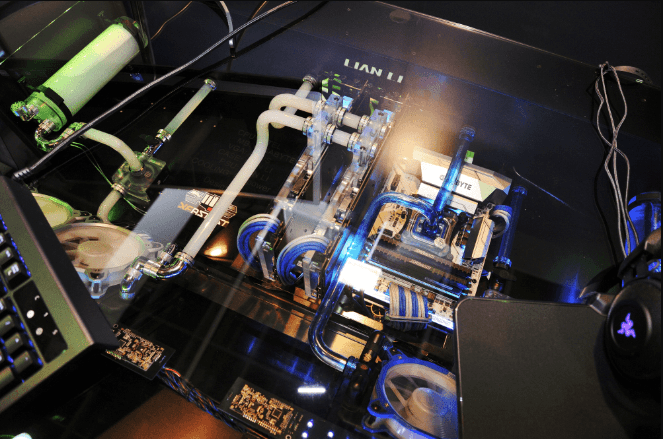
Even before Computex officially started yesterday in Taipei, Lian Li’s combination chassis and standing workstations were already turning heads as attendees got to take a look at their interiors before the glass tops were installed. The insides of the DK-05 were clearly visible, looking like miniature water parks with a labyrinthine arrangement of tubes and lights.

The inside of Lian Li's DK-05 combination workstation chassis


The desks’ interiors aren’t completely obscured once the top is in place. Their tempered glass tops are foggy when the workstations are turned off, but once switched on, everything inside—its liquid cooling system, motherboards, graphics cards, motherboards, fans, reservoirs, pumps and whatever else else you add in—are clearly visible. The bright lights inside Nangang Exhibition Center made it hard to see, but the photo above from Lian Li’s website gives you a better idea of the full effect.

Lian Li's DK-05 workstation and chassis lets you see the interior underneath its tempered glass

The larger DK-05 has USB 3.1 Type-c, USB 3.0 and HDMI ports and a 140cm by 78cm surface, making space for two monitors and plenty of peripheals (though you probably won’t want to cover it up). It boasts space for two extended ATX motherboards and a motorized height adjustment feature that takes it from 69 to 118 cm. You can preset four heights, useful if more than one person is using the workstation (and with a pricetag of about $1,999, it makes sense to share). A smaller version, the DK-04, costs about $1,300.

Northwestern Mutual has carved out $150 million for another fintech and insurance investment fund

Northwestern Mutual is setting aside $150 million for a second venture fund.

“We’re committed to transforming the client experience to drive change within the financial services industry,” said Souheil Badran, executive vice president and chief innovation officer, in a statement. “This additional capital will allow us to build on the success of Northwestern Mutual Future Ventures and invest in new technologies that have the ability to accelerate growth and advance innovation so we can create what’s next for our clients, financial representatives and employees.”

Criteria for the fund won’t change. It will still invest between $500,000 and $5 million ins Series A or B stage deals focused on technologies that can address changing customer preferences; new user experiences for the insurance industry and consumers; digital health; data and analytics technologies that can power new products and services; and other strategic objectives.

Since its launch in 2017, Northwestern Mutual Future Ventures has backed 14 startups and invested $43 million. The much larger commitment the firm is making through this second investment vehicle proves that insurers are waking up to the importance of new technology companies in the old insurance business.

Kustomer raises $40M more led by Tiger Global for its omnichannel approach to CRM

On the heels of customer service company Zendesk announcing an acquisition to expand its omni-channel offering, one of the upstarts nipping at its heels has announced a round of funding to continue growing its own platform.

Kustomer, a customer service startup that calls in data from multiple external channels and the software and apps that a company uses to manage its business internally and speak to customers externally, has raised a Series D of $40 million. led by Tiger Global with participation also from previous investor Battery Ventures. The plan will be to bring in more automation and AI processes to reduce more of the repetitive tasks around CRM — a move specifically aimed to help it target large enterprise customers — and to expand further into Europe, CEO Brad Birnbaum said in an interview.

The valuation is not being disclosed with this round, although Birnbaum noted that it is a “very significant uplift” on its previous valuation. Pitchbook, as one data point, notes that in its Series B, it was valued at around $121 million post-money. Adding another $75 million to that (Series C and D together), it’s close to $200 million, although that’s likely lower than its actual valuation now, given that uplift. It has raised just under $114 million to-date.

More tellingly, Kustomer has been on a fundraising tear in the last twelve months. It was just in January of this year that it announced a Series C of $35 million. Before that, in June 2018, it raised $26 million. (It was not on the hunt to raise another round so soon, and didn’t need the funding immediately, but it was approached by Tiger with an offer Kustomer did not want to pass up.)

In that time, Birnbaum — who co-founded the startup with Jeremy Suriel in 2015 — has told me multiple times about how Kustomer was increasingly winning more clients off Salesforce and Zendesk, with revenues growing by about 350 percent in the process with customers including Ring, Rent the Runway, Glossier, Away, Glovo, Slice, Abercrombie & Fitch and UNTUCKit.

So you might guess that Kustomer’s traction, along with a general swing in terms of what enterprises are looking for in a customer service solution, has had something to do with Zendesk’s own turn towards a more omni-channel approach.

Birnbaum and Suriel know something about how the bigger incumbents work: a previous startup they had worked on together, Assistly (where Birnbaum had been a founder too), was acquired by Salesforce.

Birnbaum does not shy away from talking about how Kustomer is faring against competitors, or why its platform is better than theirs.

“We are most proud of the fact that we do omnichannel really well. On our platform you have a threaded conversation, whereas on others the same input might resolve in four separate tickets,” he said. “In many ways, from a product perspective, I think Zendesk is chasing us, but our product is about ten years younger.”

Kustomer’s decision to use some of this latest investment to continue building out its automation and AI capabilities lines up with bigger developments that we have seen in enterprise software. Birnbaum, indeed, describes Kustomer’s automation of routine tasks as “a form of RPA” (robotic process automation, which has been one of the fastest-growing areas in enterprise software). “If you’re a retailer and someone ordered a shirt and it’s too small, through the Kustomer platform you can both take the order but also fix it if it’s not the right size, or take the return, rather than passing the customer on to another department,” he said. “You will start to see more and more of these developments as we continue building a system of record beyond a simple CRM tool.”

The next step, he said, will be building even more tools to understand the customer. “We are not a marketing platform today, but already people are using it that way, for example to find recently unhappy customers to send them offers, or do promotional outreach to those who have dropped off on their purchases.”

In addition to Tiger Global joining as an investor, Wendi Sturgis, the CEO of Yext Europe and Chief Client Officer at Yext, has joined Kustomer’s Board of Directors.

“Kustomer is one of the fastest-growing startups in its space, and I am pleased to join them on their mission to redefine what it means to truly put the customer first, radically shift the approach to customer management and ultimately manifest this in state-of-the-art marketing automation,” she said in a statement. “Plus, when it comes to leadership teams, I am drawn most to disruptors — but only those with the highest integrity. I could not have chosen better, in coming to work with Brad Birnbaum and the incredible team he has assembled.”


ASUS leans into dual-screen laptops with the ZenBook Pro Duo, featuring two 4K touchscreen displays

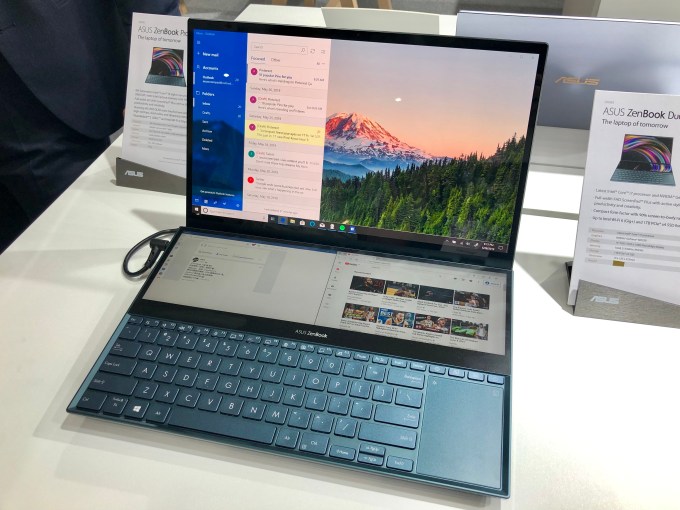
Last year during Computex, ASUS introduced the ZenBook Pro 14 and 15, with a touchscreen in place of a regular touchpad. This year, it took the concept of a built-in second screen and went much further with it, unveiling new versions of the ZenBook with even larger second screens. Instead of just replacing the touchpad, the 14-inch second screen on the new ZenBook Pro Duo extend all the way across the device above the keyboard, acting as both an extension and companion to the main 4K OLED 15.6-inch display.

The dual-screen ASUS ZenBook Pro Duo, announced at Computex in Taipei

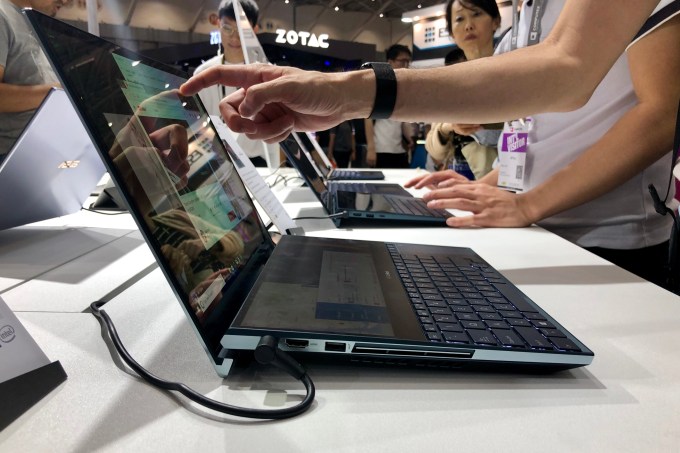
The touchpad-replacement on last year’s ZenBook Pros seemed like a novelty, with the bonus of giving you a small, extra screen for messaging apps, videos and simple utility apps like a calculator. The much larger size of the second screen on the ZenBook Pro Duo, however, enables many new possibilities. Both of its screens are touchscreens and moving apps between the windows with your finger takes a little bit of getting used to, but it is simple and intuitive (frequently-used apps can also be pinned).

During a demo, an ASUS employee showed me how it can support dual displays of maps: the larger screen giving you a bird’s eye view of the geography, while the second screen allows you to zone in on streets and locations. But the ZenBook Pro Duo’s main draw is multitasking, enabling you to monitor your email, send messages, watch videos, keep an eye on news headlines and other tasks while you use the main screen to for apps like Office 365 or video conferences.

Basically, the ASUS ZenBook Pro Duo 14 is designed to anyone who likes using a second monitor (or is tired of propping up their phone or tablet as an improvised second screen), but also wants a PC with more portability. At 2.5kg, the ZenBook Pro Duo is not the lightest laptop around, but still reasonably lightweight considering its specs and two screens.

The dual-screen ASUS ZenBook Pro Duo

Its Intel Core i9 HK processor and Nvidia RTX 20

60 ensures that both screens run smoothly, even with multiple tabs and apps open. ASUS also partnered with Harman/Kardon for its speakers, which means sound quality should be better than average. A smaller version, the ZenBook Duo, is also available, with Core i7 and a GeForce MX 250 and HD instead of 4K on both its displays.

ASUS hasn’t announced pricing and availability yet.

NYC subway riders will be able to swipe in with Apple Pay starting Friday

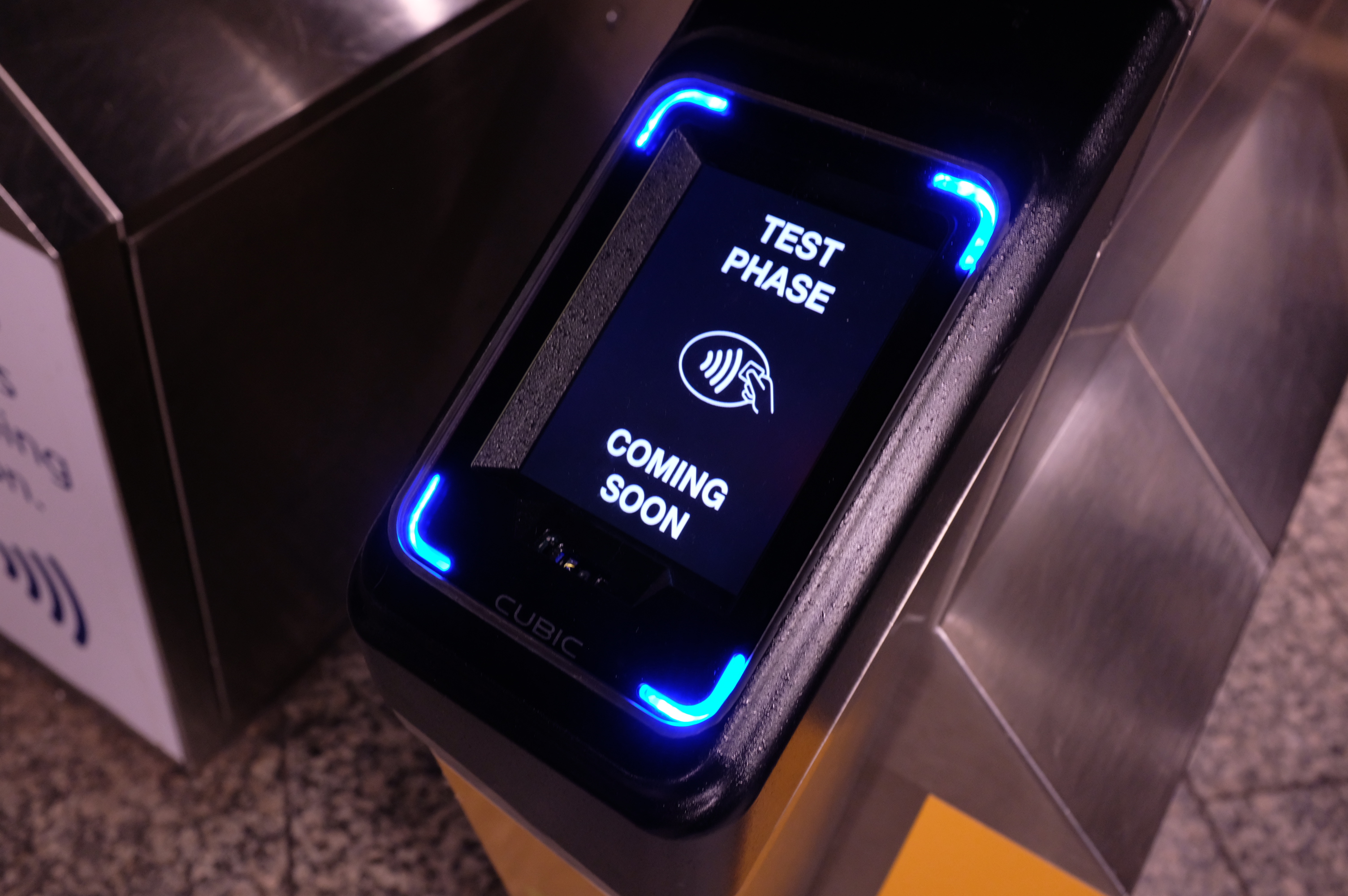
If you frequent the New York City subway’s 4, 5, 6 line, you’ve probably seen the new terminals at a variety of stations like Union Square and Grand Central. Located between turnstiles, they’ve all been sporting a curious “Test Phase/Coming Soon” screen. That finally changes this week.

Google already announced its mobile pay solution would be arriving this week, and now its chief competitor is getting in on the action. Apple Pay is hitting select stations this Friday, May 31. When that kicks in, riders will be able to swipe their iPhone or Apple Watch to catch a ride.

The kiosks are actually active, at present, but using them requires a software update — iOS 12.3 and watchOS 5.2.1, respectively. Then a debit or credit card needs to be associated with Express Transit in Apple Wallet, using Face or Touch ID. Once installed, it should work on the iPhone 6s and SE or later, along with the Apple Watch Series 1, 2 and 3, using NFC to get you in.

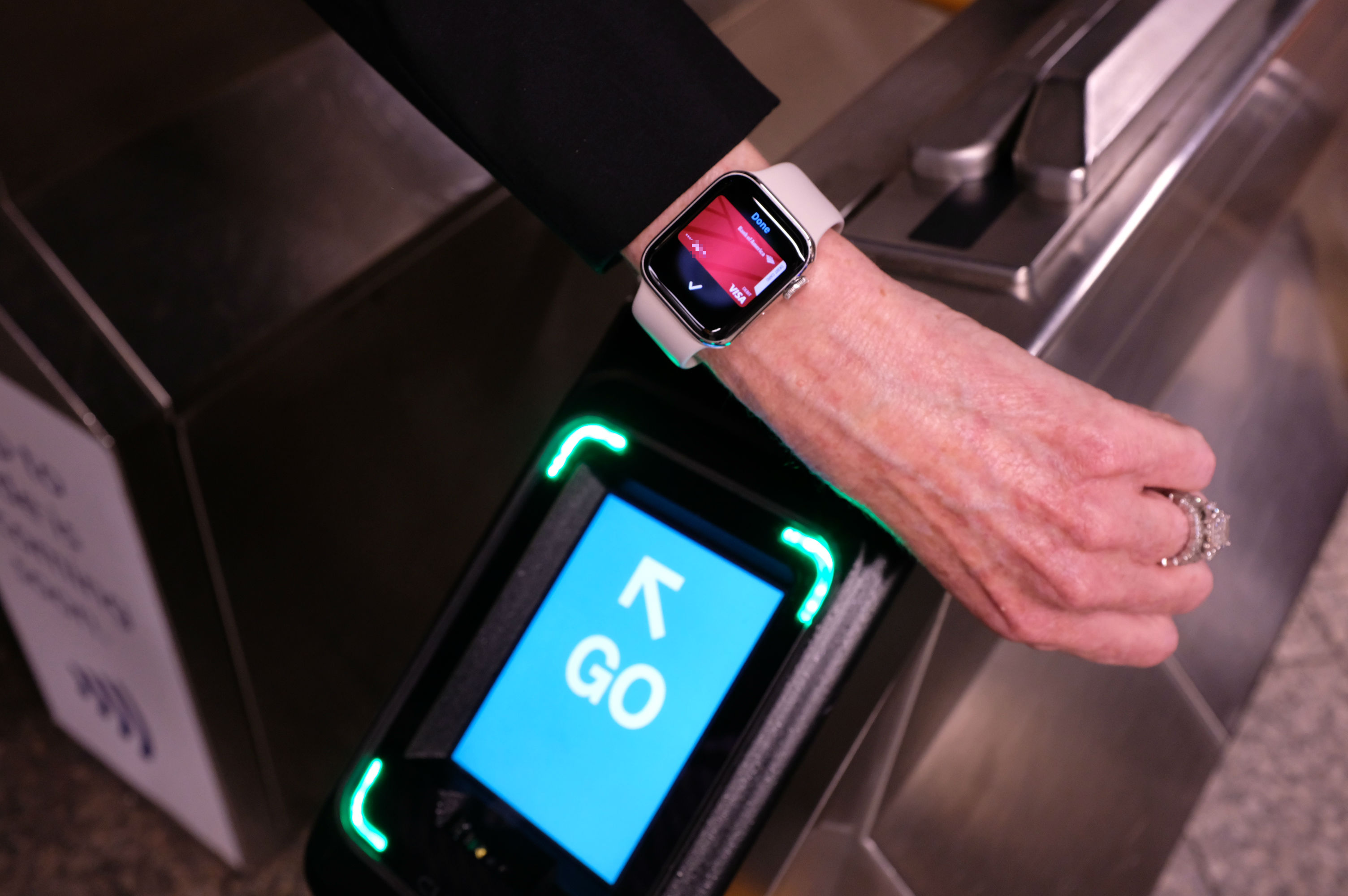
The system works as you’d expect. Hold the phone or watch up to the display and it beeps you in with a big “Go” on the screen, and a “Done” registering on the device. As long as your credit card is up to date, you should be good to go. How quickly this all works when thousands of New Yorkers are all using the system is another question entirely, of course — there tends to be a kind of learning curve with these sorts of things. And no doubt there will be a bit of a logjam at the turnstiles before the novelty of the system wears off.

Of course, that’s why this is still a kind of test period. At present, the system will be limited to the 4, 5, 6 line between Grand Central-42 Street in Manhattan and Atlantic Ave-Barclays Center in Brooklyn (16 stations in all), along with Staten Island buses. In the case of the 4, 5, 6, that’s almost certainly the most heavily trafficked stations on the most heavily trafficked subway line, so this will be an interesting sort of trial by fire.

It’s also worth noting that the system is currently limited to single-ride passes. That means those who buy daily, weekly or monthly passes (which applies to many New Yorkers, myself included) won’t be able to use the system in that capacity. More fare options are coming by late 2020, by which time the MTA expects to have rolled out Apple on all subway lines and buses, so riders will never have to worry about losing that Metro Card again.

Roger, the accounting automation tool, raises $7.35M Series A

Roger, an accounting automation tool that runs on top of accounting software to automate various processes, has raised $7.35 million in Series A funding.

Leading the round is QED Investors, with participation from 9Yards, Silicon Valley Bank, Financial Venture Studio, and BootstrapLabs. A number of individual investors, including Dan Wernikoff, the former GM of QuickBooks and TurboTax, have also backed the Series A.

Claiming to cut the time businesses spend on day-to-day financial processes by as much as 80 percent, Roger works on top of existing accounting software to automate financial processes, such as paying bills, approvals, receipt scanning, compliance and bookkeeping. This is achieved via “simple workflows” that the Denmark and U.S.-based company says anyone can set up and manage.

Customers range from small to mid-sized businesses across virtually any industry to bookkeeping and major accounting firms.

“For businesses, we’re cutting down the time you have to spend in your accounting software dramatically, and help you save time and money on your external accountant or allocate resources better in your in-house finance team,” Roger CEO and co-founder Cathrine Andersen tells me. “You’ll be able to scale your accounting department more easily without adding new headcount”.

To achieve this, Roger consists of a simple web and mobile app that scans incoming documents and ensures that they are seen by the correct person within an organisation. That way they can quickly and efficiently get “coded, approved and reconciled”.

“Roger’s workflow builder is almost like a Zapier for accounting, letting business owners and finance departments set up rules to govern all financial flows, so they can lean back and watch their work get done. Accounting without accounting,” says Andersen.

Meanwhile, for the accountants Roger sells into, Andersen says the startup is helping them stay competitive within a new landscape that is seeing automation becoming a major disruptor.

“This does not mean that there will be no accountants left in 5 years, but it means the industry has to change what services and value they bring to clients and that business models will have to change,” she says. “Any bookkeeper or accounting firm that still spends time on manual processes will likely be faced with questions from their clients and soon a rapidly declining customer base. Clients are starting to see that there are tools out there that can do the grunt work, so why would they pay an hourly fee to do the same thing over and over again every month?”.

To that end, Roger generates revenue in a number of ways. Businesses pay the company a flat monthly subscription fee based on how many documents they process. Accountants are charged a base fee per client, and a price per document.

“Over time, monetizing our large transaction volume of payments will be a key driver of revenue along with other business models that double as cool features to help our network of Roger customers and vendors to run healthier businesses,” adds the Roger CEO.