Google Assistant gets more personalized through a new ‘Picks for You’ feature

In addition to Google’s plan to bring a more powerful, next-generation Google Assistant to Pixel phones, the company also introduced new personalization features for its digital assistant. The update will take into account user preferences to help when choosing what to listen to, what to do on the weekend, or even what to eat. For example, the Google Assistant will be able to respond to a question like “What should I cook for dinner?” with selection of recipes tailored just for you.

Other people would get different results, based on their own preferences.

The feature will also leverage Google’s new plans to index podcasts, by making personalized suggestions of what to listen to.

The system, called “Picks for You” will launch on smart displays later this summer, beginning with recipes, podcasts, and events, said Google.

Beyond its understanding of your interests, Google Assistant will know which people are important to you, as well.

For instance, you could ask “How’s the traffic to mom’s house?” and Google Assistant would know where that is, and respond accordingly.

For this to work, you’ll have to share information with the system first — similar to how you today share locations with Google’s service like, “Home” or “Work,” for instance. This could include locations or important events — like mom’s birthday.

Once updated with the information you want Google Assistant to know, you could ask it to remind you to order flowers or get a card for mom’s birthday.

Other examples could include asking the Assistant for photos of your son, or directions to your dinner reservation tonight.

Users will be in control of what Google Assistant knows, as they’ll be able to edit or delete this sort of information in an updated tab in the Assistant settings, Google said.

A super fast, next-generation Google Assistant is coming to new Pixel phones this year

A next-generation Google Assistant that can handle more complex tasks across apps — quickly switching from hailing a ride, to checking the weather and taking a selfie — is coming to new Pixel phones later this year.

An early demonstration of the more robust Google Assistant was shown Tuesday at Google I/O 2019, the company’s annual developer conference.

A key feature is that users will no longer have to exclaim “Hey Google” for every question or task. Instead, a user can make a variety of requests after the initial “Hey Google” wake command.

During the demo, a Google employee on stage was able to use the voice assistant to craft a text message, quickly search photos of a trip, filter further to find animals photos, then add the image and send the message. In a subsequent task, the user verbally asked for flight information, added to the text and sent.

The next-gen Google Assistant will be able to compose and send emails as well.

Google Assistant gets driving mode

Google’s Assistant app for your phone is getting a voice-enabled driving mode, the company announced today at its annual developer conference. The idea is to bring relevant activities front and center. The Driving Mode dashboard features personalized suggestions for navigation, messages, calling and media.

Within driving mode, for example, you can see if you have a dinner reservation and if so, can quickly tap to navigate there via Google Maps. Once you’re in navigation, you can say, “Hey, Google, play some jazz.” If your mom calls, a notification will appear within the Maps app, asking you if you want to answer the phone. You can then simply say “yes” or “no.”

Driving mode, coming this summer on Android, will automatically launch when you connect your phone to your car’s bluetooth. If you’re not connected to your car, you can just say, “Hey Google, let’s drive.”

In addition to driving mode, Google is making it possible to use Assistant to remotely control your car. For example, you could ask Google to adjust your car’s temperature before you get in. This feature will be available in “the coming months” to cars compatible with Hyundai’s “Blue Link” and Mercedes-Benz’s “Mercedes me connect.”

https://platform.twitter.com/widgets.js

Daily Crunch: Twitter tweaks Retweets

The Daily Crunch is TechCrunch’s roundup of our biggest and most important stories. If you’d like to get this delivered to your inbox every day at around 9am Pacific, you can subscribe here.

1. Twitter gives Retweets an upgrade

Twitter will now allow users to add a photo, video or GIF to a Retweet, instead of only text. The feature is live on iOS, Android and Twitter’s mobile website.

Though a seemingly minor upgrade, the addition could significantly increase the amount of media that’s shared on Twitter.

2. Microsoft launches Visual Studio Online, an online code editor

The emphasis here is on Visual Studio Online being a “companion.” It’s not meant to become a developer’s default environment but instead as a way to make a quick edit, review a pull request or join a Live Share session.

3. Google refreshes Android Auto with new features and a darker look

Android Auto — the in-car platform that brings the look and functions of a smartphone to the vehicle’s central screen — is getting a new look and improved navigation.

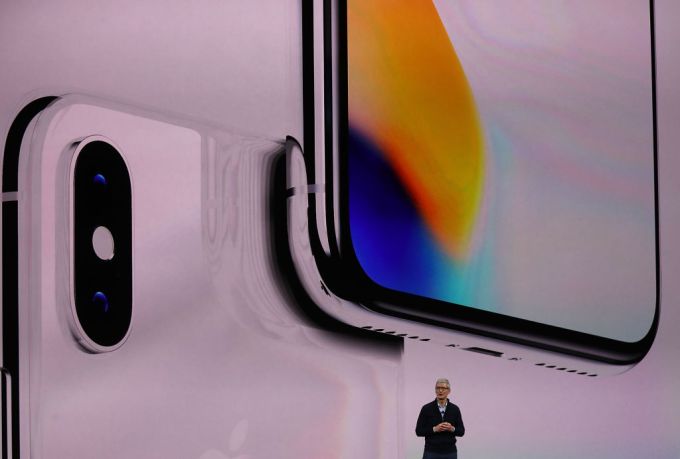
CUPERTINO, CA – SEPTEMBER 12: Apple CEO Tim Cook speaks during an Apple special event at the Steve Jobs Theatre on the Apple Park campus on September 12, 2017 in Cupertino, California. (Photo by Justin Sullivan/Getty Images)

4. iOS reportedly getting its very own swipe-to-type keyboard

Bloomberg’s Mark Gurman has published a big list of little software tweaks that his sources say are coming to iOS at WWDC.

5. US digital advertising exceeded $100B in 2018 (IAB report)

And that money is increasingly concentrated, with 77% going to the top 10 ad sellers.

6. GM Cruise raises $1.15B at a $19B valuation from SoftBank and Honda

GM Cruise has one of the most aggressive timelines among companies hoping to deploy a commercial self-driving vehicle service. It’s grown from a small startup with 40 employees to more than 1,000 today at its San Francisco headquarters.

7. Where top VCs are investing in media, entertainment & gaming

We asked nine top VCs to share where they’re putting their money. (Extra Crunch membership required.)

Protestors fly banner-towing plane over Google I/O

It wouldn’t be a Google I/O without a little bit of controversy. In the middle of today’s keynote, a plane started circling the amphitheater where Google holds its annual conference, towing a protest banner. “Google control is not privacy #savelocalnews,” the banner read.

That’s a first for Google. We’ve seen the occasional protests inside the venue, but mostly outside. With I/O happening in an outdoor space, the company opens itself up to this kind of protest and there’s really no way to stop it. There were also no flight restrictions for the airspace over the venue.

Google, of course, once flew blimps over I/O to show off Google Glass. Those were different times, though.

It’s a bit odd to see protestors use something as expensive as a banner tow, but it’s not unheard of either. The text on the banner is also a bit of an odd mix of privacy concerns and advocating for local news, but there is only so much you can fit on a banner, I guess.

We’ll update this post as we learn more.

Snap a photo of a menu and Google Lens can tell you what to order

Last year at Google I/O, the company wowed the audience by showcasing Duplex as a way to make restaurant reservations. It seems that the company is psyched to solve dining’s most annoying problems, because they’re now tapping computer vision tech to help people order the right meal and split the check.

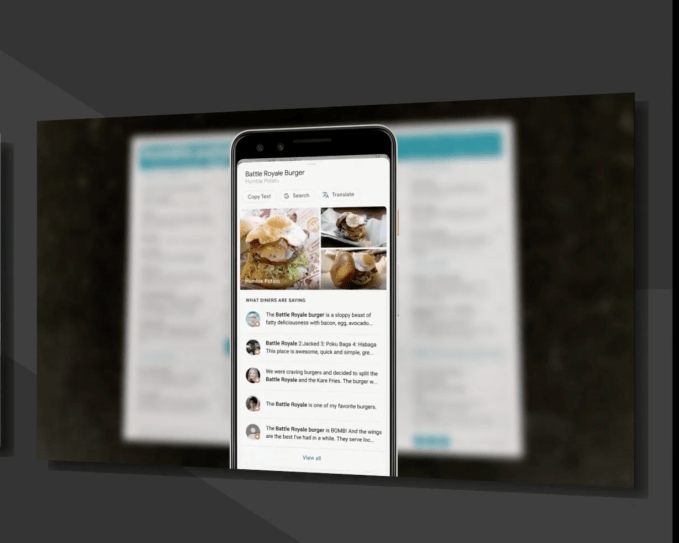
The company’s AI/AR platform, Google Lens has new capabilities for restaurant diners, by pointing the camera at a restaurant menu, Google will rapidly match the names of menu items with data in Google Maps and will actually highlight the names of the restaurant’s most popular dishes.

By tapping on the names of the dishes on your phone, you’ll be able to see photos of that meal that have been tagged.

After you finish eating, Lens can help with that too. By pointing the camera at your receipt, you can calculate the tip or more impressively, split the bill with an in-camera calculator.

Like with most Google I/O announcement, details were murky on when and where this functionality is coming.

Google is bringing AI assistant Duplex to the web

Last year at Google I/O, the tech giant’s annual developer conference in Mountain View, Calif., the company showed off a splashy demo of an artificial intelligence assistant, Duplex, that could book reservations on your behalf via the phone. Now, Google is gearing up to launch Duplex on the Web, Google CEO Sundar Pichai announced at Google I/O this morning.

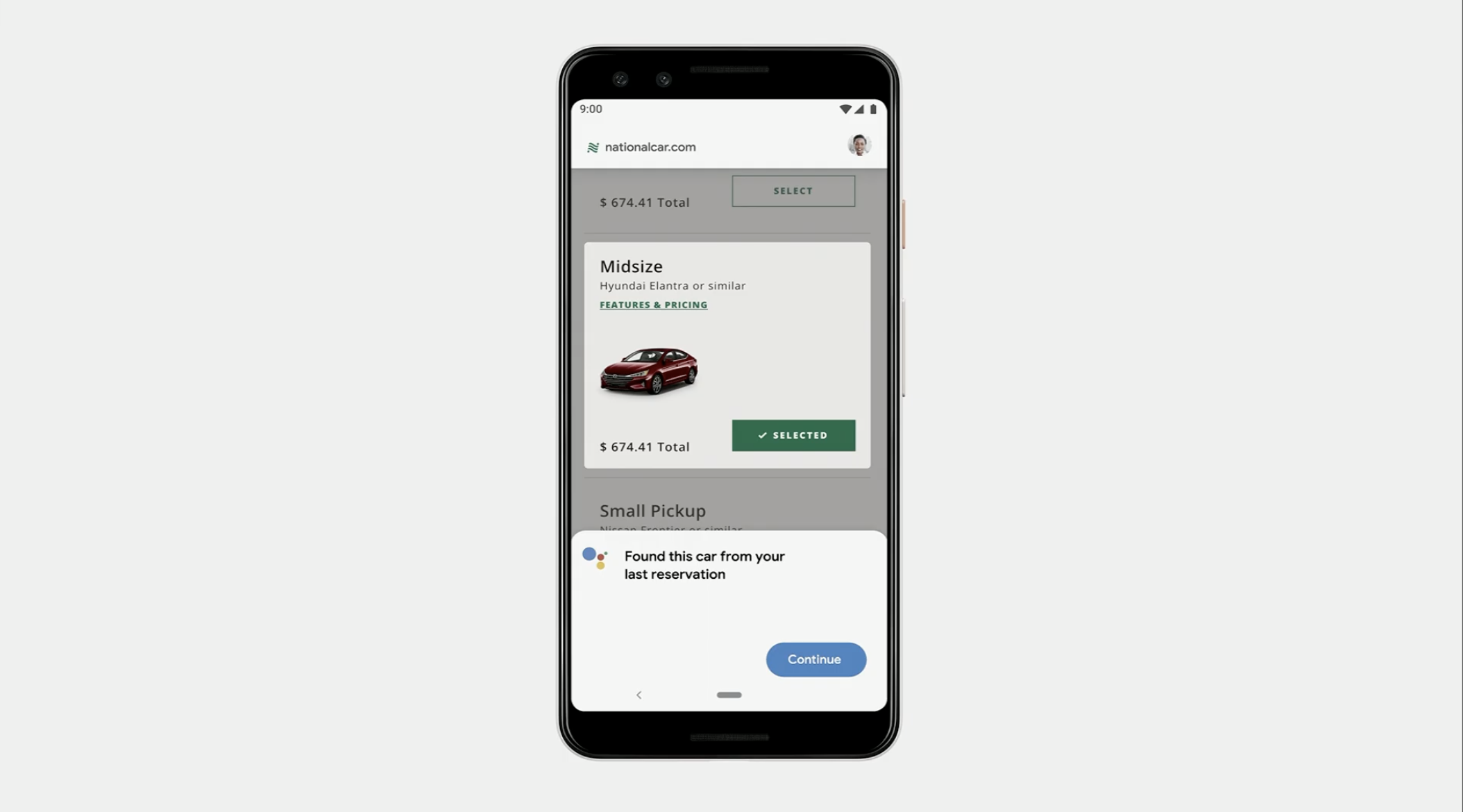
Duplex, which is live in 44 states, is now expanding beyond the phone and voice to the web. To start, Duplex will be focused on a couple of narrow use cases: car bookings and movie ticketing, Pichai said.

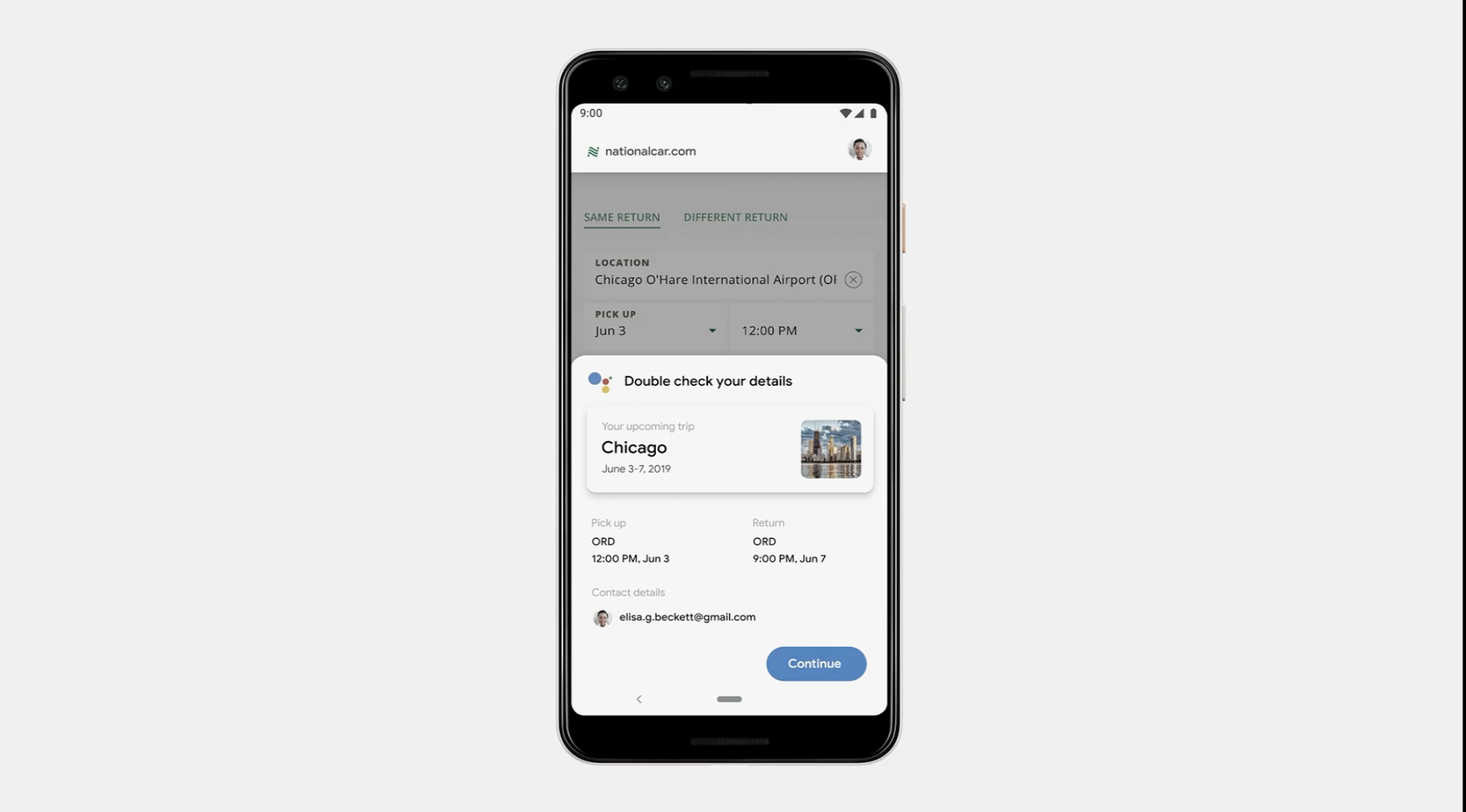
Let’s say, for example, you get a calendar reminder about an upcoming trip. You can then ask Google to rent a car for your next trip. Duplex will then open up the car rental company’s website and fill out all of the necessary information on your behalf. Before submitting the request, you can double check the details.

Pichai said Google will share more details on Duplex’s web version later this year.

Pandora slashes prices on its premium music streaming service for students and the military

To better compete with rivals like Spotify and Apple Music the music streaming service Pandora is cutting the prices on its Premium subscriptions for qualifying students and members of the military.

Pandora’s new pricing plans mean that students will pay $4.99 per month, a $5 discount to its $9.99 Premium product. The price includes the same features of on-demand music, ad-free listening, offline access, and customizable playlists.

For military personnel, national guard reservists, family members and veterans Pandora is offering a $7.99 per month price for the Premium service. It’s an offer that sets Pandora apart, since neither Apple Music nor Spotify offer military plans.

Both students and military will have their identity verified by SheerID to ensure that people who are trying to subscribe to the discount plan are who they say they are.

Each plan comes with a 60-day trial, which gives subscribers time to personalize the service to their liking — and that increases the possibility of retention.

Google Search will offer better news coverage, and soon, support for podcast search

Google Search is getting an upgrade with better news coverage and now, podcast indexing. At the company’s developer conference Google I/O this morning CEO Sundar Pichai kicks things off with an announcement that Google News’ “Full Coverage” feature, first launched last year, would now make its way directly to Google Search. Additionally, the exec said Google Search would begin indexing podcasts.

Google’s News vertical was updated last year with an A.I.-powered redesign, which included a “Full Coverage” feature to get a more holistic view of a news story.

“We use machine learning to identify different types of stories and give you a complete picture of our stories being reported from a wide variety of sources,” explained Pichai today. “It surfaces a breadth of content, but allows you to drill down into what interests you,” he said.

Google News today offer a view of all the different aspects of a story and a timeline of the events. Later this year, these features will come to Google Search, as well — not just the News vertical.

The more interesting news was glossed over, but is highly relevant to one of the most popular sources of news and information today: podcasts.

Google will begin to index podcasts so the engine can surface relevant episodes of a given program, based on the content, not just the title.

Plus, web searchers will be able to listen to the podcast right in Google’s Search results, or save an episode for later listening — like on their commute to work, for example.

The company didn’t spend much time on this announcement, so it’s unclear for now what this means for podcasters themselves. Today, they’re used to tracking listens through analytics programs which help them get a better idea of what podcast listeners engage with and respond to. It’s unclear if Google plans to offer any analytics service of its own, as part of this change.

“These are all examples of how we are making search, even more helpful for our users surfacing the right information in the right context,” said Pichai.


Google brings augmented reality to Search

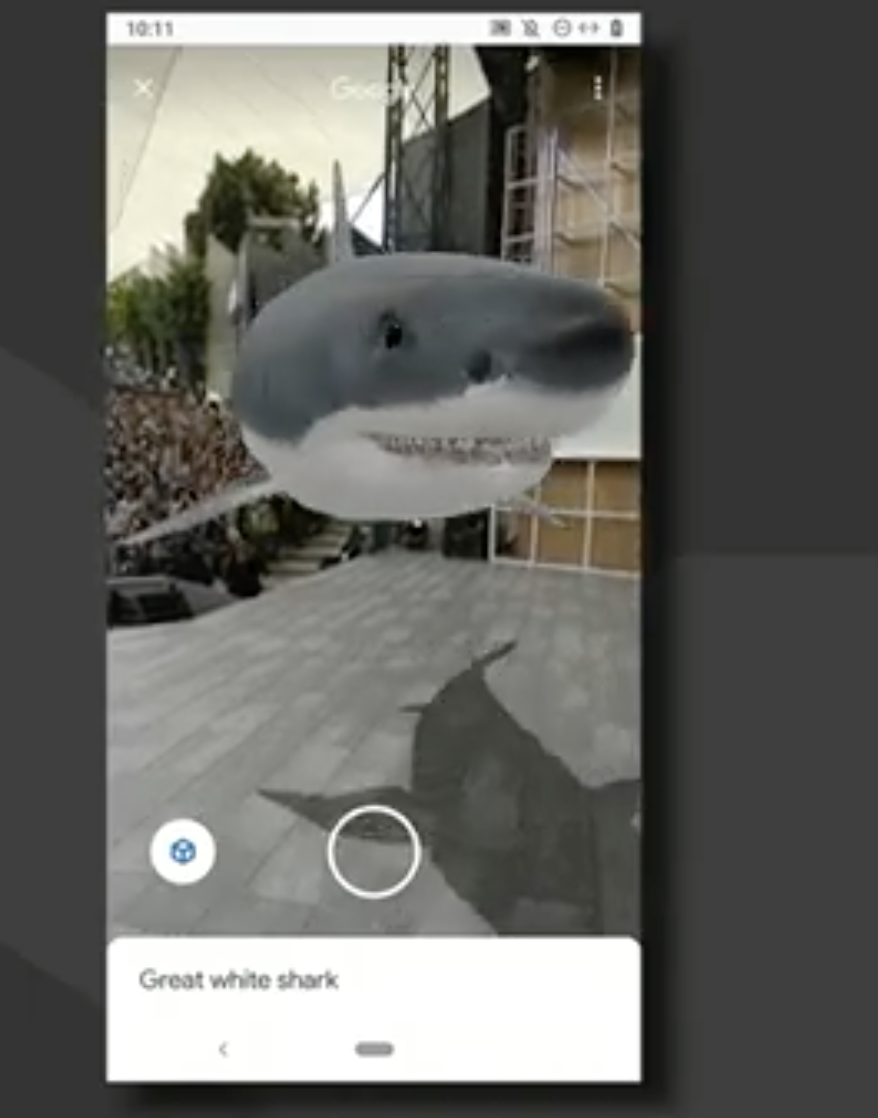
At its I/O developer conference, Google today announced that it is bringing the camera — and augmented reality – to Google Search. As the company demonstrated, you could search for something like “great white shark” and then see it in front of you through your phone’s camera. The company showed similar examples with a 3D model of the human muscular system.

It’s unclear how many of these 3D models will appear in search. It’s also unclear whether publishers will be able to create their own, but we expect to hear more about this later today.

“We are moving from a company that helps you find answers to a company that gets things done,” Google CEO Sundar Pichai said. “Our goal is to build a more helpful Google for everyone.”

That starts with Search, Pichai said, and this is a new example for this. It’s somewhat gimmicky, but also pretty cool, given that you can easily go from a search term to an AR experience in the Google app.