Twitter gives Retweets an upgrade

Twitter is finally letting you do more with Retweets. In a small but useful update rolled out today, Twitter will now allow users to add a photo, video, or GIF to a Retweet, instead of only text.

The feature is live today on iOS, Android, and Twitter’s mobile website.

Though a seemingly minor upgrade, the addition is notable because of its potential to significantly impact the amount of media that’s shared to Twitter.

Today, retweeting with a comment is a common user behavior — so opening up the Retweet to support media will likely lead to a sizable increase of the amount of non-text content you see on your Twitter timeline when you scroll through.

https://platform.twitter.com/widgets.js

The update also represents yet another step further away from Twitter’s original goal of offering a sort of public SMS-type platform with all the accompanying limitations of that format. In addition to its support for media, live streaming video from users, live video from media partners, and audio broadcasting, the company also doubled the character limit to 280 back in 2017. Now, it’s working to making conversations easier to follow by prototyping a new user interface for threaded replies in a test app called twttr.

Combined, the changes speak to a platform that’s looking to shed its reputation for “text status updates,” in favor of something more media rich and engaging. That could increase users’ time on Twitter, which then helps to boost ad revenues.

The company said the updates to the Retweet feature required teamwork and collaboration across multiple teams, as the changes impacted things like the tweet detail page, timelines, accessibility features, and parity across Twitter clients.

https://platform.twitter.com/widgets.js

“The most exciting part of this project was that we were working on a feature that many people asked for,” wrote the Twitter Engineering account, in an update today. “We’re very excited to launch this feature across Twitter, and we can’t wait to see it being used by all of you.”

Hopefully the company remembers how we’re all asking for a couple of other things, too…

https://platform.twitter.com/widgets.js

An Xbox controller with a built-in braille display is Microsoft’s latest gaming accessibility play

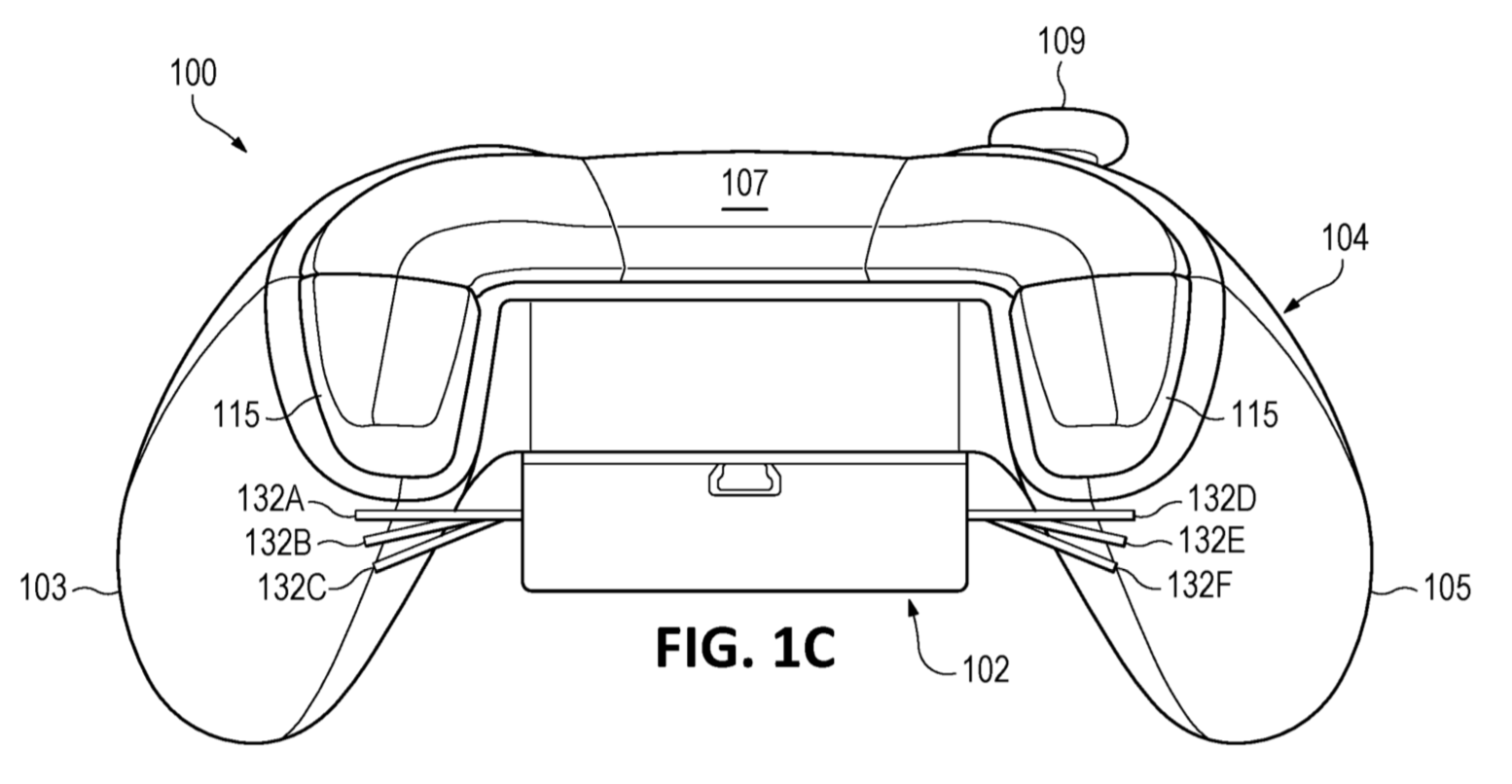
Microsoft has been leaning into accessibility in gaming lately, most visibly with its amazing Adaptive Controller, and a new patent suggests another way the company may be accommodating disabled gamers: an Xbox controller with a built-in braille display.

As you might expect, it’s already quite hard for a visually-impaired gamer to play some games, and although that difficulty can’t be entirely alleviated, there are definitely things worth doing. For instance: the text on screen that sighted people take for granted, documenting player status, items, onscreen dialogue or directions — how could these be read by a low-vision gamer who might be able to otherwise navigate the game world?

In many circumstances a screen reader is what a visually-impaired person would use to interact with this kind of data, but often that text is relayed to them in audio form, which is far less appealing an option when you’re in-game. Who wants to have a computer voice reading off your armor levels and inventory burden while you’re trying to take in the ambient environment?

There are already some braille display accessories for this kind of thing, but there’s nothing like having support direct from your console’s designer, and that’s what Microsoft has demonstrated with its patent for a braille-enabled controller.

The patent was filed last year and just recently became public, and was soon spotted by German tech site Let’s Go Digital; there have been no official announcements, though the timing is favorable for an E3 reveal. That said patents don’t necessarily represent real products in development, though in this case I think it’s worth highlighting regardless.

The braille Controller, as it’s referred to in the patent, is very much like an ordinary Xbox One gamepad, except on the back there appears to be a sort of robotic insect sticking out of it. This is the braille display, consisting of both a dot matrix that mechanically reproduces the bumps which players can run their fingers over, and a set of swappable paddles allowing for both input and output.

The six paddles correspond to the six dot positions on a braille-coded character, and a user may use them to chord or input text that way, or to receive text communications without moving their fingers off the paddles. Of course the mechanisms could also be used to send haptic feedback of other types, like directional indicators or environmental effects like screen shake. I wouldn’t mind having something like this on my controller, in fact.

Naturally this means games will need (and increasingly are including) a metadata layer for this kind of conversion of visual cue to auditory one, and vice versa, among many other considerations for gamers with disabilities. It’s on everyone’s minds but Microsoft and Xbox seem to be taking more concrete steps than the rest, so kudos to them for that. Hopefully their leadership in this space will help convince other developers and manufacturers to join up.

We’ll be sure to ask the Xbox team about their plans for this controller design and other accessibility improvements when we talk with them at E3 in June.

Uber and Lyft drivers are striking ahead of Uber’s IPO

With Uber expected to make its debut on the public market by Friday, May 10, on-demand ride-hailing drivers are planning to strike on Wednesday. The New York Taxi Workers Association is calling on U.S.-based drivers to stand in solidarity with drivers in London and log off from both Uber and Lyft on May 8 between 7 a.m. and 9 a.m.

https://platform.twitter.com/widgets.js

“In the IPO filing, Uber said drivers will only get more dissatisfied because they plan to cut our pay and stop incentives,” NYTWA member Sonam Lama said in a press release. “We don’t want our wages to stay just minimum.  We want Uber to answer to us, not to investors. The gig economy is all about exploiting workers by taking away our rights. It has to stop. Uber is the worst actor in the gig economy.”

In a statement to TechCrunch, an Uber spokesperson said drivers are at the core of its service.

“Drivers are at the heart of our service─we can’t succeed without them─and thousands of people come into work at Uber every day focused on how to make their experience better, on and off the road,” the spokesperson said. “Whether it’s more consistent earnings, stronger insurance protections or fully-funded four-year degrees for drivers or their families, we’ll continue working to improve the experience for and with drivers.”

When Lyft went public, “it was a sad day,” Gig Workers Rising organizer Shona Clarkson told TechCrunch last month.

It’s hard to see this company making tons of money when you have insecure housing or aren’t sure you can make rent or pay medical bills,” she said.

In response, Lyft drivers went on strike in San Francisco and San Diego. While some drivers want to be W-2 employees and others don’t mind being 1099 independent contractors, these drivers are united around wanting higher wages, transparent policies around wages, tips, fare breakdowns and mileage rates, benefits and a voice, Clarkson said.

“Lyft drivers’ hourly earnings have increased over the last two years, and they have earned more than $10B on the Lyft platform,” a Lyft spokesperson told TechCrunch. “Over 75 percent drive less than 10 hours a week to supplement their existing jobs. On average, Lyft drivers earn over $20 per hour. We know that access to flexible, extra income makes a big difference for millions of people, and we’re constantly working to improve how we can best serve our driver community.”

As part of their respective IPOs, both Uber and Lyft offered some drivers bonuses but pale in comparison to what executives will walk away with. Lyft, for example, offered some drivers up to a one-time bonus of $10,000. Similarly, Uber offered some drivers a bonus up to $10,000.

Drivers I know who were offered that deal from Lyft in lead up to IPO were incredibly insulted and angry about it,” Clarkson said. “Both companies just do a lot of PR work to make it seem like they’re treating drivers well.”

Uber is pricing its IPO between $44 to $50 a share, seeking a valuation up to $84 billion. Lyft set a range of $62 to $68 for its IPO, seeking to raise up to $2.1 billion. Since its debut on the NASDAQ, Lyft’s stock has suffered after skyrocketing nearly 10 percent on day one. Lyft is currently trading at around $60 per share.

Facebook updates its video guidelines to promote original content, loyal and engaged viewership

Facebook today announced a series of changes to the way it ranks videos on its social network, which determines how widely they’re distributed. According to the updated guidelines, Facebook will now prioritize videos that focus on original content, those where users are engaged for longer periods of time, and those where users return repeatedly to watch more.

The company wants to feature more high-quality videos, and less of those that feature “unoriginal or repurposed content” from other sources where there’s been little value added, it says. That seems to imply a bit of crackdown on the prolific video memes — those that lift someone else’s content (sometimes without proper credit) and then publish it to their own Page to cash in.

Facebook says it’s also now going to demote videos from Pages that are involved in Sharing Schemes. These are programs run by unethical content mills which compensate other Page owners for posting content and running ads to promote it.

In addition, Facebook will reward videos that have a more engaged and loyal fanbase.

Before, Facebook encouraged video creators to keep their viewers watching for at least a minute. Going forward, it will actively add more weight in rankings to those videos where viewers watch for at least three minutes.

And it will reward videos where viewers repeatedly return to watch week after week.

The goal with the changes is to promote those videos that people value, the company says, while also helping great video creators reach more people across the social network by way of improved distribution.

The changes come at a time when Facebook’s video effort, Facebook Watch, is facing increased competition for viewers’ time and interest from a range of players, including Apple’s streaming service Apple TV+, as well as number of places to watch free, ad-supported content, like The Roku Channel or Amazon’s IMDb, for example, in addition to, of course, YouTube. And soon, the highly anticipated streaming service from Disney will eat into more of viewers’ time, too.

Facebook Watch has also been dinged for featuring low-quality content compared to newcomers like Apple TV+, which has signed big-name talent like Spielberg, Witherspoon, and Oprah. Meanwhile, Facebook Watch has focused on things like MTV’s The Real World or Buffy re-runs in terms of its “premium” content.

With YouTube recently promising its own original content will become free and ad-supported in time, Facebook needed to keep up by making its own video site less meme-filled and more engaging than before. That can only happen if it promotes videos when they meet certain quality thresholds — which is what these guidelines aim to address.

Where top VCs are investing in media, entertainment & gaming

Most of the strategy discussions and news coverage in the media & entertainment industry is concerned with the unfolding corporate mega-mergers and the political implications of social media platforms.

These are important conversations, but they’re largely a story of twentieth-century media (and broader society) finally responding to the dominance Web 2.0 companies have achieved.

To entrepreneurs and VCs, the more pressing focus is on what the next generation of companies to transform entertainment will look like. Like other sectors, the underlying force is advances in artificial intelligence and computer power.

In this context, that results in a merging of gaming and linear storytelling into new interactive media. To highlight the opportunities here, I asked nine top VCs to share where they are putting their money.

Here are the media investment theses of: Cyan Banister (Founders Fund), Alex Taussig (Lightspeed), Matt Hartman (betaworks), Stephanie Zhan (Sequoia), Jordan Fudge (Sinai), Christian Dorffer (Sweet Capital), Charles Hudson (Precursor), MG Siegler (GV), and Eric Hippeau (Lerer Hippeau).

Cyan Banister, Partner at Founders Fund

In 2018 I was obsessed with the idea of how you can bring AI and entertainment together. Having made early investments in Brud, A.I. Foundation, Artie and Fable, it became clear that the missing piece behind most AR experiences was a lack of memory.

Google refreshes Android Auto with new features and a darker look

Android Auto — the in-car platform that brings the look and functions of a smartphone to the vehicle’s central screen — is getting a new look and improved navigation and communication features that will roll out this summer.

The improvements and new look were revealed Monday during Google I/O 2019, the annual developer conference.

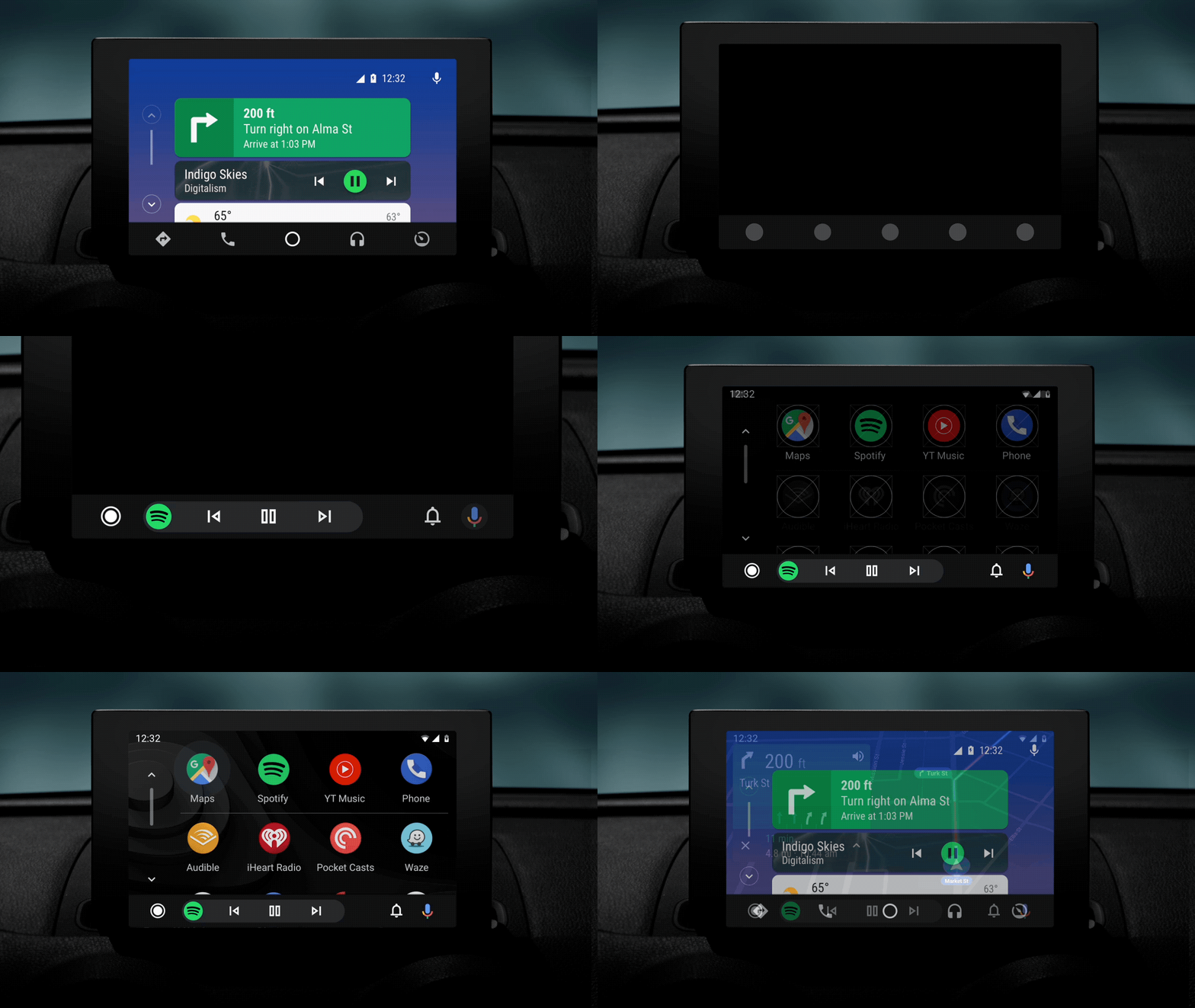
The most noticeable change might be the overall look of Android Auto. It now has a dark theme, new fonts and color accents designed to make it easier for drivers to quickly and more easily see the content on the car’s central screen.

The new version of Android Auto has also improved its notifications. Drivers can choose to view, listen and respond to messages and calls more easily.

Engineers have updated the software to make it more seamless. The system, if properly enable, would pop up on the car’s screen once the vehicle was turned on. However, the user would still have to restart their media or navigation option. Now, Android Auto will continue playing the media and navigation app of the driver’s choice. Drivers can  tap on a suggested location or say “Hey Google” to navigate to a new place.

The navigation bar on Android Auto has changed as well. Drivers will be able to see their turn-by-turn directions and control apps and phone on the same screen.

Finally, the platform has been adjusted so it will fit various sized-screens. Android Auto now maximizes the in-car display to show more information, like next-turn directions, playback controls and ongoing calls.

Android Auto is not an operating system. It’s a secondary interface — or HMI layer — that sits on top of an operating system. Google released Android Auto in 2015. Rival Apple introduced its own in-car platform, Apple CarPlay, that same year.

Automakers that wanted to give consumers a better in-car experience without giving Google or Apple total access quickly adopted the platform. Even some holdouts, such as Toyota, have come around. Today, Android Auto is available in more than 500 car models from 50 different brands, according to Android Auto product manager Rod Lopez.

Google has since developed an operating system called Android Automotive OS that’s modeled after its open-source mobile operating system that runs on Linux. Instead of running smartphones and tablets, Google modified it so it could be used in cars. Polestar, Volvo’s standalone performance electric car brand, is going to produce a new vehicle, the Polestar 2 that has an infotainment system powered by Android Automotive OS.

Show off your developer skills in the Hackathon at Disrupt SF 2019

We’re inviting hundreds of think-outside-the-boxers — coders, devs, engineers and tech makers — to compete onsite at the TechCrunch Hackathon, which takes place during Disrupt San Francisco 2019 on October 2-4. Are you up for the adventure? Participating in the hackathon is free, and all competitors receive Expo Only passes for days one and two, and then an Innovator pass for day three of Disrupt SF. If you’re psyched to strut your stuff and tackle a project that addresses a real-world challenge, apply for the hackathon today.

The hackathon will definitely put your creative skills to the test as you pit your wit and talent against some of the best devs in the world. Here’s how it all works. The competition will take place in a dedicated area at the Moscone Convention Center, and we’re limiting the number of participants to 800 people.

Our host partners will sponsor a variety of hack contests looking for solutions to real-world challenges. Your team will choose a challenge and then have less than two days to build projects with sponsored APIs, data sets and other tools. Don’t have a team? No problem, we’ll find a match for you. It’s an exhilarating, pressure-cooker situation. Thank goodness for free food, beer and plenty of caffeine. You’ll need it.

After you submit your project, you’ll have two minutes to demo your creation to judges (science-fair style) from both the sponsors and TechCrunch. They’ll select 10 finalists to demo the next day on the Extra Crunch stage at Disrupt SF.

Each sponsor awards prizes, including cash, to the team that creates a product that best addresses the specific challenge. On top of that, TechCrunch offers a grand prize of $10,000 to the best overall hack. Ka-ching!

Over the coming weeks, we’ll announce this year’s sponsors and the specific challenges and prizes they offer. In the meantime, take a look at the sponsored contests, prizes and winners from the hackathon at Disrupt SF 2018. Want more details? We know you love details. Find out what to expect at the hackathon.

The TechCrunch Hackathon is an opportunity to connect, be inspired, discover and create. And you never know what might come of it. Some projects experience success long after the hackathon ends. One legendary example — GroupMe — was built overnight, didn’t win a thing at the hackathon, but went on to be acquired by Skype for $80 million. True story.

Disrupt San Francisco 2019 takes place on October 2-4. Apply for the hackathon, join us in the City by the Bay — the birthplace of startup dreams — and start making your dreams come true. We can’t wait to see what you create!

Interested in sponsoring the hackathon? Fill out this form and a member of our sales team will contact you.

Populus AI CEO, co-founder Regina Clewlow at TC Sessions: Mobility on July 10

Behind all those on-demand shuttles, ride-hailing vehicles, dockless scooters, bikes and someday even autonomous cars is data. A lot of data.

Numerous startups have popped up and several large, established companies have rolled out products all aimed at capturing and making sense of that data.

One such company is Populus AI, a startup that has launched a data platform for cities to better understand and manage how people are moving from Point A to Point B.  The idea is that real-time data and analytics will help cities become easier to navigate and live in. Populus also offers real-time data from ride-share companies to inform curbside management and pricing. Back in December, Populus partnered with Lime to facilitate data sharing from its car-share service, LimePod.

We’re excited to announce that Populus AI CEO and co-founder Regina Clewlow will join us on stage at TC Sessions: Mobility on July 10 in San Jose.

Before launching Populus, Clewlow was the director of business development and strategy at RideScout, an early mobility-as-a-service aggregator that was acquired by moovel, Daimler and BMW’s mobility services unit.

Clewlow, who has a Ph.D in transportation and energy systems from MIT, has also served as a research scientist and lecturer at Stanford, UC Berkeley and UC Davis universities.

TC Sessions: Mobility is designed to highlight the best and brightest founders, investors and technologists. We introduce our audience to and coming startups, offer demo space to showcase products and create programming aimed at delivering the most value for every ticket holder. Our events are fun, too.

Clewlow will be able to discuss what Populus has learned from the data it collects. The company works with Washington, D.C., and cities in the SF Bay Area and Los Angeles areas.

Early-stage startup founders, don’t miss your chance to demo your company in front of top influencers at TC Sessions: Mobility 2019. It’s a prime opportunity to showcase your tech startup in front of a very large, very targeted audience — the mobility and transportation industry’s movers and shakers. Book a demo table here.

In case you missed it, some of our recently announced speakers include May Mobility co-founder and COO Alisyn Malek, Waymo CTO Dmitri DolgovNuro co-founder and CEO Dave Ferguson, Scoot SVP of Product Katie DeWitt, co-founder and CEO of Voyage Oliver Cameronco-founder, president and CEO of Mobileye, Amnon Shashua — who also is a senior vice president at Intel. And there are more.

Early-Bird tickets are now on sale — save $100 on tickets before prices go up.

Students, you can grab your tickets for just $45.

Daily Crunch: EU to investigate Spotify’s Apple complaints

The Daily Crunch is TechCrunch’s roundup of our biggest and most important stories. If you’d like to get this delivered to your inbox every day at around 9am Pacific, you can subscribe here.

1. The EU will reportedly investigate Apple following anti-competition complaint from Spotify

The European Commission plans to investigate Spotify’s claim that Apple uses its control over the App Store to “deliberately disadvantage other app developers,” according to the Financial Times.

Specifically, Spotify CEO Daniel Ek raised concerns about Apple’s 30% cut of in-app spending, as well as its restrictions on communication between app publishers and users, “placing unfair restrictions on marketing and promotions that benefit consumers.”

2. Watch Microsoft’s Build 2019 keynotes right here

CEO Satya Nadella will already be onstage by the time you get this newsletter, but you may still catch the tail end of his “vision keynote.” Then at 11am Pacific, we’ll have technical keynotes by Scott Guthrie and Rajesh Jha. (And, of course, I’ll recap the big announcements in tomorrow’s newsletter.)

3. NBCUniversal’s scannable ShoppableTV takes viewers directly to e-commerce sites

The Shoppable TV feature displays QR codes during specific moments in TV shows, taking viewers directly to e-commerce sites once scanned.

4. Carta was just valued at $1.7 billion by Andreessen Horowitz, in a deal some see as rich

The company — which helps private and public companies, investors and employees manage their equity and ownership — is the latest tech unicorn.

5. Security lapse exposed a Chinese smart city surveillance system

Security researcher John Wethington found a smart city database accessible from a web browser without a password. He passed details of the database to TechCrunch in an effort to get the data secured.

6. This week’s TechCrunch podcasts

The latest episode of Equity discusses the two new funds raised by Andreessen Horowitz, while the Original Content team put together a super-sized episode about “Avengers: Endgame” and the big battle episode of “Game of Thrones.”

7. Takeaways from F8 and Facebook’s next phase

A discussion with Josh Constine and Frederic Lardinois about the major announcements that came out of Facebook’s F8 conference. (Extra Crunch membership required).

Spoiler-heavy Spider-Man trailer establishes a way forward for Disney’s Marvel Universe

A new trailer for “Spider-Man: Far From Home” has just been released, and it’s setting up a way for Marvel to finally unite the disparate elements of its franchises.

The trailer contains a pretty huge spoiler for “Avengers: Endgame“, so be prepared, but it also reveals how Disney’s super-heroically successful Marvel franchise will enter the next phase of its development (after 22 films and nearly $21 billion in box office receipts).

The secret, it seems, to the next iteration of Marvel movies and shows will be through the concept of the multiverse that was first floated in the Academy Award-winning “Spider-Man: Into the Spider-Verse“.

In the new film, a super-powered being from another version of Earth (apparently) needs the help of a friendly neighborhood Spider-Man to help stop some evil from destroying the world.

The concept of multiple-versions of Marvel heroes opens the door for appearances of heroes from other franchises that have never been under the Marvel umbrella or incorporated fully into the Marvel universe (heroes from titles like The Fantastic Four, X-Men, and Blade, to name a few).

Some folks have even speculated that it could be a way to draw Anthony and Joe Russo (who had taken the reins on the Avengers movies from Joss Whedon) back to do another arc based on the “Secret Wars” Marvel comics of from 1984 and 1985.

No matter what ends up happening, expect to see the web-swinger become one of the mainstays of the new Marvel Universe and the hero Marvel will seemingly hang more than one franchise on.